

P0306 on 2003-2010 Porsche Cayenne V8: Cylinder 6 Misfire Causes and Fixes
P0306 indicates a misfire in cylinder 6. On the M48 V8 engine, this is most often caused by a failed ignition coil. A single OEM-quality coil costs around $50-$75, and it's a simple DIY fix. It is highly recommended to replace all 8 coils and spark plugs at the same time for a lasting repair, using reputable brands like Beru or Bosch.
- P0306 means cylinder 6 is misfiring.
- The most likely cause on a 2003-2010 Cayenne V8 is a bad ignition coil.
- The easiest way to diagnose a bad coil is to swap it with one from another cylinder and see if the misfire code follows it.
- A flashing check engine light is serious; avoid driving to prevent damage to the catalytic converter.
- For a reliable, long-term fix, it's best to replace all 8 ignition coils and spark plugs at the same time.
What's Unique About the 2003-2010 Porsche Cayenne
The first-generation Cayenne (955/957) with the M48 V8 engine is well-known for ignition coil failures. The coils are subjected to significant heat in the engine bay, causing the plastic housings to crack over time. This allows the high-voltage spark to leak to the cylinder head instead of reaching the spark plug, causing a misfire. While many vehicles experience coil failure, it is a particularly common maintenance item on these Porsche V8s, making it the first and most likely suspect for a P0306 code.
Generation note: This guide covers the first-generation Porsche Cayenne, which includes the 955 (2003-2006) and the facelifted 957 (2007-2010). The fundamental causes of a P0306 misfire are the same for both. However, the 957 models introduced Direct Fuel Injection (DFI), which can make fuel injector issues a more complex and expensive repair compared to the port-injected 955 models.
Symptoms You May Notice
- Rough or shaking idle
- Hesitation or stumbling during acceleration
- Noticeable loss of engine power
- Flashing Check Engine Light (CEL)
- Reduced fuel economy
- Engine noise like popping or backfiring
- Replacing only the spark plug when the ignition coil is the actual culprit. Since the coil must be removed to access the plug, it's easy to misdiagnose if you don't test the coil by swapping it to another cylinder first.
- Replacing coils with cheap, unbranded aftermarket parts. Forum consensus strongly indicates that only OEM (Porsche-branded) or OEM-supplier (Beru, Bosch) coils are reliable. Using cheap parts often leads to persistent or recurring misfires.
Most Likely Causes
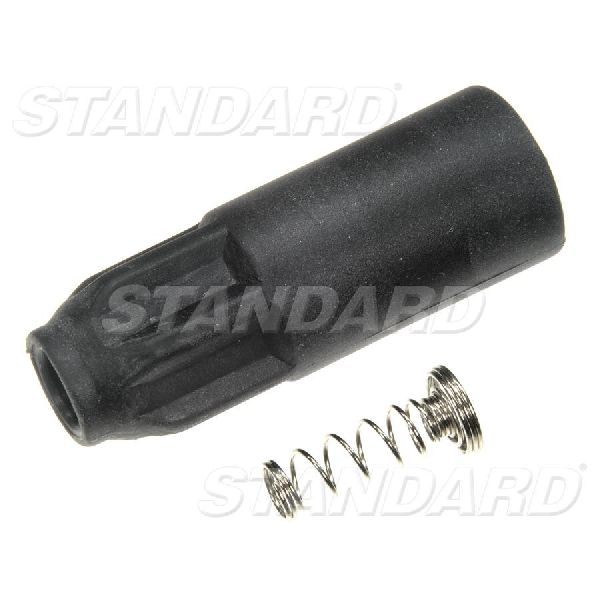
- Failed Ignition Coil 🔴 High Probability → Shop Ignition Coil The ignition coils on the M48 V8 are a very common failure item due to heat exposure causing the plastic casing to crack. This allows the spark to arc to the cylinder head instead of the spark plug. The part has been updated several times by Porsche due to the high failure rate.
How to confirm: Swap the ignition coil from cylinder 6 with an adjacent cylinder (e.g., cylinder 5). Clear the codes and drive the vehicle. If the code changes to P0305, the ignition coil is faulty. Cylinder 6 is the second cylinder from the front on the driver's side (left-hand drive vehicles). Also, ensure the electrical connector is fully seated with an audible 'click' upon reinstallation, as a loose connection can mimic a failed coil.
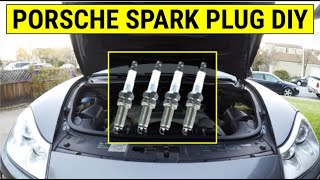
Typical fix: Replace the faulty ignition coil. It is best practice to replace all 8 ignition coils and spark plugs at the same time to prevent future failures, using OEM brands like Beru or Bosch. 🎬 Watch: Step-by-step guide to replacing your ignition coils and spark plugs.
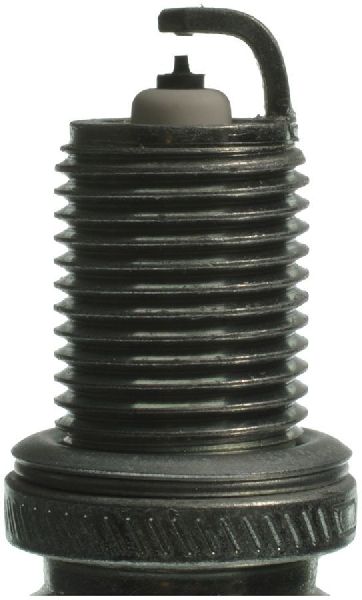
Est. part cost: $50-$85 for one OEM-quality coil - Worn or Fouled Spark Plug 🟡 Medium Probability → Shop Spark Plug Spark plugs are a standard wear item. If they are past their service interval, the gap can become too wide or electrodes can become worn, leading to a weak spark and misfires. A more vehicle-specific issue is oil leaking from a failing valve cover gasket's inner seals (spark plug tube seals), which pools in the spark plug well, saturating the plug and coil boot, causing a misfire.
How to confirm: After confirming the ignition coil is good, remove the coil and look for liquid oil in the spark plug tube. Remove the spark plug from cylinder 6. Inspect it for wear, heavy carbon buildup, oil fouling, or cracks in the ceramic insulator. Compare it to a new plug.
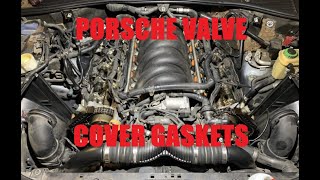
Typical fix: Replace the spark plug in cylinder 6. If oil was present, the valve cover gaskets and spark plug tube seals must be replaced to prevent a recurrence. 🎬 See this walkthrough on how to replace your valve cover gaskets. It is recommended to replace all 8 spark plugs at once if they are near the end of their service life.
Est. part cost: $10-$25 for one OEM-spec plug - Faulty Fuel Injector ⚪ Low Probability → Shop Fuel Injector Injectors can become clogged with deposits over time, or fail electrically, preventing the correct amount of fuel from being delivered to cylinder 6. This is slightly more common on the DFI engines in the 957 models (2008-2010), where carbon buildup can be a factor.
How to confirm: If the coil and plug are good, the next step is to check the injector. This is more complex. A professional can perform a fuel injector balance test. A DIY method is to listen to the injector with a mechanic's stethoscope to confirm it is clicking. Swapping injectors between cylinders is possible but is a much more involved job than swapping a coil.
Typical fix: Replace the faulty fuel injector. This may require special tools, especially on DFI engines.
Est. part cost: $150-$250 for one injector
Rare But Worth Checking
- Vacuum Leak: A vacuum leak from a cracked hose or a bad intake manifold gasket can cause a lean condition and misfires. This would typically cause random misfire codes (P0300) or misfires on multiple cylinders on the same bank, but a localized leak near cylinder 6 could trigger P0306 specifically.
- Low Engine Compression: A mechanical engine problem like a burnt valve, worn piston rings, or a leaking head gasket can cause a loss of compression in cylinder 6. A particularly notorious issue on these M48 engines is cylinder bore scoring, which often manifests on Bank 2 (cylinders 5-8) and can present as an oil-fouled plug and a persistent misfire code. This is a very serious issue requiring a compression test and borescope inspection to diagnose.
Diagnosis Steps
- Read the fault codes with an OBD-II scanner to confirm P0306 and check for any other codes.
- Identify cylinder 6. On the Porsche V8 (LHD models), Bank 1 (passenger side) has cylinders 1-4, front to back. Bank 2 (driver's side) has cylinders 5-8, front to back. Cylinder 6 is the second cylinder from the front of the engine on the driver's side.
- Swap the ignition coil from cylinder 6 with the coil from cylinder 5 (the front-most cylinder on the same side).
- Clear the fault codes and start the engine. Let it idle and rev it slightly to see if the check engine light returns.
- Re-scan for codes. If the code is now P0305, the ignition coil is bad and needs to be replaced.
- If the code remains P0306, the coil is likely good. Proceed to inspect the spark plug and its well for oil.
- Remove the coil and inspect the spark plug tube for pooled oil. If oil is present, the valve cover gasket set needs replacement.
- Remove the spark plug from cylinder 6. Check for excessive wear, carbon buildup, oil fouling, or cracks in the ceramic. Replace if it appears worn or damaged.
- If the coil and plug are good, the issue may be with the fuel injector or a mechanical problem. A professional diagnosis involving a fuel pressure test, injector flow test, and engine compression/leak-down test is recommended.
Parts You'll Likely Need
- Ignition Coil
(OEM #94860210421 (latest known supersession, verify with VIN))— This is the most frequent cause of misfires on the M48 V8 engine due to heat-related degradation. The original part numbers (e.g., 94860210400, 94860210401, etc.) have been superseded multiple times.
Trusted brands: Bosch, Beru, Porsche (OEM)
OEM price range: $60-$85
Aftermarket price range: $40-$60 (for OEM supplier brands) - Spark Plug — A standard maintenance item that is required for proper ignition. It's best practice to replace them when replacing coils.
Trusted brands: Bosch, NGK
OEM price range: $15-$25
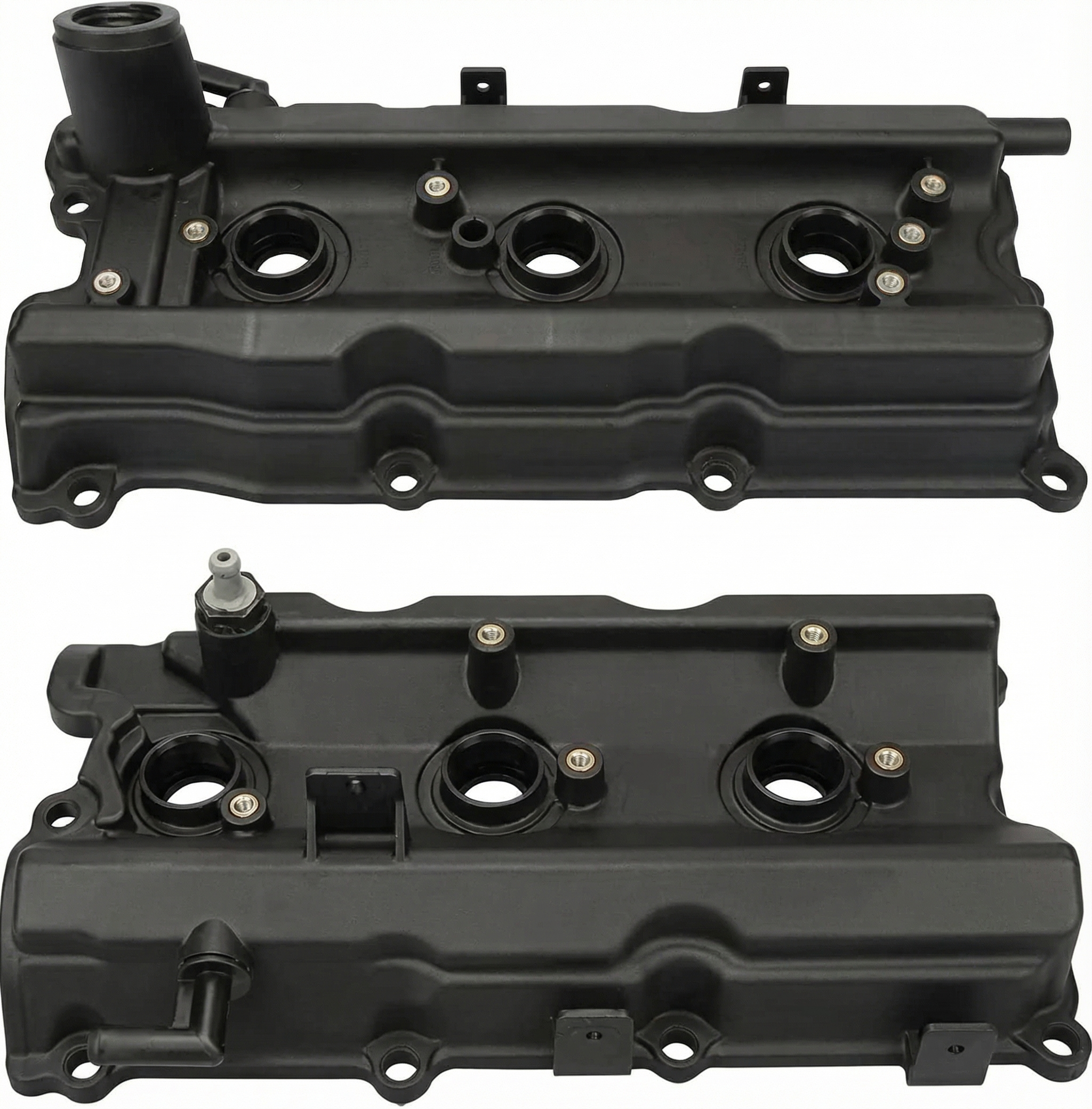
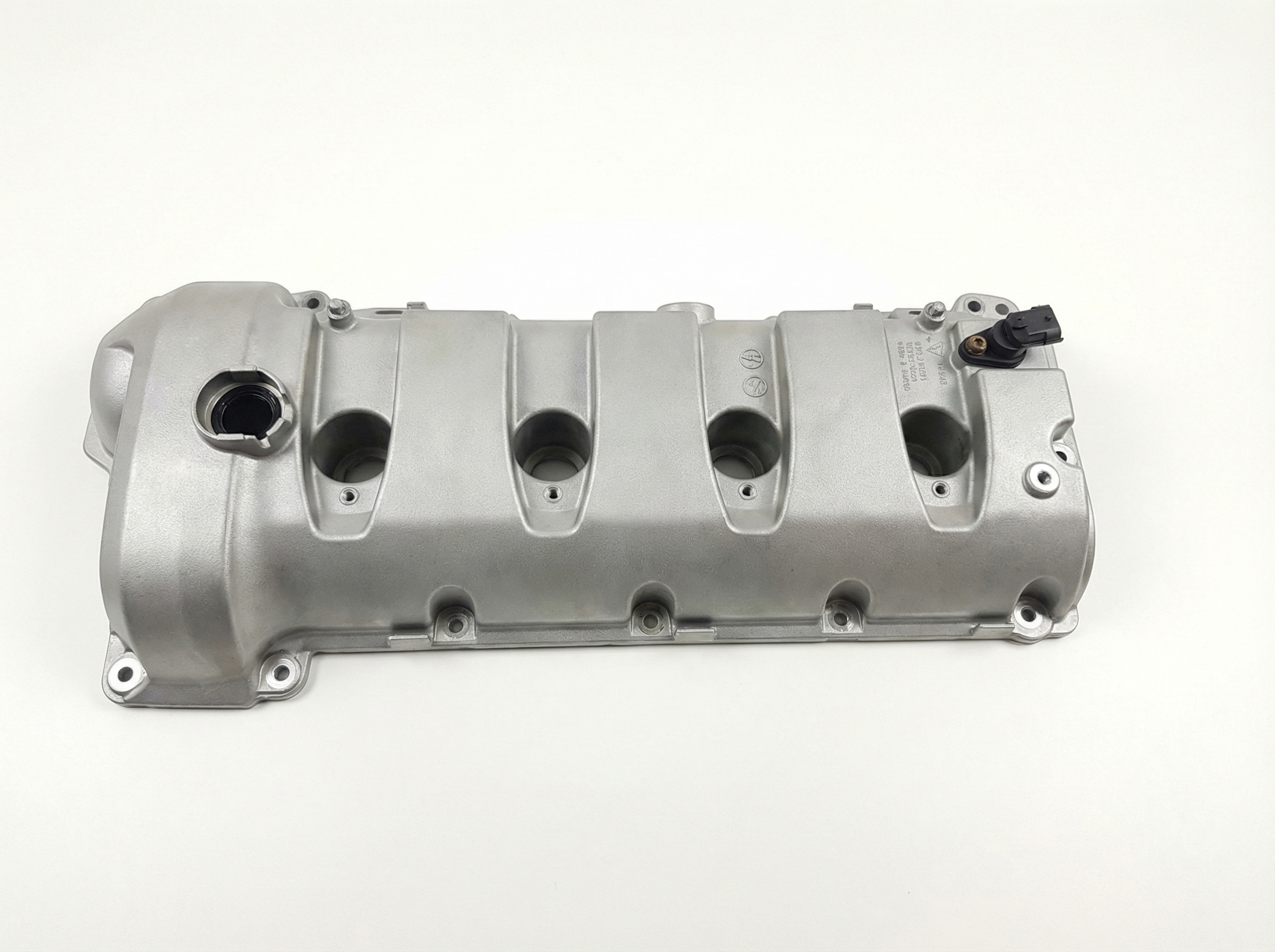
Aftermarket price range: $8-$15 - Valve Cover Gasket Set — If oil is found in the spark plug well, the gaskets have failed and are a common secondary cause of misfires. The set includes the outer gasket and inner spark plug tube seals.
Trusted brands: Victor Reinz, Elring, Porsche (OEM)
OEM price range: $80-$120
Aftermarket price range: $40-$70
Related Codes That Often Appear With This One
- P0300 — If the cause of the misfire is more systemic (like a large vacuum leak, low fuel pressure, or stale fuel), you may also get a P0300 'Random/Multiple Cylinder Misfire' code along with P0306.
- P0305, P0307, P0308 — It's common for multiple ignition coils to fail around the same time. You may see misfire codes for other cylinders on the same bank (Bank 2: cylinders 5, 6, 7, 8).
- P0431 — This code, 'Catalyst System Efficiency Below Threshold Bank 2', can appear if the misfire on cylinder 6 has been happening long enough to dump unburnt fuel into the exhaust, damaging the catalytic converter on that bank.
Platform-Specific Known Issues
- Ignition coil failure is extremely common on this platform. Many owners choose to replace all eight coils and plugs as preventative maintenance or as soon as the first one fails.
- Leaking valve cover gaskets can cause oil to pool in the spark plug tubes, saturating the ignition coil boot and spark plug, leading to a misfire. This is a very common issue on higher-mileage Cayennes.
- Cylinder bore scoring is a known, albeit rare, catastrophic failure mode for the M48 V8, often starting on Bank 2 (Cylinders 5-8). Early symptoms can include a persistent single-cylinder misfire code and increased oil consumption.
Mechanic-Grade Diagnostic Values
- High Pressure Fuel System (957 DFI Models) — expected: Setpoint at idle should be ~40 bar (580 psi). Under load, setpoint can rise to 120 bar (1740 psi).. Failure: If the 'actual value' read by a scan tool does not match the 'setpoint value'. For example, reading only 5.5 bar at idle when 40 bar is requested points to a failing High Pressure Fuel Pump (HPFP).
- Low Pressure Fuel System (957 DFI Models) — expected: Approximately 5.5 bar (80 psi).. Failure: Significantly lower pressure indicates a problem with the in-tank fuel pumps, which supply the HPFP.
- Low Pressure Fuel System (955 Port Injection Models) — expected: Approximately 4.0 bar (58 psi).. Failure: Low fuel pressure can cause lean conditions and misfires, though it would typically affect multiple cylinders.
- Ignition Coil Primary Resistance — expected: ~0.4 to 0.6 ohms (Note: This value is from a 944 and may differ slightly for the M48, but provides a general baseline).. Failure: A reading that is significantly higher (open circuit) or lower (short) indicates a faulty coil.
- Ignition Coil Secondary Resistance — expected: ~5,000 to 7,200 ohms (Note: This value is from a 944 and may differ slightly for the M48, but provides a general baseline).. Failure: A reading outside this range suggests an internal coil failure.
Hidden / Shadow Codes Worth Checking
- Mode 6 Misfire Counters: This function within a capable scan tool shows the raw count of misfire events per cylinder for the current and last 10 driving cycles. It can reveal intermittent misfires on cylinder 6 that haven't yet reached the threshold to set a P0306 code. (see via An advanced OBD-II scanner with Mode 6 functionality (e.g., Durametric, Launch, Autel, PIWIS).)
- P130A00: A Porsche-specific fault code for 'Hide cylinder'. This indicates an action taken by the DME (ECU) to disable a cylinder, likely due to persistent misfires, to protect other components like the catalytic converter. (see via Porsche-specific diagnostic tools like PIWIS or high-end aftermarket scanners (e.g., Durametric).)
Scan Tool Commands That Help
- Durametric / PIWIS: Live Data Monitoring (Actual Values) — For 957 DFI models, monitoring 'fuel high pressure set point' vs. 'fuel high pressure actual value' is critical for diagnosing a failing HPFP, a possible cause of misfires if coils and plugs are good.
- PIWIS / Advanced Scan Tool: Camshaft Adjuster Function Test — If a misfire is accompanied by camshaft position codes, this bidirectional test can be used to command the VVT solenoids/actuators to check for a mechanical or electrical response, helping to isolate a fault in the Variocam system.
Wiring & Ground Locations
- Main Engine Ground Strap — Connects the passenger side of the engine block (lower area) to the chassis. The cable often routes under the exhaust header.. This is the primary ground for the engine. Corrosion on this strap due to heat and moisture can cause high resistance, leading to a host of electrical issues including weak spark and intermittent misfires that are difficult to diagnose.
- Secondary Engine Ground Strap — Underneath the engine in the front right corner, connecting the engine to the frame.. Provides an additional ground path. Like the main strap, corrosion here can cause erratic electrical behavior and contribute to ignition problems.
- Firewall Ground Points — Multiple ground points exist on the firewall. One is on the center firewall, and another is on the right side firewall. Another post mentions two grounds behind the oil filler cap area.. These points ground various sensors and the DME (ECU) itself. A loose or corroded ground for the ignition control module or its sensors could theoretically cause isolated misfire issues.
Real Owner Repair Stories
- Rennlist user '987kmns' (2008 Porsche Cayenne S (957)) — Long crank intervals, loss of power, rough running, eventually limp mode. Misfires were occurring.
❌ Tried (didn't work) The user went straight to advanced diagnostics rather than swapping parts.
✅ What actually fixed it The user diagnosed a failing High Pressure Fuel Pump (HPFP) using a Durametric tool. They observed that at idle, the 'fuel high pressure actual value' was only 5.5 bar, while the 'set point' was 40 bar. Replacing the HPFP resolved the issue. - Rennlist user 'madclubman' (Porsche 911 (model not specified, but diagnostic process is relevant)) — P0306, rough idle, solid CEL.
❌ Tried (didn't work) Replacing the ignition coil for cylinder 6., Replacing the spark plug for cylinder 6., Shop confirmed the coil electrical connector was secure., A compression test was performed and found no issues.
✅ What actually fixed it The thread ends without a definitive confirmed fix. The next steps suggested by the community were to investigate a clogged fuel injector (by running Techron) or a potential air leak. This story highlights a common scenario where the primary suspects (coil, plug) are not the cause.
"I Checked Everything" — The Actual Cause
- In a detailed case study of a Cayenne Hybrid with persistent, random misfire codes that were not resolved by replacing coils, plugs, or injectors, the root cause was discovered using a PicoScope NVH (Noise, Vibration, and Harshness) kit. A vibration originating from the 4x4 transfer case was being transmitted through the powertrain. The crankshaft position sensor was picking up this vibration, and the ECU was misinterpreting the slight variations in crankshaft speed as engine misfires, setting false codes.
When the Usual Fixes Don't Work
- While the vast majority of P0306 codes on the M48 V8 are caused by a simple ignition coil or spark plug failure, there are documented cases where these have been replaced with no resolution. In one such instance, after new coils and plugs failed to fix the issue and a compression test came back normal, the next likely culprits were considered to be a clogged fuel injector or a vacuum leak. In another extreme case, persistent misfire codes were ultimately traced not to the engine itself, but to drivetrain vibrations from the transfer case that were being misinterpreted by the crankshaft position sensor. This demonstrates that if the common causes do not resolve the fault, a deeper, more systematic diagnosis is required.
OEM Part Supersession History
e.g., 94860210400, 94860210401, etc.→94860210421 (latest known version)— High failure rate of earlier designs due to heat-induced cracking of the plastic/epoxy housing.
Heads up: All revisions are physically interchangeable, but it is highly recommended to use the latest available part number for all coils to ensure longevity. Using a mix of old and new revisions is not advised.
Model Year Variations Within This Range
- 2008-2010 (957 Facelift): These models feature Direct Fuel Injection (DFI), which adds a High Pressure Fuel Pump (HPFP) and different fuel injectors. A P0306 on these models could be caused by a failing HPFP starving the rail of pressure, or a more complex DFI injector issue. Diagnosis requires checking both low pressure (~5.5 bar) and high pressure (40-120 bar) fuel systems.
- 2003-2006 (955 Pre-Facelift): These models use a simpler port fuel injection system with pressure around 4 bar. Fuel-related causes for P0306 are typically limited to a clogged injector, as there is no HPFP to fail.
- 2003-2006 (Cayenne S, M48.00 Engine): The naturally aspirated 4.5L V8 (M48.00) uses a Lokasil cylinder coating process and is considered more susceptible to cylinder bore scoring than the Turbo's Alusil block. A persistent P0306 on Bank 2 (cylinders 5-8) on a high-mileage M48.00 could be an early symptom of this catastrophic failure.
Diagnostic Flowchart
Real Owner Stories
Aggregated from forums and TSBs cited above. Mileages and costs reflect what owners reported in those sources.
2004 Porsche Cayenne S V8
Symptoms: Engine was rough and immediately started misfiring after parking in the shade. Experienced a rough idle and sometimes stalled when put in reverse. Got random misfire codes including cylinders 1, 6, and 8, and noticed a strong vacuum sound near the throttle body/PCV.
What fixed it: User was still seeking help and had not found the solution after replacing all 8 spark plugs and ignition coils.
Source hint: Reddit r/PorscheCayenne
2003-2010 Porsche Cayenne
Symptoms: Check Engine Light illuminated with OBDII code P0306.
What fixed it: A shop replaced the coil and plug for cylinder 6 without success. The community pointed to fuel injectors or air leaks as the likely secondary culprits.
Source hint: Rennlist.com: Thread 'Check Engine Light - OBDII code P0306 ***UPDATE***'
2003-2010 Porsche Cayenne
Symptoms: Misfire codes appeared immediately after performing a valve cover gasket replacement.
What fixed it: The misfires were temporary, caused by oil falling into the cylinders during the valve cover gasket job. The owner also noted a bad catalytic converter was linked to their misfire codes.
Source hint: Rennlist.com: Thread 'Changed Valve cover gasket, now misfire codes and leak around camshaft seal'
Related OBD-II Codes
Frequently Asked Questions
Where is cylinder 6 located on my M48 V8 engine?
Why are the ignition coils so prone to failing on the 2003-2010 Cayenne?
I replaced the coil and spark plug on cylinder 6, but P0306 came back. What else could it be?
Should I replace all the ignition coils at once if only cylinder 6 is misfiring?
Can a leaking valve cover gasket cause a P0306 code on my Cayenne?
Is cylinder bore scoring a risk if I have a persistent P0306 code?
Helpful Videos
Used OEM Parts in Stock
New Aftermarket Parts Available


The information in this article is provided for general reference and educational purposes only. Vehicle specifications, procedures, and part compatibility can vary by production date, trim level, and region. Always consult your vehicle's factory service manual and verify part numbers before purchasing or performing repairs. Safety-critical components such as airbags, seat belts, and braking systems should be installed by a qualified professional.
- Porsche Cayenne:
- 🧭 Diagnostic Flowchart
- 🎬 Helpful Videos
- 🛍️ Shop This Part
- What's Unique About the 2003-2010 Porsche Cayenne
- Symptoms You May Notice
- Most Likely Causes
- Rare But Worth Checking
- Diagnosis Steps
- Parts You'll Likely Need
- Related Codes That Often Appear With This One
- Platform-Specific Known Issues
- Mechanic-Grade Diagnostic Values
- Hidden / Shadow Codes Worth Checking
- Scan Tool Commands That Help
- Wiring & Ground Locations
- Real Owner Repair Stories
- "I Checked Everything" — The Actual Cause
- When the Usual Fixes Don't Work
- OEM Part Supersession History
- Model Year Variations Within This Range
- Real Owner Stories
- 2004 Porsche Cayenne S V8
- 2003-2010 Porsche Cayenne
- 2003-2010 Porsche Cayenne
- Related OBD-II Codes
- Frequently Asked Questions
- 🎟️ Get 5% Off