

P0306 on 2003-2009 Toyota 4Runner: Cylinder 6 Misfire Causes and Fixes
P0306 indicates a misfire on cylinder 6. On the 4.0L V6 4Runner, this is most often caused by a failed ignition coil or a worn spark plug. A simple diagnostic is to swap the coil from cylinder 6 with another cylinder (like #4) to see if the code follows. However, a leaking head gasket is a known, more serious issue on this engine that specifically affects cylinder 6, especially on earlier models (2003-early 2006). A key symptom of head gasket failure is a rough idle on a cold start that smooths
- P0306 is a misfire on cylinder 6, the rearmost cylinder on the driver's side.
- The most likely and easiest-to-fix causes are a bad ignition coil or a worn spark plug.
- Always start diagnosis by swapping the cylinder 6 ignition coil with another cylinder (like #4) to see if the misfire code moves.
- Be aware of the known head gasket issue on this engine, especially if the misfire only happens on cold starts and you are losing coolant.
- Do not drive if the Check Engine Light is flashing, as this can quickly destroy your catalytic converter, leading to a much more expensive repair.
What's Unique About the 2003-2009 Toyota 4Runner
While ignition components are the most common cause for a P0306 code on any vehicle, the 1GR-FE engine in this generation of 4Runner has a well-documented weakness regarding its head gasket, particularly in models manufactured before late 2005/early 2006. This issue disproportionately affects cylinder 6, causing a misfire that is often most noticeable on a cold start and may be accompanied by mysterious coolant loss. Toyota reportedly updated the head gasket design to resolve the issue. Therefore, while a bad coil or plug is the likely culprit, the possibility of a head gasket leak should be seriously considered, especially in 2003-2005 model years. NHTSA ODI #10543810 highlights this specific failure, noting a rough idle at morning start-up and the need to refill engine coolant on a weekly basis due to premature head gasket failure.
Symptoms You May Notice
- Rough or vibrating idle
- Engine stumbling or hesitation during acceleration
- Noticeable loss of engine power
- Flashing or solid Check Engine Light
- Decreased fuel economy
- Engine runs rough for a few seconds on a cold start, then smooths out (a key symptom of a potential head gasket leak)
- Unexplained loss of coolant from the overflow reservoir with no visible external leaks
- White, sweet-smelling smoke from the exhaust on startup
- Illumination of the VSC and TRAC OFF lights in conjunction with the Check Engine Light, as documented in NHTSA ODI #10820687
- Replacing all ignition coils and spark plugs without first swapping the coil to confirm the fault. This can be unnecessarily expensive if the cause is a fuel injector or head gasket.
- Attributing the cold start misfire to a simple tune-up need when it is actually the primary symptom of a head gasket leak.
Most Likely Causes
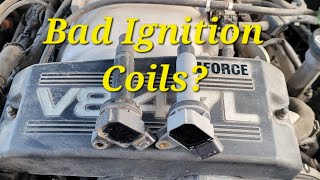
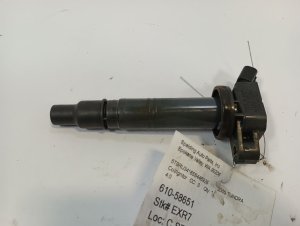
- Faulty Ignition Coil 🔴 High Probability → Shop Ignition Coil Ignition coils are a common wear item on most modern engines, failing from age and repeated heat cycles. The 1GR-FE uses a reliable coil-on-plug design, but individual coil failure is a very frequent cause of isolated misfires after 100,000 miles.
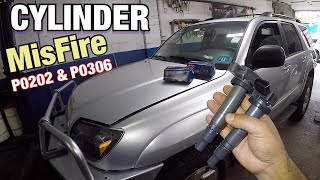
How to confirm: Swap the ignition coil from cylinder 6 (driver's side, rearmost) with the coil from cylinder 4 (driver's side, middle). Clear the codes and drive. If the code changes to P0304, the ignition coil is faulty. This is a definitive and free diagnostic step.
Typical fix: Replace the faulty ignition coil. It is held on by a single 10mm bolt.
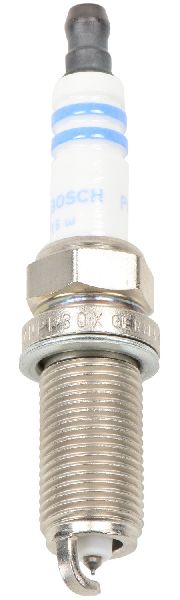
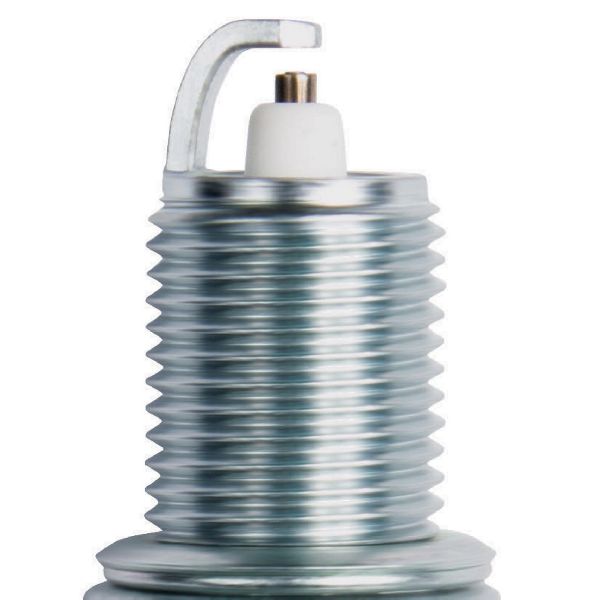
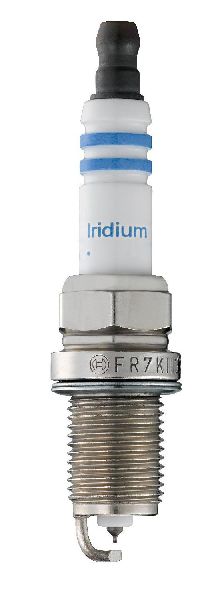
Est. part cost: $45-$80 for one - Worn or Fouled Spark Plug 🔴 High Probability → Shop Spark Plug
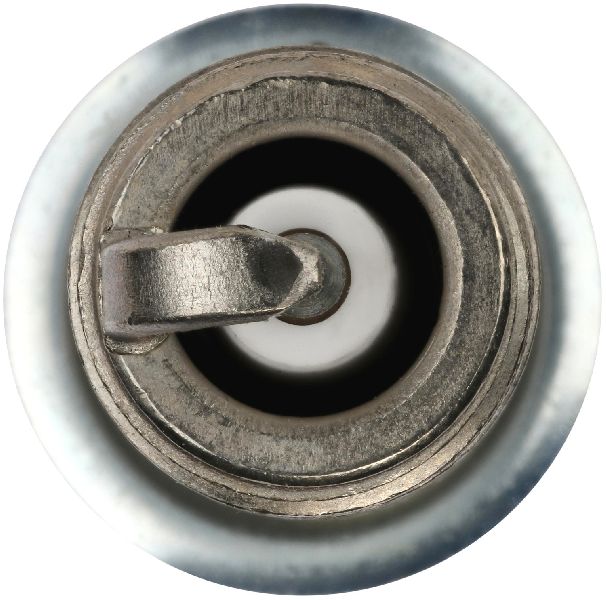
How to confirm: After confirming the ignition coil is good, remove the spark plug from cylinder 6. Inspect it for wear (worn electrode), carbon fouling, or signs of oil or coolant contamination. A coolant-fouled plug will appear unusually clean or have a white/greenish residue, indicating it has been 'steam cleaned' by coolant.
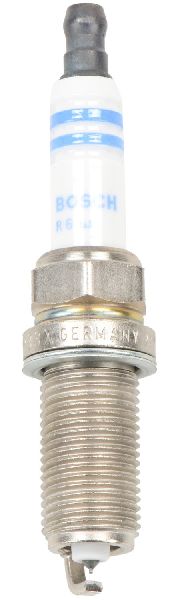
Typical fix: Replace the spark plug. It is recommended to replace all six spark plugs if they are near the end of their service interval (typically 30,000 miles for standard plugs, longer for Iridium).
Est. part cost: $5-$15 for one - Clogged or Faulty Fuel Injector 🟡 Medium Probability → Shop Fuel Injector Fuel injectors can become clogged with deposits over time, especially with lower-quality fuel. While less common than ignition components, a stuck or failing injector will cause a consistent misfire on a single cylinder.
How to confirm: This is more difficult to diagnose. A professional can perform a fuel injector balance test. A DIY method involves listening to the injector with a mechanic's stethoscope to ensure it's clicking. Swapping the injector with another cylinder is possible but requires removing the intake manifold, a significantly more involved job than swapping a coil.
Typical fix: Replace the faulty fuel injector. It's recommended to replace the O-rings and seals at the same time.
Est. part cost: $50-$150 for one
Rare But Worth Checking
- Leaking Head Gasket: This is a well-documented issue specifically for the 1GR-FE engine, often presenting as a P0306 code. Symptoms include a rough idle only on cold starts, unexplained coolant loss, and a sweet smell from the exhaust. Confirm by using a block tester (chemical test) to check for combustion gases in the coolant. The blue test fluid will turn yellow or green if exhaust gases are present. NHTSA ODI #10816381 describes a scenario where an engine rumbled for a few seconds after each start before smoothing out, which was later diagnosed as coolant seeping into the cylinder.
- Low Cylinder Compression: Caused by internal engine issues like worn piston rings or a burnt valve. This is less common on the durable 1GR-FE but possible on very high-mileage engines. A compression test is needed to confirm. One owner on a forum noted compression on the affected bank (2, 4, 6) was significantly higher than the other, which can also be an indicator of an issue.
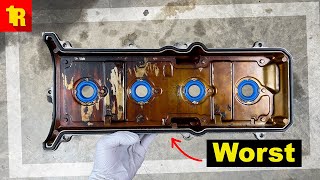
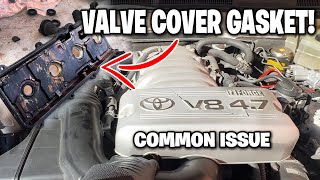
- Leaking Valve Cover Gasket: The gasket around the spark plug tube can fail, allowing oil to fill the tube and short out the spark plug and ignition coil. If you find oil on the ignition coil boot when you remove it, the valve cover gasket set (which includes the tube seals) needs to be replaced.
Diagnosis Steps
- Retrieve the stored trouble codes with an OBD-II scanner to confirm P0306 and check for any other codes.
- Identify Cylinder 6: It is the rearmost cylinder on the driver's side of the engine.
- Swap Ignition Coils: Swap the ignition coil from cylinder 6 with the one from cylinder 4 (the middle cylinder on the same side). Clear the codes and drive the vehicle. If the code returns as P0304, the ignition coil is the culprit.
- Inspect Spark Plug: If the misfire remains on cylinder 6, remove the spark plug. Check for excessive wear, fouling (black, oily, or white/green deposits), and proper gap. A clean plug might indicate coolant is 'steam cleaning' it, pointing to a head gasket leak.
- Check for Leaks: Inspect the valve cover gasket for oil leaking into the spark plug tube. Also, check for any obvious vacuum leaks around the intake manifold near cylinder 6.
- Check Fuel Injector: Listen to the fuel injector with a mechanic's stethoscope or a long screwdriver to ensure it is making a consistent clicking sound.
- Perform Compression Test: If the above steps do not reveal the cause, perform a compression test on cylinder 6 to check for internal engine problems. Compare the reading to the other cylinders.
- Test for Head Gasket Failure: If you have symptoms like coolant loss or a cold-start-only misfire, use a block tester kit to check for combustion gases in the cooling system. Pull vapor from the radiator (not liquid coolant) through the test fluid. A color change from blue to yellow/green confirms a leak. As noted in NHTSA ODI #10820687, a borescope video can also be used to visually confirm small amounts of coolant entering the cylinder.
Parts You'll Likely Need
- Ignition Coil
(OEM #90919-A2002 (replaces 90919-02248))— This is the most frequent cause of a single-cylinder misfire on the 1GR-FE engine due to age and heat cycles.
Trusted brands: Denso
OEM price range: $70-$100
Aftermarket price range: $45-$75 - Spark Plug
(OEM #90919-01233 (Denso SK16R11 Iridium))— Spark plugs are a standard maintenance item and a common cause of misfires when worn or fouled.
Trusted brands: Denso, NGK
OEM price range: $12-$20
Aftermarket price range: $8-$15 - Fuel Injector
(OEM #23209-39075)— Can become clogged or fail electronically, preventing proper fuel delivery to cylinder 6.
Trusted brands: Denso, Aisan
OEM price range: $130-$180
Aftermarket price range: $50-$100 - Valve Cover Gasket Set (Driver's Side)
(OEM #11214-AD010)— Required if oil is found in the spark plug tube. The set includes the main gasket and the spark plug tube seals.
Trusted brands: Toyota Genuine
OEM price range: $25-$40
Aftermarket price range: $15-$30
Related Codes That Often Appear With This One
- P0300 — If the underlying issue, such as a vacuum leak or major fuel delivery problem, affects multiple cylinders, a P0300 (Random/Multiple Cylinder Misfire) may accompany P0306.
- P0304 — This code will appear during the diagnostic process if you swap a faulty ignition coil or spark plug from cylinder 6 to cylinder 4 to isolate the problem.
Platform-Specific Known Issues
- Head Gasket Failure: Early 1GR-FE engines (approx. 2003-2006) are known to have a higher incidence of head gasket leaks, specifically allowing coolant to seep into cylinder 6. This typically causes a misfire on cold starts that disappears as the engine warms up and the metal expands to seal the leak temporarily. This is a major repair if it is the cause, with forum members reporting dealer quotes of $3,600-$3,900. NHTSA ODI #10783299 confirms this diagnosis, where a dealership found the head gasket allowing antifreeze to leak into cylinder 6, necessitating a replacement of both head gaskets.
Mechanic-Grade Diagnostic Values
- Fuel Injector Resistance — expected: 11.6 to 12.4 Ω at 20°C (68°F). Failure: A reading significantly outside this range indicates a faulty injector coil.
- Ignition Coil Primary Resistance — expected: Typically 0.4 to 2.0 Ω. Failure: A reading of infinity (open circuit) or near zero (short) indicates a failed primary winding.
- Fuel Pressure — expected: 281 to 287 kPa (40.8 to 41.7 psi). Failure: Low fuel pressure can cause lean misfires, though it would typically affect more than one cylinder.
- Cylinder Compression — expected: Standard: 1.3 MPa (189 psi) or more. Minimum: 1.0 MPa (145 psi).. Failure: Pressure below the minimum, or a variation of more than 100 kPa (15 psi) between cylinders, indicates a mechanical engine problem.
Hidden / Shadow Codes Worth Checking
- Mode $06, TID $A2-$AD, CID $06: This is not a traditional trouble code but raw data from the ECM's self-tests. It shows the misfire count for cylinder 6 for the current and last 10 driving cycles. A high count, even without a P0306 code, can confirm an intermittent misfire on that cylinder. (see via Requires an advanced OBD-II scanner or software like Toyota Techstream that can display Mode $06 data.)
Scan Tool Commands That Help
- Toyota Techstream: Active Test: Control the Fuel Injection (Cylinder Cut) — This allows a technician to individually disable the fuel injector for cylinder 6. If the engine's idle quality does not change when cylinder 6 is cut, it confirms that cylinder is not contributing, pinpointing the misfire location.
- Toyota Techstream: Data List: Misfire RPM — This live data PID shows the crankshaft speed variation attributed to each cylinder. It can be used to confirm which cylinder is misfiring in real-time under different engine loads and RPMs.
Wiring & Ground Locations
- Engine Ground (Driver's Side) — There are multiple ground points. A key ground is located on the driver's side of the engine block, often near the engine mount or alternator bracket. Another is on the cylinder head itself.. A poor ground connection for the engine block or cylinder head can cause erratic behavior in ignition coils and injectors, leading to misfires. Cylinder 6, being at the rear, can be affected by voltage drops if forward grounds are compromised.
- Ignition Coil Connector (Cylinder 6) — Directly on top of the ignition coil for the rearmost cylinder on the driver's side.. The connector itself or the wiring leading to it can become brittle from heat and vibration, causing an intermittent connection and misfire. Check for corrosion on the pins or a loose-fitting connector.
Real Owner Repair Stories
- Tacoma World forum user (2007 Toyota Tacoma 4.0L V6 (1GR-FE) with 73k miles) — Rough idle on cold start that went away after warming up. Eventually, a P0305 (Cylinder 5 Misfire) code was set, and the engine ran very rough even when warm.
❌ Tried (didn't work) The user did not report trying other fixes first, as the evidence pointed directly to the head gasket.
✅ What actually fixed it The user pulled the spark plug from the misfiring cylinder and could see coolant inside. This confirmed a head gasket leak. The user performed a DIY head gasket replacement, which resolved the misfire. - NHTSA Owner Report (NHTSA ODI #10783299) — An owner reported that their dealership found the head gasket was allowing antifreeze to leak into cylinder 6, causing the P0306 code. The repair required replacing both head gaskets at a cost of $2,644.91.
OEM Part Supersession History
Unknown (Pre-2006 Design)→04112-31720 (Head Gasket Set for 4Runner/FJ)— The original head gasket design was prone to failure, particularly at cylinder 6. Toyota released an updated, multi-layer steel (MLS) gasket with a revised design around the coolant passages to improve sealing.
Heads up: The new gasket design supersedes the old one for all years. When performing a head gasket replacement on an early (2003-2005) model, it is critical to use the updated part number.
Model Year Variations Within This Range
- 2003 - early 2006: These model years were equipped with the original head gasket design, which had a significantly higher failure rate. The primary symptom is a P0306 (or other specific cylinder misfire) on a cold start due to coolant leaking into the cylinder overnight.
- Late 2006 - 2009: These models came from the factory with the improved head gasket design, making the head gasket a much less likely cause for a P0306 code compared to ignition or fuel system components.
Diagnostic Flowchart
Other Known Issues on This Vehicle
Issues unrelated to this code that are worth knowing about as an owner of this generation:
- Cracked/Sticky Dashboard 🟡 Low — Extremely common on 2003-2005 models, especially in warmer climates. Toyota issued a warranty extension program, but it has since expired. (Ref: Warranty Extension ZLD)
- Seized Front Brake Calipers 🟠 Medium — Common across all 4th generation model years. The pistons in the front four-piston calipers are prone to seizing, causing uneven pad wear, pulling to one side during braking, and excessive heat.
- Frame Rust/Corrosion 🔴 High — Very common on vehicles used in the 'salt belt'. The frame can suffer from severe rust that compromises structural integrity. Toyota initiated a frame replacement program for some trucks but not officially for the 4Runner in the US. (Ref: Limited Service Campaign (for other models))
- Cracked Exhaust Manifolds 🟠 Medium — The exhaust manifolds on the 1GR-FE can develop cracks, leading to an audible ticking noise, especially when the engine is cold.
- Secondary Air Injection System Failure (V8 Models) 🔴 High — This is a very common and expensive issue on the 4.7L 2UZ-FE V8 engine, not the V6. The air pump fails, often putting the vehicle in 'limp mode'. The repair is labor-intensive as the components are under the intake manifold. (Ref: Warranty Extension (for Tundra/Sequoia))
Used vs. New Parts: Buying Guide for This Vehicle
When a used part is the smart pick: For this repair, a used ignition coil from a reputable auto recycler is a reasonable choice to save money, especially for diagnosis (to confirm if the coil is the issue before buying new). Other components like engine computers (ECMs) are also viable as used parts, provided the part numbers match exactly.
Donor-vehicle mileage cap: roughly under 80000 miles for the part to have meaningful remaining life.
What to inspect on the donor part:
- For an ignition coil, check for cracks in the plastic housing or corrosion on the electrical connector.
- Ensure the rubber boot is pliable and not torn or coated in oil.
- Ask the recycler about the donor vehicle's mileage and if it was involved in a front-end collision (which could damage engine components).
OEM-only on this vehicle (don't cheap out):
- Ignition Coils
- Fuel Injectors
- Head Gasket
Aftermarket brands forum-validated for this vehicle:
- Denso (for ignition coils, spark plugs, and fuel injectors - Denso is the Original Equipment supplier for Toyota).
- NGK (for spark plugs)
Brands owners have reported issues with on this vehicle:
- Generic, unbranded 'white box' ignition coils and fuel injectors from online marketplaces. Forum users and mechanics report high failure rates with non-Denso coils on Toyota engines.
Real Owner Stories
Aggregated from forums and TSBs cited above. Mileages and costs reflect what owners reported in those sources.
2004 4Runner 4.0L V6
Symptoms: Threw diagnostic code P0306-misfire on cylinder 6, leaking coolant into the cylinder.
What fixed it: Replacement of the head gasket. The owner noted that Toyota redesigned the gasket part in 2005 or 2006.
Cost: $3,600-$3,900
Source hint: 4Runner Forum owner report regarding '4.0L V6 Blown Head Gasket'
NHTSA Documented Reports
An owner reported in NHTSA ODI #10820687 that an analysis at an independent repair shop found a P0306 code and used a borescope video to confirm small amounts of coolant entering the cylinder. Another report, NHTSA ODI #10816381, described how the engine ran rough for a few seconds after each start before smoothing out, which was confirmed by a dealer to be coolant seeping into the #6 cylinder. Additionally, NHTSA ODI #10543810 notes a case of premature head gasket failure requiring weekly coolant refills alongside the P0306 code.
Related OBD-II Codes
Frequently Asked Questions
Why does my 4Runner misfire only on cold starts and then smooth out?
Is there a specific cylinder I should check first for a P0306 code?
How can I tell if my spark plug is fouled by coolant versus normal wear?
Is the P0306 code related to the Secondary Air Injection System failure?
Can I use a block tester to confirm if my P0306 is a head gasket issue?
What is the easiest way to test if my P0306 is just a bad ignition coil?
Helpful Videos
Used OEM Parts in Stock
New Aftermarket Parts Available


The information in this article is provided for general reference and educational purposes only. Vehicle specifications, procedures, and part compatibility can vary by production date, trim level, and region. Always consult your vehicle's factory service manual and verify part numbers before purchasing or performing repairs. Safety-critical components such as airbags, seat belts, and braking systems should be installed by a qualified professional.
- Toyota 4Runner:
- 🧭 Diagnostic Flowchart
- 🎬 Helpful Videos
- 🛍️ Shop This Part
- What's Unique About the 2003-2009 Toyota 4Runner
- Symptoms You May Notice
- Most Likely Causes
- Rare But Worth Checking
- Diagnosis Steps
- Parts You'll Likely Need
- Related Codes That Often Appear With This One
- Platform-Specific Known Issues
- Mechanic-Grade Diagnostic Values
- Hidden / Shadow Codes Worth Checking
- Scan Tool Commands That Help
- Wiring & Ground Locations
- Real Owner Repair Stories
- OEM Part Supersession History
- Model Year Variations Within This Range
- Other Known Issues on This Vehicle
- Used vs. New Parts: Buying Guide for This Vehicle
- Real Owner Stories
- 2004 4Runner 4.0L V6
- NHTSA Documented Reports
- Related OBD-II Codes
- Frequently Asked Questions
- 🎟️ Get 5% Off