

P0307 on 2006-2011 Audi S6 5.2L V10: Cylinder 7 Misfire Causes and Fixes
For a P0307 code on a 2006-2011 Audi S6, the most likely cause is a failed ignition coil or spark plug. If replacing these doesn't fix it, the next suspect is heavy carbon buildup on the intake valves, a common issue for this FSI engine. A single coil costs about $30-$80, while professional carbon cleaning can exceed $1,500. Always swap the coil from cylinder 7 with another cylinder to confirm the failure before replacing parts.
- P0307 is a misfire on cylinder 7. On the S6 V10, this is on the driver's side, second from the front.
- The easiest and most important first step is to swap the ignition coil from cylinder 7 to another cylinder to see if the misfire code follows it. This simple test can definitively identify a bad coil.
- Do not drive the vehicle if the check engine light is flashing, as this can cause rapid and expensive damage to the catalytic converters.
- The FSI engine design makes heavy carbon buildup on the intake valves a very common cause for misfires. If new coils and plugs don't solve the problem, carbon cleaning is almost certainly the next step.
- When replacing one ignition coil or spark plug, it is best practice to replace all ten to ensure reliability and prevent chasing misfires across other cylinders in the near future.
What's Unique About the 2006-2011 Audi S6
The 5.2L V10 in the C6 generation S6 is a direct-injection (FSI) engine. This design is notoriously prone to severe carbon buildup on the intake valves because fuel is injected directly into the cylinder and never washes over the valves to clean them. Oil vapor from the crankcase ventilation system bakes onto the hot valves, restricting airflow and becoming a primary cause of misfires that are often mistaken for ignition or fuel system faults, especially on cold starts. This issue is well-documented across all vehicles using this V10 engine.
Symptoms You May Notice
- Flashing or solid Check Engine Light
- Rough or vibrating idle
- Engine hesitation or stumbling during acceleration, especially on cold starts
- Noticeable loss of power
- Reduced fuel economy
- Engine stalling
- Backfiring or smell of raw fuel from the exhaust
- Replacing only the spark plug when the ignition coil was the actual cause (or vice-versa).
- Replacing fuel injectors before confirming they are faulty, when the actual issue is carbon buildup on the intake valves.
- Assuming a fuel additive will clean intake valve carbon buildup; on FSI engines, the fuel never touches the back of the valves, so only physical cleaning is effective.
Most Likely Causes
- Faulty Ignition Coil 🔴 High Probability → Shop Ignition Coil Ignition coils are a very common failure item on Audi engines of this era due to high heat and voltage stress. Oil leaks from the valve cover gasket can also seep into the spark plug tubes and destroy the coils. Several revisions of the OEM coil exist, with the red-topped 'R8' style coils being a popular upgrade.
How to confirm: Swap the ignition coil from cylinder 7 with an adjacent cylinder (e.g., cylinder 6 or 8). Clear the codes and drive the vehicle. If the code changes to P0306 or P0308, the coil is faulty.
Typical fix: Replace the faulty ignition coil. It is highly recommended to replace all 10 coils and spark plugs at the same time to prevent future misfires and ensure consistent performance.
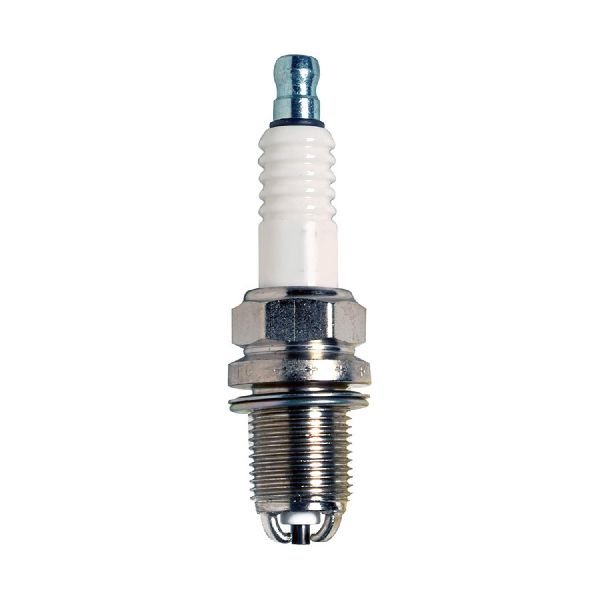
Est. part cost: $30 - $80 per coil - Worn or Fouled Spark Plug 🔴 High Probability → Shop Spark Plug
How to confirm: After ruling out the ignition coil, swap the spark plug from cylinder 7 with an adjacent cylinder. If the misfire code follows the plug, the spark plug is the issue. Visually inspect the plug for wear, oil fouling, or damage upon removal.
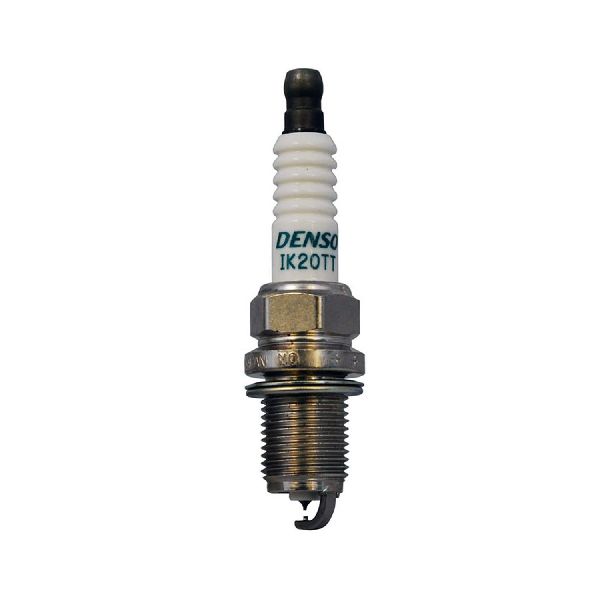
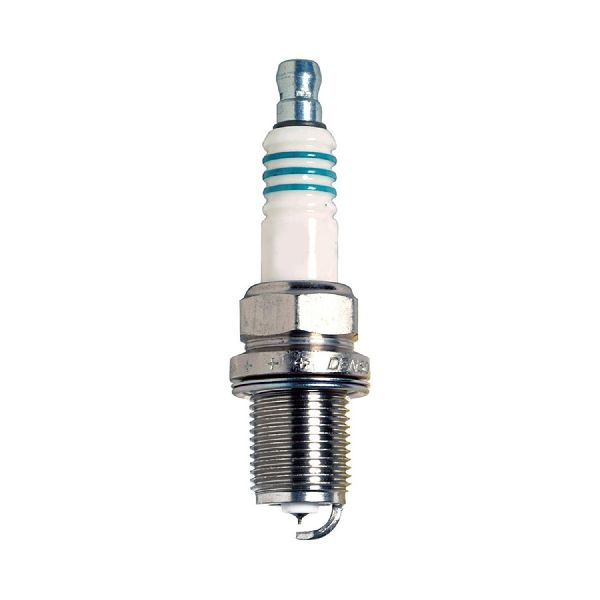
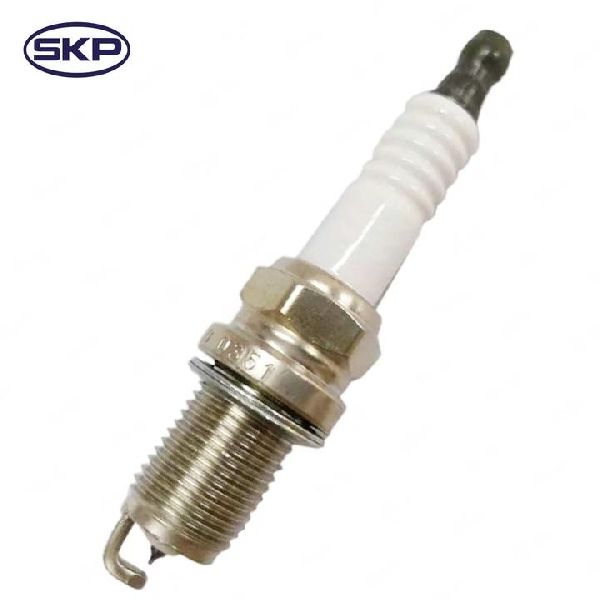
Typical fix: Replace the faulty spark plug. Spark plugs are a standard maintenance item and should be replaced as a full set of 10, typically every 30,000-40,000 miles. 🎬 See this walkthrough for replacing all 10 V10 spark plugs.
Est. part cost: $15 - $35 per plug - Carbon Buildup on Intake Valves 🟡 Medium Probability This is a well-documented weakness of the FSI direct-injection engine. Since fuel doesn't spray on the back of the valves, oil and fuel vapors from the PCV system bake onto them, restricting airflow and causing misfires, especially on cold starts. The issue typically becomes significant after 60,000-80,000 miles (100,000 km).
How to confirm: This requires visual inspection, typically using a borescope inserted into the intake runner with the intake manifold removed. Misfires that only occur on a cold start are a strong indicator.
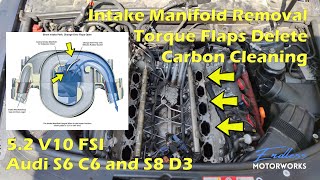
Typical fix: The intake manifold must be removed and the valves must be physically cleaned. The most effective method is walnut shell blasting. 🎬 Watch: Step-by-step guide to removing the intake and carbon cleaning. This is a labor-intensive job, often taking a full day.
Est. part cost: $1000 - $1800 for professional service - Faulty Fuel Injector ⚪ Low Probability → Shop Fuel Injector The high-pressure direct injectors can become clogged with carbon or fail electronically over time, though this is less common than ignition or carbon issues for a single-cylinder misfire. Leaking injectors can wash oil from cylinder walls and damage catalytic converters.
How to confirm: This is more difficult to diagnose. After ruling out spark and carbon, a technician can perform tests to check injector flow and electronic function. Some owners report success using a high-quality fuel system cleaner like LiquiMoly Valve Clean as a first step, though this won't clean intake valves.
Typical fix: Replace the faulty fuel injector. The Teflon seals should always be replaced when an injector is removed.
Est. part cost: $150 - $300 per injector
Rare But Worth Checking
- Leaking Valve Cover Gasket: A common issue on the 5.2L V10 is for the valve cover or spark plug tube seals to leak oil into the spark plug wells. This oil will ruin the ignition coil and foul the spark plug, directly causing a misfire. If you find oil when you pull the ignition coil, the gaskets must be replaced along with the coil and plug.
- Low Compression: A mechanical engine issue like a worn piston ring, a leaking valve, or a failed rocker arm can cause a loss of compression in cylinder 7, preventing proper combustion. A rocker arm failure can be identified by a ticking noise and metal shavings in the oil filter. This should be investigated with a compression test if spark, fuel, and carbon issues are ruled out.
- Vacuum Leak: A leak in a vacuum hose or intake manifold gasket can introduce unmetered air, causing a lean condition and misfires. This would typically affect multiple cylinders but can sometimes isolate to one. A smoke test is the best way to find a leak.
- Intake Manifold Runner Flap Failure: → Shop Engine Intake Manifold The plastic intake manifold contains runner flaps that adjust airflow. These can get stuck due to carbon buildup or the actuator motor can fail, causing airflow problems and misfires, often accompanied by codes like P2006 or P2007. Broken pieces of the flaps can fall into the intake ports, potentially causing severe engine damage. 🎬 Watch: How the intake manifold runners work and what breaks.
Diagnosis Steps
- Read the fault codes with an OBD-II scanner (VCDS/VAG-COM is recommended for Audi) and note any other codes present.
- Check for a flashing check engine light. If flashing, reduce engine load and drive as little as possible to prevent catalytic converter damage.
- To test the ignition coil, swap the coil from cylinder 7 with the coil from cylinder 6. Clear the codes and drive the car. If the misfire moves to cylinder 6 (P0306), the ignition coil is bad and needs replacement.
- If the misfire remains on cylinder 7, perform the same swap test with the spark plugs. Move the cylinder 7 plug to cylinder 6 (and vice-versa). If the code changes to P0306, the spark plug is faulty.
- If the misfire still stays on cylinder 7, inspect the spark plug well for any oil. Oil presence indicates a leaking valve cover or tube seal, which must be replaced.
- If ignition components are good, the next most likely cause is carbon buildup. This requires removing the intake manifold for visual inspection, often with a borescope. This is a significant job.
- If there is no significant carbon buildup, further diagnostics are needed to check the fuel injector, wiring, and engine compression for cylinder 7.
Parts You'll Likely Need
- Ignition Coil
(OEM #06E905115G (latest revision, red top))— This is the most common failure point for a single-cylinder misfire on this engine. The latest revision is often referred to as the 'R8 coil'.
Trusted brands: Bosch, NGK, Eldor
OEM price range: $50-$80
Aftermarket price range: $30-$60 - Spark Plug
(OEM #NGK PFR6W-TG)— A worn or fouled spark plug is the second most common cause and a routine maintenance item.
Trusted brands: NGK, Bosch
OEM price range: $20-$35
Aftermarket price range: $15-$25 - Fuel Injector
(OEM #079906036D)— Less common than ignition parts, but a direct injector can fail and cause a persistent misfire on one cylinder.
Trusted brands: Bosch, Hitachi
OEM price range: $200-$300
Aftermarket price range: $100-$200 - Valve Cover Gasket Set
(OEM #07L103484F (Bank 2))— Oil leaks into the spark plug tubes are a common cause of coil and plug failure on the 5.2L V10. If oil is present, these must be replaced.
Related Codes That Often Appear With This One
- P0300 — If the misfire is intermittent or affects multiple cylinders, a P0300 (Random/Multiple Cylinder Misfire) code may appear alongside P0307.
- P0306, P0308, P0309, P0310 — Misfires on other cylinders in the same bank (Bank 2) can indicate a shared problem, like a failing Bank 2 O2 sensor, a vacuum leak affecting that bank, or a clogged catalytic converter.
- P2006 / P2007 — These codes relate to the intake manifold runner control flaps being stuck closed. Carbon buildup is a primary cause of these flaps binding, which directly leads to airflow issues and misfires.
- P0174 — This code indicates a 'System Too Lean (Bank 2)' condition. A vacuum leak affecting Bank 2 or a widespread misfire issue on that bank can trigger this code alongside the P0307.
Technical Service Bulletins (TSBs) & Recalls
- Audi TSB 2026922/10 - Addresses misfires and rough running caused by carbon deposits on intake valves and injectors, a known FSI engine issue.
- Audi Action 28E9 - A past service campaign mentioned in forums for free replacement of certain ignition coil packs. While likely expired, it highlights the known issue with coils on this platform.
- TSB Bulletin #A01166020322224 - While originally issued for the RS 5, this manufacturer bulletin explains how to update the ECM software to correct an issue that causes DTCs including P0300 through P0308.
Platform-Specific Known Issues
- The 5.2L FSI V10 engine is highly susceptible to carbon accumulation on intake valves, which is a primary cause of misfires, especially on cold starts. This is a widely documented issue that typically requires manual cleaning every 60,000-80,000 miles.
- Oil leaks from the valve cover gaskets into the spark plug tubes are common and will destroy ignition coils, leading directly to misfire codes.
Mechanic-Grade Diagnostic Values
- Low-Pressure Fuel System (LPFP) — expected: 4.0 to 6.5 Bar (58 to 94 PSI) at idle.. Failure: Pressure significantly below 4.0 Bar may indicate a failing in-tank pump or clogged filter.
- High-Pressure Fuel System (HPFP) — expected: 29 to 32 Bar (420 to 464 PSI) at idle. Can reach up to 130 Bar (1885 PSI) under load.. Failure: If 'Actual' pressure in VCDS is stuck at low-pressure levels (e.g., 5-6 Bar) while 'Specified' pressure is high, it points to a failed HPFP or a faulty G247 high-pressure sensor.
- Long-Term Fuel Trims (LTFT) - Bank 2 — expected: Ideally between -8% and +8% at idle and steady RPM.. Failure: Values exceeding +/-10% indicate a problem. High positive trims (e.g., +25%) suggest a vacuum leak on Bank 2. High negative trims suggest a rich condition, possibly from a leaking injector.
- Ignition Coil Current Draw — expected: Can draw near 10 Amps during operation.. Failure: This is not a direct measurement but indicates the high electrical load; wiring or relay issues can limit coil performance.
Scan Tool Commands That Help
- VCDS (VAG-COM): Misfire Counter - Measuring Blocks 015, 016, 017 — To view live misfire counts for each cylinder in real-time. Cylinder 7 is in Group 016 or 017. This is essential for confirming the misfire is isolated to cylinder 7 and determining if it happens under specific conditions (cold, idle, load) before it's severe enough to set a permanent code.
- VCDS (VAG-COM): Intake Manifold Runner - Basic Settings — If P2006/P2007 codes are present with the misfire, this function can be used to cycle the intake runner flaps to test their operation after cleaning or repairs.
- VCDS (VAG-COM): Fuel Pressure Reading - Measuring Blocks — Check low-pressure actual vs. specified in block 103 and high-pressure in block 140. This helps differentiate a fuel supply problem from an ignition or mechanical issue early in the diagnosis.
Wiring & Ground Locations
- Ignition Coil Connector (Cylinder 7) — On the ignition coil for cylinder 7, which is on the driver's side (Bank 2), second cylinder from the front.. The connector provides power and signal to the coil. Pin 1 is 12V+, Pin 2 is ground to the cylinder head, Pin 3 is the signal from the ECU, and Pin 4 is another ground to the cylinder head. Checking for 12V at Pin 1 (key on) and good continuity to ground on Pins 2 & 4 is a key diagnostic step.
- Engine Ground Straps — Main ground straps are typically located from the engine block to the chassis frame rail on each side of the engine bay.. A corroded or loose ground strap can cause a host of electrical issues, including weak spark and intermittent misfires that are difficult to diagnose. The ECU and ignition coils rely on a solid ground connection for proper operation.
Real Owner Repair Stories
- Beyond.ca car forums (Audi 5.2L V10 (model not specified, but same engine)) — Check engine light with a cylinder 9 misfire code and a knock sensor code.
❌ Tried (didn't work) Initial inspection showed spark plugs were okay.
✅ What actually fixed it The technician found a small piece of plastic stuck in the cylinder 7 intake port. Further inspection revealed the variable intake runner flaps inside the manifold were broken. The flaps were completely removed, the manifold was cleaned of sludge, and the vehicle was reassembled. The misfire was also partly caused by ignition coils not being fully seated due to oil-filled spark plug tubes from leaking valve cover gaskets, which were also replaced. - Reddit r/audis5 user (Audi S5 (different model, but reports on rocker arm failure relevant to V-engines of the era)) — Ticking noise from the engine, particularly the driver's side.
❌ Tried (didn't work) Owner was trying to diagnose the source of the ticking.
✅ What actually fixed it Another user confirmed a similar sound was due to rocker arm failure, which was diagnosed by finding metal shavings in the oil filter. The original poster later confirmed it was indeed a rocker arm failure that required extensive engine work.
OEM Part Supersession History
06E905115, 06E905115A, 06E905115B, 06E905115C, 06E905115D, 06E905115E, 06E905115F→06E905115G— Progressive updates to improve reliability and performance. The later revisions, especially the 'F' and 'G' (often with a red top), are considered more robust against heat and electrical failure.
Heads up: All listed part numbers are physically interchangeable. However, it is strongly recommended to use the latest revision (06E905115G) and to replace all 10 coils at once to ensure consistent ignition performance.
Model Year Variations Within This Range
- 2006-2008: Some early reports mention excessive oil consumption possibly caused by cylinder wall issues on engines made up to 2008, though this is not considered a widespread problem. The engine management and core components related to a P0307 misfire remained largely the same throughout the 2006-2011 production run.
Diagnostic Flowchart
Other Known Issues on This Vehicle
Issues unrelated to this code that are worth knowing about as an owner of this generation:
- Intake Manifold Failure 🔴 High → Shop Engine Intake Manifold — Common on higher mileage (80k+ miles) cars. The plastic manifold can crack or the internal runner flaps/actuators can fail.
- Excessive Oil Consumption 🟠 Medium — Considered a characteristic of the engine by many, but can be exacerbated by failing PCV systems or worn piston rings/valve seals.
- Starter Motor Failure 🔴 High — The starter motor is located in the 'V' of the engine, underneath the intake manifold. Replacement is extremely labor-intensive, requiring removal of the entire intake manifold assembly.
- Timing Chain Tensioner/Guide Wear 🔴 High — Less common than other issues, but can occur at high mileage. A rattling noise on startup is the primary symptom. Repair is an engine-out procedure and extremely expensive.
- A/C Compressor Failure 🟠 Medium — The A/C compressor is known to fail. Its location at the bottom of the engine makes replacement moderately difficult.
Used vs. New Parts: Buying Guide for This Vehicle
When a used part is the smart pick: For a major structural component like the intake manifold, a used part can be a cost-effective option, provided it is thoroughly inspected. If the original has failed due to broken runner flaps, a used manifold from a lower-mileage donor car can save thousands compared to a new OEM part.
Donor-vehicle mileage cap: roughly under 80000 miles for the part to have meaningful remaining life.
What to inspect on the donor part:
- For an intake manifold, manually actuate the runner flap linkage to ensure it moves freely without binding.
- Inspect all plastic components for cracks, especially around mounting points and vacuum nipples.
- Check electrical connectors for corrosion or broken locking tabs.
- If possible, use a borescope to look inside for heavy oil sludge or broken internal components.
OEM-only on this vehicle (don't cheap out):
- Fuel Injectors: Aftermarket direct injectors for this platform have a poor reputation for reliability and correct flow rates. Stick with OEM Bosch or Hitachi.
- High-Pressure Fuel Pumps (HPFP): These are precision components critical for performance. Given the labor to replace them, using new OEM parts is the safest investment.
- Engine Sensors: Critical sensors like crankshaft position, camshaft position, and knock sensors should be OEM or from the original OE supplier (e.g., Bosch) to avoid compatibility issues.
Aftermarket brands forum-validated for this vehicle:
- Ignition Coils: Bosch, NGK, Eldor (often OEM suppliers).
- Spark Plugs: NGK, Bosch.
- Gaskets: Victor Reinz, Elring.
Brands owners have reported issues with on this vehicle:
- Unbranded 'white-box' ignition coils and sensors from online marketplaces are known for high failure rates.
Real Owner Stories
Aggregated from forums and TSBs cited above. Mileages and costs reflect what owners reported in those sources.
2007 Audi S6 5.2L V10 — 107000 miles
Symptoms: Misfires on multiple cylinders, including cylinder 7.
What fixed it: The owner replaced all 10 coil packs and was investigating the Bank 2 O2 sensor as a next step.
Source hint: AudiWorld Forums: 2007 S6 V10 Misfires
2007 Audi S6 5.2L V10 — ~70000 miles
Symptoms: Misfires on cylinders 2, 3, and 7, especially during the warm-up phase; poor acceleration.
What fixed it: Carbon buildup was identified as the root cause, persisting even after spark plugs were changed.
Source hint: AudiForums.com: 2007 S6 5.2 V10 - Misfires/poor acceleration
2006-2011 Audi S6 5.2L V10
Symptoms: Misfires on cylinders 5, 7, and 8 occurring shortly after a carbon cleaning service.
What fixed it: Using a fuel additive (LiquiMoly Valve Clean) to clean the injector tips.
Source hint: AudiWorld Forums: S6 V10 engine misfires - low cost solution
2006-2011 Audi S6 5.2L V10
Symptoms: Misfires that could not be resolved by replacing ignition components.
What fixed it: Diagnosis suggested faulty injectors or stuck intake manifold flaps.
Source hint: AudiSRS.com: S6 V10 Misfire
Related OBD-II Codes
Frequently Asked Questions
Is there a TSB for the 5.2L V10 FSI regarding misfires and carbon buildup?
I heard there was a service campaign for free ignition coils on the S6; is that still active?
What is the recommended 'upgrade' for the ignition coils on the 5.2L V10?
How often should I replace the spark plugs on my S6 to prevent misfires?
Can I use a fuel additive like LiquiMoly to fix a P0307 cold start misfire?
Why does my S6 misfire specifically on cold starts?
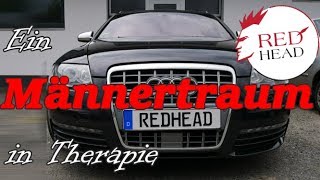
Helpful Videos
We Have This Part in Stock


The information in this article is provided for general reference and educational purposes only. Vehicle specifications, procedures, and part compatibility can vary by production date, trim level, and region. Always consult your vehicle's factory service manual and verify part numbers before purchasing or performing repairs. Safety-critical components such as airbags, seat belts, and braking systems should be installed by a qualified professional.
- Audi S6:
- 🧭 Diagnostic Flowchart
- 🎬 Helpful Videos
- 🛍️ Shop This Part
- What's Unique About the 2006-2011 Audi S6
- Symptoms You May Notice
- Most Likely Causes
- Rare But Worth Checking
- Diagnosis Steps
- Parts You'll Likely Need
- Related Codes That Often Appear With This One
- Technical Service Bulletins (TSBs) & Recalls
- Platform-Specific Known Issues
- Mechanic-Grade Diagnostic Values
- Scan Tool Commands That Help
- Wiring & Ground Locations
- Real Owner Repair Stories
- OEM Part Supersession History
- Model Year Variations Within This Range
- Other Known Issues on This Vehicle
- Used vs. New Parts: Buying Guide for This Vehicle
- Real Owner Stories
- 2007 Audi S6 5.2L V10 — 107000 miles
- 2007 Audi S6 5.2L V10 — ~70000 miles
- 2006-2011 Audi S6 5.2L V10
- 2006-2011 Audi S6 5.2L V10
- Related OBD-II Codes
- Frequently Asked Questions
- 🎟️ Get 5% Off