

P0308 on 2014-2017 Chevrolet SS: Cylinder 8 Misfire Causes and Fixes
P0308 on a Chevy SS indicates a cylinder 8 misfire, most often caused by a bad spark plug, ignition coil, or spark plug wire. Cylinder 8 is the rearmost cylinder on the passenger side. If basic ignition parts don't solve it, suspect a faulty fuel injector or a more serious mechanical issue like a worn camshaft, as noted in GM TSBs for the LS3 engine family.
- P0308 is a misfire on cylinder 8, the rearmost cylinder on the passenger side.
- Always start diagnosis with the 'swap test': swap the ignition coil, then the spark plug, from cylinder 8 to a known good cylinder to see if the misfire follows. This is the fastest and cheapest diagnostic step.
- If ignition parts are not the cause, investigate the fuel injector for cylinder 8 before assuming a larger problem.
- Be aware of GM Technical Service Bulletin #PIP4138R, which indicates a persistent P0308 could be a serious mechanical issue like a worn camshaft or lifter, especially if a ticking noise is present.
- Do not drive for an extended period with a flashing check engine light, as this can cause rapid and expensive damage to the catalytic converter.
What's Unique About the 2014-2017 Chevrolet CHEVEROLET SS
The Chevrolet SS uses the robust 6.2L LS3 V8, an engine shared with the C6 Corvette, 5th Gen Camaro SS (manual), and Pontiac G8 GXP. While the most common causes for a P0308 misfire are standard ignition or fuel system faults, this engine family has a documented history of valvetrain issues. GM Technical Service Bulletin #PIP4138R specifically mentions that a persistent misfire on a single cylinder (P0300-P0308) that isn't solved by typical diagnostics can be due to a worn camshaft lobe and/or a failed lifter, sometimes accompanied by a chirp or tick noise. The LS3 in the SS is notably simple, lacking the Active Fuel Management (AFM) system that is a common source of lifter failure on other GM V8s.
Diagnostic Flowchart
Tap your situation to follow the diagnostic path that matches what you're seeing on this vehicle.
Symptoms You May Notice
- Rough or vibrating idle
- Hesitation or stumbling during acceleration
- Noticeable loss of engine power
- Flashing or solid Check Engine Light
- Smell of raw fuel from the exhaust
- Decreased fuel economy
- Engine may be harder to start
- Stabilitrak warning light may illuminate
- Replacing all ignition coils and spark plugs without performing a 'swap test' first. This can be expensive and may not fix the issue if the cause is a fuel injector or mechanical problem.
- Assuming a flashing Stabilitrak light is a separate issue; it is often triggered as a secondary effect of a severe engine misfire.
Most Likely Causes
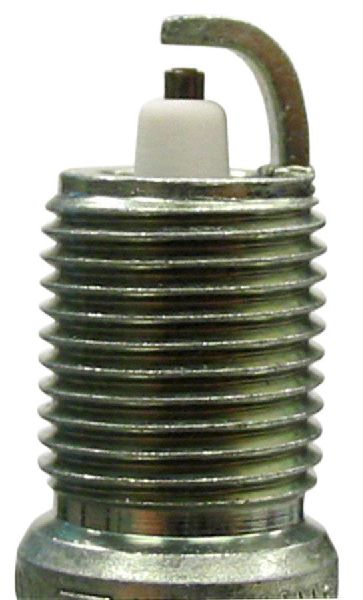
- Worn or Fouled Spark Plug 🔴 High Probability → Shop Spark Plug Spark plugs are a regular maintenance item and are the most common failure point for a single-cylinder misfire. Cylinder 8 is at the rear of the engine on the passenger side, and its location can make it susceptible to high heat and sometimes being overlooked during service. 🎬 Watch: How to change the cylinder eight spark plug
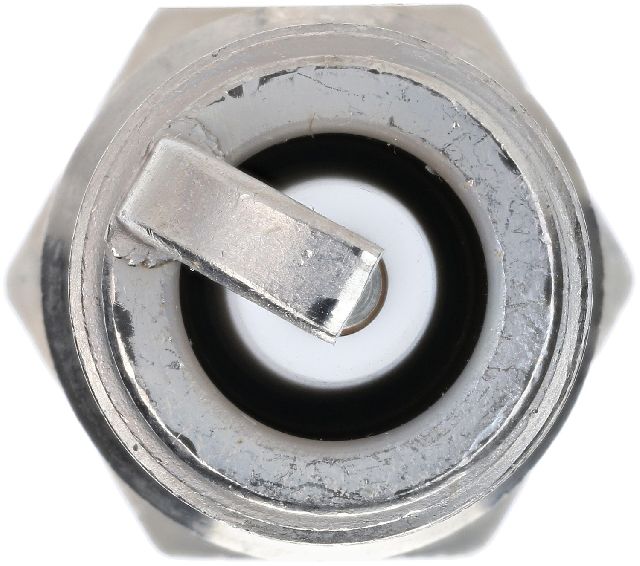
How to confirm: Remove the spark plug from cylinder 8 and inspect it for wear, fouling (black, oily, or white deposits), or damage like a cracked porcelain insulator, which is a known issue on GM V8s. Compare it to a plug from a known good cylinder.
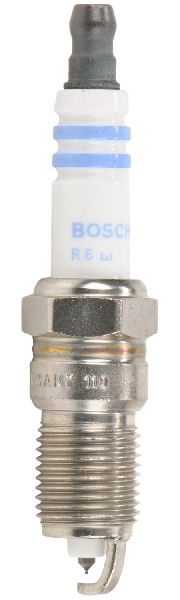
Typical fix: Replace the spark plug. The OEM recommended part is an ACDelco Iridium plug. It is often recommended to replace all 8 plugs if they are near the end of their service life.
Est. part cost: $10-$25 per plug - Faulty Ignition Coil 🔴 High Probability → Shop Ignition Coil
How to confirm: Swap the ignition coil from cylinder 8 with another cylinder (e.g., cylinder 6 on the same bank). Clear the codes and run the engine. If the misfire code changes to P0306, the coil is bad.
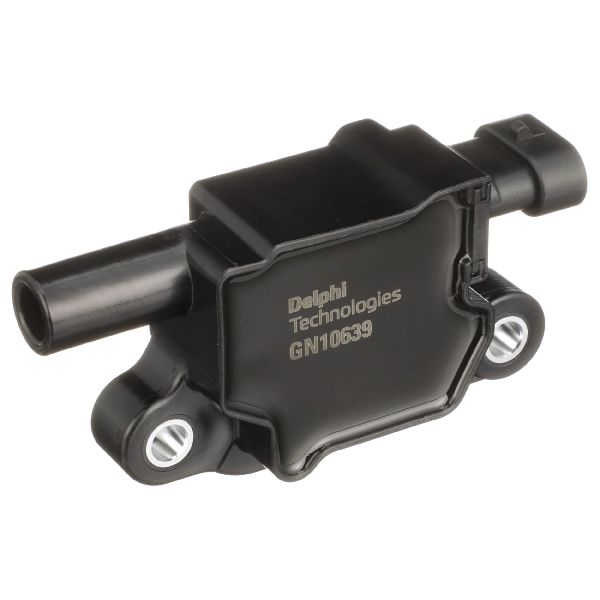
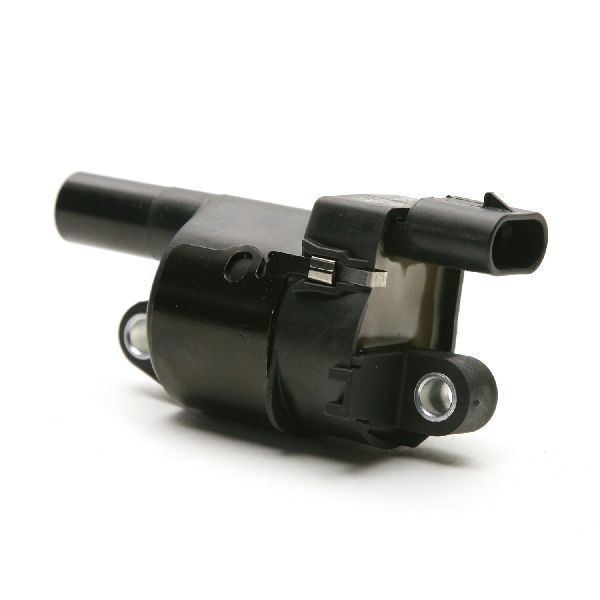
Typical fix: Replace the faulty ignition coil. It is a simple bolt-on part. The LS3 uses square-shaped coils.
Est. part cost: $40-$100 - Bad Spark Plug Wire 🟡 Medium Probability → Shop Spark Plug The spark plug wires on V8 engines are routed near hot exhaust manifolds, which can degrade the insulation over time, causing the spark to become weak or arc to the engine block. The wire for cylinder 8 is particularly susceptible due to its location.
How to confirm: Visually inspect the wire for cracks, burns, or chafing. Test its resistance with a multimeter. You can also swap the wire with another cylinder's wire (like from cylinder 6) to see if the misfire follows.
Typical fix: Replace the spark plug wire. It's often best practice to replace the full set with quality aftermarket wires if the engine is modified or sees hard use.
Est. part cost: $50-$150 for a set - Clogged or Failed Fuel Injector 🟡 Medium Probability → Shop Fuel Injector
How to confirm: Use a mechanic's stethoscope or a long screwdriver to listen to the injector; it should make a consistent clicking sound. You can also swap the injector with another cylinder to see if the misfire code moves, though this is more labor-intensive. A fuel injector balance test can also be performed with a capable scan tool.
Typical fix: Replace the faulty fuel injector. If replacing, it's critical to use the correct part number for the LS3 engine.
Est. part cost: $60-$150
Rare But Worth Checking
- Worn Camshaft Lobe / Failed Lifter: → Shop Engine Camshaft This is a significant mechanical failure. TSB #PIP4138R specifically calls this out for P0300-P0308 codes when standard diagnostics don't find the cause. Symptoms may include a persistent ticking, chirping, or squeaking noise that corresponds to half of the engine's speed. Diagnosis requires removing the valve cover to inspect the valvetrain movement and may require a compression test. Forum discussions on LS3-powered Camaros confirm this as a known, though uncommon, failure point.
- Broken Valve Spring: A broken valve spring can cause a consistent or intermittent misfire and is often accompanied by a ticking noise. This was suspected by a Camaro SS owner on a forum after ignition and fuel component swaps failed to resolve a P0308. A recall for bad valve springs was issued for some 2014 models; if one fails it can drop a valve into the cylinder causing catastrophic engine damage. Diagnosis requires a visual inspection with the valve cover removed.
- Intake Manifold Gasket Leak: → Shop Engine Intake Manifold A vacuum leak from a failed intake manifold gasket near the port for cylinder #8 can lean out the air/fuel mixture for that cylinder, causing a misfire. A smoke test is the most effective way to diagnose this.
- Low Cylinder Compression: Caused by issues like a leaking valve, worn piston rings, or a failed head gasket. A compression test and a cylinder leak-down test will confirm the mechanical health of the cylinder.
Diagnosis Steps
- Read the code with an OBD-II scanner to confirm P0308 and check for any other codes 🎬 Watch: A simple guide to understanding the P0308 code like P0300.
- Visually inspect the area around cylinder 8 (rear passenger side) for obvious issues like a loose spark plug wire, damaged wiring, signs of arcing on the coil, or fuel/oil leaks.
- Perform a 'swap test' on the ignition coil. Swap the coil from cylinder 8 with cylinder 6 (front passenger side). Clear the codes. If the code returns as P0306, the coil is the culprit.
- If the code remains P0308, inspect the spark plug. Look for wear, deposits, or cracks in the porcelain. If in doubt, swap the plug with another cylinder and see if the code follows.
- Inspect and test the spark plug wire. Check for physical damage and test its resistance with a multimeter. 🎬 See three ways to test your spark plug wires Compare the reading to other wires.
- If ignition components are confirmed good, listen to the fuel injector on cylinder 8 with a stethoscope. It should click rhythmically. Compare the sound to a neighboring injector.
- If the injector is suspect, and you are comfortable with the procedure, swap it with another cylinder to see if the misfire follows. This is more involved but is a definitive test.
- If the misfire still persists on cylinder 8, the problem is likely mechanical. Perform a cylinder compression test and compare the reading for cylinder 8 to the others.
- If compression is low, perform a cylinder leak-down test to pinpoint the source of the leak (rings, intake valve, or exhaust valve).
- If a persistent ticking or chirping noise is present and all other tests are inconclusive, refer to TSB #PIP4138R. This involves removing the valve cover to inspect for a broken valve spring, bent pushrod, or worn rocker arm, which could indicate a worn camshaft lobe and/or failed lifter.
Parts You'll Likely Need
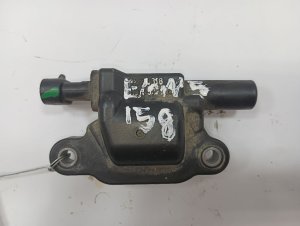
- Ignition Coil
(OEM #ACDelco D510C (12611424), ACDelco 12699383)— A common failure point for single-cylinder misfires. Easy to diagnose by swapping with another cylinder. The LS3 uses a square-style coil.
Trusted brands: ACDelco, NGK, Delphi
OEM price range: $60-$100
Aftermarket price range: $40-$80 - Spark Plug
(OEM #ACDelco 41-110 (Iridium))— A routine maintenance item that can foul or wear out, causing a weak or non-existent spark. Cracked porcelain is also a possible failure mode.
Trusted brands: ACDelco, NGK
OEM price range: $15-$25
Aftermarket price range: $8-$15 - Spark Plug Wire Set — Wires degrade over time due to engine heat, leading to weak spark. The wire for cylinder 8 is a common failure point. Often replaced as a set.
Trusted brands: ACDelco, NGK, Granatelli Motor Sports
OEM price range: $80-$150
Aftermarket price range: $50-$100 - Fuel Injector — Can become clogged or fail electronically, preventing the correct amount of fuel from being delivered to cylinder 8.
Trusted brands: ACDelco, Bosch
OEM price range: $100-$180
Aftermarket price range: $60-$120
Related Codes That Often Appear With This One
- P0300 — If the misfire becomes more widespread or is intermittent across multiple cylinders, a P0300 (Random/Multiple Cylinder Misfire) may be triggered alongside P0308.
- U0073 — Control Module Communication Bus "A" Off. This code can sometimes appear alongside a severe misfire event, possibly due to the electrical disruption caused by the misfire itself. A Camaro owner reported this code appearing simultaneously with P0308 when the misfire began.
Technical Service Bulletins (TSBs) & Recalls
- PIP4138R
- PIP5628G
Platform-Specific Known Issues
- TSB #PIP4138R: This bulletin is critical for this engine. It states that if a single cylinder misfire (P0300-P0308) is present and not resolved by normal diagnostics, technicians should inspect for a worn camshaft lobe and/or lifter. This points to a known, albeit less common, mechanical failure point that can present with a ticking or chirping sound.
- TSB #PIP5628G: This bulletin outlines the specific information and diagnostic data (like GDS2 session logs and freeze-frame records) that GM's Technical Assistance Center (TAC) requires from technicians when diagnosing persistent misfire codes P0300-P0308. This indicates the potential complexity of diagnosing these codes beyond simple parts swaps.
Mechanic-Grade Diagnostic Values
- Ignition Coil Primary Resistance — expected: 0.4 to 0.6 ohms. Failure: A reading outside this range indicates a faulty coil.
- Ignition Coil Secondary Resistance — expected: 5,000 to 7,200 ohms (5.0-7.2 kOhms). Failure: A reading outside this range indicates a faulty coil.
- Stock Fuel Injector Resistance — expected: ~11.0 to 16.0 Ohms (specifically ~12.0 Ohms for LS3). Failure: A reading of 'OL' (open), 0.0 (shorted), or a value that deviates more than 0.5 Ohms from the other injectors indicates a fault.
- Stock Fuel Pressure (at rail) — expected: ~58 psi at idle, which may taper down toward 48-50 psi at high RPM due to FPCM programming.. Failure: Significantly low pressure at idle or under load could indicate a weak fuel pump or clogged filter, affecting all cylinders.
- Cylinder Compression — expected: 120 to 150 PSI, with less than 10-15% variation between cylinders.. Failure: A reading significantly lower than other cylinders on cylinder 8 points to a mechanical issue like worn rings, a bad valve, or a head gasket leak.
Hidden / Shadow Codes Worth Checking
- Mode $06 Misfire Counters: This is not a formal DTC but a data parameter accessible via advanced scan tools. It shows the raw count of misfires detected on each cylinder, even if the count is not yet high enough to trigger a Check Engine Light and a P0308 code. This is useful for confirming an intermittent misfire is isolated to cylinder 8. (see via Use a professional scan tool (like GM's GDS2) or a quality consumer scanner that supports Mode $06 data.)
Scan Tool Commands That Help
- GDS2 (GM Global Diagnostic System 2): Misfire Graphic — To view live and historical misfire data for each cylinder. This can help confirm if the misfire is constant or intermittent and under what operating conditions it occurs. A user on CorvetteForum used this to identify a cylinder 8 misfire that wasn't setting a persistent code.
- GDS2 / Professional Scan Tool: Fuel Injector Balance Test — This command individually fires each injector for a set period while monitoring the fuel pressure drop. A smaller pressure drop for cylinder 8 compared to others indicates a clogged or failing injector.
- GDS2 / Professional Scan Tool: Cylinder Power Balance — This function deactivates one cylinder at a time and measures the corresponding drop in engine RPM. A smaller RPM drop when cylinder 8 is deactivated confirms it is contributing less power than the others.
Wiring & Ground Locations
- Main Engine Harness Grounds — Typically bolted to the rear of the driver's side and/or passenger's side cylinder head.. The ECM, ignition coils, and fuel injectors all rely on a clean ground path. A loose or corroded ground on the cylinder head can cause erratic behavior, including misfires, that can be difficult to diagnose.
- G106 (Battery Ground) — On related GM platforms, this ground is located on the engine block above the starter and is shared with the negative battery cable.. A poor main engine ground at this location can cause a host of electrical issues, including communication problems between modules (like the ECM and TCM) which can sometimes manifest with strange symptoms alongside engine performance issues.
- Cylinder 8 Injector/Coil Harness — The wiring for cylinder 8 is at the rearmost position on the passenger side of the engine, routed near the firewall and exhaust manifold.. This location is prone to high heat, which can make the wiring loom and connectors brittle over time. Inspect for cracked insulation, melted connectors, or chafing against the firewall or brackets.
Real Owner Repair Stories
- CorvetteForum user (2014 C7 Corvette Z51 (Shared LS-family engine architecture)) — Blinking Service Engine Soon (SES) light during a drive, indicating a misfire. A slight miss was felt, but a standard OBD-II scanner showed no stored codes.
❌ Tried (didn't work) Scanning with a basic code reader.
✅ What actually fixed it The owner used a VXDIAG Nano with GDS2 software to view detailed engine data. The misfire data log showed counts on cylinder 2 and cylinder 8, confirming the issue despite no code being set. The community advised checking that the spark plug wires were fully seated on the coils and plugs, as they can look connected but be popped off. After reseating the wires, the issue was resolved.
OEM Part Supersession History
12570616, 12611424→ACDelco D510C (current), GM 12713668— Standard part evolution and consolidation for LS/LT engines.
Heads up: The D510C is the correct square-shaped coil for the LS3. Be aware that other LS engines used different coil designs (e.g., D585 'truck' coils), which are not directly compatible without harness and bracket changes.
Model Year Variations Within This Range
- 2014 only: A safety recall was issued for some 2014 models due to defective valve springs. If a spring fails, it can cause a misfire and potentially lead to catastrophic engine damage if the valve drops into the cylinder.
- 2015-2017: For 2015, the SS received Magnetic Ride Control (MRC) suspension and an optional TR-6060 manual transmission. For 2016, a dual-mode exhaust and minor facelift were added. The core LS3 engine and its output of 415 hp remained unchanged throughout the entire 2014-2017 run, so the causes of P0308 are consistent across all years.
Helpful Videos
Used OEM Parts in Stock
New Aftermarket Parts Available

The information in this article is provided for general reference and educational purposes only. Vehicle specifications, procedures, and part compatibility can vary by production date, trim level, and region. Always consult your vehicle's factory service manual and verify part numbers before purchasing or performing repairs. Safety-critical components such as airbags, seat belts, and braking systems should be installed by a qualified professional.
- Chevrolet CHEVEROLET SS:
- 🧭 Diagnostic Flowchart
- 🎬 Helpful Videos
- 🛍️ Shop This Part
- What's Unique About the 2014-2017 Chevrolet CHEVEROLET SS
- Symptoms You May Notice
- Most Likely Causes
- Rare But Worth Checking
- Diagnosis Steps
- Parts You'll Likely Need
- Related Codes That Often Appear With This One
- Technical Service Bulletins (TSBs) & Recalls
- Platform-Specific Known Issues
- Mechanic-Grade Diagnostic Values
- Hidden / Shadow Codes Worth Checking
- Scan Tool Commands That Help
- Wiring & Ground Locations
- Real Owner Repair Stories
- OEM Part Supersession History
- Model Year Variations Within This Range
- 🎟️ Get 5% Off