

P0308 on 2011-2018 Chevrolet Cruze: Why This Code Is Impossible and What to Check Instead
A P0308 code on a 2011-2018 Chevrolet Cruze is not possible. The Cruze uses 4-cylinder engines, while P0308 indicates a misfire on cylinder #8. If you see this code, double-check your scan tool's vehicle selection or suspect a tool error. The actual misfire codes for a Cruze are P0301, P0302, P0303, or P0304.
- P0308 is an impossible code for any 2011-2018 Chevrolet Cruze because they are all 4-cylinder vehicles.
- If you see P0308, the problem is with the scan tool or its configuration, not your car.
- Verify the vehicle information in your scan tool and re-scan to find the correct code (likely P0300, P0301, P0302, P0303, or P0304).
- If your Cruze is actually misfiring, the most common causes are a bad ignition coil pack or worn spark plugs.
What's Unique About the 2011-2018 Chevrolet CRUZE
The key issue with a P0308 code on a Chevrolet Cruze is its fundamental incompatibility. The platform, across both its first (2011-2016) and second (2016-2018) generations, was never equipped with an 8-cylinder engine. Therefore, seeing this code is not a vehicle fault but rather an error from the diagnostic tool or user input. The provided 🎬 Watch: Why P0308 is impossible on a 4-cylinder engine. TSB #PIP5628G mentions the P0300-P0308 range because it is a general GM bulletin intended to cover their entire vehicle lineup, which includes V8 models like trucks and performance cars (e.g., Silverado, Camaro), not because a P0308 is applicable to the Cruze.
Diagnostic Flowchart
Tap your situation to follow the diagnostic path that matches what you're seeing on this vehicle.
Generation note: The 2011-2018 range covers two generations of the Chevrolet Cruze. The first generation (2011-2016) and the second generation (2016-2018) both exclusively used 4-cylinder engines, making the P0308 code impossible on both.
Symptoms You May Notice
- No symptoms will be associated with P0308, as the code is invalid for this car.
- If the car *is* misfiring and the tool is showing the wrong code, you would experience:
- Rough idle or shaking
- Hesitation or stumbling during acceleration
- Flashing Check Engine Light
- Noticeable loss of power
- Poor fuel economy
- Believing the vehicle has an 8-cylinder engine.
- Attempting to locate 'cylinder 8' for diagnosis.
- Replacing parts based on a code that is impossible for the vehicle.
Most Likely Causes
- Incorrect Scan Tool Configuration 🔴 High Probability Not specific to the vehicle, but a common user error with diagnostic tools where the wrong vehicle profile (e.g., a V8-equipped Chevy Silverado) is selected.
How to confirm: Verify that the scan tool is set to the correct year, make, model, and engine for your Chevrolet Cruze. Rescan the vehicle after confirming the settings.
Typical fix: Correct the vehicle information in the scan tool and re-read the codes. The tool should then display the correct misfire code (e.g., P0301, P0302, P0303, P0304) or a random misfire code (P0300).
Est. part cost: $0 - Scan Tool Software Glitch 🟡 Medium Probability Some OBD-II scanners may have software bugs that lead to displaying erroneous or 'ghost' codes, especially if the software is outdated or designed for a wide range of vehicles.
How to confirm: Try using a different, high-quality OBD-II scanner to see if it reports the same code or a different, more plausible code. Professional-grade scanners are less likely to exhibit this issue.
Typical fix: Update the scan tool's firmware or use a different tool. No parts are replaced on the vehicle.
Est. part cost: $0
Diagnosis Steps
- Confirm the code: Double-check the code displayed on your OBD-II scanner.
- Verify Vehicle Information: Ensure your scanner is configured for a 4-cylinder Chevrolet Cruze for the correct model year. This is the most common reason for seeing an impossible code.
- Rescan for Codes: After confirming the vehicle info, clear the codes and run the scan again. See if a different, valid code appears (P0300-P0304).
- Use a Different Scanner: If the P0308 code persists, try reading the codes with a different, known-good scanner to rule out a tool-specific error.
- Address the *Actual* Misfire: If a valid misfire code (P0301, P0302, P0303, P0304) appears, begin diagnosis for that specific cylinder. Common causes for actual Cruze misfires include faulty ignition coils, worn spark plugs, or bad fuel injectors.
Parts You'll Likely Need
- No parts needed for P0308 — This code is the result of a diagnostic error, not a vehicle fault. No parts on the car can cause a P0308 on a 4-cylinder engine.
OEM price range: $0
Aftermarket price range: $0 - Ignition Coil Pack (for actual misfire)
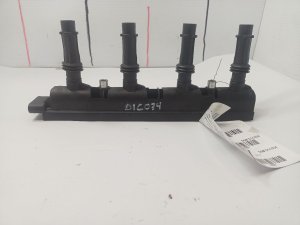
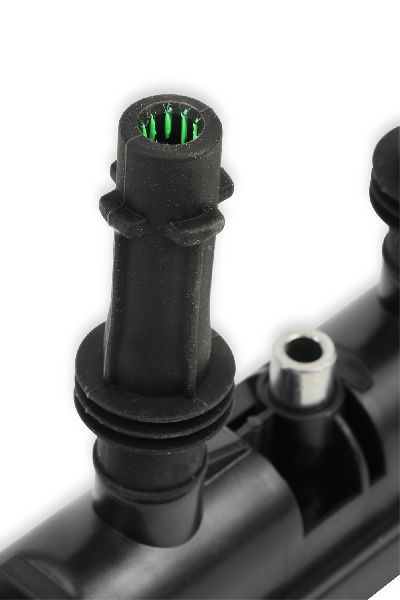
(OEM #55579072, 55577898, 55575499, 55573735, 25195107)— This is the most common part to fail and cause a *real* misfire (P0301-P0304) on the 1.4L Turbo Cruze. The entire pack must be replaced as it is a single unit.
Trusted brands: ACDelco, Delphi, NGK
OEM price range: $150 - $250
Aftermarket price range: $70 - $150 - Iridium Spark Plugs (for actual misfire)
(OEM #41-121 (ACDelco), 55585517)— Worn or fouled spark plugs are another primary cause of true misfires on the Cruze. They should be inspected or replaced when diagnosing codes P0301-P0304.
Trusted brands: ACDelco, NGK, Bosch
OEM price range: $10 - $20 per plug
Aftermarket price range: $7 - $15 per plug
Related Codes That Often Appear With This One
- P0300 — If the scan tool is malfunctioning, it might show P0308 alongside P0300 (Random/Multiple Misfire). P0300 is a valid code for a Cruze and indicates misfires are happening on more than one cylinder.
Technical Service Bulletins (TSBs) & Recalls
- PIP5628G: This is a general GM Technical Service Bulletin for diagnosing various misfire codes (P0300-P0308) and/or P050D. It provides a diagnostic template for technicians when contacting GM's Technical Assistance Center (TAC) and is not specific to the Cruze, but covers all GM vehicles, including V8s.
Platform-Specific Known Issues
- While P0308 is not a valid code, the Chevrolet Cruze is known for misfires caused by failing ignition coil packs. Often, moisture or oil intrusion can cause the coil boot to corrode or fail, leading to a misfire on one cylinder (e.g., P0304). Unlike many vehicles, the Cruze uses a single coil pack assembly that houses all four coils, meaning the entire unit must be replaced if one section fails.
- Corrosion in the ECM connector has also been documented as a cause for misfire-related codes on the Cruze, which can lead to complex diagnostic scenarios.
Mechanic-Grade Diagnostic Values
- Ignition Coil Primary Resistance (1.4L & 1.8L) — expected: 0.4 to 2.0 ohms (typical), with some sources citing 0.5-0.7 ohms as ideal.. Failure: A reading of OL (over-limit/infinite) or significantly outside the expected range indicates a failed primary winding.
- Ignition Coil Secondary Resistance (1.4L & 1.8L) — expected: 6,000 to 10,000 ohms (6k-10k Ω), with some part-specific data showing 8.5k-10.5k Ω.. Failure: A reading outside this range, like 12.3k Ω, indicates a failing coil, even if the primary resistance is good.
- Fuel Injector Resistance (1.4L MPFI & others) — expected: Approximately 12 ohms.. Failure: A reading significantly higher or lower than 12 ohms suggests a faulty injector coil.
- Fuel Pressure (1.4L Turbo - Gen 1 LUV) — expected: 50-94 PSI (key on, pump commanded on). At idle, expect around 40-43.5 PSI.. Failure: Pressure below 50 PSI during the key-on test suggests a weak fuel pump, restricted line, or faulty pressure sensor.
- Fuel Pressure (1.8L LUW/LWE) — expected: Approximately 60 PSI +/- 10 PSI (415 kPa +/- 70 kPa) while running.. Failure: Pressure that bleeds off rapidly after shutdown could indicate a leaking injector or check valve. Pressure that doesn't build indicates a pump or regulator issue.
Scan Tool Commands That Help
- GDS2 (GM Dealer Scan Tool): Reduced Engine Power History — If the vehicle displays a 'Reduced Engine Power' message without any accompanying DTCs, this function can help determine the cause. For example, it can show if the message was triggered by an event like running the vehicle out of fuel, which can be cleared by disconnecting the battery for 5 minutes.
- GDS2 (or advanced bidirectional scanner): Fuel Pump On/Off Command — Used to test fuel pressure without the engine running. Commanding the pump on several times should build pressure to the 50-94 PSI spec. If it fails to reach this pressure, it points toward a fuel delivery issue.
- GDS2 (or advanced bidirectional scanner): Misfire History / Misfire Graphic — To diagnose an actual misfire (e.g., P0301-P0304), this function shows current and historical misfire counts per cylinder, helping to confirm which cylinder is faulting and under what conditions.
Wiring & Ground Locations
- G101 — Located at the front of the engine, lower block.. This ground is critical for the Engine Control Module (ECM) and Transmission Control Module (TCM). A poor connection here can cause a wide range of erratic engine behavior and false codes.
- G103 — Located at the left rear of the engine compartment on the cowl, above the brake booster.. This ground serves the Body Control Module (BCM), Instrument Panel Cluster (IPC), and Data Link Connector (DLC). A fault here can cause communication issues with scan tools or generate erroneous warning messages that may accompany a misfire.
- Negative Battery Cable Ground — The main cable from the negative battery terminal to the chassis and engine block.. A known issue covered by GM Special Coverage 14311B involves an insufficient crimp on this cable, leading to high resistance. This can cause flickering displays, 'Service Stabilitrak' messages, and misfire codes due to inadequate power to the vehicle's electrical systems.
Real Owner Repair Stories
- Reddit user on r/cruze (2012 Chevrolet Cruze 1.4L Turbo) — Running weird, traction control light on, 'Service Stabilitrak' message, and a cylinder 4 misfire code (P0304).
❌ Tried (didn't work) The owner noted the coil pack had been replaced a couple of years prior and the spark plugs were NGK brand, indicating previous work.
✅ What actually fixed it The discussion centered on the known faulty negative battery cable (GM Special Coverage 14311B) as a likely cause for the combination of electrical warnings and the misfire code, as this issue creates high resistance and starves modules of proper voltage.
OEM Part Supersession History
55573735, 55575499, 55577898→55579072, 25195107— These part numbers all refer to the ignition coil pack for the Gen 1 1.4L engine. The numbers have been superseded over time by GM, with 55579072 and 25195107 being common current replacement numbers.
Model Year Variations Within This Range
- 2011-2016 (Gen 1) vs 2016.5-2018 (Gen 2): The 1.4L Turbo engine was completely redesigned. The Gen 1 (2011-2016) uses the LUV engine, which has a cast iron block and multi-port fuel injection (MPFI). The Gen 2 (2016.5+) uses the LE2 engine, which has an aluminum block, direct injection (SIDI), a forged crankshaft, and an integrated exhaust manifold/cylinder head. They share no major parts, and diagnostic procedures for fuel delivery will differ significantly.
- 2011-2015: These model years are specifically cited in GM's Special Coverage 14311B for the faulty negative battery cable that can cause misfire-like symptoms. While later models could have ground issues, these years have a documented manufacturing defect.
- 2016-2019 (Gen 2): The fuel injectors for the Gen 2 LE2 engine are a different part number (e.g., 55577403) due to the switch to a direct injection (SIDI) fuel system, and are not interchangeable with the MPFI injectors from the Gen 1 LUV engine.
Helpful Videos
Used OEM Parts in Stock
New Aftermarket Parts Available

The information in this article is provided for general reference and educational purposes only. Vehicle specifications, procedures, and part compatibility can vary by production date, trim level, and region. Always consult your vehicle's factory service manual and verify part numbers before purchasing or performing repairs. Safety-critical components such as airbags, seat belts, and braking systems should be installed by a qualified professional.
- Chevrolet CRUZE:
- 🧭 Diagnostic Flowchart
- 🎬 Helpful Videos
- 🛍️ Shop This Part
- What's Unique About the 2011-2018 Chevrolet CRUZE
- Symptoms You May Notice
- Most Likely Causes
- Diagnosis Steps
- Parts You'll Likely Need
- Related Codes That Often Appear With This One
- Technical Service Bulletins (TSBs) & Recalls
- Platform-Specific Known Issues
- Mechanic-Grade Diagnostic Values
- Scan Tool Commands That Help
- Wiring & Ground Locations
- Real Owner Repair Stories
- OEM Part Supersession History
- Model Year Variations Within This Range
- 🎟️ Get 5% Off