

P0308 on 2014-2017 Chevrolet SS: Cylinder 8 Misfire Causes and Fixes
P0308 indicates a misfire on cylinder 8. On the LS3 engine, this is most often caused by a failed ignition coil, a worn spark plug, or a bad spark plug wire. Start by swapping the cylinder 8 ignition coil with another cylinder to see if the misfire code moves. A loose plug wire is also a surprisingly common fix.
- P0308 is a misfire on cylinder 8, the rearmost cylinder on the passenger side.
- The most effective first diagnostic step is to swap the cylinder 8 ignition coil with another cylinder (like cylinder 6) to see if the misfire code follows the coil.
- If the coil is not the issue, inspect the spark plug and spark plug wire for cylinder 8.
- Unlike many other GM V8s, the SS's LS3 engine does not have AFM, so a failed AFM lifter is not a possible cause.
- Do not drive for an extended period with a flashing check engine light, as this can cause rapid and expensive damage to the catalytic converter.
What's Unique About the 2014-2017 Chevrolet SS
The Chevrolet SS features the robust 6.2L LS3 V8, an engine known for its performance and reliability, shared with the C6 Corvette and manual 5th Gen Camaro SS. A key advantage for the SS is that its LS3 engine does *not* have Active Fuel Management (AFM), a cylinder deactivation system found in many other GM V8s (like the L99 in the automatic Camaro SS of the same era). This eliminates a very common cause of misfires related to failed AFM lifters, making the diagnostic process for a P0308 on an SS more straightforward and typically focused on the ignition and fuel systems.
Symptoms You May Notice
- Rough or uneven idle
- Hesitation or stumbling during acceleration
- Noticeable loss of engine power
- Flashing or solid Check Engine Light
- Smell of raw fuel from the exhaust
- Reduced fuel economy
- Loud tapping or ticking noise from the engine (if related to valvetrain)
- Replacing the catalytic converter. A misfire can damage the converter, but it is the symptom, not the cause. The misfire must be fixed first.
- Replacing all fuel injectors when only one is at fault. The swap-test diagnostic method can isolate a single bad injector, saving significant cost.
Most Likely Causes
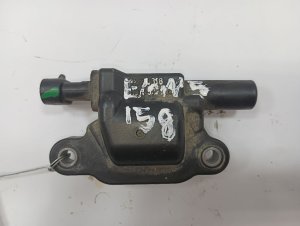
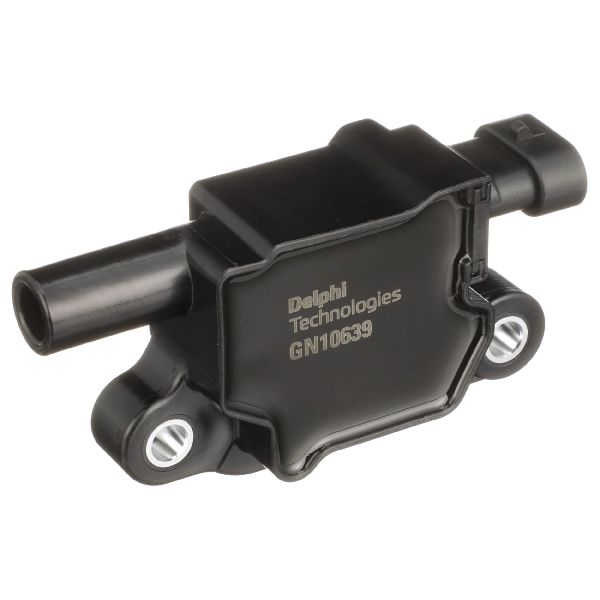
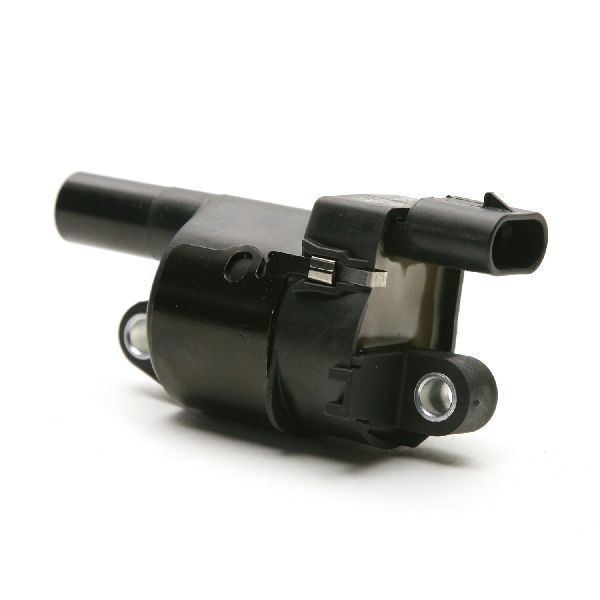
- Failed Ignition Coil 🔴 High Probability → Shop Ignition Coil The LS3 uses a coil-on-plug design where each coil is subjected to significant heat cycles, leading to eventual electronic failure. This is a common wear item on many modern engines and a top cause for P0308 on the LS3.
How to confirm: Swap the ignition coil from cylinder 8 with another cylinder (e.g., cylinder 6 on the same bank). Clear the codes and run the engine. If the misfire code changes to P0306, the coil is bad. This is the most recommended first diagnostic step.
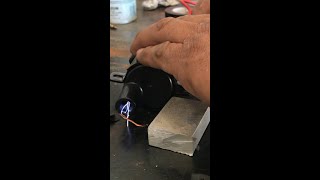
Typical fix: Replace the faulty ignition coil. It is a simple bolt-on part. 🎬 Watch: How to bench test LS ignition coils and wiring. Using a quality OEM brand like ACDelco is recommended.
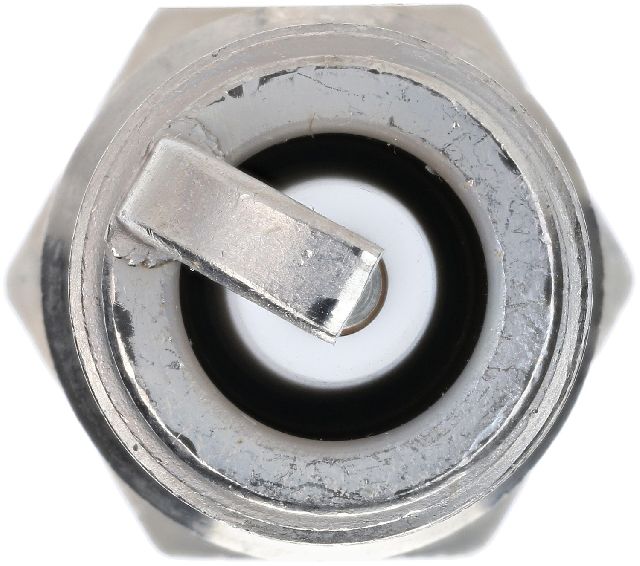
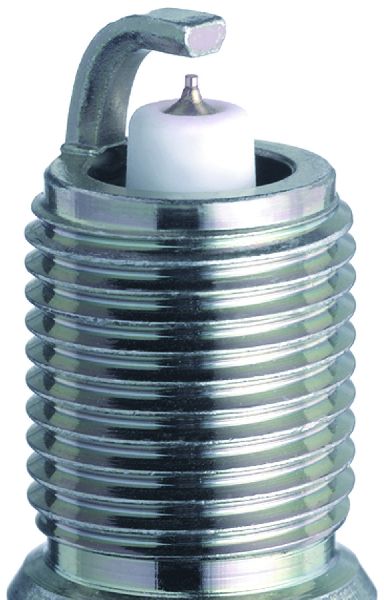
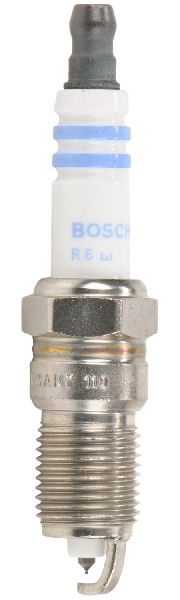
Est. part cost: $40-$80 - Worn or Fouled Spark Plug 🔴 High Probability → Shop Spark Plug Spark plugs are a routine maintenance item. An incorrect gap, carbon fouling, or simple electrode wear can prevent a strong spark, causing a misfire.
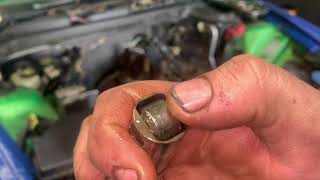
How to confirm: After ruling out the coil, remove the spark plug from cylinder 8. Inspect it for wear, damage to the porcelain, or heavy deposits of carbon or oil. A plug fouled with gas was noted in one forum diagnosis.
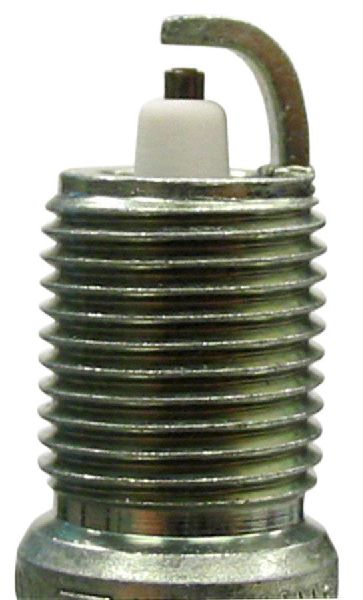
Typical fix: Replace the spark plug. It is best practice to replace all eight spark plugs at the same time to ensure consistent performance. The OEM ACDelco 41-110 plugs are pre-gapped and should not be re-gapped, as this can damage the iridium tip.
Est. part cost: $8-$20 per plug - Bad Spark Plug Wire 🟡 Medium Probability → Shop Spark Plug The LS3 uses short spark plug wires that connect the coils to the plugs. The wire for cylinder 8 is in a hot, tight location at the rear of the engine, making it susceptible to heat degradation over time, which can cause the spark to arc to the engine block. A loose connection is also a common issue.
How to confirm: Visually inspect the wire for any signs of burning, cracking, or chafing. Check that it is securely snapped onto both the spark plug and the ignition coil. You can also test its resistance with a multimeter; an out-of-spec reading or an open circuit (infinite resistance) indicates it's bad.
Typical fix: Replace the faulty spark plug wire. It is often recommended to replace the full set of 8 wires.
Est. part cost: $50-$120 for a set - Clogged or Failed Fuel Injector ⚪ Low Probability → Shop Fuel Injector
How to confirm: Use a mechanic's stethoscope or a long screwdriver to listen to the injector; it should make a consistent, rapid clicking sound. Compare its sound to an adjacent injector. A more advanced test involves swapping the injector with another cylinder to see if the misfire moves, though this is more labor-intensive.
Typical fix: Replace the faulty fuel injector.
Est. part cost: $70-$150
Rare But Worth Checking
- Worn Camshaft Lobe / Lifter Failure: → Shop Engine Camshaft While the SS LS3 avoids the common AFM lifter failures, GM has a Technical Service Bulletin (TSB #19-NA-219, which superseded PIP4138) for the broader engine family, including the LS3. It notes that a persistent single-cylinder misfire not solved by ignition or fuel system checks can be due to a worn camshaft lobe or a failed lifter roller. This is often accompanied by a distinct ticking or chirping noise and can result in metal debris in the engine oil. 🎬 See this guide on diagnosing LS engine lifter problems.
- Broken Valve Spring: A broken valve spring will cause a consistent misfire and can lead to catastrophic engine damage if the valve drops into the cylinder. This can be diagnosed by removing the valve cover for a visual inspection. This was suspected in a Camaro5 forum thread after ignition and fuel system swaps failed to resolve the misfire.
- Bent or Broken Pushrod: A bent or broken pushrod will prevent the valve from opening correctly, causing a complete loss of combustion in that cylinder. In a documented case on a Camaro5 forum, a user with a P0308 on an LS3 ultimately found a broken pushrod after all ignition and fuel system diagnostics passed.
- Intake Manifold Gasket Leak: → Shop Engine Intake Manifold A vacuum leak from a failed intake manifold gasket specifically at the runner for cylinder 8 can lean out the air/fuel mixture enough to cause a misfire. This is best diagnosed with a smoke test or by monitoring fuel trims.
Diagnosis Steps
- Confirm the code is P0308 using an OBD-II scanner. Note if the Check Engine Light is solid or flashing and check for any other codes.
- Identify cylinder 8, which is the rearmost cylinder on the passenger side of the engine.
- Visually inspect the area. Check for a loose or damaged spark plug wire, a loose electrical connector on the ignition coil, or any signs of arcing or burning.
- Perform an 'ignition swap test'. Swap the ignition coil from cylinder 8 with cylinder 6 (the next one forward on the passenger side). Clear the codes and drive the vehicle. If the code returns as P0306, the ignition coil is faulty and needs replacement.
- If the code remains P0308, swap the spark plug wire between cylinder 8 and 6. Clear codes and re-test. If the code moves to P0306, the wire is bad.
- If the code remains P0308, inspect the spark plug. Remove it and check for excessive wear, carbon buildup, oil fouling, or cracks in the porcelain insulator. Replace if necessary.
- If all ignition components are confirmed good, listen to the fuel injector on cylinder 8 with a mechanic's stethoscope. It should have a steady, rapid clicking sound. Compare it to the sound of the injector on cylinder 6.
- If the injector is silent or sounds different, consider swapping it with another cylinder to confirm it's the fault, though this is more labor-intensive.
- If ignition and fuel systems seem okay, a mechanical issue is possible. Remove the passenger-side valve cover to inspect the valve springs and rocker arms for cylinder 8. Look for a broken spring or excessive play that could indicate a bent pushrod or failed lifter.
- If no obvious mechanical issues are visible, perform a cylinder compression test on cylinder 8 and compare the reading to other cylinders to check for internal engine problems.
Parts You'll Likely Need
- Ignition Coil
(OEM #12611424)— This is the most common cause of a single-cylinder misfire on the LS3 due to failure from heat and age. The swap test is a definitive way to confirm its failure.
Trusted brands: ACDelco, Delphi
OEM price range: $50-$90
Aftermarket price range: $30-$60 - Spark Plug
(OEM #41-110)— Spark plugs are a standard wear item and the direct source of ignition. A worn or fouled plug is a high-probability cause for a misfire. Note: These are pre-gapped; do not adjust the gap.
Trusted brands: ACDelco, NGK
OEM price range: $15-$25
Aftermarket price range: $8-$18 - Spark Plug Wire Set
(OEM #9748HH)— The wires that connect the coils to the plugs can degrade over time, especially from engine heat, causing a weak or misdirected spark. A loose wire is also a common problem.
Trusted brands: ACDelco, MSD, NGK
OEM price range: $70-$100
Aftermarket price range: $40-$80
Related Codes That Often Appear With This One
- P0300 — If the misfire on cylinder 8 is intermittent or if other cylinders begin to misfire, the PCM may also log a P0300 for 'Random/Multiple Cylinder Misfire Detected'.
- P219B — This code indicates an 'Air-Fuel Ratio Imbalance' on Bank 2 (which includes cylinder 8). A misfire on cylinder 8 can cause this, as unburnt oxygen and fuel are dumped into the exhaust, confusing the oxygen sensor. Fixing the P0308 misfire will typically resolve this code.
- P050D — This code for Cold Start Rough Idle may appear alongside P0308. NHTSA ODI #11671798 notes a case where P0300, P0308, and P050D were present together due to internal engine damage and oil leaking into the cylinder.
Technical Service Bulletins (TSBs) & Recalls
- TSB #19-NA-219 (replaces PIP4138): While not specific to the SS, this GM bulletin covers the LS engine family and notes that persistent single-cylinder misfires (P0300-P0308) not resolved by ignition or fuel system diagnosis can be caused by a worn camshaft lobe or lifter roller, sometimes accompanied by a ticking or chirping noise.
- Bulletin #23-NA-043: This manufacturer bulletin addresses poor engine performance and illuminated MIL for DTCs P0300 through P0308 across various GM models.
- Bulletin #PIP5628G: This bulletin provides diagnostic information for TAC regarding vehicles exhibiting misfires and codes P0300-P0308 or P050D.
Mechanic-Grade Diagnostic Values
- Fuel Pressure (Low Pressure System) — expected: Approximately 58 PSI at idle, which may taper down to 48-51 PSI at high RPM due to FPCM programming.. Failure: Significantly lower pressure indicates a weak fuel pump or clogged filter; pressure that doesn't hold indicates a leak or faulty regulator.
- Fuel Injector Resistance — expected: Approximately 12.0 ohms (High Impedance).. Failure: A reading significantly higher (open circuit) or lower (short) than 12 ohms indicates a failed injector coil.
- Ignition Coil Resistance (Primary) — expected: 0.4 to 0.6 ohms.. Failure: A reading outside this range suggests a fault in the primary winding.
- Ignition Coil Resistance (Secondary) — expected: 5,000 to 7,200 ohms (5.0 to 7.2 kOhms).. Failure: A reading outside this range suggests a fault in the secondary winding.
- Spark Plug Wire Resistance — expected: Stock wires typically measure between 250-800 ohms. Aftermarket wires vary, but a common rule is under 12,000 ohms per foot.. Failure: An extremely high or infinite resistance reading (open circuit) indicates a bad wire.
Hidden / Shadow Codes Worth Checking
- Misfire Current/History Counters: Professional scan tools like the GM GDS2/Tech2 can display specific misfire counters for each cylinder. The 'Misfire Current Counter' shows misfires in the current drive cycle, while the 'Misfire History Counter' shows cumulative misfires over many cycles. This data is more granular than a simple P0308 code and can help determine the severity and frequency of the misfire. (see via A professional-grade scan tool (e.g., GM GDS2, Tech2) or an advanced OBD-II app that can display manufacturer-specific live data (Mode 6).)
Scan Tool Commands That Help
- GDS2 / Tech2: Cylinder Power Balance Test — This is a crucial diagnostic function to confirm a P0308. It allows the technician to command the PCM to sequentially disable the fuel injector for each cylinder. A healthy cylinder will cause a noticeable drop in engine RPM when disabled. If disabling cylinder 8 causes little or no RPM drop, it confirms that cylinder was not contributing power.
- GDS2 / Tech2: Fuel Injector Balance Test — This test can help identify a clogged or failing fuel injector by measuring the pressure drop in the fuel rail as each injector is fired for a specific duration. An inconsistent pressure drop for cylinder 8 would point to an injector issue.
- GDS2 / Tech2: Crankshaft Position (CKP) Variation Learn — This procedure should be performed after replacing the crankshaft position sensor, PCM, or making major engine repairs. It calibrates the PCM to recognize minor variations in the crankshaft reluctor wheel, ensuring accurate misfire detection. If this calibration is off, it can sometimes lead to false misfire codes.
Wiring & Ground Locations
- Engine Harness Grounds — On the rear of the cylinder heads. There are dedicated ground wires from the main engine harness that must be securely bolted to the back of both the driver's side and passenger's side cylinder heads.. These are the primary ground points for the PCM, ignition coils, and fuel injectors. A loose or corroded ground at these locations can introduce electrical noise and resistance, causing erratic behavior including misfires that can be difficult to diagnose.
Real Owner Repair Stories
- Camaro5 forum user (Chevrolet Camaro SS with 6.2L LS3 engine) — Persistent P0308 misfire, rough idle, and loss of power.
❌ Tried (didn't work) Replaced spark plug on cylinder 8, Swapped ignition coil from cylinder 8 to another cylinder (misfire did not move), Replaced spark plug wire for cylinder 8, Swapped fuel injector from cylinder 8 to another cylinder (misfire did not move)
✅ What actually fixed it The final cause was discovered to be a broken pushrod for cylinder 8. After removing the valve cover, the damage was evident. Replacing the pushrod resolved the misfire code. - Multiple YouTube videos and forum threads (e.g., MPW Performance, Scantron's Garage) (Various vehicles with LS3 engines) — Persistent single-cylinder misfire (like P0308) accompanied by a distinct ticking or tapping noise from the engine.
❌ Tried (didn't work) Ignition coil, spark plug, and wire replacement, Fuel injector checks
✅ What actually fixed it A failed lifter roller on the corresponding cylinder. The roller had seized or developed flat spots, which in turn damaged the camshaft lobe. The repair required removing the cylinder head(s) and camshaft to replace the set of lifters and the damaged camshaft. - NHTSA ODI #11729748 — An owner reported experiencing a loss of power, shaking, and hesitation. A repair shop diagnosed the P0308 code and successfully resolved the issue by replacing the #8 spark plug, ignition coil, and wire.
- NHTSA ODI #11639064 — In a report involving a P0308 misfire, a technician removed the engine valve cover and determined there was no movement in the valve train components, pointing toward a mechanical failure.
"I Checked Everything" — The Actual Cause
- In cases where a P0308 persists after ignition and fuel system checks, and a smoke test for vacuum leaks comes back clean, the cause is often purely mechanical. Documented fixes include a broken pushrod or a failed (non-AFM) lifter, neither of which would be revealed by standard electrical or vacuum diagnostics. In more severe instances, as described in NHTSA ODI #11671798, a P0308 can be associated with internal damage causing debris in the cylinder and oil leaking into the combustion chamber.
When the Usual Fixes Don't Work
- While the vast majority of P0308 codes on an LS3 are resolved by addressing the ignition system (coil, plug, wire), a significant minority of cases are not. In these instances, after the common parts have been swapped without success, the root cause is often found to be mechanical. Real-world examples from owner forums and repair shops point to internal engine issues such as a broken pushrod or, more commonly, a failed lifter roller that has damaged a camshaft lobe. These mechanical failures produce a persistent misfire that will not be fixed by replacing external ignition or fuel components and require more intensive engine work to resolve.
OEM Part Supersession History
12570616→12611424— Standard part evolution and consolidation across GM platforms.
Heads up: Both part numbers, along with aftermarket equivalents like Delphi D510C, are generally interchangeable for this application. No significant incompatibility issues are noted.
Model Year Variations Within This Range
- 2014-2017: While the Chevrolet SS received updates like the addition of a manual transmission (2015), Magnetic Ride Control (2015), and a cosmetic facelift (2016), the core 6.2L LS3 V8 engine and its related ignition and fuel systems remained unchanged. The diagnostic procedure and common causes for a P0308 code are identical across all model years.
Diagnostic Flowchart
Real Owner Stories
Aggregated from forums and TSBs cited above. Mileages and costs reflect what owners reported in those sources.
2010 Chevrolet Camaro SS 6.2L LS3
Symptoms: Persistent P0308 misfire code that did not resolve after swapping the spark plug, ignition coil, spark plug wire, and fuel injectors.
What fixed it: Replaced a broken pushrod, which was identified as a mechanical failure after all electrical and fuel components were ruled out.
Source hint: Camaro5 forum thread titled 'P0308 stabilitrac crapped itself'
Chevrolet Corvette C6 6.2L LS3
Symptoms: Persistent P0308 misfire that wasn't solved by replacing plugs, coils, wires, and injectors, with a visual inspection of the valvetrain showing no obvious issues.
What fixed it: Moved to advanced diagnostics, specifically performing a compression check and testing the injector wiring harness.
Source hint: CorvetteForum thread titled 'Po308 help!'
Chevrolet Camaro SS 6.2L LS3
Symptoms: Persistent misfire code (P0308) caused by internal engine wear.
What fixed it: Discovered deteriorating lobes on the stock LS3 camshaft during a separate repair, requiring camshaft replacement.
Source hint: Camaro5 forum thread titled 'Bad Camshaft (LS3)'
2010 Chevrolet Camaro SS 6.2L LS3
Symptoms: Misfire on cylinder 8.
What fixed it: Replaced the spark plug wire after a visual inspection revealed the wire looked 'chewed up' and physically damaged.
Source hint: Camaro5 forum thread titled 'HELP! Misfires are upon me!'
Related OBD-II Codes
Frequently Asked Questions
Is the P0308 code on my Chevrolet SS related to a known GM service bulletin?
Which spark plugs should I use when fixing a P0308 on my 6.2L LS3?
Why is cylinder 8 particularly prone to spark plug wire failure on the Chevy SS?
How can I quickly test if the ignition coil is causing the P0308 misfire on my LS3?
I replaced the coil, plug, and wire on cylinder 8, but the P0308 remains. What else fails on the LS3?
Helpful Videos
Used OEM Parts in Stock
New Aftermarket Parts Available

The information in this article is provided for general reference and educational purposes only. Vehicle specifications, procedures, and part compatibility can vary by production date, trim level, and region. Always consult your vehicle's factory service manual and verify part numbers before purchasing or performing repairs. Safety-critical components such as airbags, seat belts, and braking systems should be installed by a qualified professional.
- Chevrolet SS:
- 🧭 Diagnostic Flowchart
- 🎬 Helpful Videos
- 🛍️ Shop This Part
- What's Unique About the 2014-2017 Chevrolet SS
- Symptoms You May Notice
- Most Likely Causes
- Rare But Worth Checking
- Diagnosis Steps
- Parts You'll Likely Need
- Related Codes That Often Appear With This One
- Technical Service Bulletins (TSBs) & Recalls
- Mechanic-Grade Diagnostic Values
- Hidden / Shadow Codes Worth Checking
- Scan Tool Commands That Help
- Wiring & Ground Locations
- Real Owner Repair Stories
- "I Checked Everything" — The Actual Cause
- When the Usual Fixes Don't Work
- OEM Part Supersession History
- Model Year Variations Within This Range
- Real Owner Stories
- 2010 Chevrolet Camaro SS 6.2L LS3
- Chevrolet Corvette C6 6.2L LS3
- Chevrolet Camaro SS 6.2L LS3
- 2010 Chevrolet Camaro SS 6.2L LS3
- Related OBD-II Codes
- Frequently Asked Questions
- 🎟️ Get 5% Off