

P0308 on 2012-2019 Chevrolet Suburban: Cylinder 8 Misfire Causes and Fixes
P0308 on your Suburban indicates a misfire in cylinder 8. The most common causes are a faulty spark plug or ignition coil. However, on these GM V8 engines, this code can also be an early warning of a failing Active Fuel Management (AFM) lifter, which is a more complex and expensive repair.
- P0308 is a misfire on cylinder 8, the rearmost cylinder on the passenger side.
- Start your diagnosis with the simple and cheap fixes: swap the ignition coil and inspect the spark plug.
- Be aware that on these specific Suburban V8 engines, P0308 can be a symptom of a failing AFM lifter, which is a much more serious mechanical issue.
- A flashing Check Engine Light indicates a severe misfire that can quickly damage your expensive catalytic converter. Reduce engine load and get the vehicle serviced immediately.
- If you hear a persistent ticking noise along with the misfire, it strongly points towards a mechanical problem like a bad lifter.
What's Unique About the 2012-2019 Chevrolet SUBURBAN

The V8 engines in this generation of Suburban (primarily the 5.3L and 6.2L) feature Active Fuel Management (AFM). This system deactivates cylinders to save fuel, but the specialized hydraulic lifters it uses are a well-documented failure point. These AFM lifters can become stuck or collapse, preventing the valve from opening and causing a persistent misfire on a single cylinder, making P0308 a more potentially serious code on this platform compared to vehicles without this technology.
Diagnostic Flowchart

Tap your situation to follow the diagnostic path that matches what you're seeing on this vehicle.
Generation note: This range covers two Suburban generations: the end of the 10th gen (GMT900, 2012-2014) and the 11th gen (K2XX, 2015-2019). The earlier models used Gen IV Vortec V8s, while the later models used Gen V EcoTec3 V8s. Both engine families utilize Active Fuel Management (AFM) and are susceptible to the same primary causes for a P0308 misfire, including ignition component and AFM lifter failures.
Symptoms You May Notice
- Flashing or solid Check Engine Light
- Rough or shaking idle
- Engine hesitation or stumbling during acceleration
- Noticeable loss of power
- Smell of unburnt gasoline from the exhaust
- Engine ticking noise, especially if the cause is a failed lifter
- Replacing the oxygen sensor. An O2 sensor may report an issue due to the misfire, but it is not the root cause.
- Replacing the catalytic converter. A misfire can damage a catalytic converter, but replacing the converter without fixing the misfire will only result in the new one being damaged as well.
Most Likely Causes

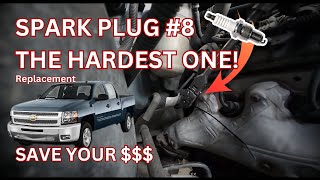
- Faulty Ignition Coil 🔴 High Probability → Shop Ignition Coil Coil-on-plug ignition systems are common failure points due to constant heat and vibration. Cylinder 8 is located at the rear of the engine bay on the passenger side, an area with significant heat soak that is notoriously difficult to access. 🎬 Watch: This trick makes replacing the difficult #8 spark plug easy.
How to confirm: Swap the ignition coil from cylinder 8 with another cylinder (e.g., cylinder 6). Clear the codes and drive. If the misfire code changes to P0306, the coil is bad. This is a common diagnostic step recommended on owner forums.
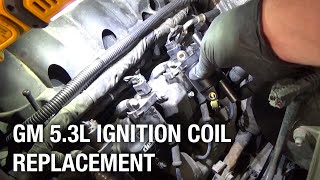
Typical fix: Replace the faulty ignition coil. 🎬 See this quick walkthrough on how to install a new coil. It is often recommended to replace the spark plug at the same time.
Est. part cost: $30-$70 - Worn or Fouled Spark Plug 🔴 High Probability → Shop Spark Plug Spark plugs are a regular maintenance item with a typical service life of around 100,000 miles. Oil consumption from the PCV system or issues with AFM can cause plugs, particularly in AFM cylinders, to foul prematurely.
How to confirm: After confirming the coil is good, inspect the spark plug from cylinder 8. Look for heavy carbon deposits, oil fouling, or a worn/damaged electrode. Compare it to a new plug.
Typical fix: Replace the spark plug. It is best practice to replace all 8 spark plugs if they are near the end of their service life. Use high-quality Iridium plugs like the OEM ACDelco parts.
Est. part cost: $8-$20 per plug - Failed AFM/DFM Lifter 🟡 Medium Probability → Shop Engine Valve Lifter The Active Fuel Management (AFM) system in the 5.3L and 6.2L V8s uses special lifters that are a known, widespread failure point. A lifter can become mechanically stuck or collapsed, preventing the valve from opening and causing a persistent misfire on that cylinder. This is a common topic in owner forums for Suburbans and their platform mates.
How to confirm: If ignition and fuel system checks do not resolve the issue, a compression test is needed. Low compression on cylinder 8 points to a mechanical problem. A consistent ticking noise from the engine is also a strong indicator of a lifter issue, which may progress to damaging the camshaft.
Typical fix: This is a major repair that involves removing the cylinder head to replace the failed lifter(s) and often the camshaft. Many owners and independent shops opt to perform an 'AFM delete' at this time, replacing all AFM components (lifters, camshaft, VLOM) with standard parts to prevent future failures. This requires an ECU tune to disable the AFM system.
Est. part cost: $500-$1500 for parts, depending on whether it's a simple lifter replacement or a full AFM delete kit with a new camshaft. - Faulty Fuel Injector ⚪ Low Probability → Shop Fuel Injector While less common than ignition or lifter issues, a fuel injector can become clogged or fail electronically, preventing fuel from being delivered to cylinder 8.
How to confirm: Use a mechanic's stethoscope or a long screwdriver to listen to the injector on cylinder 8. It should have a steady, audible clicking sound. Compare its sound to an adjacent injector. A fuel injector balance test can also be performed with a capable scan tool.
Typical fix: Replace the clogged or failed fuel injector.
Est. part cost: $50-$120
Rare But Worth Checking
- Damaged Spark Plug Wire: → Shop Spark Plug While later models are primarily coil-on-plug, the short wire connecting the coil to the plug can still fail. A Reddit user with an '11 Suburban noted a P0308 was caused by a coolant leak from a heater core connection dripping onto the #8 plug wire, causing it to short out.
- Intake Manifold Gasket Leak: → Shop Engine Intake Manifold A vacuum leak from a failed intake manifold gasket near the cylinder 8 runner can lean out the air/fuel mixture enough to cause a misfire. One forum user on a similar vehicle found that tightening the intake bolts temporarily resolved their single-cylinder misfire, pointing to a gasket issue.
- Low Compression (Non-Lifter): Beyond a failed lifter, low compression can result from worn piston rings, a bent pushrod, or a poor valve seal, though this is less common than an AFM-related failure on this platform.
Diagnosis Steps
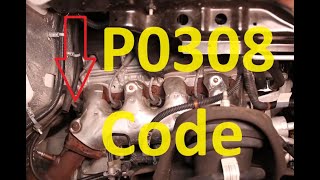
- Confirm the P0308 code using an OBD-II scanner. 🎬 Watch: A helpful overview of common P0308 causes and fixes. Note if the Check Engine Light is solid or flashing (flashing indicates a severe misfire that can damage the catalytic converter).
- Locate cylinder 8. On Chevrolet V8 engines, it is the rearmost cylinder on the passenger side (the 4th cylinder back on the passenger bank).
- Perform an 'ignition swap test'. Swap the ignition coil from cylinder 8 with the coil from cylinder 6 (the next one forward on the same bank). Clear the codes and drive the vehicle. This is the most common first step recommended in owner forums.
- If the code returns as P0306, the ignition coil is the faulty part and needs replacement.
- If the code remains P0308, swap the spark plugs between the same two cylinders. If the code then moves to P0306, the spark plug was the issue. Inspect the old plug for fouling or wear.
- If the code is still P0308, inspect the spark plug wire and the wiring harness and connector for the ignition coil and fuel injector for any visible damage, corrosion, or fluid contamination (like from a coolant leak).
- Listen to the fuel injector on cylinder 8 with a stethoscope. It should make a regular clicking noise. Compare it to cylinder 6. If it's silent or sounds different, it may be faulty.
- If all ignition and fuel components seem to be working, perform a compression test on cylinder 8. A significantly lower reading compared to other cylinders indicates a mechanical problem, such as a failed AFM lifter, worn piston rings, or a valve issue.
Parts You'll Likely Need
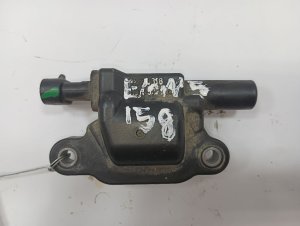
- Ignition Coil
(OEM #12611424 (Gen IV, e.g., 2012-2014), 12699383 (Gen V, e.g., 2015-2019))— This is one of the most common failures for a single-cylinder misfire. Cylinder 8's location at the back of the engine makes it prone to heat-related failure.
Trusted brands: ACDelco, Delphi, NGK
OEM price range: $50-$95
Aftermarket price range: $30-$60 - Spark Plug
(OEM #41-110 (Iridium, for Gen IV 5.3L), 41-166 (Iridium, for Gen V 5.3L/6.2L))— As a routine maintenance part, a worn or fouled spark plug is a very common cause of a misfire.
Trusted brands: ACDelco, NGK
OEM price range: $10-$15
Aftermarket price range: $8-$12 - AFM Lifter Kit — A collapsed or stuck AFM lifter is a well-known mechanical failure on these engines that directly causes a P0308 code. Repair often involves replacing all lifters on the affected bank or performing a full AFM delete.
Related Codes That Often Appear With This One
- P0300 — If the misfire becomes more frequent or other cylinders begin to misfire, a P0300 (Random/Multiple Cylinder Misfire) code may appear alongside P0308.
- P050D — A GM Technical Service Bulletin (PIP5628G) links misfire codes P0300-P0308 with P050D (Cold Start Rough Idle), indicating they can occur together. The bulletin provides a diagnostic worksheet for technicians to gather data when these codes are present.
Technical Service Bulletins (TSBs) & Recalls
- PIP5628G: A diagnostic aid bulletin for technicians encountering misfires (P0300-P0308) and/or cold start rough idle (P050D). It provides a template for data collection before contacting GM's Technical Assistance Center (TAC) and suggests diagnostic paths for ignition, fuel, or mechanical faults.
Platform-Specific Known Issues
- Active Fuel Management (AFM) lifter failure is the most significant vehicle-specific issue. A collapsed lifter will cause a persistent misfire and can lead to camshaft damage if not addressed. This issue is widely discussed by owners and mechanics and is the subject of GM service bulletins.
Mechanic-Grade Diagnostic Values
- Fuel Pressure (Gen IV, 2012-2014, Port Injection) — expected: 55-62 PSI with key on, engine off.. Failure: Pressure below 55 PSI can indicate a weak fuel pump, potentially causing a lean misfire.
- Fuel Pressure (Gen V, 2015-2019, Direct Injection) — expected: Low-pressure side: 50-75 PSI. High-pressure side: 450 PSI at idle, up to 2200+ PSI under load.. Failure: While a high-pressure pump failure usually sets other codes, an individual injector failure is more likely for a single-cylinder misfire.
- Fuel Injector Resistance — expected: Approximately 12-17 Ohms for most standard gasoline injectors.. Failure: A reading far outside this range (open or short) indicates a failed injector coil.
- Mode $06 Misfire Counts — expected: Zero or very low counts on all cylinders during normal operation.. Failure: A high and climbing count on Test ID for Cylinder 8 confirms the PCM is actively detecting misfires on that cylinder, even before the Check Engine Light is set.
Scan Tool Commands That Help
- GDS2 (GM Dealer/Professional Scan Tool): Injector Balance Test — After ruling out ignition issues. This test individually disables each fuel injector and measures the corresponding drop in fuel rail pressure or RPM. If disabling cylinder 8 causes little or no change, it confirms a fuel delivery problem to that cylinder.
- GDS2 (GM Dealer/Professional Scan Tool): Cylinder Deactivation System Test — When an AFM lifter failure is suspected. This function allows a technician to command the Valve Lifter Oil Manifold (VLOM) solenoids on and off to verify electrical circuit integrity and solenoid response, helping to distinguish between an electrical fault and a purely mechanical lifter failure.
Wiring & Ground Locations
- ECM Connector X3, Pin 48 (2015-2019 L83/L86) — On the Engine Control Module (ECM).. This specific pin is the Direct Fuel Injector High Voltage Control for cylinder 8. A technician can test this circuit for continuity and signal, tracing a wiring problem directly from the computer to the injector.
- G103 / G104 — Typically located on the front of the cylinder heads.. These are primary engine grounds. A loose or corroded ground connection here can cause a weak or intermittent spark, leading to misfires that are difficult to diagnose as the components may test good individually.
- ECM Connector J3, Pin 73 — On the Engine Control Module (ECM) for Gen IV engines.. This is a main power ground for the ECM. A fault here can cause numerous issues, including erratic behavior of ignition coil and injector drivers.
Real Owner Repair Stories
- Reddit user in r/ChevyTrucks (2011 Suburban (similar GMT900 platform)) — P0308 misfire code.
❌ Tried (didn't work) Initial diagnosis pointed towards common ignition parts.
✅ What actually fixed it The user discovered a coolant leak from the heater core quick-connect fittings located on the firewall. The coolant was dripping directly onto the cylinder 8 spark plug wire and boot, causing an electrical short. Fixing the leak and cleaning the components resolved the misfire. - Forum user reports (Various GM trucks/SUVs with 5.3L V8) — Persistent P0308 after replacing plug and coil.
❌ Tried (didn't work) Spark plug replacement, ignition coil replacement.
✅ What actually fixed it A leaking valve cover gasket allowed engine oil to pool in the spark plug well for cylinder 8. This saturated the spark plug boot and fouled the plug, causing the misfire. Replacing the valve cover gasket and cleaning the oil out of the well was the final fix. - Forum user reports (GM V8 vehicle) — P0308 misfire that was hard to trace.
❌ Tried (didn't work) Swapping coil, checking wiring.
✅ What actually fixed it After replacing the spark plug with a new one, the misfire persisted. Upon extremely close inspection, the ceramic insulator on the *new* spark plug was found to have a hairline crack, causing the spark to arc to the cylinder head instead of the electrode tip. Replacing the faulty new plug with another new one fixed the issue.
OEM Part Supersession History
ACDelco 41-110 (Spark Plug, Gen IV)→ACDelco 41-162— Supplier and/or minor design change.
Heads up: While GM considers them interchangeable for Gen IV applications, some users report slight physical differences and prefer the original 41-110 if available, citing manufacturing quality.AFM Lifter (e.g., Elgin HL-7011)→DFM Lifter (e.g., Elgin HL-7025)— Updated design for Dynamic Fuel Management (DFM) engines, which is backward compatible with older AFM systems.
Heads up: The newer DFM lifter (HL-7025) can be used in older AFM engines, but the original AFM lifter (HL-7011) CANNOT be used in newer DFM engines. It is critical to use the latest available part number when performing a repair to get the most robust design.
Model Year Variations Within This Range
- 2015-2019: These Suburbans use the Gen V EcoTec3 engine (L83 5.3L, L86 6.2L) which features Direct Injection. This introduces new potential causes for P0308 not present in earlier models, such as a failing high-pressure fuel injector or significant carbon buildup on the back of the intake valves, which are not cleaned by fuel spray.
- 2012-2014: These Suburbans use the Gen IV Vortec engine, which uses traditional multi-port fuel injection. The fuel system diagnosis is simpler, focusing on a single fuel pressure reading (55-62 psi) and standard injectors. These engines are not prone to intake valve carbon buildup as a cause for misfires.
Helpful Videos
We Have This Part in Stock

The information in this article is provided for general reference and educational purposes only. Vehicle specifications, procedures, and part compatibility can vary by production date, trim level, and region. Always consult your vehicle's factory service manual and verify part numbers before purchasing or performing repairs. Safety-critical components such as airbags, seat belts, and braking systems should be installed by a qualified professional.
- Chevrolet SUBURBAN:
- 🧭 Diagnostic Flowchart
- 🎬 Helpful Videos
- 🛍️ Shop This Part
- What's Unique About the 2012-2019 Chevrolet SUBURBAN
- Symptoms You May Notice
- Most Likely Causes
- Rare But Worth Checking
- Diagnosis Steps
- Parts You'll Likely Need
- Related Codes That Often Appear With This One
- Technical Service Bulletins (TSBs) & Recalls
- Platform-Specific Known Issues
- Mechanic-Grade Diagnostic Values
- Scan Tool Commands That Help
- Wiring & Ground Locations
- Real Owner Repair Stories
- OEM Part Supersession History
- Model Year Variations Within This Range
- 🎟️ Get 5% Off