

P0308 on 2017-2021 Ford F-250 SD: Cylinder 8 Misfire Causes and Fixes
P0308 indicates a misfire in cylinder 8. On gas engines (6.2L, 7.3L), this is often a bad ignition coil, spark plug, or plug wire (especially on the 7.3L). On the 6.7L Power Stroke diesel, it's most likely a faulty fuel injector. A fix can range from a $50 ignition part to over $500 for a diesel injector plus a mandatory new fuel line.
- P0308 is a misfire in cylinder 8, the rearmost cylinder on the driver's side.
- The most likely cause depends entirely on your engine: ignition parts for the 6.2L/7.3L gas engines, and the fuel injector for the 6.7L diesel.
- For 2020+ 7.3L gas engines, faulty spark plug wires are a very common and well-documented problem.
- Before performing expensive repairs, check with a dealer if your vehicle's software (PCM) is up to date, as several TSBs point to this as a fix.
- Do not ignore a flashing check engine light, as this indicates a severe misfire that can quickly destroy your catalytic converter.
What's Unique About the 2017-2021 Ford F-250 SD

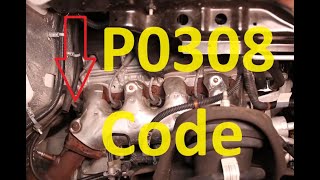
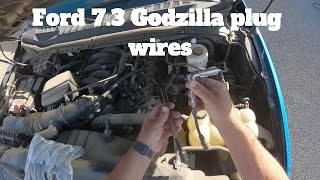
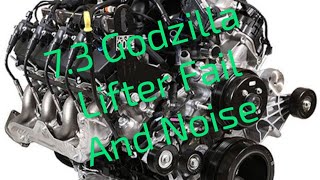
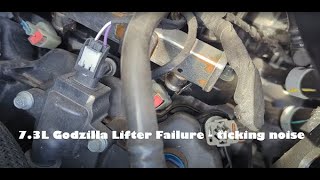
For the 2017-2021 F-250, the cause of P0308 is highly dependent on the engine. The 7.3L "Godzilla" gas V8, introduced in 2020, is known for premature spark plug wire failures causing misfires, with the wire boot failing due to heat and arcing against the cylinder head. 🎬 Watch: How to replace the updated Godzilla spark plug wires. The 6.7L Power Stroke diesel may experience this code due to complex piezoelectric fuel injector issues or may simply require a PCM software update as specified in multiple Technical Service Bulletins (TSBs). [TSB 21-2248, TSB 20-2336] Finally, severe internal engine problems like camshaft and tappet wear have been officially documented by Ford as a cause for misfires across this model range, a problem noted by owners as a catastrophic 'lifter failure' on the 7.3L gas engine. [2, 9, TSB 25-2572]
Diagnostic Flowchart

Tap your situation to follow the diagnostic path that matches what you're seeing on this vehicle.
Symptoms You May Notice

- Rough or shaking idle
- Hesitation or stumbling during acceleration
- Noticeable loss of engine power
- Solid or flashing Check Engine Light
- Possible fuel smell from the exhaust
- Audible ticking or popping sound from the engine bay (if caused by arcing spark plug wire or broken valve spring)
- Replacing oxygen sensors. While an O2 sensor can be affected by a misfire, it is almost never the root cause of a single-cylinder misfire code.
- Replacing the catalytic converter. A misfire can damage a catalytic converter, but a bad converter will not cause a P0308 code. The converter fails as a result of the misfire, not the other way around.
Most Likely Causes

- Faulty Ignition Component (Spark Plug, Coil, or Wire) 🔴 High Probability Applies to 6.2L & 7.3L Gas Engines. The 7.3L V8 is particularly known for factory spark plug wires (Motorcraft LC3Z-12286-C) failing prematurely due to heat from the exhaust manifold, causing the boot to degrade and arc. The 6.2L uses a coil-on-plug design with two plugs per cylinder, and both coils and plugs are common wear items.
How to confirm: The easiest test is to swap the ignition coil from cylinder 8 with an adjacent cylinder (like #7 on the 6.2L, or #6 on the 7.3L). Clear the codes and drive. If the code changes to P0307 or P0306, the coil is bad. If not, inspect the spark plug and wire (on 7.3L) for wear, damage, carbon tracking, or fouling. A visual inspection of the 7.3L wire boot may show a white, powdery residue from arcing.
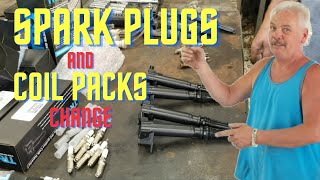
Typical fix: Replace the faulty component. For the 7.3L, it is highly recommended to replace all spark plug wires with an updated Motorcraft set or a quality aftermarket set with better heat shielding. For the 6.2L, replace the faulty coil and consider replacing all 16 spark plugs if they are near their service interval.
Est. part cost: $25-$200 - Faulty Fuel Injector 🔴 High Probability → Shop Fuel Injector This is the most common cause for the 6.7L Power Stroke Diesel. These high-pressure piezoelectric injectors can fail electronically or mechanically. It is a less common failure on the gas engines but still possible, especially if a strong fuel smell is present.
How to confirm: On a 6.7L diesel, a diagnostic scan tool capable of performing a 'Cylinder Contribution Test' is required. This test will show if cylinder 8 is underperforming. For gas engines, you can swap the injector with another cylinder, similar to the coil swap test, but this is more labor-intensive.
Typical fix: Replace the faulty fuel injector. On the 6.7L diesel, this is a complex job that also requires replacing the single-use high-pressure fuel line to that injector to prevent leaks. Extreme cleanliness is required to avoid contaminating the common rail fuel system.
Est. part cost: $300-$600 for the injector, plus $40-$60 for the required fuel line. - Internal Engine Mechanical Failure ⚪ Low Probability A Ford TSB explicitly states that excessive wear on the camshaft and/or valve tappets (lifters) can cause misfire codes on the 7.3L engine. [1, TSB 25-2572] This is a known catastrophic failure. On the 6.2L V8, broken valve springs are a known, though less frequent, cause of single-cylinder misfires.
How to confirm: A compression test on cylinder 8 is the first step. If compression is low, a cylinder leak-down test can pinpoint the source. For a suspected broken valve spring on a 6.2L, removing the valve cover will often make the broken spring immediately visible. A borescope may be needed to see internal damage like a damaged piston or valve.
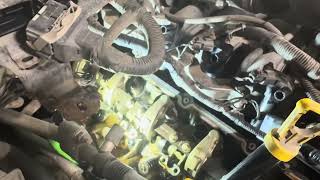
Typical fix: This is a major engine repair. For the 7.3L, it often requires replacement of the camshaft and all lifters, and in severe cases, a long block replacement. For the 6.2L, it involves replacing the broken valve spring and valve stem seal, which requires special tools to pressurize the cylinder.
Est. part cost: $1000+ for parts and specialized labor. - Powertrain Control Module (PCM) Software Issue 🟡 Medium Probability → Shop Engine Control Module (ECM) Multiple Ford TSBs exist for all engines in this range, indicating that a simple software reflash at a dealership can resolve misfire codes that appear without a clear mechanical cause, especially on the 6.7L diesel. [TSB 21-2248, TSB 20-2336, TSB 18-2188]
How to confirm: If standard diagnostics (plugs, coils, injectors) show no faults, a Ford dealership or qualified shop can check for available PCM updates related to misfire detection by checking your VIN against Ford's service database.
Typical fix: Reprogramming the PCM with the latest Ford software.
Est. part cost: $0-$200
Rare But Worth Checking
- Under-Torqued Crankshaft Pulley Bolt: Specifically for early 2017 models, a loose crank pulley bolt can cause erratic crankshaft position sensor readings, leading to multiple misfire codes, including P0308. [SSM 46391]
Diagnosis Steps
- Identify Cylinder 8: Standing in front of the truck, cylinder 8 is the last cylinder on the driver's side, closest to the firewall. The cylinders are numbered 1-4 on the passenger side (front to back) and 5-8 on the driver's side (front to back).
- Check for other codes: Use an OBD-II scanner to see if any other codes are present. Multiple misfire codes (e.g., P0300, P0302, P0305) suggest a problem affecting the whole engine.
- For 7.3L Gas Engine: Immediately suspect the spark plug wire. In a dark garage, start the engine and look for any visible arcing from the #8 plug wire boot to the cylinder head or exhaust manifold. Swap the #8 wire with #6 if possible, or move directly to inspection.
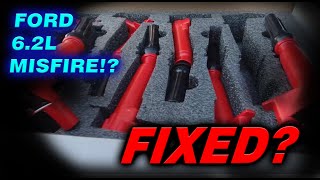
- For 6.2L Gas Engine: Start with the ignition system. Swap the ignition coil from cylinder 8 with cylinder 7 (the one in front of it). Clear the codes and run the engine. If the code changes to P0307, you have a bad coil.
- If the code remains P0308 after the coil/wire swap, inspect the spark plug. Look for cracks, corrosion, or heavy deposits. On the 6.2L, remember there are two plugs for cylinder 8 (upper and lower).
- For 6.7L Diesel Engine: Diagnosis requires a high-level scan tool like FORScan or the dealer's IDS. Perform a 'buzz test' to check the electronic function of all injectors and a 'cylinder contribution test' to see if cylinder 8 is providing less power than the others.
- Check for TSBs: Contact a dealer with your VIN to see if your truck is eligible for a PCM reflash under TSBs 21-2248, 20-2336 (for 6.7L), or 18-2188 (for 6.2L).
- Perform a Compression Test: If ignition and fuel components check out, test the mechanical health of the cylinder. A compression test will reveal issues like a broken valve spring (common on 6.2L), worn piston rings, bad valves, or a failed head gasket.
Parts You'll Likely Need
- Ignition Coil
(OEM #DG-571 (Motorcraft))— A primary cause of misfires on the 6.2L gas engine. Cylinder 8 is on the driver's side, rear.
Trusted brands: Motorcraft
OEM price range: $70-$100
Aftermarket price range: $40-$70 - Spark Plug Wire Set
(OEM #LC3Z-12286-C (Motorcraft))— A very common failure point on the 7.3L gas engine, addressed by TSB 20-2370. It's recommended to replace all 8 as a set.
Trusted brands: Motorcraft, MSD, Taylor
OEM price range: $150-$200
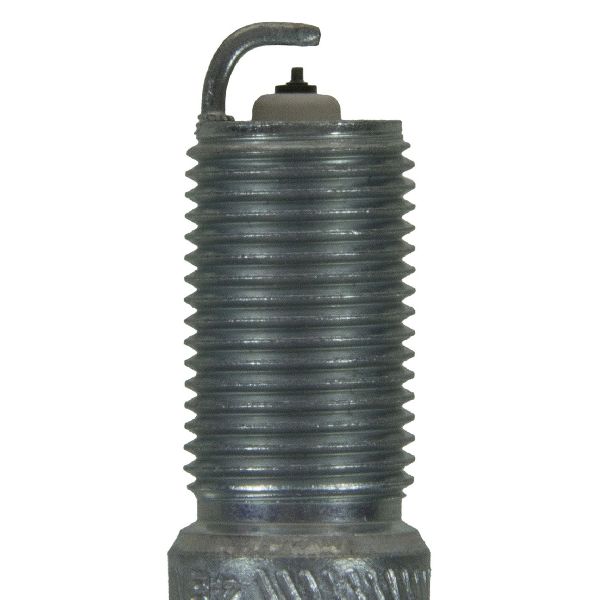
Aftermarket price range: $80-$150 - Spark Plug
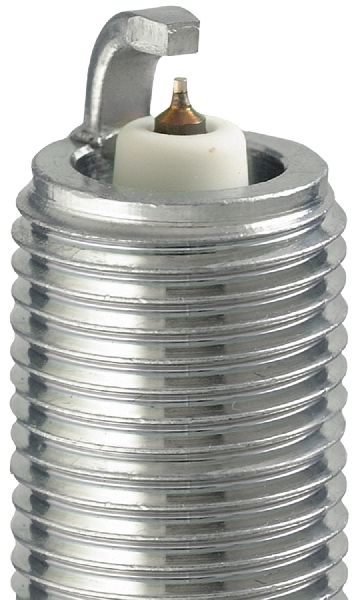
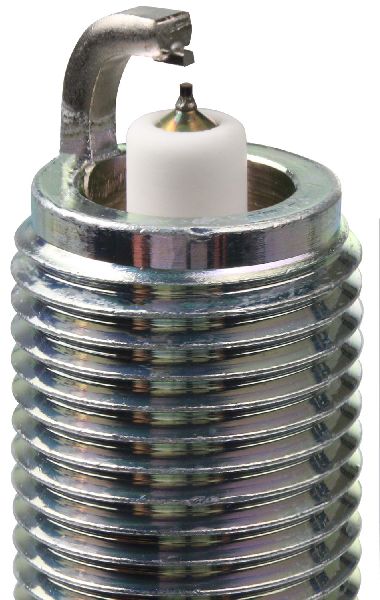
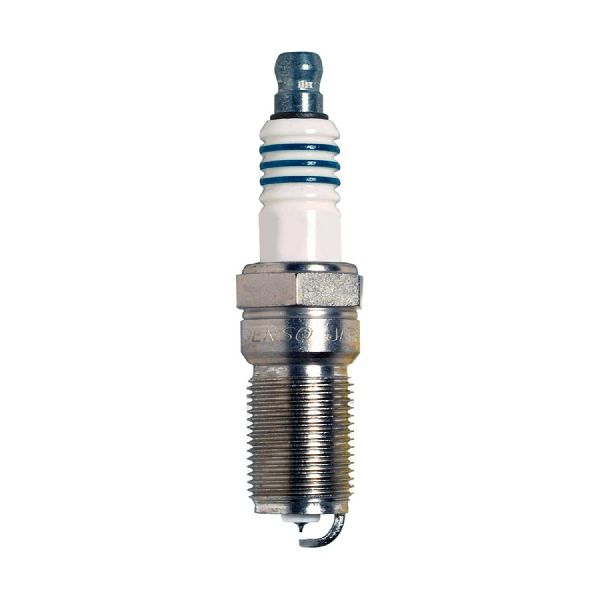
(OEM #SP-526-X (Motorcraft, 6.2L), SP-578 (Motorcraft, 7.3L))— Standard maintenance item and a common cause of misfires. The 6.2L engine uses two spark plugs per cylinder.
Trusted brands: Motorcraft, NGK, Denso
OEM price range: $8-$15 per plug
Aftermarket price range: $5-$12 per plug - Fuel Injector (6.7L Diesel)
(OEM #FC3Z-9H529-A (Motorcraft))— The most frequent cause of P0308 on the 6.7L Power Stroke. Requires replacement of the high-pressure fuel line as well.
Trusted brands: Motorcraft, Bosch, Alliant Power
OEM price range: $350-$500
Aftermarket price range: $250-$400
Related Codes That Often Appear With This One
- P0300 — If multiple cylinders are misfiring, a P0300 (Random Misfire) code will often accompany the specific cylinder code. This may point to a systemic issue like a vacuum leak or fuel delivery problem.
- P0316 — This code indicates a misfire was detected within the first 1,000 engine revolutions on startup. It frequently appears with other P030x codes and is common with ignition-related misfires.
- P0191 — On the 6.7L Power Stroke, a failing injector can sometimes cause erratic fuel rail pressure readings, potentially triggering a P0191 (Fuel Rail Pressure Sensor Circuit Range/Performance) code alongside the misfire code.
Technical Service Bulletins (TSBs) & Recalls
- TSB 25-2572: Documents camshaft and/or valve tappet wear causing misfires on 7.3L engines.
- SSM 46391: Notes under-torqued crankshaft pulley bolts on early 2017 models causing multiple misfire codes.
- TSB 21-2248: PCM reflash for various DTCs including P0300-P0308 on 6.7L diesels.
- TSB 20-2336: Earlier PCM reflash for various DTCs including P0300-P0308 on 6.7L diesels.
- TSB 18-2188: PCM reflash for misfire codes on 6.2L gas engines.
- TSB 20-2370: Recommends replacing all 8 spark plug wires for misfires on early 7.3L engines.
Platform-Specific Known Issues
- TSB 25-2572: Notes that misfire codes P0301-P0308 can be caused by excessive wear on the camshaft and/or valve tappets, requiring significant mechanical repair.
- TSB 21-2248 & 20-2336: For 6.7L diesel engines, these bulletins address a list of DTCs including P0300-P0308 that may be resolved by a PCM software update.
- SSM 46391: On early 2017 models, an under-torqued crankshaft pulley bolt can cause multiple misfire codes.
- TSB 20-2370 / Common Issue: Early 2020 models with the 7.3L gas engine are known to have defective spark plug wires that cause misfires. An updated part is available.
Mechanic-Grade Diagnostic Values
- 6.7L Power Stroke Fuel Injector Resistance — expected: 150,000 to 210,000 Ohms (150-210 kOhms). Failure: A reading significantly outside this range, such as 85,000 Ohms or 5 Ohms, indicates a bad injector.
- 6.7L Power Stroke Low-Pressure Fuel System Pressure — expected: 53-73 PSI. Failure: Pressure below 52 PSI will trigger a 'low' reading on a scan tool and prevent the high-pressure system from building the required 5000 PSI to start.
- Mode $06, Test ID $53 — expected: Value should be at or near 0.. Failure: This is the misfire monitor for a specific cylinder. A high or climbing count indicates the number of misfire events detected by the PCM for that cylinder since the last drive cycle, even if it hasn't yet triggered a CEL.
Scan Tool Commands That Help
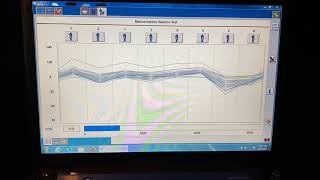
- FORScan / Ford IDS: Power Balance Test — This is the primary diagnostic tool for a misfire on Ford vehicles. It graphically displays the power contribution of each cylinder in real-time. A cylinder with a significant downward dip indicates a misfire. The tool also allows the user to disable individual injectors to see how it affects the engine, helping to confirm the location of the misfire.
- FORScan / Ford IDS: KOEO Injector Electrical Self Test (Buzz Test) — Used primarily on diesel engines to verify the electrical integrity of the fuel injectors. The PCM commands all injectors to buzz at once, then cycles through them individually. A weak or absent buzz from a specific injector points to a wiring or solenoid issue.
Wiring & Ground Locations
- C175B, C175E, C175T — These are the three main connectors for the Powertrain Control Module (PCM), typically located on the firewall or inner fender.. The PCM's middle connector is generally the 'engine' connector, containing the driver circuits for the fuel injectors and ignition coils. For a P0308, a technician would test the specific pin for the cylinder 8 injector/coil driver for continuity and voltage. For example, on some models, Pin 6 of connector C175B is the control for ignition coil #8.
- 42-pin connector — On the driver's side valve cover (on older Power Stroke models, but the principle applies to newer harness routing).. Main engine harnesses that cross over hot or vibrating engine components are prone to chafing. A rub-through on the wiring loom can cause a short or open circuit for the cylinder 8 injector or coil control wire, leading to an intermittent or persistent misfire.
Real Owner Repair Stories
- Ford Truck Enthusiasts Forum (2020 F-350 with 7.3L Gas engine, 49k miles) — Rough idle at stops, Check Engine Light came on.
❌ Tried (didn't work) Dealer replaced the spark plug and ignition coil for the misfiring cylinder (#4 in this case, but the principle applies).
✅ What actually fixed it The user suspected the issue was not resolved and that the next step would be a compression test, pointing towards a potential lifter/cam failure, which is a known issue for this engine. - YouTube - Bearded Ford Tech (2020 F-250 with 6.2L Gas engine) — Severe misfire, engine shaking, metal chunks found in the intake manifold.
❌ Tried (didn't work) Initial diagnosis was not shown, but the damage was catastrophic.
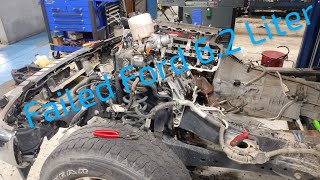
✅ What actually fixed it The root cause was a broken valve spring, which dropped the valve into the cylinder, destroying the piston and sending metal fragments into the intake manifold. The only fix was a complete engine replacement. This represents a worst-case scenario for a mechanical misfire.
OEM Part Supersession History
LC3Z-12286-A, LC3Z-12286-B→LC3Z-12286-C, and later LC3Z-12286-D— The original spark plug wires for the 7.3L Godzilla engine were prone to heat damage, causing misfires. TSB 20-2370 recommended replacing them with the '-C' revision. The '-D' part is a further revision.
Model Year Variations Within This Range
- 2020-2022 (7.3L V8): Early 7.3L 'Godzilla' engines were more susceptible to the lifter failure issue, which was often attributed to a variable displacement oil pump providing low oil pressure at idle. Ford later issued PCM updates (like 24B27) and made internal revisions to the lifters and oiling system to mitigate this problem in later model years.
- 2017: Early build 2017 models could exhibit multiple misfire codes due to an under-torqued crankshaft pulley bolt, as noted in Service Bulletin SSM 46391. This is a specific manufacturing issue not present in later years.
Helpful Videos

We Have This Part in Stock


The information in this article is provided for general reference and educational purposes only. Vehicle specifications, procedures, and part compatibility can vary by production date, trim level, and region. Always consult your vehicle's factory service manual and verify part numbers before purchasing or performing repairs. Safety-critical components such as airbags, seat belts, and braking systems should be installed by a qualified professional.
- Ford F-250 SD:
- 🧭 Diagnostic Flowchart
- 🎬 Helpful Videos
- 🛍️ Shop This Part
- What's Unique About the 2017-2021 Ford F-250 SD
- Symptoms You May Notice
- Most Likely Causes
- Rare But Worth Checking
- Diagnosis Steps
- Parts You'll Likely Need
- Related Codes That Often Appear With This One
- Technical Service Bulletins (TSBs) & Recalls
- Platform-Specific Known Issues
- Mechanic-Grade Diagnostic Values
- Scan Tool Commands That Help
- Wiring & Ground Locations
- Real Owner Repair Stories
- OEM Part Supersession History
- Model Year Variations Within This Range
- 🎟️ Get 5% Off