

P0308 on 2005-2009 GMC Yukon Denali: Cylinder 8 Misfire Causes & Fixes
P0308 indicates a misfire in cylinder 8. On a 2005-2009 Yukon Denali, this is most often caused by a bad spark plug, ignition coil, or spark plug wire. A DIY fix for these parts costs between $50 and $150. However, if these basic parts are not the cause, a more serious mechanical issue like a worn camshaft or lifter could be the problem, as noted in official GM service bulletins for these engines.
- P0308 signifies a misfire on cylinder 8, the rearmost cylinder on the passenger side.
- Start your diagnosis with the cheapest and easiest parts: check the spark plug wire connection, then swap the ignition coil with another cylinder to see if the misfire follows.
- If basic ignition parts (plug, wire, coil) don't fix the issue, the next most likely cause is a faulty fuel injector.
- Be aware of the possibility of a more serious mechanical problem like a worn camshaft or lifter, which is a known issue on these engines per GM service bulletins.
- Do not drive for extended periods with a flashing check engine light, as this indicates a severe misfire that can quickly destroy your catalytic converter.
What's Unique About the 2005-2009 Gmc YUKON DENALI
The 2005-2009 GMC Yukon Denali is equipped with a robust LS-based V8 engine (6.0L or 6.2L). While these engines are known for their durability, they are not immune to valvetrain problems. Unlike many other GM trucks of the era, the Denali V8s in this year range did not have the problematic Active Fuel Management (AFM) system. However, as confirmed by GM Technical Service Bulletin #PIP4138R (later superseded by 19-NA-219), they can still suffer from worn camshaft lobes and lifters, which can cause a persistent P0308 code after more common ignition or fuel system faults have been ruled out. This issue can present with a characteristic chirp, squeak, or tick noise that occurs at half the speed of the engine's crankshaft.
Diagnostic Flowchart
Tap your situation to follow the diagnostic path that matches what you're seeing on this vehicle.
Generation note: This range covers two generations: the end of the GMT800 platform (2005-2006) with the 6.0L V8, and the beginning of the GMT900 platform (2007-2009) with the 6.2L V8. The fundamental causes of a P0308 misfire are similar for both, with the camshaft/lifter issue being a known problem across this V8 engine family. A key difference is the transition to the E38 ECM and different fuel injector connectors (EV6 style) on the 2007+ L92 engines.
Symptoms You May Notice
- Check Engine Light is on or flashing
- Rough idle or engine shaking
- Hesitation or stumbling during acceleration
- Noticeable loss of engine power
- Reduced fuel economy
- Smell of raw fuel from the exhaust
- Engine coughing or sputtering sounds
- Stalling at idle
- Replacing oxygen sensors when the misfire is the actual root cause of abnormal readings.
- Assuming a catalytic converter is bad due to a sulfur smell, when the smell is caused by raw fuel from the misfire entering the exhaust.
Most Likely Causes
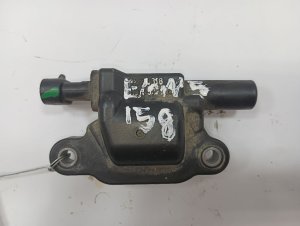
- Faulty Ignition Coil 🔴 High Probability → Shop Ignition Coil Heat and age are the primary factors for coil failure. Cylinder 8 is located at the rear of the engine bay on the passenger side, an area that can experience high temperatures, making its coil and wire more susceptible to degradation.
How to confirm: Swap the ignition coil from cylinder 8 with another cylinder (e.g., cylinder 6). Clear the codes and drive the vehicle. If the misfire code changes to P0306, the coil is faulty. A failing coil can also cause hesitation and a rough idle.
Typical fix: Replace the faulty ignition coil. Many owners recommend replacing the spark plug at the same time.
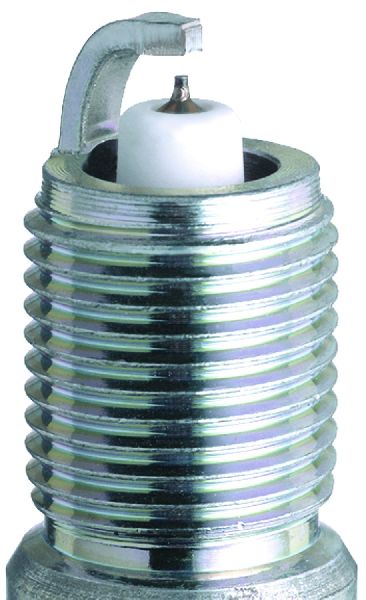
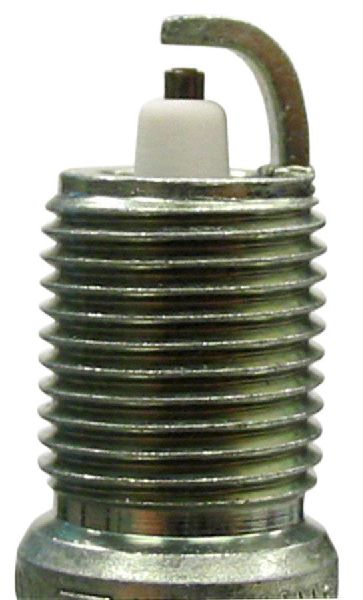
Est. part cost: $40-$80 - Worn or Fouled Spark Plug 🔴 High Probability → Shop Spark Plug
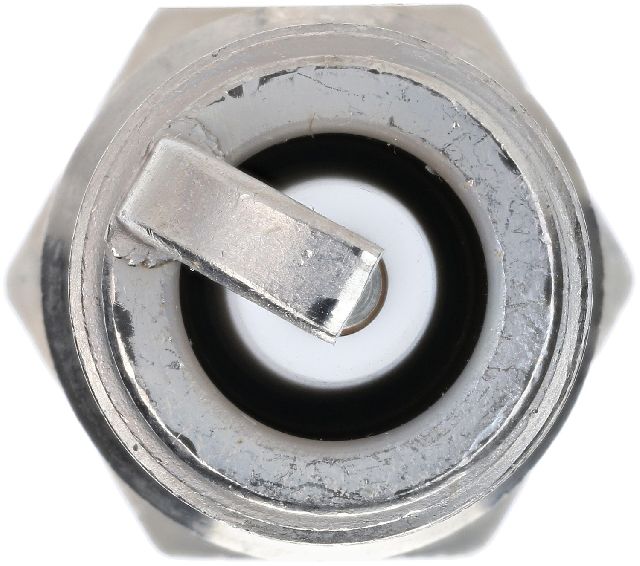
How to confirm: Remove the spark plug from cylinder 8 and inspect it for wear, carbon buildup, oil fouling, or damage to the electrode or ceramic insulator. Compare it to a plug from a working cylinder. A plug that is wet with fuel points to other issues, like a stuck injector.
Typical fix: Replace the spark plug. It is recommended to replace all 8 spark plugs at the same time for even performance, especially if they are near their service interval.
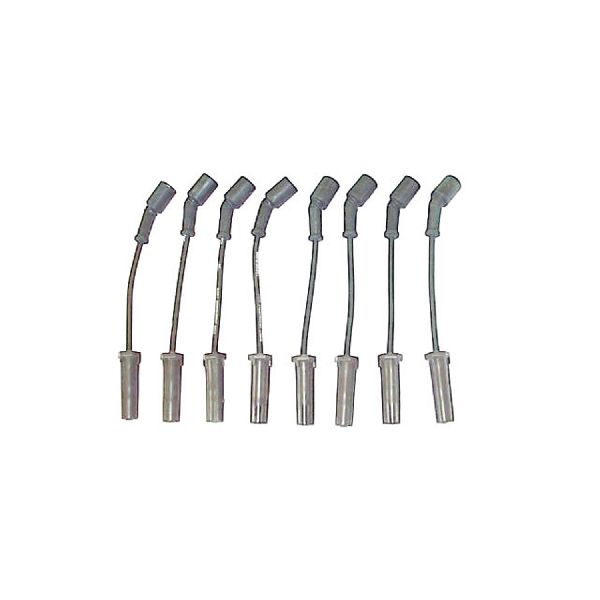
Est. part cost: $5-$15 per plug - Bad Spark Plug Wire 🟡 Medium Probability → Shop Spark Plug Wires can degrade over time from heat and vibration, causing the spark to become weak or arc to the engine block. A loose connection at the coil or plug is also common. The wire for cylinder 8 is long and in a hot location.
How to confirm: Visually inspect the wire for cracks, burns, or corrosion. Check for a secure fit at both ends. Use a multimeter to test the wire's resistance; it should be within the manufacturer's specification (e.g., 6,000-20,000 ohms for a 25-35 inch wire). A reading significantly outside this range indicates a bad wire.
Typical fix: Replace the spark plug wire. It's best practice to replace the entire set of wires.
Est. part cost: $50-$100 for a set - Failed Fuel Injector 🟡 Medium Probability → Shop Fuel Injector
How to confirm: Listen to the injector with a mechanic's stethoscope or a long screwdriver; it should have a consistent clicking sound. You can also test its resistance with a multimeter (all injectors should have similar readings, typically 12-15 ohms) or swap it with an injector from another cylinder to see if the misfire follows. Symptoms of a bad injector include rough idle, hesitation, and a raw fuel smell.
Typical fix: Replace the faulty fuel injector. It is often recommended to replace all injectors if the vehicle has high mileage, as others may soon fail.
Est. part cost: $60-$120 - Worn Camshaft Lobe or Failed Lifter ⚪ Low Probability → Shop Engine Camshaft As cited in TSB #PIP4138R and its successor 19-NA-219, this is a known, though less common, issue on these engines if standard diagnostics do not resolve the misfire. It can present with a ticking, squeaking, or chirping noise that follows camshaft speed (half of engine RPM). Forum discussions confirm this is a real-world failure mode.
How to confirm: This requires more advanced diagnosis. After ruling out ignition and fuel issues, a technician may need to remove the valve cover to inspect valve movement or use an in-cylinder pressure transducer to analyze dynamic compression. A standard compression test may not always reveal this issue.
Typical fix: Requires replacement of the camshaft and all lifters, which is a significant and costly repair.
Est. part cost: $500-$1500+
Rare But Worth Checking
- Low Engine Compression: Caused by worn piston rings, a leaking head gasket, or a valve that is not seating correctly. A compression test is needed to confirm this; healthy cylinders typically show 120 to 150 PSI. In one documented case for a platform mate, a P0308 was caused by a head gasket leak allowing coolant onto the spark plug.
- Intake Manifold Gasket Leak: → Shop Engine Intake Manifold A vacuum leak near the cylinder 8 intake runner can lean out the air/fuel mixture and cause a misfire. This may be more prevalent when the engine is cold and may be accompanied by other lean codes.
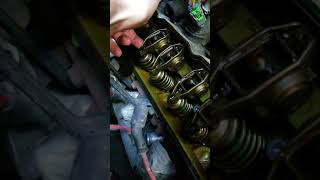
- Broken Valve Spring: As noted in TSB 19-NA-219, a broken valve spring can cause an intermittent or consistent misfire, sometimes only at high RPM. It can be hard to spot visually as the spring may remain stacked together.
Diagnosis Steps
- Read the code with an OBD-II scanner and check for any other stored codes. Note if the Check Engine Light is flashing, which indicates a severe misfire.
- Inspect the spark plug wire for cylinder 8 for damage or a loose connection at the coil pack and spark plug.
- Swap the ignition coil from cylinder 8 with an adjacent cylinder (like 6). Clear the codes and see if the misfire moves to the new cylinder (P0306). If it does, the coil is bad.
- If the misfire remains on cylinder 8, remove and inspect the spark plug for wear, damage, or fouling. Replace if necessary.
- If the coil and plug are good, test the spark plug wire's resistance with a multimeter or swap it with another wire to see if the misfire moves.
- If the ignition system checks out, test the fuel injector. Listen for a steady clicking sound. If possible, swap the injector with another cylinder to see if the misfire follows.
- If the misfire persists, perform an engine compression test on cylinder 8 to check for mechanical issues like bad rings or valves. A low reading (e.g., below 120 psi when others are higher) points to a mechanical fault.
- If compression is good but the misfire continues, investigate the possibility of a worn camshaft lobe or failed lifter, as suggested by TSB #PIP4138R / 19-NA-219. This step may require professional assistance and involves inspecting the valvetrain.
Parts You'll Likely Need
- Ignition Coil
(OEM #12573190)— Ignition coils are a very common failure point for misfires due to heat and age.
Trusted brands: ACDelco, Delphi, NGK
OEM price range: $60-$90
Aftermarket price range: $40-$70 - Spark Plug
(OEM #41-110)— Spark plugs are a routine maintenance item and a primary cause of misfires as they wear out.
Trusted brands: ACDelco, NGK
OEM price range: $8-$15
Aftermarket price range: $5-$10 - Spark Plug Wire Set
(OEM #9748RR)— Wires degrade over time, leading to weak spark. Replacing them is a common step in resolving a persistent misfire.
Trusted brands: ACDelco, NGK
OEM price range: $70-$120
Aftermarket price range: $50-$90
Related Codes That Often Appear With This One
- P0300 — If the condition causing the P0308 is intermittent or begins to affect other cylinders, a P0300 (Random/Multiple Cylinder Misfire) code may also be stored.
Technical Service Bulletins (TSBs) & Recalls
- PIP5628C: Communicates information needed to diagnose misfire codes P0300 - P0308.
- PIP4138R: Advises checking for worn camshaft lobe or lifter if other diagnostics fail to find the cause of a misfire.
Platform-Specific Known Issues
- TSB #19-NA-219 (which supersedes PIP4138R) specifically calls out that if standard diagnostics for a P030x code do not find a cause, technicians should inspect for a worn camshaft lobe and/or lifter. This may be accompanied by a chirp, squeak, or tick noise.
- TSB #PIP5628C indicates that diagnosing misfire codes P0300-P0308 on 2009 models may require specific information to be communicated to GM's Technical Assistance Center (TAC), suggesting known complex issues.
- TSB #PIP4819A notes that on some V8 engines, a misfire can be caused by something as simple as a loose spark plug wire at the ignition coil, and recommends replacing the wire if it's found to be loose.
Mechanic-Grade Diagnostic Values
- Ignition Coil Primary Resistance — expected: 0.3 to 1.5 ohms. Failure: A reading outside this range suggests a faulty coil winding.
- Ignition Coil Secondary Resistance — expected: 5,000 to 15,000 ohms (5k-15k Ω). Failure: A reading outside this range indicates a problem with the secondary coil windings.
- Fuel Injector Resistance — expected: 12.0 to 15.0 ohms (for many GM applications). Failure: A reading significantly higher or lower, or an open circuit, indicates a failed injector coil. All injectors should be within 0.8 ohms of each other.
- Fuel Pressure (Key On, Engine Off) — expected: 50-60 PSI. Failure: Pressure that is too low can cause a lean misfire. Pressure that doesn't hold may indicate a leak.
- Fuel Pressure (Engine Running at Idle) — expected: 42-45 PSI. Failure: Low or fluctuating pressure can indicate a weak fuel pump or faulty fuel pressure regulator/module.
- Spark Plug Wire Resistance (25-35 inch wire) — expected: 6,000 to 20,000 ohms. Failure: Resistance significantly higher than the specified range for the wire's length indicates excessive internal resistance.
Hidden / Shadow Codes Worth Checking
- Misfire Counters (per cylinder): A live data parameter that shows the real-time count of misfire events for each individual cylinder, including cylinder 8. This is more sensitive than the DTC and can show intermittent misfires before they are frequent enough to set a code. (see via GM Tech 2, GDS2, or high-end professional scan tools with access to GM-specific live data. Often found under 'Misfire Data' or displayed as a 'Misfire Graphic'.)
Scan Tool Commands That Help
- GM Tech 2 / GDS2: Injector Balance Test / Cylinder Power Balance — This function allows the technician to disable one injector at a time (including cylinder 8) and observe the corresponding drop in engine RPM. If disabling cylinder 8 causes little or no change in RPM, it confirms that cylinder is not contributing power, pointing to a misfire.
- GM Tech 2 / GDS2: Crankshaft Position (CKP) System Variation Learn (CASE Relearn) — This procedure should be performed after replacing a crankshaft position sensor, ECM, or making major engine repairs. It calibrates the ECM to minor variations in the crankshaft reluctor wheel, ensuring accurate misfire detection. If false misfires are suspected, performing a CASE relearn is a valid diagnostic step.
- Professional Scan Tool (e.g., Autel, Snap-on): Range Actuator Learn (Transfer Case) — While not directly related to an engine misfire, this procedure is an example of a specific learn function required after replacing transfer case components. Similar specific learn procedures exist for many modules on the vehicle.
Wiring & Ground Locations
- G102 — Located at the left rear of the engine.. This ground point is specifically for the 8 ignition coils. A loose or corroded connection here can cause weak spark or intermittent misfires on any or all cylinders, including cylinder 8.
- G103 / G104 — G103 is on the front of the right cylinder head. G104 is on the rear of the left cylinder head.. These are primary engine-to-chassis grounds. Poor connections at these points can cause a host of electrical issues, including incorrect sensor readings and problems with the ignition system that could lead to a misfire code.
- Cylinder 8 Injector Connector — On the fuel injector for cylinder 8, located on the passenger side, rear-most cylinder.. The wiring and connector pins for the injector can become brittle from heat and vibration. A poor connection here will prevent the injector from firing correctly, directly causing a P0308. The connector style changed around 2007 from a Multec 2 / Mini-Delphi to a USCAR / EV6 style.
Real Owner Repair Stories
- Tahoe Yukon Forum user '99Vortec' (GMC Denali (year not specified, but L31 Vortec engine family)) — Smoke from tailpipe, flashing check engine light for P0308, #8 spark plug drenched in raw fuel.
❌ Tried (didn't work) Swapped spark plug from cylinder 8 to 4 (misfire stayed on 8)., Swapped spark plug wire from cylinder 8 to 6 (misfire stayed on 8)., Confirmed spark was present at the #8 wire., Performed a compression test, which checked out OK.
✅ What actually fixed it The #8 fuel injector had failed and was stuck open. The owner noted it was a non-OEM spider injector assembly that had been replaced less than a year prior, and learned a lesson about using only GM replacement parts for that component. - Tahoe Yukon Forum user 'Fyrefyter303' (2016 model with 40k miles (newer but same engine family and code)) — Intermittent P0308, sometimes flashing, especially during extended drives or while trailering. No noticeable sluggishness.
❌ Tried (didn't work) Jiggling the plug wire temporarily made the light go off.
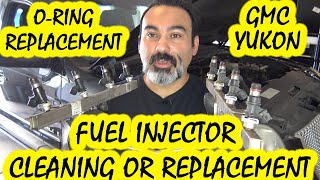
✅ What actually fixed it The user ran two tanks of gasoline treated with Techron fuel system cleaner. The code went away and did not return, suggesting the misfire was caused by a dirty or partially clogged fuel injector on cylinder 8 that was successfully cleaned.
OEM Part Supersession History
12573190 (Ignition Coil)→12739916— Standard part number update by GM.41-985 (Spark Plug)→41-110, then 41-162— Design and/or vendor changes over time.
Heads up: While 41-162 is the official replacement for 41-110, some owners report perceived quality control issues with the newer 41-162 plugs and prefer to seek out new-old-stock 41-110 plugs, which they claim provide a smoother idle.
Model Year Variations Within This Range
- 2005-2006 (GMT800): These models typically used the 6.0L V8 (LQ4 or LQ9) with a different ECM (e.g., P59) and Multec 2 / Mini-Delphi style fuel injector connectors.
- 2007-2009 (GMT900): These models introduced the 6.2L L92 V8, which uses the E38 Engine Control Module (ECM) and has different fuel injectors with USCAR / EV6 style electrical connectors. Diagnostic procedures involving the ECM may differ from earlier models.
Helpful Videos
Used OEM Parts in Stock
New Aftermarket Parts Available


The information in this article is provided for general reference and educational purposes only. Vehicle specifications, procedures, and part compatibility can vary by production date, trim level, and region. Always consult your vehicle's factory service manual and verify part numbers before purchasing or performing repairs. Safety-critical components such as airbags, seat belts, and braking systems should be installed by a qualified professional.
- Gmc YUKON DENALI:
- 🧭 Diagnostic Flowchart
- 🎬 Helpful Videos
- 🛍️ Shop This Part
- What's Unique About the 2005-2009 Gmc YUKON DENALI
- Symptoms You May Notice
- Most Likely Causes
- Rare But Worth Checking
- Diagnosis Steps
- Parts You'll Likely Need
- Related Codes That Often Appear With This One
- Technical Service Bulletins (TSBs) & Recalls
- Platform-Specific Known Issues
- Mechanic-Grade Diagnostic Values
- Hidden / Shadow Codes Worth Checking
- Scan Tool Commands That Help
- Wiring & Ground Locations
- Real Owner Repair Stories
- OEM Part Supersession History
- Model Year Variations Within This Range
- 🎟️ Get 5% Off