

P0308 on 2005-2010 Pontiac G6: Why This Code Is Not Applicable
The P0308 trouble code signifies a misfire in cylinder 8. However, the 2005-2010 Pontiac G6 was only manufactured with 4-cylinder and 6-cylinder engines. Therefore, a P0308 code is impossible for this vehicle. If this code appears, it likely points to a scan tool error or a significant issue with the Engine Control Module (ECM).
- A P0308 code should be impossible on a 2005-2010 Pontiac G6 because it was never made with a V8 engine.
- If you see this code, the most likely cause is an error with the OBD-II scan tool being used.
- Do not replace any parts like spark plugs or coils for 'cylinder 8' as it does not exist.
- If the code persists with multiple scanners, the vehicle needs professional diagnosis for a potential ECM failure, which can be a known issue on this platform.
What's Unique About the 2005-2010 Pontiac G6
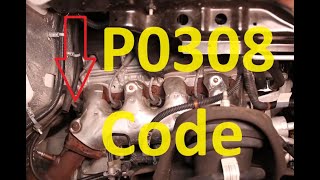
The Pontiac G6 platform, built on the GM Epsilon architecture, was exclusively offered with 4-cylinder (2.4L LE5 I4) and V6 engines (3.5L LX9/LZ4, 3.6L LY7, and 3.9L LZ9). There was never a production V8 option for the G6. The included NHTSA TSB #PIP5628G mentions the P0300-P0308 range because it is a general GM bulletin intended to cover a wide array of vehicles, including those with V8 engines (like the Pontiac G8 or various Chevrolet/GMC models), not because a G6 can experience a P0308 fault. 🎬 Watch: Understanding what causes a cylinder 8 misfire code The bulletin is a diagnostic aid for technicians when contacting the Technical Assistance Center (TAC) and is not indicative of a specific fault on all listed models.
Diagnostic Flowchart
Tap your situation to follow the diagnostic path that matches what you're seeing on this vehicle.
Symptoms You May Notice
- Check Engine Light is on
- Code P0308 is present on a scan tool
- The vehicle may exhibit erratic engine behavior if the ECM is malfunctioning
- In cases of severe ECM or BCM communication failure, the odometer may display an "error" message and the car may not start.
- Loss of communication with multiple vehicle modules, potentially including the power steering control module or transmission control module.
- Replacing ignition or fuel parts. Since cylinder 8 does not exist on a Pontiac G6, replacing a spark plug, ignition coil, or fuel injector is pointless and will not resolve the underlying electronic issue.
Most Likely Causes
- Scan Tool Error 🔴 High Probability Not specific to the vehicle, but a common source of impossible codes. The tool may be misinterpreting data, have a software bug, or be incompatible with the specific vehicle protocol.
How to confirm: Use a different, high-quality OBD-II scanner to see if the same code appears. Clear the codes and see if it returns. If the code is gone with a second scanner, the first tool was the issue.
Typical fix: Update the scan tool's software or use a different, professional-grade diagnostic tool.
Est. part cost: $0 - Engine Control Module (ECM) Malfunction ⚪ Low Probability → Shop Engine Control Module (ECM) While not common, an internal ECM failure can cause it to report erroneous and impossible trouble codes. G6 models are known to have various electrical issues that can stem from poor terminal contact at the BCM or ECM, which can lead to a wide range of symptoms. A failing ECM might also present with a U0100 'Lost Communication with ECM' code.
How to confirm: This requires professional diagnosis. A technician will test the ECM's power, grounds, and communication networks (CAN bus). They may attempt to reflash the software before condemning the unit. In some cases, a failing ECM will prevent a scan tool from communicating at all.
Typical fix: Reprogramming or replacing the ECM. The replacement unit must be programmed to the vehicle's VIN to work with the anti-theft system and other modules.
Est. part cost: $200-$800
Diagnosis Steps
- Confirm the code with a second, known-good OBD-II scanner. If the code disappears, the issue was with the initial tool.
- If the P0308 code persists, check for any other accompanying trouble codes, especially U-series (network) or P06xx (computer/output) codes, which would point towards an ECM or communication problem.
- Inspect the wiring harness and connectors to the ECM for any visible damage, corrosion, or loose connections. On the G6, poor grounds are a known issue that can cause various electrical gremlins.
- A technician should verify proper power and ground signals at the ECM connector pins before condemning the module.
- Consult a professional automotive technician for advanced diagnostics. They will have the tools (like a GDS2 or PICO scope) to test the ECM's software and internal hardware to determine if it is faulty.
- Do NOT attempt to diagnose or replace any ignition or fuel components for 'cylinder 8', as it does not exist on this vehicle.
Parts You'll Likely Need
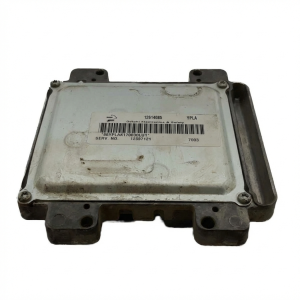
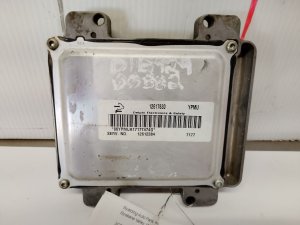
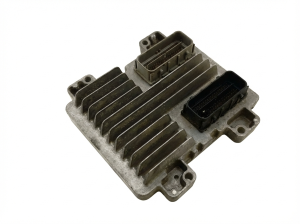
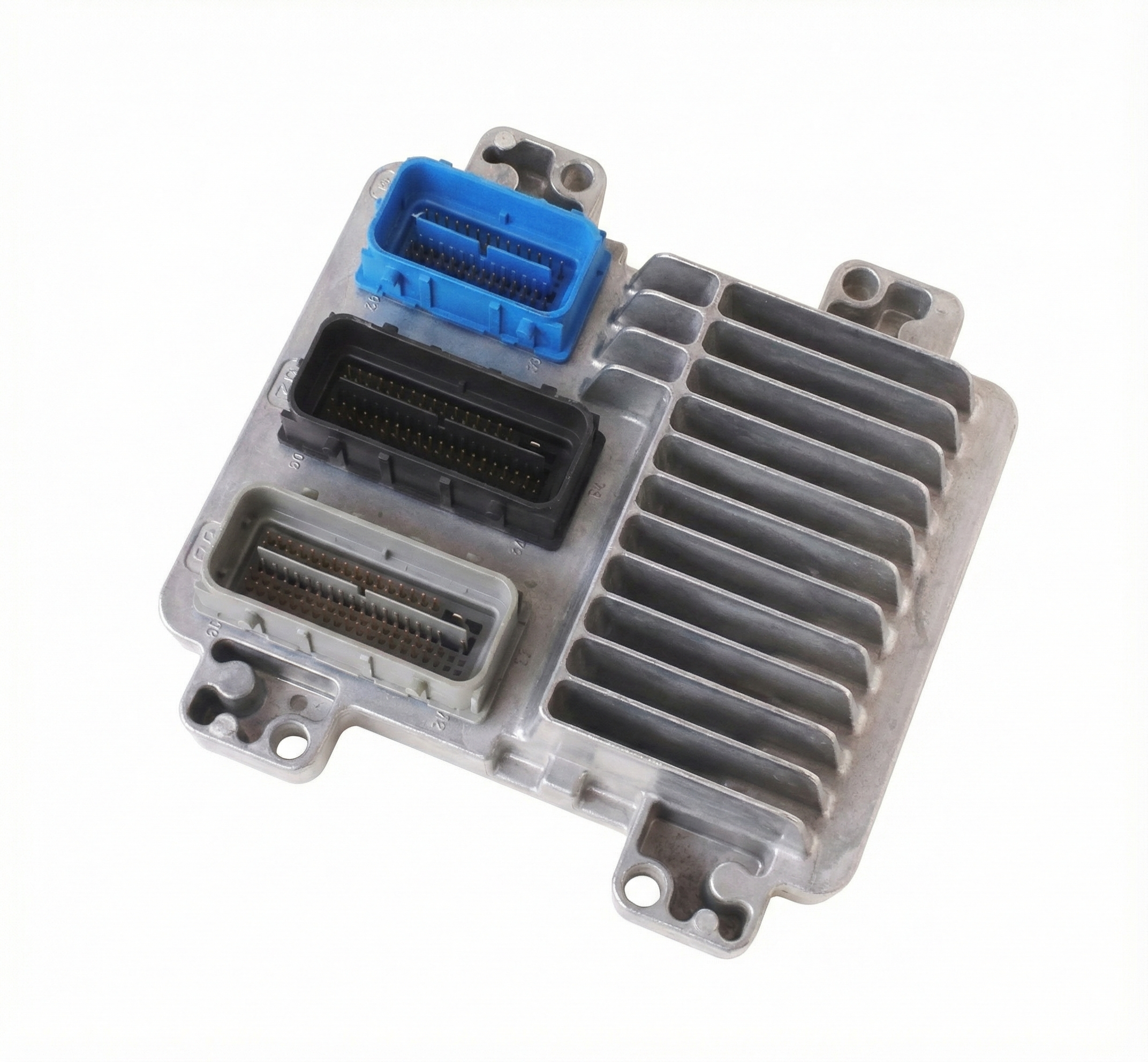
- Engine Control Module (ECM)
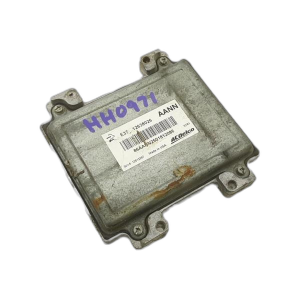
(OEM #Varies by year and engine. Examples include 12612384 (2008 3.6L), 12625455 (2009 3.5L), 12614085 (2007 3.5L), 12607096 (2009 3.6L). Always verify with VIN.)— In the rare event that a P0308 code is legitimately reported by the vehicle itself, it points to a critical failure of the ECM, which is responsible for generating these codes.
Trusted brands: ACDelco (GM Original Equipment), CARDONE Reman, Dorman
OEM price range: $400-$800
Aftermarket price range: $200-$500
Related Codes That Often Appear With This One
- U-series codes (e.g., U0100) — If the ECM is malfunctioning, it may also set communication codes with other modules on the vehicle's CAN bus network.
- P06xx codes (e.g., P0601) — These codes relate to the internal integrity of the control module itself, such as a memory checksum error, and would strongly indicate an ECM failure.
Technical Service Bulletins (TSBs) & Recalls
- PIP5628G: A general manufacturer bulletin for diagnosing misfires (P0300-P0308) across multiple GM vehicles, not specific to the G6 having a P0308. It serves as a guide for technicians on what data to collect before contacting GM's Technical Assistance Center.
Platform-Specific Known Issues
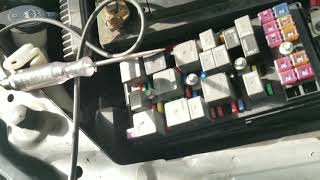
- ECM/BCM Communication and Grounding Issues: The Pontiac G6 and its platform mates can suffer from various electrical problems, including poor terminal contact at the Body Control Module (BCM) and ECM, and corroded ground wires. These issues can manifest as a wide range of seemingly unrelated symptoms, including erroneous trouble codes, no-start conditions, or failure of various electronic features. A YouTube video by 'PONTIAC G6 NO CRANK NO START' details diagnosing a bad ECM by checking for power at the connector and highlights the importance of clean grounds.
Mechanic-Grade Diagnostic Values
- ECM Battery Voltage Supply — expected: Full battery voltage (approx. 12.6V). Failure: Low or no voltage indicates a wiring or fuse issue before the ECM.
- ECM Ground Circuit Integrity — expected: A test light connected to the positive battery terminal should illuminate when probing the ground pin.. Failure: Test light does not illuminate, indicating an open or high-resistance ground circuit.
- ECM Ground Circuit Voltage Drop — expected: 0.1 Volts DC or less. Failure: A reading greater than 0.3 Volts DC indicates corrosion or a faulty wire in the ground circuit that needs to be cleaned or replaced.
- CAN Bus Network Resistance — expected: Approximately 60 Ohms. Failure: A reading of 120 Ohms indicates an open circuit or a module is disconnected/faulty. A reading near 0 Ohms indicates a short between the CAN High and CAN Low wires.
- CAN Bus Voltage (at DLC) — expected: CAN High (Pin 6 to ground) should average ~2.6V. CAN Low (Pin 14 to ground) should average ~2.4V.. Failure: Voltages that are stuck high (5V), low (0V), or equal to each other indicate a network fault, short, or open circuit.
Hidden / Shadow Codes Worth Checking
- U0073: Controller Area Network (CAN) Bus Communication. This code sets when a module's transmit error counter exceeds 255, causing it to remove itself from the network and suspend all message transmission. It strongly indicates a severe network hardware or communication fault. (see via A professional scan tool capable of reading U-series (network) codes.)
- P1680: Driver 5 (ECU Malfunction). This is a GM-specific code that points directly to an internal failure within the Engine Control Module. (see via A professional scan tool capable of reading manufacturer-specific P1xxx codes.)
- P1690: ECM Loop Overrun. Another GM-specific code indicating an internal processing problem within the ECM. (see via A professional scan tool capable of reading manufacturer-specific P1xxx codes.)
Scan Tool Commands That Help
- GDS2/Tech2 with SPS: Service Programming System (SPS) — This function is required after installing a new or used ECM. It programs the vehicle's VIN and specific software into the module, allowing it to communicate with other modules like the BCM and anti-theft system.
- GDS2/Tech2: Crankshaft Position Variation Learn — This procedure must be performed after replacing the ECM. Failure to do so will typically set a P0315 code and leave the Check Engine Light on, even if the vehicle runs normally.
Wiring & Ground Locations
- G105 — On the left rear side of the engine compartment, on an engine/transmission stud, located below the upper coolant hose.. This is a primary ground for both the Engine Control Module (ECM) and Transmission Control Module (TCM). A poor connection here due to corrosion or a broken wire can cause a no-start, loss of communication with the ECM/TCM, and various erroneous codes.
- G103 — On the left side of the engine compartment, on top of the left strut tower.. This ground serves the Body Control Module (BCM), Instrument Panel Cluster (IPC), and the Data Link Connector (DLC). A fault here can prevent a scan tool from communicating and cause widespread interior electrical issues.
- BCM Connector C2 — The Body Control Module (BCM) is located under the right side of the center console. C2 is one of its main connectors.. This specific connector is prone to fretting corrosion, which was the subject of GM safety recall 09013 for 2005-2006 models. Poor contact can cause bizarre electrical behavior, including brake light failure and communication problems that could be misdiagnosed as an ECM fault.
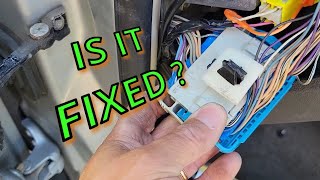
- Connector C206 — Located in the Instrument Panel (IP) harness, accessible from the driver's side. It serves as a junction for the CAN bus network.. A poor connection at this single point can bring down the entire high-speed CAN bus, causing a total loss of communication between all major modules (ECM, TCM, BCM, PSCM). This mimics a catastrophic ECM failure but may only require reseating the connector.
Real Owner Repair Stories
- YouTube channel 'Hands On Auto Training' (2007 Pontiac G6) — No communication with any high-speed CAN modules (ECM, TCM, BCM, etc.), reduced power message.
❌ Tried (didn't work) Initial diagnosis pointed towards a network-wide failure.
✅ What actually fixed it The technician located a CAN bus junction connector, C206, in the instrument panel harness. After disconnecting it and verifying the network was split (reading 120 ohms on each side), simply reconnecting it firmly restored all communication. The issue was a poor connection at this junction, not a failed module. - YouTube channel 'Pine Hollow Auto Diagnostics' (Pontiac G6 (year not specified)) — No crank/no start, no communication with transmission module. The issue was worse when the engine was hot.
❌ Tried (didn't work) Initially suspected a faulty Park/Neutral Position Switch.
✅ What actually fixed it The technician found 12 volts on the ground wire for the Park/Neutral switch, indicating a bad ground. The fault was traced to ground point G105 on the transmission stud. The wires were corroded and breaking inside the insulation right at the ring terminal. Repairing the ground connection resolved the no-start and communication issues. - YouTube channel 'South Main Auto Repair LLC' (Pontiac G6 (year not specified)) — Check Engine Light on, scan tool displays "No Communication".
❌ Tried (didn't work) Initial scan showed a complete loss of communication, making it impossible to pull codes.
✅ What actually fixed it The technician diagnosed the CAN bus network by unplugging modules one by one. The Power Steering Control Module (PSCM), located near the DLC, was found to be internally shorted and bringing the entire network down. Unplugging the faulty PSCM immediately restored communication with all other modules. Replacing the PSCM fixed the vehicle.
Model Year Variations Within This Range
- 2005-2006: These model years were subject to GM Safety Recall 09013, which addressed fretting corrosion in the Body Control Module (BCM) C2 wiring connector. The fix involves applying dielectric lubricant. While other years can experience similar issues, these were specifically identified in the recall.
Helpful Videos
We Have This Part in Stock

The information in this article is provided for general reference and educational purposes only. Vehicle specifications, procedures, and part compatibility can vary by production date, trim level, and region. Always consult your vehicle's factory service manual and verify part numbers before purchasing or performing repairs. Safety-critical components such as airbags, seat belts, and braking systems should be installed by a qualified professional.
- Pontiac G6:
- 🧭 Diagnostic Flowchart
- 🎬 Helpful Videos
- 🛍️ Shop This Part
- What's Unique About the 2005-2010 Pontiac G6
- Symptoms You May Notice
- Most Likely Causes
- Diagnosis Steps
- Parts You'll Likely Need
- Related Codes That Often Appear With This One
- Technical Service Bulletins (TSBs) & Recalls
- Platform-Specific Known Issues
- Mechanic-Grade Diagnostic Values
- Hidden / Shadow Codes Worth Checking
- Scan Tool Commands That Help
- Wiring & Ground Locations
- Real Owner Repair Stories
- Model Year Variations Within This Range
- 🎟️ Get 5% Off