

P0322 on 2004-2012 Volvo S40 2.4L: Engine Speed Sensor Circuit Fixes
This code indicates the engine computer has lost the signal from the crankshaft position sensor. The most common fix is replacing the crankshaft position sensor itself. Expect to pay between $40 for an aftermarket part and $100 for an OEM sensor. It's a moderately difficult DIY job due to the sensor's location on the rear of the engine block, near the bell housing.
- P0322 on a 2004-2012 Volvo S40 2.4L almost always means the crankshaft position sensor has failed.
- Symptoms are severe and include the engine not starting or stalling unexpectedly, making the car unsafe to drive.
- Before replacing parts, always perform a quick visual inspection of the sensor's wiring and connector for obvious damage.
- For 2004.5-2006 models, be mindful of the separate recall for the Pump Electronic Module (PEM) which can cause similar no-start/stalling symptoms.
What's Unique About the 2004-2012 Volvo S40
The 2.4L 5-cylinder engine in this generation of S40 (the P1 platform) is generally reliable, but like any engine, its sensors can fail with age. While the P0322 code is a standard OBD-II code, on this Volvo it almost always points directly to a failure of the crankshaft position sensor or its wiring. There are no widespread, unique design flaws that cause this code, but it's a known failure point as these cars age. The sensor is located on the top of the bell housing, above the passenger side axle.
🎬 Watch: Locate the S40 crankshaft sensorGeneration note: The 2004-2012 Volvo S40 is part of the second generation (P1 platform). The 2.4L I5 engine was available from 2004.5 to 2010. The information provided applies to all S40 models within this year range equipped with this engine, as well as its platform mates.
Symptoms You May Notice
- Engine cranks but will not start
- Engine stalls intermittently, especially when warm
- Engine runs rough or misfires
- Reduced engine power and acceleration
- Check Engine Light is on
- Tachometer (RPM gauge) does not move or behaves erratically during cranking
- Replacing the camshaft position sensor (while related, it typically sets different codes like P0340).
- Replacing fuel system components like the fuel pump or filter, as the symptoms can mimic a fuel delivery issue.
- Assuming the sensor is bad when the actual fault is a poor connection or damaged wire.
Most Likely Causes
- Failed Crankshaft Position Sensor 🔴 High Probability → Shop Engine Crankshaft Position Sensor Heat and age are the primary factors. The sensor is located on the engine block and is subjected to constant temperature cycles which can cause the internal electronics to fail over time. Oil leaks from above can also contaminate the sensor and its connector.
How to confirm: The most definitive way is to check for a signal from the sensor using an oscilloscope while cranking the engine. A simpler method is to check for resistance across the sensor's terminals with a multimeter (if specifications are known) or to simply replace it, as it's the most likely cause. A visual inspection may reveal a cracked or oil-soaked sensor body.
Typical fix: Replace the crankshaft position sensor.
Est. part cost: $40-$120 - Wiring Harness or Connector Damage 🟡 Medium Probability The wiring harness leading to the crankshaft sensor can become brittle from heat and age. Oil leaks from other components can also degrade the wire insulation, leading to shorts or open circuits. Rodents have also been known to chew on the wiring in this location.
How to confirm: Visually inspect the wiring harness from the sensor to the main engine harness. Look for any signs of cracking, melting, oil saturation, or physical damage. Check the connector for corrosion, backed-out pins, or a loose fit.
Typical fix: Repair the damaged section of wiring or replace the connector pigtail.
Est. part cost: $10-$30
Rare But Worth Checking
- Failed Powertrain Control Module (PCM): → Shop Engine Control Module (ECM) This is very rare. Before condemning the PCM, all other possibilities, including the sensor and its entire circuit, must be exhaustively tested. A faulty PCM is an unlikely cause for a P0322 code.
Diagnosis Steps
- Confirm the presence of P0322 with an OBD-II scanner. Note any other codes present.
- Visually inspect the crankshaft position sensor and its wiring harness. The sensor is located on the top of the bell housing, near the rear of the engine, above the passenger side axle. Access can be tight.
- Check for damage, corrosion, or loose connections at the sensor's electrical connector. Ensure it is fully seated.
- If the wiring appears intact, the next step is to test the sensor itself. If you have an oscilloscope, check for a square wave signal while an assistant cranks the engine. No signal strongly indicates a failed sensor.
- If you do not have an oscilloscope, and given the high failure rate, replacing the crankshaft position sensor is a reasonable next step. It is typically held in by a single 10mm or Torx bolt. 🎬 See this step-by-step sensor replacement walkthrough
- After replacing the sensor, clear the trouble codes and attempt to start the engine. If the code does not return and the symptoms are gone, the issue is resolved.
- If the code returns, you must perform a point-to-point wiring check between the sensor connector and the PCM to rule out an open or short in the harness.
Parts You'll Likely Need
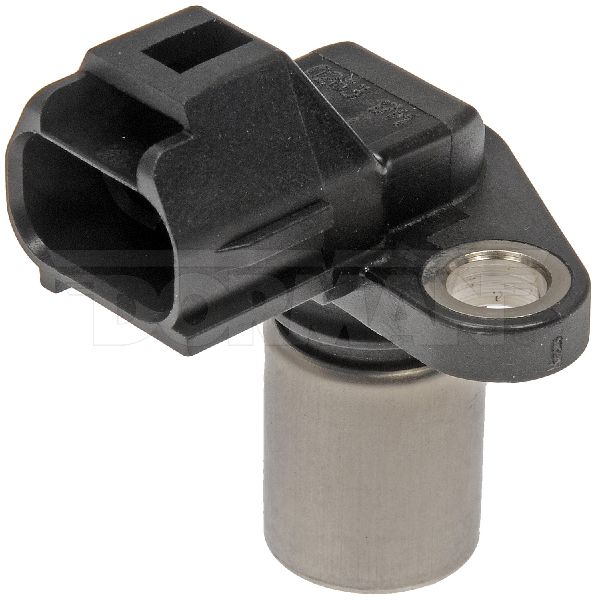
- Crankshaft Position Sensor
(OEM #31331765)— This sensor is the primary source of the engine speed signal. Its failure is the most common reason for the P0322 code on this vehicle.
Trusted brands: Bosch, Denso, Genuine Volvo
OEM price range: $80-$133
Aftermarket price range: $40-$85
Platform-Specific Known Issues
- For 2004.5-2006 models, be aware of Volvo Recall 190. This recall was for a corroding Pump Electronic Module (PEM) which could cause stalling and no-start conditions, symptoms that overlap with P0322. While it doesn't directly cause this code, it's a known issue on early P1 platform S40s that can present similarly.
Mechanic-Grade Diagnostic Values
- Crankshaft Position Sensor Internal Resistance — expected: Approximately 200-500 Ohms. A known-good sensor on a 2005 S40 2.4i measured 312 Ohms.. Failure: A reading of 0 Ohms (short circuit) or infinite/OL (open circuit). Readings significantly outside the 200-500 Ohm range warrant replacement.
- Crankshaft Position Sensor AC Voltage Output (while cranking) — expected: Approximately 30-50 millivolts (0.03-0.05V AC). This test requires a multimeter with a sensitive AC voltage setting.. Failure: No AC voltage generated while the engine is cranking indicates a failed sensor.
Wiring & Ground Locations
- Component 7/64 — This is the official Volvo wiring diagram designation for the Crankshaft Position Sensor.. Knowing the component number helps in accurately locating the sensor and its connections on a professional wiring diagram.
- Main Engine Ground Strap — A primary ground strap connects the engine block to the vehicle's chassis, often near the engine mount. A secondary ground runs from the battery negative terminal to the chassis.. A corroded or loose main engine ground can cause a variety of electrical issues, including intermittent sensor signals. While not a direct cause of P0322, poor grounding can create similar symptoms.
- Sensor Mounting Surface (Bell Housing) — The sensor body grounds itself through its mounting point on the transmission bell housing.. Loose bolts on the bell housing can create a poor ground path for the sensor, causing a 'No Signal' fault even with a perfectly good sensor. This is a critical mechanical check.
- Headlight Area Ground Point — There is a major chassis grounding point located behind the left (driver's side in LHD) front headlight assembly.. Multiple engine bay circuits ground at this point. Corrosion or looseness here can cause widespread, difficult-to-diagnose electrical faults.
Real Owner Repair Stories
- VolvoForums user 'MTruckey83' (2001 Volvo S40 (different generation, but identical failure principle)) — Engine stalling, would not idle without throttle input. Codes P0335 and P0336 (related to crank sensor circuit).
❌ Tried (didn't work) Initial diagnosis pointed towards a bad sensor or idle air control valve.
✅ What actually fixed it The user discovered three bolts on the transmission bell housing were only finger-tight and two others were missing entirely. Tightening the existing bolts and installing the missing ones secured the sensor's ground connection and resolved all symptoms. - VolvoForums user 'james_delahunt97' (Volvo S40 1.6 Diesel (different engine, but demonstrates reluctor failure)) — Engine would not rev above 3000 RPM in any gear or at idle. No warning lights other than a stored code.
❌ Tried (didn't work) The first logical step was to replace the crankshaft sensor.
✅ What actually fixed it After replacing the sensor did not work, a visual inspection of the crank sprocket revealed the reluctor wheel it reads from had missing teeth. Replacing the crank sprocket (which included a new reluctor wheel) solved the problem.
When the Usual Fixes Don't Work
- While replacing the crankshaft position sensor is the most common fix for P0322, it is not a guaranteed solution. A significant number of cases are resolved only after investigating the physical and mechanical conditions around the sensor. One owner found that the sensor was not grounding properly because several bolts on the transmission bell housing were loose; tightening them fixed the problem completely without replacing any parts. In another instance, the sensor and wiring were faultless, but the toothed reluctor ring that the sensor reads was physically damaged with missing teeth, which required replacing the crankshaft sprocket to resolve the code. These cases prove that a purely electrical diagnosis can be misleading, and mechanics should also inspect for mechanical issues that can mimic a sensor failure.
OEM Part Supersession History
8627355, 30713485→31331765— Standard part evolution for improved reliability or manufacturing changes.
Heads up: The newer part number (31331765) is the correct replacement for all earlier versions for this vehicle platform.
Diagnostic Flowchart
Other Known Issues on This Vehicle
Issues unrelated to this code that are worth knowing about as an owner of this generation:
- Clogged PCV / Oil Trap System 🔴 High — Common after 80,000 miles, especially if oil change intervals are extended. Can cause a whistling noise, oil leaks from main seals, and poor engine performance.
- Clogged Sunroof Drains 🟠 Medium —
Used vs. New Parts: Buying Guide for This Vehicle
When a used part is the smart pick: A used crankshaft position sensor is generally not recommended. As a critical electronic component that fails from heat cycles and age, a used part has an unknown history and may fail shortly after installation. It should only be considered as a temporary, emergency measure to make the vehicle drivable while waiting for a new part to arrive.
Donor-vehicle mileage cap: roughly under 80000 miles for the part to have meaningful remaining life.
What to inspect on the donor part:
- Check for cracks or damage to the plastic sensor body.
- Ensure the electrical connector is clean, with no signs of corrosion or oil saturation.
- Flex the short wire pigtail coming off the sensor to check for brittleness in the insulation.
OEM-only on this vehicle (don't cheap out):
- While not strictly OEM-only, it is highly advisable to avoid unbranded, 'white-box' sensors from online marketplaces. Their failure rate is notoriously high.
Aftermarket brands forum-validated for this vehicle:
- Bosch
- Denso
Brands owners have reported issues with on this vehicle:
- Generic, no-name sensors sold at a significant discount compared to reputable brands.
Real Owner Stories
Aggregated from forums and TSBs cited above. Mileages and costs reflect what owners reported in those sources.
2008 Volvo S40 2.4i
Symptoms: A no-start condition occurred after attempting to resolve codes by replacing the cam and crank sensors.
What fixed it: The discussion highlights the importance of ensuring proper installation and using quality parts, as a new faulty part can mimic the original failure.
Source hint: VolvoForums - 'Changed cam sensors and crank sensor, now no start!!'
Related OBD-II Codes
Frequently Asked Questions
I have a 2005 Volvo S40 that stalls and won't start; could this be related to a recall?
Where exactly is the crankshaft position sensor located on my S40 2.4L?
My RPM gauge isn't moving when I try to start my S40. Is this a symptom of P0322?
Can I use a used crankshaft sensor from a salvage yard to fix this code?
Are there specific brands I should look for when replacing the sensor on my Volvo?
Could an oil leak be causing my P0322 code?
Helpful Videos
We Have This Part in Stock


The information in this article is provided for general reference and educational purposes only. Vehicle specifications, procedures, and part compatibility can vary by production date, trim level, and region. Always consult your vehicle's factory service manual and verify part numbers before purchasing or performing repairs. Safety-critical components such as airbags, seat belts, and braking systems should be installed by a qualified professional.
- Volvo S40:
- 🧭 Diagnostic Flowchart
- 🎬 Helpful Videos
- 🛍️ Shop This Part
- What's Unique About the 2004-2012 Volvo S40
- Symptoms You May Notice
- Most Likely Causes
- Rare But Worth Checking
- Diagnosis Steps
- Parts You'll Likely Need
- Platform-Specific Known Issues
- Mechanic-Grade Diagnostic Values
- Wiring & Ground Locations
- Real Owner Repair Stories
- When the Usual Fixes Don't Work
- OEM Part Supersession History
- Other Known Issues on This Vehicle
- Used vs. New Parts: Buying Guide for This Vehicle
- Real Owner Stories
- 2008 Volvo S40 2.4i
- Related OBD-II Codes
- Frequently Asked Questions
- 🎟️ Get 5% Off