

P0325 on 2013-2016 Dodge Dart 1.4L Turbo: Knock Sensor Circuit Malfunction Causes and Fixes
This code indicates a fault in the knock sensor circuit. On the 1.4L Dart, the most common cause is a failed knock sensor, but the repair is difficult as the sensor is located on the back of the engine block, requiring removal of the intake manifold. Expect a labor-intensive fix.
- P0325 on a 2013-2016 Dart 1.4L means there's a problem with the knock sensor circuit.
- The most likely fix is replacing the knock sensor, but this is a difficult job because it's located under the intake manifold.
- Due to the high labor involved, this is not a repair where you should use a cheap part; use OEM or a reputable OES brand.
- Proper torque (18 ft-lbs) and a clean mounting surface are critical for the new sensor to function correctly.
What's Unique About the 2013-2016 Dodge Dart
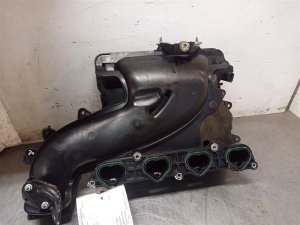
The primary challenge for the P0325 code on the 1.4L MultiAir Turbo engine in the Dodge Dart is the physical location of the knock sensor. It is mounted on the rear of the engine block, underneath the intake manifold. This placement turns a simple sensor replacement into a more complex, labor-intensive job that requires removing the entire intake manifold for access, which is not the case for many other vehicles where the sensor is more accessible. This difficult access is shared with platform mates using the same engine architecture, like the Fiat 500 1.4L.
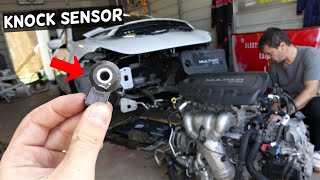
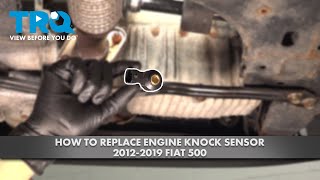
🎬 See: How to replace the knock sensor on a Fiat 500Symptoms You May Notice
- Check Engine Light illuminated
- Reduced engine power and poor acceleration
- Hesitation during acceleration
- Worse-than-usual fuel economy
- Audible pinging or knocking noise from the engine (in some cases)
- Replacing spark plugs or ignition coils without diagnosing the knock sensor circuit. While these can cause performance issues, P0325 specifically points to a problem with the sensor's circuit.
Most Likely Causes
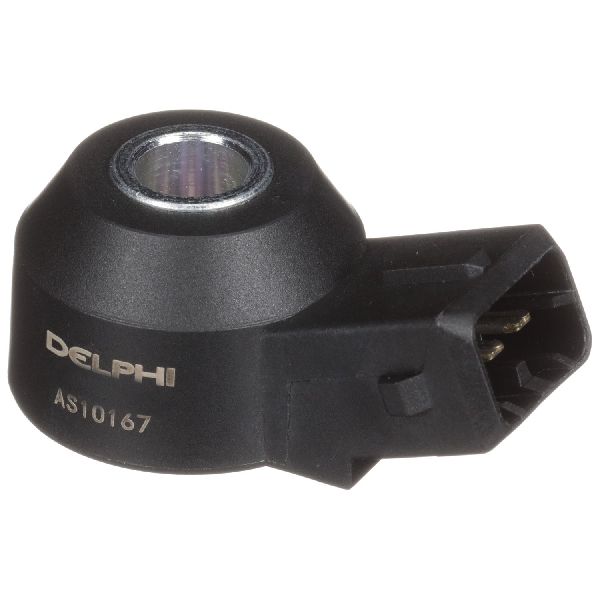
- Failed Knock Sensor 🔴 High Probability → Shop Ignition Knock (Detonation) Sensor The sensor is located in a high-heat area on the engine block, sandwiched between the block and intake manifold, which can lead to premature failure over time due to thermal stress.
How to confirm: After confirming the wiring is intact, the sensor itself is the next likely culprit. Testing the sensor's internal resistance with a multimeter is unreliable for this piezoelectric type. A 'tap test' is preferred, but this requires accessing the sensor. Replacement is often performed once the intake is removed due to the high labor involved.
Typical fix: Replace the knock sensor. Due to the labor involved, it is critical to use a high-quality OEM or reputable aftermarket part (e.g., Mopar, Bosch, NGK, Delphi). The mounting surface on the block must be cleaned, and the new sensor torqued to exactly 18 ft-lbs (24.4 Nm).
Est. part cost: $40-$90 - Damaged Wiring or Connector 🟡 Medium Probability The wiring harness is routed in a high-heat area near the engine block and under the intake manifold, making it susceptible to melting, chafing, or becoming brittle over time. Oil leaks from above can also contaminate the 2-pin connector.
How to confirm: Visually inspect the wiring harness leading to the knock sensor for any signs of damage, melting, or loose connections once the intake manifold is removed. Perform a continuity test on the wiring from the sensor connector to the PCM.
Typical fix: Repair the damaged section of the wiring harness or replace the connector pigtail. Ensure the repair is properly insulated against heat.
Est. part cost: $15-$50
Rare But Worth Checking
- Powertrain Control Module (PCM) Fault: → Shop Engine Control Module (ECM) This is very rare. The PCM should only be considered after the sensor and wiring have been definitively ruled out by thorough testing. A case on a 2016 Jeep Renegade with the same engine did require a PCM replacement to fix the issue.
- Incorrectly Torqued Knock Sensor: → Shop Ignition Knock (Detonation) Sensor If the sensor was recently replaced, it's possible it was not torqued to the manufacturer's specification of 18 ft-lbs (24.4 Nm). The sensor is a piezoelectric microphone and an incorrect torque value (either too loose or too tight) will affect its ability to 'hear' engine vibrations correctly, causing the code to return. The mounting surface must also be perfectly clean.
Diagnosis Steps
- Scan the vehicle for any other stored diagnostic trouble codes. Address other codes first if they are present.
- With the engine off, attempt a visual inspection of the area on the back of the engine, below the intake manifold. Look for any obvious signs of damaged wires or a loose connector. This is very difficult on the Dart without some disassembly.
- A professional-level scan tool can be used to monitor the knock sensor data stream. A lack of signal or a fixed, unchanging voltage would point towards a circuit fault.
- The next step is to gain access to the sensor by removing the intake manifold. This is a significant job involving disconnecting fuel lines, electrical connectors, and vacuum hoses.
- Once the manifold is removed, re-inspect the wiring harness thoroughly for any damage that was previously hidden, such as melting against the engine block or rodent damage.
- Disconnect the sensor and test its internal resistance with a multimeter. Note that piezoelectric sensors may read as an open circuit (infinite resistance) and this test is not always conclusive.
- At this point, given the high labor cost to access the sensor, most technicians and DIYers will replace the sensor regardless of test results.
- CRITICAL: Before installing the new sensor, thoroughly clean the mounting surface on the engine block to ensure a flush, metal-to-metal contact.
- Install the new sensor and torque the bolt to exactly 18 ft-lbs (24.4 Nm). Do not overtighten.
- Always replace the intake manifold gaskets (Mopar P/N 55233762) to prevent vacuum leaks upon reassembly.
- Reassemble all components, clear the P0325 code, and perform a test drive to confirm the repair.
Parts You'll Likely Need
- Knock Sensor
(OEM #68223142AA)— This is the most common failure point for the P0325 code. Due to its location in a high-heat environment, the sensor itself often fails internally.
Trusted brands: Mopar, Bosch, Delphi, NGK
OEM price range: $70-$100
Aftermarket price range: $40-$90 - Intake Manifold Gasket Set
(OEM #55233762)— The intake manifold must be removed to access the knock sensor. The gaskets are a one-time-use part and must be replaced to prevent vacuum leaks after the repair.
Trusted brands: Mopar, Fel-Pro, Mahle
OEM price range: $20-$40
Aftermarket price range: $15-$30
Related Codes That Often Appear With This One
- P0326: Knock Sensor 1 Circuit Range/Performance - This is a closely related code that can appear for the same root causes, indicating the sensor signal is erratic.
Platform-Specific Known Issues
- The knock sensor's location under the intake manifold is the most significant issue for this vehicle, dramatically increasing the labor time and cost of what would otherwise be a simple repair.
- A user on dodge-dart.org confirmed the difficulty of this repair, stating it took them approximately 4 hours and required removing the intake manifold to access the sensor on the back of the block. 🎬 Watch: Dodge Dart knock sensor removal and replacement walkthrough
Mechanic-Grade Diagnostic Values
- Knock Sensor 'Tap Test' Voltage — expected: Small fluctuating AC voltage signal when tapping on the engine block near the sensor.. Failure: No voltage signal produced during the tap test suggests a dead sensor. This test is qualitative and confirms the sensor's piezoelectric element is functional.
- Knock Sensor Internal Resistance — expected: Inconclusive. Modern piezoelectric sensors like the one in the 1.4L MultiAir may read as an open circuit (infinite resistance) with a standard ohmmeter, even when new.. Failure: This test is considered unreliable for this type of sensor; a lack of continuity does not definitively prove failure. A short to ground would be a definitive failure.
- Wiring Harness Continuity (Sensor Connector to PCM) — expected: Less than 1.0 ohm of resistance on both the signal and ground wires.. Failure: High resistance or an open circuit (OL) reading indicates a break or corrosion in the wiring harness that needs to be repaired.
Wiring & Ground Locations
- G108 — Rear center of the top of the engine (for the 1.4L engine).. The knock sensor is a sensitive microphone that relies on a clean ground reference. A corroded or loose G108 engine ground could potentially introduce electrical noise into the sensor circuit, causing erratic readings and triggering a P0325 code even if the sensor and its direct wiring are good.
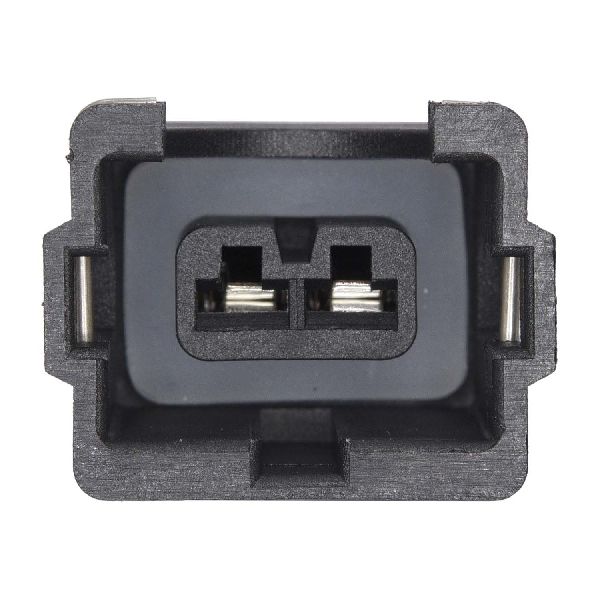
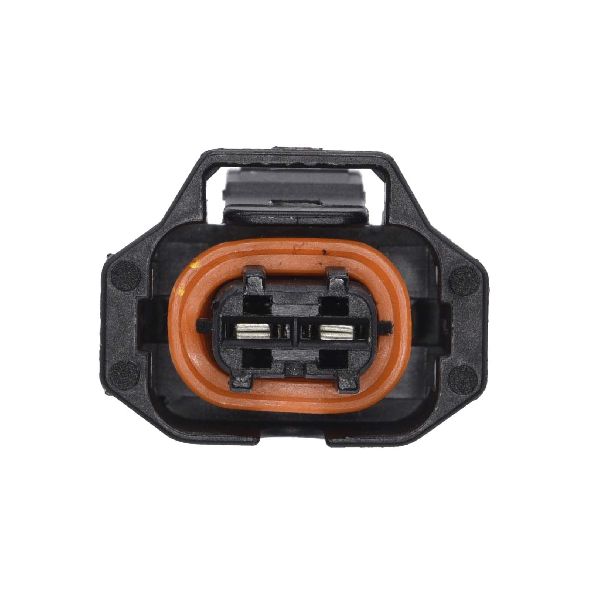
- Knock Sensor Connector — On the sensor body, located on the rear of the engine block, under the intake manifold.. This is a 2-pin connector that is a common point of failure due to heat exposure and potential oil contamination. Checking for a secure connection, pin integrity, and lack of corrosion is a key diagnostic step once access is gained.
OEM Part Supersession History
68070745AA→Unknown, but multiple part numbers exist.— Standard part evolution and supplier changes.
Heads up: Part number 68070745AA is listed for the 2013 Dart 1.4L. The pass 2 number, 68223142AA, is also valid. Always verify the correct part number with a dealership using the vehicle's VIN before ordering, as supersessions are common.
Model Year Variations Within This Range
- 2014-2016: Starting in the 2014 model year, the 1.4L MultiAir Turbo engine was primarily available only on the high-efficiency 'Aero' trim level. Other trims like the SXT and Limited moved to the 2.4L engine. This does not change the repair procedure for a 1.4L engine but affects which trims are likely to experience this specific issue.
Diagnostic Flowchart
Other Known Issues on This Vehicle
Issues unrelated to this code that are worth knowing about as an owner of this generation:
- MultiAir Actuator ('Brick') Failure 🔴 High — Common, especially on vehicles with poor oil maintenance history. Can occur at various mileages, often heralded by misfire codes (P030x) or specific MultiAir codes (P10xx). (Ref: TSB #18-009-15 REV G addresses related codes and recommends a PCM update, but often the hardware has already failed.)
- Manual Transmission Clutch Hydraulic Failure 🔴 High — A very common complaint where the clutch pedal sticks to the floor, making shifting impossible. Often caused by a failed slave or master cylinder. (Ref: TSB 06-001-16 was issued, extending the warranty on these components for some vehicles due to the high failure rate.)
- Dual-Clutch Automatic Transmission (DDCT) Failure 🔴 High — The C635 DDCT transmission available with the 1.4L Turbo has a reputation for a high failure rate, with issues ranging from jerky operation to complete failure.
- Turbocharger Wastegate Actuator Failure 🟠 Medium — A frequent cause of the P0299 (Turbo Underboost) code. The actuator fails, preventing the turbo from building proper boost, leading to significant power loss.
- Thermostat Failure / Coolant Leaks 🟠 Medium — The thermostat, housed in a plastic assembly, is prone to failing in the open position (causing code P0128) or leaking coolant.
- Excessive Oil Consumption 🟠 Medium — The 1.4L Turbo engine can consume oil between changes. Allowing the oil level to run low is a primary contributor to premature MultiAir actuator failure.
- Electrical Issues / Battery Failure 🟡 Low — The 2013 model year, in particular, is noted for various electrical gremlins and premature battery failure, which can cause a cascade of seemingly unrelated warning lights and system malfunctions.
Used vs. New Parts: Buying Guide for This Vehicle
When a used part is the smart pick: For this repair, sourcing a used part is almost never a smart choice for the sensor itself. The only scenario where a used part is viable is for sourcing a connector pigtail from a junkyard vehicle if only the connector is damaged and a new pigtail is unavailable.
Donor-vehicle mileage cap: roughly under 30000 miles for the part to have meaningful remaining life.
What to inspect on the donor part:
- For a connector pigtail, inspect for any signs of melting, brittleness, or cracked plastic.
- Ensure the wiring attached to the pigtail has at least 4-6 inches of flexible, undamaged wire to work with.
- Check that the locking tab on the connector is intact and functional.
OEM-only on this vehicle (don't cheap out):
- Knock Sensor: Due to the extremely high labor cost to access this part, using a new OEM (Mopar) or top-tier OES sensor is critical to avoid a repeat failure. The cost savings of a cheap aftermarket part are not worth the risk of having to do the 4-hour job a second time.
Aftermarket brands forum-validated for this vehicle:
- Bosch
- NGK / NTK
- Delphi
Brands owners have reported issues with on this vehicle:
- Unknown, unbranded 'white-box' parts from online marketplaces. The risk of premature failure is too high given the labor-intensive installation.
Real Owner Stories
Aggregated from forums and TSBs cited above. Mileages and costs reflect what owners reported in those sources.
2013 Dodge Dart 1.4L Turbo
Symptoms: Owner experienced a P0325 code and confirmed the sensor is located on the back of the engine block, requiring significant disassembly.
What fixed it: Replaced the knock sensor and intake manifold gaskets after removing the intake manifold.
Source hint: "P0325 Knock Sensor - 2013 Dart 1.4L Turbo" on dodge-dart.org
Related OBD-II Codes
Frequently Asked Questions
Is there a specific torque specification for the knock sensor on the 1.4L MultiAir Turbo engine?
Do I need to replace any other parts when fixing the P0325 code on my Dodge Dart?
Why is the labor for a P0325 repair so expensive on the 2013-2016 Dodge Dart?
Can I just test the resistance of the knock sensor with a multimeter before taking the engine apart?
Are there any TSBs for the MultiAir system that might be related to engine performance issues on my Dart?
Does the Fiat 500 Abarth have the same knock sensor issues as the Dodge Dart?
Helpful Videos
Used OEM Parts in Stock
New Aftermarket Parts Available


The information in this article is provided for general reference and educational purposes only. Vehicle specifications, procedures, and part compatibility can vary by production date, trim level, and region. Always consult your vehicle's factory service manual and verify part numbers before purchasing or performing repairs. Safety-critical components such as airbags, seat belts, and braking systems should be installed by a qualified professional.
- Dodge Dart:
- 🧭 Diagnostic Flowchart
- 🎬 Helpful Videos
- 🛍️ Shop This Part
- What's Unique About the 2013-2016 Dodge Dart
- Symptoms You May Notice
- Most Likely Causes
- Rare But Worth Checking
- Diagnosis Steps
- Parts You'll Likely Need
- Related Codes That Often Appear With This One
- Platform-Specific Known Issues
- Mechanic-Grade Diagnostic Values
- Wiring & Ground Locations
- OEM Part Supersession History
- Model Year Variations Within This Range
- Other Known Issues on This Vehicle
- Used vs. New Parts: Buying Guide for This Vehicle
- Real Owner Stories
- 2013 Dodge Dart 1.4L Turbo
- Related OBD-II Codes
- Frequently Asked Questions
- 🎟️ Get 5% Off