

P0325 on 2014-2020 Nissan Rogue: Knock Sensor Circuit Malfunction Explained
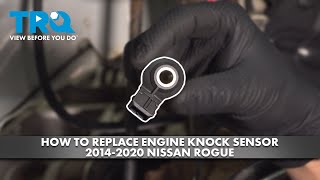
This code indicates a problem with the knock sensor circuit. On the 2014-2020 Rogue, this is most often a failed knock sensor or a problem with its wiring. The sensor is located on the back of the engine block, making access difficult and often requiring removal of the passenger side wheel for access.
- P0325 points to a malfunction in the knock sensor's electrical circuit, not necessarily a bad sensor.
- The most common causes are a failed knock sensor or damaged wiring/connectors.
- The sensor is located on the back of the engine, making it difficult to access and increasing labor costs for replacement.
- Driving with this code can lead to reduced performance and poor fuel economy, and may risk engine damage if a true knocking condition occurs.
- Always inspect the wiring and connector thoroughly before replacing the sensor itself.
- Proper torque (16 ft-lbs) on the sensor's mounting bolt is critical for correct operation.
What's Unique About the 2014-2020 Nissan Rogue
On the second-generation Nissan Rogue (T32) with the 2.5L QR25DE engine, the knock sensor is located on the firewall side of the engine block, below the intake manifold. This location makes it difficult to access, often requiring the removal of the front passenger wheel and splash shields to reach the sensor from the side. This can increase labor time and cost compared to vehicles where the sensor is more accessible from the top of the engine bay.
Symptoms You May Notice
- Check Engine Light is on
- Reduced engine power and poor acceleration
- Engine knocking or pinging sounds
- Poor fuel economy
- Hesitation during acceleration
- Rough or uneven idle
- Replacing the knock sensor without first thoroughly inspecting the wiring harness and connector. A bad connection is a common cause of this code.
- Failing to properly torque the new knock sensor. Incorrect torque can affect the sensor's ability to detect vibrations accurately.
Most Likely Causes
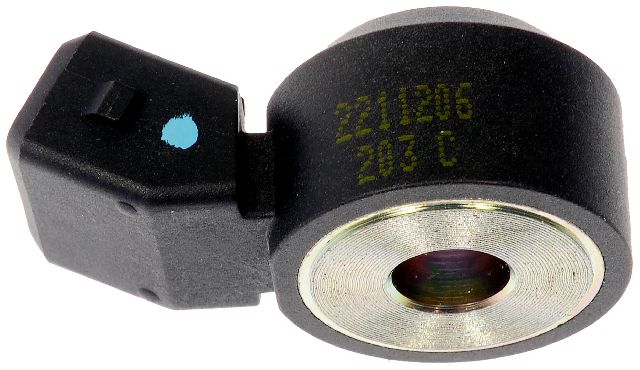
- Faulty Knock Sensor 🔴 High Probability → Shop Ignition Knock (Detonation) Sensor The sensor is exposed to constant heat and vibration, which can cause it to fail internally over time. Corrosion from moisture is also a common failure mode for these sensors.
How to confirm: After verifying the wiring is intact, the sensor itself can be tested with a multimeter for proper resistance against manufacturer specifications. If resistance is out of spec, the sensor is bad. 🎬 Watch: How to test and replace a knock sensor
Typical fix: Replace the knock sensor. This requires accessing the back of the engine block, usually through the passenger side wheel well. The sensor must be torqued to 16 ft-lbs.
Est. part cost: $277-$412 (OEM) - Wiring or Connector Issues 🟡 Medium Probability The wiring harness is in a high-heat area of the engine bay, making it susceptible to becoming brittle, corroded, or damaged over time. Rodent damage to wiring is also a common possibility, as the harness can be an attractive nesting spot.
How to confirm: Visually inspect the entire length of the knock sensor wiring harness and its connector for any signs of damage, corrosion, or loose connections. Test for continuity with a multimeter.
Typical fix: Repair the damaged section of wiring or replace the connector pigtail. In severe cases, the engine harness may need replacement.
Est. part cost: $10-$50 for a pigtail, higher for harness repair
Rare But Worth Checking
- Engine Control Module (ECM) Malfunction: → Shop Engine Control Module (ECM) This is very rare and should only be considered after all other possibilities, including the sensor and its entire circuit, have been thoroughly ruled out.
- Internal Engine Problems: Severe mechanical issues, such as a slipped timing chain, can cause vibrations that the ECM misinterprets as a sensor circuit fault, though this is uncommon.
- Faulty VVT Solenoid Connector: On some Nissan models, a faulty VVT solenoid connector can trigger a P0325 code because the wiring paths are related. While not specifically documented for the Rogue, it's a known issue in the Nissan family.
Diagnosis Steps
- Read the code from the ECM using an OBD-II scanner.
- Visually inspect the knock sensor's wiring harness and connector for any obvious signs of damage, melting, corrosion, or loose connections. Access is typically through the passenger side wheel well.
- If the wiring appears okay, use a multimeter to check for proper voltage and ground at the knock sensor connector.
- Test the continuity of the wiring between the sensor connector and the ECM connector to rule out an open or short in the harness.
- If the circuit is confirmed to be good, test the knock sensor's internal resistance and compare it to the manufacturer's specification. If it fails this test, the sensor is faulty.
- Replace the knock sensor and ensure it is torqued to the correct specification (16 ft-lbs).
- Clear the trouble code and perform a test drive to ensure the code does not return.
Parts You'll Likely Need
- Knock Sensor
(OEM #22060-5ZM0A)— The sensor itself is the most common point of failure in the circuit due to prolonged exposure to engine heat and vibration.
Trusted brands: Nissan (OEM)
OEM price range: $277-$412
Aftermarket price range: $40-$150
Platform-Specific Known Issues
- Difficult Access: The location of the knock sensor on the rear of the engine block requires mechanics to often access it through the passenger side wheel well, which involves removing the wheel and splash guards. This makes the repair more time-consuming than on many other vehicles.
Diagnostic Flowchart
Other Known Issues on This Vehicle
Issues unrelated to this code that are worth knowing about as an owner of this generation:
- CVT Transmission Failure/Judder 🔴 High — Widespread issue, often appearing around 90,000-100,000 miles. Symptoms include shaking, shuddering, hesitation, and complete failure. (Ref: NTB15-083A)
- Automatic Emergency Braking (AEB) System Malfunction 🔴 High — Common complaint where the system engages unexpectedly (phantom braking) when no obstacle is present.
- EVAP System Leaks (P0456) 🟡 Low — A common cause for the check engine light, often due to a faulty EVAP vent control valve O-ring. (Ref: NTB17-082E)
- Poor Interior Heating at Idle 🟠 Medium — Owners report the heater blows cold air at idle but warms up when driving. Often caused by air in the cooling system or a low coolant level.
- Exploding/Rattling Sunroof 🟠 Medium — Some owners have reported the panoramic sunroof rattling or, in some cases, spontaneously shattering.
Real Owner Stories
Aggregated from forums and TSBs cited above. Mileages and costs reflect what owners reported in those sources.
2016 Nissan Rogue
Symptoms: Check Engine Light is on with code P0325.
What fixed it: Replacement of the knock sensor.
Source hint: https://www.nissanforums.com/threads/2016-rogue-p0325-knock-sensor.278513/
Nissan Rogue
Symptoms: P0325 knock sensor code appearing on the dashboard.
What fixed it: Replacement of the knock sensor located on the back of the engine block.
Source hint: https://www.reddit.com/r/NissanRogue/comments/10j3f2x/p0325_knock_sensor_code/
Documented NHTSA Reports
Nissan Owner Report (Cross-Model Reference)
Symptoms: The vehicle required repairs for a P0325 code alongside EVAP system issues.
What fixed it: An owner reported that the required work included replacing the knock sensor and related gaskets, as well as the vent control valve and charcoal canister (NHTSA ODI #10245548).
Nissan Owner Report (Cross-Model Reference)
Symptoms: Check engine light with codes P1446 and P0325.
What fixed it: A diagnosis indicated the vehicle needed a vent control valve and canister; the report also noted that spider webs were found in the canister (NHTSA ODI #767359).
Related OBD-II Codes
Frequently Asked Questions
Where is the knock sensor located on my 2014-2020 Nissan Rogue?
What is the correct torque specification for the knock sensor on the QR25DE engine?
Can I use an aftermarket sensor, or should I use OEM for my Rogue?
Is there a TSB for the P0325 code on this vehicle?
Why is my Rogue hesitating and making knocking sounds with the P0325 code?
Could rodents be the cause of my Check Engine Light?
Helpful Videos
We Have This Part in Stock




The information in this article is provided for general reference and educational purposes only. Vehicle specifications, procedures, and part compatibility can vary by production date, trim level, and region. Always consult your vehicle's factory service manual and verify part numbers before purchasing or performing repairs. Safety-critical components such as airbags, seat belts, and braking systems should be installed by a qualified professional.
- Nissan Rogue:
- 🧭 Diagnostic Flowchart
- 🎬 Helpful Videos
- 🛍️ Shop This Part
- What's Unique About the 2014-2020 Nissan Rogue
- Symptoms You May Notice
- Most Likely Causes
- Rare But Worth Checking
- Diagnosis Steps
- Parts You'll Likely Need
- Platform-Specific Known Issues
- Other Known Issues on This Vehicle
- Real Owner Stories
- 2016 Nissan Rogue
- Nissan Rogue
- Documented NHTSA Reports
- Nissan Owner Report (Cross-Model Reference)
- Nissan Owner Report (Cross-Model Reference)
- Related OBD-II Codes
- Frequently Asked Questions
- 🎟️ Get 5% Off