

P0330 on 2015-2020 Ford F-150: Why a Knock Sensor Code May Point to a Coolant Sensor
On a 2015-2020 F-150 with the 2.7L EcoBoost engine, code P0330 is frequently caused by a faulty Engine Coolant Temperature (ECT) sensor circuit, not the knock sensor. Before replacing any parts, inspect the ECT sensor connector and wiring, as this is the most likely and cheapest fix. For 2018-2020 models, Ford has issued a specific relocation kit to permanently solve the problem.
- On a 2.7L EcoBoost F-150 (2015-2020), P0330 is more likely caused by the ECT sensor circuit than the knock sensor.
- Always check for other codes. The presence of codes like P0116, P0117, or P1299 is a strong clue that the problem is with the cooling system sensors.
- Start your diagnosis with the easiest and most likely fix: inspect the ECT sensor connector and wiring harness.
- Do not replace the knock sensors, a labor-intensive job, without first definitively ruling out the ECT circuit.
- For 2018-2020 models, be aware of Ford's official fix (TSB 21-2168) which involves relocating the ECT sensor.
What's Unique About the 2015-2020 Ford F-150
The diagnostic logic on the 2.7L EcoBoost platform has a well-documented quirk where faults in the Engine Coolant Temperature (ECT) circuit can mislead the PCM into flagging a P0330 knock sensor code. This is confirmed by multiple manufacturer TSBs (like TSB 21-2168 and SSM 47791) and is a frequent source of misdiagnosis. The original ECT sensor is located deep under the intake manifold, in a high-heat area where the wiring is prone to issues. Technicians and owners who replace the knock sensor based on the code's definition alone often find the problem persists, because the root cause is actually the ECT sensor, its connector, or wiring.
Diagnostic Flowchart
Tap your situation to follow the diagnostic path that matches what you're seeing on this vehicle.
Symptoms You May Notice
- Check Engine Light (MIL) illuminated
- Wrench lamp illuminated
- "Engine Coolant Over Temperature" warning on the dash
- Temperature gauge pegged to hot, even on a cold engine
- Cooling fans running constantly on high speed
- Reduced engine power or limp mode
- Engine pinging or knocking sounds on acceleration
- Poor fuel economy
- Rumble strip noise or sensation while driving
- Replacing the Bank 2 knock sensor without first inspecting the Engine Coolant Temperature (ECT) sensor, its connector, and its wiring. This is a frequent mistake that fails to fix the issue on this specific platform and results in significant unnecessary labor costs.
Most Likely Causes
- Damaged or Poorly Seated Engine Coolant Temperature (ECT) Sensor Connector 🔴 High Probability → Shop Engine Wiring Harness Ford TSBs SSM 47791 and SSM 46906 directly state this is a primary cause on 2.7L engines due to connector or wiring issues. The sensor's location under the intake manifold exposes the wiring to heat and vibration, leading to connection problems.
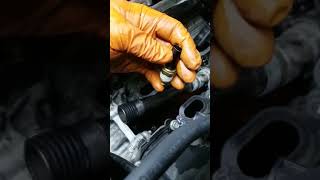
How to confirm: Visually inspect the ECT sensor connector for looseness, corrosion, or backed-out pins. Wiggle the connector while the engine is running to see if symptoms change or codes can be triggered. This is difficult due to the sensor's location.
Typical fix: Reseat the connector firmly. If damaged, replace the connector pigtail. A common replacement pigtail is Motorcraft WPT-989.
Est. part cost: $20-$50 - Faulty Engine Coolant Temperature (ECT) Sensor or Wiring 🟡 Medium Probability → Shop Engine Coolant Temperature Sensor TSB 21-2168 identifies an intermittent voltage drop from the ECT sensor as the root cause. For 2018-2020 models, Ford issued a fix that involves relocating the sensor to a less problematic area using a new heater hose and jumper harness, which avoids an 8+ hour repair job.
How to confirm: Test the sensor's resistance and compare it to specifications. Check for continuity and shorts in the wiring harness between the sensor and the PCM. Given the labor to access, performing the TSB relocation is often the most practical confirmation and fix.
Typical fix: For 2018-2020 models, the official fix is to install the Ford ECT sensor relocation kit (Part No. ML3Z-14A411-H). 🎬 Watch: Step-by-step installation of the Ford ECT relocation kit For other models, replace the ECT sensor (Motorcraft DY-1269) and repair any damaged wiring.
Est. part cost: $25-$75 for a sensor, or ~$100-$150 for the relocation kit. - Faulty Knock Sensor (Bank 2) or Harness ⚪ Low Probability → Shop Ignition Knock (Detonation) Sensor While this is the textbook cause for P0330, it is far less common on the 2.7L F-150 than the ECT circuit issue. Rodent damage to the harness under the intake manifold has been reported by owners. This should only be considered after the ECT system has been thoroughly checked and cleared.
How to confirm: Test the knock sensor's resistance and check its wiring for damage. Accessing the sensor requires removing the intake manifold, fuel rails, and injectors. This is a labor-intensive job, estimated at over 8 hours.
Typical fix: Replace the Bank 2 knock sensor (Part No. FT4Z-12A699-F). It is highly recommended to replace both sensors and the harness at the same time due to the high labor involved.
Est. part cost: $40-$110 per sensor
Rare But Worth Checking
- Powertrain Control Module (PCM) Fault: → Shop Engine Control Module (ECM) This is a rare cause and should only be considered after all other possibilities, including sensors and wiring, have been exhaustively tested and ruled out.
Diagnosis Steps
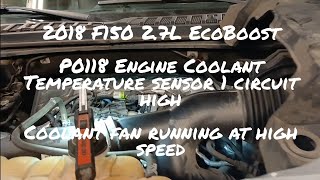
- Scan the PCM for all stored diagnostic trouble codes. If P0330 is accompanied by any ECT-related codes (P0116, P0117, P0118, etc.), prioritize diagnosing the ECT circuit first.
- For 2018-2020 models, check for applicability of TSB 21-2168. If symptoms match, installing the ECT relocation kit (Part No. ML3Z-14A411-H) is the recommended and most efficient repair.
- For 2015-2019 models, reference TSB SSM 47791. This points to checking the ECT sensor electrical connector for damage, corrosion, or a loose connection. Access is difficult as the sensor is under the intake manifold.
- Inspect the visible portions of the engine wiring harnesses for any signs of chafing, melting, or rodent damage, which has been reported by owners.
- If codes persist after checking connections (or if access is too difficult), the next logical step for 2018-2020 models is installing the Ford-approved relocation kit. This turns an 8.2-hour job into a ~2-hour job.
- Only after completely ruling out the ECT circuit as the cause should you proceed with the more labor-intensive diagnosis of the knock sensor.
- To test or replace the knock sensor, you must remove the intake manifold, fuel rails, and potentially the fuel injectors to gain access.
- Once accessed, test the knock sensor's resistance with a multimeter and inspect its dedicated wiring harness for damage.
- If the knock sensor or its harness is faulty, replace both knock sensors and the harness simultaneously to avoid future labor costs.
Parts You'll Likely Need
- ECT Sensor Relocation Kit
(OEM #ML3Z-14A411-H)— The official Ford fix for 2018-2020 models per TSB 21-2168. Includes a new heater hose with integrated sensor, a jumper harness, and zip ties. Drastically reduces labor time.
Trusted brands: Motorcraft
OEM price range: $100-$150 - Engine Coolant Temperature (ECT) Sensor Connector
(OEM #WPT-989)— Ford TSBs identify a poor connection or damaged wiring at this connector as a primary cause of the issue on 2.7L engines, especially for 2015-2019 models.
Trusted brands: Motorcraft, Dorman, Standard Motor Products
OEM price range: $30-$50
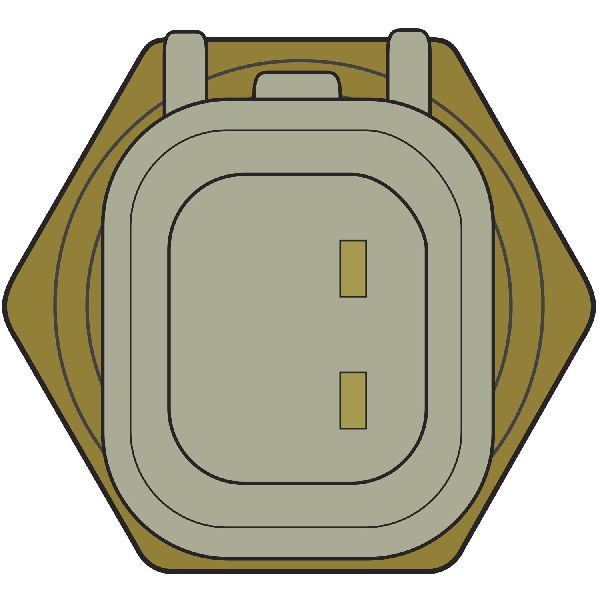
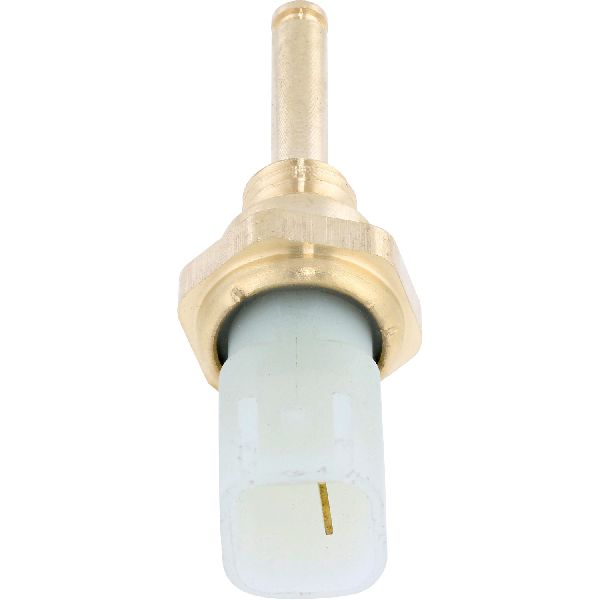
Aftermarket price range: $15-$30 - Engine Coolant Temperature (ECT) Sensor
(OEM #DY-1269)— The sensor itself can fail. For pre-2018 models or if the relocation TSB is not performed, this sensor (located under the intake) would be replaced.
Trusted brands: Motorcraft, Bosch, Delphi
OEM price range: $40-$60
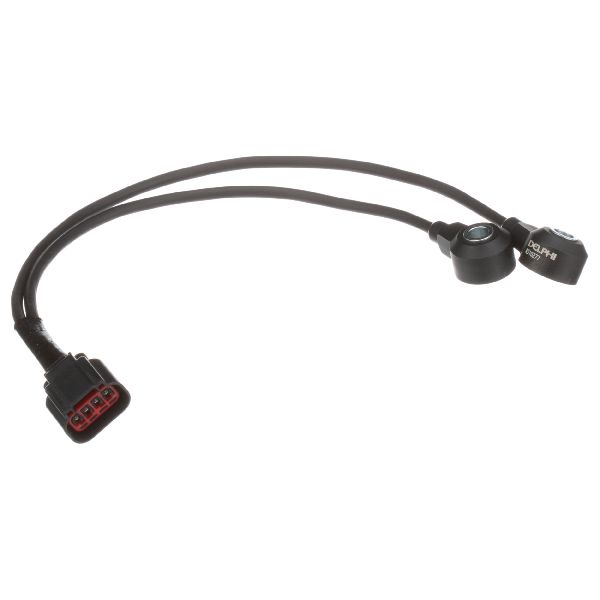
Aftermarket price range: $20-$40 - Ignition Knock Sensor
(OEM #FT4Z-12A699-F)— This is the part directly named by the code's definition, but it should only be replaced after the more common ECT circuit issues are ruled out.
Trusted brands: Motorcraft, NGK, Delphi
OEM price range: $50-$110
Aftermarket price range: $40-$80
Related Codes That Often Appear With This One
- P0116, P0117, P0118, P0119 — These are all codes directly related to the ECT sensor's performance, circuit range, low/high, and intermittent signals. Their presence strongly indicates the root cause is the ECT circuit.
- P0128 — This code indicates the coolant temperature is below the thermostat's regulating temperature, which can be caused by a faulty ECT sensor signal.
- P0217, P1299 — These codes indicate an engine or cylinder head over-temperature condition, which can be falsely triggered by an erratic ECT sensor.
- P1026, P130D — These are additional manufacturer-specific codes that Ford TSBs associate with the same ECT circuit fault. 🎬 See how these codes relate to the TSB 21-2168 fix
Technical Service Bulletins (TSBs) & Recalls
- TSB 21-2168: Notes that P0330 on 2018-2020 2.7L F-150s can be caused by an intermittent drop in ECT voltage and provides a relocation kit as the fix.
- SSM 47791: Points to a poorly seated or damaged ECT sensor connector as a cause for P0330 and other codes on 2017-2019 2.7L engines.
- SSM 46906: Similar to SSM 47791, this bulletin identifies the ECT sensor connector or wiring as a likely cause for P0330 on 2015-2017 2.7L engines.
Platform-Specific Known Issues
- TSB 21-2168: For 2018-2020 F-150s with the 2.7L EcoBoost, Ford issued a bulletin for a condition where an intermittent drop in ECT voltage causes P0330 and other codes. The fix is to install a relocation kit (ML3Z-14A411-H) which includes a new heater hose with a built-in sensor and a jumper harness.
- SSM 47791 & SSM 46906: These bulletins cover 2015-2019 F-150s (among other models) with the 2.7L engine. They point to a poorly seated ECT connector or damaged wiring as the cause for P0330 and a host of other false temperature-related codes.
Mechanic-Grade Diagnostic Values
- Knock Sensor AC Voltage Output — expected: Small AC voltage generated when the engine block is tapped near the sensor.. Failure: No AC voltage signal produced when tapping indicates a dead sensor.
- Engine Coolant Temperature (ECT) Sensor Resistance — expected: Resistance decreases as temperature increases (Negative Temperature Coefficient). For example, high resistance (e.g., ~100k Ohms) when cold, low resistance (e.g., ~2-3k Ohms) at operating temperature.. Failure: An open circuit (infinite resistance) or short circuit (zero resistance), or values that do not correspond to the known temperature.
Scan Tool Commands That Help
- Ford IDS (Integrated Diagnostic System): Datalogger - Powertrain -> Engine — To monitor live PID data for Engine Coolant Temperature (ECT), Cylinder Head Temperature (CHT), and knock sensor activity to identify intermittent drops or erratic readings that trigger the fault.
- Ford IDS (Integrated Diagnostic System): Self-Test - Retrieve Continuous Memory DTCs — To pull all stored powertrain codes, which is critical for seeing if ECT-related codes are present alongside P0330.
Wiring & Ground Locations
- Bank 2 Location — Bank 2 on the 2.7L EcoBoost V6 engine is the driver's side. Cylinders are 4, 5, and 6, from front to back.. P0330 specifically refers to the knock sensor on Bank 2.
- PCM Grounds — Located on the firewall. There may be one or two ground points depending on the model year and engine.. A poor PCM ground can cause a host of erratic sensor readings and false codes. Ensuring this connection is clean and tight is a crucial electrical diagnostic step.
- Main Battery Ground — Located just in front of the washer fluid reservoir.. This is the primary ground for the entire vehicle's electrical system. Corrosion or looseness here can cause widespread, unpredictable issues.
- Body-to-Frame Ground Strap — Underneath the passenger side door area, a braided strap connects the truck's body to the frame. A similar ground may exist on the driver's side.. These straps are known to corrode and break, especially in salt-belt regions. A bad body ground can lead to modules seeking ground paths through other circuits, causing bizarre electrical faults.
Real Owner Repair Stories
- Ford Truck Enthusiasts Forum (2007 Navigator (similar engine layout)) — P0330 code, engine ran fine when cold but issues appeared when warmed up.
❌ Tried (didn't work) Initial diagnosis was uncertain due to the intermittent nature.
✅ What actually fixed it A repair shop discovered a mouse had chewed through the knock sensor wire under the intake manifold. The area was filled with acorn and walnut shells. Repairing the chewed wire resolved the code. - Ford F150 Forum (2021 F-150 2.7L with 91,100 miles) — P0332 (Knock Sensor Circuit Low - Bank 2), a related code to P0330.
❌ Tried (didn't work) Took it to a reputable independent shop, but they stopped the repair because they lacked the specialized tools to remove the 12 fuel injectors and 4 fuel rails (port and direct) required for access on the Gen 2 2.7L.
✅ What actually fixed it The owner was forced to take the truck to a Ford dealer for the repair. The final dealer estimate for replacing both knock sensors, the harness, coolant temp sensor, and all required seals/gaskets was over $2,700 due to the extreme labor involved. - Ford F150 Forum (2015 F-150 2.7L with 73k miles) — P0332 and intermittent P0330, correlated with moisture/rain.
❌ Tried (didn't work) The owner questioned the mechanic's quote to replace fuel injectors and rails just to access the knock sensors.
✅ What actually fixed it The mechanic diagnosed 'low resistance to the knock sensors' after removing the intake manifold. The proposed fix, costing $2,600, included replacing knock sensors, the harness, and also the fuel injectors because the shop claimed they would be broken during removal without a special tool. This story highlights the extreme labor and potential for extra parts replacement.
Model Year Variations Within This Range
- 2015-2017 (Gen 1 2.7L EcoBoost): These engines use direct injection only. The primary documented cause for P0330 is the faulty ECT sensor connector or wiring under the intake manifold, as noted in TSBs SSM 46906 and SSM 47791. The repair focuses on inspecting/repairing the original sensor circuit.
- 2018-2020 (Gen 2 2.7L EcoBoost): These engines feature significant updates, including both port and direct fuel injection, a new EGR system, and a 10-speed transmission. For the P0330 issue, these models are covered by TSB 21-2168, which provides the ECT sensor relocation kit (ML3Z-14A411-H) as the official fix, avoiding the need to remove the intake manifold. Accessing the original sensors is more complex due to the dual fuel rails.
Helpful Videos

We Have This Part in Stock


The information in this article is provided for general reference and educational purposes only. Vehicle specifications, procedures, and part compatibility can vary by production date, trim level, and region. Always consult your vehicle's factory service manual and verify part numbers before purchasing or performing repairs. Safety-critical components such as airbags, seat belts, and braking systems should be installed by a qualified professional.
- Ford F-150:
- 🧭 Diagnostic Flowchart
- 🎬 Helpful Videos
- 🛍️ Shop This Part
- What's Unique About the 2015-2020 Ford F-150
- Symptoms You May Notice
- Most Likely Causes
- Rare But Worth Checking
- Diagnosis Steps
- Parts You'll Likely Need
- Related Codes That Often Appear With This One
- Technical Service Bulletins (TSBs) & Recalls
- Platform-Specific Known Issues
- Mechanic-Grade Diagnostic Values
- Scan Tool Commands That Help
- Wiring & Ground Locations
- Real Owner Repair Stories
- Model Year Variations Within This Range
- 🎟️ Get 5% Off