

P0335 on 2007-2010 Toyota Sienna: Crankshaft Position Sensor Circuit Malfunction Causes and Fixes
For a 2007-2010 Toyota Sienna, code P0335 typically points to a failed crankshaft position sensor. This is a critical part for engine timing, and a failure can cause a no-start or stalling condition. Replacing the sensor (OEM Part No. 90919-05060, superseded by 90919-T5005) is the most common fix. Before replacement, check for low battery voltage (below 11V) and inspect the wiring harness for damage, as these are also known causes.
- P0335 on a 2007-2010 Sienna is a serious code that can leave you stranded; do not drive the vehicle.
- The most likely cause is a failed crankshaft position sensor, but wiring and low battery voltage are also common culprits.
- Always check freeze frame data for battery voltage at the time of the fault, as recommended by a Toyota TSB, before replacing parts.
- Testing the sensor's resistance and checking the wiring for continuity are key diagnostic steps.
What's Unique About the 2007-2010 Toyota SIENNA
The 2007-2010 Toyota Sienna primarily uses the reliable 3.5L 2GR-FE V6 engine. While generally robust, this code on this platform is straightforward and rarely points to complex issues beyond the sensor and its wiring. A notable point for many Toyota vehicles, including this Sienna, is Technical Service Bulletin T-TT-0010-10 Rev, which states that low battery voltage (below 11 volts) can trigger a P0335 code during startup due to inconsistent cranking speed. It's important to check freeze frame data to see the battery voltage when the code was set. This simple check can prevent unnecessary parts replacement.
Diagnostic Flowchart
Tap your situation to follow the diagnostic path that matches what you're seeing on this vehicle.
Symptoms You May Notice
- Engine cranks but will not start
- Engine stalls unexpectedly, sometimes while driving
- Check Engine Light is on
- Rough idling or engine misfires
- Hesitation or stumbling during acceleration
- Reduced fuel economy
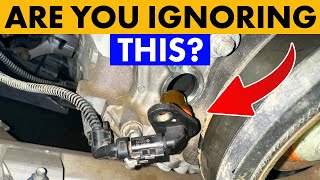
- Prolonged cranking before the 🎬 See this breakdown of common symptoms and how to fix them. engine starts
- Replacing the camshaft position sensor. While related to engine timing, the P0335 code specifically points to the crankshaft sensor circuit.
- Replacing the starter motor. A failing starter can cause a no-crank or slow-crank condition, which might trigger a P0335 due to erratic voltage, but the root cause is the starter, not the sensor circuit itself.
- Replacing ignition coils or spark plugs to fix a misfire that is actually caused by incorrect timing data from the bad crank sensor.
Most Likely Causes
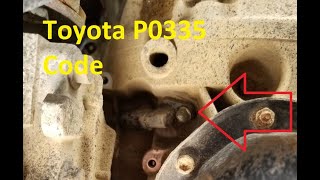
- Faulty Crankshaft Position Sensor 🔴 High Probability → Shop Engine Crankshaft Position Sensor Sensors are exposed to intense heat and vibration at the bottom of the engine, leading 🎬 Watch: See the exact location of the sensor on this engine. to internal failure over time. This is the most common failure point for any vehicle of this age with a P0335 code.
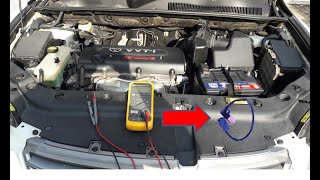
How to confirm: After checking wiring, test the sensor's resistance with a multimeter. 🎬 Watch: A quick guide on how to test the sensor's resistance. Per the service manual, the resistance should be between 985 - 1,600 Ohms (cold) and 1,265 - 1,890 Ohms (hot). An out-of-spec reading or an open circuit indicates a bad sensor.
Typical fix: Replace the crankshaft position sensor. Applying a small amount of clean engine oil to the new sensor's O-ring helps with installation.
Est. part cost: $20-$100 - Wiring or Connector Issue 🟡 Medium Probability The sensor's wiring harness is routed near hot and moving components. Over time, the protective loom can degrade, and wires can become brittle, frayed, or damaged by oil leaks or road debris. This is a very common issue on aging vehicles.
How to confirm: Visually inspect the wiring harness from the sensor to the ECM for any signs of fraying, melting, or corrosion. Wiggle the harness while the engine is running (if possible) to see if it causes a stall. A continuity test with a multimeter can confirm an open or short in the circuit between the sensor connector (C22) and the ECM connector (E11).
Typical fix: Repair the damaged section of wiring or replace the connector pigtail.
Est. part cost: $10-$30 - Low Battery Voltage ⚪ Low Probability → Shop Vehicle Battery Toyota TSB T-TT-0010-10 Rev specifically states that low battery voltage (below 11V) can cause inconsistent crankshaft speed during startup, leading the ECM to falsely trigger a P0335 code. This is often misdiagnosed as a bad sensor.
How to confirm: Test the battery voltage with a multimeter. A reading below 12.4V with the engine off suggests a weak battery. Check the freeze frame data with a scan tool to see the battery voltage at the moment the DTC was set. Also, check for corroded battery terminals.
Typical fix: Charge or replace the battery and clear the code. Clean battery terminals.
Est. part cost: $0-$200
Rare But Worth Checking
- Damaged Reluctor Ring: The reluctor ring (or sensor plate) on the crankshaft has 34 teeth that the sensor reads. While very rare, a damaged, bent, or broken tooth can cause an erratic signal. This usually requires significant disassembly to inspect and is often the result of other engine work being performed incorrectly.
- Faulty Engine Control Module (ECM): → Shop Engine Control Module (ECM) This is extremely rare and should only be considered after all other possibilities, including the sensor and the entire wiring circuit, have been exhaustively checked and confirmed to be good.
- Weak Key Fob Battery: → Shop Vehicle Battery In at least one documented case on a similar Lexus platform, a weak key fob battery caused a no-start condition that falsely triggered a P0335 code. This is due to a communication failure in the starting/immobilizer system, not a direct fault in the crank sensor circuit, but it can be a misleading symptom.
Diagnosis Steps
- Verify the presence of the P0335 code using an OBD-II scanner. Check for any other codes.
- Using a scan tool like Toyota Techstream, check the freeze frame data to see the battery voltage when the code was set. If it was below 11 volts, investigate the battery and charging system first per TSB T-TT-0010-10 Rev.
- If a scan tool is available, monitor the 'Engine Speed' data PID while cranking the engine. If the RPM reading is zero while the engine is turning over, it strongly points to a fault in the crank sensor circuit (sensor, wiring, or ECM).
- Perform a thorough visual inspection of the crankshaft position sensor and its wiring harness. Look for melted plastic, frayed wires, oil contamination, or loose connections.
- Disconnect the sensor and test its internal resistance using a multimeter. Compare the reading to the specifications: 985 - 1,600 Ohms (cold) or 1,265 - 1,890 Ohms (hot).
- If sensor resistance is within spec, check the wiring harness for continuity, shorts to ground, and shorts to power between the sensor connector (C22) and the ECM connector (E11).
- If the sensor and wiring are confirmed to be good, the issue may be with the reluctor ring (rare) or, in very rare cases, the ECM itself.
Parts You'll Likely Need
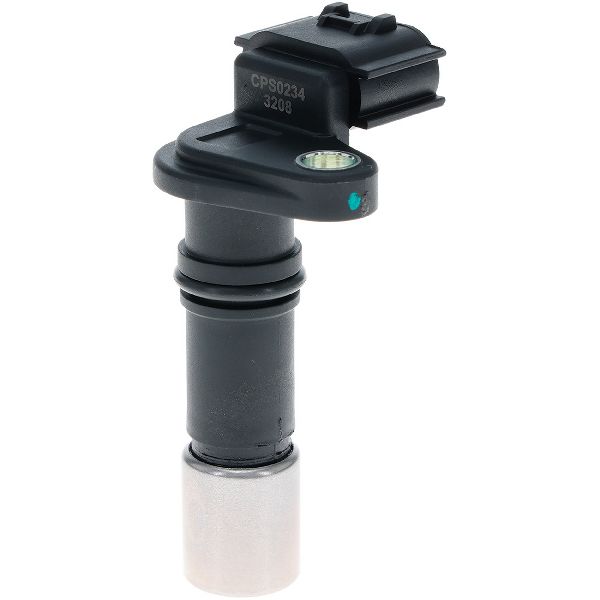
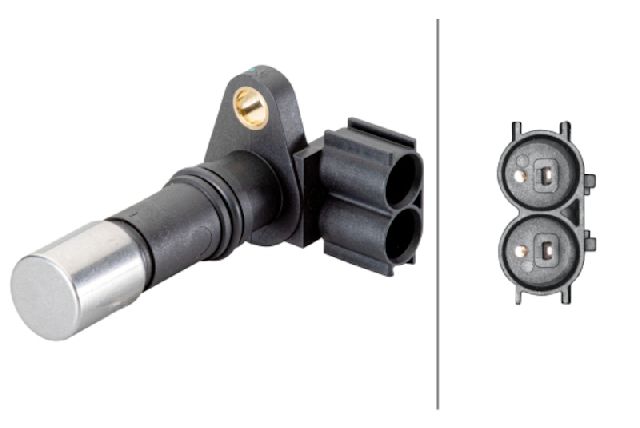
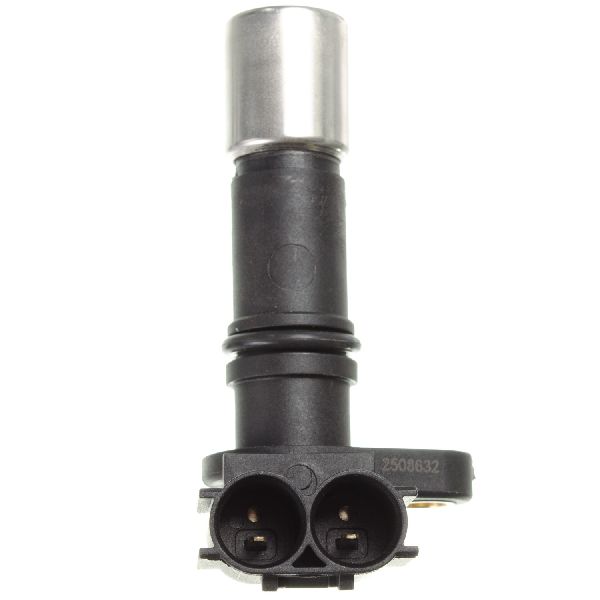
- Crankshaft Position Sensor
(OEM #90919-05060)— This is the most frequent cause of a P0335 code due to sensor failure from age and heat.
Trusted brands: Denso (OEM Manufacturer), NGK/NTK, Bosch, Standard Motor Products (PC564)
OEM price range: $60-$105
Aftermarket price range: $20-$50
Related Codes That Often Appear With This One
- P0340 — This is the code for the Camshaft Position Sensor. The TSB #T-TT-0010-10 Rev mentions that low battery voltage can cause both P0335 and P0340 to appear together.
- P0339 — This code indicates an intermittent fault in the crankshaft position sensor circuit, which can be a precursor or accompany a complete failure indicated by P0335.
Technical Service Bulletins (TSBs) & Recalls
- T-TT-0010-10 Rev: States that low battery voltage (below 11 volts) can contribute to a MIL "ON" for P0335 due to inconsistent crankshaft speed during startup. Recommends checking freeze frame data for voltage at the time of the fault.
Platform-Specific Known Issues
- A Technical Service Bulletin (T-TT-0010-10 Rev) notes that low battery voltage (below 11V) can be a contributing factor to a P0335 code on these vehicles.
- Wiring for the sensor can be damaged or improperly secured after other engine work, like a timing belt service, leading to a new P0335 code.
Mechanic-Grade Diagnostic Values
- Crankshaft Position Sensor Resistance (Cold) — expected: 985 - 1,600 Ω. Failure: Reading is outside this range or shows an open circuit (infinite resistance).
- Crankshaft Position Sensor Resistance (Hot) — expected: 1,265 - 1,890 Ω. Failure: Reading is outside this range.
- Crankshaft Position Sensor Signal (Oscilloscope) — expected: A consistent AC pulse waveform (NE+) that is generated 34 times per engine revolution. The wavelength shortens as RPM increases.. Failure: No signal, an erratic or noisy signal, or a signal with missing pulses.
- Scan Tool 'Engine Speed' PID (while cranking) — expected: Should show a rising RPM value consistent with engine cranking speed (e.g., >150 RPM).. Failure: Reading remains at 0 RPM while the engine is physically cranking.
Hidden / Shadow Codes Worth Checking
- P0335 with Detail Code: Within Toyota's Techstream software, P0335 may have additional detail or information codes that specify the failure condition, such as 'Crankshaft Position Sensor Verify Pulse Input' (indicating no signal at all) or 'Crankshaft Position Sensor Range Check or Rationality' (indicating an incorrect signal pattern). (see via Toyota Techstream software under 'DTC Info' or 'Detail' view for the specific code.)
Scan Tool Commands That Help
- Toyota Techstream: Data List > Engine Speed (RPM) — This is the primary live data parameter to monitor during diagnosis. If the engine is cranking but the 'Engine Speed' PID reads 0, it confirms the ECM is not receiving a signal from the crankshaft position sensor circuit.
- Toyota Techstream: Utility > All Readiness — After a repair (like replacing the sensor), you can use this function and select P0335 to check the DTC judgment result. This can confirm the fix is successful without needing to complete a full drive cycle, saving diagnostic time.
Wiring & Ground Locations
- EA — Engine harness ground point located on the front cylinder head.. A poor ground at this location can introduce electrical noise or cause voltage drops in the engine sensor circuits, including the crankshaft position sensor, potentially leading to a false P0335 code.
- C22 — The electrical connector for the Crankshaft Position Sensor itself.. This is the starting point for testing the sensor's resistance and for checking the wiring harness continuity back to the ECM.
- E11 — The specific ECM connector that contains the wiring for the crankshaft position sensor.. This is the termination point for checking wiring continuity from the sensor. A technician would test between pins at connector C22 and the corresponding pins at E11 to find an open or short.
Real Owner Repair Stories
- Reddit user, professional mechanic (2016 Lexus RX350 (with 2GR-FE engine, similar architecture)) — After a major service (rear main seal replacement), the engine was 'running like shit,' with misfiring, surging, and multiple random timing-related codes.
❌ Tried (didn't work) Initial diagnosis focused on what could have been done wrong during reassembly, checking connections and sensors.
✅ What actually fixed it The reluctor ring on the flywheel was found to be 'ever so slightly cockeyed' from being bumped or misaligned during transmission re-installation. This caused an incorrect signal to the crank sensor. The fix required disassembling again to properly align the reluctor ring.
When the Usual Fixes Don't Work
- While the most common fix is replacing the sensor, a P0335 that appears directly after major engine or transmission work should immediately raise suspicion of mechanical damage to the reluctor ring. A technician on a 2GR-FE engine reported that a slightly misaligned reluctor ring after a rear main seal job caused a persistent P0335 and rough running, which would not have been fixed by replacing the sensor or repairing wiring.
OEM Part Supersession History
90919-05060→90919-T5005— Standard part update/revision by Toyota.
Heads up: The new part 90919-T5005 is the correct replacement. However, many parts catalogs list this same part number for both the crankshaft and camshaft position sensors, which can cause confusion. Always confirm the part application before purchasing.
Helpful Videos

We Have This Part in Stock


The information in this article is provided for general reference and educational purposes only. Vehicle specifications, procedures, and part compatibility can vary by production date, trim level, and region. Always consult your vehicle's factory service manual and verify part numbers before purchasing or performing repairs. Safety-critical components such as airbags, seat belts, and braking systems should be installed by a qualified professional.
- Toyota SIENNA:
- 🧭 Diagnostic Flowchart
- 🎬 Helpful Videos
- 🛍️ Shop This Part
- What's Unique About the 2007-2010 Toyota SIENNA
- Symptoms You May Notice
- Most Likely Causes
- Rare But Worth Checking
- Diagnosis Steps
- Parts You'll Likely Need
- Related Codes That Often Appear With This One
- Technical Service Bulletins (TSBs) & Recalls
- Platform-Specific Known Issues
- Mechanic-Grade Diagnostic Values
- Hidden / Shadow Codes Worth Checking
- Scan Tool Commands That Help
- Wiring & Ground Locations
- Real Owner Repair Stories
- When the Usual Fixes Don't Work
- OEM Part Supersession History
- 🎟️ Get 5% Off