

P0339 on 2015-2020 Honda Fit: Crankshaft Sensor Intermittent Failure Causes and Fixes
P0339 on a 2015-2020 Honda Fit most often means the crankshaft position sensor is failing intermittently, a known issue for this platform. This can cause dangerous engine stalling, rough idling, and no-start conditions. Replacing the sensor is the standard fix, with parts costing between $40 for an aftermarket brand and $135 for an OEM sensor. A CKP relearn procedure is required after replacement.
- P0339 on a 2015-2020 Fit indicates an intermittent signal from the crankshaft position sensor, a common issue for this model.
- The most frequent symptom is dangerous engine stalling, especially when the engine is hot, along with hard starting and rough idle.
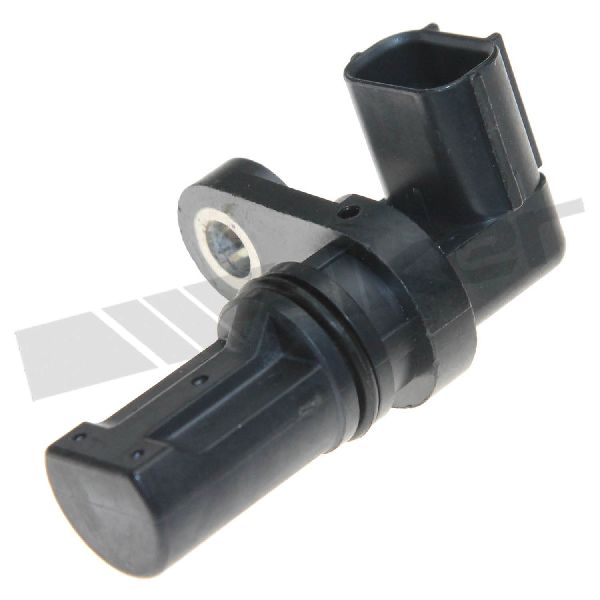
- The overwhelming majority of cases are fixed by replacing the crankshaft position sensor (OEM Part# 37500-RB0-006) with a quality part (Honda or Denso recommended).
- After replacement, a 'CKP Pattern Relearn' procedure is mandatory and can be performed with a scan tool or a specific manual driving procedure.
- If a new sensor doesn't fix the issue, the wiring harness and connector should be meticulously inspected for damage or corrosion.
What's Unique About the 2015-2020 Honda Fit
For the third-generation Honda Fit (2015-2020), the P0339 code is a well-documented issue that typically points directly to a failing crankshaft position sensor or its wiring. 🎬 Watch: Diagnosing the P0339 intermittent circuit interruption on this Honda. While other Honda models have had TSBs for software updates or harness corrosion related to this code, the Fit community experience points most strongly toward a heat-soaked, failing sensor as the primary culprit. The location at the rear of the engine block near the transaxle can make it susceptible to heat and vibration over time. Forum discussions frequently cite stalling after the car is fully warmed up, reinforcing the heat-soak failure theory.
Symptoms You May Notice
- Engine stalls unexpectedly, sometimes while driving at speed or when coming to a stop.
- Engine cranks but fails to start, or takes longer than usual to start.
- Rough or uneven idle.
- Hesitation or stumbling during acceleration, sometimes described by owners as a sudden 'jerk' between 2000-2500 RPM.
- Check Engine Light is illuminated.
- Tachometer may behave erratically or drop to zero during a stall.
- Replacing spark plugs and ignition coils to fix misfires without first addressing the P0339 code. The misfire is a symptom of the incorrect timing information from the faulty CKP sensor.
- Ignoring the code because it is intermittent. The stalling symptom is a safety hazard and will likely become more frequent over time.
- Replacing the battery or alternator. While a weak battery can cause various electrical issues, the specific P0339 code points directly to the CKP circuit.
Most Likely Causes
- Failing Crankshaft Position (CKP) Sensor 🔴 High Probability → Shop Engine Crankshaft Position Sensor The sensor is an electronic component that can fail internally due to heat cycles and vibration over many years of service. It's considered a common failure item on this platform, with many owner reports of failure causing stalling.
How to confirm: The most definitive test is to monitor the CKP sensor signal on a live data scanner or oscilloscope while the engine is running. Look for the signal to drop out, especially when the engine is hot. However, for most DIY mechanics, replacing the sensor is often the most practical diagnostic step after a visual inspection of the wiring, given its high failure rate.
Typical fix: Replace the crankshaft position sensor and its O-ring. A CKP pattern relearn procedure is required after replacement.
Est. part cost: $40-$135 - Damaged Wiring or Poor Connector 🟡 Medium Probability The sensor's wiring harness is located at the bottom rear of the engine, where it can be exposed to heat, oil, and road debris, potentially causing corrosion or damage over time. A Honda TSB for other models (16-011) specifically cites corrosion in the CKP connector as a cause for this code, requiring harness and sensor replacement.
How to confirm: Visually inspect the entire length of the wiring from the sensor to the ECM. Check the connector pins at the sensor for looseness, corrosion (green or white powder), or oil contamination. Tug gently on the wires to ensure they are secure in the connector. A user on Honda-Tech reported that even after two aftermarket sensor replacements, the P0339 code returned, pointing towards a potential wiring issue as the root cause.
Typical fix: Clean the connector terminals with electrical contact cleaner. If the connector or wiring is damaged, it will need to be repaired or the harness section replaced.
Est. part cost: $5-$300
Rare But Worth Checking
- Damaged Reluctor Wheel (Pulse Plate): The sensor reads teeth on a wheel (reluctor) attached to the crankshaft. If this wheel is damaged or has debris on it, it can cause an erratic signal. This is rare but possible, especially if other engine work has been performed. Inspection may require significant engine disassembly.
- Failing Engine Control Module (ECM): → Shop Engine Control Module (ECM) In very rare cases, the fault can be internal to the ECM itself, where it is unable to properly process the signal from a known-good sensor. This should only be considered after all other possibilities, including multiple sensor replacements and thorough wiring checks, have been exhausted.
Diagnosis Steps
- Read the code with an OBD-II scanner to confirm P0339 is present.
- Perform a thorough visual inspection of the CKP sensor's wiring and connector. The sensor is located at the rear of the engine block, near the transmission bell housing. Look for any signs of melting, corrosion, or loose pins.
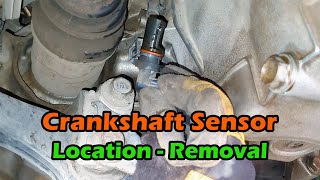
- If wiring looks good, the most likely cause is the sensor itself. Replace the Crankshaft Position Sensor with a new O-ring. It is held in by a single 10mm bolt.
- After replacing the sensor, you must clear the old CKP pattern from the ECM's memory. This is done using the 'CKP Pattern Clear' function on a professional scan tool like the Honda HDS or a capable aftermarket scanner (e.g., Launch X431, Foxwell NT510).
- Perform the CKP Pattern Learn procedure. This can be done with a high-end scan tool or by following a manual procedure.
- The manual relearn procedure generally involves: a) Warm the engine to normal operating temperature (radiator fan cycles on). b) With the transmission in neutral or park, hold the engine at 3,000 RPM until the fan comes on again. c) Test drive on a level road, decelerating (with throttle fully closed) from 2,500 RPM down to 1,000 RPM. Repeat several times. 🎬 Watch: How to perform the relearn procedure without a scanner. d) Turn the ignition off, then turn it to ON (II) and wait 30 seconds.
- If the code returns after replacing the sensor and performing the relearn, re-inspect the wiring for continuity with a multimeter or consider a more advanced diagnosis for a potential ECM or reluctor wheel issue.
Parts You'll Likely Need
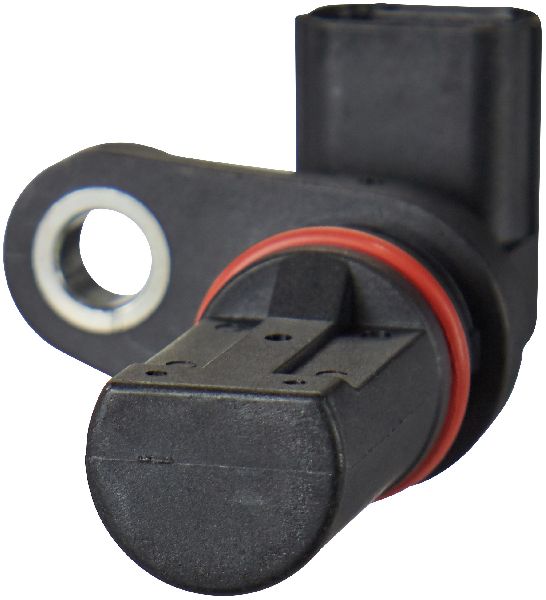
- Crankshaft Position Sensor
(OEM #37500-RB0-006)— This sensor is the most common failure point for code P0339, failing intermittently due to heat and age, causing stalling and no-start conditions.
Trusted brands: Honda (Genuine), Denso (OEM supplier), NGK/NTK, Duralast
OEM price range: $130-$135
Aftermarket price range: $40-$75 - Crankshaft Position Sensor O-Ring
(OEM #91319-PAA-A01)— A new O-ring should always be used when replacing the sensor to prevent oil leaks. It is often included with a new OEM sensor but should be purchased separately if not. 🎬 See how to properly install the new sensor O-ring.
Trusted brands: Honda (Genuine)
OEM price range: $2-$5
Aftermarket price range: $1-$3
Technical Service Bulletins (TSBs) & Recalls
- TSB 16-011 (for Accord/CR-V): Notes that corrosion between the engine wire harness and the CKP sensor connector can cause P0335 (no signal) and P0339 (intermittent signal). The fix is to replace both the engine wire harness and the CKP sensor. While not for the Fit, it establishes a known issue pattern for Honda.
- TSB 09-050 (for Accord): Mentions that a low battery during cranking can cause the PCM to misjudge the CKP signal, requiring a software update. This is a less likely cause but highlights the sensitivity of the system.
- Bulletin #A16-011: Confirms that corrosion between the engine wire harness and the CKP sensor connector may result in MIL illumination with DTC P0335 or P0339.
- Bulletin #SB16011: A manufacturer service bulletin documenting instances where the MIL comes on with DTC P0335 and/or P0339.
- Bulletin #DLR MSG - RFP -: Notes that Honda has collected specific parts from vehicles where customers reported a MIL with DTCs P0335 and/or P0339 to better understand the root cause of the intermittent interruption.
- Bulletin #A23-048: Describes symptoms such as engine RPM hunting or a rough idle associated with DTC P0339.
- Bulletin #A23-049: Notes that DTC P0339, indicating a CKP sensor circuit intermittent interruption, may affect a vehicle’s compliance with California and Federal emissions standards.
Platform-Specific Known Issues
- Heat-Related Stalling: A common owner complaint on forums like FitFreak.net is that the P0339 code and associated stalling primarily occur after the vehicle has been driven for a while and is fully warmed up. This strongly supports the theory of the electronic sensor failing due to heat-soak.
- Jerking / Hesitation During Shifts: A user on ClubJazz.org with a Honda Jazz (the Fit's name in other markets) reported a P0339 code accompanied by sudden jerks when shifting from 1st to 2nd gear, and intermittently in higher gears, between 2000-2500 RPM. Replacing the sensor did not immediately fix the issue, highlighting that a relearn procedure or wiring check is critical.
Mechanic-Grade Diagnostic Values
- CKP Sensor Resistance — expected: 200 to 900 Ohms. Failure: A reading of zero indicates a short circuit; an infinite reading indicates an open circuit. Any reading outside the expected range suggests a faulty sensor.
- CKP Sensor AC Voltage Output (while cranking) — expected: Around 200 millivolts (mV) AC. Failure: A reading of zero or a voltage that does not fluctuate during cranking indicates a failed sensor.
Scan Tool Commands That Help
- Honda Diagnostic System (HDS): CKP Pattern Clear — This function must be used after replacing the CKP sensor to erase the old, stored signal pattern from the ECM's memory before the new pattern can be learned.
- Honda Diagnostic System (HDS): CKP Pattern Learn — After clearing the old pattern, this function initiates the procedure for the ECM to learn the signal from the new sensor. This is critical for correct ignition and fuel timing.
- iCarsoft CR Ultra (or similar advanced scanner): Intermittent Fault Tracking — For a P0339 which is an intermittent fault, this function allows for continuous logging of the CKP sensor data during a test drive. This can help capture the exact moment the signal drops out and correlate it with driving conditions (e.g., hitting a bump, high engine temperature), which is invaluable for diagnosis.
Wiring & Ground Locations
- CKP Sensor Connector (3-Pin) — At the crankshaft position sensor, located on the rear of the engine block near the transmission bell housing.. This is the primary connection point to check for corrosion, damage, or looseness. Applying dielectric grease here after cleaning can prevent future moisture-related intermittent signal loss.
- PCM Connector C, Pin 38 (CRKN) — At the Powertrain Control Module (PCM).. This specific pin receives the CKP sensor signal at the PCM. Technicians can back-probe this pin to test for a consistent signal directly at the computer, which helps differentiate between a wiring problem and an internal PCM fault.
Real Owner Repair Stories
- Honda-Tech Forum Member (2011 Honda CR-V (Similar engine architecture principles apply)) — Car would turn over but not ignite, frequently throwing P0339. After starting, performance was awful.
❌ Tried (didn't work) Replacing the timing chain initially seemed to work, but the P0339 code returned as intermittent., Replacing the CKP sensor with an aftermarket brand., Replacing the CKP sensor with a second, different aftermarket brand.
✅ What actually fixed it The discussion strongly suggested the root cause was the initial timing chain being stretched, which may have damaged the reluctor wheel or caused other issues. The persistent problem with aftermarket sensors led to the recommendation to use only a factory Honda (OEM) crank sensor, as aftermarket parts were unreliable and continued to cause the code. - FitFreak Forum Member (2008 Honda Fit (Manual)) — After stalling on a hill, the car had a P0339 code, rough morning idle, and stuttering in 1st/2nd gear.
❌ Tried (didn't work) Initially planned to replace coil packs and spark plugs, which is a common misdiagnosis.
✅ What actually fixed it The user was advised that the code points directly to the CKP sensor circuit. The accepted fix was to first check the sensor's connection, and if that was secure, to replace the sensor itself. The key contribution was the detailed manual CKP relearn procedure, which was required after replacement and ultimately resolved the running issues.
OEM Part Supersession History
37500-RB0-006→No official supersession found.— This part number appears to be consistent for the entire 2009-2020 Fit generation, as well as other Honda models like the CR-Z and Insight.
Model Year Variations Within This Range
- 2015-2020: While there was a mid-cycle refresh in 2018 that added Honda Sensing, improved sound insulation, and changed some aesthetics, the core powertrain components, including the L15B engine and the associated 37500-RB0-006 crankshaft position sensor, remained the same throughout the generation. Therefore, the diagnosis and repair for P0339 are identical across all 2015-2020 model years.
Diagnostic Flowchart
Other Known Issues on This Vehicle
Issues unrelated to this code that are worth knowing about as an owner of this generation:
- Premature Starter Motor Failure 🔴 High — Commonly reported between 45,000 and 70,000 miles, especially on the 2015 model year. Symptoms include a single click with no crank, or requiring multiple presses of the start button. (Ref: No recall, but a very widely discussed problem. TSB 20-098 for a faulty Start/Stop switch can present similar symptoms and should be ruled out first on push-button start models.)
- Direct Injection Carbon Buildup 🟠 Medium — Can occur as early as 30,000 miles, causing misfire codes (P0300-P0304), rough idle, and hesitation. It's an inherent issue with the 'Earth Dreams' direct injection engine design where fuel doesn't wash over the intake valves. (Ref: Honda TSB 21-007 describes the diagnostic and cleaning procedure (walnut blasting) for intake valve carbon buildup.)
- Faulty Fuel Injectors 🟠 Medium — Particularly noted on 2015-2016 models, faulty injectors can cause misfires and may lead to a false P0420 (catalyst inefficiency) code. (Ref: Honda TSB 18-027 addresses faulty injectors causing a false P0420 code. TSB 16-034 addresses general misfire diagnosis which can lead to injector replacement.)
- VTC Actuator Rattle on Cold Start 🟡 Low — A brief, loud rattling or grinding noise for about 2 seconds on a cold engine start. While alarming, it is not typically associated with long-term damage but is a common annoyance. (Ref: Honda TSB 16-088 identifies a faulty VTC (Variable Timing Control) actuator as the cause and provides a replacement procedure.)
Used vs. New Parts: Buying Guide for This Vehicle
When a used part is the smart pick: For this specific repair, using a used part is NOT recommended. The crankshaft position sensor is a critical electronic component with a high failure rate due to heat and vibration. A used sensor from a junkyard carries an unknown history and could fail shortly after installation, wasting time and money.
What to inspect on the donor part:
- Not applicable, as a used sensor is not advised.
OEM-only on this vehicle (don't cheap out):
- Crankshaft Position Sensor
Aftermarket brands forum-validated for this vehicle:
- Denso (often the OEM supplier)
- NTK/NGK
Brands owners have reported issues with on this vehicle:
- Generic, unbranded, or 'white-box' sensors from online marketplaces. Forum discussions frequently mention that persistent issues with P0339 were only solved after replacing multiple failed aftermarket sensors with a genuine Honda or Denso part.
Real Owner Stories
Aggregated from forums and TSBs cited above. Mileages and costs reflect what owners reported in those sources.
Honda Fit
Symptoms: The engine stalls, but primarily after the vehicle has been driven for a while and is fully warmed up.
What fixed it: Replacing the crankshaft position (CKP) sensor is the standard fix confirmed by forum members.
Source hint: FitFreak.net
Honda Jazz (Fit)
Symptoms: Sudden jerks when shifting from 1st to 2nd gear, and intermittently in higher gears, between 2000-2500 RPM.
What fixed it: The report notes that simply replacing the sensor did not immediately fix the issue, highlighting that a CKP relearn procedure or a thorough wiring check is a critical part of the repair.
Source hint: ClubJazz.org
Honda Fit
Symptoms: A persistent P0339 code that would not clear.
What fixed it: This was a diagnostic story where the fix failed; the P0339 code returned even after two aftermarket sensor replacements. The suspected root cause was a wiring fault or the unreliability of non-OEM sensors.
Source hint: Honda-Tech.com
Related OBD-II Codes
Frequently Asked Questions
My 2016 Fit stalls, but only after it's been running for a while and is fully warmed up. Is this typical for a P0339 code?
I replaced the crankshaft position sensor on my Fit, but the P0339 code came back. What did I miss?
Can I perform the CKP Pattern Learn procedure myself without a professional scan tool?
My Fit is jerking suddenly between 2,000 and 2,500 RPM. Is this related to the P0339 code?
I saw Honda TSB 16-011 about corrosion causing this code. Does that apply to my 2015-2020 Fit?
Are aftermarket crankshaft sensors reliable for the Honda Fit, or should I buy an OEM part?
Helpful Videos

We Have This Part in Stock



The information in this article is provided for general reference and educational purposes only. Vehicle specifications, procedures, and part compatibility can vary by production date, trim level, and region. Always consult your vehicle's factory service manual and verify part numbers before purchasing or performing repairs. Safety-critical components such as airbags, seat belts, and braking systems should be installed by a qualified professional.
- Honda Fit:
- 🧭 Diagnostic Flowchart
- 🎬 Helpful Videos
- 🛍️ Shop This Part
- What's Unique About the 2015-2020 Honda Fit
- Symptoms You May Notice
- Most Likely Causes
- Rare But Worth Checking
- Diagnosis Steps
- Parts You'll Likely Need
- Technical Service Bulletins (TSBs) & Recalls
- Platform-Specific Known Issues
- Mechanic-Grade Diagnostic Values
- Scan Tool Commands That Help
- Wiring & Ground Locations
- Real Owner Repair Stories
- OEM Part Supersession History
- Model Year Variations Within This Range
- Other Known Issues on This Vehicle
- Used vs. New Parts: Buying Guide for This Vehicle
- Real Owner Stories
- Honda Fit
- Honda Jazz (Fit)
- Honda Fit
- Related OBD-II Codes
- Frequently Asked Questions
- 🎟️ Get 5% Off