

P0340 on 2009-2016 Audi A4 2.0T: Cam Sensor vs. Timing Chain Causes
On the 2009-2016 Audi A4 2.0T, P0340 is often a simple fix like a bad camshaft position sensor (~$40-$100). However, it can be a critical warning for a stretched timing chain, a common and expensive issue on these engines, especially in 2009-2012 models which were subject to a class-action lawsuit for this problem.
- For a P0340 code on a 2009-2016 Audi A4 2.0T, your first step should be to investigate the timing chain system, especially on 2009-2012 models.
- If the timing system is healthy, the most likely fix is a new camshaft position sensor. Use a quality brand like Bosch or Hella for reliability.
- Do not ignore this code. While it could be a cheap sensor, it could also be warning you of an impending timing chain failure that can destroy the engine.
- Always check for related codes. A P0016 (crank/cam correlation error) alongside P0340 makes a timing chain issue almost certain.
What's Unique About the 2009-2016 Audi A4
For the Audi A4 with the 2.0L TFSI EA888 engine, P0340 is more than just a sensor code; it's a potential early warning for catastrophic timing chain failure. Early versions of this engine (found primarily in 2009-2012 models) used a timing chain tensioner prone to failure, leading to a stretched chain. This mechanical timing error is often detected by the camshaft sensor first, triggering the P0340 code. Therefore, while the sensor might be the first suspect, a deeper investigation into the timing system is crucial on this specific platform, as confirmed by numerous owner experiences and a class-action lawsuit regarding the faulty tensioners.
Generation note: The 2009-2016 range covers the Audi A4 B8 (2009-2012) and B8.5 (2013-2016) generations. Both use the 2.0T EA888 engine (Gen 2), but the B8 models are significantly more susceptible to the timing chain tensioner failure that can cause this code. The B8.5 features an updated tensioner design (P/N 06K109467K), making it a less common, but still possible, cause.
Symptoms You May Notice
- Check Engine Light is on
- Engine is hard to start or cranks for a long time before starting
- Engine stalls unexpectedly, sometimes while driving or coming to a stop
- Rough or vibrating idle
- Sluggish acceleration and reduced engine power (limp mode)
- Increased fuel consumption
- Rattling noise from the engine on cold starts, indicating a loose timing chain.
- Replacing the camshaft position sensor without first checking for timing chain stretch, especially on a 2009-2012 model. If the chain is the root cause, the P0340 code will return, and the owner risks catastrophic engine failure by continuing to drive.
Most Likely Causes
- Stretched Timing Chain / Failed Tensioner 🔴 High Probability → Shop Engine Timing Chain Early EA888 Gen 2 engines (common in 2009-2012 models) used a tensioner design that is known to fail, allowing the timing chain to stretch or jump teeth. This is a widely documented issue and was the subject of a class-action lawsuit.
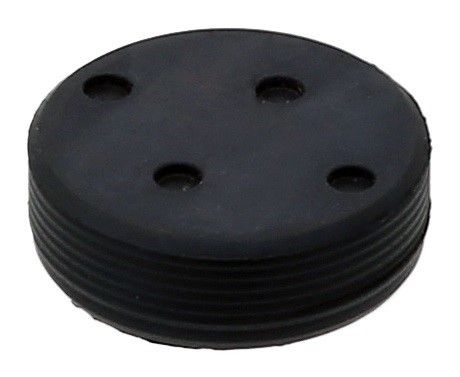
How to confirm: Scan for correlation codes like P0016. A mechanic can remove the inspection plug (P/N 06H115418AA) on the lower timing cover to visually check the extension of the timing chain tensioner. If it's extended past 6-7 'teeth' or ridges, the chain and tensioner must be replaced. Many owners use a smartphone to take a picture through the port for verification. 🎬 Watch: How to check timing chain stretch using a scanner or inspection port.
Typical fix: Complete timing chain service, including replacement of the chain, the updated tensioner (P/N 06K109467K), all guide rails, and associated seals and hardware. This is a labor-intensive job. 🎬 Watch: Complete DIY guide for replacing the timing chain and tensioner.
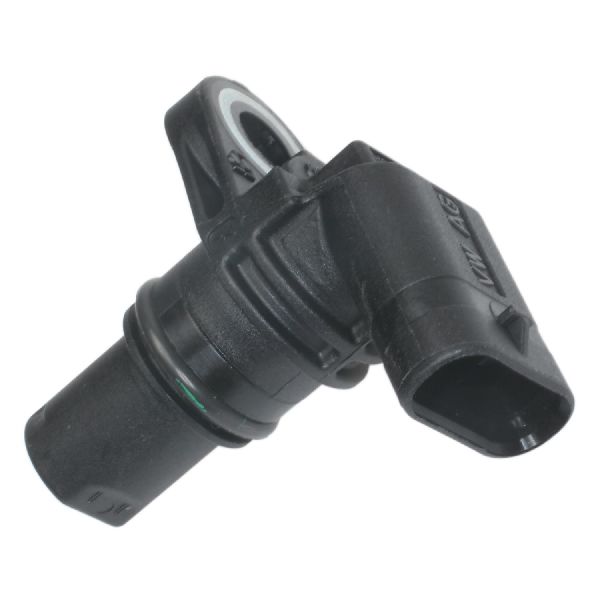
Est. part cost: $400-$800 for a full kit - Failed Camshaft Position Sensor (G40) 🔴 High Probability → Shop Engine Camshaft Position Sensor Sensors fail over time due to extreme heat cycles and oil exposure. Oil leaks from the valve cover gasket or the sensor's own O-ring can saturate the sensor and its connector, causing premature failure.
How to confirm: After ruling out timing chain stretch, inspect the sensor for oil contamination. The sensor can be tested with a multimeter for a 5V power signal at the connector. Swapping it with the identical exhaust camshaft sensor to see if the code changes is a valid diagnostic step. The easiest confirmation is replacing it, as it's relatively inexpensive.
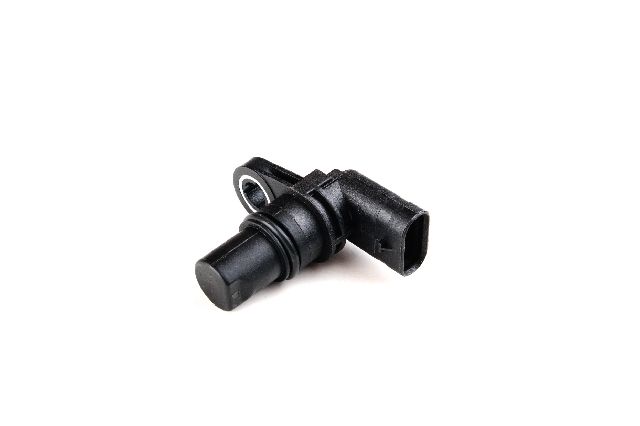
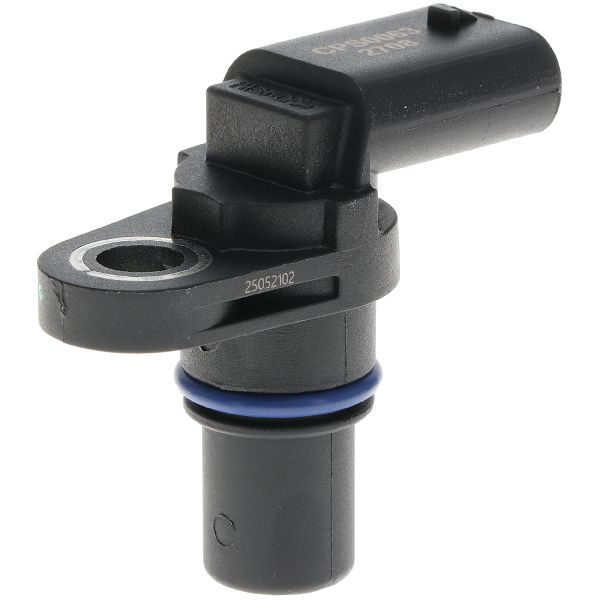
Typical fix: Replace the camshaft position sensor. It is located on the upper timing cover near the oil cap and is held by a single T30 Torx bolt. 🎬 See this quick walkthrough on replacing the camshaft position sensor.
Est. part cost: $40-$100 - Damaged Wiring or Connector 🟡 Medium Probability The wiring harness in the engine bay is exposed to heat and vibration, which can cause wires to become brittle, insulation to crack, or connectors to break over time. Previous repairs can also lead to mismatched or poorly connected wires.
How to confirm: Visually inspect the wiring harness leading to the camshaft position sensor for any signs of cracking, fraying, or heat damage. Check the connector for broken locking tabs, corrosion, or oil saturation. Test for continuity from the sensor connector to the ECM pins using a multimeter and a wiring diagram.
Typical fix: Repair the damaged section of wire or replace the connector pigtail.
Est. part cost: $15-$40 for a new connector pigtail - Low Engine Oil Level or Pressure ⚪ Low Probability
How to confirm: Check the engine oil level using the dipstick or MMI system. If the oil level is low, an oil pressure warning light may also be present. The VVT system and timing chain tensioner are hydraulically operated, and low oil pressure can affect their function, potentially triggering timing-related codes.
Typical fix: Top up the engine oil to the correct level and investigate the cause of the oil loss (e.g., PCV valve failure, piston rings). If the level is correct, oil pressure should be tested with a mechanical gauge.
Est. part cost: $10-$15 for a quart of approved oil
Rare But Worth Checking
- Failed Camshaft Adjuster Magnet (N205): → Shop Engine Camshaft This solenoid controls the variable valve timing. If it fails or its center pin breaks, it can cause camshaft position errors. It often throws its own specific codes (like P0010 or P0011) but can sometimes contribute to a P0340 or P0341, especially if the failure is intermittent.
- Metal Debris on Sensor: On 2.0T engines, a failing high-pressure fuel pump (HPFP) cam follower can shed metal shavings. These shavings can be picked up by the magnetic tip of the camshaft sensor, disrupting its reading. If you find metal debris on the old sensor, the HPFP cam follower needs immediate inspection to prevent camshaft lobe damage.
- Faulty Engine Control Module (ECM): → Shop Engine Control Module (ECM) This is extremely rare. The ECM should only be considered after all other possibilities, including mechanical timing, sensors, and wiring, have been exhaustively checked and confirmed to be in working order.
Diagnosis Steps
- Read all fault codes stored in the ECM. Pay close attention to any correlation codes like P0016, which strongly suggest a mechanical timing problem.
- Check the engine oil level and condition. Low or dirty oil can affect the hydraulic tensioner and VVT system. Top up if necessary.
- Crucial Step for EA888: Visually inspect the timing chain tensioner's extension. Remove the plastic inspection plug on the lower timing cover. If the tensioner piston shows more than 6-7 ridges, the timing chain is stretched and must be replaced immediately to prevent engine failure.
- If timing components are confirmed to be okay, inspect the camshaft position sensor's electrical connector and wiring for damage, corrosion, or oil contamination.
- Test the sensor's connector for a 5-volt reference signal from the ECM.
- If wiring is okay, replace the camshaft position sensor (G40). It's an inexpensive part and a common failure point. Use a quality brand like Bosch or OEM. Be sure to apply fresh oil to the new O-ring.
- Clear the codes and perform a test drive. If the code returns, further electrical diagnosis is needed.
- Test the wiring for continuity between the sensor connector and the ECM. A past repair may have swapped wires.
- If all else fails, investigate the camshaft adjuster magnet (N205) and, as a last resort, the ECM itself.
Parts You'll Likely Need
- Camshaft Position Sensor
(OEM #06H905163B / 07L905163C)— This is the most common direct part failure for a P0340 code after mechanical timing issues are ruled out.
Trusted brands: Bosch, Hella, NGK, OEM
OEM price range: $80-$120
Aftermarket price range: $40-$75 - Timing Chain Kit
(OEM #06K109158BP (example kit P/N))— This is required if the root cause is a stretched timing chain, a very common issue on 2009-2012 models. The kit must include the updated tensioner (06K109467K).
Trusted brands: Iwis (OEM supplier), FCP Euro, INA, ECS Tuning
OEM price range: $600-$900
Aftermarket price range: $400-$600 - Timing Chain Tensioner (Updated)
(OEM #06K109467K)— This is the specific updated part that resolves the design flaw in pre-2013 engines. If only the tensioner is being replaced as a preventative measure, this is the part to use.
Trusted brands: Genuine VW/Audi, INA
OEM price range: $60-$90
Aftermarket price range: $40-$60
Related Codes That Often Appear With This One
- P0016 — Crankshaft/Camshaft Position Correlation. This code strongly indicates a mechanical timing issue, such as a stretched timing chain, and makes it the most likely culprit when seen with P0340.
- P0341 — Camshaft Position Sensor 'A' Circuit Range/Performance. This is a closely related code that also points to a problem with the sensor's signal, often due to the same causes like a stretched chain or a failing sensor.
Technical Service Bulletins (TSBs) & Recalls
- While no TSB is specifically for P0340, several are related to its root causes. TSBs were released for excessive oil consumption (which degrades oil quality and affects timing components) and for procedures related to the camshaft bridge, which can impact timing. A major class-action lawsuit settlement effectively served the purpose of a recall for the timing chain tensioner.
Platform-Specific Known Issues
- The timing chain tensioner in pre-2013 EA888 engines is a well-known failure point. A P0340 code should always prompt an immediate check of the timing system on these vehicles to prevent catastrophic engine failure.
- A class-action lawsuit was settled regarding this tensioner issue, which extended the warranty for some owners, though most vehicles are now outside that coverage period. Reimbursements were offered for prior repairs.
Mechanic-Grade Diagnostic Values
- Camshaft Position Sensor (G40) Voltage Supply — expected: Greater than 4.5V. Failure: Voltage below 4.5V with the key on, engine off, points to a wiring or ECM power supply issue.
- Camshaft Position Sensor (G40) Connector Pinout — expected: Pin 1: Power (~5V), Pin 2: Signal, Pin 3: Ground.. Failure: Incorrect voltages or lack of ground when back-probing indicates a wiring fault.
- Camshaft Adjuster Magnet (N205) Resistance — expected: 5.0 to 15.0 Ohms. Failure: A reading of infinite resistance (open circuit) or near-zero resistance (short circuit) indicates a failed solenoid.
- Engine Oil Pressure at Hot Idle (~80°C) — expected: 17.4 - 30.5 psi (1.2 - 2.1 bar). Failure: Low oil pressure can affect the hydraulic tensioner and VVT system, contributing to timing codes.
Scan Tool Commands That Help
- VCDS (VAG-COM): Engine -> Measuring Value Blocks (MVB) -> Group 093 — Use this to check the live camshaft phase position adaptation value. A deviation greater than +/- 5 degrees at idle strongly suggests a mechanical timing issue (stretched chain, jumped tooth) rather than a sensor circuit fault. This is a key step to perform before replacing the timing chain.
Wiring & Ground Locations
- G40 Sensor Connector — On the upper timing cover, near the oil cap, held by a single T30 Torx bolt.. This is the main connector to test. It's a 3-pin connector for power, ground, and signal. Oil contamination from a leaking valve cover or sensor o-ring is common here.
- ECM Connector Pins (G40 Circuit) — At the Engine Control Module (ECM). Specific pins can vary slightly by year and engine code, but examples are Pin A35 (Power), Pin A30 (Signal), and Pin A44 (Ground).. Testing for continuity between the G40 sensor connector and these specific ECM pins is the definitive way to rule out a broken wire. Previous repairs can sometimes mismatch these wires, causing a persistent P0340 even with a new sensor.
- Main Engine Ground Strap — Typically connects the engine block to the chassis frame rail, often near the driver's side engine mount.. A corroded or loose main engine ground can create a floating ground reference for all engine sensors, including the G40, leading to erratic signals and intermittent fault codes.
Real Owner Repair Stories
- YouTube user 'No Name' (Audi (model unspecified, but with EA888-style wiring)) — Persistent P0340 camshaft position sensor fault.
❌ Tried (didn't work) The video implies that basic checks were done, but the focus is on the wiring.
✅ What actually fixed it The wiring harness to the camshaft position sensor had been previously repaired with non-OEM yellow wires. A continuity test from the sensor connector to the ECM revealed that two of the three wires (signal and ground) had been swapped during the repair. Correcting the wire positions at the connector to match the factory wiring diagram resolved the fault code. - AudiWorld Forums user (2011 Audi A4) — Rough idle, poor acceleration, rattling from engine, EPC light, followed by CEL with codes P0016, P0011, P000A.
❌ Tried (didn't work) Replaced timing chain and tensioner., Replaced camshaft bridge (due to a broken screen found during the timing job)., Replaced the camshaft position sensor.
✅ What actually fixed it The user was still diagnosing at the end of the thread, with the next recommended step being the replacement of the N205 camshaft adjuster magnet (solenoid). This story highlights how even after a full timing service, related codes can persist, pointing towards the VVT system components like the N205.
OEM Part Supersession History
06H109467N, 06H109467AB, 06H109467T→06K109467K— The original tensioner design was prone to premature failure due to a faulty retaining clip and ratchet mechanism, allowing the timing chain to lose tension. The updated 'K' revision is a complete redesign to prevent this failure.06H905163B→07L905163C— Standard part revision for improved performance, reliability, or change in manufacturer.
Heads up: The parts are generally interchangeable, but it is always best to use the latest revision (07L905163C) when replacing.
Model Year Variations Within This Range
- 2009-2012 (B8): These models were factory-equipped with the failure-prone timing chain tensioner. P0340 on these vehicles has a very high probability of being caused by a stretched timing chain. They also feature hydraulic power steering.
- 2013-2016 (B8.5): These models came with the updated timing chain tensioner (06K109467K) from the factory, making the stretched chain a less common (but still possible) cause for P0340. Other changes include electromechanical power steering, updated MMI, and different exterior styling (headlights, grille, bumpers).
Diagnostic Flowchart
Other Known Issues on This Vehicle
Issues unrelated to this code that are worth knowing about as an owner of this generation:
- Excessive Oil Consumption 🔴 High — Very common in 2009-2011 models due to piston ring design. Can be 1 quart per 1,000 miles or worse. Less common but still present in later models. (Ref: A class-action lawsuit addressed this, leading to some repairs under an extended warranty, but coverage is now expired for most.)
- PCV Valve Failure 🟠 Medium — Common across all years. The diaphragm inside the PCV (oil separator) tears, causing a whistling noise, rough idle, high oil consumption, and oil leaks.
- Water Pump / Thermostat Failure 🟠 Medium — The water pump has a plastic housing that is prone to cracking and leaking coolant, typically between 60,000 and 100,000 miles. Often replaced as a unit with the thermostat.
- Carbon Buildup on Intake Valves 🟠 Medium — As a direct-injection engine, fuel does not wash over the intake valves. This leads to carbon accumulation over 50,000-80,000 miles, causing misfires, hesitation, and reduced performance.
- Turbocharger Wastegate Rattle / Failure 🟠 Medium → Shop Turbocharger — The actuator arm for the turbo wastegate can wear out, causing a rattling noise on deceleration. In some cases, the diverter valve can also fail, causing a loss of boost.
Used vs. New Parts: Buying Guide for This Vehicle
When a used part is the smart pick: A used Camshaft Position Sensor (G40) or Camshaft Adjuster Magnet (N205) from a low-mileage donor vehicle can be a cost-effective option, as they are simple electronic components. However, given the low cost of new high-quality aftermarket sensors, the savings may be minimal.
Donor-vehicle mileage cap: roughly under 60000 miles for the part to have meaningful remaining life.
What to inspect on the donor part:
- For sensors/solenoids, check for a clean connector with no corrosion or broken locking tabs.
- Ensure the O-ring is present and not brittle or cracked.
- Ask for the VIN of the donor car to verify it's from a compatible year range and had low mileage.
- Avoid parts from engines that show signs of heavy oil sludge or neglect.
OEM-only on this vehicle (don't cheap out):
- Timing Chain
- Timing Chain Tensioner
- Timing Chain Guides
Aftermarket brands forum-validated for this vehicle:
- Camshaft Position Sensor: Bosch, Hella, NGK, Delphi
- Timing Chain Kit: Iwis (often the OEM supplier), INA, FCP Euro kits
Brands owners have reported issues with on this vehicle:
- Unbranded, no-name timing chain kits or tensioners from online marketplaces. Many forum posts and mechanic reviews warn that these parts can fail quickly, leading to catastrophic engine damage.
Real Owner Stories
Aggregated from forums and TSBs cited above. Mileages and costs reflect what owners reported in those sources.
2009-2012 Audi A4 2.0T EA888
Symptoms: Rattling noise from the engine on cold starts, indicating a loose timing chain.
What fixed it: Complete timing chain service, including replacement of the chain, the updated tensioner (P/N 06K109467K), all guide rails, and associated seals.
Cost: $400-$800
Source hint: vehicle_specific_issues and common_causes
Audi A4 (B7 platform) 2.0T
Symptoms: The engine will not run and the owner is checking for a 5V signal at the sensor connector.
What fixed it: Diagnostic process involving checking for 5V at the connector to determine if the sensor or wiring is at fault.
Source hint: AudiWorld Forums: A thread titled 'Cam position sensor code, but sensor ok'
2009-2016 Audi A4 2.0L TFSI
Symptoms: Camshaft correlation fault P0340 caused by incorrect wiring to the sensor connector after a previous repair.
What fixed it: Repairing the wiring by checking continuity back to the ECM to ensure the sensor is correctly pinned.
Source hint: YouTube - Mumbo Repairs: A video titled 'Audi camshaft correlation fault and repair P0340'
2009-2016 Audi A4 2.0L TFSI
Symptoms: The ECU sees a signal, but its relationship to the crank signal is wrong, pointing to a mechanical timing issue.
What fixed it: Investigating mechanical timing rather than just replacing the sensor, as the code indicated a correlation mismatch.
Source hint: Ross-Tech Forums: In a thread titled 'Camshaft sensor G40 replacement - now car wont start'
Related OBD-II Codes
Frequently Asked Questions
Is there a recall or TSB for the timing chain tensioner on my 2009-2012 Audi A4?
How can I check if my timing chain is stretched without taking the whole engine apart?
Can I just swap the sensors to see if the P0340 code moves?
What is the updated tensioner part number I should use for my EA888 engine?
Where is the Camshaft Position Sensor (G40) located on the 2.0L TFSI?
Could my P0340 code be caused by a previous repair?
Helpful Videos
We Have This Part in Stock


The information in this article is provided for general reference and educational purposes only. Vehicle specifications, procedures, and part compatibility can vary by production date, trim level, and region. Always consult your vehicle's factory service manual and verify part numbers before purchasing or performing repairs. Safety-critical components such as airbags, seat belts, and braking systems should be installed by a qualified professional.
- Audi A4:
- 🧭 Diagnostic Flowchart
- 🎬 Helpful Videos
- 🛍️ Shop This Part
- What's Unique About the 2009-2016 Audi A4
- Symptoms You May Notice
- Most Likely Causes
- Rare But Worth Checking
- Diagnosis Steps
- Parts You'll Likely Need
- Related Codes That Often Appear With This One
- Technical Service Bulletins (TSBs) & Recalls
- Platform-Specific Known Issues
- Mechanic-Grade Diagnostic Values
- Scan Tool Commands That Help
- Wiring & Ground Locations
- Real Owner Repair Stories
- OEM Part Supersession History
- Model Year Variations Within This Range
- Other Known Issues on This Vehicle
- Used vs. New Parts: Buying Guide for This Vehicle
- Real Owner Stories
- 2009-2012 Audi A4 2.0T EA888
- Audi A4 (B7 platform) 2.0T
- 2009-2016 Audi A4 2.0L TFSI
- 2009-2016 Audi A4 2.0L TFSI
- Related OBD-II Codes
- Frequently Asked Questions
- 🎟️ Get 5% Off