

P0340 on 2008-2017 Audi A5 2.0T: Cam Sensor & Timing Chain Guide
P0340 indicates a fault in the camshaft position sensor circuit. On the 2.0T EA888 engine, this can be a simple sensor failure (a ~$50 part) but is frequently a critical warning sign of a stretched timing chain due to a faulty tensioner design, a known issue especially on pre-2013 models. A persistent code after sensor replacement requires an immediate timing system inspection, either via VCDS (Block 093) or visually checking the tensioner, to avoid catastrophic engine failure.
- P0340 on a 2.0T EA888 engine is a serious code that should be diagnosed immediately.
- While a faulty sensor is a possible cause, a stretched timing chain is a very common and much more severe underlying issue, especially on 2008-2012 models.
- A cheap and easy first step is to replace the camshaft position sensor (~$50).
- If the Check Engine Light and P0340 code return after replacing the sensor, stop driving the vehicle and have the timing system professionally inspected.
- Using a VAG-specific scan tool to check cam phase adaptation can help diagnose a stretched chain without major disassembly.
What's Unique About the 2008-2017 Audi A5
While P0340 is a generic code, on the Audi 2.0L TFSI EA888 engine it serves as a critical early warning. These engines, particularly those made before 2013 (Gen1/Gen2), are notorious for a faulty timing chain tensioner design that allows the timing chain to stretch prematurely. A stretched chain causes the camshaft and crankshaft to lose their precise synchronization, which the ECM often reports as a camshaft sensor circuit fault (P0340 or P0341). Therefore, unlike on many other vehicles where P0340 is just a bad sensor, on this Audi it must be treated as a potential indicator of a much more severe mechanical timing problem that can lead to engine failure.
Generation note: The 2008-2017 range covers the Audi A5 B8 (2008-2012) and B8.5 (2013-2017) generations. Both use the 2.0T EA888 engine, but the timing chain tensioner issue is most prevalent in the earlier B8 generation (approx. 2008-2012) which used an older tensioner design. A class-action lawsuit was settled regarding this issue, and an updated tensioner design was used in later models. While the risk is lower on B8.5 models, chain stretch can still occur with high mileage.
Symptoms You May Notice
- Check Engine Light is on
- Engine is hard to start or cranks but won't start
- Rough or unstable idle
- Noticeable loss of power and poor acceleration
- Engine stalling unexpectedly
- Reduced fuel economy
- Audible rattling or chain noise from the engine, especially on cold starts
- Replacing the camshaft position sensor and assuming the problem is fixed, without considering that a recurring P0340 code is a classic symptom of a deeper mechanical timing issue (stretched chain) on this specific engine.
- Not checking the timing chain tensioner version during other services. If the old-style tensioner is present, it should be replaced proactively.
Most Likely Causes
- Stretched Timing Chain or Failed Tensioner 🔴 High Probability → Shop Engine Timing Chain Early versions of the EA888 engine (approx. 2008-2012) used a tensioner design prone to failure, where the ratchet mechanism could fail, allowing the chain to go slack, especially when oil pressure is low (e.g., startup). This leads to chain stretch. A stretched chain creates a mismatch between cam and crank signals, triggering a P0340 code.
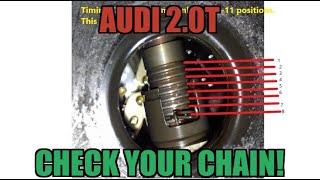
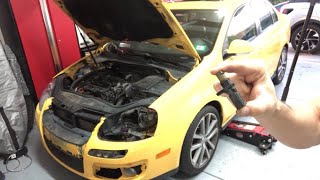
How to confirm: Use a VAG-specific scan tool (like VCDS by Ross-Tech) to check Measuring Value Block 093 🎬 Watch: How to check chain stretch with a scan tool. for 'Camshaft Adaptation' or 'Phase Position Bank 1'. A value more negative than -5 degrees typically indicates a stretched chain. A physical inspection of the tensioner's extension through the inspection port on the lower timing cover is also a definitive check. 🎬 See how to inspect the tensioner through the access port. If the tensioner piston is extended by many 'ribs' or 'notches', the chain is stretched.
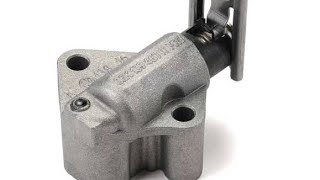
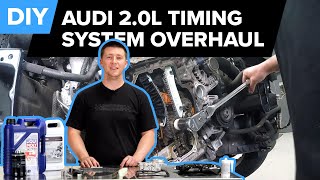
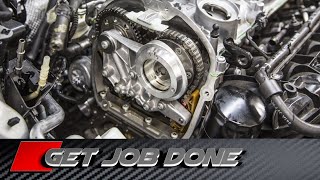
Typical fix: Replacement of the timing chain, the updated tensioner (p/n 06K109467K), and all related guides and rails. This is a labor-intensive job. 🎬 Watch this complete DIY guide for replacing the timing chain.
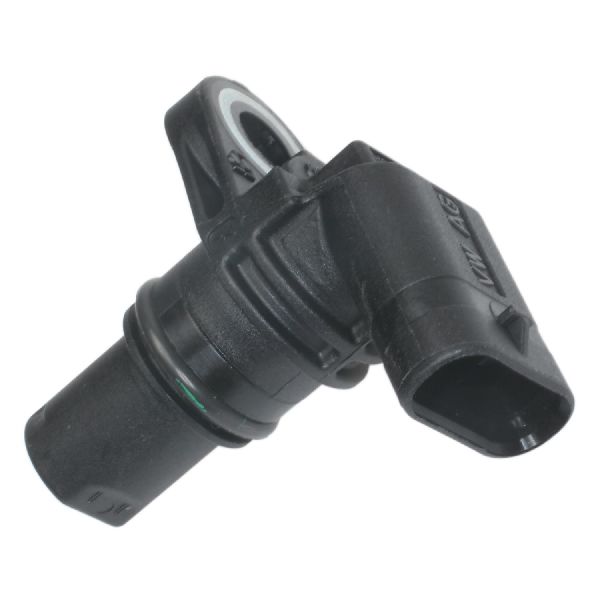
Est. part cost: $400-$800 for a full kit - Faulty Camshaft Position Sensor 🔴 High Probability → Shop Engine Camshaft Position Sensor The sensor is an electronic component in a high-heat environment that can fail with age. Oil can also leak past its O-ring and contaminate the sensor's electronics.
How to confirm: After visually inspecting the wiring, the easiest way to confirm is to replace the sensor. It is relatively inexpensive and accessible. If a new sensor resolves the code and symptoms, the old one was faulty. However, if the P0340 code returns, the cause is likely elsewhere (timing chain or wiring).
Typical fix: Replace the camshaft position sensor.
Est. part cost: $30-$110 - Wiring or Connector Damage 🟡 Medium Probability Engine bay heat and vibrations can make the plastic connector brittle and cause wires to fray or break over time, leading to an open or shorted circuit. The locking tab on the connector is also known to break.
How to confirm: Visually inspect the wiring harness and the connector going to the camshaft position sensor. Look for cracks, corrosion on the pins, or loose-fitting connections. Use a multimeter to test for continuity and proper voltage at the connector pins (typically power, ground, and signal).
Typical fix: Repair the damaged section of wiring or replace the connector pigtail. A common pigtail part number is S2316 from Standard Motor Products or 1J0973703.
Est. part cost: $15-$40 for a new pigtail
Rare But Worth Checking
- Faulty Engine Control Module (ECM): → Shop Engine Control Module (ECM) This is very rare. The ECM is the last component to suspect after all other possibilities, including mechanical timing, have been thoroughly ruled out.
- Failed Camshaft Adjuster Magnet / N205 Valve: → Shop Engine Camshaft The solenoid that controls the variable valve timing can fail or become clogged, leading to incorrect camshaft phasing that can trigger correlation codes like P0340 or P0016.
Diagnosis Steps
- Read the fault codes with an OBD-II scanner and note any other codes present, especially P0341, P0016, or misfire codes.
- Inspect the camshaft position sensor's electrical connector and wiring for any visible damage, corrosion, or looseness.
- If the wiring appears intact, the most straightforward next step is to replace the camshaft position sensor (Part # 07L905163C). Clear the codes and drive the vehicle to see if the code returns.
- If the code returns, immediately investigate the mechanical timing. Use a VAG-COM (VCDS) or similar advanced scan tool to check the camshaft phase adaptation value (In Engine -> Measuring Blocks -> Group 093, Field 3 for older ECUs; or Advanced Measuring Values for newer UDS ECUs). A value of -5° or more negative indicates significant chain stretch.
- Perform a visual inspection of the timing chain tensioner through the small plug on the lower timing cover. If the old-style tensioner is present or the new-style tensioner is extended significantly (e.g., more than 6 ribs showing), the chain and tensioner must be replaced.
- If the timing chain and tensioner are confirmed to be okay, perform more in-depth electrical testing of the sensor circuit, checking for voltage, ground, and signal integrity back to the ECM.
- Only suspect the ECM if all other possibilities have been exhausted.
Parts You'll Likely Need
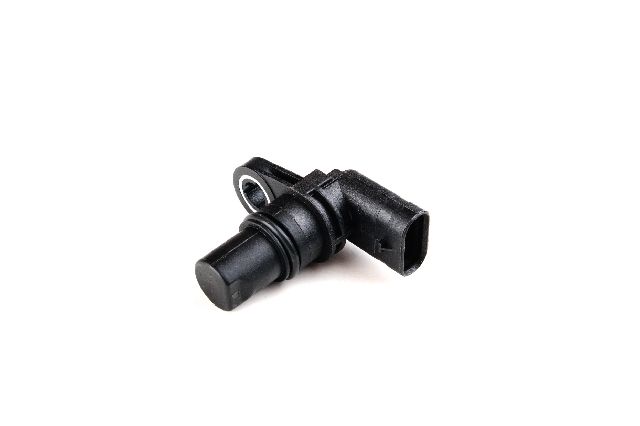
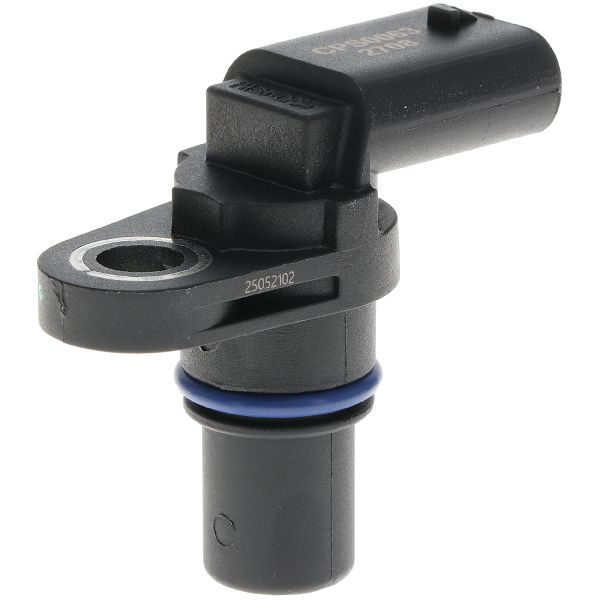
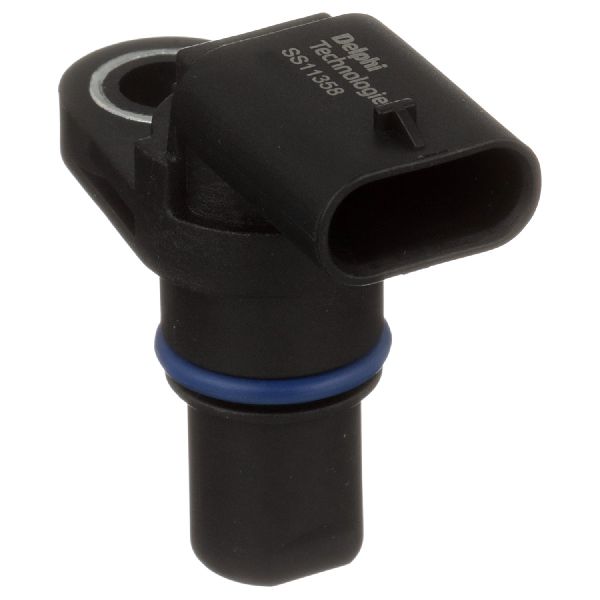
- Camshaft Position Sensor
(OEM #07L905163C)— This is the most common and simplest potential fix. The sensor itself is a frequent failure point. Note: This part number also fits other VAG engines, so always verify with VIN.
Trusted brands: Bosch, Continental/VDO, Genuine Volkswagen/Audi
OEM price range: $70-$110
Aftermarket price range: $30-$60 - Timing Chain Kit
(OEM #Multiple, see notes)— If the code is caused by a stretched timing chain, a full kit including the chain, updated tensioner, and guides is required to properly repair the vehicle and prevent engine damage.
Trusted brands: Iwis, FCP Euro, INA, Genuine Volkswagen/Audi
OEM price range: $600-$900
Aftermarket price range: $300-$500 - Camshaft Position Sensor Connector Pigtail
(OEM #1J0973703)— The connector's plastic can become brittle and fail, requiring a new pigtail to be spliced in. Aftermarket versions like Standard Motor Products S2316 are also available.
Trusted brands: Genuine VW/Audi, Standard Motor Products, Uro Parts
OEM price range: $25-$45
Aftermarket price range: $15-$30
Related Codes That Often Appear With This One
- P0341 — P0341 is 'Camshaft Position Sensor Circuit Range/Performance', which indicates the sensor signal is erratic or doesn't align with the crankshaft signal, often due to a stretched timing chain.
- P0016 — P0016 is 'Crankshaft/Camshaft Position Correlation', which directly points to a timing misalignment between the crank and cam, a primary result of a stretched timing chain.
- P0300, P0301, P0302, P0303, P0304 — Random or specific cylinder misfire codes can occur because incorrect camshaft timing leads to inefficient combustion.
Technical Service Bulletins (TSBs) & Recalls
- While no specific TSB is solely for P0340, there are numerous TSBs related to the root cause. For example, Audi TSB 2025424/15 addresses the timing chain tensioner, noting that if the old tensioner part number (e.g., 06H109467T) is found, it should be updated to the newest revision (06K109467K) along with the chain if necessary. A related TSB, 15-16-02 (2045454), addresses a torn camshaft bridge screen that can clog VVT components.
Platform-Specific Known Issues
- A class-action lawsuit (Asghari v. Volkswagen Group of America Inc.) was settled concerning premature timing chain tensioner failure on 2008-2012 VW and Audi models with the 2.0T EA888 engine. This highlights how widespread the issue is and reinforces that P0340 should be taken seriously as a potential symptom of this failure.
Mechanic-Grade Diagnostic Values
- Camshaft Position Sensor (G40) Supply Voltage — expected: Approximately 5.0 V. Failure: No voltage or significantly lower voltage indicates a wiring or ECM issue.
- Camshaft Position Sensor (G40) Signal Voltage — expected: A square wave that switches between approximately 0V and 5V (or higher, sometimes near battery voltage) as the engine is cranked.. Failure: A signal that is stuck high (e.g., 12V) or stuck low (0V) indicates a failed sensor or a short in the signal wire.
- Camshaft Adaptation Value (VCDS) — expected: Between 0° and -4.0° on a healthy engine at warm idle.. Failure: A value more negative than -5.0° (e.g., -6.0°, -8.0°) indicates significant timing chain stretch, requiring mechanical inspection.
- Camshaft Adjuster Magnet (N205) Resistance — expected: Between 5.0 and 8.0 Ohms at room temperature (some sources state up to 20 Ohms).. Failure: A reading of infinity (open circuit) or near zero (short circuit) indicates a failed solenoid.
Scan Tool Commands That Help
- VCDS (Ross-Tech): Engine -> Measuring Blocks -> Group 093 — This is the primary diagnostic step after replacing the sensor fails to fix the P0340 code. It directly reads the 'Camshaft Adaptation' value, which shows how many degrees the ECU is compensating for timing chain slack. This is for older CAN-based ECUs.
- VCDS (Ross-Tech): Engine -> Advanced Measuring Values -> Search for 'Camshaft adaptation' — For newer B8.5 models with UDS protocol ECUs, this function replaces Measuring Blocks. Search for 'IDE00182' or 'phase position' to find the same chain stretch value.
- VCDS or ODIS: Output Tests (Final Control Diagnosis) — Can be used to command the N205 Camshaft Adjuster Magnet to cycle on and off. While monitoring cam phase angle, this test can confirm if the solenoid is responding to ECU commands, helping to differentiate a wiring/ECU issue from a stuck solenoid or phaser.
Wiring & Ground Locations
- G40 Sensor Connector Pinout — The 3-pin connector on the Camshaft Position Sensor, located on the upper timing cover.. Knowing the pinout is essential for electrical testing. Pin 1: 5V Power Supply from ECM. Pin 2: Signal wire to ECM. Pin 3: Ground to ECM.
- Engine Ground Strap — A primary ground strap connects the engine block/transmission to the chassis, often near the starter or on the firewall. On the B8 platform, a key ground point is on the left front frame rail/strut tower.. A corroded or loose main engine ground can cause floating voltages and erratic sensor readings across the engine, including the G40 sensor, leading to intermittent P0340 codes that are difficult to diagnose.
- Battery Location & Jump Posts — The battery is located in the trunk, under the spare tire. Positive and negative jump-start posts are located in the engine bay under the plastic plenum cover for charging or jump-starting.. A weak battery or poor connection at the remote posts can cause low voltage during cranking, which can sometimes trigger spurious sensor circuit codes. Knowing the location is critical for proper battery service and testing.
Real Owner Repair Stories
- Common narrative from Audizine & AudiWorld forums (2010 Audi A5 2.0T, approx. 95,000 miles) — Check Engine Light with P0340, occasional hard starting, slight rattle on cold start.
❌ Tried (didn't work) Replaced the camshaft position sensor (G40) with a new Bosch part. Code was cleared but returned within two drive cycles.
✅ What actually fixed it Owner scanned the car with VCDS and found the value in Measuring Block 093 was -7.5 degrees. This confirmed a stretched timing chain. A full timing service was performed, including a new timing chain, updated tensioner (06K109467K), and all plastic guide rails. After the repair, the P0340 code was cleared and did not return. The Block 093 value was checked again and read -1.2 degrees. - Reddit user report, r/GolfGTI (2009 VW GTI 2.0T (EA888 Gen 2)) — Intermittent EPC light and P0341 (Range/Performance code, closely related to P0340) after a recent timing chain replacement.
❌ Tried (didn't work) Re-checking timing marks (they were correct)., Inspecting the N205 valve (it was not stuck).
✅ What actually fixed it The user found forum posts about a small oil screen in the camshaft bridge (the part the N205 valve mounts to). Upon inspection, the screen was missing/disintegrated, and debris had clogged the oil passages to the VVT system. Replacing the camshaft bridge (which contains the screen) and cleaning the oil passages resolved the intermittent cam phasing issue and cleared the code.
OEM Part Supersession History
06H109467T (and earlier revisions)→06K109467K— The original timing chain tensioner had a ratchet mechanism that was prone to failure, allowing the chain to lose tension. The updated part has a stronger design to prevent this.07L905163, 07L905163A, 07L905163B→07L905163C— Internal revisions to the Hall effect sensor for improved reliability and signal accuracy.
Heads up: The latest revision 'C' is backwards compatible and should always be used for replacement.06H103144G / 06H103144H→06H103144K / 06H103144J— The mesh screen on the original camshaft bridge was prone to tearing and sending debris into oil passages. The updated part features a more robust screen design.
Model Year Variations Within This Range
- 2008-2012 (B8 Platform, EA888 Gen 2): These models are most susceptible to the faulty timing chain tensioner design. The ECU typically uses CAN protocol, and chain stretch is checked via VCDS Measuring Block 093.
- 2013-2017 (B8.5 Platform, EA888 Gen 2/3): These models came with the updated timing chain tensioner from the factory, reducing (but not eliminating) the risk of premature failure. The ECU may use the UDS protocol, requiring the use of 'Advanced Measuring Values' in VCDS to check for camshaft phase adaptation (chain stretch).
Diagnostic Flowchart
Other Known Issues on This Vehicle
Issues unrelated to this code that are worth knowing about as an owner of this generation:
- Excessive Oil Consumption 🔴 High — Very common on 2009-2012 models, but can affect up to 2017. Caused by faulty piston ring design. (Ref: Multiple class-action lawsuits settled (e.g., Asghari v. Volkswagen, PistonSettlement.com).)
- PCV Valve Failure 🟠 Medium — Common failure item, often around 60k-80k miles. The diaphragm tears, causing a large vacuum leak. (Ref: Part has been updated multiple times. Latest revision is 06H103495AK.)
- Water Pump / Thermostat Housing Failure 🔴 High — Extremely common. The plastic housing becomes brittle and cracks, causing coolant leaks. Failure can occur as early as 40k miles. (Ref: No recall, but a well-known issue. Aftermarket metal housings are a popular upgrade.)
- Intake Manifold Flap Failure 🟠 Medium → Shop Engine Intake Manifold — Common on higher mileage vehicles. The runner flaps or their actuator motor can fail, causing a P2015 code and performance issues. (Ref: Warranty extension was offered for this issue in some cases.)
- Intake Valve Carbon Buildup 🟠 Medium — Inherent to all direct-injection engines. Requires cleaning (e.g., walnut blasting) every 60k-100k miles to restore performance and prevent misfires.
Used vs. New Parts: Buying Guide for This Vehicle
When a used part is the smart pick: For this specific repair, using used parts is generally not recommended due to the nature of the components. The only exception might be a major structural component like a valve cover if the original was cracked, but never the wear-and-tear or electronic parts central to the P0340 fault.
Donor-vehicle mileage cap: roughly under 50000 miles for the part to have meaningful remaining life.
What to inspect on the donor part:
- For any used part, verify the donor vehicle's mileage and history if possible.
- Avoid parts from vehicles with signs of sludge or poor maintenance.
- Inspect plastic connectors for brittleness or cracks.
OEM-only on this vehicle (don't cheap out):
- Timing Chain Kit (Chain, Tensioner, Guides): These are critical wear items. Using used parts is extremely risky and can lead to catastrophic engine failure. Always buy a new, high-quality kit.
- Camshaft Position Sensor: While aftermarket is available, many forum users report issues with cheap sensors failing prematurely. Using a new OEM (e.g., Bosch, Genuine VW/Audi) or OEM-supplier sensor is strongly advised to avoid repeat labor.
- N205 Solenoid / Camshaft Adjuster Magnet: This is a precision electro-hydraulic part. A used part may be clogged or worn. Buy new from an OEM supplier.
Aftermarket brands forum-validated for this vehicle:
- Timing Components: Iwis (often the OEM chain manufacturer), INA (often the OEM tensioner/guide manufacturer), FCP Euro (kits with quality components).
- Sensor: Bosch, Continental/VDO, NTK.
- Connector Pigtail: Standard Motor Products (SMP), Uro Parts.
Brands owners have reported issues with on this vehicle:
- Unnamed or 'white-box' eBay/Amazon sensors and timing kits. The failure rate is high, and the risk of engine damage from a failed timing component is not worth the initial savings.
Real Owner Stories
Aggregated from forums and TSBs cited above. Mileages and costs reflect what owners reported in those sources.
2014 Audi A5 2.0T
Symptoms: P0340 and P0341 Camshaft Position Sensor A Circuit and Range Performance codes present.
What fixed it: The owner discovered their mechanical timing was off, indicating a timing chain issue rather than just a sensor failure.
Source hint: https://www.audizine.com/forum/showthread.php/592227-P0340-and-P0341-Camshaft-Position-Sensor-A-Circuit-and-Range-Performance
2014 Audi Q5 3.0T (UDS Protocol)
Symptoms: Owner needed to verify timing health using advanced diagnostic tools.
What fixed it: Used VCDS (VAG-COM) to check camshaft adaptation values in Block 93 to confirm the diagnostic method for chain stretch.
Source hint: https://www.audiworld.com/forums/a4-b8-platform-discussion-128/vcds-measuring-block-93-uds-protocol-q5-2014-3-0t-3035345/
VW Golf GTI EA888 Gen 2
Symptoms: P0016 and P0341 codes linked to timing system failure.
What fixed it: Performed a full timing chain and tensioner replacement using a step-by-step DIY guide.
Source hint: https://www.reddit.com/r/GolfGTI/comments/uqm2mu/i_wrote_a_step_by_step_guide_to_replace_the/
Related OBD-II Codes
Frequently Asked Questions
I have a 2010 Audi A5 with a P0340 code. Does the Asghari v. Volkswagen Group of America lawsuit apply to my car?
My mechanic says my timing chain is stretched. Is there a specific TSB for the updated tensioner part?
How can I use VCDS to check if my A5's P0340 is caused by a stretched timing chain?
Could a torn screen in the engine cause my P0340 code?
Is there a specific replacement pigtail for the camshaft position sensor if my connector is broken?
What is the specific part number for the camshaft position sensor on the 2.0L TFSI engine?
Helpful Videos



We Have This Part in Stock


The information in this article is provided for general reference and educational purposes only. Vehicle specifications, procedures, and part compatibility can vary by production date, trim level, and region. Always consult your vehicle's factory service manual and verify part numbers before purchasing or performing repairs. Safety-critical components such as airbags, seat belts, and braking systems should be installed by a qualified professional.
- Audi A5:
- 🧭 Diagnostic Flowchart
- 🎬 Helpful Videos
- 🛍️ Shop This Part
- What's Unique About the 2008-2017 Audi A5
- Symptoms You May Notice
- Most Likely Causes
- Rare But Worth Checking
- Diagnosis Steps
- Parts You'll Likely Need
- Related Codes That Often Appear With This One
- Technical Service Bulletins (TSBs) & Recalls
- Platform-Specific Known Issues
- Mechanic-Grade Diagnostic Values
- Scan Tool Commands That Help
- Wiring & Ground Locations
- Real Owner Repair Stories
- OEM Part Supersession History
- Model Year Variations Within This Range
- Other Known Issues on This Vehicle
- Used vs. New Parts: Buying Guide for This Vehicle
- Real Owner Stories
- 2014 Audi A5 2.0T
- 2014 Audi Q5 3.0T (UDS Protocol)
- VW Golf GTI EA888 Gen 2
- Related OBD-II Codes
- Frequently Asked Questions
- 🎟️ Get 5% Off