

P0340 on 2012-2019 Chevrolet Tahoe: Camshaft Sensor Circuit Causes and Fixes
P0340 on a 2012-2019 Tahoe indicates a problem with the camshaft position sensor circuit. The most common causes are a faulty sensor or damaged wiring, often due to chaffing against engine components. A sensor replacement is relatively inexpensive, but a thorough wiring inspection is critical before replacing parts, especially on the K2XX platform (2015+).
- P0340 on a 2012-2019 Tahoe means the camshaft position sensor circuit has a fault.
- Before replacing any parts, thoroughly inspect the engine wiring harness for chaffing, especially near the ECM, shock towers, and control arms, as this is a known issue backed by GM TSBs.
- The most common fixes are repairing a damaged wire or replacing the camshaft position sensor.
- Driving with this code can be risky due to potential stalling and no-start conditions.
- The code is often accompanied by P0341 (sensor performance), P0335 (crank sensor), and P0300 (misfire).
What's Unique About the 2012-2019 Chevrolet TAHOE
For the 2012-2019 Tahoe, which spans the third (GMT900) and fourth (K2XX) generations, the P0340 code is frequently linked to specific, documented issues. GM has issued multiple Technical Service Bulletins (TSBs) that point directly to problems like chaffed wiring harnesses (TSB #PIP5553A, #21-NA-149) and, for certain 2013 models, faulty camshaft position sensors from the factory (TSB #PIP5099A). These known issues make a visual inspection of the wiring harness, particularly around the ECM/TCM bracket, shock towers, and front engine cover, a critical first diagnostic step, often more so than on other vehicles where the sensor itself is the primary suspect.
Diagnostic Flowchart
Tap your situation to follow the diagnostic path that matches what you're seeing on this vehicle.
Generation note: The 2012-2019 year range covers two Tahoe generations: the third generation (2012-2014, GMT900 platform) and the fourth generation (2015-2019, K2XX platform). While the P0340 code's meaning is the same for both, wiring harness routing and specific component locations may differ. TSBs related to wiring harness chaffing, like #21-NA-149 and #PIP5553, are particularly relevant to the K2XX generation and detail specific chafe points near the ECM bracket and front engine cover. TSB #PIP5335D also points to potential corrosion in connector X154 on the front engine cover for 2015-2020 models.
Symptoms You May Notice
- Check Engine Light is on
- Engine is hard to start or has a long crank time
- Engine stalls or dies while driving
- Rough idling
- Loss of engine power and poor acceleration
- Vehicle may enter 'limp mode' with reduced functionality
- Poor fuel economy
- Transmission shifting problems
- Replacing the camshaft position sensor without first inspecting the wiring harness. Many owners and even mechanics replace the sensor multiple times only to have the code return because the actual problem is a short in the wiring, as highlighted in GM's TSBs.
Most Likely Causes
- Damaged or Chaffed Engine Wiring Harness 🔴 High Probability GM has issued TSBs (#PIP5553A, #21-NA-149) that specifically mention wiring harnesses chaffing against engine or chassis components, causing shorts in the camshaft sensor circuit. This is a well-documented issue on this platform, especially for 2015+ models.
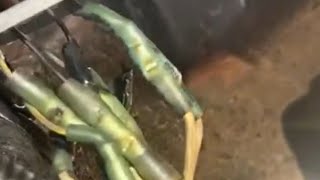
How to confirm: Visually inspect the engine wiring harness. TSB #21-NA-149 points to specific chafe points: 🎬 Watch: See exactly where these common wire breaks occur. the ECM/TCM bracket, the driver's side upper control arm, and the shock tower bolt. Also inspect the jumper harness near the X154 connector on the lower left side of the engine front cover as noted in TSB #PIP5553. Look for any signs of rubbing, exposed wires, or damage.
Typical fix: Repair the damaged section of wiring and secure the harness away from the sharp edge or contact point using clips, zip ties, and protective conduit like anti-abrasion tape. TSB #21-NA-149 provides detailed instructions for rerouting and securing the harness.
Est. part cost: $10-$50 - Faulty Camshaft Position Sensor 🔴 High Probability → Shop Engine Camshaft Position Sensor Sensors can fail over time due to heat and vibration. TSB #PIP5099A specifically notes that some 2013 models built in late 2012 may have had faulty sensors that require replacement. Owners often report that using an OEM ACDelco sensor is critical, as aftermarket sensors can sometimes fail to resolve the issue.
How to confirm: After confirming the wiring is intact, test the sensor's output with a multimeter or oscilloscope. A common diagnostic step is to simply replace the sensor, as it is relatively inexpensive. However, many forum users report replacing the sensor does not fix the issue, pointing back to wiring as the primary culprit.
Typical fix: Replace the camshaft position sensor, preferably with an OEM part.
Est. part cost: $25-$80 - Poor Electrical Connection 🟡 Medium Probability The connector to the camshaft position sensor can become loose or contaminated with oil or dirt, disrupting the signal. TSB #PIP5335D also points to potential corrosion in the X154 connector on the front engine cover on 2014-2019 models.
How to confirm: Disconnect the sensor's electrical connector and inspect for corrosion, bent pins, or a loose fit. Clean the connector and ensure it clicks securely into place. Also inspect the larger X154 harness connector if applicable.
Typical fix: Clean the connector terminals and apply dielectric grease. If the connector is damaged, replace the pigtail.
Est. part cost: $5-$30
Rare But Worth Checking
- Worn Timing Chain or Components: → Shop Engine Timing Chain If the timing chain is stretched or a tensioner has failed, the camshaft's position can become erratic relative to the crankshaft, triggering a P0340 code. This is a more serious mechanical issue, often accompanied by rattling noises from the front of the engine. This is sometimes seen on higher mileage examples or vehicles with issues related to the Active Fuel Management (AFM) system.
- Faulty Powertrain Control Module (PCM): → Shop Engine Control Module (ECM) While rare, the PCM itself can fail and stop processing the signal from the camshaft sensor correctly. This should only be considered after all other possibilities (wiring, sensor, connections) have been exhaustively ruled out.
- Faulty Alternator: In some rare cases, a failing alternator can produce excessive AC ripple (electrical noise) that interferes with the sensitive camshaft position sensor signal, triggering a P0340 code. One owner diagnosed this after noticing the code would disappear when the alternator was unplugged.
Diagnosis Steps
- Read the code with an OBD-II scanner and note any other codes that are present.
- Perform a thorough visual inspection of the engine wiring harness. Pay close attention to the areas mentioned in TSB #21-NA-149: near the ECM/TCM bracket, the driver side shock tower, and the upper control arm. Also check the harness near the X154 connector on the front engine cover per TSB #PIP5553.
- Inspect the electrical connector at the camshaft position sensor for damage, corrosion, or a loose connection. Ensure it is clean and seated properly.
- If wiring and connections appear good, test the sensor circuit. Using a multimeter, check for the correct voltage (typically a 5V reference), 🎬 See this guide on how to test the sensor circuit. a good ground, and signal wire integrity back to the PCM.
- If the circuit tests good, the camshaft position sensor itself is the next likely culprit. Replace the sensor, preferably with an ACDelco OEM part.
- If the code persists after replacing the sensor, re-examine the wiring harness for an intermittent break or short that is not visually apparent. A user on GMTNation found a break inside the insulation near the connector that was only present when the wire was bent.
- If all else fails, the issue may be more complex, such as a stretched timing chain, a damaged reluctor wheel, or a problem with the PCM. At this point, professional diagnosis may be required.
Parts You'll Likely Need
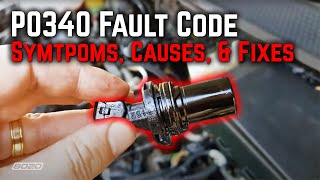
- Camshaft Position Sensor
(OEM #12591720)— This is the primary sensor that fails or is replaced during diagnosis. TSB #PIP5099A specifically calls for its replacement on certain models. The GM Genuine part is 12591720, which has been superseded by ACDelco part number 12680848.
Trusted brands: ACDelco (GM Genuine), Delphi, Bosch
OEM price range: $50-$90
Aftermarket price range: $25-$60 - Wiring Harness Repair Supplies — Needed to fix chaffed or broken wires, a common cause of P0340 on this vehicle according to TSBs #21-NA-149 and #PIP5553. This includes Tesa tape, zip ties, and potentially a connector pigtail.
OEM price range: $10-$30
Aftermarket price range: $10-$30
Related Codes That Often Appear With This One
- P0341 — This code indicates 'Camshaft Position Sensor 'A' Circuit Range/Performance' and often appears with P0340, pointing to an intermittent or unstable signal. TSB #PIP5335D and #PIP5553A mention them together.
- P0335 / P0336 — These are codes for the Crankshaft Position Sensor. Since the PCM compares signals from both the cam and crank sensors, a fault in one system can sometimes trigger codes for the other. TSB #PIP5553A lists them as appearing together.
- P0300 — This code for 'Random/Multiple Cylinder Misfire' is a common symptom of the incorrect timing information caused by a P0340 fault. TSB #PIP5553A also links these codes.
Technical Service Bulletins (TSBs) & Recalls
- PIP5335D: Notes that P0340 and P0341 can set and normal diagnostics should be followed.
- PIP5553A: Links P0340 with other DTCs to a possible chaffed wiring jumper harness causing stalls or no-starts.
- PIE0416A: A bulletin ending the need for field data on P0340 and related codes.
- PIP5099A: Advises replacing the cam position sensor on specific 2013 models if diagnostics do not find another cause.
- PIP5553: An earlier version of PIP5553A, also pointing to wiring harness issues at the X154 connector.
- 21-NA-149: The most comprehensive TSB on this topic, detailing multiple wiring harness chafe points on K2XX platform trucks.
Platform-Specific Known Issues
- TSB #21-NA-149 (supercedes earlier bulletins): Provides highly detailed diagrams of engine wiring harness chaffing points on K2XX trucks (2015-2019+). Key areas are the sharp edge of the ECM/TCM bracket, the driver side upper control arm, and the shock tower. It notes this was caused by a harness clip being removed during production, leading to an 'uncontrolled branch'.
- TSB #PIP5553A and #PIP5553: Specifically for 2018+ models but relevant to earlier K2XX, this TSB identifies a chaffed wiring jumper harness at the bolt for the X154 connector on the lower left side of the engine front cover. This can cause P0340 and a host of other codes.
Mechanic-Grade Diagnostic Values
- CMP Sensor 5-Volt Supply Circuit — expected: Approximately 5.0 volts with key on, engine off, sensor disconnected.. Failure: Voltage below 4.5V indicates an open or high resistance in the supply circuit.
- CMP Sensor Ground Circuit Resistance — expected: Below 5.0 Ohms when measured between the sensor connector's ground pin and a known good chassis ground.. Failure: Resistance above 5.0 Ohms indicates an open or high resistance in the ground circuit.
- CMP Sensor Signal Circuit Voltage (disconnected) — expected: Approximately 5.0 volts with key on, engine off, sensor disconnected.. Failure: No voltage may indicate an open or short in the signal wire back to the PCM.
Scan Tool Commands That Help
- GDS2 / Tech2: Cam/Crank Relearn — While not always required for a P0340 fix, performing a Cam/Crank Relearn procedure is good practice after replacing a camshaft sensor, crankshaft sensor, or timing components to ensure the PCM has the correct correlation data.
Wiring & Ground Locations
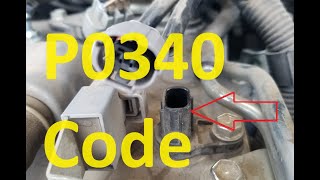
- Camshaft Position Sensor — On the front of the driver's side cylinder head, below the valve cover.. This is the location of the sensor itself. The harness connector here is a primary point of failure due to heat and vibration.
- X154 Connector — A 16-pin connector located on the front driver's side of the engine cover, near the vacuum pump.. TSB #PIP5335D specifically calls out this connector as a location for corrosion due to water intrusion on 2015-2020 models, which can cause an open/short in the CMP circuit.
- G102 — Located at the left rear of the engine.. This ground point serves the 8 ignition coils. While not directly for the CMP sensor, a poor ground here can cause erratic engine behavior and potentially related codes.
- G103 (GMT900) — On the front of the passenger side cylinder head.. This is a primary engine ground point for the earlier GMT900 platform. Poor contact here can cause a variety of sensor and module communication issues.
- Fuses F74, F87-F91 (K2XX) — In the underhood fuse block.. These fuses are tied to engine management. While no single fuse is labeled 'CMP', a problem with one of these could interrupt power or reference signals required by the sensor's circuit.
Real Owner Repair Stories
- YouTube channel 'DrShock' (2011 Chevrolet Silverado (similar GMT900 platform)) — Extended crank time, P0340 code present.
❌ Tried (didn't work) Initial visual inspection of the harness did not reveal the fault.
✅ What actually fixed it Found a blue wire in the camshaft sensor harness that was chafed and broken where it was rubbing against a power steering line. Repairing the broken wire resolved the code. - YouTube channel 'TS Mobile Mechanic' (2015 Chevrolet Suburban (K2XX platform)) — P0340 code, previous failed repair attempt by another mechanic.
❌ Tried (didn't work) A previous mechanic had attempted a repair that failed.
✅ What actually fixed it The mechanic disassembled the wiring harness near the front of the engine and found two broken wires inside the loom (a brown wire and another for the camshaft control solenoid). Repairing these internal breaks and re-assembling the harness fixed the issue.
OEM Part Supersession History
12585545→12591720— Part revision and consolidation by GM.12568983→12591720— Part revision and consolidation by GM.12591720→12680848— Part revision by GM/ACDelco. This is the most current number.
Model Year Variations Within This Range
- 2015 only: TSB #PIP5335D notes to inspect connector X154 for corrosion, but adds that for 2015 models specifically, connector X159 should also be inspected.
- 2012-2014 (GMT900) vs 2015-2019 (K2XX): Engine ground locations and harness routing differ significantly. For example, G103 is on the passenger cylinder head on a GMT900, while K2XX trucks have different grounding points. TSBs about specific harness chafe points near the ECM bracket are primarily for the K2XX platform.
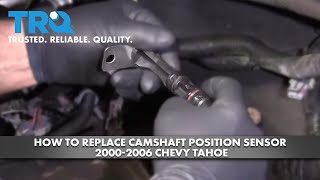
Helpful Videos
We Have This Part in Stock


The information in this article is provided for general reference and educational purposes only. Vehicle specifications, procedures, and part compatibility can vary by production date, trim level, and region. Always consult your vehicle's factory service manual and verify part numbers before purchasing or performing repairs. Safety-critical components such as airbags, seat belts, and braking systems should be installed by a qualified professional.
- Chevrolet TAHOE:
- 🧭 Diagnostic Flowchart
- 🎬 Helpful Videos
- 🛍️ Shop This Part
- What's Unique About the 2012-2019 Chevrolet TAHOE
- Symptoms You May Notice
- Most Likely Causes
- Rare But Worth Checking
- Diagnosis Steps
- Parts You'll Likely Need
- Related Codes That Often Appear With This One
- Technical Service Bulletins (TSBs) & Recalls
- Platform-Specific Known Issues
- Mechanic-Grade Diagnostic Values
- Scan Tool Commands That Help
- Wiring & Ground Locations
- Real Owner Repair Stories
- OEM Part Supersession History
- Model Year Variations Within This Range
- 🎟️ Get 5% Off