

P0340 on 2011-2017 Chrysler 200 3.6L: Cam Sensor Causes and Fixes
P0340 on the 3.6L Chrysler 200 most often indicates a failed camshaft position sensor on the rear cylinder head (Bank 1). However, this code is also a common early warning for more serious cam phaser failure, especially if you hear a rattling noise on startup. Always use an OEM Mopar sensor for the replacement, which costs around $40-$70. Aftermarket sensors are notoriously unreliable for this application.
- P0340 on your 3.6L V6 points to the camshaft sensor on the REAR cylinder head, near the firewall.
- Do not drive the vehicle; the engine can stall without warning, which is a major safety risk.
- Before buying parts, check your oil and listen for a brief rattle when starting the engine cold. A rattle strongly suggests a more serious cam phaser problem.
- If you replace the sensor, you MUST use a genuine OEM Mopar part (5149141AF). Aftermarket sensors frequently fail to fix the problem on this engine.
- If a new OEM sensor doesn't clear the code, the root cause is likely a wiring issue or a mechanical failure in the valvetrain that requires professional diagnosis.
What's Unique About the 2011-2017 Chrysler 200
While a bad sensor is a common cause on any vehicle, the 3.6L Pentastar engine has a well-documented history of this 'circuit' code being a symptom of a deeper mechanical problem. P0340 is a notorious early warning sign of failing camshaft phasers or worn rocker arms, which are known weaknesses of this engine. Owners and technicians on forums frequently report mistakenly replacing the sensor multiple times, not realizing it is accurately reporting a mechanical timing issue caused by these failing components. The PCM is particularly sensitive to signal quality, making the use of OEM Mopar sensors critical.
Generation note: This range covers two generations of the Chrysler 200: the 1st gen (JS; 2011-2014) and the 2nd gen (UF; 2015-2017). The 3.6L Pentastar V6 was an option in both. The causes and fixes for P0340 on this specific engine are consistent across both generations, though the 2nd gen was paired with the ZF 9-speed automatic which has its own unrelated set of common issues. The 3.6L engine itself was significantly updated for the 2016 model year, which may introduce other variables.
Symptoms You May Notice
- Check Engine Light is on
- Engine is hard to start or cranks but won't start
- Engine stalls unexpectedly, especially when coming to a stop or at low-speed deceleration
- Rough idle and engine misfires
- Noticeable loss of power and acceleration
- Transmission may not shift properly or may feel locked in one gear (limp mode)
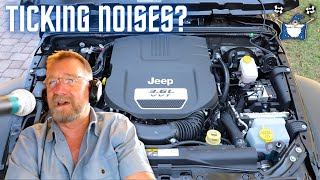
- A brief rattling or ticking noise on a cold startup (indicates potential cam phaser issue)
- Repeatedly replacing the camshaft position sensor with aftermarket parts. Many owners report that only an OEM Mopar sensor will fix the issue permanently.
- Replacing the sensor without investigating underlying mechanical issues like a failing cam phaser, especially if a startup rattle is present. The sensor is often just the messenger.
- Replacing the crankshaft position sensor by mistake.
- Assuming the sensor is bad when the actual problem is a damaged wire or a connector contaminated with engine oil from the common oil filter housing leak.
Most Likely Causes
- Failed Bank 1 Camshaft Position Sensor 🔴 High Probability → Shop Engine Camshaft Position Sensor The sensor operates in a high-heat environment and is a common failure point. Aftermarket sensors are notoriously unreliable in this application, often failing immediately or within a short period. Using a genuine Mopar part is essential for a lasting repair.
How to confirm: Inspect the sensor's wiring first. A definitive test is to swap the Bank 1 (rear) and Bank 2 (front) camshaft position sensors. If the code changes to P0365 (Bank 2 Camshaft Position Sensor Circuit), the original sensor is faulty.
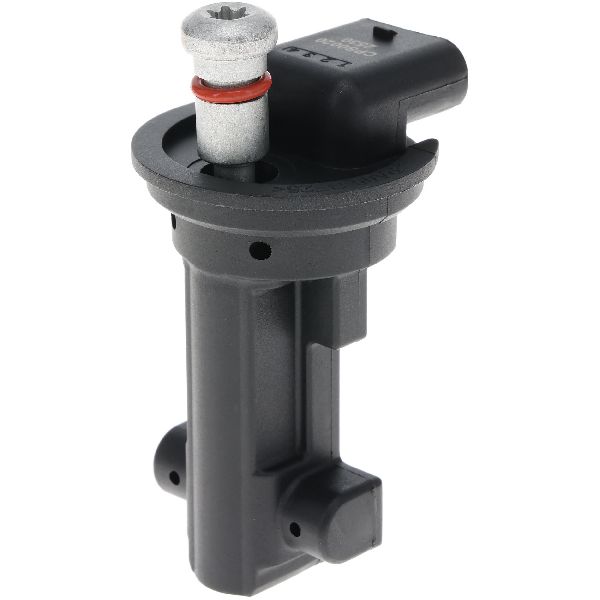
Typical fix: Replace the Bank 1 camshaft position sensor with a new OEM Mopar part (P/N 5149141AF). The sensor is located on the rear cylinder head near the firewall and is held by one T30 Torx bolt. Access requires removing the upper intake manifold.
Est. part cost: $40-$70 - Failing Camshaft Phaser(s) 🟡 Medium Probability → Shop Engine Camshaft This is a widely documented weakness of the 3.6L Pentastar engine. The internal locking pin of the phaser can fail, causing the camshaft's timing to be incorrect relative to the crankshaft, especially on startup. The sensor correctly reports this deviation, triggering the P0340 code.
How to confirm: The most common symptom is a distinct rattling or ticking noise for 2-5 seconds on a cold startup that then goes away. This noise is a classic sign of phaser failure. A mechanic can confirm this with a scan tool by observing cam/crank correlation data or by physically inspecting for play in the phaser with the valve cover removed.
Typical fix: This is a significant mechanical repair that involves replacing the faulty camshaft phaser(s), timing chain, and tensioners. It is a labor-intensive job often requiring professional service.
Est. part cost: $300-$800 - Damaged Wiring or Connector 🟡 Medium Probability The wiring harness is routed in a hot engine bay, which can make wires brittle. A very common issue is oil leaking from the cracked oil filter housing (located in the 'V' of the engine), which can saturate the connector and wiring, disrupting the signal.
How to confirm: Visually inspect the wiring harness leading to the Bank 1 cam sensor for any signs of cracking, melting, or chafing. Check the electrical connector for corrosion, bent pins, or oil saturation. Use a multimeter to check for a 5-volt reference signal and good ground at the connector.
Typical fix: Repair the damaged section of wire or replace the connector pigtail. Clean any oil from the connector using electrical contact cleaner. If the oil leak is from the filter housing, that must be replaced to prevent a repeat failure.
Est. part cost: $15-$40 - Low, Dirty, or Incorrect Engine Oil ⚪ Low Probability The cam phasers in the VVT system are hydraulically actuated by engine oil pressure. Low or dirty oil, or using the wrong viscosity, can prevent the phasers from operating correctly, leading to timing deviations that trigger the code. A collapsed aftermarket oil filter can also cause oil pressure issues.
How to confirm: Check the engine oil level on the dipstick and note the condition of the oil. If it is very low or overdue for a change, this could be a contributing factor. Ensure the correct oil viscosity (typically 5W-20) is being used.
Typical fix: Perform an oil and filter change using the manufacturer-specified oil grade (typically 5W-20 or 5W-30) and a quality filter. Clear the code and see if it returns.
Est. part cost: $50-$100
Rare But Worth Checking
- Worn Rocker Arms / Lifters: Another known weakness of the Pentastar engine, often called the 'Pentastar Tick'. Failing rocker arm bearings can cause a persistent ticking noise, shed metal debris into the oil, and lead to misfires and various timing codes, including P0340.
- Damaged Camshaft Reluctor Wheel: → Shop Engine Camshaft The sensor reads a magnetic encoder wheel (reluctor) on the camshaft. If this wheel is damaged or has sheared its pin, the signal will be incorrect, but this is an uncommon failure.
- Loose Oil Gallery Plug: In some cases, oil gallery plugs located under the valve cover can become loose, causing a significant loss of oil pressure to the valvetrain on that bank, which can trigger VVT and sensor codes.
Diagnosis Steps
- Check the engine oil level and condition. Top off or change if necessary, using the correct 5W-20 or 5W-30 oil and a quality filter.
- Listen carefully for a rattling or ticking noise during a cold engine start. A 2-5 second rattle strongly points towards cam phaser issues.
- Visually inspect the wiring harness and electrical connector for the Bank 1 (rear) camshaft position sensor. Look for cracks, heat damage, or oil contamination, especially from a leaking oil filter housing.
- If wiring looks good, consider swapping the Bank 1 (rear) and Bank 2 (front) camshaft sensors. They are identical parts. Clear the codes and drive. If code P0365 appears, the sensor you moved to the front is bad.
- If the code P0340 returns after swapping sensors, the issue is likely in the circuit for Bank 1 or a mechanical problem on that bank.
- If a new OEM Mopar sensor does not fix the code and you hear startup noise, the next step is a more in-depth mechanical diagnosis of the cam phasers and timing components, which may require a professional.
- Check for any available PCM software updates from a Chrysler dealer. TSB 18-054-14 was issued for 2014 models for a long crank condition related to this sensor, even without a code.
Parts You'll Likely Need
- Camshaft Position Sensor (Bank 1)
(OEM #5149141AF)— This is the most common direct cause of the code. The sensor fails due to heat and age. Using an OEM Mopar part is critical as aftermarket versions are known to be unreliable on this engine. This part number supersedes previous versions.
Trusted brands: Mopar
OEM price range: $40-$70
Aftermarket price range: $20-$45 - Upper Intake Manifold Gasket Set — The upper intake manifold must be removed to access the Bank 1 (rear) camshaft position sensor. The gaskets are single-use and must be replaced to prevent vacuum leaks.
Trusted brands: Mopar, Fel-Pro, Mahle
OEM price range: $25-$50
Aftermarket price range: $15-$30
Related Codes That Often Appear With This One
- P0016 — Indicates a 'Crankshaft-Camshaft Position Correlation' error. Seeing it with P0340 strongly suggests a mechanical timing problem like a bad phaser or stretched timing chain, not just a sensor fault.
- P0300 — A random/multiple cylinder misfire code. Incorrect cam timing disrupts the combustion process, leading to misfires. This is especially common with failing rocker arms on the 3.6L.
- P0365 — This is the code for the Bank 2 camshaft position sensor. If you swap the Bank 1 and Bank 2 sensors for diagnosis and this code appears, it confirms the original Bank 1 sensor was faulty.
- P06DD — This code for 'Engine Oil Pressure Control Circuit Stuck Off' can indicate an oil pressure problem that is the root cause of the VVT system malfunction, leading to the P0340 code.
Technical Service Bulletins (TSBs) & Recalls
- 18-054-14 — Intermittent Extended Crank, Long Crank Time — Applies to 2014 models with the 3.6L engine. Addresses a long crank condition by inspecting the serial number of the Bank 1 Camshaft Position Sensor and replacing it if it starts with a 'D'. Confirms part number 05149141AF as the replacement.
Platform-Specific Known Issues
- TSB 18-054-14: Issued for 2014 models (including the JS body 200) with the 3.6L engine for an intermittent extended crank time condition. The fix is to inspect the serial number on the Bank 1 cam sensor and replace it if it begins with the letter 'D'.
- Owner Experience on 200forums.com: A user with a 2015 2.4L (similar issue pattern) reported that P0340 was only resolved after replacing a brand new aftermarket sensor with a genuine OEM Mopar part, highlighting the sensitivity of the system.
- Forum Consensus on Mechanical Failure: Across multiple forums like Allpar and Dodge-related sites, the consensus for P0340 on the 3.6L, when accompanied by noise, is that it's a symptom of cam phaser or rocker arm failure, not a primary sensor fault.
Mechanic-Grade Diagnostic Values
- Camshaft Position Sensor Power Supply Voltage — expected: ~5.0 Volts DC at the sensor connector (Pin 1 to Ground) with key on, engine off.. Failure: Voltage significantly below 5V or 0V indicates a wiring or PCM fault.
- Camshaft Position Sensor Ground Circuit Resistance — expected: Less than 3.0 Ohms between the connector's ground pin (Pin 3) and a known good chassis ground.. Failure: Resistance higher than 3.0 Ohms (or OL) indicates an open or high-resistance ground circuit.
- Camshaft Position Sensor Signal Waveform (Oscilloscope) — expected: A clean digital square wave, switching between approximately 0V and 5V as the engine is running or cranked.. Failure: A static voltage (stuck high or low), no voltage, or a distorted/noisy pattern indicates a failed sensor or interference.
- Oil Galley Plug Torque — expected: 13-15 ft-lbs (17-20 Nm).. Failure: Bolts are found to be loose or have backed out completely during a visual inspection with the valve cover removed.
Hidden / Shadow Codes Worth Checking
- P0344: Camshaft Position Sensor 'A' Circuit Intermittent (Bank 1). This code indicates the signal is dropping out, rather than being completely absent. It can often appear before a hard P0340 fault sets and may point more strongly to a wiring issue or a mechanical component (like a phaser) that is just beginning to fail. (see via Standard OBD-II scanner.)
Scan Tool Commands That Help
- wiTECH or equivalent professional FCA scan tool: Cam/Crank Relearn (or Crankshaft Position Variation Learn) — This procedure is required after replacing the camshaft sensor, crankshaft sensor, timing components, or the PCM. It allows the PCM to learn the precise signal characteristics and positional variations of the new components. Failing to perform this can cause the P0340 code to persist even with new parts.
- wiTECH or equivalent professional FCA scan tool: VVT Solenoid Actuation Test — If a mechanical timing issue is suspected, this command allows the technician to manually activate the VVT solenoids to check for a response. This helps differentiate between an electrical solenoid failure and a hydraulic/mechanical problem within the phaser.
Wiring & Ground Locations
- Bank 1 Camshaft Position Sensor Connector — On the rear of the Bank 1 (firewall side) cylinder head. Access requires removing the upper intake manifold.. This is the primary connection point to test for power, ground, and signal. The connector has three pins: Pin 1 is the 5V supply, Pin 2 is the signal wire, and Pin 3 is the ground.
- G308 — Located on the right rear of the engine for the 2012 Chrysler 200.. This is a primary engine ground point. A loose or corroded connection here can cause erratic voltage and floating grounds for multiple sensors, including the camshaft position sensor, leading to false codes.
- G200 — Located at the left end of the dash for the 2012 Chrysler 200.. This is a major chassis ground. While less likely to be the direct cause, a poor chassis ground can introduce electrical noise that affects sensitive PCM calculations and sensor readings.
"I Checked Everything" — The Actual Cause
- While a smoke test is not used for this code, a common parallel is when the sensor and wiring test perfectly fine with a multimeter, yet the code persists. In these cases, the root cause is often mechanical, not electrical. The sensor is accurately reporting a timing discrepancy caused by failing cam phasers (often confirmed by a startup rattle) or a loss of oil pressure to the VVT system from loose oil galley plugs under the valve cover. Another possibility is a software glitch in the PCM that requires a dealer-installed update per a Technical Service Bulletin (TSB).
OEM Part Supersession History
Various, including those with serial numbers starting with 'D'→5149141AF— Improved design to address premature failures and intermittent signal issues causing long crank times.
Heads up: While older part numbers may physically fit, they are known to be less reliable. TSB 18-054-14 specifically advises replacing any Bank 1 sensor whose serial number begins with the letter 'D' on 2014 models due to a high failure rate.
Model Year Variations Within This Range
- 2016-2017: These models feature the upgraded 'PUG' 3.6L Pentastar engine. It adds a two-stage Variable Valve Lift (VVL) system to the existing Variable Valve Timing (VVT). While the P0340 code still relates to the cam sensor, the diagnostic process may be more complex as issues with the VVL solenoids or rocker arms could potentially manifest as timing-related codes.
- 2014: A specific Technical Service Bulletin (TSB 18-054-14) was issued for 2014 models with the 3.6L engine for an intermittent long crank time condition caused by a faulty Bank 1 cam sensor, which may or may not set a P0340 code. It advises checking the sensor's serial number.
- 2011-2012: While a TSB for a P0340 software glitch exists for some 2011-2012 Chrysler models (TSB #18-067-15 REV A), it specifically applies to the 5.7L V8, not the 3.6L V6. This is a common point of confusion.
Diagnostic Flowchart
Other Known Issues on This Vehicle
Issues unrelated to this code that are worth knowing about as an owner of this generation:
- Cracked Oil Filter / Cooler Housing 🔴 High — Extremely common failure, often occurring after 50,000 miles. The plastic housing becomes brittle and cracks, causing major oil and/or coolant leaks into the engine valley.
- Rocker Arm / Lifter Failure ('Pentastar Tick') 🔴 High — Common across all model years, typically after 60,000 miles. Needle bearings in the rocker arms fail, causing a distinct ticking sound, misfires, and can lead to camshaft damage. (Ref: Subject of class-action lawsuits.)
- Left Cylinder Head Failure (2011-2013) 🔴 High — Affected a significant number of early (2011-2013) Pentastar engines. Caused misfires on Bank 2 (cylinders 2, 4, 6) due to premature valve guide wear. (Ref: Chrysler Extended Warranty X69 (formerly X56), TSB 09-002-14)
- ZF 9-Speed Transmission Problems (2015-2017) 🔴 High — Widespread issues on the second-generation (UF) Chrysler 200. Symptoms include rough/lurching shifts, sudden shifts to neutral, and premature failure. (Ref: Multiple software updates and recalls were issued (e.g., NHTSA recall 16V-179).)
Used vs. New Parts: Buying Guide for This Vehicle
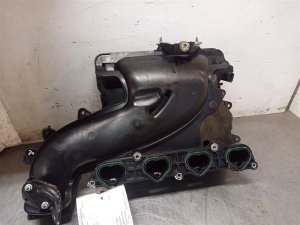
When a used part is the smart pick: Used parts are a reasonable choice for non-wear, structural components that may be removed for access during the repair. This includes the upper intake manifold or a wiring harness connector pigtail if the original is damaged.
Donor-vehicle mileage cap: roughly under 120000 miles for the part to have meaningful remaining life.
What to inspect on the donor part:
- For an intake manifold, inspect for any cracks, especially around bolt holes and seams.
- Ensure all threaded inserts are present and not stripped.
- For a wiring pigtail, check that the plastic is not brittle or cracked, the locking tab is functional, and there is at least 6 inches of flexible wire.
- Avoid parts from vehicles with signs of fire, flood, or major front-end collision damage.
OEM-only on this vehicle (don't cheap out):
- Camshaft Position Sensor: This is critical. Forum and technician consensus is overwhelming that aftermarket cam sensors are unreliable in the 3.6L Pentastar and often fail quickly or are dead-on-arrival. Always use a genuine Mopar sensor (P/N 5149141AF).
- Cam Phasers and Timing Components: Due to the high-labor cost of replacement and their critical role in engine health, using new OEM Mopar parts is strongly advised to ensure longevity and proper function.
Aftermarket brands forum-validated for this vehicle:
- For gaskets needed during the repair (intake manifold, valve cover), reputable brands like Fel-Pro or Mahle are considered reliable alternatives to OEM.
Brands owners have reported issues with on this vehicle:
- All non-Mopar brands for the camshaft position sensor itself are frequently reported to cause persistent issues on this specific engine platform.
Real Owner Stories
Aggregated from forums and TSBs cited above. Mileages and costs reflect what owners reported in those sources.
2015 Chrysler 200 2.4L
Symptoms: P0340 code persisted even after installing a brand new sensor.
What fixed it: Replacing the newly installed aftermarket sensor with a genuine OEM Mopar part.
Source hint: 200forums.com - Aftermarket vs OEM Sensor Failure
2014 Chrysler 200 3.6L
Symptoms: Intermittent extended crank or long crank time.
What fixed it: Inspecting the Bank 1 cam sensor serial number and replacing it because it began with the letter 'D' (per TSB 18-054-14).
Source hint: TSB 18-054-14
2011-2017 Chrysler 200 3.6L
Symptoms: P0340 code accompanied by a brief rattling or ticking noise on cold startup.
What fixed it: Replacement of the camshaft phasers, timing chain, and tensioners.
Source hint: Allpar / Dodge Forums - P0340 as a Symptom of Mechanical Failure
Related OBD-II Codes
Frequently Asked Questions
Does TSB 18-054-14 apply to my 2014 Chrysler 200 with the 3.6L engine?
Can I use an aftermarket sensor to fix the P0340 code on my Chrysler 200?
I replaced the sensor but the P0340 code returned. What should I check next?
How can I tell if my P0340 code is a sensor failure or a mechanical timing issue?
Where is the Bank 1 Camshaft Position Sensor located on the 3.6L Pentastar?
Could my engine oil cause a P0340 code on this vehicle?
Helpful Videos
Used OEM Parts in Stock
New Aftermarket Parts Available


The information in this article is provided for general reference and educational purposes only. Vehicle specifications, procedures, and part compatibility can vary by production date, trim level, and region. Always consult your vehicle's factory service manual and verify part numbers before purchasing or performing repairs. Safety-critical components such as airbags, seat belts, and braking systems should be installed by a qualified professional.
- Chrysler 200:
- 🧭 Diagnostic Flowchart
- 🎬 Helpful Videos
- 🛍️ Shop This Part
- What's Unique About the 2011-2017 Chrysler 200
- Symptoms You May Notice
- Most Likely Causes
- Rare But Worth Checking
- Diagnosis Steps
- Parts You'll Likely Need
- Related Codes That Often Appear With This One
- Technical Service Bulletins (TSBs) & Recalls
- Platform-Specific Known Issues
- Mechanic-Grade Diagnostic Values
- Hidden / Shadow Codes Worth Checking
- Scan Tool Commands That Help
- Wiring & Ground Locations
- "I Checked Everything" — The Actual Cause
- OEM Part Supersession History
- Model Year Variations Within This Range
- Other Known Issues on This Vehicle
- Used vs. New Parts: Buying Guide for This Vehicle
- Real Owner Stories
- 2015 Chrysler 200 2.4L
- 2014 Chrysler 200 3.6L
- 2011-2017 Chrysler 200 3.6L
- Related OBD-II Codes
- Frequently Asked Questions
- 🎟️ Get 5% Off