

P0340 on 2017-2024 Chrysler Pacifica 3.6L: Cam Sensor Causes and Fixes
P0340 on your Pacifica points to the camshaft position sensor circuit on the rear cylinder bank (Bank 1). The most likely fix is replacing the sensor itself, which is difficult due to its location under the intake manifold. However, this code can also be an early warning for a more serious mechanical issue like a failing cam phaser, a known problem on this engine. A startup rattle is a key symptom of phaser failure.
- P0340 refers to the camshaft sensor on Bank 1, which is the rear, hard-to-access cylinder bank on a Pacifica.
- Before replacing any parts, check your engine oil level. Low oil can cause this code on a Pentastar V6.
- Listen for a 2-5 second rattle when starting the engine cold. This noise is a classic sign of a failing cam phaser, a more serious and expensive repair that also causes code P0340.
- If you replace the sensor, use an OEM Mopar part (5149141AF). Aftermarket sensors are known to be problematic in this application.
- Due to the location under the intake manifold, replacing this sensor is a difficult DIY job (4/5 difficulty) and labor costs at a shop will be significant.
What's Unique About the 2017-2024 Chrysler Pacifica
On the 3.6L Pentastar engine, P0340 is notorious for being more than just a simple sensor failure. It frequently serves as an early warning for deeper mechanical issues, like failing camshaft phasers, which adjust timing using oil pressure. A failing phaser can cause the camshaft's physical position to be incorrect, and the sensor accurately reports this deviation, which the PCM logs as a 'circuit' fault, leading owners to mistakenly replace the sensor multiple times. The location of the Bank 1 sensor on the Pacifica, buried under the upper intake manifold against the firewall, also makes this a significantly more labor-intensive repair than on other vehicles. Chrysler has also issued software updates (like TSB 18-002-19 REV A) to change P0340 from a one-trip to a two-trip fault, acknowledging the system's sensitivity to intermittent glitches.
Symptoms You May Notice
- Check Engine Light is on
- Engine is hard to start or cranks for a long time
- Engine stalls, especially at low speeds or when stopping
- Rough idle
- Poor acceleration and loss of power
- Engine misfires
- Transmission may have shifting problems or feel locked in gear
- Noticeable decrease in fuel economy
- Replacing the wrong camshaft sensor. P0340 is for Bank 1 (rear/firewall side). Many people mistakenly replace the much more accessible Bank 2 (front/radiator side) sensor, which will not fix the problem.
- Replacing the crankshaft position sensor. The crankshaft sensor has its own set of codes (e.g., P0335) and is a different part.
- Replacing the camshaft sensor multiple times without investigating underlying mechanical issues like a failing cam phaser, especially if a startup rattle is present.
Most Likely Causes
- Failed Bank 1 Camshaft Position Sensor 🔴 High Probability → Shop Engine Camshaft Position Sensor This is a common failure item on the 3.6L Pentastar engine. Oil leaks from the valve cover or oil filter housing can also seep into the connector and damage the sensor.
How to confirm: After checking oil and wiring, the most common diagnostic step is to swap the suspect sensor with the corresponding sensor from Bank 2 (front of the engine). If the code changes to P0345 (Bank 2), the sensor is confirmed bad. This requires removing the upper intake manifold for access.
Typical fix: Replace the Bank 1 camshaft position sensor. It is highly recommended to use an OEM Mopar part, as aftermarket sensors are known to cause issues on this platform. The job requires removing the upper intake manifold, and it's recommended to replace the intake gaskets at the same time.
Est. part cost: $40-$100 - Damaged Wiring or Connector 🟡 Medium Probability The engine harness is exposed to significant heat and vibration. Wires can become brittle, chafe against other components, or the connector can become contaminated with oil. The harness can rub against the back of the cylinder head.
How to confirm: Visually inspect the wiring harness leading to the Bank 1 cam sensor for any signs of melting, chafing, or broken wires. Check the connector for a secure fit, corrosion, or oil intrusion. Use a multimeter to check for 5V supply, ground, and signal continuity back to the PCM.
Typical fix: Repair the damaged section of the wiring harness or replace the connector pigtail. Clean the connector with electrical contact cleaner.
Est. part cost: $15-$50 - Low or Dirty Engine Oil ⚪ Low Probability The camshaft phasers that control valve timing are operated by engine oil pressure. If the oil level is low or the oil is dirty and sludged, the phasers may not operate correctly, leading to timing deviations that can trigger this code.
How to confirm: Check the engine oil level on the dipstick and note the condition of the oil. This should be the very first step in any diagnosis.
Typical fix: Perform an oil and filter change using the correct specification oil (e.g., Mopar-approved 5W-20 or 5W-30 depending on the year). Clear the code and see if it returns.
Est. part cost: $50-$100
Rare But Worth Checking
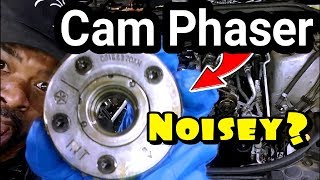
- Failing Camshaft Phaser: → Shop Engine Camshaft This is a serious mechanical issue and a known weakness of the 3.6L Pentastar. Even though P0340 is a 'circuit' code, a failing phaser's internal locking pin can fail, causing the camshaft's physical position to be incorrect. A distinct rattling or ticking noise from the top of the engine for 2-5 seconds on a cold startup is a strong indicator of this problem. 🎬 See this video on Pentastar rattling noises and phaser issues.
- Worn Rocker Arms: Another known Pentastar issue where the needle bearings in the rocker arm fail, causing a persistent ticking sound that increases with engine speed. This can lead to camshaft damage and trigger timing-related codes.
- Outdated PCM Software: Chrysler has released software updates for some vehicles to make the P0340 fault less sensitive to intermittent glitches. TSB 18-002-19 REV A specifically changes the code from a one-trip to a two-trip fault. It's worth checking with a dealer if any updates are available for your VIN.
- Failing Powertrain Control Module (PCM): → Shop Engine Control Module (ECM) In rare cases, the fault can be internal to the PCM itself. This is usually diagnosed only after all other possibilities (sensor, wiring, mechanical) have been eliminated.
Diagnosis Steps
- Check the engine oil level and condition. Top off or change the oil if it is low or dirty. Clear the codes and see if P0340 returns.
- Scan for other fault codes. Note if codes like P0365 (Bank 1 exhaust cam sensor), P0300 (misfire), or P0016 (correlation) are also present.
- Listen carefully for engine noises. A 2-5 second rattle on cold startup points strongly to cam phaser issues. A persistent ticking noise that follows engine RPM suggests rocker arm failure.
- If possible, check with a dealer or a shop with a high-end scan tool (like wiTECH) for any available Powertrain Control Module (PCM) software updates, referencing TSB 18-002-19 REV A.
- Gain access to the rear of the engine to inspect the wiring harness and connector for the Bank 1 camshaft sensor. Look for damage, melting, or oil contamination. Pay special attention to areas where the harness might chafe against the cylinder head.
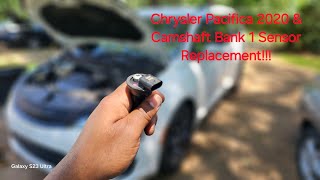
- For definitive diagnosis, remove the upper intake manifold to access both Bank 1 (rear) and Bank 2 (front) camshaft sensors. The sensors are identical. A video guide for a 2020 Pacifica shows the tools needed include T30 Torx, 8mm, and 10mm sockets.
- Swap the Bank 1 sensor with the Bank 2 sensor. Reassemble the intake, clear the codes, and run the engine.
- If the code changes to P0345 (Camshaft Position Sensor 'A' Circuit Bank 2), the original sensor from Bank 1 is faulty and must be replaced.
- If code P0340 returns, the problem lies in the Bank 1 wiring, the PCM, or a mechanical component on Bank 1 (phaser, timing chain, rocker arm). A professional can use a scan tool to compare desired vs. actual cam timing angles to confirm a mechanical fault.
Parts You'll Likely Need
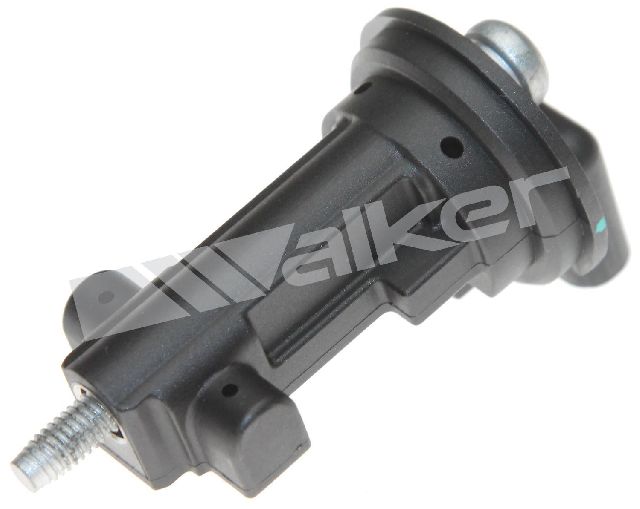
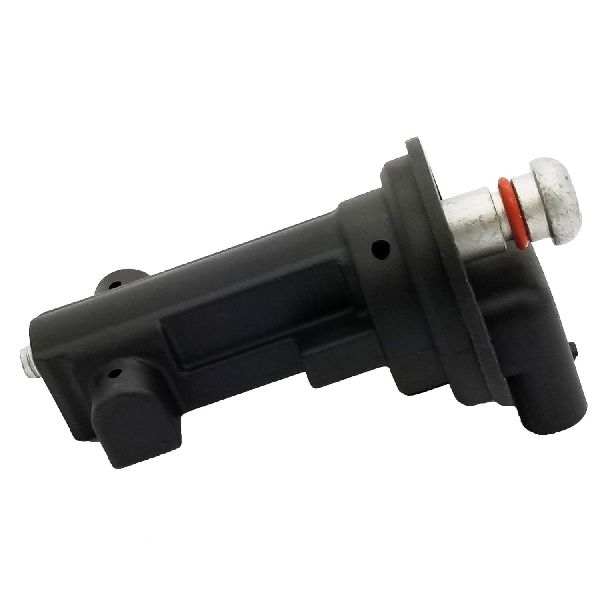
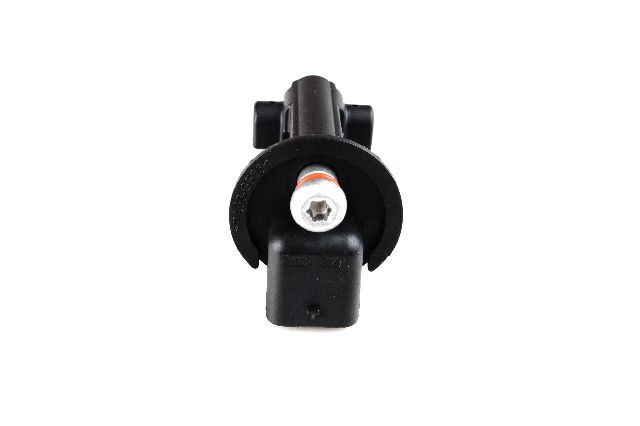
- Camshaft Position Sensor
(OEM #5149141AF)— This is the most common part to fail and directly cause the P0340 code. All four cam sensors on the 3.6L Pentastar are the same part number.
Trusted brands: Mopar (OEM), Delphi, Hitachi, NGK/NTK
OEM price range: $70-$100
Aftermarket price range: $20-$50 - Upper Intake Manifold Gasket Set
(OEM #MS97204)— These gaskets must be replaced anytime the upper intake manifold is removed to access the Bank 1 sensors. Reusing old gaskets will cause vacuum leaks.
Trusted brands: Fel-Pro, Mahle, Mopar
OEM price range: $25-$40
Aftermarket price range: $15-$25
Related Codes That Often Appear With This One
- P0365 — This code is for the Bank 1 exhaust camshaft position sensor ('Sensor B'). Seeing P0340 and P0365 together often points to an issue affecting the entire Bank 1 cylinder head, like a wiring harness problem, a PCM software issue, or a mechanical timing problem on that bank.
- P0300 — This is a code for 'Random/Multiple Cylinder Misfire'. Without a correct signal from the cam sensor, the PCM cannot properly time ignition spark and fuel injection, leading to misfires.
- P0016 — This indicates a 'Crankshaft/Camshaft Position Correlation' error for Bank 1. When seen with P0340, it strongly suggests a mechanical timing problem, such as a failing cam phaser or stretched timing chain, as the computer is detecting a mismatch between where the crank and cam *should* be.
Technical Service Bulletins (TSBs) & Recalls
- TSB #18-002-19 REV A: Involves a PCM software update that, among other things, changes the P0340 fault from a one-trip to a two-trip fault to reduce instances of false positives from intermittent signals.
- TSB #23-017-20: While not related to P0340, this TSB addresses issues with sliding door lock actuators, a common owner complaint.
Platform-Specific Known Issues
- The 3.6L Pentastar engine is widely known for camshaft phaser failure, which causes a startup rattle and can set a P0340 code even though the sensor itself is good.
- Accessing the Bank 1 (rear) sensors is very difficult, requiring the removal of the upper intake manifold.
Mechanic-Grade Diagnostic Values
- Camshaft Position Sensor Power Supply — expected: ~5.0 Volts DC. Failure: Voltage significantly below 5V or 0V indicates a wiring or PCM issue.
- Camshaft Position Sensor Ground Circuit Resistance — expected: Less than 3 Ohms. Failure: High resistance or an Open Line (OL) reading indicates a poor or broken ground connection.
- Camshaft Position Sensor Signal (Hall-Effect Sensor) — expected: Switches between 0V and 5V. Failure: No voltage switch or an erratic signal when the engine is cranked suggests a failed sensor or a problem with the reluctor wheel.
- Scan Tool: Desired vs. Actual Cam Angle — expected: Actual angle should closely track the desired angle commanded by the PCM.. Failure: A significant, consistent deviation between desired and actual angles, especially if accompanied by a startup rattle, points towards a mechanical issue like a failing cam phaser, not a sensor or wiring fault.
Scan Tool Commands That Help
- wiTECH (or other high-end scan tool): VVT Solenoid Actuator Test / Camshaft Actuator Test — This bidirectional command allows the technician to manually activate the Variable Valve Timing (VVT) solenoids. When activated at idle, a healthy system will cause a noticeable change in engine RPM or a rough run condition as the cam timing is altered. If commanding the Bank 1 intake phaser solenoid produces no change in engine behavior, it points to a stuck phaser, a clogged oil passage, or a faulty solenoid, helping to differentiate from a sensor circuit issue.
- wiTECH, Snap-on, etc.: Cam/Crank Relearn — While not a direct diagnostic for P0340, this function may be required after replacing major timing components like phasers or the timing chain. It allows the PCM to learn the new positions and variations of the components. It is not typically needed for just a sensor replacement.
- Oscilloscope / Graphing Scan Tool: Cam and Crank Signal Waveform Analysis — This is the definitive test to verify signal integrity. By graphing the Bank 1 cam sensor signal against the crankshaft sensor signal, a technician can visually confirm if the signal is clean (no dropouts, noise, or rounded edges) and if its timing relationship (correlation) to the crank is correct. A noisy pattern can indicate a failing sensor or metallic debris on the magnetic encoder wheel.
Wiring & Ground Locations
- G101 / G102 — On older Pacifica models, key grounds were located on the lower left side of the engine and on the left side of the engine compartment, often near the headlight assembly.. While specific locations for the 2017+ model may vary, the main engine-to-chassis grounds are critical. A corroded or loose main ground can cause a host of electrical issues, including erratic sensor readings and codes like P0340. The PCM and its sensors rely on a stable ground reference.
- PCM Connector C2 — This is one of the main connectors on the Powertrain Control Module (PCM).. The 5V power supply and the ground reference for both Bank 1 and Bank 2 camshaft position sensors originate from this connector. A forum post on a similar Pentastar engine confirmed that checking for 4.9-5.0V and low resistance (<3 ohms) at this connector is a key step to rule out the PCM or a harness-wide issue.
- Rear of Cylinder Head — The wiring harness for the Bank 1 sensors runs along the back of the cylinder head, near the firewall.. This area is a common chafe point. The harness can rub against the cylinder head or other components due to engine vibration, eventually wearing through the insulation and causing a short or open circuit, triggering a P0340 code.
Real Owner Repair Stories
- JK-Forum.com user (2018 Jeep JKU with 3.6L Pentastar (engine is identical)) — Crank-no-start condition after an engine rebuild. Multiple cam sensor codes were present: P0340, P0345, P0365, P0390.
❌ Tried (didn't work) Assuming it was unlikely for all sensors to fail at once., Checked 5V supply and ground at the PCM connector, which tested good (4.9V, <3 ohms)., Wiggled the harness with no change., Disconnected and reconnected all sensors after cleaning connectors.
✅ What actually fixed it The user did not post the final resolution, but the diagnostic process confirmed the issue was not the sensors themselves but likely a widespread wiring harness problem or a timing correlation issue from the rebuild, as all four sensor circuits were faulting simultaneously. - RamForum.com user (2016 Ram 1500 with 3.6L Pentastar) — After replacing a leaking oil cooler housing with an aftermarket part that failed, the owner lost oil pressure. After installing an OEM cooler, the truck would not start and threw codes P0340, P0345, P0365, and P0390.
❌ Tried (didn't work) Replacing both camshaft positioning sensors.
✅ What actually fixed it The thread concluded without a definitive fix, but the presence of 'glitter' in the oil after the oil pressure loss event, combined with all four cam sensor codes, strongly implies catastrophic internal engine damage (e.g., failed bearings, damaged timing components) was the root cause, not an electrical issue. The sensor codes were symptoms of the larger mechanical failure.
OEM Part Supersession History
5149141AE (and earlier revisions)→5149141AF— Standard part revision and improvement process by the manufacturer.
Heads up: While older revisions might physically fit, it is always best practice to use the latest specified part number (5149141AF) to ensure compatibility with the vehicle's software and to benefit from any manufacturing improvements.
Model Year Variations Within This Range
- 2016+: The 3.6L Pentastar was updated around 2016 (becoming the 'Pentastar Upgrade' or PUG). This included changes to the variable valve timing (VVT) system, among other things. However, for the purpose of diagnosing P0340, the fundamental causes (sensor, wiring, phasers) and the diagnostic approach remain the same. The camshaft position sensors themselves (P/N 5149141AF) are used across both the original and upgraded versions of the engine.
Diagnostic Flowchart
Other Known Issues on This Vehicle
Issues unrelated to this code that are worth knowing about as an owner of this generation:
- Engine Stop/Start (ESS) System Failure 🟠 Medium — Very common, typically occurs after 2-4 years of service. The primary cause is the failure of the small, secondary auxiliary battery ('Aux 14 AGM').
- 9-Speed Transmission Problems (esp. 2017-2018) 🔴 High — Commonly reported on early model years. Symptoms include rough/hard shifting, jerking, stalling, and sometimes complete failure requiring replacement. (Ref: Software updates have been issued to address shifting behavior. A recall was issued for hybrid models for engine shutdown risk.)
- Sliding Door Malfunctions 🟠 Medium — Owners report doors failing to open, close, or lock, sometimes accompanied by a buzzing noise from the actuator. (Ref: Chrysler issued TSB 23-017-20 and a warranty extension (15 years/150,000 miles) for the door lock actuators.)
- Paint Bubbling/Peeling on Hood 🟡 Low — Frequently reported on 2017 models, where paint bubbles and peels, particularly on the leading edge of the aluminum hood.
- Uconnect Infotainment System Glitches 🟡 Low — Owners report issues like the screen freezing, blacking out, or being unresponsive. Sometimes fixed with a software update, but may require unit replacement.
Used vs. New Parts: Buying Guide for This Vehicle
When a used part is the smart pick: For a P0340 repair, sourcing used parts is generally not recommended for the sensor itself. However, if diagnosis points to a larger issue, a used engine wiring harness or a Powertrain Control Module (PCM) from a reputable salvage yard could be a cost-effective option, provided the part numbers match exactly.
Donor-vehicle mileage cap: roughly under 75000 miles for the part to have meaningful remaining life.
What to inspect on the donor part:
- For a wiring harness: Inspect thoroughly for any cuts, melted sections, or brittle insulation. Ensure all connector locking tabs are intact.
- For a PCM: Verify the donor vehicle was not involved in a flood or fire. Check for any signs of corrosion on the pins.
- Always try to source from a vehicle of the same model year to avoid compatibility issues.
OEM-only on this vehicle (don't cheap out):
- Camshaft Position Sensor: Forum consensus strongly advises using only Mopar OEM sensors. Aftermarket sensors are notoriously unreliable on the Pentastar platform and can cause the code to return or introduce new drivability problems.
- Camshaft Phasers: If mechanical failure is the cause, using OEM Mopar phasers is critical for longevity and proper function. This is not a job you want to do twice.
Aftermarket brands forum-validated for this vehicle:
- For gaskets (like the intake manifold gasket): Fel-Pro and Mahle are widely trusted aftermarket brands.
- For sensors, if OEM is unavailable: NGK/NTK and Delphi are generally considered higher-quality alternatives to no-name brands, but OEM is still the first choice.
Brands owners have reported issues with on this vehicle:
- Unbranded or 'white-box' electronic sensors from online marketplaces. The savings are not worth the high probability of premature failure or incorrect readings on this sensitive engine.
Real Owner Stories
Aggregated from forums and TSBs cited above. Mileages and costs reflect what owners reported in those sources.
2011 Dodge Grand Caravan 3.6L V6
Symptoms: The vehicle exhibited a classic startup rattle and sluggish performance along with the P0340 code.
What fixed it: The issue was identified as a VVT/phaser issue; the first recommended step was checking oil level and condition.
Source hint: DodgeForum.com - '5th Gen 08+ 2011 Grand Caravan - P0340 troubles'
2018 Chrysler Pacifica
Symptoms: Stop/Start Unavailable warning and Service Stop/Start System message.
What fixed it: Replacement of the small, secondary auxiliary battery ('Aux 14 AGM'), though users noted the issue can return.
Source hint: Reddit r/ChryslerPacifica - 'Stop/Start Unavailable Service Stop/Start System (2018 Chrysler Pacifica)'
Related OBD-II Codes
Frequently Asked Questions
I heard there is a software update for P0340 on the Pacifica. What does TSB 18-002-19 REV A do?
Can I use an aftermarket camshaft sensor to fix the P0340 code on my 3.6L Pentastar?
My Pacifica has a rattle for a few seconds when I start it cold. Is this related to the P0340 code?
Is it true I have to remove the intake manifold to replace the Bank 1 sensor?
Could my Pacifica's transmission shifting problems be caused by a camshaft sensor code?
How can I be sure the sensor is actually bad before I buy a new one?
Helpful Videos
We Have This Part in Stock


The information in this article is provided for general reference and educational purposes only. Vehicle specifications, procedures, and part compatibility can vary by production date, trim level, and region. Always consult your vehicle's factory service manual and verify part numbers before purchasing or performing repairs. Safety-critical components such as airbags, seat belts, and braking systems should be installed by a qualified professional.
- Chrysler Pacifica:
- 🧭 Diagnostic Flowchart
- 🎬 Helpful Videos
- 🛍️ Shop This Part
- What's Unique About the 2017-2024 Chrysler Pacifica
- Symptoms You May Notice
- Most Likely Causes
- Rare But Worth Checking
- Diagnosis Steps
- Parts You'll Likely Need
- Related Codes That Often Appear With This One
- Technical Service Bulletins (TSBs) & Recalls
- Platform-Specific Known Issues
- Mechanic-Grade Diagnostic Values
- Scan Tool Commands That Help
- Wiring & Ground Locations
- Real Owner Repair Stories
- OEM Part Supersession History
- Model Year Variations Within This Range
- Other Known Issues on This Vehicle
- Used vs. New Parts: Buying Guide for This Vehicle
- Real Owner Stories
- 2011 Dodge Grand Caravan 3.6L V6
- 2018 Chrysler Pacifica
- Related OBD-II Codes
- Frequently Asked Questions
- 🎟️ Get 5% Off