

P0340 on 2005-2010 Scion tC: Camshaft Position Sensor Causes and Fixes
P0340 on a 2005-2010 Scion tC most often means the camshaft position sensor has failed. It's an affordable and easy DIY replacement located on the driver's side of the cylinder head, typically costing $25-$75 for a new sensor. Before replacing, check the engine oil level, as low oil is a known issue on the 2AZ-FE engine and can cause timing-related faults.
- P0340 on your Scion tC points to an issue with the camshaft position sensor circuit.
- The most likely fix is replacing the camshaft position sensor, which is an easy and affordable DIY job.
- Before replacing any parts, check your engine oil level. Low oil is a well-documented issue with the 2AZ-FE engine (TSB S-SB-0031-14) and can cause timing-related problems.
- Also, check your battery voltage and inspect the engine ground wires on the cylinder head, as both are known, simple-to-fix causes for this code.
- If a new sensor doesn't fix the code, inspect the wiring and connector carefully before considering more complex issues like the timing chain.
What's Unique About the 2005-2010 Scion tC
The 2005-2010 Scion tC uses the 2.4L 2AZ-FE engine, which has a single camshaft position sensor located on the intake camshaft. While the P0340 code is often a simple sensor failure, this engine is known for potential oil consumption issues which were addressed in Toyota Technical Service Bulletin (TSB) T-SB-0094-11. Chronically low oil levels can accelerate wear on the timing chain and tensioner, which in rare cases can cause timing to jump and trigger a P0340 code. Therefore, it's wise to check the oil level immediately when this code appears. Additionally, loose ground wires on the cylinder head (specifically points 'EG' and 'EH') are a known issue on the 2AZ-FE that can cause an intermittent P0340.
Symptoms You May Notice
- Check Engine Light is on
- Engine is hard to start or cranks for a long time
- Engine will not start at all
- Engine stalls unexpectedly while driving or idling, sometimes when shifting from Park to Drive.
- Rough idle and engine misfires
- Noticeable loss of power and hesitation during acceleration
- Engine may backfire during starting attempts.
- Replacing the crankshaft position sensor. While related, the crankshaft sensor has its own specific trouble code (P0335). If only P0340 is present, focus on the camshaft sensor circuit first.
- Immediately replacing the sensor without checking wiring. Many owners replace the sensor only to have the code return because the actual fault was a loose ground wire or damaged connector.
Most Likely Causes
- Failed Camshaft Position Sensor 🔴 High Probability → Shop Engine Camshaft Position Sensor Electronic sensors can fail over time due to heat cycles and vibration. This is the most common point of failure for this code. Sludge from poor oil quality or infrequent oil changes can also coat the sensor tip, blocking its reading.
How to confirm: Test the sensor's internal resistance with a multimeter. For the 2AZ-FE, it should be between 1,630-2,740 Ω when cold and 2,065-3,225 Ω when hot. A reading outside this range indicates failure. The easiest confirmation for a DIYer is to replace it, as it's a relatively inexpensive part.
Typical fix: Replace the camshaft position sensor. It is recommended to apply a thin layer of clean engine oil to the new sensor's O-ring before installation.
Est. part cost: $25-$75 - Wiring or Connector Issue 🟡 Medium Probability The wiring harness and connector are exposed to engine heat and vibration, which can lead to brittle plastic, loose connections, or corrosion over time. A known issue on the 2AZ-FE is a loose ground wire bolt on the cylinder head, which can cause intermittent signal loss.
How to confirm: Visually inspect the sensor's connector and nearby wiring for any signs of damage, corrosion, or loose pins. Specifically check the ground wire attachment points on the cylinder head, often labeled 'EG' and 'EH', for tightness. Use a multimeter to check for continuity between the sensor connector and the ECM.
Typical fix: Repair the damaged section of wiring, clean/replace the connector, or tighten the loose ground bolt on the cylinder head.
Est. part cost: $5-$50 - Stretched Timing Chain or Failed Tensioner ⚪ Low Probability → Shop Engine Timing Chain The 2AZ-FE engine can suffer from excessive oil consumption due to piston ring design, as documented in TSB S-SB-0031-14. Running the engine with low oil can cause premature wear on the timing chain, guides, and tensioner. A stretched chain can cause the camshaft and crankshaft to be out of sync, triggering this code, sometimes with P0016.
How to confirm: Listen for a rattling noise from the front of the engine, especially on cold startups. 🎬 Listen: What a rattling timing chain sounds like on the 2AZ-FE. This is a more advanced diagnosis that requires removing the valve cover to check for chain slack and verifying timing marks.
Typical fix: Replace the timing chain, tensioner, and guides as a kit. This is a significant repair.
Est. part cost: $100-$250
Rare But Worth Checking
- Failing Engine Control Module (ECM): → Shop Engine Control Module (ECM) This is extremely rare. The ECM should only be considered after all other possibilities, including sensors, wiring, and mechanical timing, have been thoroughly ruled out.
- Weak or Failing Battery: → Shop Vehicle Battery A Toyota TSB (T-TT-0010-10 Rev) confirms that low battery voltage during cranking can cause inconsistent engine rotation speed, which may trigger a P0340. Always ensure the battery is healthy (12.6V+ engine off, 13.7-14.7V running) before diagnosing other components.
- Sensor Clearance Issues: While documented on other Scion models, manufacturer service bulletin #S-SB-0013-14 notes that P0340 and engine misfire codes can occur if the camshaft position sensor clearance is out of specification.
Diagnosis Steps
- Read the trouble codes with an OBD-II scanner to confirm P0340 is present.
- Check the engine oil level and condition. Top off or change if necessary. Dirty or low oil can cause this code.
- Test the battery. Ensure it has a full charge (approx. 12.6V engine off) and the charging system is working (13.7-14.7V engine on). A weak battery is a known cause.
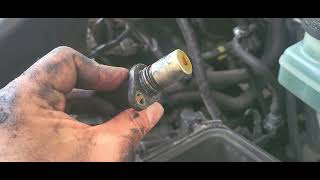
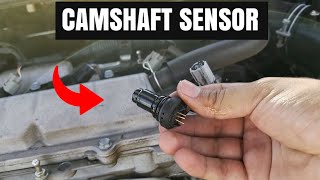
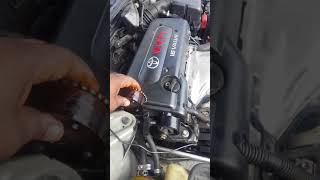
- Locate the camshaft position sensor. On the 2AZ-FE engine, it is on the driver's side of the cylinder head, near the top, held by a single 10mm bolt. 🎬 Watch: See exactly where the sensor is located on your engine.
- Visually inspect the sensor's electrical connector and wiring for any obvious damage, corrosion, or loose connections. Pay close attention to the plastic locking tab, which can become brittle and break.
- Inspect engine ground points. Check for loose ground wire bolts on the cylinder head, specifically 'EG' (front of head) and 'EH' (rear of head, near intake manifold).
- If wiring looks good, the most common next step is to replace the camshaft position sensor. Lubricate the new O-ring with fresh oil before installation.
- Clear the code with the scanner and perform a drive cycle to see if the code returns.
- If the code returns, perform a resistance test on the old sensor (and the new one) to verify it's within spec (1,630-2,740 Ω cold).
- If the sensor is good, a more in-depth diagnosis is needed. Use a multimeter to test the wiring harness for continuity between the sensor connector and the ECM.
- If wiring and sensor are confirmed good, listen for any rattling noises that could indicate a timing chain issue. This may require professional diagnosis.
Parts You'll Likely Need
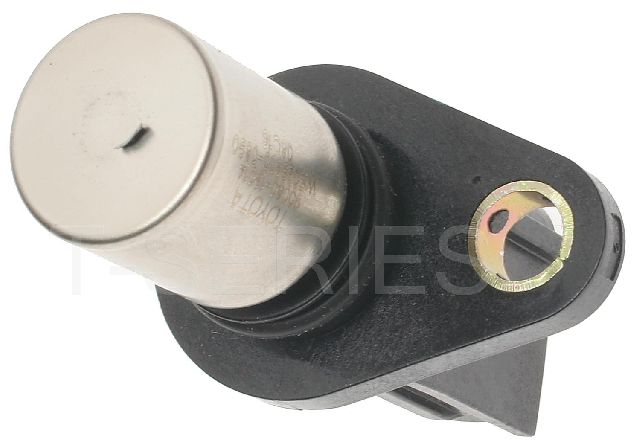
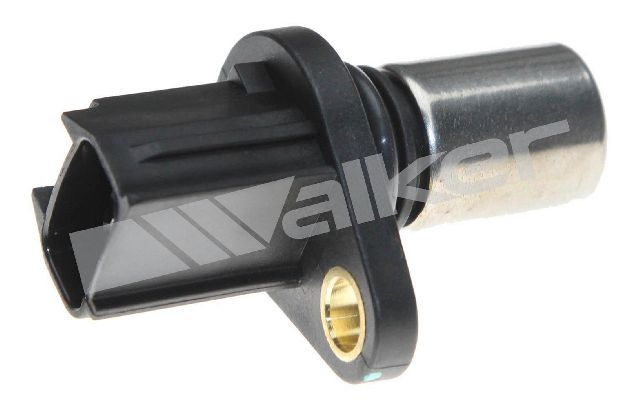
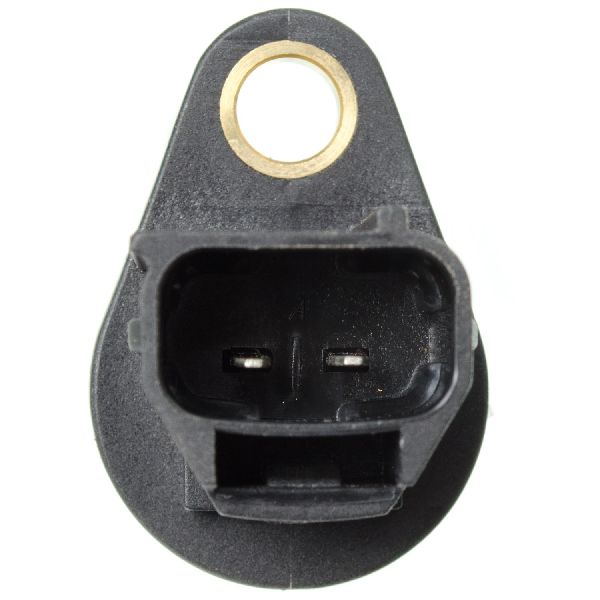
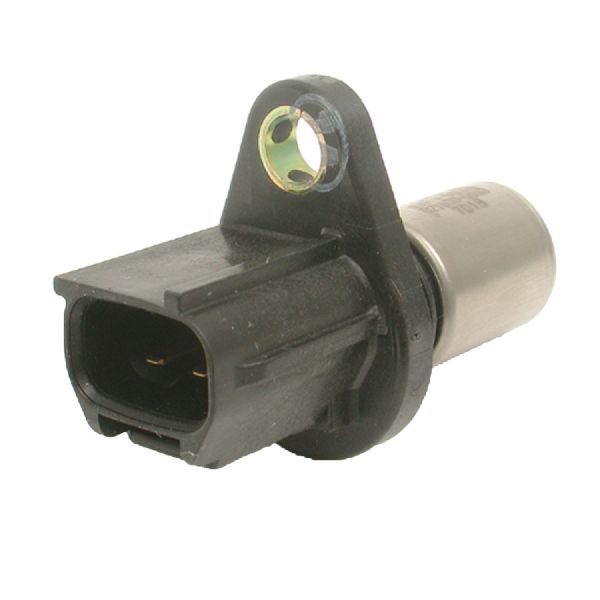
- Camshaft Position Sensor
(OEM #90919-05047 (may be superseded by 90080-19024))— This sensor is the most frequent cause of a P0340 code and is a simple, direct replacement. Note that some parts catalogs incorrectly label this a crankshaft sensor, but it is used for the camshaft on the 2AZ-FE.
Trusted brands: Denso (OEM Manufacturer), NTK/NGK, Hitachi, SKP
OEM price range: $60-$90
Aftermarket price range: $25-$60
Related Codes That Often Appear With This One
- P0335 — If both the camshaft and crankshaft sensor signals are lost, it could point to a more significant wiring issue, a problem with a shared power/ground circuit, or a failing ECM.
- P0300, P0301, P0302, P0303, P0304 — These are misfire codes. A bad camshaft position sensor signal disrupts proper ignition and fuel timing, which can easily lead to the engine misfiring. Oil consumption leading to fouled plugs can also set these codes.
- P0016 — Crankshaft/Camshaft Position Correlation. This code is more likely to appear if the root cause is mechanical, such as a stretched timing chain, indicating the two sensors' readings are out of sync.
Technical Service Bulletins (TSBs) & Recalls
- T-SB-0094-11 / S-SB-0031-14: Details the excessive oil consumption issue on 2AZ-FE engines and the repair procedure, which involves replacing pistons and rings. This is a critical related issue that can lead to timing problems.
- T-SB-0158-14: Outlines the official inspection procedure to confirm if a 2AZ-FE engine is consuming excessive oil, a prerequisite for the repair covered in T-SB-0094-11.
- T-TT-0010-10 Rev: A technical tip from Toyota stating that low battery voltage can cause P0340 during engine cranking, advising technicians to check freeze-frame data and battery health before replacing sensors.
- S-SB-0033-13 Rev: A manufacturer bulletin for other Scion platforms notes that vehicles may exhibit P0340 and engine misfire codes due to the camshaft position sensor being out of specification.
Platform-Specific Known Issues
- The 2AZ-FE engine in the 2005-2010 Scion tC is widely known for excessive oil consumption due to piston/piston ring design issues. Toyota issued TSB S-SB-0031-14 for the Scion tC to address this. Failure to maintain the proper oil level can starve the timing chain tensioner of oil pressure, leading to accelerated wear of the timing chain system and potentially causing this code in severe cases.
- Loose ground wires bolted to the cylinder head are a documented cause of intermittent P0340 and other codes on the 2AZ-FE. A user on YouTube with a 2006 Camry solved P0340 by tightening a loose ground bolt on the back of the head.
Mechanic-Grade Diagnostic Values
- Camshaft Position Sensor Resistance (2-wire sensor) — expected: 1,630 to 2,740 Ω (Cold), 2,065 to 3,225 Ω (Hot). Failure: A resistance reading outside of the specified range for the sensor's temperature.
- Camshaft (G2) and Crankshaft (NE) Sensor Waveform — expected: Using an oscilloscope, check for a clean, consistent square wave signal from the G2+ terminal and a clean, consistent sine wave from the NE+ terminal relative to ground while the engine is cranking or idling. The G2 signal should appear 3 times for every two crankshaft rotations.. Failure: A missing, noisy, or erratic waveform from the G2+ terminal indicates a problem in the camshaft sensor circuit. Grounding failure of the shielded wire is a common cause of noise.
Hidden / Shadow Codes Worth Checking
- Freeze Frame Data: Not a hidden code, but a critical data snapshot stored by the ECM at the moment a DTC like P0340 is set. It records parameters like engine speed, vehicle speed, engine temperature, and fuel system status. (see via Use a professional scan tool like Toyota's Techstream or an advanced OBD-II scanner. This data helps a technician understand the exact conditions under which the fault occurred (e.g., during cranking, at idle, under load), which is crucial for diagnosing intermittent issues.)
Scan Tool Commands That Help
- Techstream (or equivalent professional scanner): DTC Info / Pending Codes — After clearing codes and running the engine, checking for pending codes can confirm if the fault condition has been met again before the MIL is commanded on, speeding up verification of a fix.
- Techstream (or oscilloscope function): Waveform Viewer (G2+ vs NE+) — To visually inspect the integrity of the camshaft and crankshaft sensor signals in real-time. This is the definitive test to distinguish between a sensor failure, wiring issue, or mechanical timing problem.
Wiring & Ground Locations
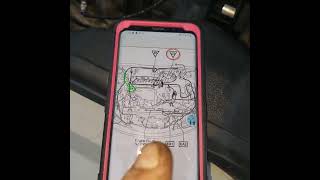
- EG — On the front (exhaust side) of the cylinder head. A black and white wire is typically attached here.. This is a primary ground point for engine sensors. A loose or corroded connection here can cause intermittent or complete loss of the camshaft position sensor signal, triggering P0340.
- EH — On the back (intake side) of the cylinder head, often difficult to see, located near where the intake manifold loops.. This is another critical engine ground. A loose bolt at this location is a documented cause of P0340 on the 2AZ-FE, as it can cause signal interference or loss.
- ECM Connector (G22+) — At the Engine Control Module (ECM). The specific pin number for the camshaft position sensor signal.. This is the destination for the camshaft sensor signal. Testing for the signal waveform or checking for continuity between this pin and the sensor connector is the final step in diagnosing a wiring harness issue.
Real Owner Repair Stories
- YouTube user 'Praise God' (2006 Toyota Camry with 2AZ-FE engine) — Car ran great for a few days after a cylinder head replacement, then started acting up, setting P0340 and P0010.
❌ Tried (didn't work) The owner was struggling to diagnose the issue, implying that simple checks did not resolve it.
✅ What actually fixed it The owner's wife found a diagram for ground locations. They discovered the ground bolt for point 'EH' on the back of the cylinder head near the intake manifold was 'terrible loose'. Tightening this loose ground bolt solved the codes.
OEM Part Supersession History
90919-05047→90080-19024— Standard part number consolidation and update by Toyota.
Heads up: The new part number is a direct replacement for the original. No known incompatibility issues.
Diagnostic Flowchart
Real Owner Stories
Aggregated from forums and TSBs cited above. Mileages and costs reflect what owners reported in those sources.
Scion tC 2AZ-FE
Symptoms: Experienced classic P0340 symptoms including hard starting, backfiring, and engine misfiring.
What fixed it: Diagnosed as a failed camshaft position sensor.
Source hint: ScionLife.com - Thread 'Where is the Cam Shaft Sensor? Code P0340..'
2005 Scion tC 2.4L (Turbocharged)
Symptoms: Engine would crank but refused to start, throwing both P0340 and P0335 codes.
What fixed it: Replacing the camshaft sensor did not resolve the issue; it was traced to a wiring harness problem associated with an aftermarket piggyback ECU.
Source hint: ScionLife.com - Thread '05 tC Cranks - Won't Start - Codes P0335B and P0340..'
2006 Toyota Camry 2.4L 2AZ-FE
Symptoms: Intermittent P0340 code and drivability issues.
What fixed it: Tightened a loose ground bolt on the back of the cylinder head, restoring the sensor's ground connection.
Source hint: YouTube user cited in vehicle_specific_issues
Related OBD-II Codes
Frequently Asked Questions
Does TSB S-SB-0031-14 apply to my 2005-2010 Scion tC, and can it cause code P0340?
Can a weak battery cause a P0340 code on the 2.4L 2AZ-FE engine?
Where is the camshaft position sensor located on the Scion tC, and how do I test it?
I replaced the camshaft position sensor on my tC but the P0340 code came back. What should I check next?
How do I know if my P0340 is caused by a stretched timing chain instead of a bad sensor?
Helpful Videos
We Have This Part in Stock


The information in this article is provided for general reference and educational purposes only. Vehicle specifications, procedures, and part compatibility can vary by production date, trim level, and region. Always consult your vehicle's factory service manual and verify part numbers before purchasing or performing repairs. Safety-critical components such as airbags, seat belts, and braking systems should be installed by a qualified professional.
- Scion tC:
- 🧭 Diagnostic Flowchart
- 🎬 Helpful Videos
- 🛍️ Shop This Part
- What's Unique About the 2005-2010 Scion tC
- Symptoms You May Notice
- Most Likely Causes
- Rare But Worth Checking
- Diagnosis Steps
- Parts You'll Likely Need
- Related Codes That Often Appear With This One
- Technical Service Bulletins (TSBs) & Recalls
- Platform-Specific Known Issues
- Mechanic-Grade Diagnostic Values
- Hidden / Shadow Codes Worth Checking
- Scan Tool Commands That Help
- Wiring & Ground Locations
- Real Owner Repair Stories
- OEM Part Supersession History
- Real Owner Stories
- Scion tC 2AZ-FE
- 2005 Scion tC 2.4L (Turbocharged)
- 2006 Toyota Camry 2.4L 2AZ-FE
- Related OBD-II Codes
- Frequently Asked Questions
- 🎟️ Get 5% Off