

P0341 on 2015-2019 GMC Yukon Denali: Camshaft Sensor Causes and Fixes
On a 2015-2019 GMC Yukon Denali, code P0341 usually points to a faulty camshaft position sensor or a chafed wiring harness, often near the back of the engine or by the front cover. A thorough wiring inspection is critical before replacing the sensor, which costs about $40-$80 for an OEM part.
- P0341 on a 2015-2019 Yukon Denali indicates a performance problem with the camshaft position sensor signal.
- Before replacing any parts, carefully inspect the engine wiring harness for chafing, as this is a known issue documented in GM Technical Service Bulletins.
- Symptoms can be severe, including stalling or a no-start condition, so prompt diagnosis is recommended.
- If the wiring is intact, the most likely fix is replacing the camshaft position sensor with a quality OEM part like ACDelco.
- This code can appear with other codes related to engine timing and misfires; diagnosing them together can help pinpoint the root cause.
What's Unique About the 2015-2019 Gmc YUKON DENALI
For this generation of GMC Yukon (K2XX platform), a key issue is not always the sensor itself, but the wiring leading to it. GM has issued multiple Technical Service Bulletins (TSBs) for a wide range of engine codes, including P0341, that point to 🎬 Watch: Diagnosing P0340 and P0341 codes on a Yukon specific wiring harnesses chafing against engine or chassis components. TSB PIP5553A specifically calls out a jumper harness chafing, while TSB PIP5335 points to potential corrosion in connector X154 on the front engine cover as another common source of the problem. This makes a thorough visual inspection of these specific areas a critical first step.
Diagnostic Flowchart
Tap your situation to follow the diagnostic path that matches what you're seeing on this vehicle.
Symptoms You May Notice
- Check Engine Light is on
- Engine is hard to start or cranks but won't start
- Engine stalling, especially at low speeds or when coming to a stop.
- Rough idling
- Hesitation or stumbling during acceleration
- Reduced engine power or entering 'limp mode'.
- Decreased fuel economy
- Service Stabilitrak message may appear on the dash.
- Replacing the camshaft position sensor without first inspecting the wiring harness. The TSBs strongly suggest wiring is a common culprit on the K2XX platform.
- Confusing the camshaft position sensor with the crankshaft position sensor. They are different parts with different functions.
- Replacing the sensor with a cheap aftermarket part, which may fail prematurely or be dead-on-arrival, leading to a repeat of the same code.
Most Likely Causes
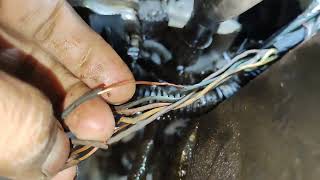
- Chafed or Damaged Wiring Harness 🔴 High Probability As cited in GM TSBs #PIP5553A and #PIP5553, a specific wiring jumper harness is known to chafe, causing shorts or open circuits for multiple sensors, including the camshaft position sensor. The chafe point is often located at the back of the engine where the harness can rub against brackets or the cylinder head.
How to confirm: Visually inspect the engine wiring harness, particularly around the back of the engine and where it may contact brackets or the engine block. Also inspect the harness near the front driver's side of the engine, near the upper control arm and shock tower, as noted in related TSBs for harness chafing on this platform. Look for worn insulation, exposed copper wires, or sharp edges the harness is resting on.
Typical fix: Repair the damaged section of the harness using solder and heat-shrink tubing. Re-route the harness and secure it with zip ties and protective conduit (anti-abrasion tape) to prevent future chafing.
Est. part cost: $5-$25 - Faulty Camshaft Position Sensor 🟡 Medium Probability → Shop Engine Camshaft Position Sensor Sensors can fail over time due to extreme heat cycles and engine vibration. While wiring is a major issue on this platform, sensor failure is still a common root cause for this code, especially as vehicles age.
How to confirm: After confirming the wiring is intact, test the sensor's output signal with a digital multimeter or oscilloscope. The signal should change consistently as the engine is cranked. A failing sensor may produce an erratic or intermittent signal.
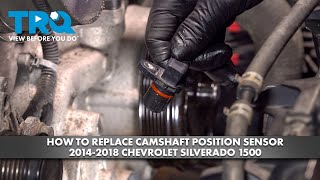
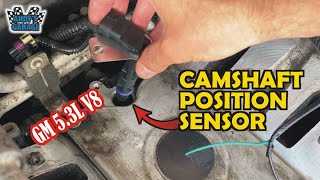
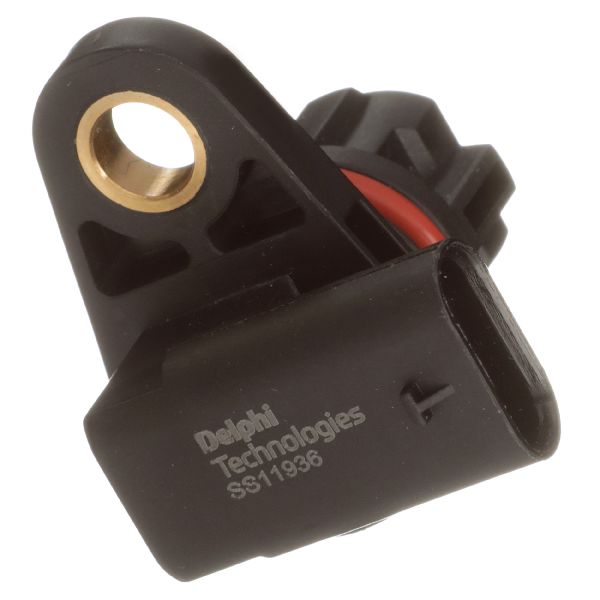
Typical fix: Replace the faulty camshaft position sensor. It is located on the front timing cover. It's highly recommended to use OEM parts like ACDelco for sensors to ensure reliability and avoid issues with aftermarket parts.
Est. part cost: $40-$85 - Poor Electrical Connection at Sensor or Connector X154 ⚪ Low Probability TSB #PIP5335 specifically identifies corrosion in connector X154, located on the front engine cover near the vacuum pump, as a potential cause for P0340 and P0341.
How to confirm: Inspect the electrical connector at the camshaft position sensor itself for corrosion, moisture, or loose/backed-out pins. Then, locate and inspect connector X154 on the front cover for any signs of green or white corrosion or moisture intrusion.
Typical fix: Clean the connector terminals with electrical contact cleaner and apply dielectric grease before reconnecting. Replace the connector pigtail if it's damaged or terminals are too corroded.
Est. part cost: $10-$30
Rare But Worth Checking
- Timing Chain or Cam Phaser Issue: → Shop Engine Timing Chain A stretched timing chain or a malfunctioning cam phaser (actuator) can cause the camshaft's timing to be out of sync with the crankshaft, triggering a P0341 code. This is a more serious mechanical issue that usually presents with other symptoms like rattling noises from the front of the engine, especially on cold starts.
- Sheared Camshaft Sprocket Locating Pin: → Shop Engine Camshaft Extremely rare, but documented in GM diagnostics (TSB #PIP5168G). A sheared pin on the camshaft sprocket will cause the cam to stop rotating with the engine, leading to a crank-no-start condition and multiple timing codes. This requires significant engine repair.
- Failing Engine Control Module (ECM): This is extremely rare. The ECM should only be considered after all other possibilities, including wiring, sensors, and mechanical timing, have been exhaustively ruled out by a professional technician.
Diagnosis Steps
- Scan for all DTCs. Note any other codes that appear with P0341, as they can provide clues (e.g., P0340, P0011, P0300).
- Thoroughly inspect the engine wiring harness, paying close attention to the areas mentioned in TSBs #PIP5553A (jumper harness chafing) and other bulletins for this platform, such as behind the cylinder head and near the driver's side shock tower.
- Inspect the electrical connector at the camshaft position sensor. Check for corrosion, bent pins, or a loose connection. Apply dielectric grease upon reconnection.
- Inspect connector X154 on the front engine cover for corrosion, as specified in TSB #PIP5335.
- If wiring and connectors are good, test the sensor. Using a multimeter, check for correct voltage (typically 5V reference) and ground at the sensor connector. Use an oscilloscope to observe the sensor's output signal while cranking the engine to verify it is producing a clean, consistent square wave.
- If the sensor signal is faulty, replace the camshaft position sensor with a quality OEM part like ACDelco.
- After replacement, some GM vehicles may benefit from a 'camshaft position variation relearn' procedure using a high-end scan tool, though often driving the vehicle is sufficient for the ECM to adapt.
- If the sensor and wiring are confirmed to be good, the next step is to investigate potential mechanical issues, such as timing chain stretch or cam phaser problems. This is a more advanced diagnosis.
- Clear the codes and perform a test drive to ensure the repair was successful.
Parts You'll Likely Need
- Camshaft Position Sensor
(OEM #12623093)— This sensor is the primary component that fails electronically, causing the P0341 code when wiring is not the issue. This part number is the specified GM/ACDelco OEM replacement.
Trusted brands: ACDelco, Delphi, Standard Motor Products
OEM price range: $55-$85
Aftermarket price range: $40-$65 - Wiring Harness Repair Supplies — Needed to fix chafed or broken wires, a common cause identified in GM TSBs. Includes anti-abrasion tape, zip ties, and heat-shrink tubing.
Trusted brands: N/A
OEM price range: $10-$30
Aftermarket price range: $5-$20
Related Codes That Often Appear With This One
- P0340 — P0340 indicates a general circuit malfunction for the same sensor, while P0341 points to a performance/range issue. They often appear together when the sensor signal is intermittent or failing.
- P0335 / P0336 — These are codes for the crankshaft position sensor. Since the ECM compares cam and crank signals, a problem with one can sometimes lead to fault codes for the other, or indicate a deeper mechanical timing issue.
- P0011 / P0010 — These codes relate to the camshaft position actuator (VVT solenoid). As noted in TSB #PIP5553A, they can be triggered by the same chafed wiring harness that causes P0341.
- P0300 — This is a random/multiple cylinder misfire code. An incorrect camshaft position signal can disrupt ignition and fuel timing, leading to misfires. TSB #PIP5553A also lists this as a related code.
Technical Service Bulletins (TSBs) & Recalls
- PIP5553A: Mentions P0341 among a list of DTCs that can be caused by a chafed wiring jumper harness, potentially leading to a crank-no-start or stall.
- PIP5553: An earlier version of the above TSB, also pointing to a chafed wiring harness as a possible cause for P0341 and other codes.
- PIP5335D: Not
Platform-Specific Known Issues
- A known issue documented in TSBs #PIP5553A and #PIP5553 involves a wiring jumper harness that can become chafed, leading to a host of electrical and engine performance DTCs, including P0341. This can cause symptoms like a crank-no-start or stalling.
- TSB #PIP5335D (and earlier versions) points to potential corrosion in connector X154 on the front engine cover as another specific point of failure for the camshaft position sensor circuit on these trucks and SUVs.
Mechanic-Grade Diagnostic Values
- Camshaft Position Sensor 5V Reference Voltage — expected: 4.8V to 5.2V DC with key on, engine off.. Failure: Voltage below 4.8V or above 5.2V indicates a problem in the wiring or the ECM. No voltage suggests an open circuit or blown fuse.
- Camshaft Position Sensor Ground Circuit — expected: Continuity to ground (near 0 Ohms) when tested between the ground pin at the connector and a known good chassis ground.. Failure: High resistance or an open circuit (OL) indicates a bad ground connection, which is a common issue.
- Camshaft Position Sensor Signal Voltage (Oscilloscope) — expected: A clean square wave pattern that alternates between approximately 0V and 5V as the engine is cranked or running.. Failure: A missing signal, a signal that is erratic, 'noisy', or a wave that does not form a clean square pattern indicates a failing sensor or a damaged reluctor wheel.
Scan Tool Commands That Help
- GDS2 / Tech 2 / High-End Scan Tool: Crankshaft Position System Variation Learn (also known as cam/crank relearn) — This procedure may be required after replacing the camshaft or crankshaft position sensor. It allows the ECM to learn the minor variations in the new sensor and the reluctor wheel to ensure accurate timing calculations. Failure to perform this when needed can sometimes cause a persistent P0341 code even with a good sensor.
Wiring & Ground Locations
- X154 / X159 — Located on the front engine cover, near the vacuum pump on the driver's side. TSB #PIP5335D notes to check X159 on 2015 models, and X154 on 2016-2019 models.. This connector is a known point of failure due to corrosion from moisture intrusion, which can directly interrupt the camshaft position sensor signal, causing P0341.
- ECM Ground — On top of the engine block, often at the rear of the driver's side cylinder head.. This is the primary ground for the Engine Control Module. A loose or corroded connection here can cause a host of erratic sensor readings and seemingly unrelated DTCs, including P0341, because it provides an unstable reference for the entire engine management system.
- G104 — On the rear of the driver's side cylinder head.. This is a major engine ground point. A poor connection here can cause electrical noise and intermittent sensor issues, including for the camshaft position sensor.
Real Owner Repair Stories
- CorvetteForum user (1999 Chevrolet Corvette (demonstrates a common GM issue)) — Persistent P0341 code and Check Engine Light after other engine work was completed.
❌ Tried (didn't work) Replacing the camshaft position sensor with a new aftermarket part from a major retailer., Performing a PCM Idle Learn procedure.
✅ What actually fixed it The new aftermarket camshaft position sensor was faulty out of the box. Replacing it a second time with a genuine GM OEM part resolved the P0341 code immediately.
When the Usual Fixes Don't Work
- While replacing the camshaft position sensor is a common fix, it is not always successful on the first try, even if the diagnosis is correct. A documented case on a GM vehicle with a persistent P0341 showed that a brand-new aftermarket sensor was defective right out of the box. The code was only resolved after this new part was swapped for a genuine GM OEM sensor. This strongly reinforces the common wisdom that critical electronic sensors on modern vehicles should be replaced with high-quality OEM parts to avoid repeat repairs and chasing a problem that has already been 'fixed'.
OEM Part Supersession History
12623093→N/A— This is the current, correct OEM part number for the 2015-2019 6.2L V8 engine.
Heads up: No supersession is noted in major parts catalogs. Be aware that aftermarket sensors, even when new, are a common source of repeat failures.
Model Year Variations Within This Range
- 2015 only: Per GM TSB #PIP5335D, when checking for corrosion as a cause for P0341, technicians should inspect connector X159. For 2016-2019 models, the equivalent connector to inspect is X154.
Helpful Videos
We Have This Part in Stock


The information in this article is provided for general reference and educational purposes only. Vehicle specifications, procedures, and part compatibility can vary by production date, trim level, and region. Always consult your vehicle's factory service manual and verify part numbers before purchasing or performing repairs. Safety-critical components such as airbags, seat belts, and braking systems should be installed by a qualified professional.
- Gmc YUKON DENALI:
- 🧭 Diagnostic Flowchart
- 🎬 Helpful Videos
- 🛍️ Shop This Part
- What's Unique About the 2015-2019 Gmc YUKON DENALI
- Symptoms You May Notice
- Most Likely Causes
- Rare But Worth Checking
- Diagnosis Steps
- Parts You'll Likely Need
- Related Codes That Often Appear With This One
- Technical Service Bulletins (TSBs) & Recalls
- Platform-Specific Known Issues
- Mechanic-Grade Diagnostic Values
- Scan Tool Commands That Help
- Wiring & Ground Locations
- Real Owner Repair Stories
- When the Usual Fixes Don't Work
- OEM Part Supersession History
- Model Year Variations Within This Range
- 🎟️ Get 5% Off