

P0341 on 2016-2021 Hyundai Tucson: Camshaft Sensor Causes and Fixes
On a 2016-2021 Hyundai Tucson, code P0341 most often points to a failing intake camshaft position sensor. This is a simple, DIY-friendly repair involving a single bolt, with the part costing between $25 for an aftermarket sensor and $95 for an OEM part. Low or dirty oil can also trigger this code by affecting the CVVT system's performance.
- P0341 on a 2016-2021 Tucson is overwhelmingly likely to be a bad intake camshaft position sensor.
- The repair is very simple and accessible for a DIY mechanic, requiring only basic tools.
- Before replacing the sensor, check your engine oil level and inspect the sensor's electrical connector for oil contamination or damage.
- Part numbers can vary, so it is wise to confirm the correct part for your specific vehicle using your VIN at a dealership or online parts store.
What's Unique About the 2016-2021 Hyundai Tucson
The 2016-2021 Tucson uses engines (Nu 2.0L GDI, Gamma 1.6L T-GDI) that are sensitive to oil level and quality. Since the camshaft position is adjusted using oil pressure via the Continuous Variable Valve Timing (CVVT) system, low or dirty oil can cause the camshaft phasers to respond sluggishly, triggering a performance code like P0341 before a low oil pressure light appears. Additionally, some 2017 Tucson models with the 2.0L Nu GDI engine were subject to a recall (Campaign 209) for premature engine bearing wear, which can cause various engine performance codes as the engine health degrades. This generation of Tucson is also known for significant engine and transmission issues, which can sometimes present with timing-related codes.
Symptoms You May Notice
- Check Engine Light is on
- Difficulty starting the engine, or extended cranking time.
- Engine stalls, especially at low speeds or idle.
- Rough or uneven idle.
- Noticeable loss of engine power and poor acceleration.
- Reduced fuel economy.
- Engine misfires.
- Replacing the crankshaft position sensor instead of the camshaft position sensor.
- Replacing the correct sensor but failing to inspect and clean the oil-fouled electrical connector, leading to a quick return of the code.
- Forgetting to perform an oil change when the oil is clearly old or low, as this directly impacts the CVVT system that is being monitored.
Most Likely Causes
- Failing Camshaft Position Sensor 🔴 High Probability → Shop Engine Camshaft Position Sensor The sensor is a common failure point due to constant heat cycles and potential oil contamination from a leaking valve cover gasket, which can foul the sensor's magnetic tip or electrical connector.
How to confirm: Inspect the sensor and its connector for visible damage or oil intrusion. A user on Reddit with a 2019 Tucson confirmed finding oil on both camshaft sensors when the code appeared. The most definitive test is to replace the sensor, as testing can be inconclusive if the failure is intermittent.
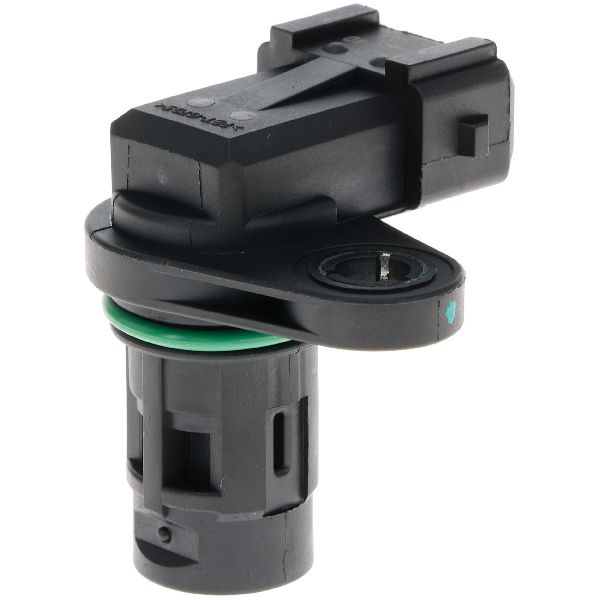
Typical fix: Replace the intake camshaft position sensor ('A'). It is held by a single 10mm bolt and is easily accessible on top of the engine's valve cover.
Est. part cost: $25-$95 - Wiring Harness or Connector Issue 🟡 Medium Probability The engine cover and high heat can cause wiring to become brittle and crack over time. Oil leaks from the valve cover are common and can saturate the electrical connector, disrupting the signal.
How to confirm: Visually inspect the wiring leading to the sensor for any signs of fraying, melting, or damage. Unplug the connector and check for corrosion, oil, or bent pins.
Typical fix: Clean the connector with electrical contact cleaner. If wiring is damaged, repair the specific wires. In severe cases, the connector pigtail may need to be replaced.
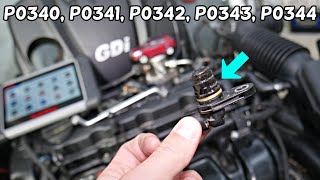
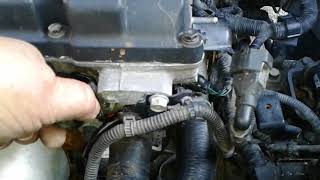
Est. part cost: $5-$30 - Low or Dirty Engine Oil 🟡 Medium Probability The CVVT (Continuous Variable Valve Timing) system uses oil pressure to adjust cam timing. If the oil level is low or the oil is degraded and sludgy, the camshaft phaser may not react as commanded by the ECM. The ECM sees this discrepancy between the desired and actual cam position (via the sensor) 🎬 See this breakdown of common causes for the P0341 code. and flags the P0341 performance code.
How to confirm: Check the engine oil level and condition using the dipstick. If the oil is very low or appears dark and sludgy, this is a likely contributing factor.
Typical fix: Perform an oil and filter change using the correct viscosity oil specified for your engine. Clear codes and re-test.
Est. part cost: $40-$70 - Failing Oil Control Valve (OCV) ⚪ Low Probability The OCV is the solenoid that directs oil flow to the CVVT gear. It can become clogged with sludge or fail electrically, preventing proper camshaft timing adjustments. This is a known issue on other Hyundai models with similar engines.
How to confirm: The OCV can be tested with a multimeter for proper resistance or by applying 12V to see if the solenoid actuates. Often, inspection will reveal sludge on the internal screens.
Typical fix: Replace the intake bank Oil Control Valve. It is also typically located on the valve cover and held in by one bolt.
Est. part cost: $50-$120
Rare But Worth Checking
- Stretched Timing Chain or Failing Tensioner: → Shop Engine Timing Chain This is a more serious mechanical issue. It would typically be accompanied by other timing correlation codes (like P0016) or rattling noises from the engine, especially on startup. A Reddit user with a 2013 Elantra (similar engine) reported P0341 and P0016 together, pointing to a timing chain issue after replacing sensors.
- Damaged Camshaft Reluctor Wheel: → Shop Engine Camshaft The reluctor wheel (a toothed ring on the camshaft) is what the sensor reads. If it's damaged, has slipped, or is covered in metallic debris, the signal will be incorrect. This is very rare and usually only occurs during major engine work or severe engine failure.
- Failing ECM: An internal fault in the Engine Control Module is extremely rare but possible. All other potential causes, including all wiring and mechanical components, should be exhaustively ruled out first.
Diagnosis Steps
- Read all stored fault codes with an OBD-II scanner. Note any other codes that are present, especially P0340, P0016, or P1326.
- Check the engine oil level and condition. If low, top off. If dark, sludgy, or past its service interval, perform an oil and filter change. This is a critical and inexpensive first step.
- Locate the intake camshaft position sensor ('A') on top of the valve cover. It is typically held in by one 10mm bolt.
- Disconnect and inspect the electrical connector for oil contamination, corrosion, or bent pins. Clean with electrical contact cleaner if any issues are found.
- Inspect the wiring harness leading to the sensor for any visible signs of damage, melting, or fraying.
- If wiring looks good and the oil is clean, the most common fix is to replace the camshaft position sensor. After replacing, clear the codes and perform a test drive.
- If the code returns, consider testing or replacing the Oil Control Valve (OCV) for the intake camshaft, as it can get stuck or clogged.
- If the code persists, advanced diagnostics are needed. This includes using a multimeter to check for 5V reference, ground, and signal at the sensor connector. An oscilloscope is the best tool to verify the actual signal pattern from the sensor.
- If all sensor and wiring tests pass, the issue is likely mechanical. This requires a professional inspection of the timing chain, tensioners, and CVVT phasers.
Parts You'll Likely Need
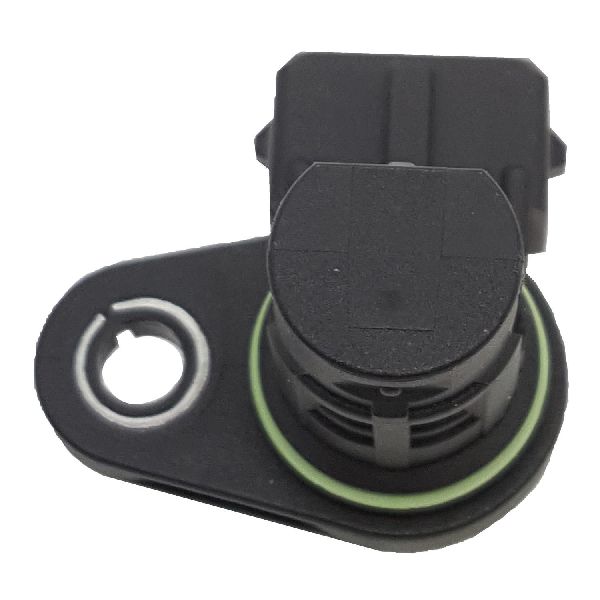
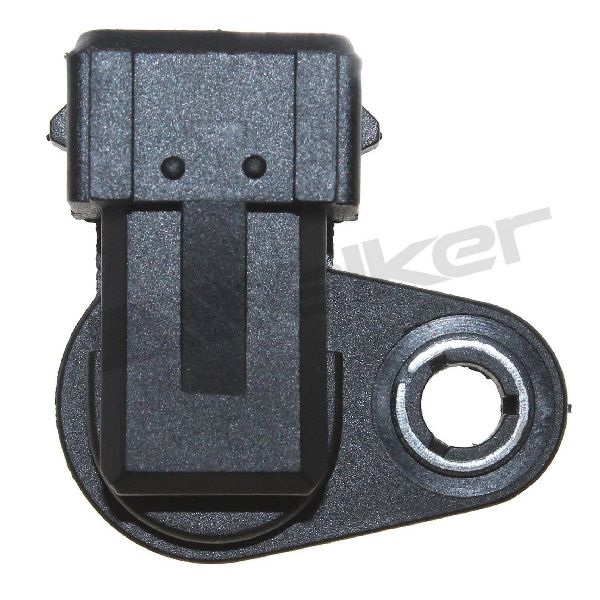
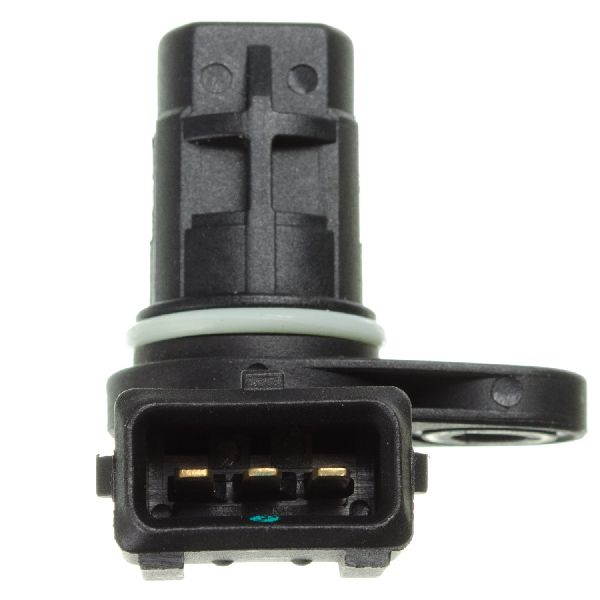
- Camshaft Position Sensor (Intake)
(OEM #39350-2G000 (For 2.0L Nu) / 39350-2E600 (Possible alternative, verify with VIN))— This is the most common part to fail and trigger the P0341 code.
Trusted brands: Hyundai (OEM), Bosch, Delphi, Duralast, NTK/NGK
OEM price range: $68-$95
Aftermarket price range: $25-$60
Related Codes That Often Appear With This One
- P0340 — P0340 indicates a general circuit malfunction (e.g., no signal), while P0341 indicates a performance problem (e.g., irrational signal). They often appear together if the sensor is failing completely or has a severe wiring issue.
- P1326 — On many Hyundai/Kia vehicles, P1326 is related to the Knock Sensor Detection System (KSDS), which was part of a software update campaign to detect premature engine bearing wear. Severe engine wear issues that trigger P1326 can also affect timing and potentially cause P0341 as a secondary fault.
- P0016 — This code indicates a direct correlation issue between the crankshaft and camshaft. If seen with P0341, it strongly suggests a base mechanical timing problem, such as a stretched timing chain or a failing tensioner, rather than just a sensor issue.
Technical Service Bulletins (TSBs) & Recalls
- TSB 21-AT-014H: Addresses judder in the 7-speed DCT for 2016-2018 1.6T models, involving a TCU software update. While not directly for P0341, it highlights the known electronic control issues in the platform.
- TSB 16-01-038-1 (Recall 149): A DCT control logic update for 2016 Tucsons to fix delayed engagement, another example of powertrain software refinements for this generation.
- TSB 22-01-023H-2: Pertains to the Check Engine light with DTC P1326 due to connecting rod bearing wear, a severe issue that can be linked with other performance codes like P0341.
Platform-Specific Known Issues
- Oil Contamination of Sensor: A Reddit user with a 2019 Tucson noted finding oil on both camshaft sensors when this code appeared, suggesting a possible valve cover gasket leak as a contributing factor. Another user confirmed replacing the sensor fixed the issue.
- Recall Campaign 209 / TSB for P1326: Recall Campaign 209 was issued for some 2017 Tucson 2.0L engines for premature bearing wear. While not a direct cause, a mechanically unhealthy engine can lead to various performance codes. Hyundai also issued TSBs (e.g., 22-01-023H-2) and a software update (KSDS) to detect bearing failure, which logs code P1326. The root cause of bearing failure can also affect timing and trigger P0341.
- title: Intermittent
Mechanic-Grade Diagnostic Values
- Oil Control Valve (OCV) Coil Resistance — expected: 6.9 - 7.9 Ω at 20°C (68°F). Failure: A reading outside this range indicates a faulty solenoid coil.
- Camshaft Position Sensor (CMP) Signal Voltage (Hall-effect type) — expected: Digital signal switching between approximately 0V and 5V.. Failure: A signal that is stuck high (5V), stuck low (0V), or shows a weak/erratic pattern on an oscilloscope.
- Camshaft Position Sensor (CMP) Power Supply — expected: 5V reference voltage at the sensor connector with key on, engine off.. Failure: No voltage or significantly lower voltage indicates a wiring or ECM issue.
Scan Tool Commands That Help
- Hyundai GDS (Global Diagnostic System) or equivalent professional scanner: CVVT Actuation Test — This bidirectional command allows the technician to manually activate the Oil Control Valve (OCV) to verify its mechanical operation. It helps determine if the OCV is stuck or responding sluggishly, which can cause a P0341 performance code.
- Hyundai GDS or advanced aftermarket scanner: Cam Sensor Relearn / Adaptive Values Reset — After replacing a camshaft position sensor, some Hyundai models may require a relearn procedure for the ECM to adapt to the new sensor's specific signal characteristics. Failure to do so can sometimes cause the code to return even with a good part.
Wiring & Ground Locations
- Engine Ground Cable — A primary ground cable for the engine wiring harness is located on top of the transmission, underneath the battery tray.. A poor or corroded engine ground can introduce electrical noise and voltage drops, affecting the signals from sensitive sensors like the camshaft position sensor, potentially leading to a range/performance code.
- CMP Sensor Connector (Intake) — On the top of the valve cover, typically toward the passenger side on the 2.0L engine. The connector has three pins.. This is the direct connection point for the sensor. The pins are for power (5V), ground, and signal. Testing voltage and signal integrity at these pins is a core diagnostic step.
Real Owner Repair Stories
- Reddit user in /r/MechanicAdvice (2018 Hyundai Tucson) — Check engine light came on with code P0341, but the car was running fine with no noticeable symptoms. The light would turn off and on intermittently over a period of weeks.
❌ Tried (didn't work) A shop recommended spark plugs, wires, and fuel injector cleaning, but this was not directly related to the final cause.
✅ What actually fixed it The user's post highlights the intermittent nature of a failing sensor. While a definitive fix wasn't posted by the original author, the behavior is classic for an early-stage sensor failure where the signal becomes erratic before failing completely. The common resolution for this scenario is replacing the camshaft position sensor.
OEM Part Supersession History
39350-2G000→Check with dealer, may have newer revisions.— Standard part updates for reliability or manufacturing changes.
Heads up: The part number 39350-2E600 is listed for some 2.0L Hybrid models (like the Sonata) and may not be compatible with the Tucson's 2.0L GDI or 1.6L Turbo GDI engines. Always verify the correct part number with the vehicle's VIN.
Diagnostic Flowchart
Other Known Issues on This Vehicle
Issues unrelated to this code that are worth knowing about as an owner of this generation:
- Engine Failure & Excessive Oil Consumption 🔴 High — Widespread on 2.0L Nu and 2.4L Theta II engines. Subject of multiple recalls (e.g., Recall 162, 209) and a KSDS software update (P1326 code) to detect bearing wear. (Ref: Recall 162, Recall 209, TSB 22-01-023H-2)
- 7-Speed Dual-Clutch Transmission (DCT) Hesitation and Failure 🔴 High — Very common on 1.6L Turbo models. Symptoms include hesitation from a stop, juddering at low speeds, and complete failure to engage gears. (Ref: TSB 21-AT-014H, Recall 149 (TSB 16-01-038-1))
- ABS Module Fire Risk 🔴 High — Affects many 2015-2021 models. An internal short circuit in the ABS module can occur even when the vehicle is off, posing a fire risk. (Ref: Recall R/2021/035)
- Paint Peeling (Especially White) 🟡 Low — Common complaint where the paint, particularly on white vehicles, bubbles and peels off in large sheets. This is a known issue across many Hyundai models of this era.
Used vs. New Parts: Buying Guide for This Vehicle
When a used part is the smart pick: For this repair, buying a used part is generally not recommended. The camshaft position sensor is an inexpensive electronic component that is a common failure item. The cost savings of a used sensor are minimal and not worth the risk of receiving a part that is already near the end of its service life.
Donor-vehicle mileage cap: roughly under 40000 miles for the part to have meaningful remaining life.
What to inspect on the donor part:
- If buying used is unavoidable, ensure the part comes from a low-mileage, collision-damaged vehicle rather than one scrapped for engine failure.
- Inspect the plastic housing for any signs of cracking or brittleness from heat exposure.
- Check the electrical connector pins for any corrosion or oil residue.
OEM-only on this vehicle (don't cheap out):
- While not strictly 'OEM-only', using an OEM (Hyundai) or a reputable OE-supplier (like Bosch, Delphi, NTK) sensor is highly recommended. Cheap, unbranded aftermarket sensors are known to have a high failure rate, sometimes being dead-on-arrival or failing within a few months.
Aftermarket brands forum-validated for this vehicle:
- Bosch
- Delphi
- NTK/NGK
- Duralast (from AutoZone)
Brands owners have reported issues with on this vehicle:
- Unbranded sensors from online marketplaces (e.g., eBay, Amazon) that are priced significantly lower than reputable brands.
Real Owner Stories
Aggregated from forums and TSBs cited above. Mileages and costs reflect what owners reported in those sources.
2019 Hyundai Tucson
Symptoms: Found oil on both camshaft sensors when the code appeared.
What fixed it: Replacing the bad sensor resolved the P0341 code.
Source hint: Reddit r/MechanicAdvice - 2019 Tucson P0341
2018 Hyundai Tucson
Symptoms: Intermittent P0341 code that comes and goes without any noticeable symptoms.
What fixed it: The source describes it as an intermittent issue that may not always present immediate driveability problems.
Source hint: Reddit r/MechanicAdvice - P0341 but no issues?
Related OBD-II Codes
Frequently Asked Questions
I have a 2017 Tucson 2.0L with P0341; could this be related to the engine bearing recall?
My 2019 Tucson has oil on the camshaft sensor connector. Is this common?
Can a software update fix the issues related to P0341 on my 2016 Tucson?
Is the Oil Control Valve (OCV) a likely culprit for P0341 on the Tucson?
Does the 7-speed DCT judder TSB 21-AT-014H have anything to do with my camshaft code?
Helpful Videos

We Have This Part in Stock


The information in this article is provided for general reference and educational purposes only. Vehicle specifications, procedures, and part compatibility can vary by production date, trim level, and region. Always consult your vehicle's factory service manual and verify part numbers before purchasing or performing repairs. Safety-critical components such as airbags, seat belts, and braking systems should be installed by a qualified professional.
- Hyundai Tucson:
- 🧭 Diagnostic Flowchart
- 🎬 Helpful Videos
- 🛍️ Shop This Part
- What's Unique About the 2016-2021 Hyundai Tucson
- Symptoms You May Notice
- Most Likely Causes
- Rare But Worth Checking
- Diagnosis Steps
- Parts You'll Likely Need
- Related Codes That Often Appear With This One
- Technical Service Bulletins (TSBs) & Recalls
- Platform-Specific Known Issues
- Mechanic-Grade Diagnostic Values
- Scan Tool Commands That Help
- Wiring & Ground Locations
- Real Owner Repair Stories
- OEM Part Supersession History
- Other Known Issues on This Vehicle
- Used vs. New Parts: Buying Guide for This Vehicle
- Real Owner Stories
- 2019 Hyundai Tucson
- 2018 Hyundai Tucson
- Related OBD-II Codes
- Frequently Asked Questions
- 🎟️ Get 5% Off