

P0344 on 2002-2008 Dodge Ram 1500 4.7L: Intermittent Cam Sensor Causes and Fixes
This code usually means the camshaft position sensor is failing or its wiring is damaged. On the 4.7L V8, this often causes stalling, a long crank, or a no-start condition. Replacing the sensor with a quality OEM Mopar part is the most common fix, costing around $40-$80 for the part. Aftermarket sensors are a frequent cause of repeat failures.
- P0344 on the 4.7L Ram almost always points to a bad camshaft position sensor or its wiring.
- Do not use a cheap, generic sensor. Spend the extra money on a Mopar OEM part or a top-tier brand to avoid having the code return.
- Before replacing the sensor, always inspect the connector and wiring for visible damage, as this is a common and cheaper fix.
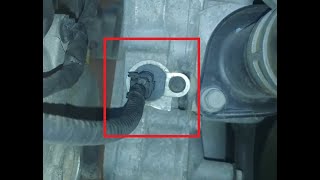
- The sensor is easy to access and replace; it's on the front of the passenger-side cylinder head, held by one 10mm bolt.
What's Unique About the 2002-2008 Dodge Ram 1500
For the 3rd Generation Ram with the 4.7L 'PowerTech' V8, the P0344 code is a straightforward issue that is almost always electrical, not mechanical. Unlike the 5.7L HEMI engine available in the same truck (which can trigger this code due to low/incorrect oil viscosity affecting its VVT system), this code on the 4.7L is not typically related to oil level or complex Variable Valve Timing (VVT) systems. The most common owner complaints involve replacing the sensor multiple times, highlighting the engine's sensitivity to aftermarket sensor quality. Using a Mopar or high-quality OEM-equivalent sensor is critical to fixing this problem permanently.
Generation note: This guide covers the entire third generation (DR) of the Dodge Ram 1500 (2002-2008). A facelift occurred in 2006, but it did not significantly alter the 4.7L engine or the location and function of the camshaft position sensor. The 4.7L PowerTech engine was used in the Ram 1500 until the 2013 model year. A key difference within this generation is the switch from a JTEC (3-plug) to an NGC (4-plug) Powertrain Control Module (PCM) around the 2002-2003 model years, which also changed the camshaft and crankshaft tone wheels.
Symptoms You May Notice
- Engine stalls, sometimes suddenly while driving, when coming to a stop, or when the engine gets hot.
- Engine cranks for a long time before starting, or fails to start at all.
- Rough or erratic idle.
- Hesitation or stumbling during acceleration.
- Engine may refuse to rev past a certain limit, like 2500 RPM (limp mode).
- Flashing or solid Check Engine Light.
- Sudden engine shut-off when accelerating hard or exceeding a certain RPM (e.g., 4500 RPM), which then immediately restarts.
- Replacing the sensor with a low-quality aftermarket part. Many owners report the P0344 code returning shortly after, mistakenly believing the cause is something else when it's actually the poor quality of the new sensor.
- Replacing the Crankshaft Position Sensor. While these sensors can fail and cause similar no-start or stalling symptoms, P0344 specifically points to the camshaft sensor circuit. However, a service manual notes that an intermittent crank sensor can sometimes cause a P0344 to set.
Most Likely Causes
- Failing Camshaft Position Sensor 🔴 High Probability → Shop Engine Camshaft Position Sensor The sensor is located in a high-heat area on the front of the passenger-side cylinder head, leading to eventual electronic failure. This platform is notoriously sensitive to the quality of this sensor, with many owners reporting that cheap aftermarket parts fail quickly or don't work at all. Oil from a leaking valve cover gasket can also saturate the sensor and its connector, potentially causing failure.
How to confirm: After confirming the wiring is intact, replacing the sensor is the most direct way to confirm. If a new, high-quality sensor resolves the symptoms and the code does not return, the old sensor was faulty. A failing sensor may also show erratic voltage when tested with a multimeter as it heats up; for example, it might get stuck at a low voltage (e.g., 0.5V) regardless of the camshaft's position.
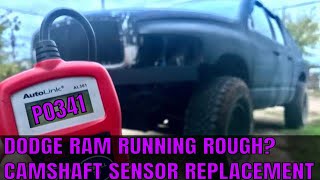
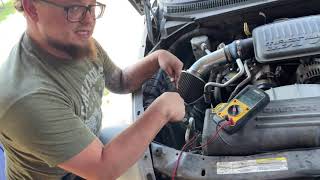
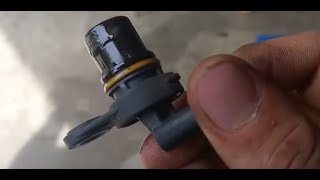
Typical fix: Replace the camshaft position sensor with a new OEM (Mopar) or top-tier aftermarket part (e.g., NGK/NTK). The sensor is held by a single 10mm bolt. 🎬 Watch this step-by-step guide to replacing the sensor yourself. Ensure the O-ring is lubricated before installation to prevent damage.
Est. part cost: $30-$80 - Damaged Wiring or Connector 🟡 Medium Probability The wiring harness runs through a hot and vibration-prone engine bay. Wires can become chafed, brittle, or break internally over time. The connector pigtail can also become corroded, filled with oil/grime, or have loose pins.
How to confirm: Visually inspect the entire harness leading to the sensor for cracks, chafing, or melting. Unplug the connector and check for corrosion or pushed-out pins. With the key on, use a multimeter to verify you have a 5-volt supply, a good ground, and a signal wire that also shows 5 volts. Wiggling the harness with the engine running may cause it to stumble or stall, confirming an intermittent connection.
Typical fix: Repair the damaged section of wire or replace the connector pigtail. Ensure the repaired harness is secured away from heat and moving parts. Clean any oil or corrosion out of the connector with electrical cleaner.
Est. part cost: $15-$30 for a pigtail
Rare But Worth Checking
- Damaged Camshaft Tone Ring: → Shop Engine Camshaft While uncommon, the toothed ring on the camshaft that the sensor reads can become damaged, loose, or have debris (like metal shavings) stuck to it, disrupting the signal. This is a mechanical failure inside the engine and is much more labor-intensive to inspect. This is usually only suspected after multiple high-quality sensors and a verified wiring harness fail to solve the problem.
- Faulty Powertrain Control Module (PCM): → Shop Engine Control Module (ECM) In very rare cases, the internal circuitry of the PCM that processes the cam sensor signal can fail. This should be considered the last resort after all other possibilities have been exhaustively ruled out by a professional, typically involving scoping the signal at the PCM connector.
Diagnosis Steps
- Read the trouble codes with an OBD-II scanner and note any other codes present, especially P0340 or P0016.
- Visually inspect the camshaft position sensor, its connector, and the wiring harness leading back to the main loom. Look for obvious signs of damage, such as melted plastic, chafed wires, oil saturation, or green corrosion in the connector.
- The sensor is located on the front of the passenger-side cylinder head, accessible from the wheel well or from underneath the truck.
- With the engine running, carefully wiggle the wiring harness for the sensor to see if it causes the engine to stumble or stall, which would indicate an intermittent break in the wire.
- Disconnect the sensor. With the ignition key in the 'ON' position (engine off), use a multimeter to test the connector terminals. You should find a 5-volt supply wire, a ground wire (check for continuity to chassis ground), and a signal wire that should also read 5 volts.
- If the wiring and connector check out, the most likely cause is the sensor itself. Remove the 10mm bolt and pull/twist the sensor out. Inspect the sensor tip for metal debris and the tone wheel inside the engine for visible damage.
- Replace the sensor with an OEM Mopar part or a reputable aftermarket brand like NGK/NTK. Lubricate the new O-ring before installation.
- Clear the codes and perform a test drive. If the code returns, the issue may be more complex, such as a damaged tone ring or a PCM fault, and may require professional diagnosis with an oscilloscope.
Parts You'll Likely Need
- Camshaft Position Sensor
(OEM #56041584AF)— This sensor is the most common failure point for code P0344 on this engine due to heat and electronic wear. Quality is critical.
Trusted brands: Mopar, NGK/NTK, Delphi, Standard Motor Products
OEM price range: $60-$80
Aftermarket price range: $30-$55
Related Codes That Often Appear With This One
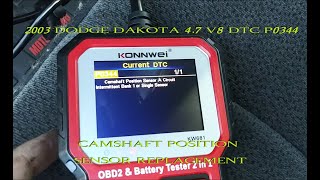
- P0340 — P0340 is a general 'Camshaft Position Sensor Circuit Malfunction' code. P0344 is more specific, indicating the fault is intermittent. 🎬 Watch a breakdown of common causes for the P0344 code. They often appear together as a sensor or wiring issue develops or worsens.
- P0016 — This code indicates a 'Crankshaft/Camshaft Timing Misalignment'. If you see P0016 along with P0344, it points to a more serious mechanical issue like a stretched timing chain, a problem with the tone wheel, or even mismatched engine components from a previous repair, rather than just a bad sensor.
Technical Service Bulletins (TSBs) & Recalls
- 18-015-09 (Mentioned in forums, but research shows it is not applicable to the 4.7L V8 for this issue).
- TSB Bulletin #68080819A notes that if replacing a camshaft position sensor for P0340 and/or P0344 fault codes, specific manufacturer review of the diagnostic information may be required.
- TSB Bulletin #05149141A also addresses the replacement of the camshaft position sensor when fault codes P0340 or P0344 are present, indicating ongoing manufacturer monitoring of these specific sensor failures.
Platform-Specific Known Issues
- A TSB (18-015-09) was issued for some Dodge vehicles regarding a PCM reflash for a P0344 code, however, searches for this TSB show it applies to diesel engines or other unrelated issues and is not the solution for the 4.7L V8.
- Owners repeatedly report that using non-OEM sensors leads to the code returning within a short period, from days to a few thousand miles. This often leads to unnecessary replacement of other parts before circling back to a faulty aftermarket sensor.
Mechanic-Grade Diagnostic Values
- Camshaft Position Sensor (CMP) Connector - Supply Voltage — expected: 4.5 to 5.2 volts. Failure: Voltage below 4.5V or above 5.2V indicates an issue with the PCM or wiring.
- Camshaft Position Sensor (CMP) Connector - Ground Circuit — expected: Continuity to ground with less than 5.0 ohms of resistance.. Failure: High or infinite resistance indicates an open or poor ground connection.
- Camshaft Position Sensor (CMP) Connector - Signal Circuit (Key On, Engine Off) — expected: Approximately 5.0 volts (bias voltage from PCM).. Failure: 0 volts or significantly lower voltage could indicate a short to ground in the signal wire.
- Camshaft Position Sensor (CMP) - Bench Test — expected: With the sensor plugged in but removed from the engine, the signal wire should read ~5V. When the tip of the sensor is touched to a ground source, the voltage should drop to 0V.. Failure: If the voltage does not switch from 5V to 0V when grounded, or if it gets stuck at an intermediate voltage (e.g., 0.5V) especially when hot, the sensor is faulty.
Scan Tool Commands That Help
- Lab Scope: Signal Waveform Analysis — To visually inspect the digital square wave pattern from the camshaft position sensor while the engine is running. This is the definitive way to spot intermittent signal dropouts, noise, or a complete loss of signal that a multimeter would miss.
Wiring & Ground Locations
- Main Engine Ground Strap — Connects from the passenger-side cylinder head to the firewall or chassis, often near the battery tray.. A corroded or loose main engine ground can cause a floating ground, leading to erratic voltage readings across multiple sensors, including the camshaft position sensor. This can mimic sensor failure and cause intermittent codes like P0344.
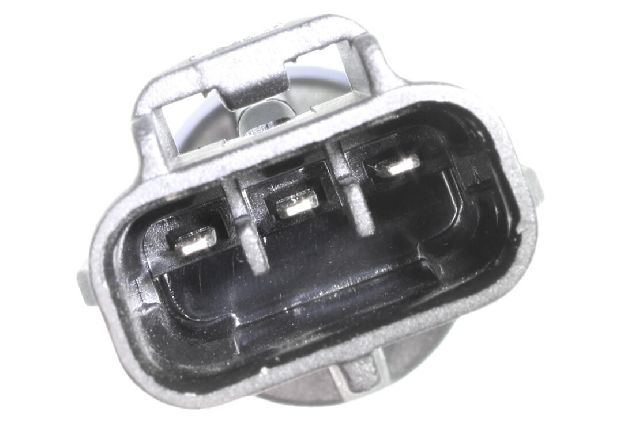
- Camshaft Position Sensor Connector Pin 1 — Connector at the sensor on the passenger side cylinder head.. This is the 5-volt supply circuit from the PCM, designated as (F856) in some service manuals. Verifying 4.5-5.2V here is the first step in confirming the circuit has power.
- Camshaft Position Sensor Connector Pin 2 — Connector at the sensor on the passenger side cylinder head.. This is the signal circuit wire back to the PCM, designated as (K44) in some service manuals. This wire carries the square wave signal that the PCM reads.
- Camshaft Position Sensor Connector Pin 3 — Connector at the sensor on the passenger side cylinder head.. This is the sensor ground circuit. A poor connection here will prevent the sensor from working correctly.
Real Owner Repair Stories
- Reddit user on r/AskAMechanic (2007 Dodge Ram 1500 4.7L) — Persistent P0344 code for over a year, engine performance issues.
❌ Tried (didn't work) Replacing the camshaft position sensor multiple times, Replacing the crankshaft position sensor, Replacing coil packs and spark plugs
✅ What actually fixed it A responding technician suggested the likely cause was a damaged or loose tone wheel on the camshaft, a mechanical failure requiring inspection inside the engine. - Reddit user on r/DodgeDakota (2003 Dodge Dakota 4.7L) — Timing issues, poor running.
❌ Tried (didn't work) Using aftermarket crank and cam sensors.
✅ What actually fixed it Replacing the aftermarket sensors with genuine Mopar sensors resolved the timing issues and made the engine run much better.
OEM Part Supersession History
56028133AD, 56028133AE, 56041584AC, 56041584AE→56041584AF— Standard part revision and consolidation by the manufacturer.
Heads up: While the sensors are physically interchangeable, forum and mechanic consensus strongly advises against using aftermarket versions on this platform due to high failure rates. Sticking with the latest Mopar revision is the most reliable fix.
Model Year Variations Within This Range
- 2002-2003 (Transition Years): Chrysler switched from the JTEC (Jeep/Truck Engine Controller) PCM with 3 plugs to the NGC (Next Generation Controller) PCM with 4 plugs. This change also required different tone wheels on the crankshaft (16-tooth for JTEC, 32-tooth for NGC) and camshaft. A 2002 model could have either system, making it critical to verify by checking the PCM connectors before swapping an engine or PCM.
Diagnostic Flowchart
Other Known Issues on This Vehicle
Issues unrelated to this code that are worth knowing about as an owner of this generation:
- Engine Sludge Buildup 🔴 High — Common at higher mileage, especially if oil change intervals are extended past 5,000-8,000km. The long oil filler neck can also contribute to moisture buildup.
- Cracked/Warped Exhaust Manifold Bolts 🟠 Medium — A frequent problem causing a ticking noise on cold starts that may go away as the engine warms up.
- Cracked Plastic Dashboard 🟡 Low — Extremely common across this generation of Ram. The dashboard material becomes brittle and large cracks and chunks can break off over time.
- Transmission Solenoid Pack Failure (545RFE) 🟠 Medium — Can cause shifting issues, hesitation, or transmission-related codes. It's a common wear item on the 545RFE transmission paired with this engine.
- Front Wheel Bearing Failure 🟠 Medium — Notorious for premature front wheel bearing wear, sometimes requiring replacement as early as 75,000 miles, and often multiple times before 100,000 miles. (Ref: A recall was issued for certain aftermarket Federal-Mogul replacement hubs, but the core issue of wear is widespread.)
- Timing Chain Guide Failure 🔴 High → Shop Engine Timing Chain — Less common than other issues but severe when it occurs. The plastic timing chain guides can break, causing chain chatter and potentially catastrophic engine damage if not addressed. Proper oil maintenance helps mitigate this.
Used vs. New Parts: Buying Guide for This Vehicle
When a used part is the smart pick: For this repair, used parts are generally not recommended for the sensor itself. However, sourcing a used wiring harness pigtail from a junkyard is a viable option if your connector is damaged and a new pigtail is unavailable. A used OEM PCM could also be an option as a last resort, but it must match your vehicle's year, engine, and transmission, and specifically the PCM type (JTEC or NGC).
Donor-vehicle mileage cap: roughly under 120000 miles for the part to have meaningful remaining life.
What to inspect on the donor part:
- For a wiring pigtail, inspect for any signs of cracking, melting, or brittle insulation. Ensure the connector's locking tab is intact and the terminals are clean and not corroded.
- For a PCM, check the donor vehicle's VIN to ensure it matches the JTEC/NGC configuration of your truck. Inspect the PCM case for physical damage or signs of water intrusion.
OEM-only on this vehicle (don't cheap out):
- Camshaft Position Sensor: Due to the engine's extreme sensitivity, only a new OEM Mopar sensor is recommended to ensure a lasting repair.
Aftermarket brands forum-validated for this vehicle:
- NGK/NTK is often cited as a reliable alternative if an OEM Mopar part is not available.
Brands owners have reported issues with on this vehicle:
- Generic, unbranded, or 'white-box' parts store sensors have a very high rate of premature failure or being dead-on-arrival for this specific application, according to numerous owner reports.
Real Owner Stories
Aggregated from forums and TSBs cited above. Mileages and costs reflect what owners reported in those sources.
2002-2008 Dodge Ram 1500 4.7L V8
Symptoms: The engine was dying when revved above 4500 RPM and was throwing code P0344.
What fixed it: The community suspected a cheap aftermarket sensor was the cause and recommended replacing it with an OEM part.
Source hint: RamForum.com: 'Problem with engine stumbling'
2002-2008 Dodge Ram 1500 4.7L V8
Symptoms: The truck was stalling and had codes P0340 and P0344. The problem returned two weeks after replacing both cam and crank sensors with aftermarket parts.
What fixed it: The forum response stressed the need to use factory Mopar sensors, as aftermarket versions are often unreliable for this platform.
Source hint: DodgeForum.com: 'P0340, P0344 and stalling'
2007 Dodge Ram 1500 4.7L 4x4
Symptoms: The owner was unable to get rid of code P0344, even after replacing the sensor multiple times over the course of a year.
What fixed it: A technician suggested that after multiple failed sensor swaps, the next logical step was to inspect the camshaft tone wheel for mechanical damage, which is a rare but possible cause.
Source hint: Reddit r/AskAMechanic: 'cant get rid of p0344. 07 dodge ram 1500 4.7l 4x4'
Related OBD-II Codes
Frequently Asked Questions
I saw a TSB (18-015-09) mentioned for P0344. Does this apply to my 4.7L V8 Ram?
Can I use a cheaper aftermarket camshaft position sensor to fix my 2005 Dodge Ram 4.7L?
Where is the camshaft position sensor located on the 4.7L V8 engine?
My truck stalls when I accelerate hard or rev it past 4500 RPM. Is this a symptom of P0344?
Could a leaking valve cover gasket be related to my P0344 code?
What should I check first if I suspect a wiring issue is causing the P0344 code?
Do other vehicles with the 4.7L V8 have this same P0344 sensor problem?
Helpful Videos
We Have This Part in Stock


The information in this article is provided for general reference and educational purposes only. Vehicle specifications, procedures, and part compatibility can vary by production date, trim level, and region. Always consult your vehicle's factory service manual and verify part numbers before purchasing or performing repairs. Safety-critical components such as airbags, seat belts, and braking systems should be installed by a qualified professional.
- Dodge Ram 1500:
- 🧭 Diagnostic Flowchart
- 🎬 Helpful Videos
- 🛍️ Shop This Part
- What's Unique About the 2002-2008 Dodge Ram 1500
- Symptoms You May Notice
- Most Likely Causes
- Rare But Worth Checking
- Diagnosis Steps
- Parts You'll Likely Need
- Related Codes That Often Appear With This One
- Technical Service Bulletins (TSBs) & Recalls
- Platform-Specific Known Issues
- Mechanic-Grade Diagnostic Values
- Scan Tool Commands That Help
- Wiring & Ground Locations
- Real Owner Repair Stories
- OEM Part Supersession History
- Model Year Variations Within This Range
- Other Known Issues on This Vehicle
- Used vs. New Parts: Buying Guide for This Vehicle
- Real Owner Stories
- 2002-2008 Dodge Ram 1500 4.7L V8
- 2002-2008 Dodge Ram 1500 4.7L V8
- 2007 Dodge Ram 1500 4.7L 4x4
- Related OBD-II Codes
- Frequently Asked Questions
- 🎟️ Get 5% Off