

P0345 on 2019-2024 Audi A6 3.0T: Bank 2 Cam Sensor Causes and Fixes
P0345 on a C8 Audi A6 3.0T indicates a fault with the intake camshaft position sensor on the driver's side (Bank 2). The most common fix is replacing the sensor itself (~$70-$150 for the part). However, listen carefully for a rhythmic ticking noise, as this code can be an early symptom of a much more serious rocker arm bearing failure, a known issue in the EA839 engine family. Ignoring this ticking can lead to catastrophic engine failure.
- P0345 points to the intake cam sensor on the driver's side.
- Before replacing any parts, listen carefully for a loud, rhythmic ticking from the engine. This sound points to a serious rocker arm failure that requires immediate professional repair.
- If no ticking is present, the most likely fix is a new camshaft position sensor, which is a DIY-friendly job.
- A good diagnostic step is to swap the driver's side and passenger side intake cam sensors to see if the fault code follows the sensor.
- Always use a quality OEM or OEM-supplier brand like Bosch or Continental for critical engine sensors to ensure reliability.
What's Unique About the 2019-2024 Audi A6
The DCBD engine in this A6 is part of the EA839 engine family co-developed with Porsche. While a P0345 code is often just a bad sensor, on this specific platform it can be an early warning of a significant mechanical issue. These engines, particularly earlier 2017-2019 models, are known for premature rocker arm bearing failure. When the needle bearings in a rocker arm fail, they can fall into the engine, and the rocker itself can damage the camshaft lobe or even the reluctor wheel that the sensor reads. This disruption triggers the P0345 code. In some cases, the magnetic tip of the camshaft position sensor will attract the metallic debris from the failed bearing, causing the signal fault. Therefore, diagnosis must include listening for a distinct ticking sound from the top of the engine that increases with RPM.
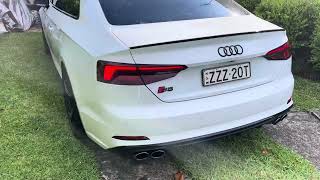
🎬 Watch: Hear what a healthy EA839 engine should sound like.Symptoms You May Notice
- Check Engine Light is on
- Engine is difficult to start or requires long cranking
- Engine stalls or idles roughly
- Noticeable loss of power and sluggish acceleration
- Reduced fuel economy
- Engine misfires
- Loud, rhythmic ticking/tapping noise from the top of the engine that increases with RPM (indicates rocker arm failure)
- Replacing the camshaft position sensor without listening for a ticking noise. If the underlying cause is a failing rocker arm, a new sensor is a wasted expense as the root mechanical problem will remain and cause further damage.
Most Likely Causes
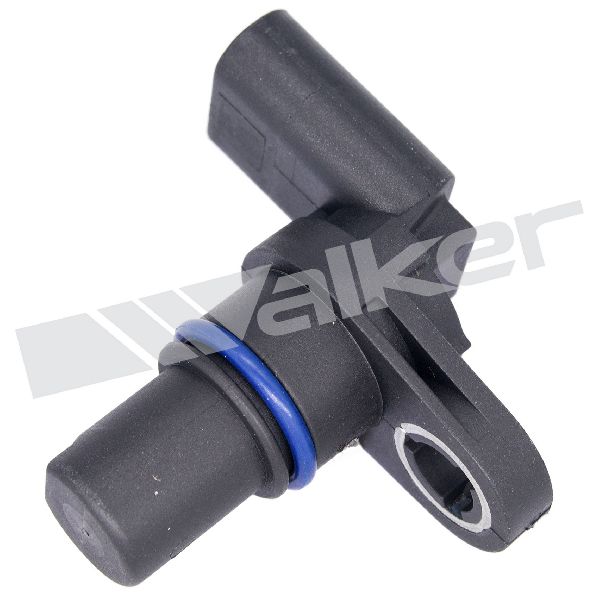
- Failed Camshaft Position Sensor 🔴 High Probability → Shop Engine Camshaft Position Sensor Sensors are electronic components that operate in a high-heat environment and can fail over time. They are a common failure point on most modern vehicles.
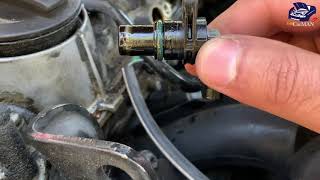
How to confirm: After checking the wiring for 5V power, the easiest test is to swap the Bank 2 (driver's side) intake sensor with the Bank 1 (passenger's side) intake sensor. If the code changes to P0340 (Bank 1), the sensor is confirmed bad. This is a standard diagnostic procedure. 🎬 Watch: A general guide on how to replace the sensor.
Typical fix: Replace the faulty camshaft position sensor and its O-ring.
Est. part cost: $70-$150 - Damaged Wiring or Connector 🟡 Medium Probability Engine bay heat can make plastic connectors and wire insulation brittle over time, leading to cracks or loose connections. On older Audi models, it was common for similar-looking connectors to be swapped by mistake during other repairs, a possibility to consider if work was recently performed.
How to confirm: Visually inspect the wiring harness and the connector for the Bank 2 intake cam sensor. Check for frayed wires, corrosion in the pins, or a loose-fitting connector. Use a multimeter to confirm 5V power and ground at the connector.
Typical fix: Repair the damaged section of wiring or replace the connector pigtail.
Est. part cost: $15-$50
Rare But Worth Checking
- Rocker Arm Bearing Failure / Damaged Camshaft Lobe: → Shop Engine Camshaft This is a known, serious issue on the EA839 engine family. A failing rocker arm will damage the camshaft lobe it rides on. The primary symptom is a loud, rhythmic ticking noise from the top of the engine that increases with RPM. If you hear this, stop driving immediately. Replacing only the sensor will not fix the problem, and continued operation will destroy the engine.
- Damaged Camshaft Reluctor Wheel: → Shop Engine Camshaft In a severe rocker arm failure, the loose rocker can physically strike and break the reluctor wheel (tone ring) on the camshaft that the sensor reads. This will cause a persistent P0345 code even after the sensor is replaced. This requires camshaft replacement to fix.
- Stretched Timing Chain or Failed Tensioner: → Shop Engine Timing Chain While less common on this newer engine than on older Audi V6/V8s, significant timing chain stretch can cause the camshaft and crankshaft signals to be out of sync, triggering correlation codes and potentially sensor-specific codes like P0345. This is a major mechanical repair.
Diagnosis Steps
- Read the codes with an OBD-II scanner and confirm P0345 is present. Note any other codes, especially misfire or correlation codes.
- Start the engine and listen carefully from outside the vehicle for any loud, rhythmic ticking from the top of the engine, especially the driver's side. The sound will increase with engine RPM. If a tick is present, suspect the more serious rocker arm/camshaft issue and seek professional diagnosis immediately.
- If no ticking is heard, locate the intake camshaft position sensor on Bank 2 (driver's side). It is on the front of the valve cover.
- Inspect the sensor's electrical connector and wiring for any visible damage, corrosion, or looseness.
- Disconnect the sensor and use a multimeter to verify that the harness connector is receiving approximately 5 volts from the ECM.
- If power is present, the simplest diagnostic step is to swap the Bank 2 intake sensor with the identical Bank 1 (passenger side) intake sensor. They are the same part number.
- Clear the codes and drive the vehicle. If the code returns as P0340 (for Bank 1), the sensor you moved is faulty and needs to be replaced.
- If the code remains P0345 after the swap, the problem lies in the wiring to the Bank 2 sensor or, more seriously, a mechanical issue with the Bank 2 camshaft/timing components.
- If all electrical checks pass and the code persists, the vehicle should be inspected for mechanical timing issues by a qualified technician, which may involve removing the valve cover to inspect the camshaft and rocker arms.
Parts You'll Likely Need
- Camshaft Position Sensor
(OEM #06M907601D, superseded by 06M907601G)— This is the most common failure point for a P0345 code when no mechanical engine noise is present.
Trusted brands: Bosch, Continental/VDO, HELLA, NGK
OEM price range: $110-$150
Aftermarket price range: $70-$100
Related Codes That Often Appear With This One
- P0304, P0305, P0306 — These codes indicate misfires on cylinders 4, 5, and 6, which are all on Bank 2. A faulty camshaft position sensor on this bank can disrupt timing enough to cause misfires across all of its cylinders. This can also be caused by the underlying rocker arm failure.
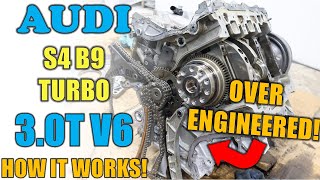
- P0018 — This code indicates a 'Crankshaft Position - Camshaft Position Correlation' error for Bank 2. It often appears alongside P0345 when the root cause is a mechanical timing issue, like a stretched chain or a damaged camshaft lobe 🎬 See a teardown of the rocker arm and camshaft failure. from rocker arm failure, rather than just a sensor circuit fault.
Technical Service Bulletins (TSBs) & Recalls
- TSB 2069038/2: Addresses MIL on for misfire DTCs (P0300-P0306). An ECM software update was developed to correct a calibration issue that could cause false misfire detection, particularly with winter blend fuels. This is relevant context if P0345 appears with misfire codes.
Platform-Specific Known Issues
- A known issue with premature rocker arm bearing failure on the EA839 engine can cause damage to the camshaft lobes, leading to this code. This is a severe mechanical failure that requires immediate attention and is much more costly to repair than a simple sensor replacement.
- Audi has issued a Technical Service Bulletin (TSB 2069038 /2) for an ECM software update to fix false misfire detection on Bank 2 for some models with the DCBD engine, sometimes caused by winter blend fuels. While not directly for P0345, it shows a sensitivity to issues on this bank and may be performed if misfire codes are also present.
Mechanic-Grade Diagnostic Values
- Camshaft Position Sensor (G301) Supply Voltage — expected: Approximately 5.0V DC. Failure: Significantly lower or no voltage indicates a wiring or ECM issue, not a sensor failure.
- Camshaft Position Sensor (G301) Signal Voltage (Key On, Engine Off) — expected: Switches between ~0V and ~5V as the engine is slowly cranked by hand.. Failure: Voltage that is stuck high, low, or does not switch cleanly indicates a faulty sensor or a damaged reluctor wheel.
- Camshaft Position Sensor (G301) Ground Connection — expected: Near 0 Ohms of resistance between the ground pin and a known good chassis ground.. Failure: High resistance indicates a corroded or broken ground wire, which will cause sensor malfunction.
- VCDS Camshaft Adaptation Phase Position (Bank 2) — expected: 0° to -4° at warm idle.. Failure: Values approaching -8° or more indicate significant timing chain stretch or a tensioner problem, which can trigger correlation faults. A value of -4° to -6° is a warning to plan for timing service.
Scan Tool Commands That Help
- VCDS (VAG-COM) or ODIS: Advanced Measuring Values - Group 093 — Use this to check the 'Phase Position' for Bank 1 and Bank 2 at warm idle. This value shows how much the ECU is compensating for timing chain stretch. A significant deviation on Bank 2 can be a clue that the P0345 is related to a mechanical timing issue rather than just the sensor.
Wiring & Ground Locations
- Camshaft Position Sensor Connector (Bank 2) — On the front of the driver's side valve cover.. This is the direct connection to the sensor. Testing voltage and ground here is the first step in electrical diagnosis. The pinout is: Pin 1 = 5V Supply, Pin 2 = Signal, Pin 3 = Ground.
- Engine Harness Ground Point — Audi typically uses common ground points where multiple brown wires are bolted to the chassis, often on the firewall or a strut tower.. A loose or corroded main ground for the engine sensor harness can cause erratic behavior from multiple sensors, including the camshaft position sensor. Verifying this connection is a crucial step if direct sensor testing is inconclusive.
Real Owner Repair Stories
- Reddit user 'RudyCantReddit' in r/Audi (2018 Audi S5 (EA839 3.0T engine, same family as A6)) — Classic 'loud ticking' noise that increased with RPM, initially mistaken for normal high-pressure fuel pump (HPFP) noise. Later, the car threw engine warning lights and went into limp mode.
❌ Tried (didn't work) Initially ignoring the ticking sound as a normal characteristic of the engine.
✅ What actually fixed it The OBD code was for a cam position sensor fault on bank 2 (P0345). The root cause was a catastrophic rocker arm bearing failure. The magnetic cam position sensor had attracted the metal debris from the disintegrated bearing, causing the signal fault. The fix required major engine work to replace the failed rocker arms and likely the camshafts.
OEM Part Supersession History
06M907601D→06M907601G— Standard part revision and improvement by the manufacturer.
Heads up: The parts are interchangeable, but it is always recommended to use the latest revision (G).
Model Year Variations Within This Range
- 2019: The 2019 model year is a transition period for the EA839 engine's rocker arms. While the C8 A6 production started in early 2019 and should have received updated rocker arms with larger, more durable bearings, some early-production 2019 vehicles across the EA839 family may still have the older, more failure-prone design. The rocker arm failure is the most serious potential cause of a P0345 code.
Diagnostic Flowchart
Other Known Issues on This Vehicle
Issues unrelated to this code that are worth knowing about as an owner of this generation:
- 48V Mild-Hybrid (MHEV) System Failure 🔴 High — A widespread and well-documented problem. Failure of the belt-driven starter/generator can occur at various mileages (as low as 20k miles), causing a complete electrical system shutdown and immobilizing the vehicle. (Ref: Audi has issued recalls and service campaigns in some regions, but parts availability has been a major issue, leading to long repair times.)
- Water Pump & Thermostat Leaks 🟠 Medium — Common across many modern Audi engines. The plastic housings can become brittle and crack over time, leading to coolant loss and potential overheating. Often replaced preventatively during other major services.
- Excessive Oil Consumption 🟠 Medium — A historical issue with many VAG engines, related to piston ring and PCV system design. While improved on newer engines, some owners still report needing to top off oil between changes.
- PCV System Failure 🟡 Low — The PCV (Positive Crankcase Ventilation) valve can fail, leading to a rough idle, whistling noises, and increased oil consumption. It's a relatively common and inexpensive repair.
Used vs. New Parts: Buying Guide for This Vehicle
When a used part is the smart pick: For this repair, a used part is generally not recommended for the sensor itself due to the low cost of a new part and the critical function. However, if the root cause is a damaged camshaft from rocker arm failure, a low-mileage, guaranteed used camshaft from a reputable salvage yard can be a cost-effective alternative to a new OEM part.
Donor-vehicle mileage cap: roughly under 50000 miles for the part to have meaningful remaining life.
What to inspect on the donor part:
- For a used camshaft: MUST confirm the donor engine did NOT suffer a rocker arm failure. Ask for the reason the vehicle was salvaged.
- Inspect camshaft lobes for any scoring, pitting, or unusual wear patterns.
- Ensure the reluctor wheel for the sensor is intact with no broken teeth or cracks.
OEM-only on this vehicle (don't cheap out):
- Rocker Arms: If replacing due to failure, only use the latest revision Genuine Audi parts to prevent a recurrence. Do not use used or unverified aftermarket rocker arms.
Aftermarket brands forum-validated for this vehicle:
- For the camshaft position sensor: Bosch, Continental/VDO, and HELLA are often the original equipment manufacturers for Audi and are considered reliable alternatives to dealer-branded parts.
Brands owners have reported issues with on this vehicle:
- Avoid unbranded, 'white-box' sensors from online marketplaces. Forum discussions frequently report premature failure or out-of-spec signals from no-name electronic parts, leading to the code returning.
Real Owner Stories
Aggregated from forums and TSBs cited above. Mileages and costs reflect what owners reported in those sources.
2018 Audi S4 EA839 3.0T
Symptoms: Owner observed failed rocker arms and documented the damage to the engine components.
What fixed it: DIY replacement of the failed rocker arms.
Source hint: AudiWorld Forums - B9 S4 EA839 Series Engine Rocker Arm Failure (Thread ID: 3045339)
2020 Audi S5 3.0T — 55000 miles
Symptoms: Owner reported a ticking noise from the engine.
What fixed it: Replacement of the rocker arms; the owner noted that repair shops see this regularly on 2.9T and 3.0T engines.
Source hint: Reddit r/audis5 - Rocker arm failure reality (Posted Feb 2026)
Related OBD-II Codes
Frequently Asked Questions
Does TSB 2069038/2 apply to my 2019-2024 Audi A6 with the DCBD engine?
I hear a rhythmic ticking noise from the driver's side of my A6's engine; is this related to P0345?
Can I swap sensors to test if the Bank 2 intake camshaft sensor is actually bad?
Is the rocker arm failure a known issue for the 3.0L Turbo V6 in the A6?
Could my A6's 48V Mild-Hybrid system be causing this camshaft code?
What is the estimated cost to replace just the camshaft position sensor on this Audi?
Helpful Videos
Used OEM Parts in Stock
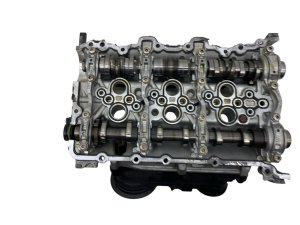
New Aftermarket Parts Available

The information in this article is provided for general reference and educational purposes only. Vehicle specifications, procedures, and part compatibility can vary by production date, trim level, and region. Always consult your vehicle's factory service manual and verify part numbers before purchasing or performing repairs. Safety-critical components such as airbags, seat belts, and braking systems should be installed by a qualified professional.
- Audi A6:
- 🧭 Diagnostic Flowchart
- 🎬 Helpful Videos
- 🛍️ Shop This Part
- What's Unique About the 2019-2024 Audi A6
- Symptoms You May Notice
- Most Likely Causes
- Rare But Worth Checking
- Diagnosis Steps
- Parts You'll Likely Need
- Related Codes That Often Appear With This One
- Technical Service Bulletins (TSBs) & Recalls
- Platform-Specific Known Issues
- Mechanic-Grade Diagnostic Values
- Scan Tool Commands That Help
- Wiring & Ground Locations
- Real Owner Repair Stories
- OEM Part Supersession History
- Model Year Variations Within This Range
- Other Known Issues on This Vehicle
- Used vs. New Parts: Buying Guide for This Vehicle
- Real Owner Stories
- 2018 Audi S4 EA839 3.0T
- 2020 Audi S5 3.0T — 55000 miles
- Related OBD-II Codes
- Frequently Asked Questions
- 🎟️ Get 5% Off