

P0345 on 2012-2018 Audi S8 4.0T: Camshaft Sensor Circuit Malfunction Causes and Fixes
P0345 on a 2012-2018 Audi S8 indicates a fault with the Bank 2 (driver's side) intake camshaft position sensor. The most common fix is replacing the sensor itself (OEM Part #07L905163C). However, before replacing the sensor, it's critical to rule out a known issue with the camshaft adjuster valve screen, which can cause similar timing-related codes, especially on 2013-2014 models.
- P0345 on your S8 points to the intake camshaft sensor on the driver's side.
- The most likely cause is a failed sensor (OEM #07L905163C), which is a straightforward DIY replacement for many owners.
- Before buying parts, swap the sensor with the one from the passenger side to confirm the sensor itself is the problem.
- Be aware that a known issue with the camshaft adjuster valve screen on 2013-14 models can mimic a sensor failure, requiring more complex diagnosis.
- This engine has several well-documented major issues, most notably a recalled turbo oil strainer that can cause catastrophic turbo failure.
What's Unique About the 2012-2018 Audi S8
The 4.0L TFSI V8 is a complex, high-performance engine with a 'hot-vee' design, where the twin turbochargers are located between the cylinder banks. This layout creates extreme heat in the engine valley. While a P0345 code is often just a failed sensor, this engine has a known vulnerability that can be a red herring. A Technical Service Bulletin (TSB 2041097) exists for related timing codes (P0011/P0021) on 2013-2014 models, caused by a failing filter screen on the camshaft *adjuster valve*. This mechanical failure can disrupt oil flow and affect cam timing, potentially leading to a P0345 code even if the sensor itself is functional. Therefore, proper diagnosis is key to avoid replacing parts unnecessarily.
Symptoms You May Notice
- Check Engine Light or EPC (Electronic Power Control) light is on
- Engine is difficult to start or cranks for a long time
- Engine will not start at all (crank-no-start)
- Rough, unstable idle
- Engine stalling, sometimes while driving
- Noticeable loss of power and sluggish acceleration
- Reduced fuel economy
- Engine misfires
- Replacing the camshaft position sensor when the actual fault is with the camshaft adjuster valve screen. This is a common trap on the 2013-2014 4.0T engine.
- Replacing the sensor when the issue is a damaged wire or corroded connector in the harness.
Most Likely Causes
- Failed Bank 2 Intake Camshaft Position Sensor 🔴 High Probability → Shop Engine Camshaft Position Sensor These Hall-effect sensors operate in a high-heat environment and can fail electronically over time due to heat cycles and age.
How to confirm: Swap the suspect sensor with the equivalent sensor from Bank 1 (passenger side). If the code changes to P0340 (Bank 1 equivalent), the sensor is bad. Alternatively, test the sensor's output signal with an oscilloscope or check its resistance with a multimeter against specifications.
Typical fix: Replace the Bank 2 intake camshaft position sensor. It is often recommended to replace them in pairs (both intake sensors) or as a full set of four, as the others have been exposed to the same conditions and may fail soon.
Est. part cost: $50-$160 - Damaged Wiring or Corroded Connector 🟡 Medium Probability The engine bay heat, particularly from the 'hot-vee' design, can make wiring insulation brittle over time, and connectors can become contaminated with oil or dirt, leading to a poor connection.
How to confirm: Visually inspect the wiring harness leading to the sensor for any signs of cracking, melting, or breaks. Check the connector pins for corrosion, oil contamination, or a loose fit. Perform a continuity test on the wiring with a multimeter.
Typical fix: Repair the damaged section of the wiring harness or clean/replace the electrical connector.
Est. part cost: $10-$60 - Failed Camshaft Adjuster Valve (or Screen) ⚪ Low Probability → Shop Engine Camshaft Audi has a TSB (2041097 / 01-16-71) for 2013-2014 4.0T engines where the filter screen on the camshaft adjuster valve bridge can break apart. Debris can then enter oil passages, disrupting camshaft timing and triggering position codes even with a good sensor.
How to confirm: This is a more involved diagnosis. A technician would need to inspect the camshaft adjuster valve for a broken screen. This is often suspected if camshaft position codes return immediately after replacing the sensor, especially if accompanied by codes like P0021.
Typical fix: Replace the affected camshaft adjuster valve and meticulously clean out the oil passages to remove any debris. This is a more complex and costly job than replacing the sensor.
Est. part cost: $200-$400
Rare But Worth Checking
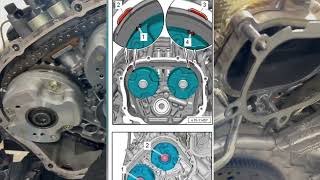
- Stretched Timing Chain or Failed Tensioner: → Shop Engine Timing Chain While rare to be the primary cause for just this code, significant timing chain stretch can cause the camshaft and crankshaft signals to be out of sync, triggering position sensor faults. This would typically be accompanied by a rattling noise on startup and other timing-related codes like P0016 or P0021. 🎬 Watch: How a technician performs a 4.0T timing chain adjustment.
- Failing Engine Control Module (ECM): This is extremely rare and should only be considered after all other possibilities (sensor, wiring, mechanical) have been exhaustively ruled out.
Diagnosis Steps
- Read the fault codes with a high-quality OBD-II scanner to confirm P0345 is present and note any other codes, such as P0346 or P0021.
- Visually inspect the Bank 2 (driver's side) intake camshaft position sensor and its connector for any obvious damage, oil leaks, or loose connections. The sensor is located on the cylinder head cover.
- As a simple test, clear the codes and swap the Bank 2 intake sensor with the Bank 1 (passenger side) intake sensor. Drive the vehicle and see if the code returns as P0345 (problem is not the sensor) or P0340 (the sensor is faulty).
- If the code does not follow the sensor, inspect the wiring harness for continuity, shorts to ground, or shorts to power using a multimeter.
- If wiring is good, investigate potential mechanical issues. Given the known issues with the 4.0T, it is highly advisable to research TSB 2041097, especially for 2013-2014 models, which points to a broken filter screen on the camshaft adjuster valve.
- If no issues are found, use an oscilloscope to analyze the sensor's signal pattern to confirm it is operating correctly. This can definitively separate an electrical from a mechanical timing problem.
Parts You'll Likely Need
- Camshaft Position Sensor (Hall Sensor)
(OEM #07L905163C)— This is the most frequent cause of a P0345 code, failing due to heat and age. The part number supersedes 07L905163B, 07L905163A, and 07L905163.
Trusted brands: Bosch, NTK, Delphi, Vemo
OEM price range: $110-$160
Aftermarket price range: $50-$100 - Turbocharger Oil Strainer
(OEM #079115175G)— While not a direct cause of P0345, this part is central to the most critical known issue on the 4.0T engine. Its failure starves the turbos of oil. Aftermarket relocation kits are available to make servicing easier.
Trusted brands: Genuine Audi, JHMotorsports (Relocation Kit), ECS Tuning (Relocation Kit)
OEM price range: $30-$50
Aftermarket price range: $200-$300 (for relocation kits)
Related Codes That Often Appear With This One
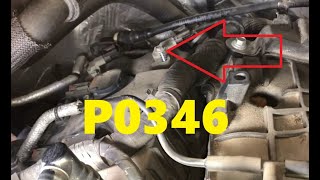
- P0346 — This code is for 'Camshaft Position Sensor 'A' Circuit Range/Performance (Bank 2)'. It indicates a performance problem rather than a complete circuit failure, but they share the same root causes and are often diagnosed together. 🎬 Watch: Understanding the P0346 code and how to fix it.
- P0021 — This code is for '"A" Camshaft Position - Timing Over-Advanced or System Performance (Bank 2)'. If you see this code alongside P0345, it strengthens the possibility of a mechanical timing issue, such as the one described in TSB 2041097.
- P0340 — This is the equivalent code for Bank 1. If you swap the Bank 1 and Bank 2 sensors for diagnosis and this code appears, it confirms the sensor you moved is faulty.
Technical Service Bulletins (TSBs) & Recalls
- TSB 2041097 / ATU 01-16-71: Addresses camshaft timing codes (P0011/P0021) on 2013-2014 models caused by a broken filter screen on the camshaft adjuster valve, a potential cause for misdiagnosis.
- TSB 2044640: Precursor to the main recall, addressing the clogged turbocharger oil strainer issue that leads to turbo failure.
Platform-Specific Known Issues
- TSB 2041097 / 01-16-71: Camshaft Adjuster Screen: → Shop Engine Camshaft Applies to 2013-2014 models. Notes that timing codes (P0011, P0021) can be caused by a broken filter element on the camshaft adjuster valve bridge. This is a critical consideration when diagnosing P0345 to avoid misdiagnosing a sensor failure when the root cause is mechanical oil starvation to the phasers.
- Recall 21H7: Turbo Oil Strainer: A major recall was issued for the 4.0T engine because a small oil strainer (screen) located in the 'hot-vee' gets clogged with sludge, starving the turbochargers of oil and causing catastrophic failure. 🎬 See this DIY walkthrough for replacing the turbo oil strainer. While not a direct cause of P0345, it highlights the engine's vulnerability to oiling issues which can sometimes manifest as timing-related codes.
Mechanic-Grade Diagnostic Values
- Camshaft Adaptation Phase Position (Bank 2) — expected: Close to 0° at warm idle on a new chain. Values between -5° and -8° indicate wear.. Failure: A value more negative than -8.0° at warm idle strongly suggests a stretched timing chain, which can trigger camshaft position codes.
Hidden / Shadow Codes Worth Checking
- G163: This is the official Audi component designation for the Camshaft Position Sensor 'A' on Bank 2 (the intake sensor on the driver's side). A generic P0345 code corresponds to a fault in the circuit for sensor G163. (see via Factory service manuals and professional VAG diagnostic tools like VCDS or ODIS will reference this component name directly.)
- G40, G300, G301: These are the other camshaft position sensors on the 4.0T engine. G40 is Bank 1 Intake, G300 is Bank 1 Exhaust, and G301 is Bank 2 Exhaust. Knowing these helps in diagnostics, such as when swapping sensors between banks. (see via Factory service manuals and professional VAG diagnostic tools.)
Scan Tool Commands That Help
- VCDS (VAG-COM) / OBDeleven: Advanced Measuring Values for 'Phase position Bank 2' — This is a critical first step after reading the code. It helps differentiate between a simple sensor failure and a much more serious mechanical timing chain stretch issue, potentially saving thousands in misdiagnosis.
- VCDS (VAG-COM) / OBDeleven: Output Test for 'Camshaft Adjustment Valve 2 (N208)' — Use this if you suspect a mechanical timing issue or have accompanying codes like P0021. This command actively cycles the VVT solenoid for Bank 2, allowing you to check its mechanical response and rule it out as a cause.
Wiring & Ground Locations
- G163 Sensor Location — On the top of the Bank 2 (US driver's side) cylinder head cover, towards the front of the engine. It is accessible after removing the plastic engine cover and is held by a single Torx bolt.. This is the precise physical location of the sensor that needs to be inspected, tested, and potentially replaced for a P0345 code.
- Engine Ground Straps — Key ground points are located from the engine block to the chassis frame rails on either side of the engine bay. Another ground connection point is in the electrical junction box on the bulkhead at the rear of the engine bay.. A poor ground connection can cause erratic voltage and signal issues for sensors like the camshaft position sensor, mimicking a sensor failure. These points should be checked for corrosion and tightness.
OEM Part Supersession History
07L905163, 07L905163A, 07L905163B→07L905163C— Standard part revision and improvement by the manufacturer.
Model Year Variations Within This Range
- 2015-2018: The S8 received a mid-cycle facelift for the 2015 model year, which included revised styling (grille, Matrix LED headlights) and a slight engine power increase to 520 hp, though the core engine architecture and causes for P0345 remained the same.
- 2016-2017: The S8 Plus model was introduced, featuring a significantly more powerful 605 hp engine. These models were built by Audi Sport and have a different VIN prefix (WUA), indicating they may have other mechanical differences from the standard S8.
- 2013-2014: These model years are specifically called out in TSB 2041097 for the failing camshaft adjuster valve screen, making this a higher probability cause for timing codes on these specific years.
Diagnostic Flowchart
Other Known Issues on This Vehicle
Issues unrelated to this code that are worth knowing about as an owner of this generation:
- Clogged Turbocharger Oil Strainer 🔴 High — Very common, especially on 2013-2017 models. This is a widespread, well-documented failure leading to Audi Recall 21H7 (NHTSA 22V178000). Failure can occur at any mileage but risk increases with age and inadequate oil change intervals. (Ref: Audi Recall 21H7 / NHTSA 22V178000; TSB 2044640)
- PCV Valve / Oil Separator Failure 🟠 Medium — Common failure item. The PCV unit is made of plastic and located in the hot-vee of the engine, where extreme heat makes it brittle over time, leading to cracks and vacuum leaks.
- Adaptive Air Suspension Leaks 🟠 Medium — Highly common as the vehicle ages, typically appearing after 80,000 miles. Failures include leaking rubber air bladders on the struts, failing compressors (often due to overwork from a leak), and faulty level sensors.
- Camshaft Adjuster Bridge Filter Screen Failure 🟠 Medium → Shop Engine Camshaft — Specifically noted for 2013-2014 models. The small filter screen can disintegrate, clogging oil passages to the cam phasers and causing timing correlation faults. (Ref: TSB 01-16-71 / 2041097)
- Excessive Oil Consumption 🟡 Low — Frequently reported by owners, though not always indicating a catastrophic failure. Can be caused by failing piston rings, valve seals, or a faulty PCV system.
Used vs. New Parts: Buying Guide for This Vehicle
When a used part is the smart pick: For this repair, obtaining a used part is generally not recommended for the sensor itself. However, sourcing a used wiring harness pigtail connector from a junkyard is a viable option if only the connector is damaged.
Donor-vehicle mileage cap: roughly under 80000 miles for the part to have meaningful remaining life.
What to inspect on the donor part:
- For a connector: Ensure the plastic is not brittle or cracked.
- Check for any signs of corrosion or oil contamination on the pins.
- Verify the locking tab is intact and functional.
OEM-only on this vehicle (don't cheap out):
- While not strictly OEM-only, it is highly recommended to use either a Genuine Audi sensor or one from a reputable OEM supplier for critical electronic components like the camshaft position sensor. Cheap, unbranded sensors have a high failure rate.
Aftermarket brands forum-validated for this vehicle:
- Bosch
- Vemo
- NTK/NGK
- Delphi
Brands owners have reported issues with on this vehicle:
- Unbranded, 'white-box' parts from online marketplaces should be avoided as their quality and reliability are unknown and often poor.
Real Owner Stories
Aggregated from forums and TSBs cited above. Mileages and costs reflect what owners reported in those sources.
2014 Audi S8 4.0T
Symptoms: Timing-related codes and concerns over a potential 'big problem' shortly after purchase.
What fixed it: The owner utilized the sensor-swapping diagnostic technique to isolate the fault, specifically referencing TSB 01 16 71 / 2041097/2 regarding the camshaft adjuster screen.
Source hint: AudiWorld Forums: 2014 S8 - New owner with a bid problem
Related OBD-II Codes
Frequently Asked Questions
Does TSB 2041097 apply to my 2014 Audi S8 regarding the P0345 code?
How can I tell if my P0345 code is a simple sensor failure or the more serious camshaft adjuster screen issue?
Is the turbo oil strainer recall (21H7) related to my camshaft position sensor code?
Should I replace all four camshaft sensors if only the Bank 2 intake sensor (P0345) is failing?
Can a failing PCV valve cause timing issues on the 4.0L TFSI?
Helpful Videos

Used OEM Parts in Stock
New Aftermarket Parts Available


The information in this article is provided for general reference and educational purposes only. Vehicle specifications, procedures, and part compatibility can vary by production date, trim level, and region. Always consult your vehicle's factory service manual and verify part numbers before purchasing or performing repairs. Safety-critical components such as airbags, seat belts, and braking systems should be installed by a qualified professional.
- Audi S8:
- 🧭 Diagnostic Flowchart
- 🎬 Helpful Videos
- 🛍️ Shop This Part
- What's Unique About the 2012-2018 Audi S8
- Symptoms You May Notice
- Most Likely Causes
- Rare But Worth Checking
- Diagnosis Steps
- Parts You'll Likely Need
- Related Codes That Often Appear With This One
- Technical Service Bulletins (TSBs) & Recalls
- Platform-Specific Known Issues
- Mechanic-Grade Diagnostic Values
- Hidden / Shadow Codes Worth Checking
- Scan Tool Commands That Help
- Wiring & Ground Locations
- OEM Part Supersession History
- Model Year Variations Within This Range
- Other Known Issues on This Vehicle
- Used vs. New Parts: Buying Guide for This Vehicle
- Real Owner Stories
- 2014 Audi S8 4.0T
- Related OBD-II Codes
- Frequently Asked Questions
- 🎟️ Get 5% Off