

P0345 on 2011-2017 Chrysler 200 3.6L: Camshaft Sensor Causes and Fixes
On the 3.6L Pentastar V6, code P0345 is most often caused by a failed Bank 2 (front/radiator side) camshaft position sensor. The OEM Mopar part number is 5149141AF. Replacing the sensor is a common DIY fix, with the part costing between $30 and $75. However, be aware of underlying issues like a leaking oil filter housing contaminating the wiring or low oil pressure before replacing parts.
- P0345 on a Chrysler 200 3.6L points to the intake camshaft sensor on the front (radiator side) cylinder bank.
- The most likely fix is replacing the sensor itself, which is an accessible and affordable DIY job.
- Before replacing the sensor, inspect its connector for oil contamination, as a leaking oil filter housing is a very common root cause of this electrical fault.
- If a new sensor doesn't fix the code, or if code P06DD is also present, the issue may be a more serious, engine-specific problem like loose oil gallery plugs, which requires professional diagnosis.
- Check with a dealer to see if your vehicle's PCM software has been updated per factory TSBs, as this can sometimes resolve false codes.
What's Unique About the 2011-2017 Chrysler 200
The 3.6L Pentastar engine has several well-documented issues that can trigger a P0345 code beyond a simple sensor failure. A very common problem is a leaking oil filter/cooler housing, which drips oil onto the sensor wiring and causes electrical faults. More seriously, loose oil gallery plugs under the valve cover can cause a loss of oil pressure to the valvetrain, leading to this code, often accompanied by P06DD. The torque spec for these plugs is 13 ft-lbs. Chrysler also released software updates to make the PCM less sensitive to minor sensor glitches that could falsely trigger the code.
Generation note: This guide covers both the first generation (2011-2014) and second generation (2015-2017) Chrysler 200 with the 3.6L V6. While the root causes are similar, some Technical Service Bulletins (TSBs) for PCM software updates are year-specific. For example, TSB 18-023-14 applies to 2011-2014 models for intermittent cam sensor codes, while TSB 18-002-19 REV A changes the code to a two-trip fault to prevent false positives on later models.
Symptoms You May Notice
- Check Engine Light is on
- Traction control light may illuminate
- Engine is hard to start or has a long crank time
- Engine may stall unexpectedly, especially when coming to a stop
- Rough idle
- Reduced engine power and acceleration
- Cruise control may not work
- Engine may crank but not start
- Poor fuel economy
- Replacing the PCM. A PCM failure is extremely rare and should only be considered after all other possibilities, including sensor, wiring, and mechanical checks, have been exhausted.
- Replacing the sensor without checking for oil contamination. If the connector is full of oil from a leak, a new sensor will likely fail again quickly or not solve the problem. The root cause of the leak must be fixed.
Most Likely Causes
- Failed Camshaft Position Sensor (Bank 2) 🔴 High Probability → Shop Engine Camshaft Position Sensor The sensor is an electronic component that fails over time from constant exposure to engine heat and vibration, a common issue on the Pentastar engine. Oil contamination can also degrade the sensor's internal components.
How to confirm: The most effective diagnostic step is to swap the Bank 2 (front, easy access) sensor with the Bank 1 (rear, difficult access) sensor. If the code changes to P0340 (Bank 1), the sensor is confirmed bad. The sensors are identical parts.
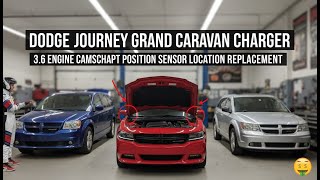
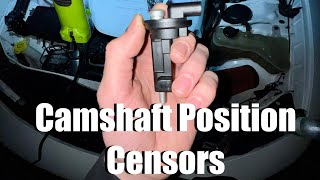
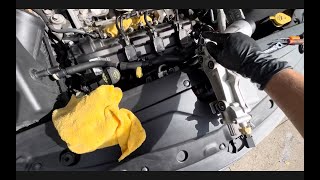
Typical fix: Replace the Bank 2 camshaft position sensor. The Bank 2 sensor is located on the front cylinder head (near the radiator) and is held by a single 10mm or Torx T30 bolt, making it relatively easy to access and replace. 🎬 Watch: This video shows the sensor location and easy replacement. The recommended OEM part is Mopar 5149141AF.
Est. part cost: $30-$75 for aftermarket, $100-$150 for OEM Mopar. - Wiring Harness or Connector Issue 🟡 Medium Probability The 3.6L Pentastar is notorious for oil leaks from the plastic oil filter/cooler housing located in the engine valley. This oil drips down the back of the engine and can saturate the Bank 2 camshaft sensor connector, causing a short or poor connection.
How to confirm: Visually inspect the sensor's electrical connector and surrounding harness for signs of oil contamination, chafing, or melting. If oil is present, the source of the leak must be addressed. The connector has a 3-pin layout.
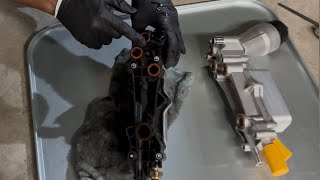
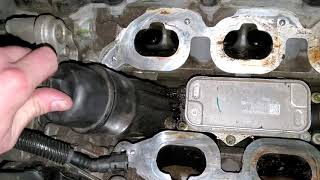
Typical fix: Clean the oil from the connector with electrical contact cleaner and inspect for damage. If the connector or pigtail is damaged, it will need to be repaired or replaced. The source of the oil leak (usually the oil filter housing) must also be fixed. Many owners opt for an upgraded aluminum oil filter housing 🎬 See why these oil filter housings leak and how to fix them. to prevent recurrence.
Est. part cost: $10-$40 for a pigtail, $150-$300 for an oil filter housing assembly. - Loose Oil Gallery Plugs ⚪ Low Probability A well-documented design flaw on the 3.6L Pentastar involves small oil gallery plugs located under the valve covers that can back out over time. This causes a significant loss of oil pressure to the VVT (Variable Valve Timing) system on that cylinder head.
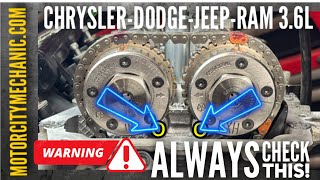
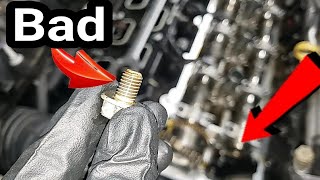
How to confirm: This is an advanced diagnosis. If new sensors and wiring checks don't resolve the code, especially if code P06DD (Engine Oil Pressure Control Circuit Stuck Off) is also present, the valve cover for Bank 2 must be removed to physically inspect and tighten these plugs. There are two 13mm plugs per head. 🎬 Watch: A mechanic shows you how to find these loose plugs.
Typical fix: Remove the Bank 2 valve cover and tighten the oil gallery plugs to the proper torque specification of 13 ft-lbs (18 Nm). Some mechanics add thread locker as a preventative measure.
Est. part cost: $30-$60 for a new valve cover gasket. - Outdated PCM Software ⚪ Low Probability Chrysler released software updates because the original PCM calibration was too sensitive and could set a fault code due to a momentary signal glitch, often changing the fault from a one-trip to a two-trip logic.
How to confirm: A Chrysler dealership or a professional shop with a wiTECH scan tool can check the current software version and see if an update is available per TSBs like 18-002-19 REV A or 18-050-22.
Typical fix: Reprogram the Powertrain Control Module (PCM) with the latest software. This must be done by a dealer or qualified shop.
Est. part cost: $0 under warranty, or typically one hour of labor cost at a dealership ($100-$200).
Rare But Worth Checking
- Failing Camshaft Phaser or VVT Solenoid: → Shop Engine Camshaft A mechanical failure in the Variable Valve Timing system can prevent the camshaft from reaching its target position, which the PCM may interpret as a sensor circuit fault. This is often accompanied by a rattling or chattering noise from the engine.
- Loose or Damaged Camshaft Tone Ring: → Shop Engine Camshaft The magnetic ring on the end of the camshaft that the sensor reads can become loose or damaged, leading to an erratic signal. This requires significant mechanical repair.
- Stretched Timing Chain: → Shop Engine Timing Chain If the timing chain is excessively worn or has jumped a tooth, the correlation between the camshaft and crankshaft will be incorrect, which can trigger sensor circuit codes.
- Failing Rocker Arms: A widespread issue on the 3.6L Pentastar is rocker arm bearing failure, which creates a 'ticking' sound. If a rocker arm seizes or fails, it can cause erratic camshaft movement or damage the camshaft lobe, leading to sensor codes.
Diagnosis Steps
- Check Engine Oil: Ensure the engine oil level is correct and the oil is in good condition. Low or dirty oil can affect the VVT system and trigger timing-related codes.
- Scan for Other Codes: Check for other codes, especially P0390, P06DD, or any misfire codes, as they can provide critical diagnostic clues.
- Inspect the Sensor and Connector: Locate the Bank 2 camshaft position sensor on the front cylinder head. Visually inspect the electrical connector and wiring for oil contamination, corrosion, or physical damage. Pay close attention to oil dripping from the oil filter housing above.
- Swap Sensors (Recommended): Swap the Bank 2 (front) sensor with the Bank 1 (rear) sensor. This requires removing the upper intake manifold to access the Bank 1 sensor. Clear the codes and drive the vehicle. If the code returns as P0340, the sensor is faulty. If P0345 returns, the issue is with the wiring or a mechanical component.
- Test the Circuit: If the code does not move after the swap, use a multimeter to test the sensor's circuit. At the connector (Key On, Engine Off), check for a 5-volt reference, good ground, and a signal wire.
- Check for TSBs: Have a dealer or equipped independent shop check if your vehicle's VIN has any open campaigns or applicable TSBs for a PCM reflash, such as TSB 18-002-19 REV A.
- Advanced Mechanical Checks: If all else fails, remove the Bank 2 valve cover to inspect for loose oil gallery plugs, damaged rocker arms, or worn camshaft lobes.
Parts You'll Likely Need
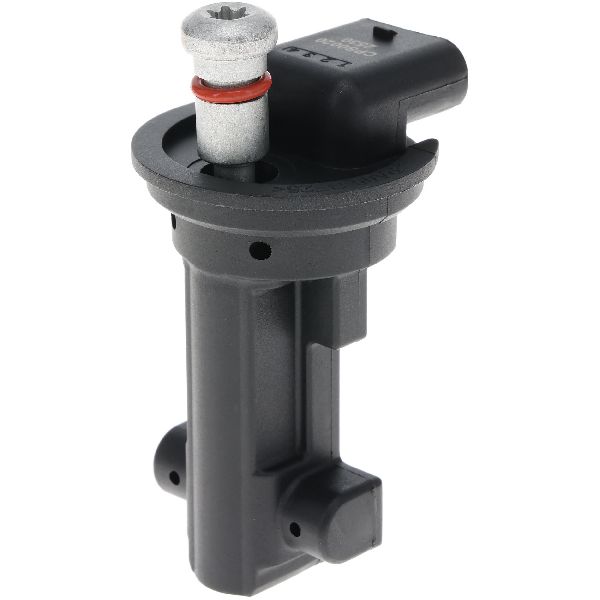
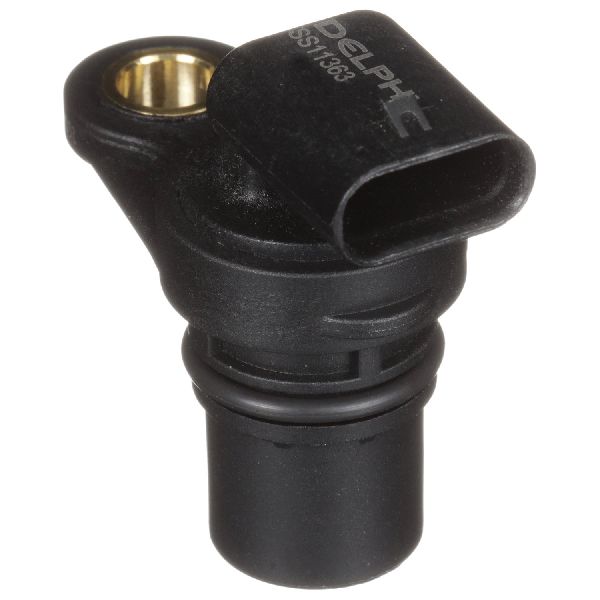
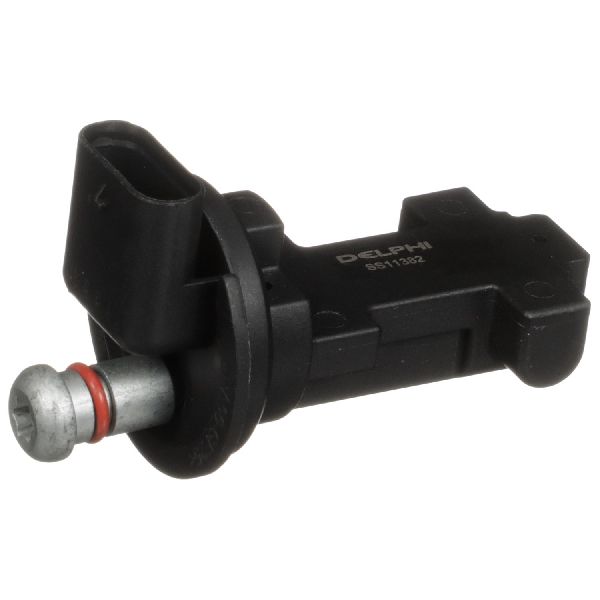
- Camshaft Position Sensor
(OEM #5149141AF)— This is the most common component to fail, causing the P0345 code. The sensors on the 3.6L Pentastar are exposed to significant heat and vibration.
Related Codes That Often Appear With This One
- P0390 — This is the code for the exhaust ('B') camshaft sensor on the same bank (Bank 2). Seeing P0345 and P0390 together strongly points to a failure of the single sensor unit, its shared wiring/power/ground, or an oil pressure issue affecting the entire head.
- P06DD — This code means 'Engine Oil Pressure Control Circuit Stuck Off'. Seeing it with P0345 is a major red flag for a systemic oil pressure problem, most commonly the loose oil gallery plug issue specific to the Pentastar engine.
- P0340 — This is the identical code but for Bank 1 (rear/firewall side). It will typically only appear if a technician swaps a known-bad Bank 2 sensor to the Bank 1 position as a diagnostic test.
- P0302, P0304, P0306 — These are misfire codes for the cylinders on Bank 2 (Cylinders 2, 4, and 6). A faulty camshaft position signal disrupts engine timing, which can easily lead to misfires on the affected bank.
Technical Service Bulletins (TSBs) & Recalls
- TSB 18-023-14: Addresses intermittent camshaft position sensor codes on 2011-2014 models via a PCM software update.
- TSB 18-024-17: Involves a PCM reflash for 2016-2017 models to improve system robustness and change fault logic for certain DTCs to prevent false triggers.
- TSB 18-049-20: Supersedes TSB 18-024-17, providing further PCM updates for 2016-2017 models to improve drivability during a cam sensor fault and address other DTCs.
Platform-Specific Known Issues
- Loose Oil Gallery Plugs: A widely documented issue where plugs under the valve cover back out, causing oil pressure loss to the VVT phasers and triggering cam sensor codes like P0345, often along with P06DD.
- Leaking Oil Filter/Cooler Housing: The original plastic housing is prone to cracking from heat cycles, causing oil to leak down the back of the engine and contaminate the Bank 2 sensor connector.
- Sensitive PCM Software: Early software versions were overly sensitive to minor signal interruptions, leading to false codes. Chrysler issued TSBs to update the software to a 'two-trip' fault logic.
Mechanic-Grade Diagnostic Values
- Camshaft Position Sensor 5-Volt Supply — expected: 4.9V - 5.2V (Key On, Engine Off), measured at the sensor connector between the supply and ground pins.. Failure: Voltage below 4.9V or above 5.2V points to a wiring or PCM issue.
- Camshaft Position Sensor Signal Circuit Voltage — expected: A 0V to 5V square wave when viewed on an oscilloscope while the engine is running. With a multimeter, it may show an average voltage or frequency that changes with RPM.. Failure: A flat 0V, a constant 5V, or a noisy/erratic signal indicates a failed sensor, wiring short/open, or damaged tone ring.
- Sensor Ground Circuit Resistance — expected: Less than 5.0 Ohms between the ground pin at the sensor connector and a known good chassis ground.. Failure: Resistance higher than 5.0 Ohms indicates a poor ground connection, which can cause erratic sensor readings.
- Oil Gallery Plug Torque — expected: 13 ft-lbs (18 Nm). Failure: Plugs that are loose or can be turned by hand have backed out, causing an internal oil pressure leak.
Scan Tool Commands That Help
- High-End OBD-II Scanner / wiTECH: Camshaft Position Sensor Relearn — Some Chrysler vehicles may require a relearn procedure after the sensor is replaced to ensure the PCM correctly recognizes the new sensor's signal. This may be necessary if the engine runs poorly or won't start after replacement.
- Aftermarket Scan Tool: Sensor Test Mode — Some advanced scan tools can command a 'sensor test mode' to force a simulated signal. If the sensor and wiring are known-good but the PCM does not register the simulated signal, it points towards an internal PCM fault.
Wiring & Ground Locations
- CMP Sensor Connector Pins — At the camshaft position sensor on the front (Bank 2) cylinder head.. Knowing the pinout is critical for testing. The 3-pin connector contains: (K856) 5 Volt Supply, (K900) Sensor Ground, and (K444) CMP Signal. Testing for correct voltage and ground at these specific pins is a primary diagnostic step.
- G103 — A main ground point located on the frame rail under the brake master cylinder.. This ground point is known to corrode on Chrysler 200 models, especially in rust-belt regions. While not exclusive to the CMP circuit, a poor main ground can cause widespread, difficult-to-diagnose electrical issues, including erratic sensor readings that could trigger a P0345.
Real Owner Repair Stories
- JK-Forum.com user (2018 Jeep Wrangler JKU (with 3.6L Pentastar)) — Crank-no-start condition after an engine rebuild, with all four camshaft sensor codes active (P0340, P0345, P0365, P0390).
❌ Tried (didn't work) Verified 5V supply and ground to sensors were in spec., Performed wiggle tests on the wiring harness with no change., Disconnected and reconnected all related connectors., Swapped sensors with known-good units from another engine.
✅ What actually fixed it The root cause was a faulty Powertrain Control Module (PCM). Even though the PCM was providing the correct 5V reference voltage, its internal circuits for processing the sensor signals had failed.
"I Checked Everything" — The Actual Cause
- In cases of loose oil gallery plugs, all electrical tests for the sensor and wiring will pass, as there is no electrical fault. The code is triggered because the loss of oil pressure prevents the cam phaser from reaching its commanded position, creating a discrepancy that the PCM interprets as a sensor signal problem. The true cause is mechanical, not electrical.
- A rare but confirmed cause is a faulty PCM. A technician may find that the 5V reference and ground are perfect, and even swapping sensors doesn't help. The PCM itself can fail in a way that it provides correct power but cannot properly interpret the signal from a perfectly good sensor, leading to a dead-end diagnosis if the PCM isn't considered.
OEM Part Supersession History
5149141AE (example predecessor)→5149141AF— Revisions are common to improve reliability, material quality, or resistance to heat and oil contamination.
Heads up: While older revisions may fit, it is always best practice to use the latest available OEM part number (currently 5149141AF) to benefit from any engineering improvements.
Model Year Variations Within This Range
- 2011-2013: Early 3.6L Pentastar engines were known for a specific cylinder head issue, primarily on the left bank, unrelated to the sensor itself but part of the engine's early history. This was resolved by 2014 with harder valve guides.
- 2016-2017: The 3.6L Pentastar was significantly updated for the 2016 model year. It received a two-stage variable valve lift (VVL) system in addition to VVT, a higher compression ratio, and a new intake manifold. While the P0345 code's root causes are largely the same, the underlying VVT/VVL system being monitored is more complex than in earlier years.
Diagnostic Flowchart
Other Known Issues on This Vehicle
Issues unrelated to this code that are worth knowing about as an owner of this generation:
- Cracked Oil Filter/Cooler Housing 🔴 High — Extremely common, often occurs after 60,000-80,000 miles. The plastic housing becomes brittle from heat cycles and cracks, causing significant oil and/or coolant leaks. (Ref: No recall has been issued, despite widespread failure.)
- Rocker Arm / Lifter Tick 🔴 High — Commonly referred to as the 'Pentastar Tick'. Needle bearings in the rocker arms fail, causing a ticking noise that can lead to camshaft damage if not addressed. Can occur at various mileages, often after 50,000 miles.
- Left Cylinder Head Failure (2011-2013) 🔴 High — Primarily affected early 2011-2013 models. A defect caused excessive valve guide wear on the left cylinder head (cylinders 2, 4, 6), leading to misfires (P0302, P0304, P0306) and requiring head replacement. (Ref: Covered by extended warranty X56 / TSB 09-002-14.)
- Transmission Shifting Problems (2015-2017) 🟠 Medium — The ZF 9-speed automatic transmission in second-generation models is known for rough shifting, hesitation, and sometimes complete failure. (Ref: Multiple software updates (TSBs) were released to improve shift logic, but hardware issues persist for some owners.)
- Engine Stalling While Driving 🔴 High — Reported on both generations, an NHTSA investigation found that a defective Powertrain Control Module (PCM) could cause the engine to stall during low-speed deceleration. (Ref: NHTSA investigation PE12023, related software updates may apply.)
Used vs. New Parts: Buying Guide for This Vehicle
When a used part is the smart pick: A used wiring harness pigtail from a junkyard is a viable option if your connector is damaged, provided the used part is clean, not brittle, and free of corrosion or oil contamination.
Donor-vehicle mileage cap: roughly under 50000 miles for the part to have meaningful remaining life.
What to inspect on the donor part:
- For a pigtail, inspect for flexible wiring (not stiff or brittle).
- Check that connector locking tabs are intact.
- Ensure there are no signs of oil saturation or green corrosion on the pins.
OEM-only on this vehicle (don't cheap out):
- Camshaft Position Sensor: It is strongly recommended to use the OEM Mopar part or a top-tier OEM supplier like NTK. Chrysler electronics can be sensitive to the signal quality of aftermarket sensors, leading to persistent codes or premature failure.
Aftermarket brands forum-validated for this vehicle:
- NTK (also known as NGK)
- Delphi
Brands owners have reported issues with on this vehicle:
- Generic, unbranded, or low-cost 'white-box' sensors are frequently reported by mechanics to fail quickly or be dead-on-arrival for Chrysler applications.
Real Owner Stories
Aggregated from forums and TSBs cited above. Mileages and costs reflect what owners reported in those sources.
2011-2017 Chrysler 200 3.6L Pentastar V6
Symptoms: The car had problems starting despite the starter, alternator, and battery being only a month old. The code reader returned P0345.
What fixed it: The owner replaced both camshaft position sensors, though the source notes the issue can persist if the underlying cause isn't addressed.
Source hint: YourMechanic.com question by Brittany B
2011-2017 Chrysler 200 3.6L Pentastar V6
Symptoms: P0345 and P0390 codes appearing together.
What fixed it: Swapping sensors between banks to confirm if the fault follows the sensor or stays with the bank (wiring/mechanical).
Source hint: 200forums.com thread titled 'p0345-and-p0390-camshaft-position-sensor'
Related OBD-II Codes
Frequently Asked Questions
Which TSB applies to my 2011-2014 Chrysler 200 for intermittent P0345 codes?
Is there a software update for my 2016-2017 Chrysler 200 to fix false P0345 triggers?
Where is the Bank 2 camshaft sensor located on the 3.6L Pentastar engine?
What is the recommended replacement part for the camshaft sensor?
Why is there oil in my camshaft sensor connector?
What should the oil gallery plugs be torqued to if they are loose?
Helpful Videos

We Have This Part in Stock


The information in this article is provided for general reference and educational purposes only. Vehicle specifications, procedures, and part compatibility can vary by production date, trim level, and region. Always consult your vehicle's factory service manual and verify part numbers before purchasing or performing repairs. Safety-critical components such as airbags, seat belts, and braking systems should be installed by a qualified professional.
- Chrysler 200:
- 🧭 Diagnostic Flowchart
- 🎬 Helpful Videos
- 🛍️ Shop This Part
- What's Unique About the 2011-2017 Chrysler 200
- Symptoms You May Notice
- Most Likely Causes
- Rare But Worth Checking
- Diagnosis Steps
- Parts You'll Likely Need
- Related Codes That Often Appear With This One
- Technical Service Bulletins (TSBs) & Recalls
- Platform-Specific Known Issues
- Mechanic-Grade Diagnostic Values
- Scan Tool Commands That Help
- Wiring & Ground Locations
- Real Owner Repair Stories
- "I Checked Everything" — The Actual Cause
- OEM Part Supersession History
- Model Year Variations Within This Range
- Other Known Issues on This Vehicle
- Used vs. New Parts: Buying Guide for This Vehicle
- Real Owner Stories
- 2011-2017 Chrysler 200 3.6L Pentastar V6
- 2011-2017 Chrysler 200 3.6L Pentastar V6
- Related OBD-II Codes
- Frequently Asked Questions
- 🎟️ Get 5% Off