

P0352 on 2006-2012 Ford Fusion 2.3L: Ignition Coil 'B' Circuit Causes and Fixes
On a 2006-2012 Ford Fusion with the 2.3L engine, code P0352 almost always means the ignition coil for cylinder #2 has failed. This is a very common, inexpensive, and easy DIY repair, typically costing between $25 and $60 for a new coil and spark plug. It is often accompanied by a P0302 misfire code.
- P0352 on the 2.3L Fusion is overwhelmingly likely to be a bad ignition coil on cylinder #2.
- The most effective diagnostic step is to swap the coil from cylinder #2 with another cylinder to see if the code follows.
- This is a very DIY-friendly repair that requires minimal tools and can be completed in under 30 minutes.
- Always replace the spark plug for the corresponding cylinder when you replace an ignition coil.
- If a new coil and plug don't fix the issue, carefully inspect the wiring and connector before suspecting a rare PCM failure.
What's Unique About the 2006-2012 Ford Fusion
For the first-generation Ford Fusion with the 2.3L 4-cylinder engine, the ignition system is straightforward and generally reliable. Unlike the V6 models from the same era which had a well-documented issue where a failing rear ignition coil could damage the PCM, this problem is less common on the 2.3L. However, it is not impossible. The key takeaway for this platform is the simplicity and accessibility of the repair, as all four coils are located directly on top of the engine, making for a quick and easy DIY fix.
Symptoms You May Notice
- Check Engine Light is on
- Flashing Check Engine Light (indicates a severe misfire)
- Rough idle or engine shaking
- Engine hesitation or stumbling during acceleration
- Noticeable loss of power
- Reduced fuel economy
- Engine may stall intermittently
- Replacing only the spark plug without testing the coil.
- Replacing the fuel injector for cylinder #2, as the symptoms are similar to a fuel delivery issue.
- Assuming the PCM is bad before thoroughly testing the coil, plug, and wiring harness.
Most Likely Causes
- Failed Ignition Coil on Cylinder #2 🔴 High Probability → Shop Ignition Coil Ignition coils are a common wear-and-tear item. Heat cycles and vibration eventually lead to internal failure of the coil's windings.
How to confirm: The easiest method is to swap the ignition coil from cylinder #2 with another cylinder (e.g., cylinder #1). Clear the codes and drive the vehicle. If the code changes to P0351 (Ignition Coil 'A'), the coil is confirmed bad. This is a widely accepted diagnostic step in owner forums.
Typical fix: Replace the faulty ignition coil. It is highly recommended to replace the corresponding spark plug at the same time.
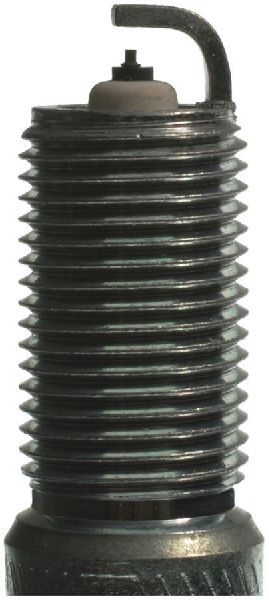
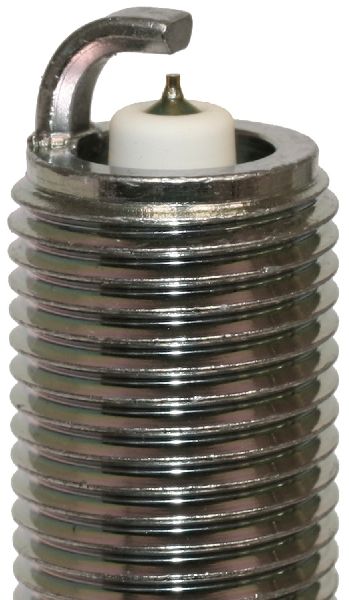
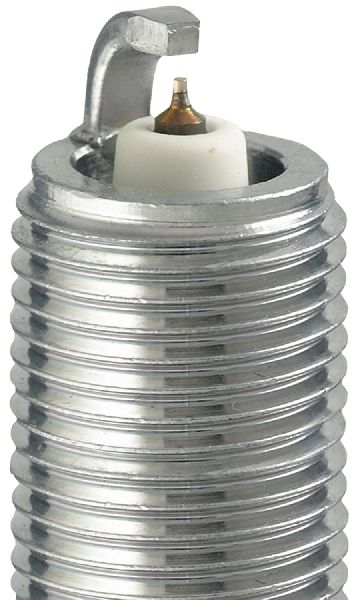
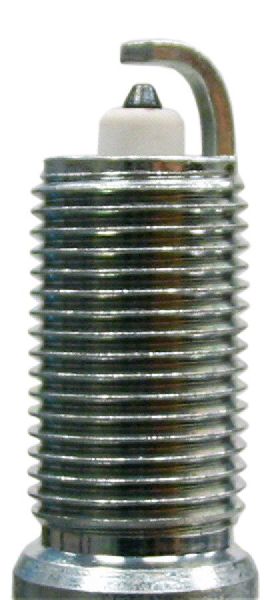
Est. part cost: $25-$60 - Worn or Fouled Spark Plug in Cylinder #2 🟡 Medium Probability → Shop Spark Plug Spark plugs have a finite service life. A worn electrode or carbon fouling can increase resistance in the secondary ignition circuit, stressing the coil and potentially causing a circuit fault code.
How to confirm: Remove the spark plug from cylinder #2 and inspect it. Look for a worn-down electrode, heavy carbon deposits, or signs of oil or coolant fouling. Compare it to a plug from a different cylinder.
Typical fix: Replace the spark plug in cylinder #2. It is best practice to replace all four spark plugs at the same time to maintain even performance.
Est. part cost: $5-$15 per plug - Damaged Ignition Coil Connector or Wiring ⚪ Low Probability → Shop Ignition Coil The plastic connector lock tab can become brittle over time and break, leading to a loose connection. Wires can also be damaged from engine heat or abrasion, causing an open or short in the circuit. In some cases, as described in NHTSA ODI #11270907, the wiring harness can actually melt on an ignition coil, leading to intermittent power loss or stuttering.
How to confirm: Visually inspect the electrical connector for cylinder #2's ignition coil. Check for broken plastic, corroded pins, or pushed-out terminals. Gently tug on the wires to ensure they are secure in the connector. Use a multimeter to check for 12V power at the connector with the key on.
Typical fix: If the connector is damaged, a new pigtail connector (Motorcraft WPT-1283) can be spliced into the harness. Damaged wiring will need to be repaired.
Est. part cost: $20-$40 for a pigtail
Rare But Worth Checking
- Failed Powertrain Control Module (PCM): → Shop Engine Control Module (ECM) While more common on the V6 models, a shorted ignition coil can potentially damage the driver circuit within the PCM on the 2.3L engine. This should only be considered after a new coil, plug, and wiring inspection fail to resolve the code. Companies like Circuit Board Medics offer repair services for this specific issue. A user on Ranger-Forums with a 2.3L engine also noted the PCM as a potential cause after coil replacement didn't work. Similarly, NHTSA ODI #10644521 notes a case where replacing all spark plugs and the specific coil did not fix the P0352 code, pointing toward the PCM.
- Leaking Valve Cover Gasket: → Shop Engine Valve Cover If the spark plug tube seals, which are part of the valve cover gasket set, fail, oil can leak into the spark plug well. This oil can saturate the ignition coil boot, causing it to swell, degrade, and eventually short out the coil, triggering a P0352 code. If you find oil when removing the coil, the valve cover gasket set needs to be replaced.
Diagnosis Steps
- Use an OBD-II scanner to confirm the P0352 code and check for any other related codes, like P0302. An owner report (NHTSA ODI #11681823) mentions that P0352 can often appear alongside multiple misfire codes such as P0300, P0304, P0305, and P0306.
- Locate cylinder #2. On the 2.3L I4 engine, the cylinders are numbered 1-2-3-4 from left to right (passenger side to driver side) when facing the engine.
- Swap the ignition coil from cylinder #2 with the coil from cylinder #1. This is the most common and effective first step recommended in forums.
- Clear the trouble codes with the scanner.
- Start the engine and let it run for a minute, or take a short drive.
- Re-scan for codes. If the code has changed to P0351, the ignition coil is faulty and needs to be replaced.
- If the P0352 code returns, the issue is likely not the coil. Turn off the engine and remove the coil and spark plug from cylinder #2.
- Inspect the spark plug for wear, damage, or fouling. Crucially, check the spark plug well for any signs of oil, which would indicate a leaking valve cover gasket.
- Inspect the ignition coil's electrical connector and wiring for any signs of damage, corrosion, or loose pins. Check for a broken locking tab on the connector.
- If the coil, plug, and wiring appear to be in good condition, the fault may lie within the PCM. A more advanced diagnosis would involve using a multimeter to check for the control signal from the PCM at the coil connector.
Parts You'll Likely Need
- Ignition Coil
(OEM #6E5Z-12029-AA (Motorcraft DG-513))— This is the most common failure point for a P0352 code. An alternate OEM number may be 6E5G-12A366.
Trusted brands: Motorcraft, NGK, Denso, Delphi
OEM price range: $50-$75
Aftermarket price range: $25-$50 - Spark Plug
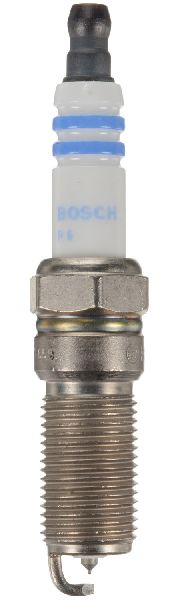
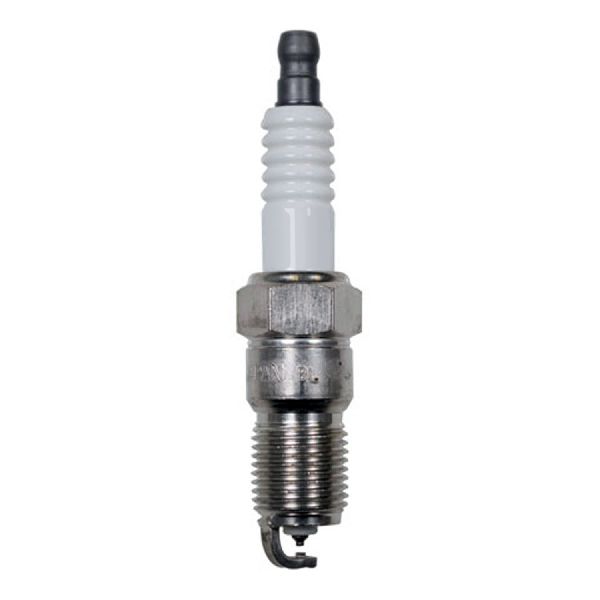
(OEM #SP-530-X)— It is best practice to replace the spark plug when replacing an ignition coil to ensure proper performance and prevent the new coil from failing prematurely.
Trusted brands: Motorcraft, NGK, Autolite, Bosch
OEM price range: $8-$15
Aftermarket price range: $5-$10 - Ignition Coil Connector Pigtail
(OEM #WPT-1283 (Motorcraft))— Needed if the original plastic connector is broken or the terminals are corroded, causing a poor connection to the coil.
Trusted brands: Motorcraft, Dorman
OEM price range: $25-$40
Aftermarket price range: $15-$30
Related Codes That Often Appear With This One
- P0302 — P0302 means 'Cylinder 2 Misfire Detected.' The P0352 code indicates the specific electrical fault in the ignition coil circuit that is causing the misfire.
- P0351, P0353, P0354 — If multiple P035x codes are present, it suggests a widespread problem like a damaged wiring harness, a poor ground connection, or a failing PCM, rather than several coils failing simultaneously. Manufacturer service bulletin #SSM 52455 notes that multiple ignition system DTCs including P0352 through P0357 may set in the powertrain control module simultaneously.
Technical Service Bulletins (TSBs) & Recalls
- TSB 13-4-17: While this TSB specifically addresses the 3.0L and 3.5L V6 engines, it is relevant as it documents the issue of P035x codes being caused by failed ignition coils that can lead to PCM damage. This highlights a known potential failure pattern on Ford vehicles of this era.
- TSB 24-2406: This bulletin notes that vehicles equipped with 2.3L engines may exhibit an illuminated MIL with ignition system DTCs including P0352, P0353, P0354, and P0355 set in the PCM.
- Bulletin #SSM 52455: This record indicates that various Ford gas engines may exhibit an illuminated MIL with ignition system DTCs P0352, P0353, P0354, and others set in the powertrain control module.
Platform-Specific Known Issues
- While more prevalent on the V6 engine, a failed ignition coil has the potential to short and send a voltage spike back to the Powertrain Control Module (PCM), damaging the coil driver circuit. If a new coil and plug do not fix the P0352 code, and the wiring is confirmed to be good, a faulty PCM should be suspected.
Mechanic-Grade Diagnostic Values
- Ignition Coil Primary Resistance — expected: 0.4 to 2.0 ohms (typical for many coils). A Delphi aftermarket coil for this vehicle specifies 0.73 ohms.. Failure: A reading of infinite ohms (OL) indicates an open circuit. A reading of zero indicates a short. Either requires coil replacement.
- Ignition Coil Secondary Resistance — expected: 6,000 to 10,000 ohms (6kΩ to 10kΩ).. Failure: A reading significantly outside this range indicates a faulty coil.
- Voltage at Ignition Coil Connector (Power Wire) — expected: Should be approximately 12V (battery voltage) with the key in the 'ON' position.. Failure: Voltage below 9V suggests a problem with the power supply circuit, potentially a fuse or relay issue.
- PCM Control Signal at Ignition Coil Connector — expected: This is a pulsed ground signal from the PCM when the engine is cranking or running. A noid light connected between the power and signal pins should flash. A multimeter set to AC voltage might show a fluctuating reading.. Failure: No flashing from the noid light indicates a lack of signal from the PCM or a break in the control wire. This points towards a wiring or PCM driver issue.
Scan Tool Commands That Help
- Ford IDS / FDRS (or equivalent high-end scanner): Power Balance Test — This is the most definitive way to confirm which cylinder is misfiring. The tool disables one cylinder at a time and measures the corresponding drop in RPM. A cylinder with a small or no RPM drop is the one not contributing power. This is especially useful if you suspect the PCM might be misreporting the cylinder location, a known issue on some other Ford models.
- Advanced Scan Tool: Module Test: Pulse Coil Driver — After confirming the coil and wiring are good, this bidirectional command forces the PCM to send a firing signal to the coil. If the command is sent but a spark tester shows no spark, it strongly suggests the PCM's internal driver for that cylinder has failed.
Wiring & Ground Locations
- Ignition Coil #2 Connector — On top of the valve cover, second from the passenger side.. This is the primary connection point for the component in question. The power wire is typically Violet/Green (VT/GN) and the control wire from the PCM is Gray/Yellow (GY/YE). The third wire is a radio frequency interference capacitor wire.
- G100 — On the left front strut tower in the engine compartment.. This is a major engine compartment ground. While not directly for the coil packs, a poor connection here can cause a host of electrical issues and unpredictable behavior in engine management systems.
- G101 — Located on the lower left front of the engine block.. This is a critical ground point for the Powertrain Control Module (PCM). A corroded or loose G101 can cause intermittent P035x codes and other seemingly unrelated engine control faults.
Model Year Variations Within This Range
- 2006-2009: The 2.3L Duratec I4 engine was only available in the Ford Fusion from the 2006 to 2009 model years. For the 2010 model year facelift, it was replaced by the 2.5L Duratec I4. While the ignition system concept is similar, part numbers for coils and other components may differ.
Diagnostic Flowchart
Other Known Issues on This Vehicle
Issues unrelated to this code that are worth knowing about as an owner of this generation:
- Automatic Transmission Failure/Harsh Shifting 🔴 High — Common complaint, especially on the 2.3L models with the 5-speed automatic. Issues can range from solenoid problems to complete failure.
- Broken Interior Door Handles 🟡 Low — Extremely common failure. The plastic handle mechanism is prone to breaking, making it impossible to open the door from the inside.
- Power Steering Fluid Leaks 🟠 Medium — Leaks from power steering hoses are a frequently reported problem, leading to a whining noise and loss of power assist.
- Thermostat Stuck Open (P0128) 🟡 Low — The thermostat commonly fails in the open position, preventing the engine from reaching operating temperature and triggering code P0128.
- Failing/Noisy Alternator 🟠 Medium — Alternator failure is a common issue, leading to a dead battery and a battery warning light on the dash.
- Takata Airbag Inflator Recall 🔴 High — Affects 2006-2012 models. The driver's side airbag inflator can explode, causing serious injury or death. This is a critical safety recall (NHTSA Recall 21V158000). (Ref: 21S12)
Used vs. New Parts: Buying Guide for This Vehicle
When a used part is the smart pick: For this specific repair, buying a used ignition coil is generally not recommended. New aftermarket coils are inexpensive, and a used coil has an unknown service life and could fail shortly after installation. A used wiring harness pigtail from a junkyard is a viable option if the connector is in excellent physical condition with no broken tabs or corrosion.
Donor-vehicle mileage cap: roughly under 40000 miles for the part to have meaningful remaining life.
What to inspect on the donor part:
- For a pigtail connector, ensure the plastic isn't brittle and the locking tab clicks securely.
- Check for any signs of green or white corrosion on the metal pins inside the connector.
- Ensure there is at least 4-6 inches of wire attached to the pigtail for easier splicing.
OEM-only on this vehicle (don't cheap out):
- Powertrain Control Module (PCM) - While used PCMs are available, they often require specific programming (flashing) to the vehicle's VIN and options. It's often better to use a reputable repair service for your original PCM or purchase a pre-programmed unit from a specialist.
Aftermarket brands forum-validated for this vehicle:
- Motorcraft (OEM)
- NGK
- Denso
- Delphi
Brands owners have reported issues with on this vehicle:
- Unnamed, no-brand 'white box' coils sold on auction sites at extremely low prices often have a high failure rate and may not last long.
Real Owner Stories
Aggregated from forums and TSBs cited above. Mileages and costs reflect what owners reported in those sources.
2001-2011 Ford Ranger 2.3L I4
Symptoms: The owner experienced a P0352 code and sought a budget-friendly repair.
What fixed it: Replacing the coil pack with a unit sourced from a junkyard fixed the issue immediately.
Source hint: The Ranger Station / Ranger-Forums
1995 Ford Ranger 2.3L I4
Symptoms: The vehicle threw codes P0351 and P0352 simultaneously.
What fixed it: The dual codes pointed toward a potential wiring or computer issue rather than two individual coils failing at the same time.
Source hint: Ford Truck Enthusiasts
Ford Fusion Owner Report
Symptoms: An owner reported that the vehicle loses power intermittently or stutters, accompanied by P0352 codes (NHTSA ODI #11270907).
What fixed it: The owner noted that the wiring harness eventually melted on an ignition coil, indicating that wiring integrity is a critical check for this code.
Ford Edge Owner Report
Symptoms: After the check engine light came on, the code was pulled as P0352 (Ignition Coil 2 or PCM).
What fixed it: The owner changed all spark plugs and coil 2, but this did not fix the problem, suggesting a deeper electrical or PCM issue (NHTSA ODI #10644521).
Related OBD-II Codes
Frequently Asked Questions
Does TSB 13-4-17 apply to my 2.3L Duratec Ford Fusion?
Where is cylinder #2 located on my 2006-2012 Ford Fusion 2.3L?
If I need to replace a damaged wiring connector, what part should I look for?
Is there a major safety recall I should be aware of for my 2006-2012 Fusion?
Can I use a used ignition coil from a junkyard to fix P0352?
My Fusion is also shifting harshly; is this related to the P0352 code?
Helpful Videos
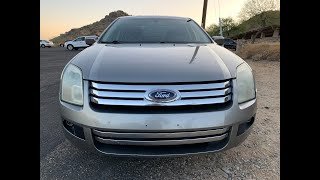
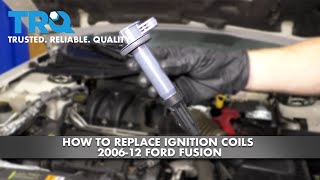
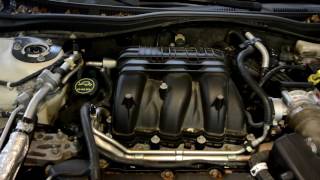
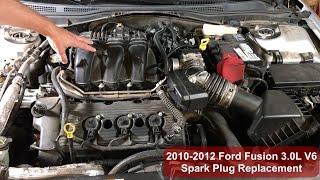
Used OEM Parts in Stock
New Aftermarket Parts Available

The information in this article is provided for general reference and educational purposes only. Vehicle specifications, procedures, and part compatibility can vary by production date, trim level, and region. Always consult your vehicle's factory service manual and verify part numbers before purchasing or performing repairs. Safety-critical components such as airbags, seat belts, and braking systems should be installed by a qualified professional.
- Ford Fusion:
- 🧭 Diagnostic Flowchart
- 🎬 Helpful Videos
- 🛍️ Shop This Part
- What's Unique About the 2006-2012 Ford Fusion
- Symptoms You May Notice
- Most Likely Causes
- Rare But Worth Checking
- Diagnosis Steps
- Parts You'll Likely Need
- Related Codes That Often Appear With This One
- Technical Service Bulletins (TSBs) & Recalls
- Platform-Specific Known Issues
- Mechanic-Grade Diagnostic Values
- Scan Tool Commands That Help
- Wiring & Ground Locations
- Model Year Variations Within This Range
- Other Known Issues on This Vehicle
- Used vs. New Parts: Buying Guide for This Vehicle
- Real Owner Stories
- 2001-2011 Ford Ranger 2.3L I4
- 1995 Ford Ranger 2.3L I4
- Ford Fusion Owner Report
- Ford Edge Owner Report
- Related OBD-II Codes
- Frequently Asked Questions
- 🎟️ Get 5% Off