

P0355 on 2005-2012 Toyota Avalon 3.5L V6: Ignition Coil 'E' Causes and Fixes
P0355 on a Toyota Avalon with the 3.5L V6 almost always indicates a failed ignition coil on cylinder #5. This cylinder is on the rear bank against the firewall, requiring significant labor to access. It's highly recommended to replace all three rear coils (cylinders 1, 3, 5) and all six spark plugs at the same time, with parts costing around $200-$350 for quality components. This is a very common failure on this platform.
- P0355 on this Avalon points directly to a problem with the ignition circuit for cylinder #5.
- Cylinder #5 is on the difficult-to-access rear cylinder bank, requiring removal of the intake manifold.
- The most common cause is a failed ignition coil.
- Due to the high labor involved, it is highly recommended to replace all three rear ignition coils, all six spark plugs, and the intake gaskets at the same time.
- This repair is complex and rated a 4/5 for DIY difficulty; it requires patience, organization, and a torque wrench for reassembly.
What's Unique About the 2005-2012 Toyota Avalon
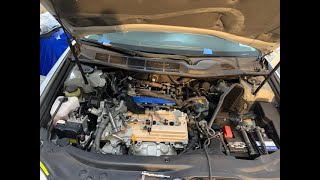
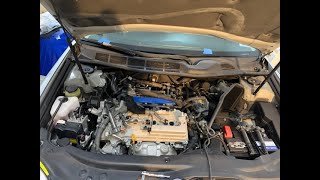
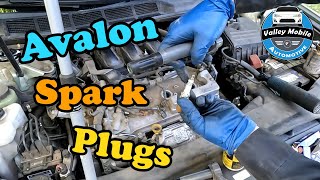
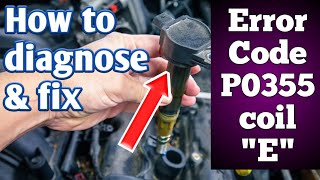
The key challenge with a P0355 on the 2005-2012 Avalon is the location of cylinder #5. It is part of the rear cylinder bank (Bank 1), positioned against the firewall. Accessing this coil is not a simple task; it requires the complete removal of the upper intake manifold (plenum). 🎬 Watch: Part 1 of this 2GR-FE coil replacement walkthrough. Because of the significant labor involved, the standard diagnostic trick of swapping the coil with an easily accessible one isn't practical, and most owners and shops elect to replace all three rear coils (cylinders 1, 3, 5) and all six spark plugs preventatively during the repair. This issue is widely documented across many vehicles using the 2GR-FE engine.
Symptoms You May Notice
- Check Engine Light is on or flashing
- Rough, shaking, or vibrating idle
- Engine misfiring or stumbling during acceleration
- Noticeable loss of engine power
- Engine may hesitate or be hard to start
- Smell of unburnt fuel from the exhaust
- Replacing only the spark plug without replacing the faulty coil.
- Replacing a fuel injector, as the ECM may disable the injector for the affected cylinder, leading some to mistakenly diagnose a fuel issue.
- Assuming the issue is with an easily accessible front cylinder and not realizing 'E' corresponds to the rear bank.
Most Likely Causes
- Failed Ignition Coil on Cylinder #5 🔴 High Probability → Shop Ignition Coil The rear bank of cylinders runs hotter, which can contribute to a shorter lifespan for electronic components like ignition coils. Heat cycling over many years leads to internal coil failure. This is a very common failure point on the 2GR-FE engine across many Toyota and Lexus models.
How to confirm: After removing the intake manifold for access, the coil can be tested with a multimeter or swapped with another coil. However, due to the high labor cost to access it, replacement is the most common confirmation.
Typical fix: Replace the ignition coil for cylinder #5. It is strongly recommended to replace all three rear coils (cylinders 1, 3, 5) and all six spark plugs at the same time.
Est. part cost: $50-$90 per coil - Damaged Wiring or Connector 🟡 Medium Probability The wiring harness is tucked behind the engine, where high heat can make plastic connectors brittle and wires fragile over time. Rodents can also chew on wiring in this hidden area. The locking tab on the connector is notoriously brittle and can break during removal.
How to confirm: Visually inspect the wiring harness and the connector for cylinder #5's ignition coil. Look for signs of melting, corrosion, chafing, or broken locking tabs. Use a multimeter to check for continuity and proper voltage at the connector.
Typical fix: Repair the damaged section of wire or replace the connector pigtail. 🎬 See how to fix P0355 if a new coil doesn't work.
Est. part cost: $15-$30 for a connector pigtail - Worn or Fouled Spark Plug ⚪ Low Probability → Shop Spark Plug Spark plugs are a normal wear item. An excessively worn plug increases the electrical resistance, putting extra strain on the ignition coil, which can lead to coil failure. Since the labor to reach the rear plugs is so high, they are often neglected past their service interval.
How to confirm: Once the coil is removed, extract the spark plug and inspect it for wear on the electrode, carbon fouling, or oil contamination. Check the spark plug gap against the manufacturer's specification.
Typical fix: Replace the spark plug. It is best practice to replace all six spark plugs if they are near the end of their service life (typically 100,000-120,000 miles).
Est. part cost: $10-$20 per Iridium plug
Rare But Worth Checking
- Faulty Engine Control Module (ECM): → Shop Engine Control Module (ECM) This is extremely rare. The internal driver circuit for the ignition coil can fail. This should only be considered after a professional has definitively ruled out the coil, spark plug, and all wiring.
Diagnosis Steps
- Confirm the presence of code P0355 (and likely P0305) with an OBD-II scanner.
- Confirm cylinder numbering: Bank 1 (rear, against firewall) contains cylinders 1, 3, 5 (from passenger to driver side). Bank 2 (front) contains 2, 4, 6. Cylinder #5 is on the rear bank, driver's side.
- Acknowledge that access requires removing the upper intake manifold (plenum).
- Disconnect the negative battery terminal.
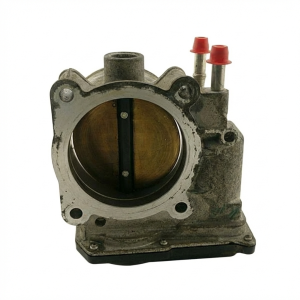
- Remove the engine cover, air intake assembly, and throttle body. It is recommended to replace the throttle body gasket upon reassembly.
- Carefully disconnect all vacuum lines and electrical connectors from the upper intake manifold (plenum) and label them. Take pictures for reference.
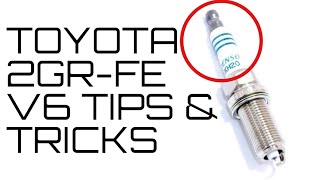
- Unbolt and remove the upper intake manifold. There are typically 4 bolts and 2 nuts. Be sure to cover the open lower intake ports with clean rags to prevent debris from falling in. 🎬 Watch: Pro tips and tricks for replacing these rear spark plugs.
- You now have access to the three rear ignition coils (1, 3, 5). Locate cylinder #5.
- Inspect the electrical connector and wiring going to the coil for any visible damage, melting, or corrosion.
- If wiring is intact, the ignition coil is the primary suspect. Unbolt and remove the coil (10mm bolt).
- Strong Recommendation: At this stage, replace all three rear ignition coils, all six spark plugs (front and rear), the upper intake manifold gasket, and the throttle body gasket to avoid future repeat labor.
- Reassemble in reverse order. Torque the intake manifold bolts to 13 ft-lbs and the nuts to 12 ft-lbs. Torque the throttle body bolts to 7.5 ft-lbs. Ensure all connectors and vacuum lines are securely reconnected.
- Reconnect the battery, clear the codes with the scanner, and start the engine to verify the repair. The engine may run rough for a few seconds as the ECM relearns.
Parts You'll Likely Need
- Ignition Coil (Coil-on-Plug)
(OEM #90919-A2004, superseded by 90919-A2007, 90919-A2013)— This is the most common failure part for a P0355 code. The rear bank location experiences high heat, leading to eventual failure.
Trusted brands: Denso (OEM supplier), NGK, Toyota (Genuine)
OEM price range: $90-$120
Aftermarket price range: $50-$90 - Iridium Spark Plug
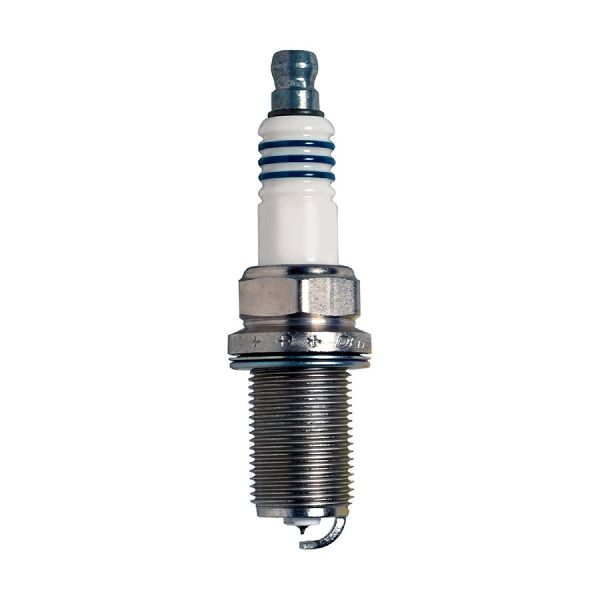
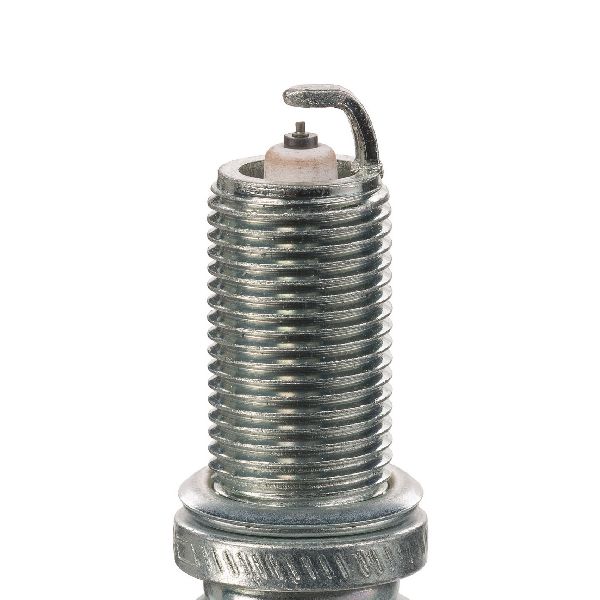
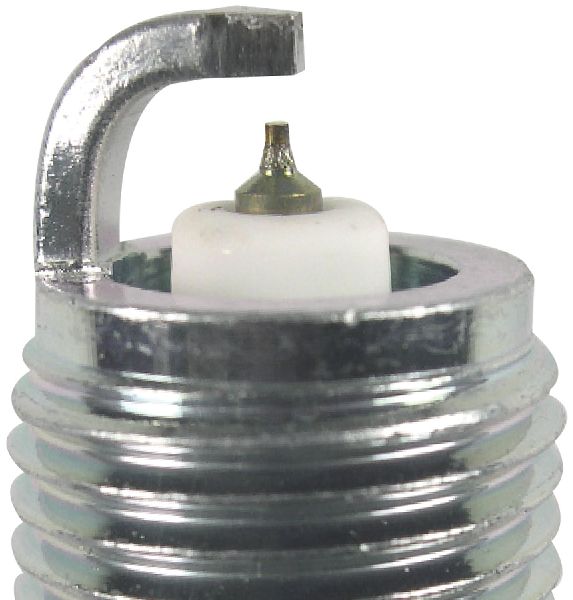
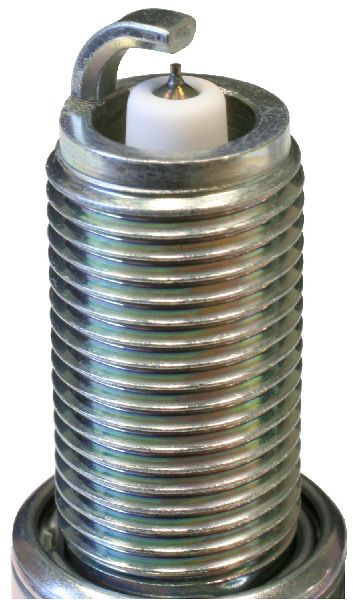
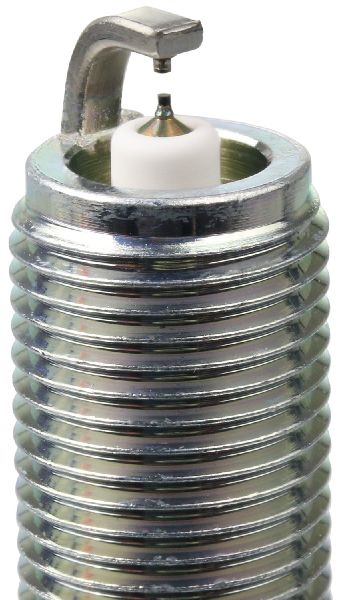
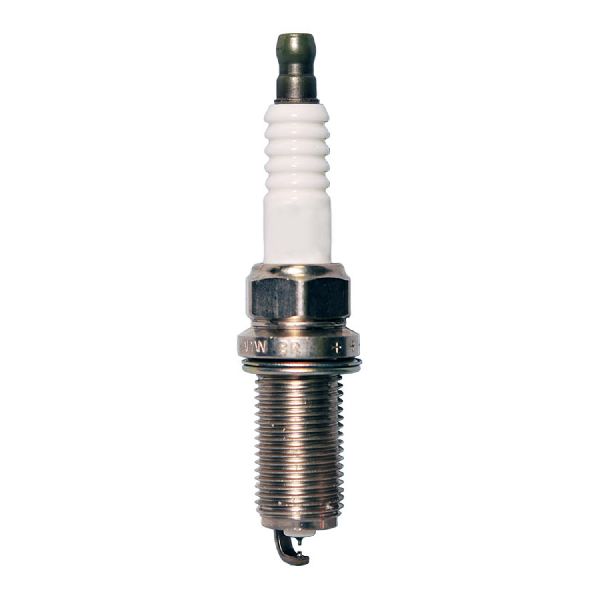
(OEM #90919-01247 (Denso FK20HR11))— Since accessing the rear bank is labor-intensive, replacing all spark plugs is a crucial preventative measure.
Trusted brands: Denso (OEM), NGK
OEM price range: $15-$25
Aftermarket price range: $10-$20 - Intake Manifold Gasket Set
(OEM #17176-0P021)— This gasket is a single-use item and must be replaced anytime the intake manifold is removed to prevent vacuum leaks.
Trusted brands: Fel-Pro (MS 96733), Mahle, Toyota OEM
OEM price range: $25-$40
Aftermarket price range: $15-$30 - Throttle Body Gasket
(OEM #22271-0P020)— The throttle body must be removed to access the intake manifold. This gasket should be replaced to prevent vacuum leaks.
Trusted brands: Toyota OEM, Fel-Pro
OEM price range: $8-$15
Aftermarket price range: $3-$7
Related Codes That Often Appear With This One
- P0305 — P0305 means 'Cylinder 5 Misfire Detected.' P0355 is the specific electrical cause for the misfire, so these two codes almost always appear together.
- P0300 — P0300 means 'Random/Multiple Cylinder Misfire Detected.' This may appear alongside P0355 if the misfire is severe enough to affect overall engine balance.
- P0351, P0352, P0353, P0354, P0356 — These codes correspond to ignition coil faults on cylinders 1, 2, 3, 4, and 6 respectively. Seeing multiple codes may indicate a systemic wiring issue, a failing ECM, or simply multiple aged coils failing around the same time.
Technical Service Bulletins (TSBs) & Recalls
- T-SB-0094-09: While not directly for P0355, this TSB addresses a ticking noise and VVT-i related DTCs on 2005-2009 Avalons with the 2GR-FE engine. It involves inspection of the VVT-i gear actuator and is relevant to anyone working in the top end of this engine.
Mechanic-Grade Diagnostic Values
- Ignition Coil Primary Resistance — expected: 0.5Ω ± 0.1Ω. Failure: A reading significantly outside this range indicates an internal fault in the coil's primary winding.
- Ignition Coil Secondary Resistance — expected: ~12 kΩ. Failure: An open circuit (infinite resistance) or a reading far from the specification points to a failed secondary winding.
- Ignition Coil Connector Pin 1 (+B) Voltage — expected: 9 to 14 V (Ignition ON). Failure: No voltage indicates a problem with the power supply from the IG2 relay or fuse.
- Ignition Coil Connector Pin 4 (GND) Resistance — expected: Below 1 Ω (to body ground). Failure: High resistance indicates a poor ground connection, which is critical for coil operation.
- Ignition Coil Connector Pin 2 (IGT) Signal — expected: Pulsing signal from ECM during cranking (requires oscilloscope). Failure: No signal suggests a wiring issue back to the ECM or a faulty ECM driver.
- Ignition Coil Connector Pin 3 (IGF) Signal — expected: Pulsing confirmation signal to ECM after spark event (requires oscilloscope). Failure: The absence of this signal when IGT is present is what triggers the P035x code.
Scan Tool Commands That Help
- Toyota Techstream: Active Test: Control the Injector / Ignition — After confirming the coil itself is not the issue (e.g., if a new coil does not fix the problem), this test can command the specific coil to fire with the engine off. Using a spark tester, a technician can verify if the ECM is capable of sending the signal, helping to isolate a wiring fault from a failed ECM driver.
- Toyota Techstream: Misfire Count (Mode $06) — While P0305 already indicates a misfire on cylinder 5, viewing the live misfire counters can confirm the fault is isolated to that cylinder and isn't randomly occurring on others, which might suggest a different root cause like a vacuum leak or fuel delivery issue.
Wiring & Ground Locations
- Ignition Coil Connector (Cylinder 5) — 4-pin connector on the ignition coil for cylinder #5, located on the rear cylinder bank (Bank 1), driver's side, under the intake manifold.. This is the primary connection point for all power, ground, and signal wires for the coil. It is a common point of failure due to heat and vibration. The pins are: Pin 1 (+B), Pin 2 (IGT5), Pin 3 (IGF), Pin 4 (GND).
- Engine Harness Ground (Bank 1) — A primary ground point for the engine harness attaches to the side of the rear cylinder head, underneath the throttle body area.. A loose or corroded ground at this location can cause intermittent and difficult-to-diagnose electrical issues for all components on Bank 1, including the ignition coils for cylinders 1, 3, and 5.
- Engine Harness Ground (Bank 2) — A similar engine harness ground attaches to the front cylinder head.. While less likely to cause a P0355 specifically, verifying all major engine grounds is good practice when diagnosing any electrical fault.
Real Owner Repair Stories
- YouTube user 'Dr. Cool' (Toyota vehicle with P0355 (procedure applicable to Avalon)) — Rough running, surging, high fuel consumption, and a P0355 code.
❌ Tried (didn't work) Swapping the ignition coil from the faulty cylinder to a known good cylinder; the code P0355 remained and did not follow the coil.
✅ What actually fixed it The final diagnosis was a faulty Engine Control Unit (ECU). The driver circuit within the ECU responsible for activating the ignition coil had failed. The fix was to replace the ECU with a known-good used unit. - NHTSA ODI #10969044 (Toyota vehicle with 2GR-FE engine) — An owner reported that only nine months after a P0351 code was addressed, a P0355 code was thrown for cylinder 5, highlighting the recurring nature of these ignition circuit failures.
OEM Part Supersession History
90919-A2004→90919-A2007, which was later superseded by 90919-A2013— Standard part revision and improvement by the manufacturer.
Heads up: All part numbers in this chain (90919-A2004, 90919-A2007, 90919-A2013) are cross-compatible for this application.
Model Year Variations Within This Range
- 2005-2007: These models were equipped with a 5-speed automatic transmission. The engine and ignition system are identical to later years.
- 2008-2012: These models received an updated 6-speed automatic transmission. The 2GR-FE engine and the P0355 fault diagnosis remain the same as the earlier years.
Diagnostic Flowchart
Other Known Issues on This Vehicle
Issues unrelated to this code that are worth knowing about as an owner of this generation:
- VVT-i Oil Line Rupture 🔴 High — Very common on early 2GR-FE engines (approx. 2005-2010). The original rubber hose section degrades and can burst, leading to rapid oil loss and catastrophic engine failure. (Ref: Limited Service Campaign (LSC 90K) was issued to replace the rubber line with an all-metal line (Part No. 15772-31030). Many vehicles may still have the old part.)
- Melting / Sticky Dashboard 🟡 Low — Extremely common on 2005-2010 Avalons, especially in high-heat, high-humidity climates. The dashboard material degrades, becoming shiny, sticky, and soft. (Ref: Toyota issued a Warranty Enhancement Program (ZE6) to replace affected dashboards, though the program has since expired.)
- Minor Transmission Shift Issues 🟠 Medium — Some owners of 2005-2007 models report hesitation or rough shifting, particularly at low speeds. This can sometimes be addressed with a fluid change or an ECM software update.
- Excessive Oil Consumption 🟠 Medium — Some 2005-2007 models have been reported to consume oil. This is less widespread than on the 4-cylinder (2AZ-FE) engines of the same era but is still noted by some owners. (Ref: A TSB (T-SB-0094-11) was issued for the 2AZ-FE engine, but not specifically for the 2GR-FE, which experiences this less frequently.)
Used vs. New Parts: Buying Guide for This Vehicle
When a used part is the smart pick: For this specific repair, using used parts is generally not recommended for the electronic components. However, if the intake manifold or associated brackets/bolts are damaged during removal, a used part from a junkyard is a perfectly acceptable and cost-effective replacement.
Donor-vehicle mileage cap: roughly under 100000 miles for the part to have meaningful remaining life.
What to inspect on the donor part:
- For a used intake manifold, ensure there are no cracks, especially around bolt holes.
- Check that all threaded inserts for sensors or brackets are intact and not stripped.
- Avoid parts from vehicles that show signs of a severe engine fire or heavy front-end collision.
OEM-only on this vehicle (don't cheap out):
- Ignition Coil: Given the high labor cost, installing a new, high-quality coil is critical. OEM (Toyota box) or the original supplier (Denso) are the only recommended options.
- Intake Manifold Gaskets: These are single-use gaskets and must always be purchased new to prevent vacuum leaks.
Aftermarket brands forum-validated for this vehicle:
- Denso (for ignition coils and spark plugs - this is the OEM supplier)
- NGK (for ignition coils and spark plugs)
- Fel-Pro (for gaskets)
Brands owners have reported issues with on this vehicle:
- Unbranded or generic 'white-box' ignition coils from online marketplaces. Many forum users and videos report premature failure, and the risk of counterfeit Denso parts is high. The significant labor for this job makes it unwise to save a few dollars on a part with questionable reliability.
Real Owner Stories
Aggregated from forums and TSBs cited above. Mileages and costs reflect what owners reported in those sources.
2007 Toyota Avalon 3.5L V6
Symptoms: P0355 and P0305 codes appeared simultaneously.
What fixed it: The owner replaced the rear coils and spark plugs, which resolved the issue.
Source hint: Toyotanation Forum: Thread discussing P0355 on a 2007 Avalon
Related OBD-II Codes
Frequently Asked Questions
Where is cylinder #5 located on my 2005-2012 Toyota Avalon 3.5L V6?
Does TSB-0094-09 apply to my P0355 ignition coil issue?
Why is the labor so high for a simple ignition coil on this 2GR-FE engine?
Should I replace all the coils if only cylinder #5 is failing?
What specific spark plugs should I use for my Avalon?
Are there any other major issues I should check while the intake manifold is off?
Helpful Videos
Used OEM Parts in Stock
New Aftermarket Parts Available

The information in this article is provided for general reference and educational purposes only. Vehicle specifications, procedures, and part compatibility can vary by production date, trim level, and region. Always consult your vehicle's factory service manual and verify part numbers before purchasing or performing repairs. Safety-critical components such as airbags, seat belts, and braking systems should be installed by a qualified professional.
- Toyota Avalon:
- 🧭 Diagnostic Flowchart
- 🎬 Helpful Videos
- 🛍️ Shop This Part
- What's Unique About the 2005-2012 Toyota Avalon
- Symptoms You May Notice
- Most Likely Causes
- Rare But Worth Checking
- Diagnosis Steps
- Parts You'll Likely Need
- Related Codes That Often Appear With This One
- Technical Service Bulletins (TSBs) & Recalls
- Mechanic-Grade Diagnostic Values
- Scan Tool Commands That Help
- Wiring & Ground Locations
- Real Owner Repair Stories
- OEM Part Supersession History
- Model Year Variations Within This Range
- Other Known Issues on This Vehicle
- Used vs. New Parts: Buying Guide for This Vehicle
- Real Owner Stories
- 2007 Toyota Avalon 3.5L V6
- Related OBD-II Codes
- Frequently Asked Questions
- 🎟️ Get 5% Off