

P0356 on 2008-2013 Toyota Highlander 3.5L V6: Ignition Coil 'F' Circuit Fixes
This code almost always means the ignition coil on cylinder #6 has failed. On the 3.5L V6 Highlander, cylinder #6 is conveniently located on the front bank (near the radiator) on the driver's side, making it a very easy 15-minute DIY fix. Expect to pay $40-$70 for an aftermarket coil or $90-$130 for an OEM part.
- P0356 on a 2008-2013 Highlander almost certainly means the ignition coil for cylinder #6 has failed.
- Cylinder #6 is on the front, driver's side of the engine, making this a very simple 15-minute DIY fix with a 10mm socket.
- This is a known issue acknowledged by Toyota in a TSB (T-SB-0047-10), and updated parts are available.
- The VSC and TRAC lights will illuminate along with the Check Engine Light; this is normal and will resolve when the P0356 code is fixed.
- Always perform the simple coil swap test (swap #6 with #4) to confirm the coil is the problem before buying parts.
What's Unique About the 2008-2013 Toyota Highlander
For the 2008-2013 Highlander with the 2GR-FE V6, the key detail for code P0356 is the location of cylinder #6. Unlike the rear three cylinders (1, 3, 5) which require removing the intake manifold for access, cylinder #6 is on the front bank (Bank 2), on the driver's side. This makes it the most accessible coil on that side of the engine, turning a potentially expensive, labor-intensive job into a simple and cheap DIY repair that can be done in minutes with basic tools.
Symptoms You May Notice
- Check Engine Light is on
- Flashing Check Engine Light (during misfire)
- VSC and/or TRAC warning lights are on
- Rough idle or engine vibration
- Engine hesitation or stumbling during acceleration
- Noticeable loss of power
- Engine may stall or be difficult to start
- Replacing the wrong ignition coil. Many owners or technicians may assume 'F' or '6' is on the difficult-to-access rear bank, leading to unnecessary work. Always confirm the cylinder location first. For the 2GR-FE, the front bank (near radiator) has cylinders 2, 4, and 6 (from passenger to driver side). The rear bank has 1, 3, 5.
- Replacing other components before performing the simple coil swap diagnostic test.
Most Likely Causes
- Failed Ignition Coil on Cylinder #6 🔴 High Probability → Shop Ignition Coil Ignition coils are a common wear item that fail from heat cycles and electrical stress. Toyota issued TSB T-SB-0047-10 for 2008-2010 models for P035x codes, acknowledging a potential issue with the original coils and providing an updated part.
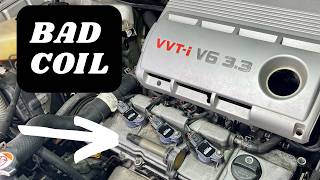
How to confirm: Swap the ignition coil from cylinder #6 with the coil from cylinder #4 (the middle coil on the front bank). 🎬 See how to diagnose and fix this V6 misfire Clear the codes and run the engine. If the code changes to P0354, the ignition coil is definitively bad.
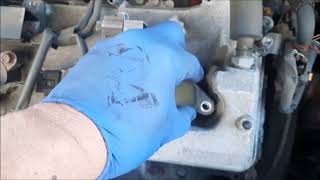
Typical fix: Replace the faulty ignition coil. Since it's easily accessible, this involves removing one 10mm bolt and the electrical connector.
Est. part cost: $40-$130 - Worn or Fouled Spark Plug 🟡 Medium Probability → Shop Spark Plug If spark plugs have not been replaced according to the 120,000-mile service interval, a worn plug can increase resistance and strain the ignition coil, leading to premature coil failure or causing the circuit fault itself.
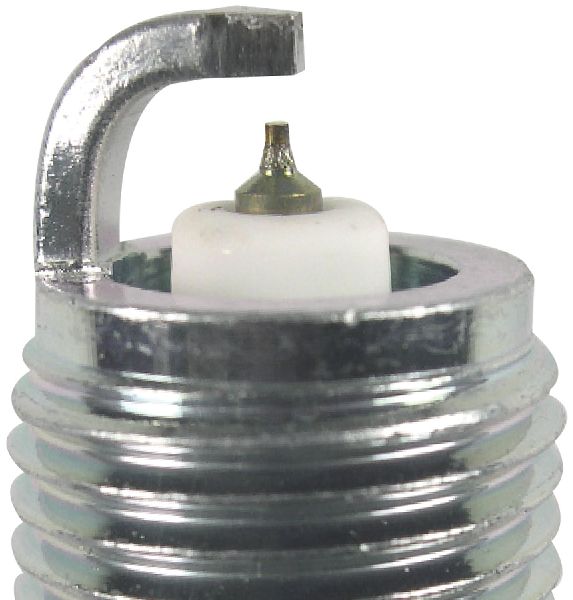
How to confirm: After confirming the coil is good, remove the spark plug from cylinder #6. Inspect it for wear (rounded electrode), carbon tracking, oil fouling, or damage to the porcelain insulator.
Typical fix: Replace the spark plug. It is highly recommended to replace all six plugs at the same time if they are due for service. 🎬 Watch: Full spark plug and coil replacement walkthrough
Est. part cost: $10-$20 per plug - Damaged Connector or Wiring ⚪ Low Probability
How to confirm: Visually inspect the ignition coil connector for cylinder #6. Check for cracked plastic (especially the locking tab), corroded pins, or loose wires. Gently tug on the wires to ensure they are secure in the connector. Check the wiring harness for any signs of fraying or damage from rubbing against other components.
Typical fix: If the connector clip is broken, it may need to be replaced or secured with a zip tie as a temporary measure. Damaged wiring would need to be repaired by splicing in a new connector pigtail.
Est. part cost: $15-$30 for a new connector pigtail
Rare But Worth Checking
- Faulty Engine Control Module (ECM): → Shop Engine Control Module (ECM) This is extremely rare. The ECM's internal driver for the ignition coil can fail, but this should only be considered after all other possibilities (coil, plug, wiring) have been exhaustively ruled out. A failure of all six coils simultaneously (P0351-P0356) could point to a shared power/ground issue or a failed ECM.
Diagnosis Steps
- Read the trouble codes with an OBD-II scanner to confirm P0356 is present. Note any other codes like P0306 or C1201.
- Identify cylinder #6. It is located at the front of the engine bay (near the radiator), on the driver's side.
- Swap the ignition coil from cylinder #6 with the one from cylinder #4 (the middle cylinder on the front bank). This is the easiest diagnostic test.
- Clear the trouble codes with the scanner.
- Start the engine and let it run for a minute, or take a short drive.
- Re-scan for codes. If code P0354 ('Ignition Coil D Circuit Malfunction') appears, the ignition coil you moved is faulty and must be replaced.
- If code P0356 returns, the problem is not the coil. Proceed to inspect the spark plug in cylinder #6. Check for cracks, wear, or fouling.
- If the spark plug is in good condition, carefully inspect the wiring and connector for cylinder #6 for any damage, corrosion, or loose connections. Check for power and ground at the connector with a multimeter.
- If all components and wiring appear good, the issue may be a rare ECM failure, which requires professional diagnosis.
Parts You'll Likely Need
- Ignition Coil
(OEM #90919-A2007)— This is the most common failure point for a P0356 code. The original part (e.g., 90919-02251) was superseded by improved versions like 90919-A2004 and 90919-A2007 due to a known issue addressed in TSB T-SB-0047-10.
Trusted brands: Denso (OEM supplier), NGK, Hitachi
OEM price range: $90-$130
Aftermarket price range: $40-$70 (Denso aftermarket part number is 673-1309) - Spark Plug
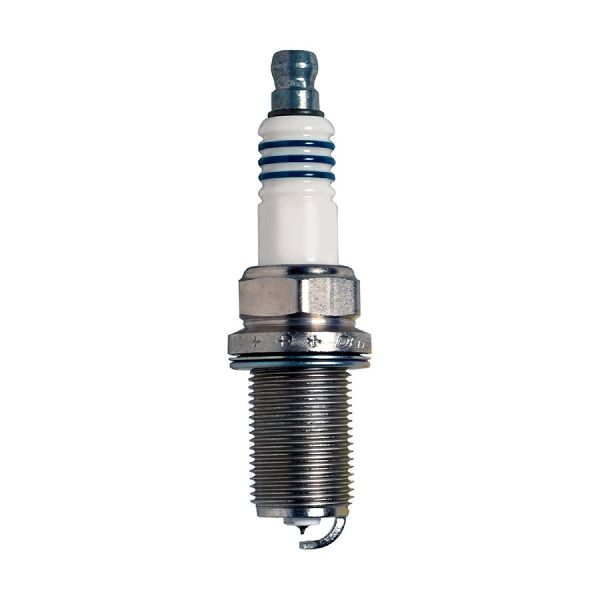
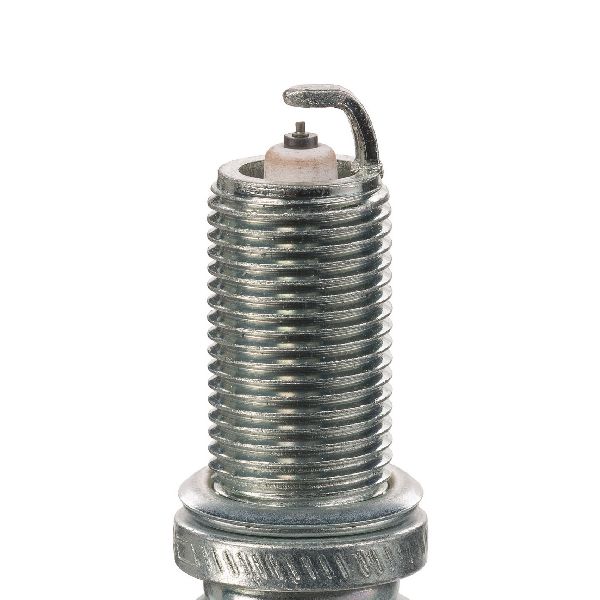
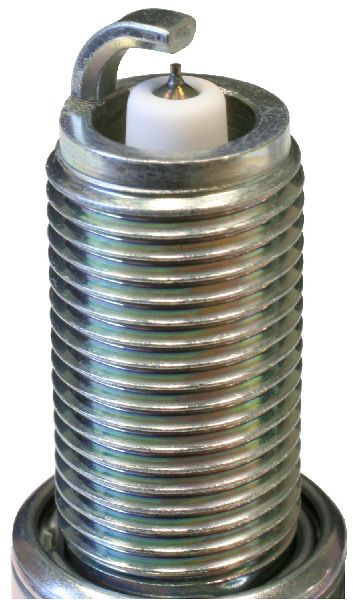
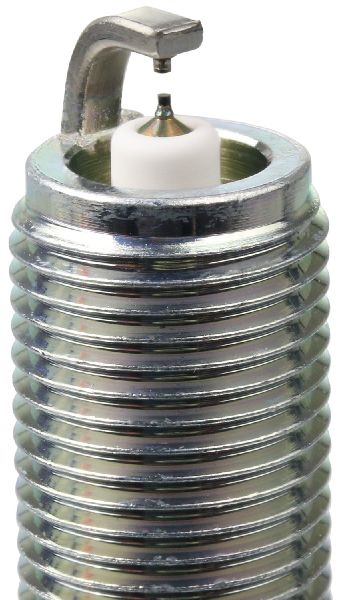
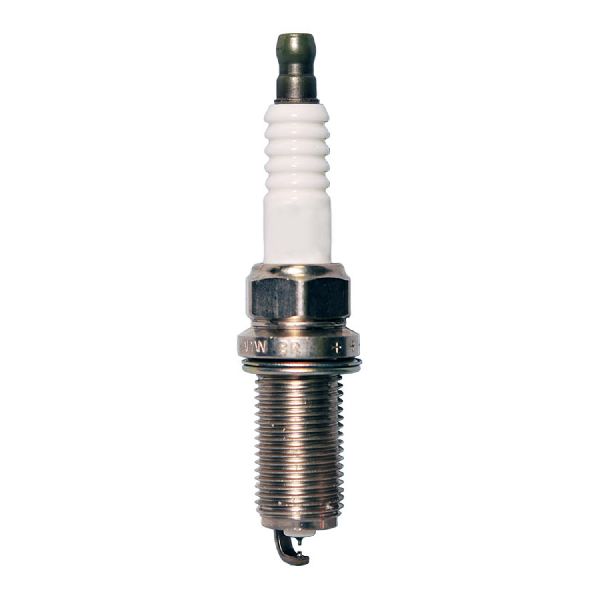
(OEM #90919-01247 (Denso FK20HR11))— If the spark plugs are old, a worn plug in cylinder #6 could be the cause or a contributing factor. It's good practice to replace it while the coil is removed, especially on a high-mileage vehicle.
Trusted brands: Denso, NGK
OEM price range: $15-$25
Aftermarket price range: $10-$18
Related Codes That Often Appear With This One
- P0306 — P0306 means 'Cylinder 6 Misfire Detected.' Since P0356 indicates a fault in the ignition circuit for cylinder 6, it will almost always cause a misfire, triggering P0306 as well.
- C1201 — This is a code for 'Engine Control System Malfunction.' On many Toyota vehicles, a powertrain fault that illuminates the Check Engine Light will automatically disable the Vehicle Stability Control (VSC) and Traction Control (TRAC) systems as a precaution, logging this code. Resolving the P0356 code and clearing the codes will turn off the VSC/TRAC lights.
Technical Service Bulletins (TSBs) & Recalls
- T-SB-0047-10 (January 28, 2010): Titled 'MIL ON DTC P0351, P0352, P0353, P0354, P0355, P0356', this TSB specifically addresses this family of codes for 2008-2010 2GR-FE engines. It acknowledges a potential coil issue and lists updated part numbers for the repair, confirming this is a known problem.
Mechanic-Grade Diagnostic Values
- Ignition Coil Primary Winding Resistance — expected: 0.49 - 0.57 Ohms at 68°F (20°C). Failure: A reading outside this range indicates a faulty coil.
- Ignition Coil Secondary Winding Resistance — expected: 9.5 - 11.1 kOhms. Failure: A reading outside this range indicates a faulty coil.
- Voltage at Coil Connector Pin 1 (+B wire) — expected: Battery Voltage (approx. 12V) with Key On, Engine Off. Failure: No voltage indicates a problem with the power supply circuit, fuse, or relay.
- Continuity at Coil Connector Pin 4 (Ground wire) — expected: Continuity to chassis ground. Failure: No continuity (high resistance) indicates a broken or corroded ground connection.
- IGF (Ignition Confirmation) Signal Voltage — expected: A 5V square wave signal when the engine is running. The circuit should show ~5V KOEO (Key On, Engine Off) and be pulled to ground by the igniter upon a successful spark event.. Failure: A constant low or zero voltage, or a flat 5V signal that never drops, indicates a fault in the coil's internal igniter or the IGF circuit wiring.
- IGT (Ignition Trigger) Signal Waveform — expected: A square wave signal from the ECM commanding the coil to fire. Can be observed with an oscilloscope.. Failure: Absence of the signal points to a wiring issue between the ECM and coil, or a faulty ECM driver.
Scan Tool Commands That Help
- Toyota Techstream: Power Balance Test — This active test allows the technician to disable individual fuel injectors one by one. When the injector for cylinder #6 is disabled, if there is no change in engine RPM or smoothness, it confirms that cylinder #6 was not contributing, reinforcing the diagnosis of a fault in that cylinder's ignition circuit.
- Toyota Techstream: DTC Simulation Test — After swapping components like ignition coils, this function can be used to run the engine through conditions that would trigger the fault, allowing for faster confirmation of whether the problem has moved with the component (e.g., from P0356 to P0354).
Wiring & Ground Locations
- Ignition Coil #6 Connector (E5) — On the ignition coil for cylinder #6, front bank (near radiator), driver's side.. This is the primary connection point for all signals related to P0356. The plastic locking tab is known to become brittle and break, leading to a poor connection. The pinout is: Pin 1: +B (Power), Pin 2: IGT (Trigger), Pin 3: IGF (Confirmation), Pin 4: GND (Ground).
- ECM Connector C39 (IGT6) — At the Engine Control Module (ECM). Pin C39 is the specific terminal for the ignition trigger signal to cylinder #6.. This is the origin point of the 'fire' command. A continuity check between this pin and Pin 2 at the coil connector can rule out a broken IGT wire.
- ECM Connector C36 (IGF) — At the Engine Control Module (ECM). Pin C36 is the terminal for the shared ignition confirmation signal from all coils.. This is the destination for the confirmation signal. A fault on this wire can cause P035x codes. If multiple P035x codes are present, a short to ground on this shared circuit is a possibility.
- Engine Harness Ground (Front) — On the side of the front cylinder head (Bank 2), below the throttle body area.. A poor ground connection at this point can cause various electrical issues, including erratic sensor readings and ignition problems for the front bank of cylinders (2, 4, 6).
- Engine Harness Ground (Rear) — On the rear valve cover, near the attachment point for the VVTi oil line.. While less likely to affect only cylinder #6, a compromised main engine ground can cause unpredictable electrical faults across the entire system.
Real Owner Repair Stories
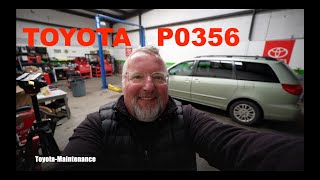
- YouTube channel 'Toyota Maintenance' (2009 Toyota Sienna with 2GR-FE engine, 166,000 miles) — Running rough, Check Engine, VSC, and TRAC OFF lights on, code P0356 stored.
❌ Tried (didn't work) The code was intermittent. The initial diagnosis was simply a bad coil.
✅ What actually fixed it The locking tab on the ignition coil connector for cylinder #6 was broken, causing an intermittent connection. The mechanic secured the connector using a dab of black RTV silicone, which is heat resistant and flexible, allowing for future removal if needed. This resolved the intermittent P0356 code. - YouTube channel 'Fix It With Cronk' (2008 Toyota Highlander) — VSC OFF and Check Engine lights on, code P0356.
✅ What actually fixed it A direct replacement of the ignition coil on cylinder #6 fixed the issue and cleared the codes. The owner noted that the plastic locking tab on the original connector broke upon removal, corroborating that these connectors become brittle over time. - NHTSA ODI #10448450 (Toyota 3.5L V6) — An owner reported that while driving to a dealer, the vehicle felt like it was misfiring. The technician found multiple codes including P0304, P0305, P0306, P0356, P1578, and C1201, confirming a malfunction in the #6 coil.
OEM Part Supersession History
90919-02251→90919-A2002, 90919-A2004, 90919-A2005, and finally 90919-A2007— Addressed a known issue with premature coil failure on early 2GR-FE engines, as documented in Toyota TSB T-SB-0047-10.
Model Year Variations Within This Range
- 2008-2010: These model years were equipped with the original, less reliable ignition coils (like 90919-02251) and are specifically called out in TSB T-SB-0047-10. They are more likely to experience this failure compared to 2011-2013 models, which received the improved parts during manufacturing.
Diagnostic Flowchart
Other Known Issues on This Vehicle
Issues unrelated to this code that are worth knowing about as an owner of this generation:
- Rupturing VVT-i Oil Line 🔴 High — Common on earlier 2008 models that haven't had the updated part installed. Failure can cause rapid oil loss and catastrophic engine failure. (Ref: LSC 90K / T-SB-02011-11)
- Water Pump Failure 🟠 Medium — Water pump may fail between 80,000 and 150,000 miles. It's an internal pump, so a slow leak can be hard to detect before it causes issues.
- Intermediate Steering Shaft Clunk 🟡 Low — A clunking or popping noise may be heard when turning the steering wheel. It is not a safety issue but is a common annoyance. (Ref: T-SB-0034-13)
- VVT Actuator Gear Failure 🟠 Medium — Less common than other issues, but can cause rattling noises on startup and engine timing codes. Regular oil changes help prevent this.
Used vs. New Parts: Buying Guide for This Vehicle
When a used part is the smart pick: For this specific repair, using a used ignition coil is not recommended. Coils are wear-and-tear items that can develop intermittent, heat-sensitive faults that are impossible to verify on a junkyard part. Given the low cost of reliable aftermarket coils, a used part offers poor value and high risk of repeat failure.
Donor-vehicle mileage cap: roughly under 50000 miles for the part to have meaningful remaining life.
What to inspect on the donor part:
- If buying a used coil is unavoidable, look for one from a low-mileage, late-model-year vehicle (2011-2013).
- Inspect the plastic housing for any cracks, melting, or signs of arcing.
- Ensure the connector pins are clean, straight, and free of corrosion.
- Avoid any coil that shows signs of oil contamination on the boot.
OEM-only on this vehicle (don't cheap out):
- Engine Control Module (ECM)
Aftermarket brands forum-validated for this vehicle:
- Denso (OEM supplier)
- NGK
- Hitachi
Brands owners have reported issues with on this vehicle:
- Unbranded, no-name ignition coil sets sold in bulk on marketplaces. While tempting due to low price, they often have a high failure rate and may not meet OEM resistance or durability specifications.
Real Owner Stories
Aggregated from forums and TSBs cited above. Mileages and costs reflect what owners reported in those sources.
2008 Toyota Highlander 3.5L V6
Symptoms: Check engine light was on and the owner recorded the diagnosis and repair process in a driveway setting.
What fixed it: Replacement of the cylinder #6 ignition coil.
Source hint: YouTube - 'FixIt-029 - 2008 Toyota Highlander Code P0356 Ignition Coil Replacement'
2007 Toyota Sienna 3.5L V6
Symptoms: Classic trifecta of lights (Check Engine, VSC, TRAC OFF) with code P0356.
What fixed it: The owner performed a coil swap procedure between cylinders on the front bank to identify the bad coil and then replaced it.
Source hint: Reddit r/Cartalk - 'Toyota Sienna - Check Engine, VSC, Trac Off, and a P0356'
2007 Lexus RX350 3.5L V6
Symptoms: Check engine light with a slight skip on idle.
What fixed it: Replacing the single ignition coil on cylinder 6 after a coil swap diagnostic test.
Source hint: ClubLexus - 'Check Engine Light - "P0356" - Ignition Coil 6'
2008-2013 Toyota Highlander 3.5L V6
Symptoms: Engine hesitation and a scanned P0356 code.
What fixed it: A simple ignition coil swap/replacement.
Source hint: Reddit r/ToyotaHighlander - 'Trouble...'
NHTSA ODI #10969044
Symptoms: An owner reported that their engine threw code P0354 and the coil on cylinder 4 was replaced. Later, code P0356 was thrown, requiring the replacement of the coil on cylinder 6 after a dangerous incident involving lost power.
Related OBD-II Codes
Frequently Asked Questions
Is there a technical service bulletin for the P0356 code on my 2008-2010 Toyota Highlander?
Where is cylinder #6 located on the Highlander 3.5L V6 engine?
Why did my VSC and TRAC OFF lights come on at the same time as the P0356 Check Engine code?
Can I test if the ignition coil is actually bad before buying a new one?
How often should I be changing the spark plugs on my 2GR-FE engine to prevent coil failure?
What should I do if the connector clip breaks while I'm replacing the coil?
Helpful Videos
We Have This Part in Stock

The information in this article is provided for general reference and educational purposes only. Vehicle specifications, procedures, and part compatibility can vary by production date, trim level, and region. Always consult your vehicle's factory service manual and verify part numbers before purchasing or performing repairs. Safety-critical components such as airbags, seat belts, and braking systems should be installed by a qualified professional.
- Toyota Highlander:
- 🧭 Diagnostic Flowchart
- 🎬 Helpful Videos
- 🛍️ Shop This Part
- What's Unique About the 2008-2013 Toyota Highlander
- Symptoms You May Notice
- Most Likely Causes
- Rare But Worth Checking
- Diagnosis Steps
- Parts You'll Likely Need
- Related Codes That Often Appear With This One
- Technical Service Bulletins (TSBs) & Recalls
- Mechanic-Grade Diagnostic Values
- Scan Tool Commands That Help
- Wiring & Ground Locations
- Real Owner Repair Stories
- OEM Part Supersession History
- Model Year Variations Within This Range
- Other Known Issues on This Vehicle
- Used vs. New Parts: Buying Guide for This Vehicle
- Real Owner Stories
- 2008 Toyota Highlander 3.5L V6
- 2007 Toyota Sienna 3.5L V6
- 2007 Lexus RX350 3.5L V6
- 2008-2013 Toyota Highlander 3.5L V6
- NHTSA ODI #10969044
- Related OBD-II Codes
- Frequently Asked Questions
- 🎟️ Get 5% Off