

P0363 on 2007-2015 Mini Cooper: Misfire Detected & Fueling Disabled Causes and Fixes
On a 2007-2015 Mini Cooper, code P0363 indicates a severe misfire that caused the engine computer to cut fuel to a cylinder. The most common causes are faulty ignition coils and spark plugs. A failing High-Pressure Fuel Pump (HPFP) is another very frequent culprit, especially if you have long crank times or the code P2880 is also present.
- P0363 is a serious code indicating the engine is protecting itself. Do not continue to drive.
- Always start diagnosis with the cheapest and easiest parts: swap ignition coils, then inspect spark plugs.
- If you experience long crank times or hard starts when cold, the High-Pressure Fuel Pump (HPFP) is a very likely suspect.
- If you have an N14 engine (2007-2010 S) and hear a rattling noise on startup, suspect a failing timing chain and have it inspected immediately.
- Misfires are a symptom. The cause is almost always related to ignition, fuel delivery, or (on these engines) timing or carbon buildup.
What's Unique About the 2007-2015 Mini Cooper
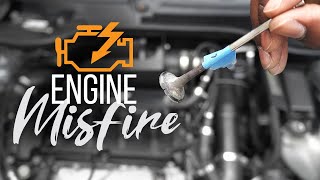
The direct-injection turbocharged Prince engines (N14/N18) in the R56-generation Mini are uniquely susceptible to a few key issues that trigger misfires. Unlike many 🎬 Watch: A detailed breakdown of common R56 engine misfire causes. port-injected cars, these engines suffer from notorious High-Pressure Fuel Pump (HPFP) failures, which can starve the engine of fuel under load. The earlier N14 engine is also infamous for timing chain stretch (the 'death rattle') and severe carbon buildup on intake valves, both of which are common sources of misfire codes that might be rare on other vehicles.
Generation note: This range covers the second-generation Mini (R55, R56, R57, etc.) but includes two key engine updates. The N14 engine (2007-2010 Cooper S, 2008-2012 JCW) is significantly more prone to timing chain failures and heavy carbon buildup on the intake valves. The N18 engine (2011-2015) featured a revised cylinder head, double VANOS, and timing chain system to mitigate these issues, but still shares vulnerabilities like ignition coil and HPFP failures.
Symptoms You May Notice
- Flashing Check Engine Light, which may become solid later. This is often accompanied by a 'half-engine' power loss light on the tachometer.
- Significant loss of engine power, often called 'limp mode'.
- Engine shaking, vibrating, or running very rough.
- Hesitation or stumbling during acceleration.
- Long crank times or difficulty starting, especially when the engine is cold (a classic HPFP failure symptom).
- Audible rattling or slapping noise from the engine, particularly on cold starts (indicative of a timing chain issue on N14 engines).
- Replacing the ECU. One owner was told their ECU was faulty, but the actual problem was a simple cracked air intake boot. Always exhaust mechanical, ignition, and fuel system checks before suspecting the computer.
- Replacing oxygen sensors. O2 sensors may report issues due to the misfire, but they are almost never the root cause of the misfire itself.
- Replacing the valve cover for a long crank issue. A user on a Mini Cooper Forum replaced their valve cover based on a dealer diagnosis, but the long crank and slow acceleration persisted, pointing towards a misdiagnosed HPFP issue.
Most Likely Causes
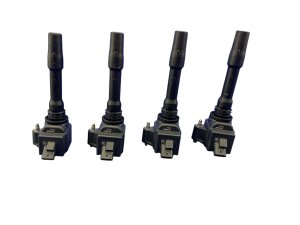
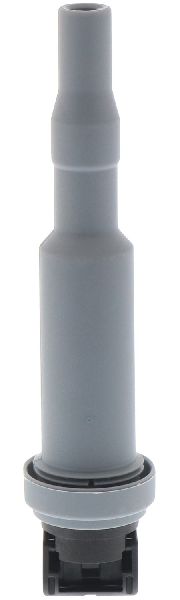
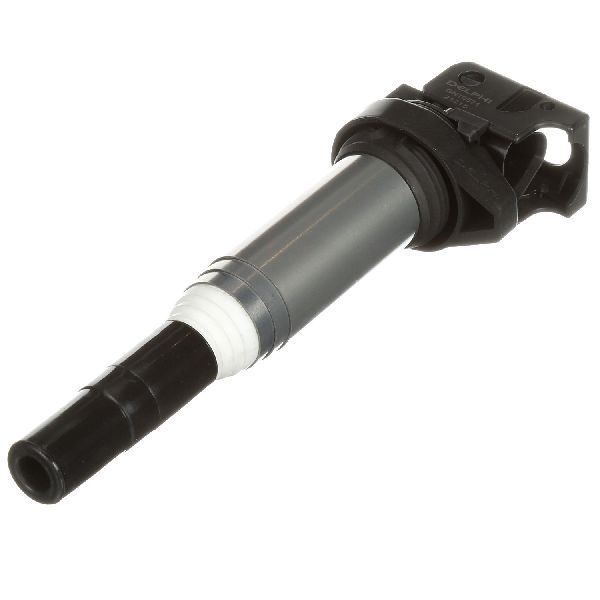
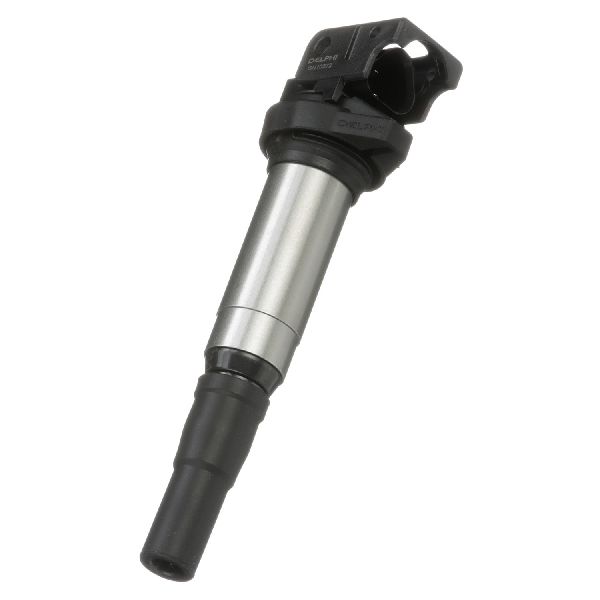
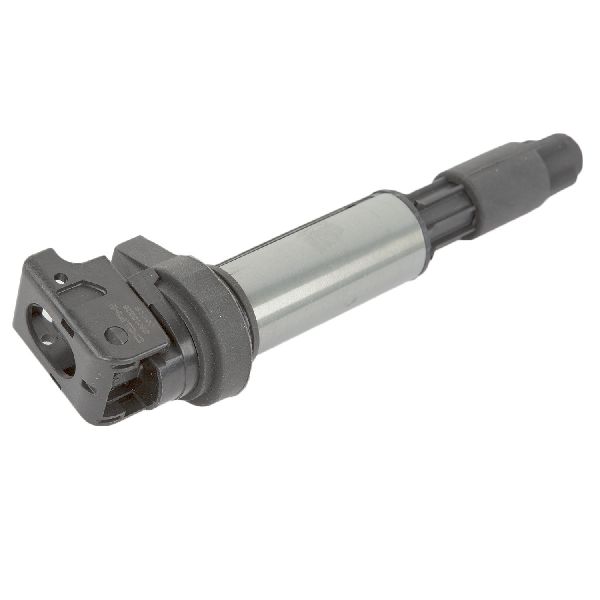
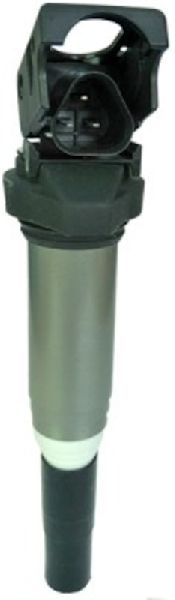
- Faulty Ignition Coil(s) 🔴 High Probability → Shop Ignition Coil The coil-on-plug design is a common failure point. BMW/Mini issued a Technical Service Bulletin acknowledging that high temperatures can cause premature coil failure. The coils are a frequent topic of failure in owner forums, often failing as early as 60,000 miles.
How to confirm: Use a scan tool to identify the misfiring cylinder (e.g., P0301 for cylinder 1). Swap the ignition coil from the misfiring cylinder with one from a working cylinder. Clear the codes and run the engine. If the misfire code follows the coil (e.g., now shows P0302), the coil is bad.
Typical fix: Replace the faulty ignition coil. It is often recommended to replace all four at once if they are original and high-mileage. Popular OEM-quality brands include Bosch and Delphi.
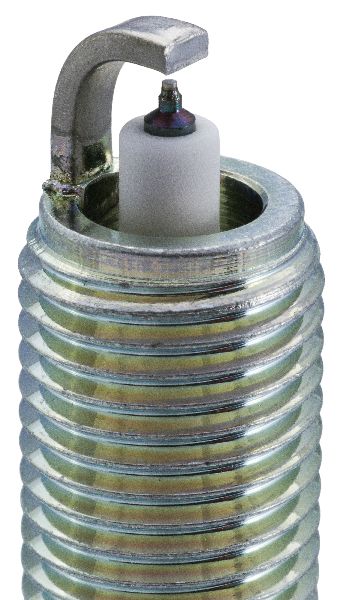
Est. part cost: $40-$80 per coil - Worn or Fouled Spark Plugs 🔴 High Probability → Shop Spark Plug
How to confirm: After ruling out the coil, inspect the spark plug from the misfiring cylinder. Look for wear on the electrode, oil fouling, or carbon tracking. A Reddit user found a misfire under load was caused by a spark plug with a missing ground electrode.
Typical fix: Replace the spark plugs. They are a regular maintenance item and should be replaced as a full set. Use the correct heat range plug specified for your engine.
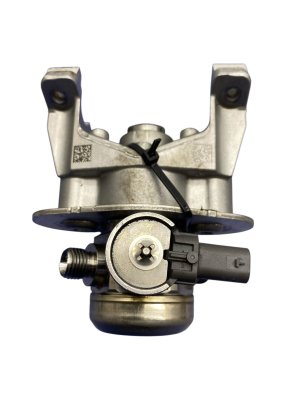
Est. part cost: $50-$100 for a set of four - Failing High-Pressure Fuel Pump (HPFP) 🟡 Medium Probability The HPFP is a notoriously common failure item on N14 and N18 engines, to the point that Mini extended the warranty on them to 10 years/120,000 miles. They often fail prematurely, sometimes as early as 40,000 miles.
How to confirm: Use a scan tool capable of reading live data. Monitor the fuel rail pressure at idle and during a cold start. At idle, pressure should be around 50 bar (725 PSI). A key failure indicator is low pressure during a cold start; desired pressure is ~5 bar (72.5 PSI) from the low-pressure pump before the engine starts, and if the high-pressure pump struggles to build pressure from there, it's likely failing. The code P2880 ('High Pressure System') often points directly to the HPFP.
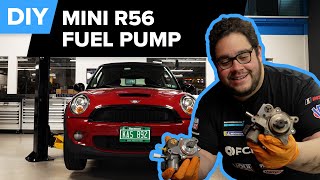
Typical fix: Replace the High-Pressure Fuel Pump. The N14 and N18 engines use different pumps. 🎬 See this step-by-step walkthrough for replacing your high-pressure fuel pump.
Est. part cost: $300-$1000 - Stretched Timing Chain or Failed Tensioner 🟡 Medium Probability This is a very common and serious issue on the N14 engine, often called the 'death rattle'. The original tensioner design was weak, leading to chain slack, which causes incorrect valve timing and misfires. The N18 engine has an improved design but is not entirely immune.
How to confirm: Listen for a loud rattling or chain-slapping noise from the passenger side of the engine, especially on cold starts that lasts for more than a few seconds. A mechanic can remove the valve cover to physically inspect for chain slack and guide condition.
Typical fix: Replace the timing chain, tensioner, sprockets, and all plastic guides. This is a labor-intensive job.
Est. part cost: $200-$500 for a kit - Carbon Buildup on Intake Valves 🟡 Medium Probability As a direct-injection engine, fuel does not spray over the intake valves to clean them. Oil vapor from the PCV system bakes onto the hot valves, restricting airflow and causing misfires. This is a severe problem on the N14 engine, though the N18's revised PCV system (internal to the valve cover) lessens the severity, it does not eliminate it.
How to confirm: Visually inspect the intake ports and valves using a borescope camera after removing the intake manifold. Significant black, crusty buildup is a clear indicator.
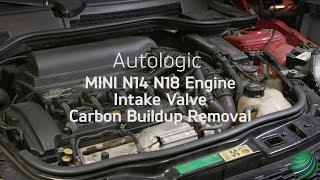
Typical fix: Perform a walnut shell blasting service to clean the valves and ports. This is not a DIY job for most owners and is considered a periodic maintenance item by many enthusiasts. 🎬 Watch: How to perform a carbon cleaning on your intake valves.
Est. part cost: N/A (Labor-based service, typically $500-$900)
Rare But Worth Checking
- Leaking or Clogged Fuel Injector: → Shop Fuel Injector While less common than coils or the HPFP, a fuel injector can fail electronically or become clogged, leading to a misfire in a single cylinder.
- Cracked Intake Air Duct or Valve Cover: → Shop Engine Valve Cover A user on North American Motoring traced a persistent random misfire issue to a crack on the underside of the air duct leading to the turbo, creating a vacuum leak under load. Similarly, the valve cover on the N14/N18 integrates the PCV system, and cracks in the cover or failure of the internal PCV diaphragm can cause unmetered air leaks and misfires.
- Faulty VANOS Solenoid: The variable valve timing (VANOS) solenoids can get clogged with oil sludge or fail, causing incorrect camshaft timing. This can lead to rough running, poor performance, and misfire codes. The N14 has one solenoid on the intake side, while the N18 has two (intake and exhaust). They can sometimes be cleaned, but replacement is often the best fix. Associated codes include 2A87, 2A82, P0013, P2088.
- Low Engine Compression: A severe mechanical issue like a burnt or cracked exhaust valve or damaged piston can cause a complete loss of compression and a persistent misfire. A compression test will confirm this. One owner found a cracked exhaust valve in cylinder 3 was the cause of a mechanical misfire that did not set a check engine light.
Diagnosis Steps
- Read all stored fault codes with a BMW/Mini-capable OBD-II scanner to identify the specific cylinder(s) that are misfiring (e.g., P0302 for cylinder 2) and check for related codes like P2880 or VANOS faults.
- Begin with the simplest and most common culprits: the ignition system. Swap the ignition coil from the misfiring cylinder to a known good cylinder.
- Clear the codes and run the engine to see if the misfire code 'follows' the coil to the new cylinder. If it does, the coil is faulty and needs replacement.
- If the misfire remains in the original cylinder, perform the same swap test with the spark plug.
- If ignition components are good, visually inspect the air intake system between the mass air flow sensor and the turbo for cracks or loose connections, which can cause unmetered air leaks. Also inspect the valve cover for cracks or signs of oil leaks, as the integrated PCV can fail.
- Using a scan tool with live data, monitor the 'Fuel Rail Pressure' (desired vs. actual). During a cold start, watch for a significant lag or failure of the actual pressure to meet the desired pressure. At idle, pressure should be around 725 PSI (50 bar). This points to a failing HPFP.
- Listen for a loud rattling or chain-slapping noise from the passenger side of the engine on cold starts, which indicates a timing chain problem, especially on N14 engines.
- Perform a compression test to rule out mechanical engine damage like a burnt valve or bad piston ring if all other tests fail.
- If carbon buildup is suspected, use a borescope to inspect the intake valves by removing the intake manifold.
- Check for faulty VANOS solenoids by inspecting for sludge and testing their operation, especially if VANOS-related codes are present.
Parts You'll Likely Need
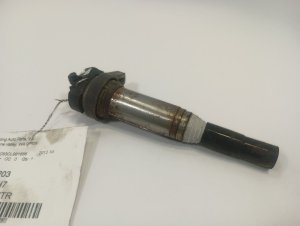
- Ignition Coil
(OEM #12138616153)— This is one of the most frequent causes of misfires on the N14/N18 engines and is a simple part to replace during diagnosis.
Trusted brands: Bosch, Delphi, Eldor
OEM price range: $60-$90
Aftermarket price range: $30-$60 - Spark Plugs
(OEM #12120035933)— Worn spark plugs are a primary cause of weak spark and misfires. They are a routine maintenance item that should be checked first.
Trusted brands: NGK, Bosch
OEM price range: $20-$30 per plug
Aftermarket price range: $12-$20 per plug - High-Pressure Fuel Pump (HPFP)
(OEM #13517588879)— A widespread and well-documented failure point on this platform that directly causes misfires and starting issues.
Trusted brands: Genuine MINI/BMW, Bosch, PSA
OEM price range: $800-$1200
Aftermarket price range: $300-$600 - Timing Chain Kit — Essential for fixing the 'death rattle' on N14 engines. A stretched chain causes incorrect timing, leading to misfires and potentially catastrophic engine failure.
Trusted brands: Iwis, Febi Bilstein
OEM price range: $400-$600
Aftermarket price range: $150-$300
Related Codes That Often Appear With This One
- P0300 — This is the code for a random/multiple cylinder misfire. P0363 is the more specific code indicating the computer has taken the step of cutting fuel.
- P0301, P0302, P0303, P0304 — These codes specify which cylinder is misfiring (Cylinder 1, 2, 3, or 4). They will almost always be present with P0363 and are essential for diagnosis.
- P2880 — This code specifically indicates a problem with the high-pressure fuel system plausibility and is a strong indicator of a failing HPFP.
- 2A87, 2A82 — These BMW-specific codes point to a VANOS solenoid issue (exhaust and intake, respectively) where the mechanism is jammed or slow to respond, which can cause misfires.
Technical Service Bulletins (TSBs) & Recalls
- SI M12 01 15: Notes that temperature fluctuations can cause premature ignition coil failure, leading to misfires.
- SI M01 04 10: A TSB mentioned by a user on North American Motoring related to HPFP replacement.
Platform-Specific Known Issues
- HPFP Failure Leading to P2880 and Misfires: A user on North American Motoring describes how their car went into 'engine safe mode' with difficulty driving on cold days. An initial shop misdiagnosed the issue as simple misfires (P0301, P0302, P0304) because they lacked Mini/BMW specific software. A second shop with the correct tools pulled code P2880 (High Pressure System) and correctly identified the failing HPFP as the root cause.
- Carbon Buildup Causing Persistent Misfires After Other Fixes: A detailed blog post from J.E. Robison Service describes a 2008 Cooper S with persistent misfire codes that had already received new plugs, coils, and injector cleaning to no effect. A teardown revealed intake valves severely clogged with carbon deposits, which was restricting airflow and causing the misfire. This highlights how carbon buildup can be the underlying cause when common ignition and fuel fixes fail.
- Long Crank and Sputtering Misdiagnosed as Valve Cover: → Shop Engine Valve Cover A 2010 Cooper S owner on a Mini forum reported long crank times, sputtering, and slow acceleration. The dealer diagnosed a bad valve cover. The owner replaced it themselves, but the long crank and acceleration issues remained, indicating the original diagnosis was likely incorrect and the symptoms were more aligned with a failing HPFP.
Mechanic-Grade Diagnostic Values
- High-Pressure Fuel Rail Pressure (at idle) — expected: ~50 bar (725 PSI). Failure: Significantly lower pressure or erratic readings.
- High-Pressure Fuel Rail Pressure (at full load) — expected: Up to 120 bar (1,740 PSI). Failure: Pressure failing to increase under load, causing lean misfires.
- Low-Pressure Fuel System (engine off, key on) — expected: 5 bar (72.5 PSI). Failure: Reading consistently below 5 bar before a cold start can indicate a failing low-pressure fuel pump or sensor issue, which can starve the HPFP.
- Ignition Coil Primary Circuit — expected: A specific waveform showing a sharp voltage spike, a short dwell period, and a clean cutoff. The coil has three wires: power, ground, and a trigger signal from the DME.. Failure: Using a PicoScope on the signal wire, a weak or inconsistent waveform compared to other cylinders indicates a failing coil or a problem in the trigger circuit.
Hidden / Shadow Codes Worth Checking
- P2880: Fuel Pressure Plausibility, High Pressure System. This is not a hidden code, but it is a critical companion code that strongly points to the HPFP as the root cause of the misfire. (see via Most standard OBD-II scanners.)
- 2F7C, 2F7B: These are BMW hexadecimal codes that can indicate misfires and are often seen alongside the generic P030x codes. They can sometimes provide more specific context when read with BMW-specific software like ISTA. (see via BMW-specific diagnostic tools like ISTA/INPA or advanced scanners (Foxwell, Autel).)
Scan Tool Commands That Help
- ISTA (BMW/MINI Dealer Software): Fuel Pressure Test Plan — To systematically test both the low-pressure and high-pressure fuel systems. The software guides the technician through checks at idle, under load, and during specific engine states to verify HPFP function.
- ISTA (BMW/MINI Dealer Software): VANOS System Test — If VANOS-related fault codes (like 2A87, 2A82) are present with the misfire. This function actuates the VANOS solenoids and measures camshaft timing response to check for sluggish or jammed solenoids.
- Advanced OBD-II Scanners (Autel, Foxwell, etc.): Clear Adaptations — After replacing major components like the HPFP or fuel injectors, it is sometimes recommended to reset fuel trim and other engine adaptations to allow the DME to relearn values with the new parts.
Wiring & Ground Locations
- Engine Ground Strap — Typically runs from the passenger side engine mount to a bolt on the frame rail/chassis.. A corroded or loose main engine ground strap can cause intermittent and hard-to-diagnose electrical issues, including weak spark, which can lead to misfires. The DME and ignition coils rely on a stable ground.
- DME (ECU) Ground — The DME is located in the electronics box (E-box) at the right rear of the engine compartment. It has multiple ground wires (typically brown) in its main harness connectors.. A poor ground at the DME itself can cause a wide range of faults, including incorrect sensor readings and faulty control over ignition and fuel injection, leading to misfires.
- Front Loom Earth Point — On the bulkhead cross member, under the triangular stiffener plate below the master cylinders (on RHD models).. This is a major grounding point for the front wiring harness, which includes circuits for various engine sensors. Corrosion here can disrupt sensor signals that the DME uses to manage the engine.
Real Owner Repair Stories
- YouTube channel 'R56 Mini Cooper S Engine Misfire Explained' (2007-2013 R56 Mini Cooper S) — Engine misfire that did not set any check engine codes.
❌ Tried (didn't work) Initial diagnosis did not point to a specific component.
✅ What actually fixed it A compression test revealed low pressure in cylinder 3. Upon removing the cylinder head, a cracked exhaust valve was discovered. Replacing all exhaust valves and valve stem seals resolved the misfire. - YouTube channel 'VetOnVettes757' (MINI Cooper (model year not specified, Gen 2)) — Misfire code P0304 (Cylinder 4 Misfire).
❌ Tried (didn't work) Replacing all spark plugs did not fix the issue.
✅ What actually fixed it The owner swapped the ignition coil from cylinder 4 to cylinder 3, and the fault code followed the coil (changing to P0303). Replacing the single faulty ignition coil solved the problem for about $42. - Go-Parts Blog Owner Story (2013 MINI Cooper S (N18) with 95,000 miles) — P0363 and P0301, misfire under heavy acceleration or going uphill.
❌ Tried (didn't work) Spark plugs and ignition coils were replaced but the issue persisted.
✅ What actually fixed it A BMW specialty shop diagnosed a failing High-Pressure Fuel Pump (HPFP). The pump could not supply the required pressure under load. Replacing the HPFP and the fuel pressure sensor fixed the misfire.
OEM Part Supersession History
13517592429→13518605102— Update to the High-Pressure Fuel Pump (HPFP) for the N18 engine. The later part is a Bosch unit, replacing the earlier Continental pump which had a high failure rate.
Heads up: Vehicles produced after March 2012 use the newer Bosch pump and may require a wiring harness adapter if fitting a replacement meant for an older model, or vice-versa. It's critical to order the correct pump for the vehicle's production date.Multiple (e.g., 12137575010)→12138616153 (Bosch)— Ignition coils have gone through several revisions from different manufacturers like Delphi and Bosch to improve reliability and performance.
Heads up: While most N14/N18 coils are physically interchangeable, it is highly recommended to replace them as a full set with coils from the same brand (e.g., all Bosch or all Delphi) to ensure consistent performance and dwell characteristics.
Model Year Variations Within This Range
- 2007-2010 (N14 Engine): Uses a single VANOS system (intake only) and has an external PCV hose, making it more susceptible to severe carbon buildup and timing chain 'death rattle' compared to the N18.
- 2011-2015 (N18 Engine): Features a more robust timing chain system, double VANOS (intake and exhaust), and an integrated PCV system within the valve cover to reduce carbon buildup issues. The HPFP was also updated in March 2012.
- Post-03/2012 (N18 Engine): These models came from the factory with the more reliable Bosch HPFP (PN 13518605102) and were not initially covered by the extended warranty for the earlier, failure-prone Continental pump.
Diagnostic Flowchart
Used vs. New Parts: Buying Guide for This Vehicle
When a used part is the smart pick: Used parts can be a cost-effective choice for stable, non-wear components like engine covers, intake manifolds, or certain sensors from a low-mileage donor car. However, for the common causes of P0363, used parts are generally not recommended.
Donor-vehicle mileage cap: roughly under 60000 miles for the part to have meaningful remaining life.
What to inspect on the donor part:
- Check for the vehicle's service history if possible.
- Visually inspect for cracks, corrosion, or oil leaks.
- For electronic parts, ensure connectors are clean and pins are not bent.
- When buying from a dismantler like Allmag, inquire about the donor car's condition and mileage.
OEM-only on this vehicle (don't cheap out):
- High-Pressure Fuel Pump (HPFP): Due to the extremely high failure rate of even new pumps, buying a used one is a major gamble. It is best to buy a new OEM or Genuine PSA/Bosch unit with a warranty.
- Timing Chain Kit: This is a critical engine component where the cost of labor for installation far outweighs the part cost. Using new, updated OEM parts is essential for reliability.
- Fuel Injectors: Used direct injectors can have hidden clogging or electronic issues. New or professionally refurbished and flow-tested injectors are a safer bet.
Aftermarket brands forum-validated for this vehicle:
- Ignition Coils: Bosch, Delphi, and Eldor are OEM suppliers and considered reliable replacements. Some owners report good results with performance-oriented brands like MMX.
- Spark Plugs: NGK is a widely recommended OEM-equivalent brand.
Brands owners have reported issues with on this vehicle:
- Unbranded/No-Name Ignition Coils: Cheap, unbranded ignition coils from online marketplaces are frequently reported to fail quickly, sometimes within weeks or months, causing the misfire to return.
Real Owner Stories
Aggregated from forums and TSBs cited above. Mileages and costs reflect what owners reported in those sources.
Mini Cooper (N14/N18)
Symptoms: The car went into 'engine safe mode' and had difficulty driving on cold days, with misfire codes P0301, P0302, and P0304 stored.
What fixed it: A shop using Mini/BMW specific software found code P2880 (High Pressure System) and correctly identified the failing High-Pressure Fuel Pump (HPFP) as the root cause.
Source hint: A user on North American Motoring
2008 Cooper S
Symptoms: Persistent misfire codes that were not resolved after replacing spark plugs, coils, and cleaning the injectors.
What fixed it: A teardown revealed the intake valves were severely clogged with carbon deposits, which was restricting airflow and causing the misfire. The underlying issue was carbon buildup.
Source hint: A detailed blog post from J.E. Robison Service
2010 Cooper S
Symptoms: Long crank times, sputtering, and slow acceleration.
What fixed it: The owner replaced the valve cover based on a dealer's misdiagnosis, but the problems remained. The symptoms were more aligned with a failing HPFP, which was the likely true cause.
Source hint: A 2010 Cooper S owner on a Mini forum
Mini Cooper (N14/N18)
Symptoms: Misfire under load.
What fixed it: The cause was found to be a spark plug with a missing ground electrode. Replacing the set of spark plugs resolved the issue.
Source hint: A Reddit user
Related OBD-II Codes
Frequently Asked Questions
My Mini has a rattling noise on cold starts. Is this related to the P0363 code?
I have a P0363 code, but my mechanic also found a P2880. What does that mean?
Is the High-Pressure Fuel Pump (HPFP) covered by any extended warranty on my 2007-2015 Mini?
My mechanic recommends a 'walnut blasting' service for a misfire code. Why would my Mini need this?
I'm replacing my ignition coils to fix a misfire. Are there specific brands or part numbers I should use?
The dealer said my valve cover was bad, but replacing it didn't fix my long crank and sputtering. What else could it be?
Helpful Videos
Used OEM Parts in Stock
New Aftermarket Parts Available

The information in this article is provided for general reference and educational purposes only. Vehicle specifications, procedures, and part compatibility can vary by production date, trim level, and region. Always consult your vehicle's factory service manual and verify part numbers before purchasing or performing repairs. Safety-critical components such as airbags, seat belts, and braking systems should be installed by a qualified professional.
- Mini Cooper:
- 🧭 Diagnostic Flowchart
- 🎬 Helpful Videos
- 🛍️ Shop This Part
- What's Unique About the 2007-2015 Mini Cooper
- Symptoms You May Notice
- Most Likely Causes
- Rare But Worth Checking
- Diagnosis Steps
- Parts You'll Likely Need
- Related Codes That Often Appear With This One
- Technical Service Bulletins (TSBs) & Recalls
- Platform-Specific Known Issues
- Mechanic-Grade Diagnostic Values
- Hidden / Shadow Codes Worth Checking
- Scan Tool Commands That Help
- Wiring & Ground Locations
- Real Owner Repair Stories
- OEM Part Supersession History
- Model Year Variations Within This Range
- Used vs. New Parts: Buying Guide for This Vehicle
- Real Owner Stories
- Mini Cooper (N14/N18)
- 2008 Cooper S
- 2010 Cooper S
- Mini Cooper (N14/N18)
- Related OBD-II Codes
- Frequently Asked Questions
- 🎟️ Get 5% Off