

P0401 on 2013-2018 Ram 2500 6.7L Cummins: Insufficient EGR Flow Causes and Fixes
On a 2013-2018 Ram 2500 with the 6.7L Cummins, P0401 almost always means the EGR system is severely clogged with soot. The most likely fix is cleaning or replacing the EGR cooler and EGR valve, which is a dirty but manageable DIY job. Before paying for repairs, owners must check with a dealer for coverage under the XQ1 Emissions Warranty Extension.
- P0401 on a 6.7L Cummins almost always points to a soot-clogged EGR system, not just a single faulty part.
- The EGR cooler is the most likely component to be severely restricted and should be inspected before replacing any other parts.
- Do not just replace the EGR valve; the problem will likely return if the clogged cooler and passages are not also addressed.
- Before paying for any repairs, call a Ram dealer with your VIN to check for open recalls and see if your truck is covered under the XQ1 emissions warranty extension.
What's Unique About the 2013-2018 Ram 2500
The 6.7L Cummins diesel engine is notorious for producing heavy soot that mixes with oil vapor from the crankcase ventilation (CCV) system. This combination creates a thick, sludgy paste that is exceptionally effective at clogging the small passages within the EGR cooler and the EGR valve itself. A dirty CCV filter can accelerate this process. While all EGR systems get dirty, the Cummins system is particularly susceptible to extreme blockages, making P0401 a very common and well-documented issue that often requires more than just a simple valve replacement.
Symptoms You May Notice
- Check Engine Light (MIL) is on
- Reduced engine power or entering 'limp mode'
- Poor fuel economy
- Engine knocking or pinging, especially under load
- Failing an emissions test
- Slightly rough idle
- Black smoke from exhaust
- Hesitation on acceleration
- Replacing only the EGR valve without inspecting or cleaning the EGR cooler. The code will almost certainly return if the cooler is clogged.
- Trusting scan tool EGR position data. The position sensor is on the actuator motor, not the valve itself. The motor can report a 'closed' position while the valve is mechanically stuck open with carbon.
- Replacing EGR components when the issue is a simple software bug that requires a PCM flash from the dealer.
Most Likely Causes
- Clogged or Restricted EGR Cooler 🔴 High Probability → Shop Exhaust Gas Recirculation (EGR) Valve The 6.7L Cummins produces heavy soot that combines with oil vapor to create a thick sludge, which is highly effective at blocking the small passages inside the cooler. This is the most common point of restriction for this code. Manufacturer TSB Bulletin #9003758 specifically instructs technicians to contact the STAR Center if they determine the EGR cooler is plugged with soot in conjunction with P0401.
How to confirm: Remove the EGR cooler and visually inspect the internal passages. On a truck with P0401, they will almost certainly be visibly blocked with thick, black soot. If the soot is wet or you see white, crusty deposits, the cooler is leaking coolant internally and must be replaced.
Typical fix: Replacement of the EGR cooler is the most reliable fix. While cleaning is possible by soaking in a solvent like Purple Power overnight and pressure washing, it is labor-intensive and risks causing or revealing internal leaks. Replacement is often recommended for long-term reliability.
Est. part cost: $400-$1100 - Sticking or Clogged EGR Valve 🔴 High Probability → Shop Exhaust Gas Recirculation (EGR) Valve The same soot and oil sludge that clogs the cooler also builds up on the EGR valve's sliding mechanism, causing it to stick closed or not open fully.
How to confirm: Remove the EGR valve and inspect for heavy carbon buildup. The actuator motor can be separated from the valve body by removing four screws to check if the valve pintle is mechanically stuck, even if the scan tool shows the actuator is moving.
Typical fix: Replacement of the EGR valve assembly is common. While it can be cleaned, the internal motor can also fail, and cleaning is often a temporary solution if the root cause (a clogged cooler) is not addressed.
Est. part cost: $250-$650 - Clogged EGR Passages and Crossover Tubes 🟡 Medium Probability Soot builds up in all parts of the EGR system, not just the valve and cooler. The tubes connecting the components and the intake horn where gases enter can become restricted over time.
How to confirm: When the EGR valve or cooler is removed, inspect all connecting ports and tubes for blockages.
Typical fix: Thoroughly clean all passages and ports with brushes and carbon-dissolving solvents before reassembling with new components and gaskets.
Est. part cost: $0 (if cleaning), gaskets $40-$120 - Failed EGR Cooler Bypass Valve 🟡 Medium Probability → Shop Exhaust Gas Recirculation (EGR) Valve This valve is integrated with the EGR cooler assembly and is prone to sticking. Its failure is a very common companion to a P0401 code.
How to confirm: This failure often sets its own specific trouble code, P24A5 ('EGR Cooler Bypass Bank 1 Control Stuck'), which is a strong indicator. TSB 18-023-21 links these two codes directly.
Typical fix: The bypass valve is typically part of the EGR cooler assembly and is replaced along with the cooler. It is also a covered component under the XQ1 warranty extension.
Est. part cost: Included with EGR Cooler replacement.
Rare But Worth Checking
- Faulty EGR Temperature or Pressure Sensor: The sensors that monitor EGR flow can become coated in soot or pitted from exhaust gases, leading to incorrect readings that trigger a P0401 code even if the flow is adequate. TSB Bulletin #1808022 and Bulletin #1806120REVA both list P040B (EGR Temperature Sensor "A" Circuit Performance) as a code that may appear alongside P0401.
- Powertrain Control Module (PCM) Software Issue: → Shop Engine Control Module (ECM) Ram has issued several Technical Service Bulletins (TSBs), like #18-023-21 for 2016 models, that involve a PCM software update to correct logic for monitoring the EGR system and prevent false codes. TSB Bulletin #18-096-16 also notes that P0401 is a specific concern for DJ/D2 vehicles that may require software intervention.
- Intake Air (Boost) Leak: A leak in the charge air system after the turbo can alter air pressure dynamics and trick the PCM into flagging a P0401 code. This is often accompanied by a P0299 (Turbo Underboost) or P2281 (Air Leak) code. TSB Bulletin #1813022 notes that technicians may find P0401 alongside P2281, P0402, and P0234 (Turbocharger Overboost).
Diagnosis Steps
- Check for Warranty Coverage. Before any diagnosis, contact a Ram dealer with your VIN to check for coverage under the Emissions Warranty Extension XQ1. This may cover the entire repair cost.
- Check for other DTCs. Codes like P24A5, P0402, or P0299 provide critical clues. TSB Bulletin #1808022 suggests looking for related codes such as P207F (Reductant Quality) and P2509 (PCM Power Input Signal Intermittent) which may occur in the same diagnostic session as P0401.
- Check for Technical Service Bulletins (TSBs). A dealer can check if a PCM software update, like the one in TSB 18-023-21, applies to your vehicle.
- Using a capable scan tool, command the EGR valve to open and close. Monitor PIDs for EGR position, EGR temperature, and EGR differential pressure to see if the system is responding. Note that the position sensor only reflects the motor's command, not the actual valve position.
- Perform a thorough visual inspection. This is the most critical step. Remove the EGR crossover tubes and EGR valve to inspect for heavy, wet sludge or dry soot buildup.
- If the valve and tubes are clogged, the EGR cooler is the primary suspect. Remove the EGR cooler for inspection. It is highly likely to be severely restricted or completely blocked with soot.
- While inspecting the cooler, check for signs of an internal coolant leak, such as wetness, a sweet smell, or white, crusty deposits. A leaking cooler requires immediate replacement.
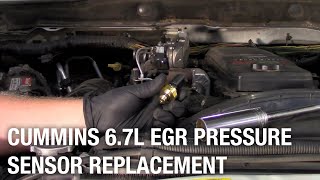
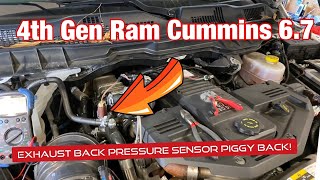
- Inspect and clean the EGR temperature and differential pressure sensors. Check for heavy soot coating or physical pitting on the sensor probes.
- If components are being replaced, thoroughly clean all mating surfaces and connecting passages before installing new parts. Always use new gaskets to prevent exhaust and coolant leaks.
Parts You'll Likely Need
- EGR Cooler
(OEM #68620418AA (supersedes 68224582AA))— This is the most common failure point for P0401 on the 6.7L Cummins, as its small passages get severely clogged with soot, restricting flow. The part number has been superseded, indicating a design revision.
Trusted brands: Mopar, Dorman, Bullet Proof Diesel, Bostech
OEM price range: $700-$1800
Aftermarket price range: $300-$700 - EGR Valve — The valve gets clogged with the same soot/oil sludge as the cooler, causing it to stick. The actuator motor can also fail. Often replaced with the cooler as a set.
Trusted brands: Mopar, Standard Motor Products (BWD), Dorman
OEM price range: $400-$700
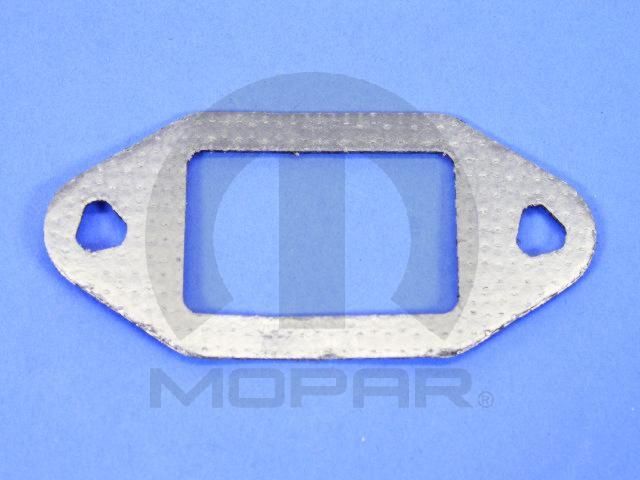
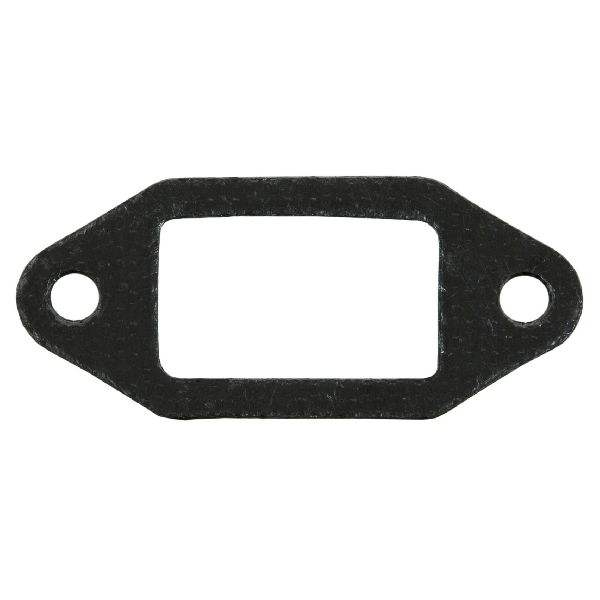
Aftermarket price range: $250-$500 - EGR Gasket and Seal Kit — New gaskets are required any time the EGR valve, cooler, or crossover tubes are removed to prevent coolant and exhaust leaks. The OEM cooler often includes new gaskets.
Trusted brands: Mopar, Fel-Pro, Mahle
OEM price range: $80-$150
Aftermarket price range: $40-$100
Related Codes That Often Appear With This One
- P24A5 — Stands for 'EGR Cooler Bypass Bank 1 Control Stuck'. This code is very commonly seen with P0401 and points directly to a failure within the EGR cooler assembly. TSB #18-023-21 links these codes.
- P0402 — Stands for 'EGR Flow Excessive'. A sticking EGR valve can cause both codes, as it may be stuck closed at times (P0401) and stuck open at others (P0402).
- P0299 — Stands for 'Turbocharger Underboost'. A severely clogged EGR system can affect exhaust flow, but more commonly, a boost leak in the intake system can trigger both P0299 and P0401.
- P040B — Stands for 'EGR Temperature Sensor 'A' Circuit Performance'. This code points to a potential issue with the sensor used to measure EGR flow, which can be a root cause of P0401.
Technical Service Bulletins (TSBs) & Recalls
- 18-023-21: Involves a PCM software update for 2016 models to address a list of DTCs, including P0401 and the commonly associated P24A5 (EGR Cooler Bypass Bank 1 Control Stuck).
- XQ1 Emissions Warranty Extension: A bulletin (D-24-10) informing dealers of an extended warranty for 2013-2018 models that covers the EGR cooler, EGR valve, and EGR temperature sensors, among other components.
- 18-130-22: Supersedes TSB 18-023-21 and notes the relationship between EGR codes and other codes like P2281 (Air Leak Between MAF and Throttle Body).
- Bulletin #18-096-16: Notes that P0401 EGR System Performance is a specific concern for DJ and D2 vehicle platforms.
- Bulletin #9003758: Provides guidance for technicians when P0401, P2281, or P0234 are present and the EGR cooler is found to be plugged with soot.
Platform-Specific Known Issues
- Warranty Extension XQ1: Ram extended the warranty on certain emissions components for many 2013-2018 models that have completed recall 67A. This extension (XQ1) covers the EGR Cooler, EGR Valve, EGR Temperature Sensors, and the EGR Cooler Bypass Valve. The coverage is typically for 10 years or 120,000 miles from the vehicle's in-service date. Owners must verify with a dealer if this warranty applies before paying for repairs.
- Cleaning vs. Replacing EGR Cooler: → Shop Exhaust Gas Recirculation (EGR) Valve While cleaning the EGR cooler is possible, it is a very dirty and time-consuming job. Many owners and shops recommend replacement for a few key reasons: 1) It's difficult to remove 100% of the baked-on carbon. 2) The harsh chemicals and pressure washing used for cleaning can create or expose pinhole leaks in the cooler's core, leading to coolant loss and potential engine damage. 3) A new, often redesigned, part offers more long-term reliability.
Mechanic-Grade Diagnostic Values
- EGR Differential Pressure Sensor Voltage vs. Pressure — expected: 0.88 Volts at 0 PSI. Voltage should rise with pressure, reaching approximately 4.5V between 80-100 PSI.. Failure: Voltage that is stuck, does not correspond to expected pressure, or reads 0V or 5V constantly. A shorted sensor can pull down the 5V reference circuit for other sensors.
Hidden / Shadow Codes Worth Checking
- NOx Exceedence - Deactivation of EGR: This is a status flag, not a standard DTC, that indicates the Engine Control Module (ECM) has disabled the EGR system due to other persistent emission-related faults. It can be a clue that the P0401 is a symptom of a larger problem. (see via Dealer-level scan tools like wiTECH or advanced aftermarket tools with manufacturer-specific data streams.)
Scan Tool Commands That Help
- wiTECH or AlphaOBD: EGR Valve Actuator Test — Use this bidirectional command to force the EGR valve to open and close while monitoring live data PIDs like EGR temperature or differential pressure. This helps confirm if the valve motor is responding to commands, which is critical for differentiating a physically stuck valve from a sensor, wiring, or flow blockage issue.
Wiring & Ground Locations
- EGR Valve Connector — On the EGR valve assembly, located on the driver's side of the engine, connected to the intake elbow.. A corroded or damaged connector/pigtail can cause erratic EGR operation and trigger various EGR codes. The pinout is critical for electrical testing. Pin 1 is the 5V supply, Pin 5 is the ground, and Pins 2, 3, and 4 are for signal. Pins 6, 7, and 8 are for motor control.
- EGR Differential Pressure Sensor Connector — The sensor is typically threaded into a port near the EGR system plumbing to measure pressure differences.. This sensor provides the primary feedback for EGR flow. A bad connection or a shorted sensor can cause P0401. A shorted sensor can also bring down the entire 5V reference circuit, causing multiple other codes to appear simultaneously.
Real Owner Repair Stories
- HD Rams forum user (2019+ Ram 6.7L (logic applies to 2013-2018)) — P0299 (Underboost) and P0401 (Insufficient EGR Flow) codes present.
❌ Tried (didn't work) Dealer performed a pressure test and found a leak., Initial diagnosis did not include checking for simple mechanical looseness.
✅ What actually fixed it The user discovered the two bolts connecting the aftermarket Banks Monster-Ram to the EGR valve were loose. Tightening these bolts resolved the air leak that was causing both the P0299 and P0401 codes. - DodgeForum.com user (2013 Ram 2500 6.7L Cummins) — Recurring P0401 code, intermittent 'gutless' feeling.
❌ Tried (didn't work) Replaced turbo actuator, Replaced MAP sensor, Replaced exhaust pressure sensor, Replaced MAF sensor, Thoroughly cleaned EGR system components
✅ What actually fixed it The user's post ends while still diagnosing, highlighting a scenario where all common fixes fail. The final suspect was a potential internal ECM fault or a very obscure wiring issue, demonstrating that even after replacing all related parts, the problem can persist.
OEM Part Supersession History
68210506AA→68224582AA, then 68444084AA, finally 68620418AA— Likely design revisions to improve durability and resist clogging and cracking, which are common failure modes for this part.
Heads up: While all listed part numbers are for the standard pickup models, the EGR cooler for Cab & Chassis trucks is physically different and not interchangeable.
Model Year Variations Within This Range
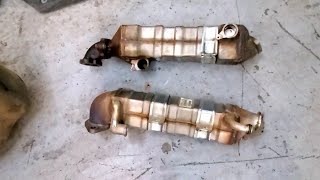
- 2013-2018: The EGR cooler for Cab & Chassis models is physically larger and shaped differently than the cooler used on standard Ram 2500/3500 pickups. They are not interchangeable. A video comparison shows significant differences in size, shape, and mounting points.
- 2013: 2013 marked the introduction of the Selective Catalytic Reduction (SCR) and Diesel Exhaust Fluid (DEF) system on top of the existing EGR and DPF systems, making the emissions controls more complex than the prior 2007.5-2012 generation. The EGR cooler and valve were also redesigned for 2013.
Diagnostic Flowchart
Real Owner Stories
Aggregated from forums and TSBs cited above. Mileages and costs reflect what owners reported in those sources.
2013-2018 Ram 2500 6.7L Cummins
Symptoms: Triggered a P0401 code.
What fixed it: Performed a full EGR system clean, including the valve, cooler, and crossover tubes, using an overnight soak in Purple Power solvent.
Source hint: cumminsforum.com
Ram 2500 6.7L Cummins
Symptoms: Experienced both P0401 and P0299 (underboost) codes simultaneously.
What fixed it: Found and repaired a boost leak in the intake system, which was the root cause of both codes.
Source hint: hdrams.com
2019 Ram 3500 6.7L Cummins
Symptoms: Check engine light on with a P0401 code.
What fixed it: Diagnosed with an internally leaking EGR cooler that required replacement.
Source hint: ramforum.com
2013 Ram 2500 6.7L Cummins
Symptoms: Experienced a recurring P0401 code that kept returning even after cleaning the EGR valve and cooler.
What fixed it: Replaced the EGR temperature sensor, which was found to be heavily sooted and pitted.
Source hint: dodgeforum.com
2014 Ram 2500 6.7L Cummins
Symptoms: Truck threw multiple EGR-related codes including P0403, P0405, and P0401.
What fixed it: Replaced the EGR cooler. Cleaning the valve alone was only a temporary fix, and the clogged cooler was identified as the root cause.
Source hint: turbodieselregister.com
Related OBD-II Codes
Frequently Asked Questions
Will my emissions warranty cover the P0401 repair on my 2013-2018 Ram 2500?
Should I clean or replace the EGR cooler on my 6.7L Cummins?
Does TSB 18-023-21 apply to my Ram 2500 for code P0401?
Why do I have both P0401 and P24A5 codes on my Ram?
Can a boost leak cause a P0401 code on the 6.7L Cummins?
I cleaned the EGR valve and cooler, but P0401 came back. What else could it be?
Helpful Videos

We Have This Part in Stock


The information in this article is provided for general reference and educational purposes only. Vehicle specifications, procedures, and part compatibility can vary by production date, trim level, and region. Always consult your vehicle's factory service manual and verify part numbers before purchasing or performing repairs. Safety-critical components such as airbags, seat belts, and braking systems should be installed by a qualified professional.
- Ram 2500:
- 🧭 Diagnostic Flowchart
- 🎬 Helpful Videos
- 🛍️ Shop This Part
- What's Unique About the 2013-2018 Ram 2500
- Symptoms You May Notice
- Most Likely Causes
- Rare But Worth Checking
- Diagnosis Steps
- Parts You'll Likely Need
- Related Codes That Often Appear With This One
- Technical Service Bulletins (TSBs) & Recalls
- Platform-Specific Known Issues
- Mechanic-Grade Diagnostic Values
- Hidden / Shadow Codes Worth Checking
- Scan Tool Commands That Help
- Wiring & Ground Locations
- Real Owner Repair Stories
- OEM Part Supersession History
- Model Year Variations Within This Range
- Real Owner Stories
- 2013-2018 Ram 2500 6.7L Cummins
- Ram 2500 6.7L Cummins
- 2019 Ram 3500 6.7L Cummins
- 2013 Ram 2500 6.7L Cummins
- 2014 Ram 2500 6.7L Cummins
- Related OBD-II Codes
- Frequently Asked Questions
- 🎟️ Get 5% Off