

P0402 on 2011-2018 Audi A6: TDI EGR Excessive Flow Causes & Fixes
On the 3.0L V6 TDI diesel engine, P0402 is almost always caused by the EGR valve being stuck open from heavy carbon buildup. Before any repair, call an Audi dealer with your VIN to check if it's covered for free under the TDI Extended Emissions Warranty, which is very likely for affected models.
- This code is a TDI (diesel) problem. If you have the TFSI (gasoline) engine, the cause is different.
- The number one cause is a carbon-clogged EGR valve that is stuck open.
- Your first step should be to call an Audi dealer with your VIN to check for coverage under the TDI Extended Emissions Warranty. Do not pay for repairs until you confirm you are not covered.
- The most reliable fix is to replace the entire EGR valve assembly and its gaskets, not just clean it.
- This is not a beginner-friendly DIY repair due to the part's location deep in the engine bay.
What's Unique About the 2011-2018 Audi A6
This code is almost exclusively a problem for the 3.0L V6 TDI (diesel) engine, not the 3.0L V6 TFSI (gasoline) engine. The 3.0L TDI is known for producing significant soot, which combines with oil vapor to create thick carbon deposits that physically jam the EGR valve open. Many owners and technicians believe the 'Dieselgate' emissions software update increased EGR usage rates, causing this carbon to build up faster and leading to more frequent failures. If you have a TFSI engine, this code is very rare, and its cause is likely unrelated to the common TDI failure mode, possibly pointing to a faulty sensor or a different mechanical issue.
Symptoms You May Notice
- Rough or surging idle, especially when the engine is warm.
- Engine stalling when coming to a stop or at idle.
- Noticeable hesitation or lack of power during acceleration.
- Reduced fuel economy.
- Check Engine Light illuminated.
- Faint sucking or hissing noise from the engine bay (in some cases, this can indicate a disconnected boost hose mimicking EGR symptoms).
- Replacing the Mass Airflow (MAF) sensor. A stuck EGR valve allows unmetered exhaust gas into the intake, which causes the amount of fresh air crossing the MAF to drop. This can trigger a secondary code like P0101, but the MAF sensor is usually not the root cause of P0402; it is reacting to the EGR fault.
Most Likely Causes
- EGR Valve Stuck Open due to Carbon Buildup 🔴 High Probability → Shop Exhaust Gas Recirculation (EGR) Valve The 3.0L TDI engine produces a high volume of soot, which is the primary cause of the heavy carbon deposits that physically jam the valve's pintle, preventing it from closing completely. This is the most common failure mode.
How to confirm: Visually inspect the EGR valve after removal. It will likely be coated in thick, hard carbon deposits, preventing the internal mechanism from moving freely. The intake ports may also show significant buildup.
Typical fix: Replacement of the EGR valve assembly is the most reliable fix. While cleaning is possible, the buildup is often so severe that the problem returns quickly, and given the high labor cost to access the part, replacement is recommended. Always replace the associated gaskets to prevent leaks.
Est. part cost: $150-$450 - Faulty EGR Sensor (Position or Pressure) ⚪ Low Probability While less common than mechanical jamming, the sensors that measure EGR flow (like a differential pressure sensor) or valve position can fail. The ECM relies on these sensors to verify flow rates, and a bad sensor can send incorrect data.
How to confirm: Using an advanced diagnostic scan tool (like VCDS), monitor the EGR sensor data blocks to see if the reported values are illogical or do not change when the EGR is commanded to operate. Test the sensor's voltage to see if it's within spec.
Typical fix: If the sensor is separate (like the differential pressure sensor), replace the sensor. In many cases, the position sensor is integrated into the EGR valve, requiring the replacement of the entire assembly.
Est. part cost: $50-$150
Rare But Worth Checking
- Carbon chunk from EGR cooler: → Shop Exhaust Gas Recirculation (EGR) Valve A large piece of carbon can break off from inside a heavily clogged EGR cooler, travel downstream, and become lodged in the EGR valve, forcing it open. This would cause P0402 suddenly. A clogged cooler itself more commonly causes P0401 (Insufficient Flow).
- Disconnected Charge Pipe / Boost Leak: In at least one documented case, a P0402 code was triggered because a charge pipe hose was disconnected from the throttle body after an air filter change. The massive unmetered air leak caused the ECU to misinterpret sensor readings as an EGR fault. The fix was simply reconnecting the hose.
Diagnosis Steps
- Step 1: Check for Extended Emissions Warranty. Before any diagnosis or repair, call an Audi dealership with your vehicle's VIN. Ask if the 'TDI Extended Emissions Warranty' is active for your vehicle. This repair is frequently covered at no cost for eligible vehicles, which includes the entire EGR system.
- Step 2: Scan for Codes. Use an OBD-II scanner to confirm P0402 is the primary code. Look for other related codes like P0401, P0101, or DPF codes, as they provide clues to the fault's nature.
- Step 3: Monitor Live Data. With a capable scan tool (like VCDS), observe the EGR valve commanded position vs. actual position and the differential pressure sensor readings at idle. With P0402, you will likely see flow being detected (indicated by a lower-than-expected MAF reading) when the EGR is commanded closed.
- Step 4: Inspect for Boost Leaks. Before major disassembly, thoroughly inspect all intake and charge air piping between the air filter, turbo, intercooler, and throttle body. Ensure all clamps are tight and hoses are properly seated. A large leak can mimic P0402 symptoms.
- Step 5: Visual Inspection of EGR Valve. If not covered by warranty and you proceed with diagnosis, the next step is to access and remove the EGR valve. This is a labor-intensive process. Visually inspect the valve for heavy carbon buildup that is preventing it from closing.
- Step 6: Clean or Replace. If the valve is clearly jammed with carbon, replacement is the recommended fix. Cleaning is often a temporary solution due to the severity of the buildup. Ensure all mating surfaces are cleaned of old gasket material and carbon, and use new gaskets upon reassembly to prevent coolant and exhaust leaks.
Parts You'll Likely Need
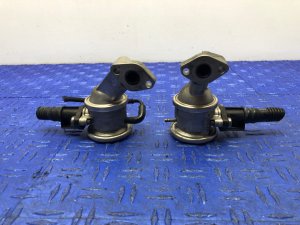
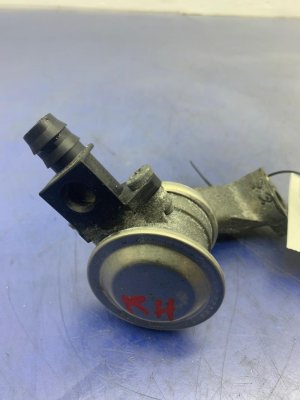
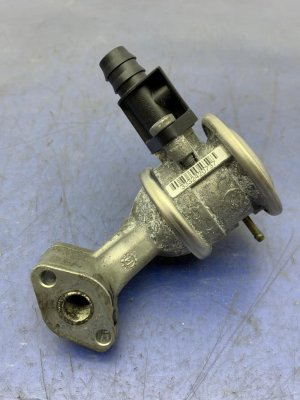
- EGR Valve Assembly
(OEM #059131502G (supersedes 059131502B))— This is the component that fails, typically by getting stuck open with carbon. Replacement is the most reliable repair. Always verify the part number with your VIN.
Trusted brands: Audi (OEM), Pierburg (OEM supplier), Bosch, Topran
OEM price range: $250-$400
Aftermarket price range: $150-$250 - EGR Valve Gasket Kit
(OEM #Often included with new EGR valve)— These are single-use gaskets that must be replaced any time the EGR valve is removed to prevent exhaust and coolant leaks.
Trusted brands: Victor Reinz, Elring
OEM price range: $20-$40
Aftermarket price range: $10-$20
Related Codes That Often Appear With This One
- P0401 — If the EGR valve is sticking intermittently, it may sometimes get stuck closed (causing P0401 Insufficient Flow) and other times get stuck open (causing P0402 Excessive Flow). It can also be seen if the EGR cooler is clogged but a piece breaks off and jams the valve open.
- P0101 — The ECM cross-checks the MAF sensor reading to verify EGR flow. When the EGR valve is stuck open, the amount of air passing the MAF sensor is lower than expected, which can trigger a MAF range/performance code.
- P2463 — A stuck-open EGR valve leads to poor combustion, which creates more soot. This extra soot can overwhelm and clog the Diesel Particulate Filter (DPF), triggering a DPF restriction code.
Technical Service Bulletins (TSBs) & Recalls
- Emissions Service Action 26L9: A campaign for some 2014 A6/A7/A8/Q5 3.0L TDI models to inspect and replace incorrect EGR coolers that may have been installed during prior service.
- TSB 26-16-42 / 2054935: While the original pass-1 reference seems to be a typo, TSB 2054935 (revising 26-21-47) exists for the C7 platform but addresses exhaust droning noises by replacing exhaust hangers, not EGR issues directly. No specific TSB for P0402 was found, likely because the issue is handled under the extended warranty.
Platform-Specific Known Issues
- TDI Extended Emissions Warranty: As part of the 'Dieselgate' settlement, many 3.0L TDI vehicles have a comprehensive extended warranty covering the entire emissions system. This includes the EGR valve, EGR cooler, all related sensors, and the DPF. The warranty period is the greater of 10 years/120,000 miles from the in-service date, or 4 years/48,000 miles from when the emissions modification was performed. It is fully transferable to subsequent owners.
Mechanic-Grade Diagnostic Values
- EGR Position Sensor Voltage (via VCDS Measuring Blocks, Group 074) — expected: Field 1 (Min Position): ~1.0-2.5V. Field 2 (Max Position): ~3.5-4.8V. Field 3 (Potentiometer Voltage) should move smoothly between these values during an output test.. Failure: Voltage in Field 3 is stuck, does not change when commanded, or is fixed at the minimum or maximum value, indicating a seized valve or failed sensor.
- EGR Valve (N18) Motor Coil Resistance — expected: 4-12 Ohms between the motor terminals on the valve assembly.. Failure: A reading of infinite resistance (OL) indicates an open circuit within the valve motor. A reading far outside the expected range suggests an internal fault.
- MAF reading at idle after EGR adaptation (VCDS) — expected: After performing an EGR adaptation to increase the correction value (e.g., to 35 mg/stroke), the MAF reading at idle should be around 350 mg/stroke, indicating the valve is successfully being commanded to close more.. Failure: If the MAF reading remains significantly lower than expected after the adaptation, it suggests the valve is physically stuck open and cannot respond to the new electronic command.
Hidden / Shadow Codes Worth Checking
- 16786: This is the VAG-specific fault number that corresponds directly to the generic OBD-II code P0402. It does not provide additional diagnostic information but will be displayed by VAG-specific tools like VCDS. (see via Ross-Tech VCDS, ODIS, or other advanced VAG-compatible scan tools.)
Scan Tool Commands That Help
- VCDS (Ross-Tech): [01 - Engine] -> [Basic Settings - 04] -> Group 074 — This is the EGR Valve Adaptation procedure. It is mandatory after replacing the EGR valve to teach the ECU the new valve's closed and open electronic limits. The status should change to 'ADP OK' upon successful completion.
- VCDS (Ross-Tech): [01 - Engine] -> [Output Tests - 03] -> Select "Exhaust Gas Recirculation Valve (N18)" — This command actively cycles the EGR valve, allowing a technician to test its function. While the valve is not visible, you can monitor live data (MAF, EGR position sensor) for a corresponding change to see if the valve is responding to commands.
- VCDS (Ross-Tech): [01 - Engine] -> [Adaptation - 10] -> Select "EGR adjustment" or similar channel — On some controllers, this allows for adjusting the EGR correction value. Changing the value (e.g., from 0 to 35 mg/stroke) commands the EGR to close more, which can be a diagnostic step to see if the valve is physically capable of moving.
Wiring & Ground Locations
- Engine Ground Strap — There is a primary ground point on the passenger side (right side) of the engine compartment, near the alternator.. A poor engine ground can cause erratic behavior in various sensors and actuators, including the electronically controlled EGR valve. While not a primary cause for P0402, verifying main grounds is a good practice during electrical diagnosis.
- 306 — This is an earth connection specifically for the ignition coils, located in the engine prewiring harness.. While specific to ignition coils, its location in the main engine harness highlights the complexity of shared ground paths. A fault in this harness could potentially affect other components.
Real Owner Repair Stories
- AudiWorld Forums user on a 2015 Q7 3.0L TDI (same engine family) (2015 Audi Q7 3.0L TDI) — Engine was very sluggish, slow off the line, with a faint sucking noise from the engine bay. P0402 (Excessive EGR flow), a boost pressure regulation code, and a DPF warning light all appeared.
❌ Tried (didn't work) Initial diagnosis pointed towards a clogged DPF from multiple short idling sessions or a failed EGR valve, which are the common culprits.
✅ What actually fixed it The root cause was a disconnected charge pipe hose at the throttle body. The hose was not properly reconnected after an engine air filter replacement. Securely reconnecting the boost hose resolved all symptoms and codes.
"I Checked Everything" — The Actual Cause
- While a smoke test is not the primary diagnostic for excessive flow, a similar pattern exists where standard diagnosis is misleading. In a documented case, the P0402 code and symptoms pointed directly to a classic stuck EGR valve. However, the actual cause was a massive intake leak from a charge pipe that had popped off the throttle body after recent service. The ECU's logic was thrown off by the unmetered air, causing it to incorrectly flag the EGR system.
OEM Part Supersession History
059131502B→059131502G— Likely an updated design to improve reliability or address the carbon buildup issue, though the specific changes are not officially documented. This is a common revision for high-failure parts.
Heads up: None found. 059131502G is a direct replacement for 059131502B.
Model Year Variations Within This Range
- 2011-2018: While several different TDI engine codes were used in the C7 platform (e.g., CLAB, CDUC), the fundamental design of the EGR system—a single, complex module located in the 'V' of the engine—and its failure mode (carbon buildup causing P0402) remain consistent across the entire model range.
Diagnostic Flowchart
Other Known Issues on This Vehicle
Issues unrelated to this code that are worth knowing about as an owner of this generation:
- 3.0T TFSI Water Pump & Thermostat Failure 🔴 High — Common after 60,000-80,000 miles. The plastic housings for the water pump and thermostat are prone to cracking, leading to significant coolant leaks in the engine 'V'.
- 3.0T TFSI & TDI Timing Chain Tensioner Wear 🔴 High — More common on higher-mileage engines (>100,000 miles). Causes a metallic rattle on cold starts. Repair is extremely labor-intensive as the chains are at the rear of the engine.
- 3.0T TFSI PCV Valve Failure 🟠 Medium — Can fail around 50,000-70,000 miles, causing high oil consumption, rough idle, and a vacuum leak (sometimes with a whistling noise).
- MMI Infotainment Screen Mechanism Failure 🟡 Low — Common across all model years. The gears in the mechanism that retracts the screen can fail, causing it to get stuck open or closed.
- Control Arm Bushing Wear 🟠 Medium — Front upper control arm bushings can wear out prematurely (around 50,000-70,000 miles), causing creaking or groaning noises from the front suspension, especially over bumps.
- Early 2.0T TFSI Excessive Oil Consumption 🔴 High — Primarily affects pre-facelift (2012-2015) 2.0T engines due to piston ring design, though less common on the A6 than other models like the A4. Can lead to engine damage if not monitored. (Ref: Class-action lawsuits were filed for this issue on other Audi models.)
Used vs. New Parts: Buying Guide for This Vehicle
When a used part is the smart pick: A used EGR valve is NOT recommended for this repair. The primary failure mode is severe internal carbon buildup that is difficult to clean completely. A used part carries a very high risk of failing again shortly after installation, wasting the significant labor cost.
What to inspect on the donor part:
- If considering a used part against advice, it must be from a very low-mileage vehicle and professionally cleaned and verified to be fully functional, which is rare.
OEM-only on this vehicle (don't cheap out):
- EGR Valve Assembly: Due to the extremely high labor cost to access this part, using a cheap, unproven aftermarket valve is a major gamble. Stick with the genuine Audi part or a reputable OEM supplier to ensure longevity.
Aftermarket brands forum-validated for this vehicle:
- Pierburg (often the original equipment manufacturer for VAG emissions components).
- Wahler (another well-regarded German OEM supplier).
Brands owners have reported issues with on this vehicle:
- Unbranded, low-cost EGR valves from online marketplaces. The quality control is often poor, and premature failure is common, leading to a repeat of a very expensive repair job.
Real Owner Stories
Aggregated from forums and TSBs cited above. Mileages and costs reflect what owners reported in those sources.
2014 Audi A6 3.0L TDI
Symptoms: Check Engine Light illuminated with P0402. Owners on the forum discussed the issue specifically regarding the C7 platform and the 3.0L TDI engine.
What fixed it: The repair was covered under the extended emissions warranty, which includes the EGR valve and cooler.
Source hint: AudiWorld Forums - A6 (C7 Platform) Discussion
Related OBD-II Codes
Frequently Asked Questions
Will the 'Dieselgate' extended emissions warranty cover the P0402 repair on my 2014 Audi A6 3.0L TDI?
Does Emissions Service Action 26L9 apply to my 2014 Audi A6 3.0L TDI?
Can I just clean the EGR valve on my 3.0L TDI to save on part costs?
My A6 is making a hissing noise and has a P0402 code; could it be something other than the EGR valve?
Is the P0402 issue common on other Audi models with the same engine?
Does TSB 2054935 address the P0402 EGR flow issue on the C7 A6?
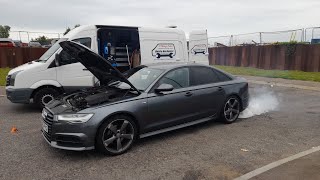
Helpful Videos
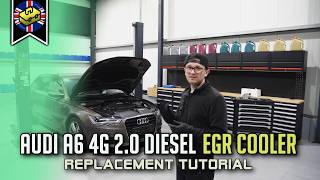
We Have This Part in Stock

The information in this article is provided for general reference and educational purposes only. Vehicle specifications, procedures, and part compatibility can vary by production date, trim level, and region. Always consult your vehicle's factory service manual and verify part numbers before purchasing or performing repairs. Safety-critical components such as airbags, seat belts, and braking systems should be installed by a qualified professional.
- Audi A6:
- 🧭 Diagnostic Flowchart
- 🎬 Helpful Videos
- 🛍️ Shop This Part
- What's Unique About the 2011-2018 Audi A6
- Symptoms You May Notice
- Most Likely Causes
- Rare But Worth Checking
- Diagnosis Steps
- Parts You'll Likely Need
- Related Codes That Often Appear With This One
- Technical Service Bulletins (TSBs) & Recalls
- Platform-Specific Known Issues
- Mechanic-Grade Diagnostic Values
- Hidden / Shadow Codes Worth Checking
- Scan Tool Commands That Help
- Wiring & Ground Locations
- Real Owner Repair Stories
- "I Checked Everything" — The Actual Cause
- OEM Part Supersession History
- Model Year Variations Within This Range
- Other Known Issues on This Vehicle
- Used vs. New Parts: Buying Guide for This Vehicle
- Real Owner Stories
- 2014 Audi A6 3.0L TDI
- Related OBD-II Codes
- Frequently Asked Questions
- 🎟️ Get 5% Off