

P0402 on 2010-2017 Audi A8 3.0L TDI: Excessive EGR Flow Causes and Fixes
P0402 indicates excessive exhaust gas recirculation, almost always caused by a carbon-fouled EGR valve that is stuck open. While cleaning is possible, replacement of the EGR valve assembly is the most reliable fix. Owners should first check with an Audi dealer, as this repair may be covered under the TDI emissions extended warranty, making the repair free of charge.
- P0402 means the EGR valve is likely stuck open from carbon buildup.
- Your first and most important step is to call an Audi dealer with your VIN to check for TDI extended warranty coverage, which could make the repair free.
- The most permanent fix is to replace the entire EGR valve assembly and its gasket.
- This repair is difficult for a DIYer due to the valve's location in the 'V' of the engine, requiring significant disassembly.
- Ignoring the code can lead to stalling, poor performance, and more expensive repairs down the line.
What's Unique About the 2010-2017 Audi A8
On the Audi A8 with the 3.0L V6 TDI (CPNA) engine, the EGR valve and its associated cooler are known to accumulate significant carbon deposits, which is the primary cause of the valve sticking open. This engine is part of the generation of TDI engines involved in the "Dieselgate" emissions scandal. As a result, many of these vehicles have a comprehensive extended warranty on all emissions-related components, including the entire EGR system. Before attempting any DIY repair or paying for service, the most critical first step is to contact an Audi dealership with the vehicle's VIN to determine if it is covered by this warranty, which could make the repair free of charge. The repair itself is labor-intensive due to the EGR valve's location in the 'V' of the engine, requiring removal of the intake manifold and other components 🎬 Watch: Tips and tricks for removing the EGR valve to access.
Symptoms You May Notice
- Check Engine Light illuminated
- Rough, surging, or unstable idle, especially when the engine is at operating temperature
- Engine stalling or hesitating, particularly at low speeds or when coming to a stop
- Reduced fuel economy
- Noticeable loss of engine power or sluggish acceleration.
- Engine knocking or pinging noises during acceleration
- A faint sucking or hissing noise from the engine bay may be audible.
- Replacing the Mass Airflow (MAF) sensor. While a faulty MAF can cause performance issues, it is not a typical cause for a P0402 code. The ECM uses the MAF reading to infer EGR flow, so an abnormal reading could be a symptom, not the cause.
- Replacing oxygen sensors. O2 sensors monitor exhaust gas content but do not directly measure EGR flow rate.
- Assuming an EGR delete kit was installed incorrectly. While an improper tune after an EGR delete can cause this code, it's more likely a component failure on a stock vehicle.
Most Likely Causes
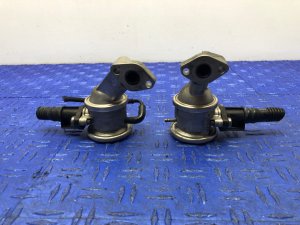
- EGR Valve Stuck Open 🔴 High Probability → Shop Exhaust Gas Recirculation (EGR) Valve Diesel engines, especially direct-injection TDI models, produce soot that can build up as hard carbon deposits. These deposits physically restrict the EGR valve's pintle from closing completely, causing a constant, excessive flow of exhaust gas into the intake.
How to confirm: Remove the EGR valve and visually inspect it for carbon buildup. Check if the internal valve moves freely or is seized in an open position. A scan tool can also show commanded vs. actual EGR position; if the actual position is greater than 0% at idle, it's stuck open.
Typical fix: Thoroughly clean the valve with a dedicated EGR cleaner or solvent. If cleaning is ineffective, the valve's electronic sensor is faulty, or for a more permanent solution, the entire EGR valve assembly must be replaced.
Est. part cost: $250-$500 - Faulty EGR Position Sensor 🟡 Medium Probability The sensor is integrated into the electronic EGR valve assembly. Extreme heat cycles and vibration in the 'V' of the engine can cause the sensor to fail, sending incorrect position data to the ECM, which may misinterpret the flow rate.
How to confirm: Use a diagnostic scan tool with live data capabilities (like VCDS) to monitor the commanded EGR position versus the actual position reported by the sensor. If the values do not match or the actual value is erratic and doesn't correspond to engine load, the sensor is likely faulty.
Typical fix: The sensor is not sold separately from the EGR valve on this platform. The entire EGR valve assembly must be replaced.
Est. part cost: $250-$500 - Leaking or Clogged EGR Cooler 🟡 Medium Probability → Shop Exhaust Gas Recirculation (EGR) Valve The EGR cooler on the 3.0 TDI is prone to internal leaks. While a leak itself causes coolant loss, the resulting mix of coolant and soot can create a thick sludge that jams the EGR valve open. Alternatively, a large piece of carbon breaking free from a clogged cooler can lodge the valve open.
How to confirm: Check for unexplained coolant loss. When the EGR valve is removed, inspect it for a wet, slimy, black substance instead of dry soot, which indicates a coolant leak. The engine valley may also be filled with a pool of leaked coolant. 🎬 Watch: Identifying and fixing common valley coolant leaks
Typical fix: If the cooler is leaking internally, it must be replaced. This is a very labor-intensive job as it sits deep in the engine valley. While there, it is critical to replace all associated seals and gaskets for the oil cooler and intake manifold.
Est. part cost: $0 (if cleaning), $500+ (for a new cooler if damaged)
Diagnosis Steps
- Check for Extended Warranty: Before any diagnosis, contact an Audi dealer with your VIN to check for coverage under the TDI Emissions Modification Extended Warranty. This may cover the entire repair, including parts and labor, for free.
- Scan for Codes: Use an OBD-II scanner (VCDS is preferred for VW/Audi) to confirm P0402 is the primary code. Note any other codes present, especially those related to the DPF (P2463) or EGR circuit (P0404).
- Live Data Analysis: With a capable scan tool, monitor the EGR valve's commanded position and the actual position reported by the sensor at idle and while driving. At idle with a warm engine, the commanded value should be 0%. If the actual value is higher, it confirms the valve is stuck open.
- Visual Inspection (Engine Bay): Remove the plastic engine cover. The EGR valve is located in the 'V' of the engine, at the rear, under the intake manifold. Inspect the electrical connector and wiring for any visible damage. Check for signs of coolant or oil leaks in the engine valley, which could point to a leaking EGR or oil cooler.
- Remove and Inspect EGR Valve: This is a labor-intensive step. The intake manifold must be removed to access the EGR valve. Disconnect the electrical connector and remove the bolts holding the EGR valve. Once removed, inspect the valve for heavy carbon buildup and check if the pintle is physically stuck open. Note if the carbon is dry soot or a wet, sludgy consistency (indicating a coolant leak).
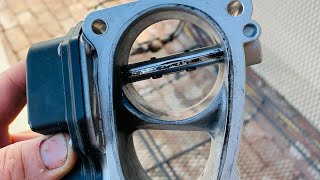
- Clean or Replace: If heavy, dry carbon is present, 🎬 See how much soot can clog these intake systems attempt to clean it using a specialized EGR cleaner and brushes. If the valve is clean but still faulty (based on live data), is a sealed electronic unit, or is contaminated with coolant sludge, replacement is necessary.
- Inspect Passages and Cooler: While the valve is off, inspect the port on the intake manifold and the connecting pipe from the EGR cooler for carbon blockages. If a coolant leak is suspected, this is the time to pressure test the EGR cooler or replace it preventatively along with its seals.
- Reassembly and Testing: Install the cleaned or new EGR valve using new gaskets. It is highly recommended to replace all intake manifold gaskets and oil cooler seals at the same time. Torque all bolts to manufacturer specifications. Clear the trouble codes and perform a test drive, including idle and cruise conditions, to ensure the code does not return.
Parts You'll Likely Need
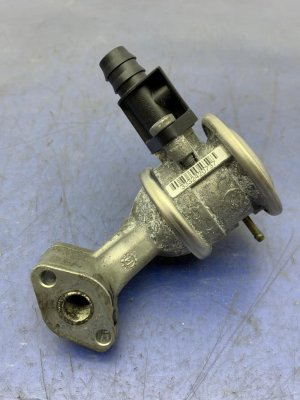
- EGR Valve
(OEM #059131503AM)— This is the component that fails, either by sticking open from carbon buildup or due to an internal electronic sensor fault.
Trusted brands: Genuine VW/Audi, Bosch, BorgWarner, Wahler
OEM price range: $400-$550
Aftermarket price range: $250-$400 - EGR Valve Gasket Kit
(OEM #059131547P)— New gaskets are required to ensure a proper seal when reinstalling or replacing the EGR valve to prevent exhaust and coolant leaks. Kits often include multiple seals for the valve and connecting pipes.
Trusted brands: Genuine VW/Audi, Victor Reinz, Elring
OEM price range: $25-$50
Aftermarket price range: $10-$25 - Intake Manifold Gaskets
(OEM #059129717N)— The intake manifold must be removed to access the EGR valve. The gaskets are one-time use and must be replaced to prevent vacuum leaks upon reassembly.
Trusted brands: Genuine VW/Audi, Victor Reinz, Elring
OEM price range: $40-$60
Aftermarket price range: $20-$40
Related Codes That Often Appear With This One
- P0401 — Exhaust Gas Recirculation Flow Insufficient Detected. It's common to see both codes if the EGR valve is sticking intermittently, sometimes not opening enough (P0401) and other times not closing fully (P0402).
- P0404 — Exhaust Gas Recirculation Circuit Range/Performance. This code indicates a problem with the EGR valve's electrical circuit or position sensor, which is often the root cause of the valve not closing properly.
- P2463 — Diesel Particulate Filter Restriction - Soot Accumulation. Excessive EGR flow leads to poor combustion, which creates more soot and can overload the DPF, triggering this code.
Technical Service Bulletins (TSBs) & Recalls
- While no TSB is specific to P0402, TSB 01-21-15 (2048402/10) addresses unrelated ECM software updates, highlighting the importance of ensuring the engine software is current.
- A TSB for the 4.0T engine (related to the A8 platform) discusses turbocharger damage from oil starvation due to a clogged oil strainer (part 079115175G), emphasizing the need to investigate root causes for component failures.
Platform-Specific Known Issues
- TDI Emissions Extended Warranty: The most significant issue for this vehicle is its potential eligibility for the emissions modification settlement warranty. This warranty covers the EGR valve, EGR cooler, and all related components. Owners must check their VIN with an Audi dealer for coverage status before paying for any repairs.
- Coolant Leaks in Engine Valley: The 3.0L TDI engine is notorious for coolant leaks from various plastic components and seals located in the 'V' between the cylinder heads, including the EGR cooler, oil cooler, and various flanges. A P0402 fault is often diagnosed concurrently with fixing these leaks, as the sludge from a leaking cooler can cause the EGR valve to stick.
Mechanic-Grade Diagnostic Values
- VCDS EGR Valve Position and Voltage — expected: Using VCDS, go to Engine -> Measuring Blocks -> Group 074. Field 1 shows min position voltage, Field 2 shows max position voltage, Field 3 shows current potentiometer voltage, and Field 4 shows adaptation status ('OK' is good).. Failure: If adaptation status is not 'OK', or if the potentiometer voltage in Field 3 does not change smoothly with commanded position, the sensor is faulty. If the valve is commanded closed (0%) at idle but voltage indicates it is open, it is stuck.
Scan Tool Commands That Help
- VCDS (VAG-COM): EGR Valve Adaptation — After replacing the EGR valve, an adaptation must be performed to teach the ECU the new valve's end-stop positions. Go to Engine -> Basic Settings -> Group 074 and click Go. The status will change from 'Run' to 'ADP OK' when complete.
- VCDS (VAG-COM): Login-11 to enable Adaptation — On some ECU versions, a security login is required before performing adaptations. In Engine, select 'Login-11' and enter code '12233' to enable the EGR adaptation function in 'Adaptation-10'.
Wiring & Ground Locations
- EGR Valve Connector (E15) — Located at the left rear of the engine, in the 'V', behind the intake air flow valve.. This 8-pin connector provides power, ground, and signal lines for the EGR valve's motor and position sensor. Corrosion or damage here can cause P0402 or other EGR-related codes.
- Engine Ground Connection (600) — A primary ground connection is located on the right cylinder head.. A poor engine ground can cause erratic behavior in various sensors, including the EGR position sensor, leading to incorrect readings and fault codes. Ensure this connection is clean and tight.
- Main Chassis Ground Points — Major ground points are in the engine compartment on the left and right sides, near the strut towers.. The entire electrical system relies on these main grounds. Voltage drop issues caused by corrosion here can manifest as bizarre sensor faults anywhere on the engine.
OEM Part Supersession History
059131503AA, 059131503AD, 059131503AK→059131503AM— Revisions to improve reliability and address failure modes of earlier versions.
Heads up: The latest part number, 059131503AM, is the correct replacement for all previous versions on this platform.
Diagnostic Flowchart
Other Known Issues on This Vehicle
Issues unrelated to this code that are worth knowing about as an owner of this generation:
- High-Pressure Fuel Pump (HPFP) Failure 🔴 High — A known weak point across VW/Audi TDI engines of this era (Bosch CP4.1/CP4.2 pumps). Failure can occur without warning and can send metal debris throughout the entire fuel system, requiring a costly replacement of the pump, injectors, rails, and lines. (Ref: NHTSA Investigation EA11-003 covered this issue, though no formal recall was issued for all models.)
- Timing Chain Tensioner Wear 🔴 High — Typically occurs after 100,000 miles. Owners report a metallic rattle noise from the back of the engine for a few seconds on a cold start. If ignored, a failed tensioner can lead to the timing chain jumping, causing catastrophic engine damage. Repair is extremely labor-intensive as the chains are on the rear of the engine.
- Coolant Leaks in Engine 'V' (Valley) 🟠 Medium — Very common. Leaks often originate from aging plastic components and seals for the oil cooler, EGR cooler, and various coolant flanges located between the cylinder heads. Results in slow coolant loss and can pool in the valley, often misdiagnosed as a head gasket leak.
- Adaptive Air Suspension Failure 🟠 Medium — Common on higher-mileage vehicles. Symptoms include the vehicle sagging at one corner after being parked, a bumpy ride, or compressor failure. Leaks in the air springs (struts) are the most frequent cause.
- Intake Manifold Carbon Buildup 🟡 Low → Shop Engine Intake Manifold — A universal issue for direct-injection engines, including this TDI. Soot from the EGR system and oil vapor from the PCV system combine to coat the intake ports and swirl flaps, restricting airflow over time (typically noticeable after 90,000+ miles) and causing reduced performance.
Used vs. New Parts: Buying Guide for This Vehicle
When a used part is the smart pick: A used EGR valve is almost never a smart choice for this engine. The primary failure mode is internal carbon buildup, a condition that will be present or imminent in any used part from a donor vehicle. The labor to access the part is too high to risk installing a component with a short remaining lifespan.
What to inspect on the donor part:
- Not applicable, as buying a used EGR valve is strongly discouraged.
OEM-only on this vehicle (don't cheap out):
- EGR Valve and Cooler Assembly: Due to the high failure rate of this component and the critical emissions function, using a Genuine VW/Audi part or a part from the original equipment manufacturer (OEM) like BorgWarner/Wahler or Bosch is highly recommended. The TDI Extended Emissions Warranty may cover this part, making an OEM part free.
Aftermarket brands forum-validated for this vehicle:
- Bosch
- BorgWarner (Wahler)
- Pierburg
Brands owners have reported issues with on this vehicle:
- Unbranded, 'white-box' parts from online marketplaces should be avoided. The complex electronics and mechanics of this valve mean that low-quality copies are very likely to fail prematurely, leading to a repeat of a very labor-intensive repair.
Real Owner Stories
Aggregated from forums and TSBs cited above. Mileages and costs reflect what owners reported in those sources.
2015 Audi Q7 3.0L TDI
Symptoms: P0402 code along with a DPF error and boost problems. The owner had performed multiple cold starts without driving the vehicle.
What fixed it: The issue was attributed to temporary sensor confusion and DPF loading from short trip cycles.
Source hint: AudiWorld Forums: A user with a 2015 Q7 TDI (same engine) reported P0402 along with a DPF error and boost problems
2010-2017 Audi A8 3.0L TDI
Symptoms: Coolant leak in the engine valley, described as a 'swimming pool of coolant and oil.'
What fixed it: Repairing the coolant leak in the valley and replacing all associated seals, including the EGR and oil cooler seals.
Source hint: Reddit r/Justrolledintotheshop: A mechanic shared an experience of repairing a coolant leak in the valley of a 3.0 TDI
Audi A5 3.0 TDI
Symptoms: Intermittent P0402 code described as 'insufficient air flow.'
What fixed it: The source highlights the long-term, recurring nature of EGR issues on this engine platform, though a specific one-time fix was not finalized in the report.
Source hint: ozAudi Forums: An Audi A5 3.0 TDI owner reported an intermittent P0402 code
Related OBD-II Codes
Frequently Asked Questions
Will the TDI Emissions Modification Extended Warranty cover the P0402 repair on my Audi A8?
Is there a specific TSB for the P0402 code on the 3.0L TDI engine?
Can I just clean the EGR valve on my A8 3.0L TDI instead of replacing it?
Why is my A8 losing coolant along with the P0402 code?
Where is the EGR valve located on the CPNA engine?
Is the EGR position sensor available as a separate part?
Helpful Videos
![3.0 TDI Valley Coolant Leak [VAG 3L V6 Diesel Gen2] 2013 Porsche Cayenne 958, Audi Q7, VW Touareg](https://img.youtube.com/vi/MA0qaoT0EdI/mqdefault.jpg)

Used OEM Parts in Stock
New Aftermarket Parts Available

The information in this article is provided for general reference and educational purposes only. Vehicle specifications, procedures, and part compatibility can vary by production date, trim level, and region. Always consult your vehicle's factory service manual and verify part numbers before purchasing or performing repairs. Safety-critical components such as airbags, seat belts, and braking systems should be installed by a qualified professional.
- Audi A8:
- 🧭 Diagnostic Flowchart
- 🎬 Helpful Videos
- 🛍️ Shop This Part
- What's Unique About the 2010-2017 Audi A8
- Symptoms You May Notice
- Most Likely Causes
- Diagnosis Steps
- Parts You'll Likely Need
- Related Codes That Often Appear With This One
- Technical Service Bulletins (TSBs) & Recalls
- Platform-Specific Known Issues
- Mechanic-Grade Diagnostic Values
- Scan Tool Commands That Help
- Wiring & Ground Locations
- OEM Part Supersession History
- Other Known Issues on This Vehicle
- Used vs. New Parts: Buying Guide for This Vehicle
- Real Owner Stories
- 2015 Audi Q7 3.0L TDI
- 2010-2017 Audi A8 3.0L TDI
- Audi A5 3.0 TDI
- Related OBD-II Codes
- Frequently Asked Questions
- 🎟️ Get 5% Off