

P0402 on 2017-2019 Ford F-450 SD: EGR Excessive Flow Causes & Fixes
On a 2017-2019 F-450 with the 6.7L Power Stroke, P0402 is most often caused by a powertrain control module (PCM) software issue, not a failed part. The most common fix is a dealer-performed software update as outlined in Ford's Technical Service Bulletins (TSBs). If the software is current, the next most likely cause is a soot-clogged Manifold Absolute Pressure (MAP) sensor.
- For a 2017-2019 F-450 with a 6.7L engine, your first step for a P0402 code should be to check if Ford TSB 19-2343 or TSB 16-0152 applies to your truck.
- The most likely fix is a PCM software update from a Ford dealer, not an expensive hardware replacement.
- Do not immediately replace the EGR valve or MAF sensor. These are less likely to be the cause than software or a dirty MAP sensor on this specific platform.
- If a software update doesn't apply or doesn't fix it, the next most probable cause is a MAP sensor covered in soot. Cleaning or replacing it is a simple and inexpensive diagnostic step.
What's Unique About the 2017-2019 Ford F-450 SD
Unlike many vehicles where P0402 immediately points to a mechanically stuck EGR valve, the 6.7L Power Stroke in this generation is highly susceptible to software-related issues. Ford has issued multiple Technical Service Bulletins (TSBs) confirming that the PCM's software calibration is a primary cause for this code. For early 2017 models, the issue was sometimes related to the Mass Air Flow (MAF) sensor's adaptive learning process. Therefore, the first diagnostic step for this specific truck is always to check for applicable software updates before assuming a part has failed. The PCM uses a comparison of the MAP sensor and Exhaust Pressure (EP) sensor signals to determine EGR flow, making a soot-clogged MAP sensor another very common trigger for this code on the 6.7L Power Stroke.
Diagnostic Flowchart
Tap your situation to follow the diagnostic path that matches what you're seeing on this vehicle.
Symptoms You May Notice
- Check Engine Light (MIL) illuminated
- Rough or surging idle
- Engine hesitation or stalling, especially when cold or at low RPM
- Reduced engine power and poor acceleration, especially noticeable when towing or on inclines
- Increased black smoke from the exhaust
- Reduced fuel economy
- DPF 'overloaded' messages appearing more frequently or regens failing to complete
- Replacing the EGR valve when the root cause is a PCM software issue. The TSBs clearly indicate that a reflash is the primary fix in many cases.
- Replacing the MAF sensor. Ford has specifically warned against replacing the MAF sensor for related airflow codes unless a specific diagnostic test proves it has failed. One owner on a forum reported the dealer replaced the MAF sensor only for the code to return, indicating it was not the root cause.
Most Likely Causes
- Outdated Powertrain Control Module (PCM) Software 🔴 High Probability → Shop Engine Control Module (ECM) Ford explicitly identified PCM software strategies as the primary cause for P0402 on models built on or before January 9, 2019, as detailed in TSB 19-2343. 🎬 Watch: A technician explains TSB updates for related codes. This TSB supersedes a previous one (19-2271) and addresses a cluster of codes including P0401, P2074, and P0170.
How to confirm: A Ford dealer or a qualified shop with a Ford IDS scan tool can check the current PCM calibration level against the latest available version and determine if TSB 19-2343 applies. The issue is confirmed if the vehicle build date is prior to 01/09/2019 and one of the specified DTCs is present.
Typical fix: Reprogram the PCM to the latest software version and perform a MAF sensor parameter reset using the Ford IDS tool. Note: The TSB states this calibration update will increase Diesel Exhaust Fluid (DEF) consumption during high-load operation.
Est. part cost: $0 (if under warranty), $200-$300 (dealer fee) - Faulty or Clogged Manifold Absolute Pressure (MAP) Sensor 🔴 High Probability → Shop Manifold Absolute Pressure Sensor The MAP sensor on the 6.7L Power Stroke is located on the intake manifold where it is exposed to EGR gases and crankcase vapors, making it prone to clogging with soot. A clogged sensor sends incorrect (low) pressure readings to the PCM, which then miscalculates EGR flow as being excessive, triggering P0402. This is a very common failure point discussed in owner forums.
How to confirm: Remove the single bolt holding the MAP sensor to the intake manifold and visually inspect it and its port for heavy soot buildup. With a scan tool, compare the MAP sensor reading at Key On, Engine Off to the Barometric Pressure (BARO) reading; they should be nearly identical. A stuck or failed sensor will often read 0 volts on its signal wire.
Typical fix: Carefully clean the sensor and its port with a dedicated MAF or electronics sensor cleaner. 🎬 See how to diagnose a P0402 on the 6.7L engine. Do not use harsh chemicals like brake cleaner. If cleaning doesn't resolve the issue or the sensor has failed electronically (as seen in a ScannerDanner forum post where replacement was the fix), it must be replaced.
Est. part cost: $40-$100 - Mass Air Flow (MAF) Sensor Adaptation Not Learned 🟡 Medium Probability Specifically affects early-build 2017 models (on or before Oct 24, 2016). TSB 16-0152 states the code can set before the MAF sensor's adaptive feature has learned the correct values, especially if there are no other DTCs or drivability symptoms.
How to confirm: This applies if the vehicle is an early 2017 model, the code P0402 appears alone, and there are no drivability symptoms. A technician can check the MAFLRN_AIDLE PID value with a Ford IDS scan tool; if the value is less than 0.04, the TSB applies.
Typical fix: Update the 'as-built' data in the PCM using a Ford IDS scan tool, which forces the adaptation process, then clear DTCs.
Est. part cost: $0 - EGR Valve Stuck Open 🟡 Medium Probability → Shop Exhaust Gas Recirculation (EGR) Valve Like any diesel, the 6.7L Power Stroke produces soot, which can accumulate on the EGR valve and cause it to stick in the open position, leading to excessive flow. While less common than software or MAP sensor issues on this platform, it is still a significant possibility, as documented in owner forums.
How to confirm: Use a scan tool with bidirectional controls (like FORScan) to command the EGR valve open and closed while monitoring EGR-related PIDs (EGR_V_POS, EGR_V_CMD). A valve that doesn't respond or whose actual position doesn't match the commanded position is likely sticking. Physical inspection for carbon buildup is also possible but labor-intensive.
Typical fix: Replace the EGR valve. Cleaning is sometimes possible but often not a long-term solution due to the difficulty of accessing and thoroughly cleaning the internal mechanism. The OEM part number is BC3Z-9D475-J.
Est. part cost: $250-$500
Rare But Worth Checking
- Cracked or Leaking Charge Air Cooler (CAC) Pipe: A leak in the cold-side intercooler pipe (a known weak point on these trucks, often made of plastic) 🎬 Watch: How to replace a damaged cold side intercooler hose. can cause a mismatch between the MAF sensor reading and what the MAP sensor sees, confusing the PCM. Several owners on Ford-Trucks.com reported that a P0402 code appeared immediately after replacing a cracked CAC pipe, suggesting the PCM had adapted to the leak and was now confused by the correct airflow.
- Faulty EGR Pressure Sensor (DPFE): While less common on this platform than software or MAP sensor issues, a faulty DPFE sensor can send incorrect data about EGR flow to the PCM, causing the code. The PCM uses the MAP and Exhaust Pressure (EP) sensor to calculate flow, so a faulty EP sensor could also be a cause.
Diagnosis Steps
- Connect a professional OBD-II scanner (like Ford IDS or FORScan) and confirm P0402 is present. Note any other codes, as codes like P0401, P2074, or P0170 strongly suggest a software issue per TSB 19-2343.
- Check for applicable Technical Service Bulletins (TSBs). Enter the vehicle's VIN into the NHTSA database or have a dealer check. Specifically look for TSB 19-2343 (for 2017-2019 models) and TSB 16-0152 (for early 2017 models).
- If a TSB applies, the first step is to have a dealer or qualified shop perform the specified PCM software update and MAF parameter reset. This is the most likely fix.
- If no TSB applies or the update does not fix the issue, inspect the Manifold Absolute Pressure (MAP) sensor. It is located on the upper intake manifold. Remove it and check for heavy soot buildup. Clean with electronics cleaner or replace as needed.
- Using the scan tool's live data function, monitor EGR commanded position vs. actual position while driving or using bidirectional controls. If the actual position does not follow the commanded position, the EGR valve is likely sticking.
- Inspect the charge air cooler (CAC) pipes, especially the flexible cold-side pipe, for cracks, holes, or loose connections. Pay close attention if the code appeared after a CAC pipe was recently replaced.
Parts You'll Likely Need
- Manifold Absolute Pressure (MAP) Sensor
(OEM #BC3Z-9F479-B)— This sensor is highly prone to clogging with soot on the 6.7L Power Stroke, leading to incorrect readings that can trigger a P0402 code. Cleaning is often sufficient, but replacement is a common fix. This part number supersedes BC3Z-9F479-A.
Trusted brands: Motorcraft, Bosch, Standard Motor Products
OEM price range: $60-$90
Aftermarket price range: $40-$70 - EGR Valve
(OEM #BC3Z-9D475-J)— If the valve itself is mechanically stuck open due to carbon buildup, it will cause excessive flow. This is a less common cause than software or MAP sensor issues for this specific code but is still a primary mechanical suspect.
Trusted brands: Motorcraft, Standard Motor Products
OEM price range: $300-$450
Aftermarket price range: $200-$350
Related Codes That Often Appear With This One
- P0401 — Insufficient EGR Flow. TSB 19-2343 lists P0401 and P0402 together, indicating the same PCM software glitch can cause the system to incorrectly report either too much or too little flow.
- P2074 — MAF/MAP Correlation. This code is also cited in TSB 19-2343 as being caused by the same software issue, as the PCM struggles to reconcile airflow readings from different sensors.
- P0170 — Fuel Trim Malfunction. Also listed in TSB 19-2343, this code can appear when incorrect EGR flow disrupts the expected air-fuel mixture, causing the PCM's fuel adjustments to go out of range.
- P0107 — Manifold Absolute Pressure/Barometric Pressure Circuit Low. This code can appear alongside P0402 if the MAP sensor has failed electronically. A forum thread detailed a 2017 F-350 with both codes that was fixed by replacing the MAP sensor.
- P2463 — Diesel Particulate Filter Restriction. Excessive EGR flow can lead to poor combustion and increased soot, which can overload and clog the DPF more quickly. An owner experience confirmed this link while towing.
Technical Service Bulletins (TSBs) & Recalls
- TSB 19-2343
- TSB 16-0152
- SSM 46115
Platform-Specific Known Issues
- PCM Software Calibration: The most common cause for P0402 on this platform is not a hardware failure, but a software issue that requires a PCM reflash at a dealership, as outlined in TSB 19-2343.
- Soot-Clogged MAP Sensor: → Shop Manifold Absolute Pressure Sensor After software, the next most likely culprit is the MAP sensor becoming clogged with soot, giving the PCM false data about intake manifold pressure and causing it to miscalculate EGR flow.
- Cracked Cold-Side CAC Pipe: The factory plastic cold-side charge air cooler (CAC) pipe is a known failure point. A crack will cause boost leaks and can lead to various airflow codes. Paradoxically, fixing the leak can sometimes trigger a P0402 as the PCM must re-learn airflow characteristics.
Mechanic-Grade Diagnostic Values
- MAP Sensor Voltage at Key On, Engine Off (KOEO) — expected: ~0.96 V at ~3,000 ft elevation, corresponding to atmospheric pressure (e.g., 12.9-13.2 PSI). Should be nearly identical to the BARO sensor reading.. Failure: A reading of 0 volts on the signal wire indicates an electrical failure of the sensor or a wiring issue.
- Exhaust Pressure (EP) Sensor Voltage — expected: Should read a specific voltage corresponding to exhaust backpressure. While a precise number isn't given, it's a critical input along with the MAP sensor for the PCM's EGR flow calculation.. Failure: A biased sensor reading (too high or too low compared to a known good sensor) or 0 volts can cause the PCM to miscalculate EGR flow.
Scan Tool Commands That Help
- FORScan / Ford IDS: EGR Valve Position Command (EGR_V_CMD) & Actual Position (EGR_V_POS) — To perform a bidirectional test of the EGR valve. Command the valve to open and close while monitoring the actual position PID. If the actual position does not match the commanded position, the valve is sticking or has failed electronically.
- FORScan / Ford IDS: Reset All Adaptations / EGR Valve Adaptation Reset — After replacing the EGR valve or cleaning the intake system, this function resets the learned values in the PCM, forcing it to relearn the flow characteristics of the new or cleaned components.
- Ford IDS: EGR Cooler Flow Test — To diagnose a plugged EGR cooler. The test commands the EGR cooler bypass valve and monitors the change in the Mass Airflow (MAF) sensor reading. A change of less than 5 g/s at high idle indicates a restriction.
Wiring & Ground Locations
- G104 — Located in the left rear of the engine compartment on the fender apron.. This is a major ground point for the Powertrain Control Module (PCM). A loose, damaged, or corroded connection here can cause erratic behavior from the PCM and incorrect sensor readings, potentially leading to false P0402 codes.
- MAP Sensor Connector — On the MAP sensor, which is mounted to the top of the intake manifold.. This 3-pin connector provides the sensor with power, ground, and a path for the signal to return to the PCM. Testing for 5V reference, good ground, and the signal voltage at this connector is a key diagnostic step. A failed sensor often shows 0V on the signal wire.
Real Owner Repair Stories
- ScannerDanner Forum (2017 Ford F-350 6.7L with ~32,000 miles) — Check Engine Light came on while pulling a toy hauler travel trailer. Codes P0402 and P0107 were present.
❌ Tried (didn't work) Initial online research pointed towards the EGR valve itself.
✅ What actually fixed it The scan tool showed 0 volts for the MAP sensor live data. The MAP sensor was replaced, which cleared both the P0107 (MAP Circuit Low) and the P0402 (EGR Excessive Flow) codes, confirming the faulty MAP sensor was the root cause for both. - Ford Truck Enthusiasts Forum (2019 F-250 6.7L with 117k miles) — Check Engine Light with code P0402 appeared a few drive cycles after replacing a failed aftermarket cold-side charge air cooler (CAC) pipe with a stock part.
❌ Tried (didn't work) The thread is a discussion between multiple users experiencing the same issue, but no single user posted a confirmed final fix.
✅ What actually fixed it The consensus among users was that the PCM had adapted its airflow calculations to a pre-existing leak in the old CAC pipe. After the pipe was replaced and the system was sealed correctly, the old adaptations were now incorrect, causing the PCM to miscalculate EGR flow and set P0402. The recommended fix was to inspect the MAP sensor for soot and perform a PCM adaptation reset.
OEM Part Supersession History
BC3Z-9D475-B, -D, -E, -G→BC3Z-9D475-J (Motorcraft CX2638)— Standard part revision and improvement over time.
Heads up: The listed part numbers are generally for 2011-2016 models but are often cross-referenced for 2017-2019 as the core component is similar. Always verify with VIN, as running changes can occur.BC3Z-9F479-A→BC3Z-9F479-B— Revision of the MAP sensor.
Model Year Variations Within This Range
- 2017-2019: The core EGR system, including the single-plate EGR cooler, is consistent across the 2017-2019 model years. The more significant dual-plate EGR system was introduced in 2020 models. Therefore, diagnostic procedures for P0402 are largely the same within this specific vehicle range.
Helpful Videos
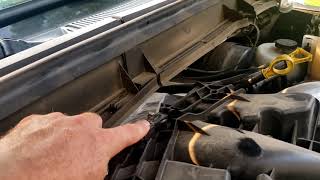
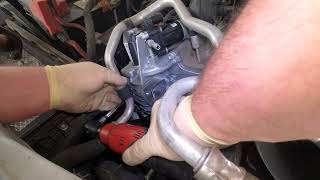
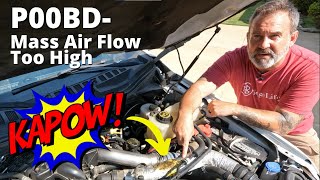

We Have This Part in Stock
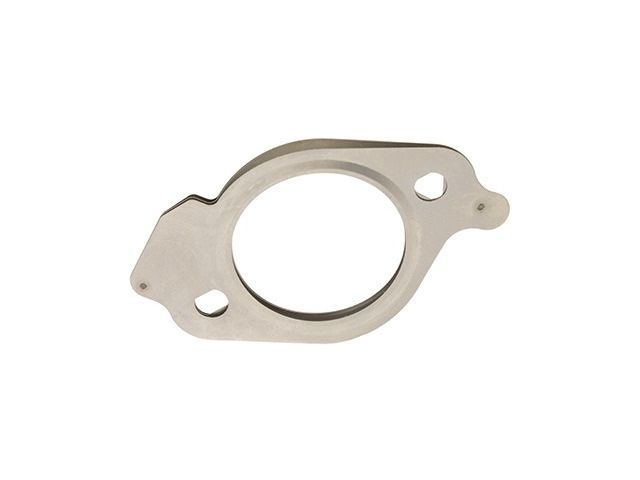




The information in this article is provided for general reference and educational purposes only. Vehicle specifications, procedures, and part compatibility can vary by production date, trim level, and region. Always consult your vehicle's factory service manual and verify part numbers before purchasing or performing repairs. Safety-critical components such as airbags, seat belts, and braking systems should be installed by a qualified professional.
- Ford F-450 SD:
- 🧭 Diagnostic Flowchart
- 🎬 Helpful Videos
- 🛍️ Shop This Part
- What's Unique About the 2017-2019 Ford F-450 SD
- Symptoms You May Notice
- Most Likely Causes
- Rare But Worth Checking
- Diagnosis Steps
- Parts You'll Likely Need
- Related Codes That Often Appear With This One
- Technical Service Bulletins (TSBs) & Recalls
- Platform-Specific Known Issues
- Mechanic-Grade Diagnostic Values
- Scan Tool Commands That Help
- Wiring & Ground Locations
- Real Owner Repair Stories
- OEM Part Supersession History
- Model Year Variations Within This Range
- 🎟️ Get 5% Off