

P0420 on 2017-2025 Chrysler Pacifica PHEV: Causes and Fixes for Catalyst Efficiency
This code indicates low catalyst efficiency on Bank 1. While it can mean a failed catalytic converter, first check for software updates, as recalls for 2017-2018 PHEV models address this. Also, inspect for exhaust leaks and failing oxygen sensors before replacing the expensive converter.
- For 2017-2018 Pacifica PHEVs, your first step must be to check for and perform any outstanding software recalls (like U73) before attempting any hardware repairs.
- Do not automatically replace the catalytic converter. A faulty oxygen sensor or an exhaust leak are common, cheaper-to-fix causes of P0420.
- A scan tool that can display live data is essential for diagnosis. Comparing the upstream and downstream O2 sensor signals is the primary way to determine if the converter is working.
- Any engine running issues, especially misfires (P030x codes), must be fixed immediately. They will destroy a new catalytic converter in a very short time.
What's Unique About the 2017-2025 Chrysler Pacifica
For the Pacifica PHEV, this code has a significant history tied to software issues. A major safety recall (NHTSA 18V740000 / Chrysler U73) was issued for 2017-2018 models where a powertrain software fault could cause the engine not to restart correctly after running in electric mode. This could lead to unburned fuel entering and damaging the catalytic converter. A subsequent service bulletin explicitly warned technicians that replacing the converter without addressing the underlying software issue would result in a repeat failure in 400 miles or less. This history makes checking for and applying all available PCM software updates a critical first step, distinguishing it from non-hybrid platforms where the diagnosis might more immediately focus on hardware.
Symptoms You May Notice
- Check Engine Light is on
- Reduced engine power or sluggish acceleration
- Vehicle may struggle to go above 30-40 mph if the converter is severely clogged
- A rotten egg or sulfur smell from the exhaust, indicating the converter is overheating.
- Failed emissions test
- Immediately replacing the catalytic converter without checking for software updates, exhaust leaks, or faulty oxygen sensors. This is the most expensive mistake and often leads to the code returning if the root cause wasn't fixed.
- Replacing the oxygen sensors without verifying their failure with a scan tool. While O2 sensors are a common cause, they are not always the problem, and this can be a waste of money if the converter is truly at fault.
Most Likely Causes
- Powertrain Control Module (PCM) Software Error 🔴 High Probability Chrysler issued recalls and service bulletins (U73/18V740000, U94) for 2017-2018 Pacifica PHEVs specifically for software issues causing false or premature P0420 codes and converter failure. The fault could cause the engine to mis-synchronize on startup, dumping raw fuel into the exhaust.
How to confirm: A Chrysler dealership or a qualified shop with access to OEM software tools can check if the vehicle's PCM is running the latest calibration and if any recalls (like U73 or U94) are outstanding for the specific VIN.
Typical fix: Reprogramming the PCM to the latest software version. This is often the first and most crucial step, and may be performed free of charge under a recall campaign.
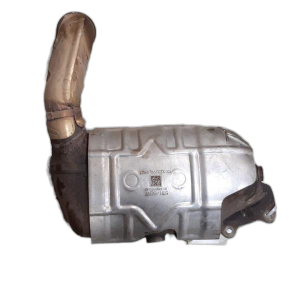
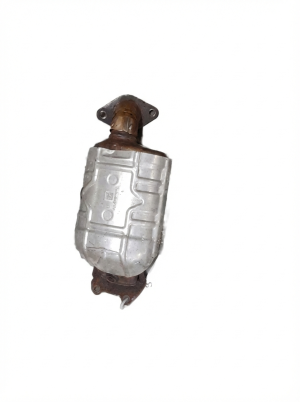
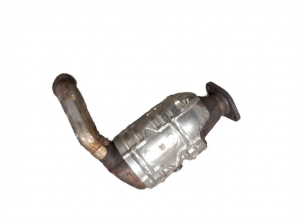
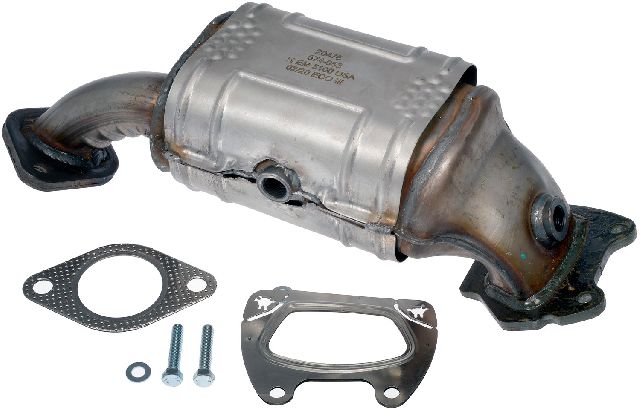
Est. part cost: $0-$200 - Failing or Failed Catalytic Converter 🔴 High Probability → Shop Catalytic Converter Converters can fail from age, but on this vehicle, they are often damaged by underlying issues like engine misfires or the software faults noted above, which allow unburned fuel to enter the exhaust and overheat the catalyst. The converters are integrated into the exhaust manifolds, making replacement more labor-intensive.
How to confirm: After ruling out other causes, a mechanic can use an infrared thermometer to check temperatures. A working converter should be significantly hotter at the outlet than the inlet. A visual inspection of the internal honeycomb (if removed) can also show melting or clogging. A backpressure test can confirm a clog.
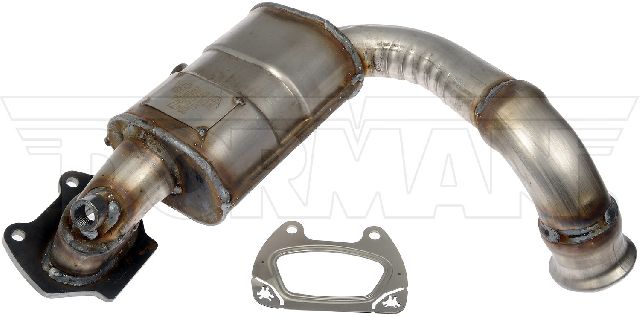
Typical fix: Replacement of the Bank 1 catalytic converter (rear, against the firewall). It is critical to fix the root cause (e.g., misfires, software) before replacing the converter to prevent repeat failure. OEM part numbers have been superseded multiple times; an example is 68184158AD.
Est. part cost: $500-$1600 - Faulty Downstream Oxygen (O2) Sensor 🟡 Medium Probability → Shop Oxygen Sensor Oxygen sensors are wear items and can become lazy or inaccurate over time, especially after 80,000-100,000 miles. A faulty downstream sensor can send incorrect data, mimicking the signal of a bad converter.
How to confirm: Use a scan tool with live data graphing. The Bank 1 Sensor 2 (downstream) voltage should be relatively steady (typically above 0.5V). If it's fluctuating rapidly like the upstream sensor (Bank 1 Sensor 1), the converter is likely bad. If the sensor's readings are erratic, flat, or slow to respond, the sensor itself is likely the problem.
Typical fix: Replace the Bank 1, Sensor 2 (downstream) oxygen sensor. A common Mopar part number is 5149171AA (superseded by 5149171AB).
Est. part cost: $50-$150 - Exhaust System Leak ⚪ Low Probability Leaks from cracked exhaust manifolds, failed gaskets, or loose flange connections between the engine and the downstream O2 sensor can allow outside oxygen into the exhaust. This extra oxygen fools the downstream sensor into reading lean, which can contribute to a P0420 code.
How to confirm: Perform a visual inspection for rust or cracks. Listen for hissing or ticking sounds from the exhaust, especially when the engine is cold. A smoke machine test is the most effective way to pinpoint the exact location of a leak.
Typical fix: Repair the leak by replacing the failed gasket, welding the crack, or tightening the loose connection.
Est. part cost: $20-$300
Rare But Worth Checking
- Engine Misfires or Rich/Lean Running Condition: Problems like leaking fuel injectors, bad spark plugs, or a faulty ignition coil can send unburned fuel into the exhaust, which superheats and destroys the catalytic converter. If you have other codes like P030x (misfire codes) along with P0420, you must fix the misfire first.
- Internal Engine Issues: On higher mileage Pentastar engines, issues like leaking valve seals or bad head gaskets can allow oil or coolant to enter the exhaust, contaminating and poisoning the catalytic converter and oxygen sensors. This is a less common but severe problem that requires major engine repair.
Diagnosis Steps
- Check for any Technical Service Bulletins (TSBs) or recalls related to P0420 for your specific vehicle. For 2017-2018 PHEV models, ensure recalls U73 and U94 have been performed by a dealer.
- Using an OBD-II scanner, check for any other stored trouble codes. Misfire or fuel system codes must be addressed first.
- Inspect the exhaust system from the engine to the tailpipe for any signs of leaks, such as black soot, cracks, or audible hissing. Pay close attention to gaskets and flange connections.
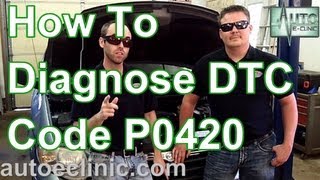
- Use a scan tool with live data to observe the oxygen sensor readings. Compare the Bank 1 Sensor 1 (upstream) and Bank 1 Sensor 2 (downstream) voltage graphs. The upstream sensor should fluctuate rapidly between ~0.1V and ~0.9V, while the downstream should be relatively steady and above 0.5V. If the downstream sensor mirrors the upstream, the converter is not working. 🎬 Watch: A professional guide to diagnosing P0420 catalyst codes.
- Test the oxygen sensors themselves. If the downstream sensor appears lazy, stuck, or does not respond to changes in the air/fuel mixture (when induced for testing), it may be faulty.
- If all other possibilities have been ruled out, test the catalytic converter directly. Use an infrared thermometer to measure the temperature at the inlet and outlet pipes. A healthy, warm converter should be at least 100°F hotter at the outlet.
- If the converter is clogged, you may notice a significant loss of power. A backpressure test can confirm this.
Parts You'll Likely Need
- Bank 1 Catalytic Converter
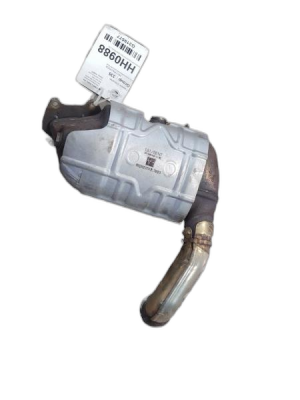
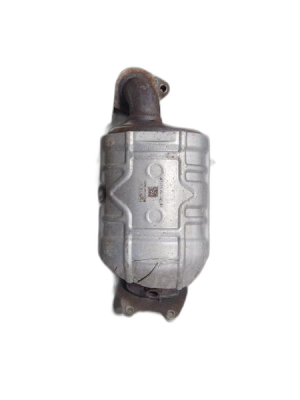
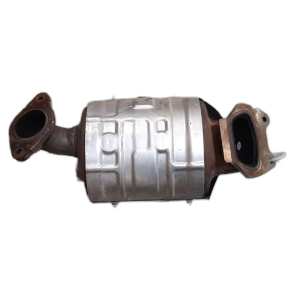
(OEM #68184158AD (supersedes previous versions))— This is the ultimate fix if the converter itself has failed internally, either from age or damage from another unresolved issue. On the Pacifica, this is the converter on the rear bank against the firewall, integrated with the exhaust manifold. 🎬 See this walkthrough for replacing the 2018 Pacifica catalytic converter.
Trusted brands: Mopar, Walker, MagnaFlow, Dorman - Bank 1, Sensor 2 (Downstream) Oxygen Sensor
(OEM #5149171AB (replaces 5149171AA))— This sensor is responsible for monitoring the converter's efficiency. If it fails, it can provide false readings that trigger a P0420 code.
Trusted brands: Mopar, Denso, Bosch, NTK
Related Codes That Often Appear With This One
- P0430 — This is the same catalyst efficiency code but for Bank 2 (the front bank). It's common to see both P0420 and P0430 if the cause is systemic, like a software issue, bad fuel, or an engine problem affecting both cylinder banks.
- P0300-P0306 — These are cylinder misfire codes (P0300 for random, P0301-P0306 for specific cylinders). A misfire allows unburned fuel to be dumped into the exhaust, which can quickly overheat and destroy the catalytic converter, leading to a P0420 code.
Technical Service Bulletins (TSBs) & Recalls
- Chrysler Safety Recall U73 / NHTSA 18V740000: Addresses a PCM software issue on 2017-2018 Pacifica PHEVs that could cause the engine not to restart properly, leading to unburned fuel damaging the catalytic converter.
- Chrysler Safety Recall U94: A follow-up action for 2017-2018 PHEVs to update powertrain controller software and inspect/replace the catalytic converter if damaged by the original software fault.
- Chrysler TSB (August 2018 Communication): A notice sent to dealers regarding recall U73, explicitly stating: 'It is NOT ADVISED to replace the catalytic converter on these vehicles [with P0420/P0430 after the recall]. An attempt to replace the catalytic converter to repair the vehicle will result in a repeat failure in 400 miles or less.'
Platform-Specific Known Issues
- NHTSA Recall 18V740000 (Chrysler U73): Affects 2017-2018 Pacifica PHEV models. A software issue could prevent the engine from restarting, dumping unburned fuel into the exhaust and destroying the catalytic converter. The fix is a PCM software update.
- Chrysler Service Bulletin for U73 Follow-up: A bulletin specifically warned dealers NOT to replace catalytic converters on vehicles presenting with P0420 after the U73 recall was performed, as a repeat failure was likely. This underscores the importance of software and proper diagnosis.
Mechanic-Grade Diagnostic Values
- O2 Sensor Heater Element Resistance — expected: 3 to 30 Ohms for a healthy Pentastar sensor.. Failure: Infinite resistance (OL) indicates an open circuit, while near-zero Ohms indicates a shorted element.
- Downstream O2 Sensor Voltage (Idle, Warm Engine) — expected: Relatively steady between 0.4V to 0.5V.. Failure: Voltage fluctuating rapidly, mimicking the upstream sensor, indicates a failed catalytic converter.
- Mode $06 Catalyst Monitor Test (Bank 1) — expected: A passing value, which varies by software but indicates the measured efficiency is above the minimum threshold.. Failure: A test result that is at or below the minimum specified value in the scan tool data, often flagged as 'FAIL'.
Hidden / Shadow Codes Worth Checking
- Mode $06, Test ID $21, Component ID $A9: This refers to the raw data for the Bank 1 Catalyst Efficiency test. Before a P0420 code is set, the values here can show a declining trend, indicating the converter is becoming marginal. A value at or below the minimum threshold confirms the failure detected by the PCM. (see via A professional scan tool with Mode $06 capabilities, such as Chrysler's wiTECH software or some high-end consumer scanners.)
Scan Tool Commands That Help
- wiTECH: Catalyst Monitor Drive Cycle Procedure — After a repair (like replacing a converter or O2 sensor), a specific drive cycle must be performed to allow the PCM to re-run the catalyst efficiency test and confirm the fix. This avoids waiting for the monitor to run on its own. The generic procedure involves idling for 5 minutes, then driving at a steady speed (e.g., 30-45 mph) for 2 minutes.
- wiTECH: Clear All DTCs — After a PCM software flash or part replacement, all fault codes should be cleared. The wiTECH application will automatically prompt the technician to clear any codes set in other modules during the reprogramming process.
Wiring & Ground Locations
- G304 — Located behind the right rear quarter panel.. This is a major chassis ground point for components located in the rear of the vehicle. While not directly tied to the O2 sensor circuit in all diagrams, poor grounding in this area can cause a host of electrical issues and is worth inspecting for corrosion or looseness if other electrical symptoms are present with the P0420 code.
- Bank 1 Sensor 2 Connector — On the rear exhaust bank (against the firewall), downstream of the catalytic converter. Access is typically from underneath the vehicle.. This is the primary connector for the sensor that triggers the P0420 code. It must be inspected for damage, corrosion, or loose pins. Voltage and resistance tests are performed at this connector's harness-side pins to diagnose the sensor and its circuit.
Real Owner Repair Stories
- Reddit user in r/pacificahybrid (2022 Pacifica Hybrid with 5,000 km) — Check Engine Light on.
❌ Tried (didn't work) Dealer confirmed software was up to date., Dealer unplugged and replugged everything, which only made the light go away temporarily.
✅ What actually fixed it The catalytic converter was diagnosed as bad and replaced under warranty. The user was also experiencing a P0E15 code, but the P0420-related fault was resolved by the new converter. - NHTSA ODI #11539650 — An owner reported that while starting the car, they noticed shaking and a check engine light. A scan revealed codes P0420, P0303, and P0203.
- NHTSA ODI #11615791 — An owner reported that "service electronic stability control" would pop up on the dash and message center, and code P0420 appeared on a reader. Despite several trips to the dealership, the issues could not be resolved.
- NHTSA ODI #10726467 — A cross-manufacturer reference for the Pacifica platform notes an instance where codes P0700, P0420, and P0456 appeared simultaneously, requiring the catalytic converter to be replaced along with a transmission rebuild and a new fuel pump.
When the Usual Fixes Don't Work
- A service bulletin for the 2017-2018 Pacifica PHEV explicitly warns technicians that even if diagnostic flow charts point to replacing the catalytic converter, it should NOT be done if the U73 recall was recently performed. The bulletin states the vehicle may need to be held at the dealership pending further instruction, as a replacement converter would fail again in under 400 miles. This directly contradicts the standard procedure of replacing the converter as the final step.
OEM Part Supersession History
68184158AA, 68184158AB, 68184158AC→68184158AD— Part revisions to improve performance, durability, or manufacturing process.
Heads up: These parts are for the Bank 2 (Front) converter, not Bank 1 (Rear) which causes P0420. While the search results point to this part number, it's crucial to verify the correct part for the rear bank. This highlights a common parts lookup error.5149171AA→5149171AB— Updated design for the downstream oxygen sensor.
Model Year Variations Within This Range
- 2017-2018: These model years were subject to the critical U73/18V740000 recall for a PCM software fault that could destroy the catalytic converter. Diagnosis for these years must start with verifying this recall has been completed.
Diagnostic Flowchart
Other Known Issues on This Vehicle
Issues unrelated to this code that are worth knowing about as an owner of this generation:
- Sudden Engine Stall / Loss of Motive Power 🔴 High — Affects 2017-2023 models. A recall was issued, but investigations were reopened as the software fix may not have solved the root cause. (Ref: NHTSA Recall 23V-010)
- Transmission Shudder, Jerking, or Failure 🔴 High — Commonly reported on 2017-2023 models, especially early model years. Can manifest as hard shifts, hesitation, or complete failure. The PHEV eFlite transmission can have issues with internal wiring connectors or motor position sensors. (Ref: TSB 21-025-25 REV. A, Warranty Extension XE1)
- High Voltage Battery Fire Risk 🔴 High — Affects 2017-2018 models. A recall was issued advising owners not to recharge and to park outside due to fire risk, even when off. (Ref: NHTSA Recall 22V-077, 24V536000 (73B))
- General Electrical and Battery Problems 🟠 Medium — Owners report a high rate of issues with the 12V auxiliary battery draining, infotainment screen freezing, and other electrical gremlins.
- Engine Restart Failure (Software Glitch) 🟠 Medium — Specific to 2017-2018 PHEV models where the gas engine fails to restart after electric operation, which is a direct cause of catalytic converter damage leading to P0420. (Ref: NHTSA Recall 18V740000 (U73/U94))
Used vs. New Parts: Buying Guide for This Vehicle
When a used part is the smart pick: Given the high cost of a new catalytic converter and the specific software-related failure patterns on the PHEV model, buying a used converter is generally not recommended. A used part carries the risk of being near the end of its life or having been damaged by the same issues as the part being replaced. Used parts may be considered for simple hardware like exhaust hangers or heat shields.
Donor-vehicle mileage cap: roughly under 40000 miles for the part to have meaningful remaining life.
What to inspect on the donor part:
- For a catalytic converter, inspect the honeycomb structure from both ends; it should be intact with no signs of melting, clogging, or rattling when shaken.
- Check for severe rust, cracks, or damage to the manifold or flanges.
- Ensure the O2 sensor bungs have clean, undamaged threads.
OEM-only on this vehicle (don't cheap out):
- Catalytic Converter: Strongly recommended to use OEM Mopar parts. Aftermarket converters, especially for California emissions standards, frequently fail to meet the PCM's strict efficiency monitoring, leading to the P0420 code returning. For the PHEV, compatibility with the complex engine management software is critical.
- Powertrain Control Module (PCM): If the PCM is ever suspected to be faulty, it must be replaced with an OEM unit and programmed by a dealer.
Aftermarket brands forum-validated for this vehicle:
- Oxygen Sensors: Denso and NTK are the original equipment manufacturers for Mopar and are highly recommended for reliable performance.
Brands owners have reported issues with on this vehicle:
- Generic/No-Name Catalytic Converters: Inexpensive, unbranded catalytic converters sold online often lack the necessary precious metal loading to satisfy the vehicle's emissions monitor, causing the P0420 code to return quickly.
Real Owner Stories
Aggregated from forums and TSBs cited above. Mileages and costs reflect what owners reported in those sources.
2017-2018 Chrysler Pacifica PHEV
Symptoms: The engine would not restart properly, leading to unburned fuel entering the exhaust system and damaging the catalytic converter.
What fixed it: PCM software update under Chrysler Safety Recall U73 / NHTSA 18V740000.
Source hint: Chrysler Safety Recall U73 / NHTSA 18V740000
Chrysler Pacifica 3.6L
Symptoms: P0420 code along with an EVAP code and rough running conditions.
What fixed it: Diagnosis of P0420 and P0456 (EVAP) codes simultaneously.
Source hint: Chrysler Forum - 'Codes P0456 & P0420'
2017-2018 Chrysler Pacifica PHEV
Symptoms: P0420/P0430 codes appearing after a recall was performed; vehicle at risk of repeat converter failure.
What fixed it: Powertrain controller software update and inspection/replacement of the catalytic converter under Recall U94.
Source hint: Chrysler Safety Recall U94
2017 Chrysler Pacifica
Symptoms: An owner reported shaking while starting the vehicle accompanied by a check engine light. Diagnostic scanning revealed codes P0420, P0303, and P0203.
Source hint: NHTSA ODI #11539650
2017 Chrysler Pacifica
Symptoms: Multiple dashboard warnings including "service electronic stability control" and "available service required." A code reader confirmed P0420 was present.
Source hint: NHTSA ODI #11615791
Related OBD-II Codes
Frequently Asked Questions
My 2017 Pacifica Hybrid has a P0420 code; should I replace the catalytic converter immediately?
What specific recalls address the P0420 code on the 2017-2018 Pacifica PHEV?
Is there a specific part number for the Bank 1 catalytic converter on the 3.6L Pentastar PHEV?
Can a faulty oxygen sensor cause a false P0420 on this vehicle?
Why is the catalytic converter replacement so expensive on the Pacifica?
Will the U73 recall software update cost me anything?
Helpful Videos

Used OEM Parts in Stock
New Aftermarket Parts Available

The information in this article is provided for general reference and educational purposes only. Vehicle specifications, procedures, and part compatibility can vary by production date, trim level, and region. Always consult your vehicle's factory service manual and verify part numbers before purchasing or performing repairs. Safety-critical components such as airbags, seat belts, and braking systems should be installed by a qualified professional.
- Chrysler Pacifica:
- 🧭 Diagnostic Flowchart
- 🎬 Helpful Videos
- 🛍️ Shop This Part
- What's Unique About the 2017-2025 Chrysler Pacifica
- Symptoms You May Notice
- Most Likely Causes
- Rare But Worth Checking
- Diagnosis Steps
- Parts You'll Likely Need
- Related Codes That Often Appear With This One
- Technical Service Bulletins (TSBs) & Recalls
- Platform-Specific Known Issues
- Mechanic-Grade Diagnostic Values
- Hidden / Shadow Codes Worth Checking
- Scan Tool Commands That Help
- Wiring & Ground Locations
- Real Owner Repair Stories
- When the Usual Fixes Don't Work
- OEM Part Supersession History
- Model Year Variations Within This Range
- Other Known Issues on This Vehicle
- Used vs. New Parts: Buying Guide for This Vehicle
- Real Owner Stories
- 2017-2018 Chrysler Pacifica PHEV
- Chrysler Pacifica 3.6L
- 2017-2018 Chrysler Pacifica PHEV
- 2017 Chrysler Pacifica
- 2017 Chrysler Pacifica
- Related OBD-II Codes
- Frequently Asked Questions
- 🎟️ Get 5% Off