

P0422 on 2004-2009 Mazda 3 2.3L: Main Catalyst Efficiency Causes and Fixes
This code means your main catalytic converter is failing. While a bad downstream O2 sensor or an exhaust leak can be the cause, on the 2.3L Mazda 3 it's most often a worn-out or contaminated catalytic converter. Expect to spend $500-$1,500+ for a replacement converter.
- P0422 almost always points to a failing catalytic converter on a higher mileage Mazda 3.
- Before replacing the expensive converter, rule out a bad downstream O2 sensor and any exhaust leaks.
- ALWAYS check for and fix any other engine codes (especially for misfires or fuel trim) before replacing the converter, or the new one will be damaged.
- Due to the 2.3L engine's potential for oil consumption, check your oil level regularly. A drop in oil level could be the root cause of the converter failure.
What's Unique About the 2004-2009 Mazda 3
The first-generation Mazda 3 with the 2.3L MZR engine uses a catalytic converter that is integrated directly into the exhaust manifold. This one-piece design can make replacement more labor-intensive than under-car converters. Furthermore, some early 2.3L MZR engines were known to consume oil, which can contaminate and prematurely destroy the catalytic converter, making it a common failure point on these specific vehicles. While TSBs for excessive oil consumption on this specific generation are not readily available, later Mazda TSBs (e.g., 01-011/22) for other models point to faulty valve stem seals as a cause for oil entering the combustion chamber, a plausible reason for the oil consumption seen in these earlier MZR engines.
Symptoms You May Notice
- Check Engine Light is on
- Failure to pass an emissions test
- Reduced engine power or sluggish acceleration, especially if the converter is clogged
- A rotten egg or sulfur (Hydrogen Sulfide) smell from the exhaust, especially under hard acceleration, as the failing converter cannot properly process sulfur in the fuel.
- Replacing the oxygen sensors without testing them first. While a bad O2 sensor is a possible cause, it's often misdiagnosed when the catalytic converter is the true failure.
- Replacing the catalytic converter without fixing the root cause of its failure, such as an engine misfire, oil consumption, or a rich fuel condition. This will lead to the new converter failing prematurely.
Most Likely Causes
- Failing Catalytic Converter 🔴 High Probability → Shop Catalytic Converter Converters fail from age (100k+ miles) or contamination. The 2.3L MZR's tendency for oil consumption can accelerate this process by coating the catalyst materials with oil ash, rendering it ineffective.
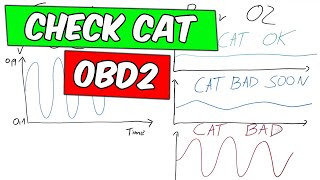
How to confirm: Use a scan tool to graph O2 sensor data. 🎬 Watch: How to check catalytic converter health with live data. If the downstream (Sensor 2) voltage fluctuates similarly to the upstream (Sensor 1) voltage, the converter is not storing oxygen and has failed. An exhaust backpressure test can confirm a clog. An infrared thermometer can also be used; the outlet of a working converter should be significantly hotter than the inlet.
Typical fix: Replace the manifold catalytic converter assembly. It is critical to fix any underlying issues (like oil consumption or misfires) first, or the new converter will fail quickly.
Est. part cost: $400-$1200 - Faulty Downstream Oxygen Sensor (Bank 1, Sensor 2) 🟡 Medium Probability → Shop Oxygen Sensor Oxygen sensors are wear items that degrade over time, leading to slow or inaccurate readings that can falsely trigger a catalyst efficiency code. They are exposed to extreme heat and contaminants in the exhaust stream.
How to confirm: Test the sensor's response time and voltage output. A healthy sensor should produce a steady voltage on a warm engine at steady RPM. If it's lazy, stuck, or mirrors the upstream sensor's activity when the cat is known to be good, it needs replacement. Often, if the car has over 100k miles, it's replaced as a matter of course when the converter is replaced.
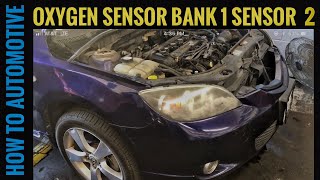
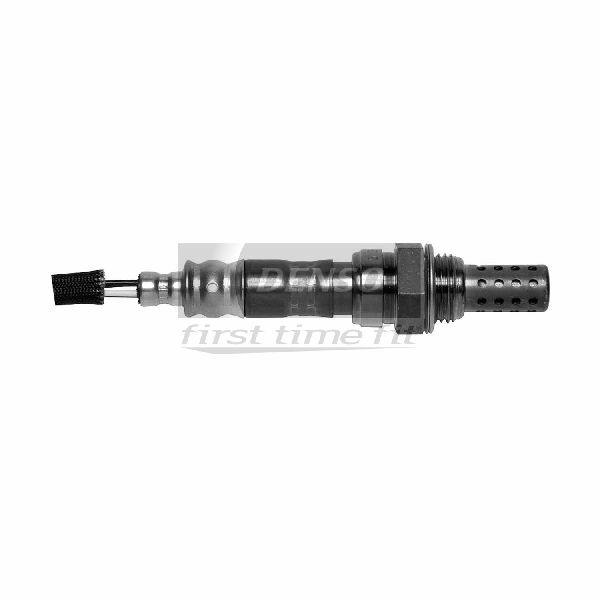
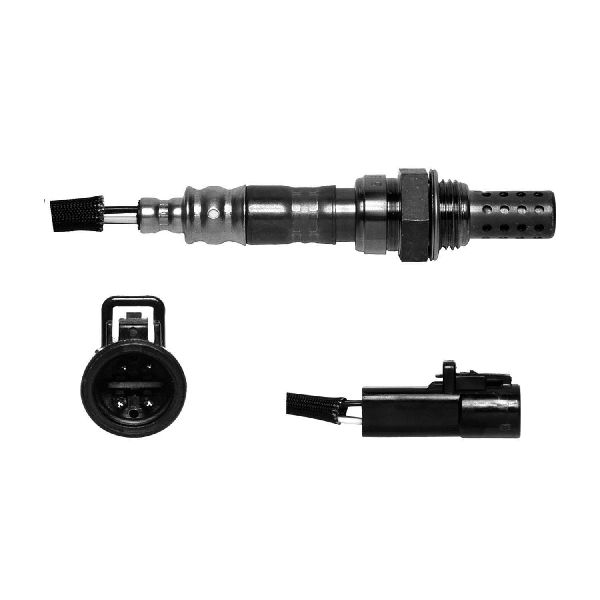
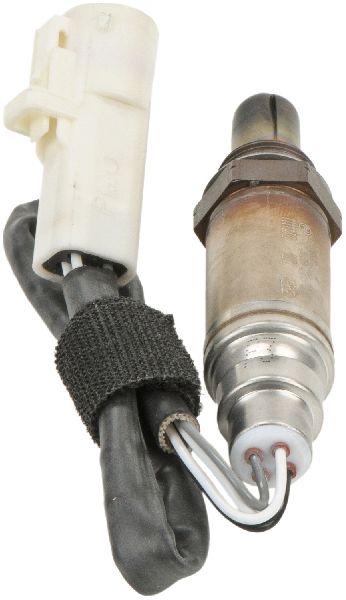
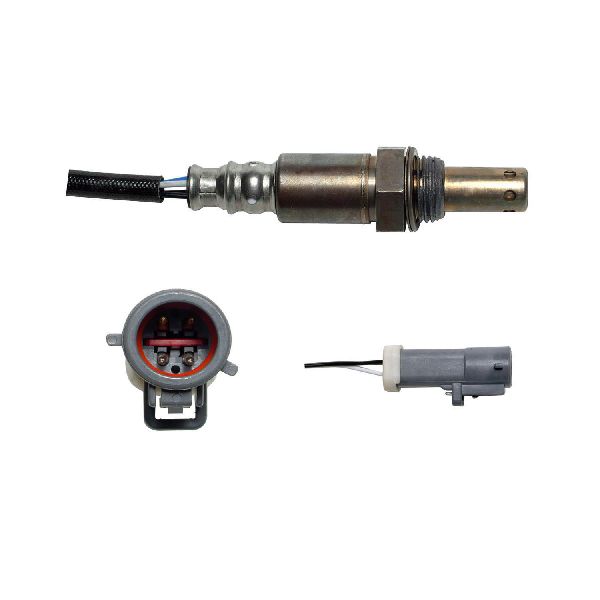
Typical fix: Replace the downstream (post-catalyst) oxygen sensor. Use a proper O2 sensor socket for removal 🎬 See this walkthrough for replacing the downstream oxygen sensor. and installation. Popular direct-fit brands include Denso and Bosch.
Est. part cost: $50-$150 - Exhaust System Leak ⚪ Low Probability Rust can cause leaks at gasket flanges (especially the manifold-to-head gasket or converter-to-pipe gasket) or cracks in the exhaust manifold itself. These leaks, if located before the downstream O2 sensor, can introduce outside oxygen and trick the sensor into thinking the converter isn't working.
How to confirm: Perform a visual inspection for rust, cracks, or black soot around exhaust connections. A smoke test is the most effective way to pinpoint the exact location of a leak. You can also have a helper temporarily block the tailpipe with a rag while the engine is running to make leaks more audible.
Typical fix: Replace the leaking gasket or repair/replace the cracked exhaust component.
Est. part cost: $20-$100 - Underlying Engine Problems ⚪ Low Probability Issues like engine misfires (bad spark plugs/coils), leaking fuel injectors, or a faulty/stuck EVAP purge valve can create a rich fuel condition. This sends unburned fuel into the exhaust, which can overheat and melt the internal ceramic structure of the converter.
How to confirm: Check for other diagnostic trouble codes (DTCs) related to misfires (P030x), fuel trim (P017x), or the EVAP system (P04xx). Address and repair these codes first. A faulty purge valve is a known issue on these cars and can sometimes be diagnosed by a rough idle or trouble starting after refueling.
Typical fix: Repair the root cause, which may involve replacing spark plugs, ignition coils, fuel injectors, or the EVAP purge solenoid.
Est. part cost: $50-$500
Rare But Worth Checking
- PCM Software Glitch:
Diagnosis Steps
- Check for any other DTCs in the PCM. If codes for misfires, fuel trim, O2 sensors, or EVAP are present, diagnose and fix them first.
- Visually inspect the exhaust system from the engine manifold to the rear O2 sensor. Look for cracks, holes, or black soot indicating a leak. Pay close attention to gaskets.
- Use a scan tool with live data capability. Graph the voltage for the upstream (Bank 1 Sensor 1) and downstream (Bank 1 Sensor 2) oxygen sensors.
- Observe the sensor graphs with the engine fully warmed up and running at around 2000 RPM. The upstream sensor should show rapid fluctuations between approximately 0.1V and 0.9V.
- A healthy catalytic converter will result in a steady downstream O2 sensor reading, typically between 0.5V and 0.8V.
- If the downstream O2 sensor's graph mirrors the rapid fluctuations of the upstream sensor, the catalytic converter is no longer functioning correctly and is the most likely cause.
- If the downstream sensor's reading is flat, stuck, or very slow to respond, the sensor itself is likely faulty and should be tested and/or replaced.
- If an exhaust leak is suspected but not visible, perform a smoke test to definitively locate the source.
- If the converter is suspected of being clogged, perform an exhaust backpressure test. Pressure should be very low (under 1.5 PSI) at idle and when revved.
Parts You'll Likely Need
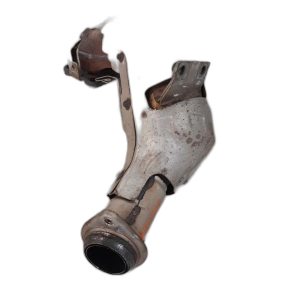
- Manifold Catalytic Converter
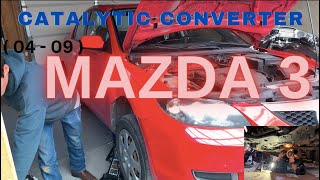
(OEM #L328-20-50XG, L3B42050X)— This is the most common failed component for a P0422 code on a high-mileage Mazda 3. The original unit wears out or becomes contaminated. Due to the manifold design, it is a single, complex part. 🎬 Watch: Step-by-step guide to replacing the manifold catalytic converter.
Trusted brands: Mazda (OEM), Magnaflow, Walker Exhaust, AP Exhaust Technologies
OEM price range: $800-$1500
Aftermarket price range: $400-$800 - Downstream Oxygen Sensor
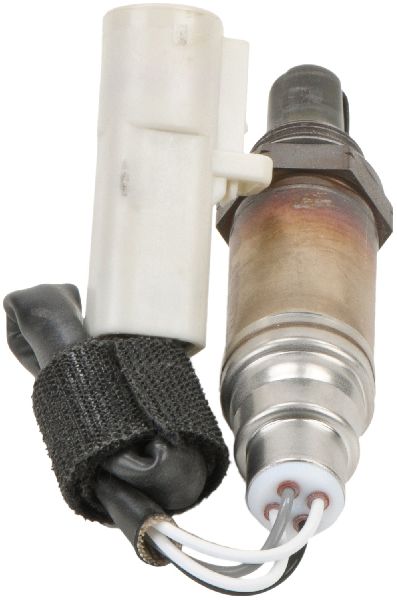
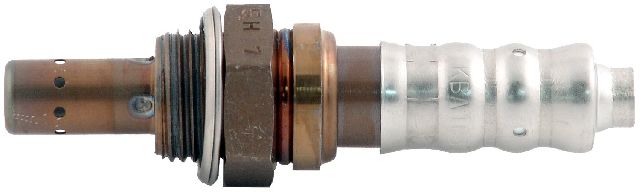
(OEM #ZJ39-18-861A, L32F-18-861A (for Calif. emissions))— This sensor is responsible for reporting the converter's efficiency. If it fails, it can provide false data that triggers the P0422 code. It's often replaced as a diagnostic step or when replacing the converter. Denso and Bosch are the OEM suppliers and highly recommended.
Trusted brands: Denso (e.g., 234-4349), Bosch (e.g., 15372), NGK/NTK
OEM price range: $150-$270
Aftermarket price range: $50-$150 - Exhaust Manifold Gasket
(OEM #L309-13-460)— This multi-layer steel gasket seals the manifold converter to the cylinder head. It is a one-time-use part and MUST be replaced whenever the manifold is removed.
Trusted brands: Mazda (OEM), Fel-Pro, Victor Reinz
OEM price range: $30-$50
Aftermarket price range: $15-$30
Related Codes That Often Appear With This One
- P0420 — P0420 is the generic code for 'Catalyst System Efficiency Below Threshold'. P0422 is a manufacturer-specific code that points to the same fundamental problem. They are often used interchangeably in forums and discussions.
- P0300, P0301, P0302, P0303, P0304 — Misfire codes. An engine misfire allows unburned fuel to enter the exhaust, which can rapidly overheat and destroy the catalytic converter. If you have misfire codes, they MUST be fixed before replacing the converter.
- P0171 — System Too Lean. While less common to see with a cat code, a lean condition can cause high combustion temperatures, which can also damage the converter over time. It often points to vacuum leaks or a dirty MAF sensor.
Technical Service Bulletins (TSBs) & Recalls
- TSB 01-011/22: While for later model Mazdas, this TSB describes excessive oil consumption caused by damaged exhaust valve stem seals, providing a plausible explanation for the oil consumption issues seen in the 2004-2009 2.3L MZR engine that leads to catalyst failure.
Platform-Specific Known Issues
- The 2.3L MZR engine in early models (approx. 2004-2006) had reports of higher-than-normal oil consumption. This can lead to oil ash contaminating the catalytic converter, causing it to fail prematurely. Owners should monitor oil levels closely.
- The catalytic converter is part of the exhaust manifold, making replacement more difficult than a separate under-car unit. It requires removing heat shields and working in a tight space against the firewall.
Mechanic-Grade Diagnostic Values
- Downstream O2 Sensor (B1S2) Voltage — expected: Relatively stable voltage between 0.4V and 0.6V at steady cruise (2000-2500 RPM) on a fully warmed engine.. Failure: Voltage fluctuates rapidly, mirroring the upstream sensor's pattern (swinging between ~0.1V and ~0.9V), indicating the catalyst is not storing oxygen.
- Exhaust Backpressure — expected: Less than 1.5 PSI at idle. Should not exceed 3.0 PSI when held at 2500 RPM.. Failure: Pressure significantly above these thresholds indicates a clogged or internally melted catalytic converter.
- PCM Pin Voltage Test - Rear O2 Sensor Signal — expected: Using a multimeter or oscilloscope, probe the signal wire at the PCM connector. Expect to see the same stable voltage (0.4V-0.6V) as seen on the scan tool.. Failure: If the voltage at the PCM pin is erratic, noisy, or different from the voltage at the sensor connector, it indicates a wiring problem (short, open, or high resistance) between the sensor and the PCM. The relevant pins on the ECU are 2BE and 2BH.
Scan Tool Commands That Help
- Mazda Modular Diagnostic System (M-MDS) / MDARS: PCM Reprogramming — This is a dealer-level function used to update the PCM's software. While no specific TSB for P0422 on this model mandates a reflash, it is a known fix for other codes where the monitoring parameters were too sensitive. This should be considered a last resort after all hardware faults are ruled out.
Wiring & Ground Locations
- Rear O2 Sensor PCM Pins — At the main Engine Control Unit (ECU/PCM) connector. Specific pins for the rear O2 sensor are 2BE and 2BH.. Allows for testing the integrity of the O2 sensor signal and heater circuit wiring directly at the computer, bypassing the entire harness to rule out wiring faults.
- G6 — On the left rear of the engine block.. A poor engine block ground can affect the performance and readings of various sensors, including the oxygen sensors which rely on a solid ground reference.
- G10 / G8 — Behind the right side of the dashboard (right kick panel area).. This is a major chassis ground point. A loose or corroded connection here can cause a variety of difficult-to-diagnose electrical issues for systems grounded in the cabin.
- Main Chassis Ground — On the passenger side strut tower, near the battery and underhood fuse block.. This is the primary ground connection from the battery negative terminal to the vehicle's body. Corrosion or a loose connection here can cause widespread electrical problems.
Real Owner Repair Stories
- Mazda Forum user (2015 Mazda 3 (later generation, but relevant issue)) — Loud exhaust noise, initially diagnosed as a failed catalytic converter/manifold assembly.
❌ Tried (didn't work) Initial diagnosis from one shop (Meineke) quoted $2200 for a new converter., Another mechanic was prepared to replace the entire manifold/converter assembly for over $3500.
✅ What actually fixed it A third opinion from a dedicated exhaust shop found the actual problem was a leak in the exhaust flex pipe, located after the converter. The repair cost was $700, saving thousands compared to replacing the entire manifold assembly. - Reddit user r/AskAMechanic (2006 Mazda 3 2.3L with 206k miles) — High and inconsistent oil consumption (a known cause of catalyst contamination), but no P0422 code mentioned directly.
❌ Tried (didn't work) Replacing the PCV valve, which is a difficult job requiring intake manifold removal, did not solve the oil consumption.
✅ What actually fixed it The user's experience points to the ultimate root cause of oil consumption being internal engine wear, likely worn piston rings or valve stem seals, which is not easily or cheaply fixed. This highlights that if oil consumption is the root cause of P0422, a new converter will also fail unless the engine is rebuilt or replaced.
"I Checked Everything" — The Actual Cause
- A common misdiagnosis is confusing a bad catalytic converter with a leaking exhaust flex pipe. A small crack in the flex pipe might not be obvious during a visual inspection or even a smoke test if the engine isn't under load. The leak can become more pronounced when the engine torques, allowing air to be pulled in and corrupting O2 sensor readings. One owner was quoted thousands for a new converter when the final fix was a much cheaper flex pipe repair.
Model Year Variations Within This Range
- 2006-2009: For the 2.3L engine, the optional automatic transmission was upgraded from a 4-speed to a 5-speed starting in the 2006 model year. This does not directly affect the P0422 code but is a notable powertrain change.
- 2007-2009: The Mazda 3 received a mid-cycle facelift for the 2007 model year, involving cosmetic changes to the front and rear fascias, lights, and interior trim. No significant mechanical changes were made to the 2.3L engine or emissions system that would alter the diagnosis of P0422.
Diagnostic Flowchart
Other Known Issues on This Vehicle
Issues unrelated to this code that are worth knowing about as an owner of this generation:
- Passenger-Side Hydraulic Engine Mount Failure 🔴 High — Very common after 60,000-100,000 miles. The hydraulic fluid leaks out, causing excessive vibration in the cabin, especially at idle and in gear.
- Stuck-Open or Leaking Thermostat 🟠 Medium — Common failure around 80,000-120,000 miles. Leads to the engine not reaching full operating temperature, poor heater performance, and can trigger codes like P0126.
- Worn Front Lower Control Arm Bushings 🟠 Medium — Frequently occurs at higher mileage (100,000+ miles), causing clunking noises from the front suspension, poor alignment, and uneven tire wear.
- Failing Transmission Control Module (TCM) - Automatic Transmissions 🔴 High — A known issue causing harsh shifting, getting stuck in a gear, and the 'AT' light to illuminate. It's an expensive part to replace.
- Sticking EVAP Purge Solenoid Valve 🟡 Low — A common cause for EVAP-related codes (like P0442, P0455) and sometimes difficulty starting after refueling. It's a relatively inexpensive and easy part to replace.
Used vs. New Parts: Buying Guide for This Vehicle
When a used part is the smart pick: For this repair, using used parts is generally not recommended for the main components. A used oxygen sensor is a gamble with no way to know its remaining life. A used catalytic converter is especially risky given the 2.3L MZR's known oil consumption issues; the donor car likely had the same problem, meaning the used converter could be contaminated and fail quickly.
Donor-vehicle mileage cap: roughly under 60000 miles for the part to have meaningful remaining life.
What to inspect on the donor part:
- If considering a used converter, demand to see the inside of the catalyst honeycomb. Look for a clean, intact brick.
- Avoid any converter with signs of oil residue in the inlet/outlet pipes.
- Check the donor vehicle's history for any indication of accidents or major engine repairs.
OEM-only on this vehicle (don't cheap out):
- Catalytic Converter: Strongly recommended to use OEM or a high-quality, CARB-compliant aftermarket unit. Many standard aftermarket converters do not have enough precious metal loading to satisfy the Mazda PCM's strict monitoring parameters, leading to the P0422 code returning even with a new part.
Aftermarket brands forum-validated for this vehicle:
- Denso and Bosch for Oxygen Sensors (often the OEM supplier).
- Magnaflow or Walker for catalytic converters (ensure it is a direct-fit, CARB-compliant model if required by your state).
Brands owners have reported issues with on this vehicle:
- Unbranded, 'universal' catalytic converters found on sites like eBay or Amazon. These are notorious for failing within months and are often the cause of recurring P0422 codes.
Real Owner Stories
Aggregated from forums and TSBs cited above. Mileages and costs reflect what owners reported in those sources.
2005 Mazda 3 2.3L — ~145000 miles
Symptoms: Check Engine Light on with code P0422.
What fixed it: Discussion pointed to a failed catalytic converter as the ultimate cause on a higher mileage car, requiring replacement of the converter.
Source hint: mazda3forums.com thread titled 'P0422 code on 2005 Mazda 3'
Mazdaspeed 3 2.3L
Symptoms: P0422 code accompanied by a rough idle.
What fixed it: Discussion pointed towards diagnosing other contributing factors like MAF sensors or oil leaks before condemning the converter itself.
Source hint: Reddit r/mazdaspeed3 thread titled 'Rough Idle and P0422 code'
Mazda 3 2.3L
Symptoms: Check Engine Light on with codes P0422, P0455, and P0421.
What fixed it: Replacement of a faulty EVAP purge valve resolved the codes.
Source hint: YouTube video titled 'Mazda 3 purge control valve 911-701 P0455 P0421 P0422'
Related OBD-II Codes
Frequently Asked Questions
Why is my 2004-2006 Mazda 3 2.3L more prone to catalytic converter failure?
How difficult is it to replace the catalytic converter on this specific Mazda 3?
My Mazda 3 has a rough idle along with the P0422 code. Could something else be wrong?
Is it more likely the catalytic converter or the O2 sensor causing P0422 on my high-mileage Mazda 3?
Should I just replace the downstream O2 sensor first since it's cheaper?
Does TSB 01-011/22 about oil consumption apply to my 2007 Mazda 3?
Helpful Videos
Used OEM Parts in Stock
New Aftermarket Parts Available

The information in this article is provided for general reference and educational purposes only. Vehicle specifications, procedures, and part compatibility can vary by production date, trim level, and region. Always consult your vehicle's factory service manual and verify part numbers before purchasing or performing repairs. Safety-critical components such as airbags, seat belts, and braking systems should be installed by a qualified professional.
- Mazda 3:
- 🧭 Diagnostic Flowchart
- 🎬 Helpful Videos
- 🛍️ Shop This Part
- What's Unique About the 2004-2009 Mazda 3
- Symptoms You May Notice
- Most Likely Causes
- Rare But Worth Checking
- Diagnosis Steps
- Parts You'll Likely Need
- Related Codes That Often Appear With This One
- Technical Service Bulletins (TSBs) & Recalls
- Platform-Specific Known Issues
- Mechanic-Grade Diagnostic Values
- Scan Tool Commands That Help
- Wiring & Ground Locations
- Real Owner Repair Stories
- "I Checked Everything" — The Actual Cause
- Model Year Variations Within This Range
- Other Known Issues on This Vehicle
- Used vs. New Parts: Buying Guide for This Vehicle
- Real Owner Stories
- 2005 Mazda 3 2.3L — ~145000 miles
- Mazdaspeed 3 2.3L
- Mazda 3 2.3L
- Related OBD-II Codes
- Frequently Asked Questions
- 🎟️ Get 5% Off