

P0422 on 2013-2018 Toyota RAV4 Hybrid: Main Catalyst Fixes & Causes
This code means your catalytic converter's efficiency is low. Before replacing the expensive converter, first check for exhaust leaks and failing oxygen sensors, which are common, cheaper culprits. If the converter is bad, expect to pay $400+ for an OEM part and be wary of cheap aftermarket units, as Toyotas are sensitive and the code may return. Catalytic converter theft is also a major issue for this model.
- P0422 means the catalytic converter is not working efficiently, but the converter itself is not always the root cause.
- ALWAYS diagnose for cheaper problems first: check for exhaust leaks and test the downstream oxygen sensor before buying a new converter.
- The catalytic converter is part of the exhaust manifold on this RAV4; they are replaced as one unit.
- If you must replace the converter, use a high-quality OEM (Toyota) or CARB-compliant aftermarket part to avoid the Check Engine Light from returning.
What's Unique About the 2013-2018 Toyota RAV4
On this generation of RAV4, the primary catalytic converter is integrated directly into the exhaust manifold, meaning they are replaced as a single assembly. While the code points to the converter, these vehicles are known for being very sensitive to exhaust leaks and the quality of replacement parts. Many owners mistakenly replace the expensive converter assembly when the true cause was a less expensive exhaust gasket leak or a failing downstream oxygen sensor. Using a non-OEM or non-CARB certified aftermarket converter can often lead to the check engine light returning because they may lack sufficient precious metal loading for Toyota's sensitive monitoring.
Generation note: The 2013-2018 Toyota RAV4 is the fourth generation (XA40). The 2AR-FXE hybrid engine was introduced for the 2016 model year. This guide applies to the 2016-2018 Hybrid models, but the general diagnosis for the non-hybrid 2.5L (2AR-FE) engine from 2013-2018 is nearly identical as it shares a similar emissions system design.
Symptoms You May Notice
- Check Engine Light is on
- Reduced fuel economy
- Possible hesitation or lack of engine power
- A sulfur or "rotten egg" smell from the exhaust
- Failure to pass a state emissions inspection
- Slightly rougher engine feel or hesitation on light acceleration, which could indicate an underlying misfire issue that is damaging the catalyst.
- Replacing the catalytic converter without first checking for exhaust leaks or testing the oxygen sensors. An exhaust leak or a bad O2 sensor is a much cheaper fix and a very common cause for this code.
- Assuming the P0422 code always means the catalytic converter is bad. As one owner found, an intermittent misfire from a bad ignition coil can trigger a catalyst code before a dedicated misfire code appears.
Most Likely Causes
- Failing Catalytic Converter 🔴 High Probability → Shop Catalytic Converter Catalytic converters have a finite lifespan and can be damaged by engine problems like misfires or burning oil. They are also a high-theft item on RAV4 Hybrids due to their valuable metals and easy accessibility.
How to confirm: After confirming no exhaust leaks and that both oxygen sensors are working correctly, the converter is the remaining culprit. A mechanic can use a scan tool to view live O2 sensor data; a bad converter will show the downstream O2 sensor voltage fluctuating similarly to the upstream sensor.
Typical fix: Replace the exhaust manifold with integrated catalytic converter. It is highly recommended to use an OEM or high-quality CARB-compliant aftermarket part to ensure the code does not return. Consider installing an anti-theft shield at the same time. 🎬 Watch: How to install a catalytic converter anti-theft shield
Est. part cost: $400-$600 - Faulty Downstream Oxygen (O2) Sensor 🟡 Medium Probability → Shop Oxygen Sensor Oxygen sensors wear out over time, typically after 80,000+ miles, and can provide slow or inaccurate readings to the computer, falsely triggering a catalyst efficiency code.
How to confirm: Use a scan tool to graph the sensor's voltage. A healthy downstream sensor should show a relatively steady voltage. If it's stuck or fluctuating rapidly like the upstream sensor, it has likely failed. A visual inspection may also reveal a physically damaged or contaminated sensor.
Typical fix: Replace the downstream (post-catalyst) oxygen sensor. Denso is the original equipment manufacturer (OEM) supplier and is highly recommended. 🎬 Watch: How to replace the downstream oxygen sensor
Est. part cost: $80-$150 - Exhaust System Leak 🟡 Medium Probability Gaskets between exhaust components can fail over time, and pipes can develop cracks from corrosion, especially in areas that use road salt. A leak before the downstream O2 sensor can allow outside oxygen in, fooling the sensor into thinking the catalyst isn't working.
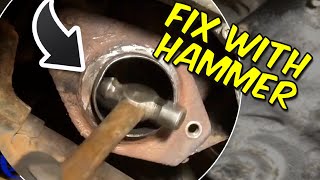
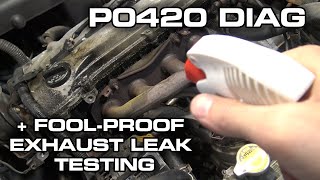
How to confirm: Perform a visual inspection for black soot marks around exhaust connections, especially at the manifold and flange gaskets. A professional can use a smoke machine to pressurize the exhaust and easily spot leaks. 🎬 See how to test for exhaust leaks and diagnose a P0420 code
Typical fix: Replace the leaking gasket or repair the cracked pipe section.
Est. part cost: $20-$100
Rare But Worth Checking
- Engine Misfires or Fuel Mixture Issues: An engine that is running too rich or lean, or has consistent misfires, can send unburnt fuel into the exhaust, which rapidly overheats and destroys the catalytic converter. If you replace the converter without fixing the root engine problem, the new one will fail quickly. These issues will almost always be accompanied by other trouble codes (e.g., P030x, P0171, P0172). A failing ignition coil is a real-world example that can cause this.
Diagnosis Steps
- Scan for any other DTCs. If codes for misfires (P030x), fuel mixture (P017x), or oxygen sensor circuits (P013x) are present, diagnose and fix them first. This is critical.
- Perform a thorough visual inspection of the exhaust system from the manifold to the tailpipe. Look for any signs of leaks, such as black soot trails at gaskets or cracks in the pipes.
- With the engine running, carefully listen for any hissing or puffing sounds that would indicate a leak. A professional can use a smoke machine to pinpoint the source.
- If no leaks are found, use an OBD-II scanner with live data capability to monitor the upstream (A/F Sensor) and downstream (O2 Sensor) voltage readings at a steady 2,500 RPM.
- A good catalytic converter will show the upstream sensor fluctuating rapidly, while the downstream sensor remains relatively stable and steady.
- If the downstream sensor's voltage is fluctuating in a similar pattern to the upstream sensor, it confirms low catalyst efficiency.
- If the downstream sensor's voltage is flatlined or slow to respond, the sensor itself is likely faulty.
- If the sensors test good and there are no exhaust leaks, the catalytic converter has failed and needs to be replaced.
Parts You'll Likely Need
- Exhaust Manifold with Integrated Catalytic Converter
(OEM #25051-0V110)— This is the most probable cause if exhaust leaks and O2 sensors have been ruled out. On this RAV4, the manifold and converter are one piece. It is also a very common target for theft.
Trusted brands: Toyota (OEM), Walker (CARB-Compliant), MagnaFlow (CARB-Compliant)
OEM price range: $400-$600
Aftermarket price range: $250-$500 - Downstream Oxygen Sensor (Bank 1, Sensor 2)
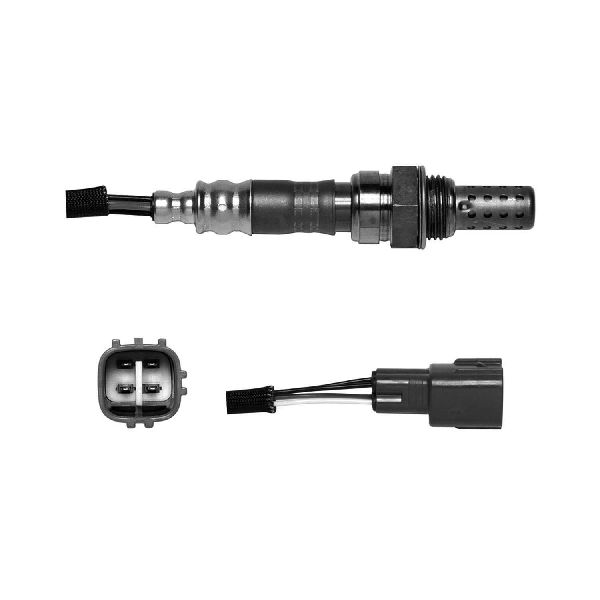
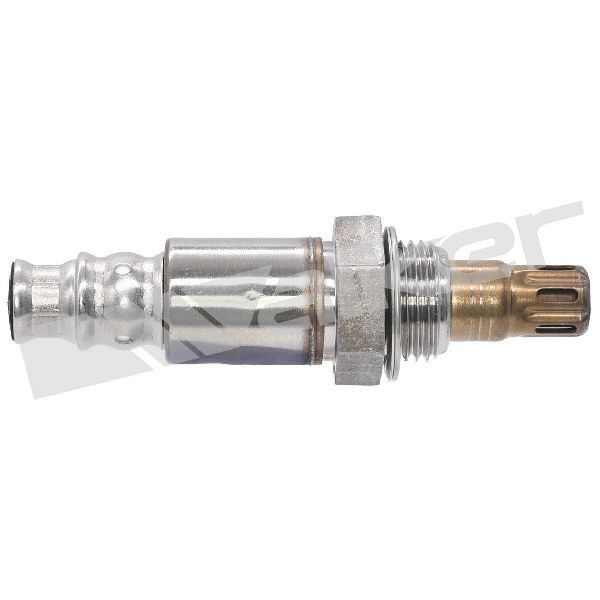
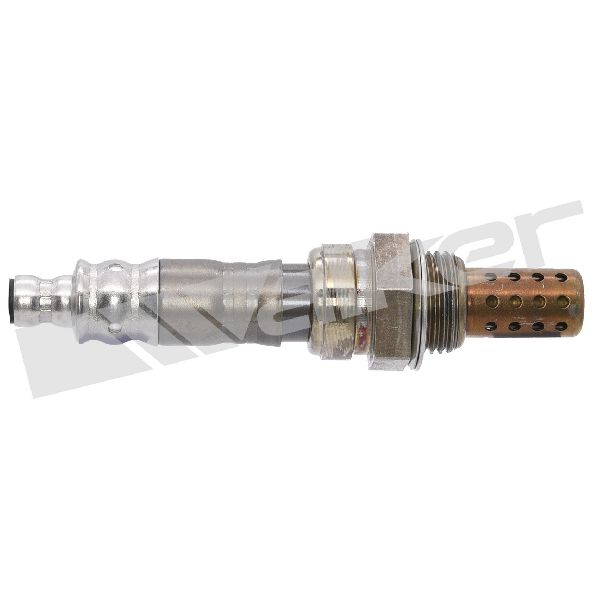
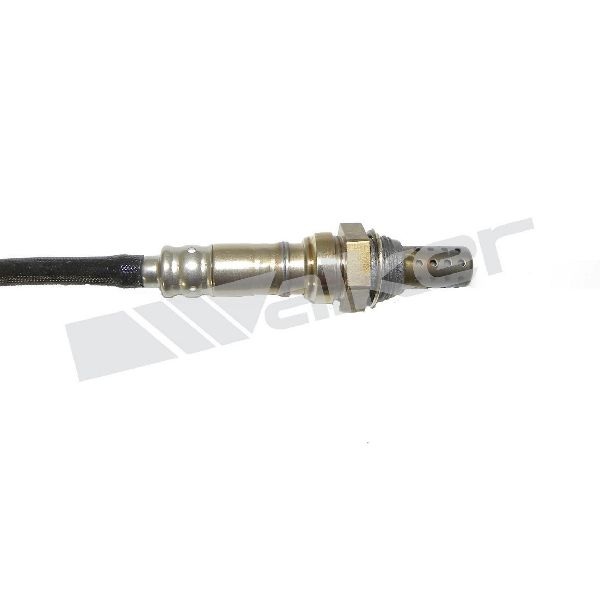
(OEM #89465-42230 (Denso 234-4524))— This sensor measures catalyst efficiency. Its failure can mimic a bad converter and is a common misdiagnosis. Replacing it is a critical diagnostic step before condemning the converter.
Trusted brands: Denso (OEM supplier), Bosch, NGK/NTK
OEM price range: $120-$180
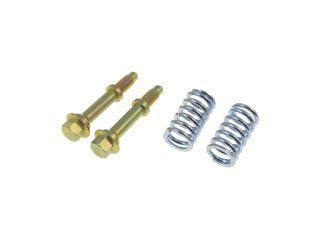
Aftermarket price range: $80-$130 - Exhaust Manifold Gasket
(OEM #17173-0V020)— A leak at the manifold gasket can let oxygen into the exhaust stream and trigger a false P0422 code. It should always be replaced when the manifold is serviced.
Trusted brands: Toyota (OEM), Fel-Pro
OEM price range: $25-$40
Aftermarket price range: $15-$30
Related Codes That Often Appear With This One
- P0420 — P0420 is the identical code but for Bank 1. Since the 2AR-FXE is an inline 4-cylinder, it only has one bank. P0420 and P0422 are often used interchangeably by generic scan tools for this fault.
- P0137 / P0138 — These codes indicate a fault with the downstream oxygen sensor circuit itself (low or high voltage). If you see one of these, the O2 sensor is the primary suspect, not the converter.
- P0300-P0304 — These codes indicate engine misfires. A misfire sends unburnt fuel into the exhaust, which can quickly destroy a catalytic converter. If you see these codes alongside P0422, the misfire is the root cause that must be fixed first.
Technical Service Bulletins (TSBs) & Recalls
- While not directly for P0422, Toyota Customer Support Program 22TE09 is a critical TSB for hybrid owners. It addresses corrosion on the high-voltage floor wire harness connecting to the rear motor, a condition known as 'Cablegate'. This issue can cause various electrical problems and even a no-start condition. It highlights a known vulnerability in the hybrid system's wiring in certain environments.
Platform-Specific Known Issues
- Catalytic converter theft is extremely common on this generation of RAV4, particularly the hybrid models. The higher ground clearance provides easy access for thieves, and the hybrid converters contain more valuable precious metals. Owners often discover the theft when the vehicle starts with an extremely loud roar. Installing an anti-theft shield is a highly recommended preventative measure.
Mechanic-Grade Diagnostic Values
- Downstream O2 Sensor (Sensor 2) Voltage at Idle — expected: Relatively stable voltage between 0.4V and 0.8V.. Failure: Voltage fluctuates rapidly, mimicking the upstream sensor's pattern (0.1V - 0.9V), indicating a bad converter. Voltage is stuck or unresponsive, indicating a bad sensor.
- Toyota Mode $06 Catalyst Monitor Test Value (Catalyst O2 Storage) — expected: The test value should be above the minimum threshold specified in the scan tool data. For example, a value of 0.265 with a minimum of 0.250 is passing but indicates the catalyst is nearing the end of its life.. Failure: The test value is below the minimum threshold. This is a non-pass/fail indicator that can show a degrading catalyst before a DTC is set.
Hidden / Shadow Codes Worth Checking
- Mode $06 Test ID ($86), Component ID ($10): This is not a DTC but a specific monitor test result within a generic OBD-II scanner's Mode $06 data. It provides the raw test value and the minimum/maximum thresholds for the catalyst's oxygen storage capacity. A value close to the minimum limit can indicate a catalyst that is weak but has not yet failed badly enough to set a P0422 code. (see via A professional scan tool or an advanced consumer OBD-II scanner with Mode $06 functionality. In Toyota's Techstream software, this is found under the 'Monitor' or 'Monitor Info' section.)
Scan Tool Commands That Help
- Toyota Techstream: Active Test: Control the Injection Volume for A/F Sensor — This test allows a technician to force the engine rich (+12.5%) or lean (-12.5%) to observe the reaction of the O2 sensors. It's a definitive way to test the oxygen storage capacity (OSC) of the catalytic converter. A good converter will show a delayed reaction on the downstream sensor, while a bad one will show an immediate reaction.
- Toyota Techstream: Utility: Monitor / Readiness — After a repair (like replacing an O2 sensor or converter), you can use this function to view the status of the catalyst monitor. It will show as 'INCMPL' (Incomplete) until the specific drive cycle conditions are met. This is crucial for verifying that the repair was successful and the monitor will run and pass.
- Toyota Techstream: Dual Data List — This feature allows graphing the upstream A/F sensor and downstream O2 sensor on the same screen. This is the primary visual method for diagnosing P0422, as it makes it easy to see if the downstream sensor is mimicking the upstream sensor.
OEM Part Supersession History
25051-36150→25051-0V110— Standard part number update/revision by Toyota.
Heads up: These parts are interchangeable for the specified vehicle range. 25051-0V110 is the current correct part.89465-42230→89465-0R040— Standard part number update/revision by Toyota.
Heads up: 89465-0R040 is the direct replacement. There are no known incompatibility issues. Some sources note the new part is for vehicles not built in Japan, but it is the correct service part for US models.
Model Year Variations Within This Range
- 2017-2018: For 2017, the Toyota Safety Sense suite became standard, and the base hybrid trim was renamed LE+. An SE trim was also added. For 2018, the model was largely unchanged. These changes do not affect the diagnosis of P0422 but are relevant for trim-specific features.
- 2017-2018 vs 2016: The official highway fuel consumption rating slightly increased from 7.6 L/100 km in 2016 to 7.8 L/100 km for 2017 and 2018 models, indicating minor calibration or system changes.
Diagnostic Flowchart
Other Known Issues on This Vehicle
Issues unrelated to this code that are worth knowing about as an owner of this generation:
- High-Voltage Cable Corrosion ('Cablegate') 🔴 High — More common on 2019+ models but affects the design philosophy. Occurs in regions with road salt. Can lead to hybrid system failure and a no-start condition. Repair cost out of warranty can be thousands. (Ref: Toyota Customer Support Program 22TE09 (extends warranty coverage for this part).)
- Water Pump Seepage/Failure 🟠 Medium — A common maintenance item on the 2AR engine family as mileage exceeds 80,000-100,000 miles. Often presents as a slow coolant leak with pink crust around the pump.
- Torque Converter Shudder (Non-Hybrid) 🟠 Medium — Primarily documented on 2013-2015 non-hybrid models with the 6-speed automatic. Causes a vibration at low RPM/light throttle, typically around 40 mph. Often caused by a software issue or old fluid. (Ref: A warranty extension was previously offered for this issue on some models.)
- Excessive Oil Consumption (2AR-FE Non-Hybrid) 🟠 Medium — While this article covers the 2AR-FXE, the closely related non-hybrid 2AR-FE engine used in many XA40 RAV4s can suffer from oil consumption due to piston ring design. It is a widely discussed issue for the platform in general.
- HVAC Evaporator Odor/Leaks 🟡 Low — A recurring complaint in owner communities is a musty smell from the vents or evidence of a leak in the passenger footwell, pointing to issues with the HVAC evaporator or its drain.
Used vs. New Parts: Buying Guide for This Vehicle
When a used part is the smart pick: Due to the high cost and high theft rate of the catalytic converter, a used OEM unit from a reputable auto recycler can be a cost-effective option. It is generally not recommended for other parts related to this repair, such as O2 sensors or gaskets.
Donor-vehicle mileage cap: roughly under 80000 miles for the part to have meaningful remaining life.
What to inspect on the donor part:
- Verify the donor vehicle's mileage; lower is always better.
- Inspect the part for physical damage, heavy corrosion, or signs of overheating (discoloration).
- Ensure it's a genuine Toyota part by looking for OEM stampings.
- Ask the recycler if they guarantee the part will allow the vehicle to pass an emissions test.
OEM-only on this vehicle (don't cheap out):
- Catalytic Converter: Toyotas are notoriously sensitive to the efficiency of aftermarket catalytic converters. Using a non-OEM or non-CARB compliant unit frequently results in the P0422/P0420 code returning within a few thousand miles. An OEM part (new or used) is strongly recommended to ensure a lasting repair.
Aftermarket brands forum-validated for this vehicle:
- Oxygen Sensors: Denso is the Original Equipment Manufacturer (OEM) for Toyota. Using a Denso-branded sensor (e.g., Denso 234-4524) is equivalent to buying the part from a Toyota dealer and is a reliable, often cheaper, alternative.
Brands owners have reported issues with on this vehicle:
- Universal Catalytic Converters: Avoid generic, weld-in catalytic converters. They almost never have the correct precious metal loading required by the Toyota ECM's sensitive monitoring strategy and will cause the code to return.
Real Owner Stories
Aggregated from forums and TSBs cited above. Mileages and costs reflect what owners reported in those sources.
2016 Toyota RAV4 Hybrid 2.5L — 93205 miles
Symptoms: Check engine light with code P0420 (related to catalyst efficiency).
What fixed it: The owner sought advice regarding catalyst efficiency on a Polish Toyota forum.
Source hint: Rav 4 hybrid 2016r 150000km P0420 - Toyota Klub Poland
2013-2018 Toyota RAV4 Hybrid
Symptoms: The vehicle starts with an extremely loud roar.
What fixed it: Replacement of the catalytic converter and installation of an anti-theft shield.
Source hint: vehicle_specific_issues
Related OBD-II Codes
Frequently Asked Questions
Does the 'Cablegate' TSB 22TE09 apply to my 2013-2018 RAV4 Hybrid if I have emissions codes?
Why is the catalytic converter so expensive to replace on my RAV4 Hybrid?
Can I use any aftermarket oxygen sensor to fix the P0422 code?
Is there a specific maintenance item I should check on my 2AR-FXE engine to prevent engine damage?
Could a simple exhaust leak be causing my P0422 code?
Should I install an anti-theft device when I replace my converter?
Helpful Videos

We Have This Part in Stock


The information in this article is provided for general reference and educational purposes only. Vehicle specifications, procedures, and part compatibility can vary by production date, trim level, and region. Always consult your vehicle's factory service manual and verify part numbers before purchasing or performing repairs. Safety-critical components such as airbags, seat belts, and braking systems should be installed by a qualified professional.
- Toyota RAV4:
- 🧭 Diagnostic Flowchart
- 🎬 Helpful Videos
- 🛍️ Shop This Part
- What's Unique About the 2013-2018 Toyota RAV4
- Symptoms You May Notice
- Most Likely Causes
- Rare But Worth Checking
- Diagnosis Steps
- Parts You'll Likely Need
- Related Codes That Often Appear With This One
- Technical Service Bulletins (TSBs) & Recalls
- Platform-Specific Known Issues
- Mechanic-Grade Diagnostic Values
- Hidden / Shadow Codes Worth Checking
- Scan Tool Commands That Help
- OEM Part Supersession History
- Model Year Variations Within This Range
- Other Known Issues on This Vehicle
- Used vs. New Parts: Buying Guide for This Vehicle
- Real Owner Stories
- 2016 Toyota RAV4 Hybrid 2.5L — 93205 miles
- 2013-2018 Toyota RAV4 Hybrid
- Related OBD-II Codes
- Frequently Asked Questions
- 🎟️ Get 5% Off