

P0440 on 1993-2002 Chevrolet Camaro: EVAP System Malfunction Causes and Fixes
For a 1993-2002 Camaro, code P0440 is most often caused by a loose or worn-out gas cap. If the cap is good, the next most likely culprits are a faulty EVAP purge solenoid in the engine bay or, on 1998-2002 models, a bad EVAP vent solenoid near the fuel tank. A new gas cap costs about $15-$30.
- Always start your diagnosis by checking the gas cap. It's the most common and cheapest fix.
- For 1998-2002 models, the EVAP vent solenoid near the fuel tank is the second most likely part to fail.
- For all years, the EVAP purge solenoid in the engine bay is a common culprit.
- Parts for the EVAP system are often different for 1993-1997 and 1998-2002 models. Verify the correct part for your specific year before purchasing.
- If you can't find the leak visually or by testing the solenoids, a professional smoke test is the most reliable way to pinpoint the problem.
What's Unique About the 1993-2002 Chevrolet Camaro
The 1993-2002 fourth-generation Camaro's EVAP system differs significantly between early (1993-1997 LT1-powered) and late (1998-2002 LS1-powered) models. A major change occurred in 1999 with the switch from a metal to a plastic fuel tank, which also altered the design and location of components like the charcoal canister and vent solenoid. On 1998-2002 models, the EVAP vent solenoid, located near the rear axle and charcoal canister, is a notoriously common failure point due to its exposure to road debris and moisture. Early models have a different canister and valve setup integrated near the tank.
Generation note: This guide covers the entire fourth generation of the Chevrolet Camaro (1993-2002). There was a significant refresh in 1998 (engine and styling) and a fuel tank change in 1999 (metal to plastic). EVAP system parts are often different between the 1993-1997 and 1998-2002 model year ranges, so it is crucial to buy parts specific to your year.
Symptoms You May Notice
- Check Engine Light is on
- A noticeable smell of fuel vapors, especially around the gas cap or rear of the car.
- Vehicle will not pass an emissions inspection
- In rare cases, a whooshing sound when opening the gas cap due to pressure not being properly vented.
- Replacing the O2 sensors. Oxygen sensors are not related to the EVAP system.
- Replacing the fuel pump. Unless the fuel tank pressure sensor has been confirmed faulty (and it's part of the pump module), the pump itself does not cause this code.
- Blaming an exhaust cutout. An owner on LS1Tech asked if installing an exhaust cutout could cause P0440; it cannot, as the EVAP and exhaust systems are unrelated.
Most Likely Causes
- Loose or Faulty Gas Cap 🔴 High Probability → Shop Fuel Tank Cap This is the most common cause for any EVAP code on any vehicle. The rubber seal on the cap can crack and deteriorate with age, preventing a proper seal. Aftermarket and locking caps are also frequent culprits.
How to confirm: Ensure the cap is tightened until it clicks at least three times. Inspect the rubber O-ring on the cap for cracks, stiffness, or damage. Check the fuel filler neck for rust or debris that could prevent a seal. Some owners on LS1Tech forums have fixed the code by simply replacing the old, worn gasket from a new cap onto their original one.
Typical fix: Tighten the cap. If the seal is bad, replace the entire gas cap with a quality OEM part (ACDelco is recommended).
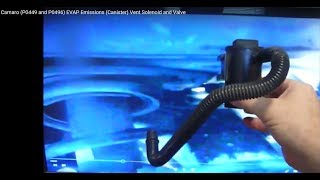
Est. part cost: $15-$30 - Faulty EVAP Vent Valve/Solenoid 🔴 High Probability → Shop Vapor Canister On 1998-2002 models, this part is mounted near the fuel tank, making it highly susceptible to damage from road debris, water, and corrosion, causing it to stick open or closed. It is a very common failure point for the P0440 code on these later models.
How to confirm: Locate the solenoid near the charcoal canister by the fuel tank (in front of the left rear wheel). You can test it by applying a 12V power source to its terminals; you should hear a distinct click as it actuates. If it doesn't click, or if it's physically damaged, it has failed. You can also measure the resistance across the terminals; a good solenoid should measure around 20-24 ohms.
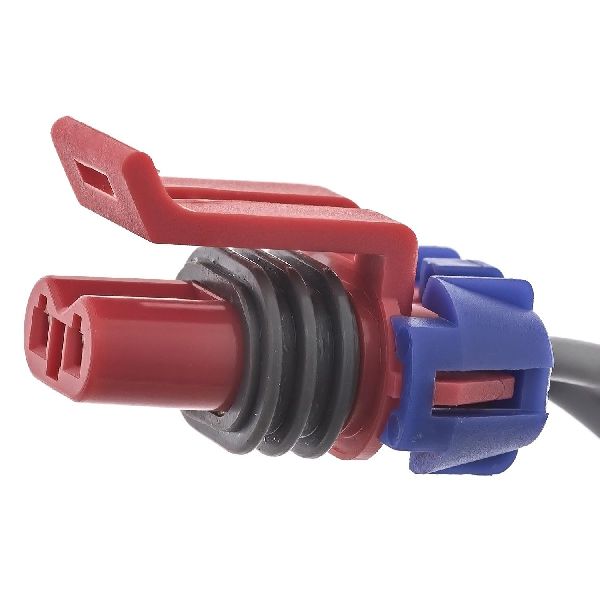
Typical fix: Replace the vent solenoid. Some aftermarket replacements for 1999-2002 models may require a separate jumper harness for the electrical connection due to an OEM design change.
Est. part cost: $25-$50 - Faulty EVAP Purge Valve/Solenoid 🟡 Medium Probability → Shop Vapor Canister This valve is located in the engine bay and can become stuck open or closed over time, either preventing vapor flow or creating a constant vacuum leak.
How to confirm: Locate the valve on the intake manifold. With the engine running, disconnect the vacuum hose from it; you should not feel any vacuum at idle (unless commanded by a scan tool). You can also test it for function by applying 12V to its terminals to hear if it clicks.
Typical fix: Replace the purge valve.
Est. part cost: $25-$60 - Cracked or Disconnected EVAP Hoses 🟡 Medium Probability The plastic and rubber hoses in the EVAP system become brittle with age and exposure to engine heat and the elements, leading to cracks and leaks. This is especially true for the lines around the engine and near the canister.
How to confirm: Visually inspect all accessible EVAP lines from the engine bay to the charcoal canister and fuel tank. Look for obvious cracks, breaks, or loose connections. A professional smoke test is the most effective way to find small, hard-to-see leaks.
Typical fix: Replace the cracked section of hose. Small cracks can sometimes be temporarily sealed, but replacement is the correct long-term fix.
Est. part cost: $10-$50 - Damaged Charcoal Canister ⚪ Low Probability → Shop Vapor Canister The canister can be damaged by road debris or become saturated with fuel if the gas tank is habitually overfilled, which destroys the charcoal pellets inside. A cracked canister will cause a leak.
How to confirm: Visually inspect the canister (located near the fuel tank) for physical cracks or damage. If you remove the canister and black charcoal pellets fall out of the hose connections, it has failed internally and has likely contaminated the system.
Typical fix: Replace the charcoal canister. It's also critical to replace the purge valve if charcoal particles have contaminated the EVAP lines, as the particles can hold the valve open.
Est. part cost: $100-$200
Rare But Worth Checking
- Rusted Fuel Filler Neck: → Shop Fuel Filler Neck More common on pre-1999 models with metal fuel tanks, especially in regions that use road salt. Rust can create a hole or prevent the gas cap from sealing properly, causing a leak.
- Faulty Fuel Tank Pressure (FTP) Sensor: → Shop Fuel Tank This is uncommon for a P0440 code, which usually indicates a leak. A bad sensor is more likely to set a specific sensor-related code (e.g., P0452, P0453). On this car, it is part of the fuel pump module inside the tank, making replacement labor-intensive.
- Leaking Fuel Tank: → Shop Fuel Tank While rare, a crack in the fuel tank itself will cause a P0440 code. One owner on an F-body forum discovered the previous owner had drilled screws for a stereo into the top of the plastic fuel tank, causing a leak and the code. Additionally, cross-manufacturer reports such as NHTSA ODI #10191706 and #10184336 describe small fractures or cracks where the fuel filler neck meets the fuel tank, which can trigger the P0440 code and cause fuel to leak.
Diagnosis Steps
- Check the Gas Cap: This is the simplest and most common fix. Remove the cap, inspect the seal for cracks or damage, and reinstall it, ensuring it clicks several times. Clear the code and drive for a few days to see if it returns. An owner on LS1Tech noted the code on their car would only appear when the fuel tank was below 1/4 full, but the root cause was still a faulty cap.
- Visual Inspection: Check the engine bay and under the car for any obvious signs of damage, such as cracked, disconnected, or brittle EVAP hoses. Pay close attention to the lines near the purge solenoid on the intake and the vent solenoid/canister area near the rear axle.
- Test the Purge Solenoid: Locate the purge solenoid on the engine's intake manifold. With the engine off, apply 12V to its two pins. A healthy solenoid will make an audible click.
- Test the Vent Solenoid: Locate the vent solenoid near the charcoal canister by the fuel tank. Perform the same 12V test. This part is a very common failure on 1998-2002 models and a prime suspect after the gas cap.
- Perform a Smoke Test: 🎬 Watch: How to find a P0440 leak using a smoke machine If the above steps do not reveal the cause, the next step is to perform a smoke test. This involves injecting low-pressure smoke into the EVAP system (usually via the purge valve hose) to reveal the exact location of any hard-to-find leaks in the hoses, canister, or fuel tank. NHTSA ODI #10192200 notes that while initial inspections may find nothing, a smoke test is often required to identify the specific problem within the fuel evaporation system.
Parts You'll Likely Need
- Gas Cap
(OEM #ACDelco GT261 (2001-02), ACDelco GT181 (1996-97))— The seal fails over time, causing a leak. This is the most frequent cause of P0440.
Trusted brands: ACDelco, Stant, MotoRad
OEM price range: $20-$35
Aftermarket price range: $15-$25 - EVAP Vent Valve / Solenoid (1999-2002)
(OEM #ACDelco 214-2308 (Supersedes original, may require harness adapter))— Its exposed location near the rear axle on later models leads to frequent failure from corrosion and debris.
Trusted brands: ACDelco, Dorman (911-075), Standard Motor Products (CVS92)
OEM price range: $30-$50
Aftermarket price range: $25-$40 - EVAP Canister Purge Valve / Solenoid
(OEM #ACDelco 214-645 (LS1), ACDelco 214-558 (LT1))— Located on the hot intake manifold, this valve can fail over time, typically by sticking open or closed.
Trusted brands: ACDelco, Standard Motor Products, Dorman
OEM price range: $40-$60
Aftermarket price range: $25-$50
Related Codes That Often Appear With This One
- P0442 — Indicates a small EVAP leak. P0440 and P0442 can appear together if the computer is having trouble determining the exact size of the leak.
- P0455 — Indicates a large EVAP leak. This often points more directly to a missing gas cap or a stuck-open vent or purge solenoid.
- P0449 — This code specifically points to an electrical fault in the EVAP vent solenoid control circuit. If you have P0440 and P0449 together, the vent solenoid or its wiring is almost certainly the problem.
Technical Service Bulletins (TSBs) & Recalls
- GM TSB #00-06-04-011A: Provides information on the conditions required for the PCM to run the EVAP self-test and warns that filling the fuel tank with the engine running can cause the test to fail and potentially set a code.
Mechanic-Grade Diagnostic Values
- EVAP Vent Solenoid Coil Resistance — expected: 20-24 Ω. Failure: A reading outside this range, or an open circuit (O.L.), indicates a faulty solenoid coil.
- EVAP Purge Valve Coil Resistance — expected: 30-38 Ω (when engine is cool). Failure: A reading outside this range suggests a faulty solenoid coil.
- Fuel Tank Pressure (FTP) Sensor Voltage (Key On, Engine Off, Gas Cap Off) — expected: Approximately 1.3V - 1.7V. Failure: A reading of 0V or 5V indicates a wiring or sensor fault. A reading that doesn't change when pressure/vacuum is applied suggests a stuck sensor.
- EVAP Vent Solenoid Control Circuit Voltage (at PCM, Solenoid Commanded OFF) — expected: 2.6V - 4.6V. Failure: Voltage less than 2.6V when commanded OFF suggests a short to ground or a faulty driver in the PCM.
Scan Tool Commands That Help
- Tech2 / GDS2: EVAP Purge/Seal — Used to command the purge solenoid ON/OFF and seal the system by closing the vent solenoid. This allows a technician to monitor the FTP sensor data to see if the system holds vacuum, confirming a leak is present.
- Tech2 / GDS2: EVAP Vent Solenoid Test — Allows the technician to command the vent solenoid open and closed to verify its function. The tech can listen for an audible click from the solenoid or observe the change in system pressure.
- Tech2 / GDS2: Output State Control (OSC) — A general function that allows direct control over most output actuators, including the EVAP purge and vent solenoids, to test their electrical and mechanical operation independently.
Wiring & Ground Locations
- EVAP Canister Vent Valve Control (1999-2002) — Blue Connector, Pin 45 (White wire) at the PCM.. This is the control wire from the PCM that commands the vent valve. A break or short in this wire will cause a P0449 and can contribute to a P0440.
- EVAP Canister Purge Valve Control (1999-2002) — Blue Connector, Pin 4 (Dark Green/White wire) at the PCM.. This is the control wire for the purge solenoid. A fault in this circuit will prevent the system from purging vapors and can cause test failures.
- Fuel Tank Pressure Sensor Signal (1999-2002) — Red Connector, Pin 24 (Dark Green wire) at the PCM.. The PCM relies on this signal to determine if the system is holding pressure. An inaccurate signal can lead to a false P0440 code.
- G401 (Rear Body Ground) — Located in the trunk area, typically near the driver's side tail light assembly.. This is a common ground point for rear-body components. While not directly tied to the EVAP solenoids (which are grounded through the PCM driver), a poor ground here can cause electrical noise and affect the nearby fuel pump and FTP sensor module.
Real Owner Repair Stories
- F-Body.com forum user (2000 Chevrolet Camaro V6) — Check Engine Light with code P0440.
❌ Tried (didn't work) Initial scan and code retrieval.
✅ What actually fixed it The user was advised that the most common causes are a loose/bad gas cap or a leak in the EVAP vacuum lines. Another user confirmed that simply cleaning the gas cap gasket and resetting the computer fixed the issue on a similar vehicle. - LS1Tech.com forum user (1998 Chevrolet Camaro Z28) — Inability to fill the fuel tank (pump clicks off immediately), accompanied by EVAP codes.
❌ Tried (didn't work) Replacing the charcoal canister., Replacing the purge solenoid., Replacing the EVAP canister purge valve.
✅ What actually fixed it The user's issue was not resolved in the thread, but the symptoms point to a blocked vent path, not a leak. This is a classic example of misdiagnosing a venting issue as a leak-related P0440 component failure. The actual cause is likely a blocked vent solenoid or a clogged line to the canister, preventing air from escaping the tank during refueling. - Manufacturer-Related Reports — An owner reported that after the "Service Engine Soon" light came on with code P0440, they replaced the gas cap, but that was not the problem (NHTSA ODI #10247244). In another instance, a diagnostic check for P0440 was performed, yet no one could find anything wrong with the vehicle initially (NHTSA ODI #10007823).
"I Checked Everything" — The Actual Cause
- A smoke test will typically find any physical leak, so a 'clean' test with a persistent P0440 strongly points to a non-leak failure. The most likely cause is an intermittent or faulty component that passes a static test but fails during operation. This could be the Fuel Tank Pressure (FTP) sensor providing incorrect readings, making the PCM believe there's a leak when there isn't one. It could also be a PCM driver fault, though this is very rare.
OEM Part Supersession History
Unknown original P/N for 1999-2002 Vent Solenoid→ACDelco 214-2308— Design update by GM.
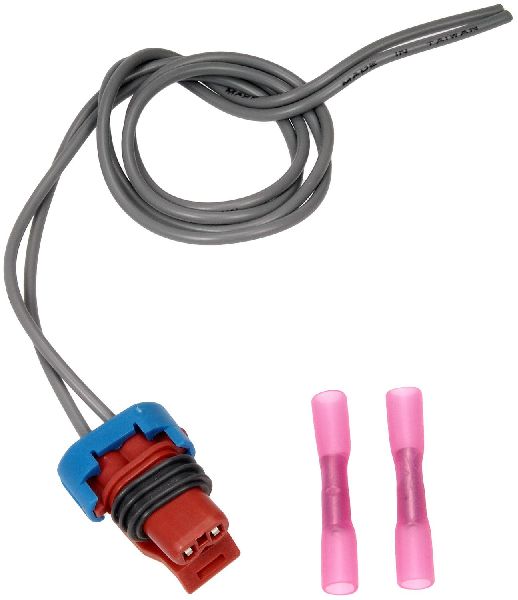
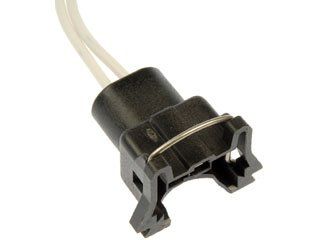
Heads up: The ACDelco 214-2308 and its Dorman equivalent (911-075) use a different electrical connector than the original factory harness on some 1999-2002 models. A separate jumper harness adapter (e.g., Standard Motor Products S-1350) is often required to connect the new solenoid to the old vehicle harness.
Model Year Variations Within This Range
- 1998 vs 1999-2002: The 1998 model uses a metal fuel tank, while 1999-2002 models use a plastic one. This change affects the gas cap, fuel filler neck, charcoal canister design/location, and the part numbers for the EVAP vent solenoid. The PCM pinouts for EVAP controls are also different.
- 1998-2000 vs 2001-2002: The 2001-2002 models received a more restrictive camshaft and the LS6 intake manifold, which slightly changed vacuum characteristics and some hose routings, though the primary EVAP components remained in the same locations as the 1999-2000 models.
Diagnostic Flowchart
Other Known Issues on This Vehicle
Issues unrelated to this code that are worth knowing about as an owner of this generation:
- LT1 Opti-Spark Distributor Failure 🔴 High — Very common on 1993-1997 V8 models. Moisture from a leaking water pump (located directly above it) or even engine washing can destroy the distributor's optical sensor, causing misfires or a no-start condition. Early 1993-94 versions were un-vented and more prone to internal condensation issues.
- Power Window Motor Failure 🔴 High — Extremely common across all years. The motors are known to fail prematurely, causing the window to become slow, get stuck, or stop working entirely. The original motors were riveted to the door, requiring drilling for replacement.
- Bubbling/Cracked Roof Panel ('Sail Panel') 🟠 Medium — Affects hardtop and T-top cars, particularly from late 1998-2002. The factory adhesive seeps through the composite panel over time, causing the paint to bubble up. The only permanent fix is to replace the entire panel. (Ref: There was a special policy/goodwill warranty for this issue, but it has long since expired.)
- Cracked Dashboard Top Panel 🟠 Medium — Common on all years. The main dash pad becomes brittle from sun exposure and develops cracks, often shattering during removal for other repairs.
- LS1 Engine 'Piston Slap' on Cold Start 🟡 Low — Common on 1998-2002 V8 models. A knocking or ticking sound is heard for the first minute or two after a cold start, which then goes away as the engine warms up. It is caused by the short-skirt piston design and is generally considered harmless by GM and the owner community. (Ref: GM TSB 01-06-01-005 acknowledges the condition as characteristic and not detrimental to engine life.)
Used vs. New Parts: Buying Guide for This Vehicle
When a used part is the smart pick: For this repair, used parts are generally not recommended due to the age of the vehicle and the nature of the components. However, a used charcoal canister from a low-mileage, non-rust-belt donor could be a viable option if it is inspected for cracks and saturation. Hard plastic EVAP lines could also be sourced from a junkyard if they are not brittle.
Donor-vehicle mileage cap: roughly under 100000 miles for the part to have meaningful remaining life.
What to inspect on the donor part:
- For charcoal canisters, ensure there are no visible cracks and shake it to listen for loose/dislodged charcoal.
- For solenoids, check that electrical pins are not corroded or bent.
- For hoses, bend them slightly to ensure the rubber is still pliable and not dry-rotted or cracked.
OEM-only on this vehicle (don't cheap out):
- Gas Cap: Aftermarket gas caps are a very common source of EVAP codes. It is highly recommended to use a genuine ACDelco cap to ensure a proper seal.
- Fuel Tank Pressure (FTP) Sensor: Since this sensor is located inside the fuel tank and requires significant labor to replace, using a high-quality OEM or top-tier aftermarket part is crucial to avoid repeat repairs.
Aftermarket brands forum-validated for this vehicle:
- Standard Motor Products (SMP)
- Dorman (often a cost-effective option, but check for included hardware like adapter harnesses)
- ACDelco (OEM)
Brands owners have reported issues with on this vehicle:
- Unnamed, 'white-box' or exceptionally cheap online parts for critical components like solenoids and sensors. The failure rate is often higher, leading to repeat diagnostics and labor.
Real Owner Stories
Aggregated from forums and TSBs cited above. Mileages and costs reflect what owners reported in those sources.
1999 Chevrolet Camaro Z28 LS1
Symptoms: The Check Engine Light (P0440) would only appear specifically when the fuel tank reached approximately 1/4 full.
What fixed it: Replacing the gas cap.
Source hint: LS1TECH - P0440 Evap System (https://ls1tech.com/forums/general-maintenance-repairs/1720815-p0440-evap-system.html)
2002 Pontiac Firebird (Platform Mate)
Symptoms: Persistent P0440 code.
What fixed it: Repairing screw holes that had been drilled into the plastic gas tank by a previous owner during a stereo installation.
Source hint: LS1.com - P0440 Code (https://www.ls1.com/forums/f6/p0440-code-68258/)
Related OBD-II Codes
Frequently Asked Questions
Can I cause a P0440 code on my Camaro by refueling while the engine is running?
Where is the EVAP vent solenoid located on my 1998-2002 Camaro?
My 1999 Z28 only throws the P0440 code when the gas tank is below 1/4 full. Is this normal?
I'm replacing the vent solenoid on my 2001 Camaro; do I need any extra parts?
Could my aftermarket exhaust cutout be causing the P0440 code?
What brand of replacement gas cap is recommended for the 4th Gen Camaro?
Helpful Videos
![SMOKE Machine Diagnose Evap P0440 [Problem Found] #automobile #diyrepair #mechanic](https://img.youtube.com/vi/tYMqzzdXO58/mqdefault.jpg)
We Have This Part in Stock


The information in this article is provided for general reference and educational purposes only. Vehicle specifications, procedures, and part compatibility can vary by production date, trim level, and region. Always consult your vehicle's factory service manual and verify part numbers before purchasing or performing repairs. Safety-critical components such as airbags, seat belts, and braking systems should be installed by a qualified professional.
- Chevrolet Camaro:
- 🧭 Diagnostic Flowchart
- 🎬 Helpful Videos
- 🛍️ Shop This Part
- What's Unique About the 1993-2002 Chevrolet Camaro
- Symptoms You May Notice
- Most Likely Causes
- Rare But Worth Checking
- Diagnosis Steps
- Parts You'll Likely Need
- Related Codes That Often Appear With This One
- Technical Service Bulletins (TSBs) & Recalls
- Mechanic-Grade Diagnostic Values
- Scan Tool Commands That Help
- Wiring & Ground Locations
- Real Owner Repair Stories
- "I Checked Everything" — The Actual Cause
- OEM Part Supersession History
- Model Year Variations Within This Range
- Other Known Issues on This Vehicle
- Used vs. New Parts: Buying Guide for This Vehicle
- Real Owner Stories
- 1999 Chevrolet Camaro Z28 LS1
- 2002 Pontiac Firebird (Platform Mate)
- Related OBD-II Codes
- Frequently Asked Questions
- 🎟️ Get 5% Off