

P0440 on 2009-2014 Ford F-150: EVAP System Malfunction Causes and Fixes
On a 2009-2014 F-150, code P0440 most often points to a faulty EVAP canister purge valve in the engine bay or a bad vent valve near the spare tire. Always check for a loose gas cap first. Expect to pay $30-$90 for the valves.
- Always check the gas cap first. Make sure it's tight and the seal isn't cracked. This is the easiest and most common fix.
- The two most likely parts to have failed on your 2009-2014 F-150 are the EVAP purge valve (in the engine bay) and the vent valve (near the spare tire).
- If you have trouble filling your gas tank, the vent valve is the most probable cause.
- A smoke test is the most effective way to find a leak if a visual inspection doesn't reveal the problem.
- Do not replace expensive components like oxygen sensors or catalytic converters for a P0440 code; they are unrelated to the EVAP system.
What's Unique About the 2009-2014 Ford F-150
For the 12th generation F-150 (2009-2014), the two most common culprits for a P0440 are the canister purge valve, which is subjected to high heat in the engine bay, and the canister vent valve, which is mounted near the spare tire and is vulnerable to road grime and moisture. While a loose gas cap is always the first thing to check, owners of these trucks frequently find one of these two valves has failed. A rusted fuel filler neck is also a notable issue, particularly in regions that use road salt, creating pinhole leaks. Some owners have also reported internal breaks in the wiring harness leading to the vent solenoid, causing an open circuit even when the component itself is good.
Symptoms You May Notice
- Check Engine Light is on
- A faint smell of gasoline, especially around the rear of the truck
- Slight decrease in fuel economy
- Difficulty refueling (fuel nozzle clicks off repeatedly), which often points to a bad vent valve or a clogged canister
- Rough idle or hard starting immediately after refueling, a classic sign of a purge valve stuck open 🎬 Watch: Why your F-150 struggles to start after refueling
- Replacing the O2 sensors. O2 sensors are not related to the EVAP system.
- Replacing the catalytic converter. This is an expensive repair that has no connection to the P0440 code.
Most Likely Causes
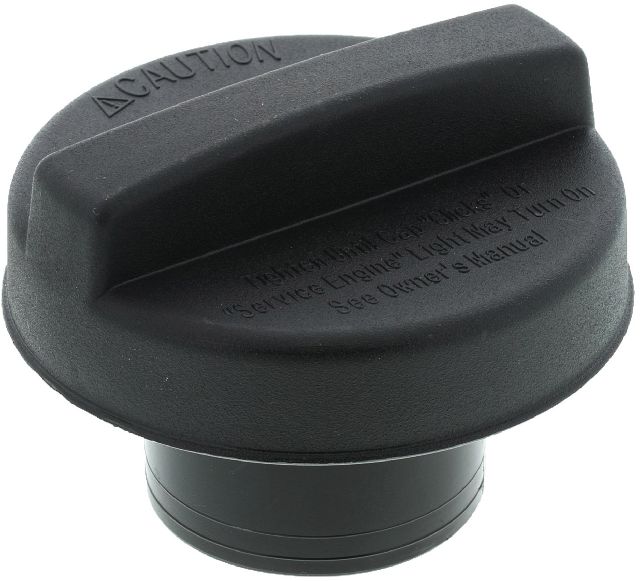
- Loose or Worn Gas Cap 🔴 High Probability → Shop Fuel Tank Cap This is the most common cause on any vehicle. For the capless system on the F-150, debris can get into the sealing flap, preventing a proper seal.
How to confirm: For the capless system, use the white plastic funnel included with the truck to open and close the fuel door 5-10 times to dislodge any debris. Inspect the seal for any visible damage. If the seal is damaged, the filler neck assembly needs replacement.
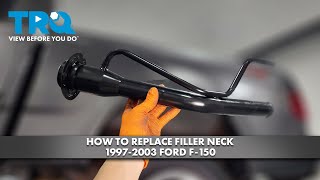
Typical fix: Clean the capless fuel filler neck seal. If cleaning doesn't work and the neck is rusted or damaged, it will need to be replaced. Using an OEM Motorcraft filler neck is recommended.
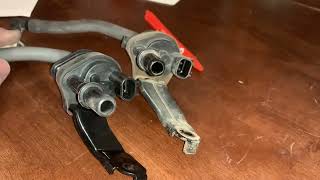
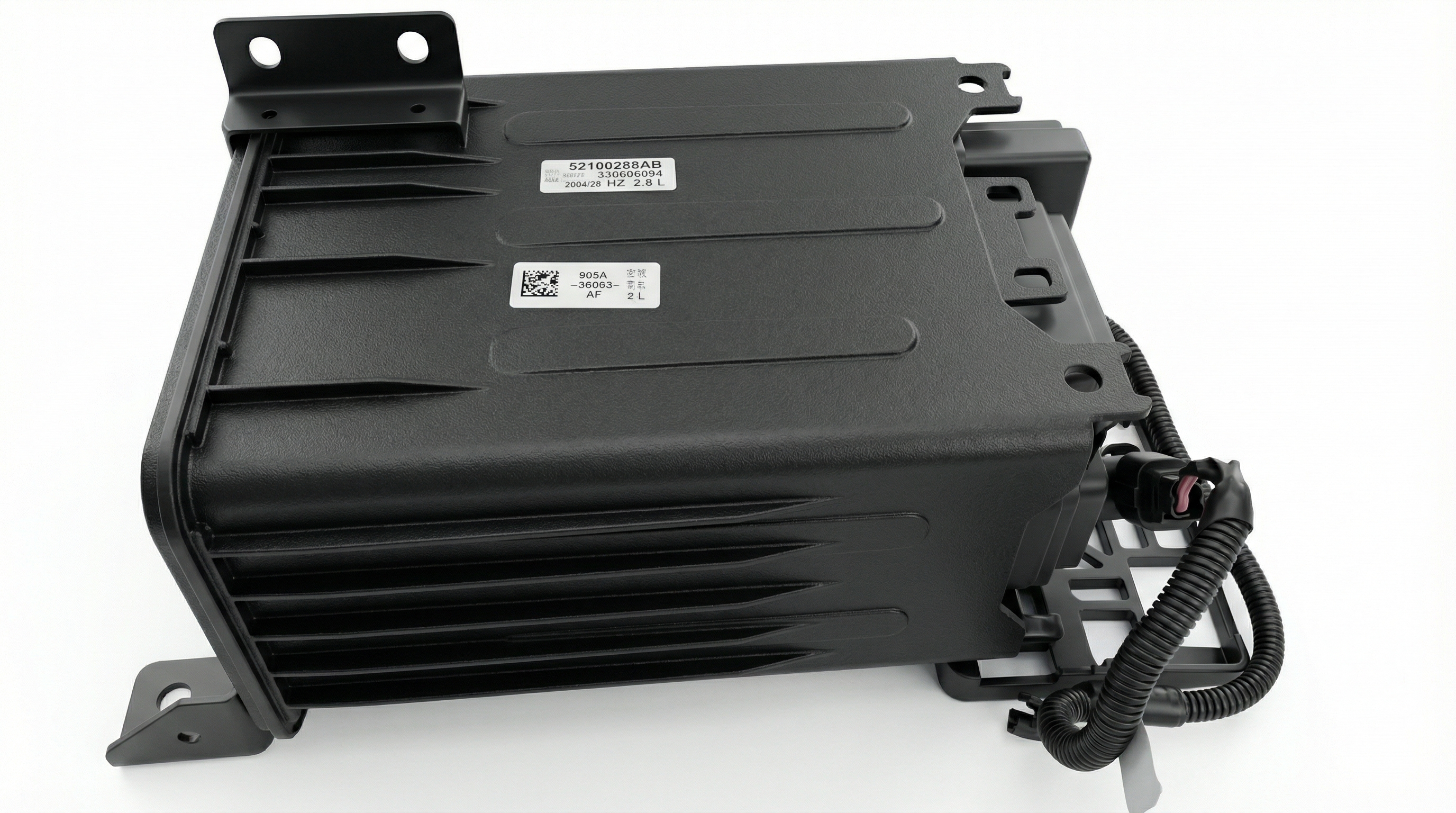
Est. part cost: $15-$35 - Failed EVAP Canister Purge Valve 🔴 High Probability → Shop Vapor Canister This valve is located in the hot engine bay, causing it to fail over time by sticking open or closed. It's a very frequent failure point on this F-150 generation. A stuck-open valve is a common cause of hard starting after a fill-up.
How to confirm: The valve is typically located on the engine's intake manifold. With the engine running, you can disconnect the vapor line to feel for constant vacuum (indicating it's stuck open). A scan tool can also command the valve to cycle, and you should hear an audible click. You can also remove the valve and try to blow through it; if air passes, it's stuck open and has failed.
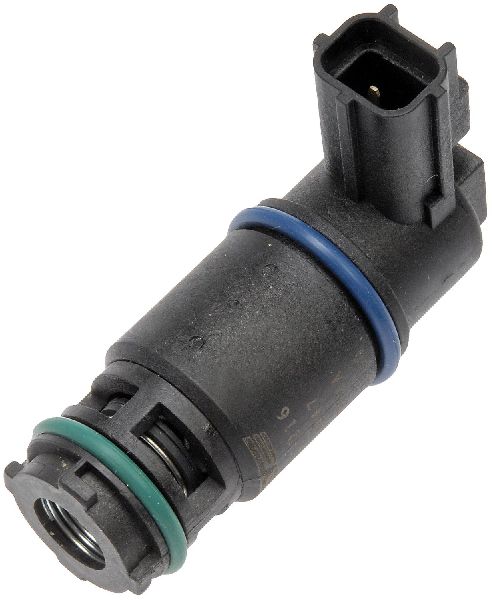
Typical fix: Replace the canister purge valve. This is a straightforward repair that is easily accessible in the engine bay, often requiring only an 8mm or 10mm socket. 🎬 See this easy DIY purge valve replacement walkthrough
Est. part cost: $40-$90 - Failed EVAP Canister Vent Valve/Solenoid 🟡 Medium Probability → Shop Vapor Canister This component is mounted on or near the charcoal canister above the spare tire, exposing it to road salt, water, and debris. The valve can stick, and its electrical connector and wiring are prone to corrosion and internal breaks.
How to confirm: Visually inspect the valve and its wiring for corrosion or damage; lowering the spare tire provides better access. A common symptom of failure is difficulty filling the fuel tank. A scan tool can command the valve closed during a smoke test to verify its operation.
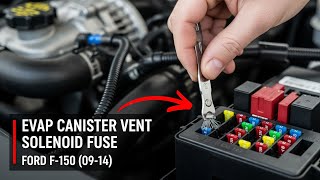
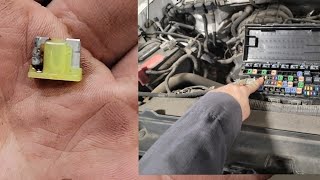
Typical fix: Replace the vent valve solenoid. In cases of heavy corrosion or confirmed wiring faults, the wiring pigtail may also need to be replaced. 🎬 Watch: How to find and replace the vent solenoid fuse
Est. part cost: $30-$80 - Cracked or Disconnected EVAP Hoses 🟡 Medium Probability Engine heat and age cause the plastic and rubber EVAP lines to become brittle and crack. The connections at the purge valve and canister are common weak points.
How to confirm: Visually inspect all accessible EVAP lines for obvious cracks or breaks. A smoke test is the most effective way to find small, hard-to-see leaks in the hose system.
Typical fix: Replace the cracked section of hose or the entire line assembly if necessary.
Est. part cost: $10-$50 - Rusted or Damaged Fuel Filler Neck ⚪ Low Probability → Shop Fuel Filler Neck In states with heavy road salt use (the "Salt Belt"), the metal fuel filler neck can rust through, creating a leak that prevents the system from sealing. This is a well-documented issue on F-150s of this era.
How to confirm: A visual inspection may reveal rust, but a smoke test is the definitive way to confirm a leak in the filler neck. Smoke will be seen escaping from the pinholes caused by rust.
Typical fix: Replace the fuel filler neck assembly. This is related to TSBs that address slow-fill issues and 'Check Fuel Fill Inlet' messages often caused by a faulty/corroded filler neck.
Est. part cost: $100-$200
Rare But Worth Checking
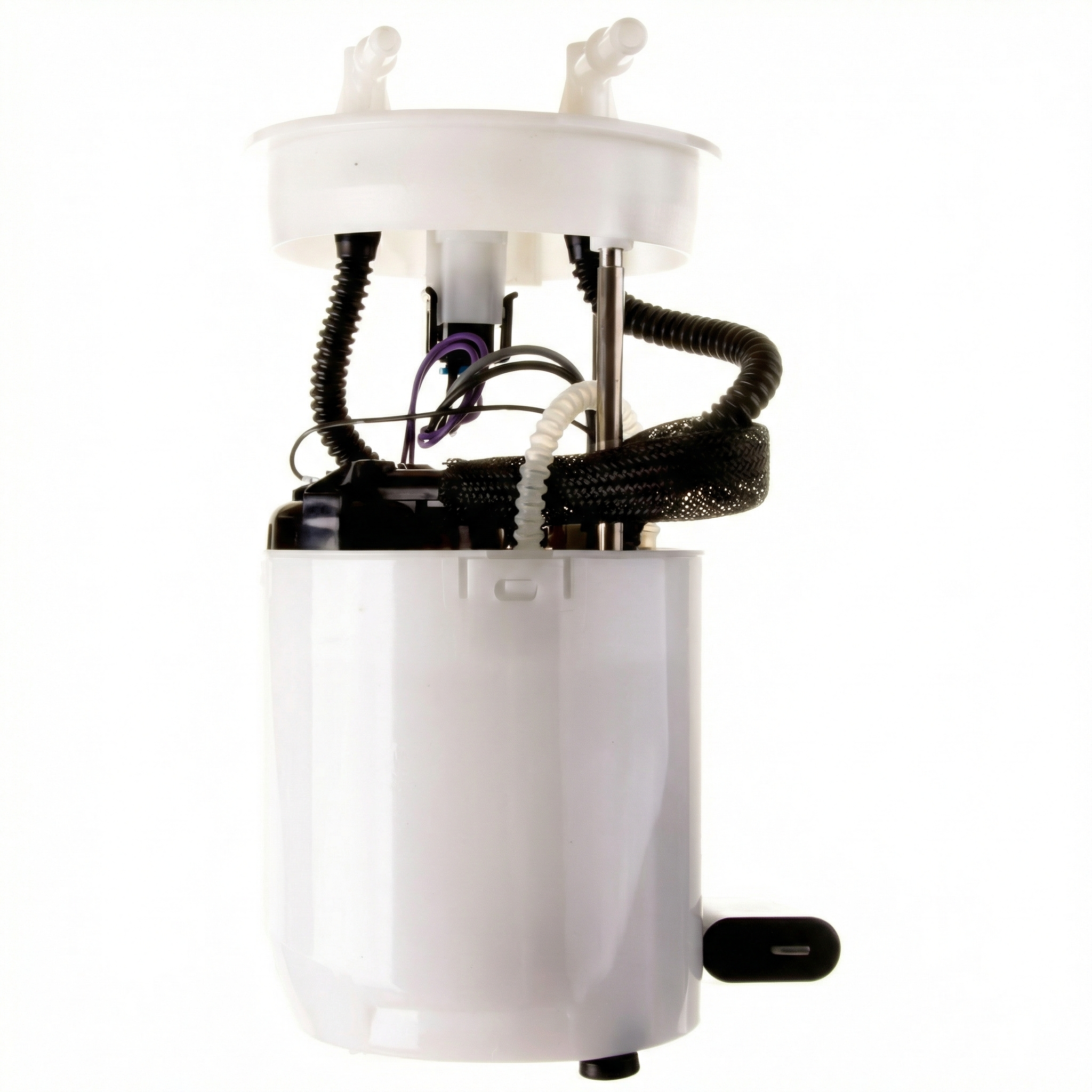
- Faulty Fuel Tank Pressure (FTP) Sensor: → Shop Fuel Tank This sensor tells the computer the pressure in the EVAP system. It can fail and send incorrect data, tricking the computer into setting a P0440 code even without a leak. On many F-150s, it is integrated into the fuel pump assembly and may not be sold separately.
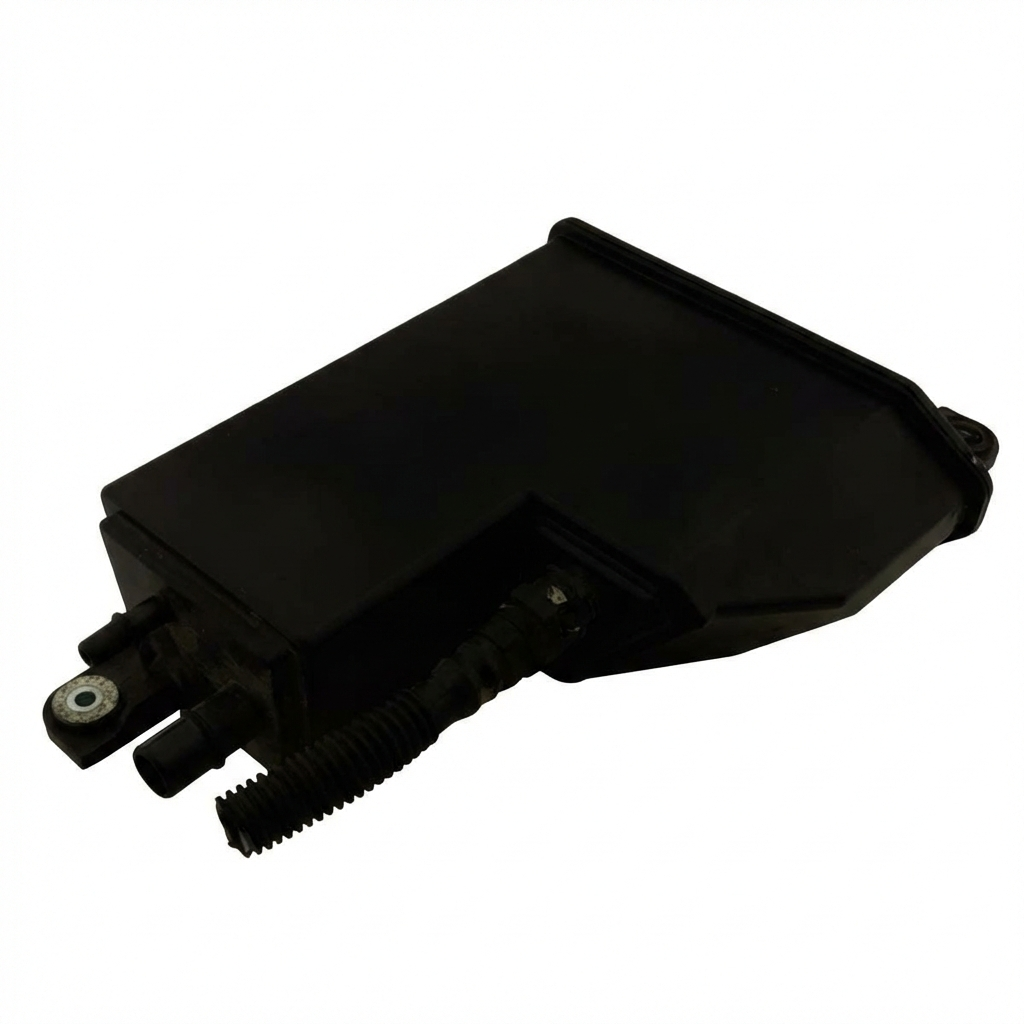
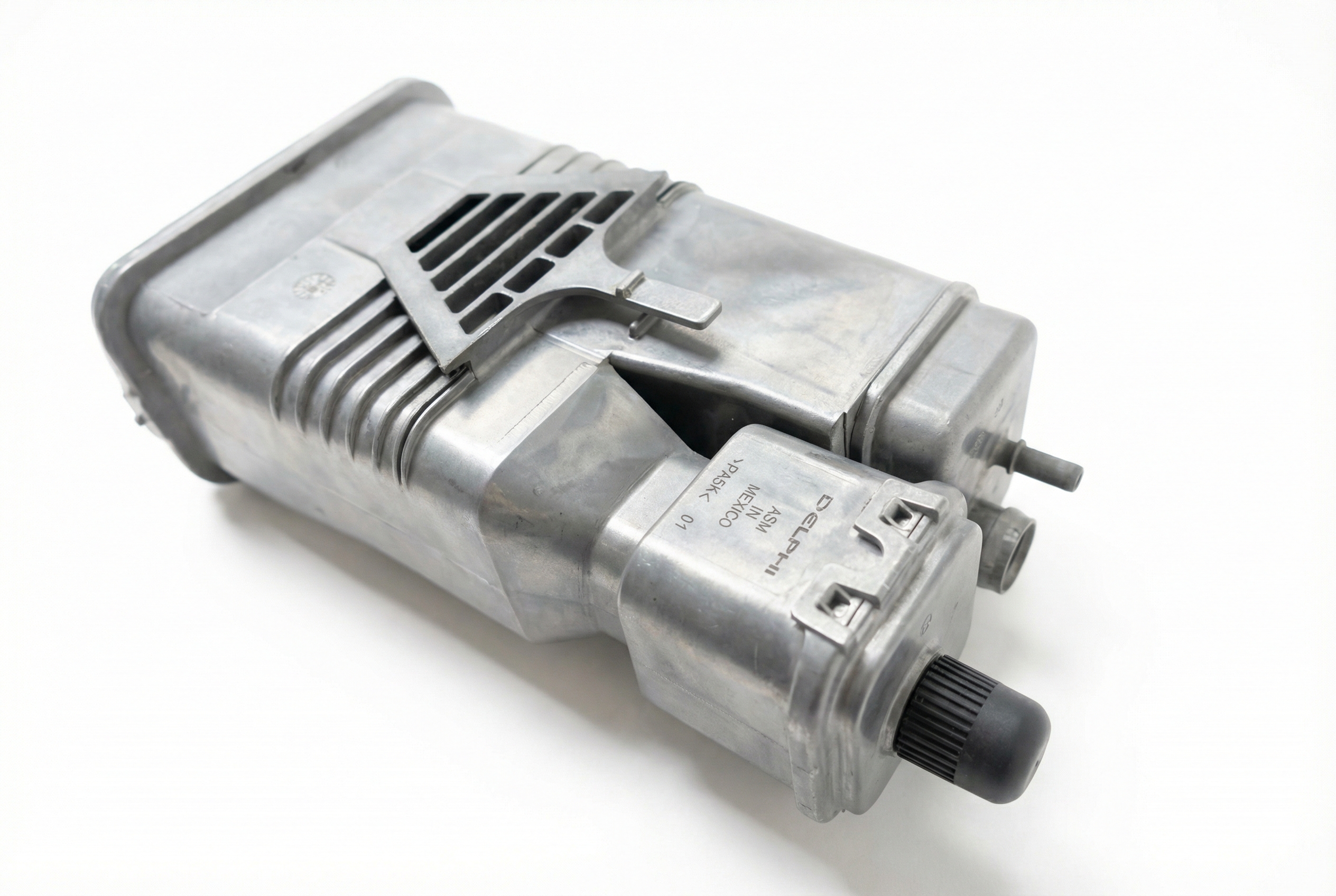
- Cracked Charcoal Canister: → Shop Vapor Canister The canister itself can be cracked by road debris or damaged internally if the fuel tank is consistently overfilled ('topped off'), which floods it with liquid fuel.
- Spider Webs or Insect Nests in Vent Hose: Spiders and other insects can build nests inside the EVAP vent hose or at the vent solenoid's air inlet, causing a blockage. This can trigger various EVAP codes by preventing the system from venting properly during self-tests.
Diagnosis Steps
- Check the capless fuel filler inlet. Use the vehicle's emergency funnel to actuate the internal door 10-20 times to clear any debris. Clear the code and drive for a few days to see if it returns.
- If the code returns, perform a visual inspection of the EVAP hoses in the engine bay and around the fuel tank for any obvious cracks, breaks, or disconnections.
- Locate the EVAP canister purge valve on the engine. With the engine off, remove the valve and try blowing through it; no air should pass when unpowered. Test the solenoid's resistance with a multimeter.
- Lower the spare tire for better access and inspect the EVAP canister vent valve and its wiring harness near the rear axle. Look for any signs of corrosion, damage, or loose connections. Test the solenoid's resistance and check for voltage at the connector.
- If no obvious faults are found, the most reliable next step is to have a smoke test performed. A machine injects vaporized smoke into the EVAP system, and any leaks will be visible as smoke escapes. This is the best method for finding leaks in the filler neck or small hose cracks.
- If a smoke test reveals no leaks, the Fuel Tank Pressure (FTP) sensor may be faulty and providing incorrect readings. Testing the sensor's output with a multimeter or advanced scan tool may be necessary.
Parts You'll Likely Need
- EVAP Canister Purge Valve
(OEM #9U5Z-9C915-H (also known as Motorcraft CX2626))— This is one of the most common failure points on the 2009-2014 F-150 for code P0440, as it is constantly working in a high-heat environment.
Trusted brands: Motorcraft, Bosch, Dorman
OEM price range: $60-$90
Aftermarket price range: $40-$70 - EVAP Canister Vent Valve / Solenoid
(OEM #9L3Z-9C915-A (also known as Motorcraft CX2284))— Its location near the rear axle makes it highly susceptible to damage from road debris and corrosion, leading to failure.
Trusted brands: Motorcraft, Dorman, Standard Motor Products
OEM price range: $50-$80
Aftermarket price range: $30-$60 - Fuel Cap
(OEM #FC1081 (Motorcraft))— The seal wears out over time. It's the simplest and most common reason for an EVAP code and should always be the first part checked/replaced.
Trusted brands: Motorcraft, Stant
OEM price range: $20-$35
Aftermarket price range: $10-$20
Related Codes That Often Appear With This One
- P0455 — Indicates a 'Large EVAP Leak'. This often appears with P0440 when a component has completely failed or a hose is disconnected, representing a more severe version of the same problem.
- P0446 — Indicates a fault specifically in the 'EVAP Vent Control Circuit'. If you see this with P0440, it strongly suggests the problem is the vent valve solenoid near the spare tire or its wiring.
- P0457 — Indicates 'EVAP Leak Detected (Fuel Cap Loose/Off)'. While it points directly at the cap, it can also be triggered by other large leaks like a failed purge valve or rusted filler neck.
Technical Service Bulletins (TSBs) & Recalls
- TSB 09-19-1: Addresses slow fuel fill conditions, often linked to a faulty or rusted fuel filler neck which can also cause EVAP leaks.
- TSB 12-3-5: Pertains to a 'Check Fuel Fill Inlet' message on capless systems, authorizing cleaning or replacement of the fuel filler pipe assembly to resolve sealing issues that trigger EVAP codes.
- TSB 13-8-1: For 2011-2012 3.5L EcoBoost models, this TSB details a fix for intercooler condensation by reloca
Mechanic-Grade Diagnostic Values
- EVAP Canister Purge Valve Solenoid Resistance — expected: 30 - 50 Ohms (some guides specify 34 +/- 4 Ohms).. Failure: A reading of zero ohms (short) or infinite/OL (open circuit) indicates a failed solenoid coil.
- EVAP Canister Vent Valve/Solenoid Resistance — expected: 48 - 65 Ohms.. Failure: Readings outside this range indicate a faulty solenoid coil.
- Fuel Tank Pressure (FTP) Sensor Voltage (Key-On-Engine-Off) — expected: Approximately 2.6V - 2.7V at atmospheric pressure.. Failure: A significantly different voltage at rest can indicate a biased sensor. If the voltage immediately drops when the engine starts, it can indicate a purge valve stuck open.
- Canister Vent Solenoid Connector Power Wire Voltage — expected: Full battery voltage (~12V) on the Yellow/Red wire with key on.. Failure: Low or no voltage indicates a wiring issue, blown fuse, or problem upstream of the solenoid.
Hidden / Shadow Codes Worth Checking
- Mode $06, Test ID $81: This monitor test checks for a gross EVAP system leak (0.090" or larger). Viewing the raw test data can confirm if the system is failing the large leak test, which often triggers P0440 or P0455. (see via Advanced OBD-II scan tool with Mode 6 capability.)
Scan Tool Commands That Help
- Ford IDS (Integrated Diagnostic System): Powertrain -> EVAP System Test — This is a guided, automated test that commands the purge and vent solenoids to seal the system, pulls a vacuum, and monitors the FTP sensor for pressure decay to detect leaks. It's the dealership-level method for verifying system integrity after a repair or when a visual inspection finds nothing.
- Ford IDS (or capable bidirectional scanner): Manual EVAP Test via Datalogger — Allows a technician to manually command the purge valve (CPV) and vent valve (CV) while watching the FTP sensor voltage in real-time. This is useful for isolating a specific component. For example, you can command the vent valve closed and the purge valve open to see if the system can pull a vacuum, confirming the purge valve works.
Wiring & Ground Locations
- G401 — Under the rear of the vehicle, often above the spare tire.. This is a primary ground point for rear-mounted components. A corroded or loose G401 can cause intermittent electrical faults for the canister vent solenoid and the fuel pump module (which contains the FTP sensor), leading to various EVAP codes.
- EVAP Canister Vent Solenoid Connector — On the vent solenoid, located on or near the charcoal canister above the spare tire.. The power wire (typically Yellow/Red) should have battery voltage with the key on. The other wire is the control wire, which the PCM grounds to close the valve. Checking for power here is a key step in diagnosing a P0446 or a non-responsive vent valve.
- Fuse #17 (example) — In the under-hood fuse box (Power Distribution Box).. A fuse, such as #17 (20A) in some configurations, can protect the canister vent valve and purge valve circuits. A blown fuse will cause a circuit code (like P0443 or P0446) and prevent the component from operating, which could also lead to a general P0440. Always check the owner's manual for the specific fuse number for your year and engine.
Real Owner Repair Stories
- Ford-Trucks.com forum user (2010 F-150) — Check Engine Light with P0440 and other EVAP codes.
❌ Tried (didn't work) Replaced gas cap, Replaced purge valve solenoid
✅ What actually fixed it The owner performed a smoke test and found no leaks. Upon inspecting the vent line running from the canister, he found it was completely blocked by a spider's nest/web. Cleaning out the obstruction from the hose resolved the code. - F150forum.com user (2010 F-150 5.4L) — Check Engine Light with P0455 and 'Check Fuel Fill Inlet' message.
❌ Tried (didn't work) Cleaning the capless fuel filler neck, Replacing the purge valve
✅ What actually fixed it After a smoke test revealed a leak from the top of the fuel tank, the owner discovered a small, hairline crack on the fuel tank vent valve nipple where the hose connects. This part is located on the fuel tank itself. Replacing the vent valve assembly fixed the leak and cleared the codes.
"I Checked Everything" — The Actual Cause
- In some cases, a smoke test may pass, but the code returns. This can happen if the Fuel Tank Pressure (FTP) sensor is faulty, providing incorrect pressure readings to the PCM and tricking it into thinking there's a leak when there isn't one. Verifying the FTP sensor's voltage at rest (approx. 2.6V) is a critical step if a smoke test finds no leaks.
- An intermittent electrical issue with the vent or purge solenoid wiring can also cause the code without a physical leak. The component may test fine on the bench and the smoke test may pass, but a wire could be breaking contact under vibration while driving, causing the system to fail its self-test.
Model Year Variations Within This Range
- 2009-2010: Models with the 5.4L V8 have the EVAP purge valve located on the passenger side rear of the engine, near the firewall, making it significantly more difficult to access and replace compared to later engines.
- 2011-2014: Models with the 5.0L, 3.5L, and 3.7L engines feature a much more accessible purge valve located directly on top of the intake manifold, making replacement a 10-15 minute job.
- 2009+: The introduction of the 'Easy Fuel' capless fuel filler system created a new common failure point. Debris lodging in the sealing flap or corrosion of the filler neck itself became a frequent cause for EVAP codes like P0440, P0456, and P0457.
Diagnostic Flowchart
Other Known Issues on This Vehicle
Issues unrelated to this code that are worth knowing about as an owner of this generation:
- 5.4L 3V Cam Phaser Rattle 🔴 High — Very common on 5.4L 3V engines, often starting after 80,000 miles. Presents as a diesel-like ticking or rattling noise at idle that may disappear at higher RPMs.
- 6R80 Transmission Molded Lead Frame Failure 🔴 High — Common issue causing sudden downshifting, erratic shifting, or loss of speed sensor signals. Ford issued recalls and extended warranties (e.g., 19S07) for this part. (Ref: Recall 19S07 / TSB 16-0028)
- 3.5L EcoBoost Intercooler Condensation 🟠 Medium — Primarily affects 2011-2012 models in humid climates, causing stumbling or misfires during acceleration after extended highway driving. (Ref: TSB 13-8-1)
- Electronic Throttle Body Failure 🟠 Medium — Can cause the truck to enter 'limp mode' with reduced power, accompanied by a wrench icon on the dash. Affects various engine types in this generation.
- Ignition Coil / Spark Plug Misfires 🟡 Low — Worn ignition coils and spark plugs are a common cause of engine misfires (P030x codes). The 5.4L 3V engine had a notorious issue with spark plugs breaking during removal, though this was largely resolved by the 2009 model year.
- Exhaust Manifold Leaks 🟠 Medium — Broken exhaust manifold studs can cause a ticking noise from the engine bay, especially when cold. This is common on the V8 engines.
Used vs. New Parts: Buying Guide for This Vehicle
When a used part is the smart pick: For a major structural component like a fuel filler neck assembly (if it's confirmed rust-free from a dry-climate donor) or a complete charcoal canister assembly, a used part can offer significant savings. These parts have no complex electronics and their condition is easy to verify visually.
Donor-vehicle mileage cap: roughly under 100000 miles for the part to have meaningful remaining life.
What to inspect on the donor part:
- For a filler neck, inspect for any rust, especially around the sealing flap and mounting brackets.
- For a charcoal canister, check for any physical cracks in the plastic housing.
- Ensure all hose connection nipples are intact and not cracked or brittle.
- Verify the donor vehicle is from a region with no road salt to minimize corrosion risk.
OEM-only on this vehicle (don't cheap out):
- Fuel Tank Pressure (FTP) Sensor: Aftermarket sensors can have different voltage scaling, leading to persistent incorrect readings and codes. Given its integration into the fuel pump on many models, using an OEM Motorcraft assembly is the safest bet.
- EVAP Purge and Vent Valves: While many aftermarket brands exist, Motorcraft solenoids are widely reported by forum members to be the most reliable long-term solution. The cost difference is often minimal, making OEM the recommended choice to avoid repeat repairs.
Aftermarket brands forum-validated for this vehicle:
- Bosch (for Purge Valve)
- Standard Motor Products (SMP) (for Vent/Purge Valves)
Brands owners have reported issues with on this vehicle:
- Unbranded, low-cost parts from online marketplaces are frequently cited as failing quickly or being dead-on-arrival. It's often better to pay slightly more for a name brand or OEM part.
Real Owner Stories
Aggregated from forums and TSBs cited above. Mileages and costs reflect what owners reported in those sources.
2011-2012 Ford F-150
Symptoms: A user was chasing EVAP codes and found that replacing parts didn't solve the issue.
What fixed it: The issue was finally resolved by identifying and repairing internally broken wires near the vent solenoid connector.
Source hint: f150forum.com: A user chasing EVAP codes found internally broken wires near the vent solenoid connector
2009-2014 Ford F-150
Symptoms: Persistent EVAP codes in a 'Salt Belt' state.
What fixed it: Replacing the fuel filler neck assembly because the metal had rusted through, preventing the system from sealing.
Source hint: ford-trucks.com: Multiple threads discuss the fuel filler neck rusting through in salt-belt states
Related OBD-II Codes
Frequently Asked Questions
My 2012 F-150 is showing a 'Check Fuel Fill Inlet' message; does a TSB cover this?
Why does my F-150 struggle to start only after I fill up the gas tank?
I'm having trouble getting the gas pump nozzle to stay on while refueling my truck. Is this related to P0440?
Can I fix the capless fuel filler leak without replacing the whole neck?
Where is the vent valve located on the 2009-2014 F-150?
Is there a specific brand of replacement parts recommended for the fuel filler neck?
Helpful Videos

Used OEM Parts in Stock
New Aftermarket Parts Available


The information in this article is provided for general reference and educational purposes only. Vehicle specifications, procedures, and part compatibility can vary by production date, trim level, and region. Always consult your vehicle's factory service manual and verify part numbers before purchasing or performing repairs. Safety-critical components such as airbags, seat belts, and braking systems should be installed by a qualified professional.
- Ford F-150:
- 🧭 Diagnostic Flowchart
- 🎬 Helpful Videos
- 🛍️ Shop This Part
- What's Unique About the 2009-2014 Ford F-150
- Symptoms You May Notice
- Most Likely Causes
- Rare But Worth Checking
- Diagnosis Steps
- Parts You'll Likely Need
- Related Codes That Often Appear With This One
- Technical Service Bulletins (TSBs) & Recalls
- Mechanic-Grade Diagnostic Values
- Hidden / Shadow Codes Worth Checking
- Scan Tool Commands That Help
- Wiring & Ground Locations
- Real Owner Repair Stories
- "I Checked Everything" — The Actual Cause
- Model Year Variations Within This Range
- Other Known Issues on This Vehicle
- Used vs. New Parts: Buying Guide for This Vehicle
- Real Owner Stories
- 2011-2012 Ford F-150
- 2009-2014 Ford F-150
- Related OBD-II Codes
- Frequently Asked Questions
- 🎟️ Get 5% Off