

P0440 on 1997-2001 Toyota Camry: EVAP System Malfunction Causes and Fixes
For a 1997-2001 Camry, code P0440 is most often caused by a failed Vacuum Switching Valve (VSV) or a loose/bad gas cap. Check the gas cap first, then inspect the VSVs near the airbox and charcoal canister. A replacement VSV costs around $30-$70. The most common failure is the Canister Closed Valve (CCV) VSV located on the charcoal canister, as noted in Toyota TSB EG013-03.
- Always check the gas cap first; it's the simplest and a very common fix.
- On a 1997-2001 Camry, a faulty Vacuum Switching Valve (VSV) is a highly probable cause for a P0440 code, often accompanied by P0441 and P0446.
- There are multiple VSVs; one is usually in the engine bay near the air filter, and another is near the charcoal canister.
- If the gas cap and VSVs are good, inspect all vacuum hoses for cracks before considering the more expensive charcoal canister.
- A smoke test is the most effective way to find hard-to-see leaks in the EVAP system.
What's Unique About the 1997-2001 Toyota Camry
On this generation of Toyota Camry (XV20), the P0440 code, especially when paired with P0441 and P0446, is very frequently linked to the failure of small, electrically-operated valves called Vacuum Switching Valves (VSVs). Toyota issued Technical Service Bulletins (TSBs) for this specific issue on 1998-2001 models, highlighting known problems with the VSVs related to the vapor pressure sensor and charcoal canister. While a bad gas cap is always a possibility, these VSVs are a well-documented weak point on this particular vehicle and its platform mates like the Toyota Solara and Lexus ES300.
Symptoms You May Notice
- Check Engine Light is on
- A faint smell of fuel near the vehicle, particularly after refueling
- Inability to pass an emissions inspection
- Difficulty starting the car immediately after filling the gas tank
- Replacing the charcoal canister when the actual problem is a much cheaper and easier-to-replace VSV mounted on or near it.
- Replacing the fuel tank pressure sensor when the issue is a simple vacuum leak in a hose.
- A mechanic incorrectly diagnosing the P0440 code as a bad catalytic converter, as reported by one Lexus ES300 owner.
Most Likely Causes
- Faulty Vacuum Switching Valve (VSV) 🔴 High Probability Toyota issued TSBs EG013-02 and EG013-03 specifically for failing VSVs on 1998-2001 Camrys causing this code. These valves, particularly the Canister Closed Valve (CCV) VSV on the charcoal canister, can get stuck open or closed, causing the system to fail its self-test. This is a widely discussed failure in owner forums.
How to confirm: Locate the VSVs (one is often near the air filter box, another on the charcoal canister). Apply 12V power from the battery to the valve's terminals; a healthy valve will make an audible 'click'. A more thorough test involves using a hand vacuum pump to verify the valve holds and releases vacuum correctly when powered and unpowered, as detailed in TSB diagnostic procedures.
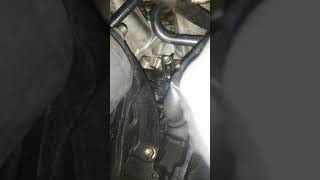
Typical fix: Replace the faulty VSV. This is a plug-and-play component held by one or two bolts with vacuum lines attached. 🎬 Watch this video to see a VSV replacement walkthrough. The most common culprit is the VSV on the charcoal canister, often part number 90910-12276.
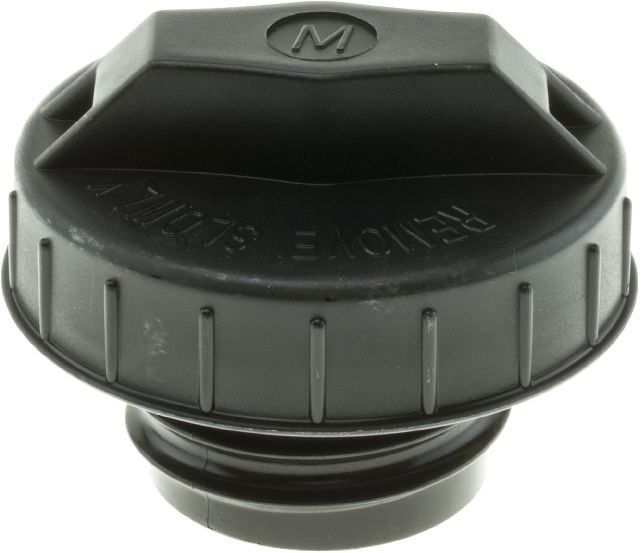
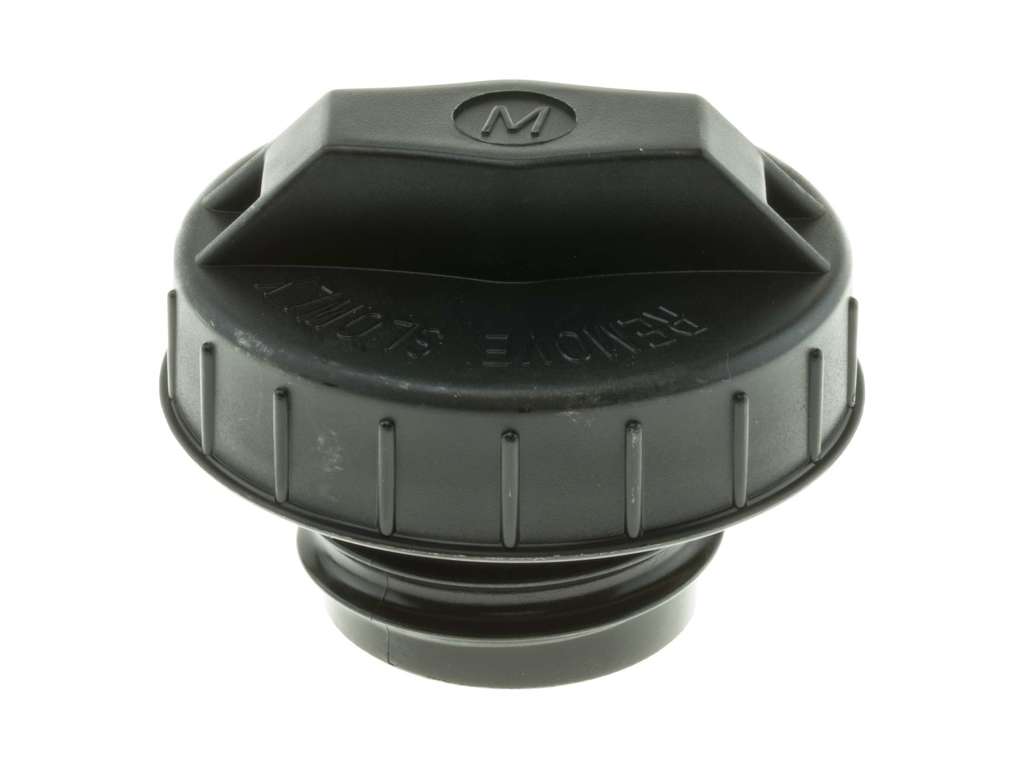
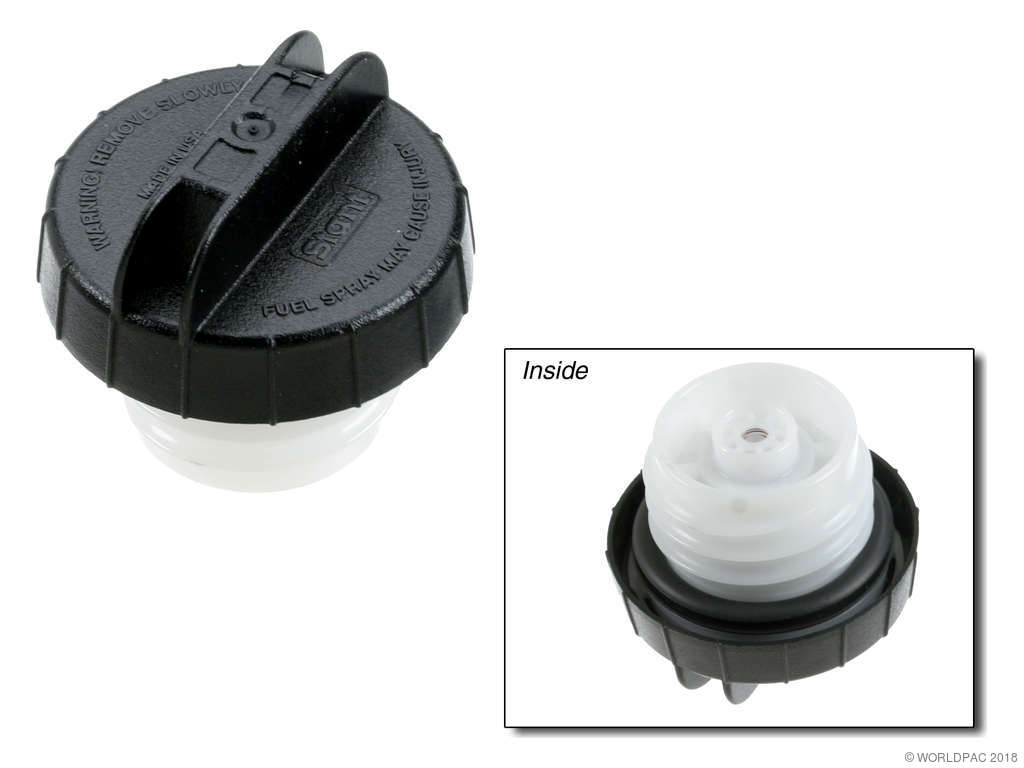
Est. part cost: $30-$90 - Loose, Damaged, or Incorrect Gas Cap 🔴 High Probability → Shop Fuel Tank Cap This is the most common cause for P0440 on any vehicle. The rubber seal on the cap degrades over time, or the cap may not have been tightened properly after refueling, causing a system leak. Using a non-OEM cap can also lead to a poor seal.
How to confirm: Ensure the gas cap is tightened until it clicks. Inspect the rubber O-ring or seal on the cap for cracks, stiffness, or damage. Check that you are using an OEM or equivalent quality cap. An OEM replacement is often recommended to ensure a perfect seal.
Typical fix: Tighten or replace the gas cap. The OEM part number is often 77300-33070 or similar.
Est. part cost: $15-$40 - Cracked or Disconnected EVAP Hoses 🟡 Medium Probability After two decades, the rubber and plastic hoses in the engine bay and underneath the car become brittle and are prone to cracking, especially at connection points to the VSVs and charcoal canister.
How to confirm: Visually inspect all EVAP system hoses for obvious cracks, especially around the VSVs and the charcoal canister. A definitive diagnosis requires a smoke test, which forces smoke into the EVAP system to reveal the location of any leaks. Pay close attention to the small vacuum lines around the airbox.
Typical fix: Replace the cracked section of hose and secure it with clamps.
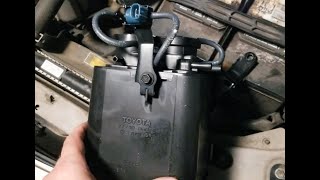
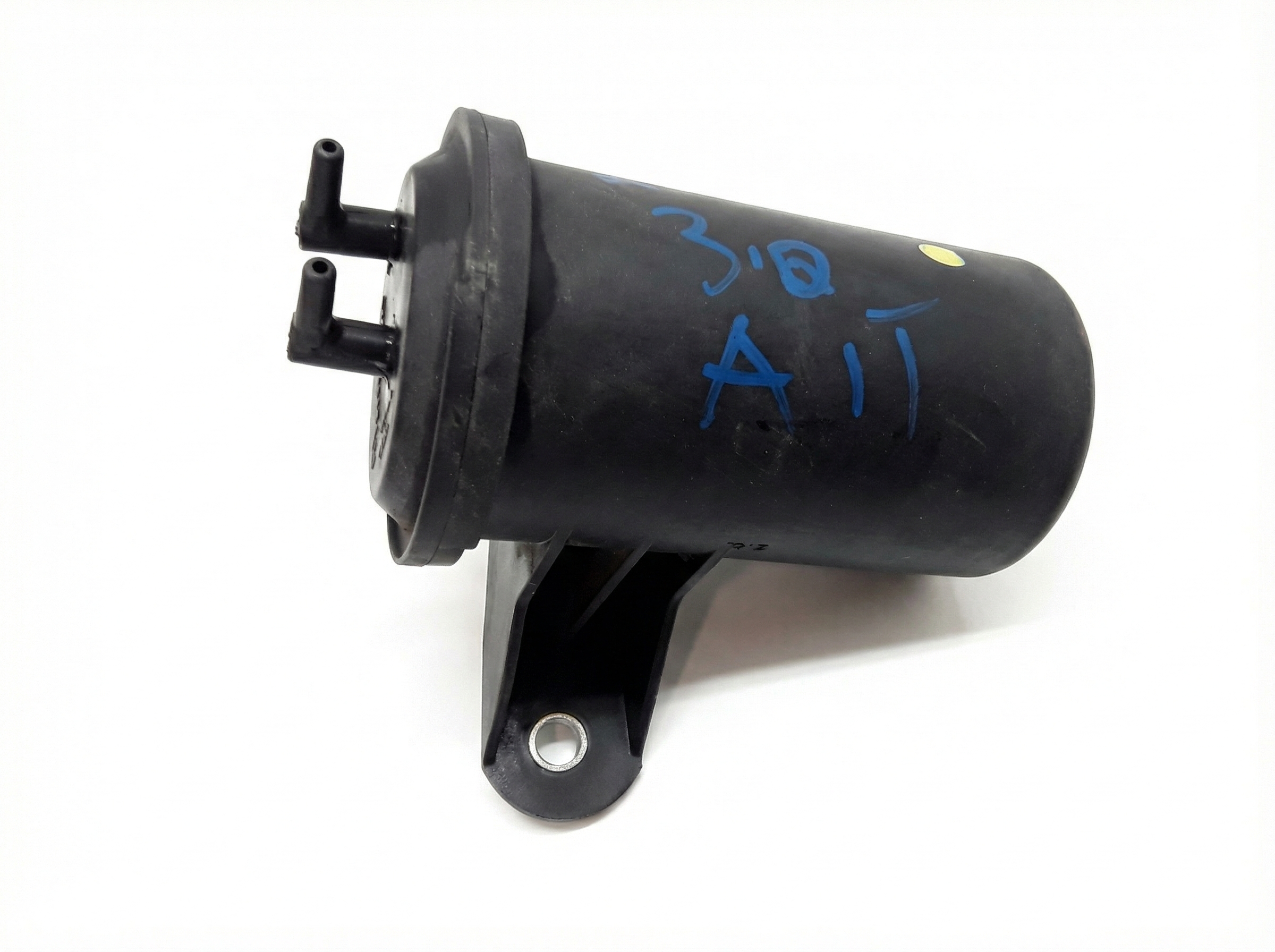
Est. part cost: $5-$30 - Faulty Charcoal Canister ⚪ Low Probability → Shop Vapor Canister The canister, which stores fuel vapors, can crack from age or road debris, or its internal valves can fail. On 4-cylinder models, the canister is often in the engine bay, under the master cylinder. On V6 models, it is more commonly found near the rear axle. A video from a '97 Camry owner shows a detailed replacement of the engine-bay-mounted canister. 🎬 See how to replace the engine bay charcoal canister.
How to confirm: Visually inspect the canister for cracks or damage. If a smoke test shows smoke emerging from the canister body itself, it needs replacement. This is typically diagnosed after ruling out the gas cap, VSVs, and hoses.
Typical fix: Replace the entire charcoal canister assembly. Note that for some model years, the VSVs are integrated and can be replaced separately, while for others the entire assembly is required.
Est. part cost: $150-$300
Rare But Worth Checking
- Rusted Fuel Filler Neck: → Shop Fuel Filler Neck The metal pipe leading to the gas tank can rust where the gas cap seals, preventing a proper seal even with a new cap. This is more common in regions that use road salt and has been noted by owners in forums. A DIY replacement video exists showing the process.
- Pinhole Leak in Metal EVAP Line: A documented case on a 2000 Camry showed a tiny, hard-to-see pinhole leak in a metal EVAP line near the filler neck, hidden under a plastic cover. This was only found by performing a smoke test from the gas tank filler neck.
- Cracked Fuel Tank Overfill Check Valve: → Shop Fuel Tank On platform mates like the Toyota Sienna, a common source for small EVAP leak codes (P0442) is a cracked plastic overfill check valve located on top of the fuel tank. This requires dropping the tank to access and replace, but the part itself is inexpensive. This could also be a potential, though less documented, cause on the Camry.
Diagnosis Steps
- Read the codes with an OBD-II scanner to confirm P0440 and check for any other related codes like P0441 or P0446.
- Inspect the gas cap. Ensure it is tight and clicks. Remove it and check the seal for cracks or damage. If in doubt, replace it with an OEM-spec cap (e.g., Toyota P/N 77300-33070).
- Clear the codes and drive for a few days to see if the light returns. If it does, proceed to the next step.
- Visually inspect all accessible EVAP hoses in the engine bay, particularly those connected to the VSV near the air filter housing, for cracks, brittleness, or disconnection.
- Test the VSVs. Locate the valves (typically one in the engine bay on the airbox and one on the charcoal canister). Test for operation by applying 12V power and listening for a click. For a more thorough test, use a hand vacuum pump to verify they open and close correctly per the TSB procedure.
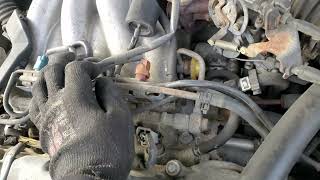
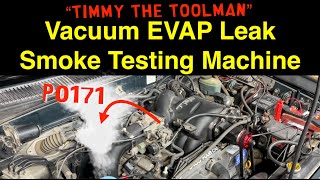
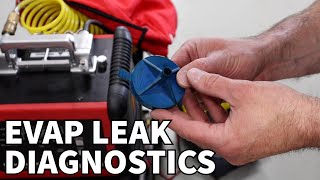
- If the valves and hoses appear fine, the next step is a professional smoke test. This will pressurize the system with smoke and make even the smallest leaks visible. 🎬 Watch a mechanic perform a professional EVAP smoke test. This is the most effective way to find hairline cracks in hoses, the canister, or the filler neck.
- Based on the smoke test results, replace the leaking hose, charcoal canister, or other faulty component.
Parts You'll Likely Need
- Vacuum Switching Valve (VSV)
(OEM #90910-12276 (Commonly for CCV on canister), 90910-12271 (Per TSB EG013-02))— This is a documented common failure point for P0440 on this Camry generation, as confirmed by Toyota TSBs EG013-02 and EG013-03. Part number 90910-12276 is a widely available VSV that fits many Toyota applications and is often the solution.
Trusted brands: Toyota (OEM), Denso, Aisin, Dorman
OEM price range: $60-$110
Aftermarket price range: $30-$70 - Gas Cap
(OEM #77300-33070)— A worn seal on the gas cap is a very common cause of EVAP leaks and is the first and easiest part to check. An OEM cap is strongly recommended for a reliable seal.
Trusted brands: Toyota (OEM), Stant
OEM price range: $25-$40
Aftermarket price range: $15-$25 - Charcoal Canister Assembly
(OEM #77740-06042)— If the canister itself is cracked or its integrated valves have failed, it must be replaced. This is usually diagnosed after VSVs and hoses are confirmed to be good. Part number 77740-06042 fits 1997-1998 Camrys and is located in the engine bay. Note that this specific part may be discontinued, but replacements exist.
Trusted brands: Toyota (OEM)
OEM price range: $200-$300
Aftermarket price range: $150-$220
Related Codes That Often Appear With This One
- P0441 — This code indicates 'Incorrect Purge Flow' and often appears with P0440 when a VSV or the purge solenoid is malfunctioning. Toyota's TSBs for this platform explicitly group P0440, P0441, and P0446 together as symptoms of a failed VSV.
- P0446 — This code points to a 'Vent Control Circuit Malfunction' and is commonly triggered alongside P0440 and P0441, especially when a VSV is the root cause, as noted in Toyota's TSBs. Many owner forum posts report fixing all three codes by replacing a single VSV.
Technical Service Bulletins (TSBs) & Recalls
- EG013-02 (July 2002): M.I.L. 'ON' P0440, P0441 & P0446 for 1998-1999 Camry due to inoperative Vapor Pressure Sensor VSV.
- EG013-03 (Revised Sept 2003): M.I.L. 'ON' DTC P0440, P0441 OR P0446 for 2000-2003 Camry due to inoperative Canister Closed Valve VSV.
Platform-Specific Known Issues
- TSB EG013-02 identifies an inoperative Vapor Pressure Sensor VSV as a cause for P0440, P0441 & P0446 on 1998-1999 models, instructing replacement with P/N 90910-12271.
- TSB EG013-03 points to an inoperative Canister Closed Valve (CCV) VSV as a cause for P0440, P0441 OR P0446 on 2000-2001 models. This valve is located on the charcoal canister.
- Charcoal canister location varies: On many 4-cylinder models, it is located in the engine bay on the driver's side, underneath the brake master cylinder. On other models (often V6), it is located under the car near the rear axle. This is a critical distinction for diagnosis and repair.
Mechanic-Grade Diagnostic Values
- Vapor Pressure Sensor Signal Voltage — expected: 0.5V to 4.5V. Failure: Voltage outside of this range indicates a sensor or circuit fault. Low voltage corresponds to low pressure (vacuum), high voltage to high pressure.
- Vapor Pressure Sensor VSV Resistance — expected: 30 - 34 Ohms at 68°F (20°C). Failure: Resistance outside this range indicates a faulty valve coil.
Scan Tool Commands That Help
- Toyota Techstream: Evaporative System Check Utility — This utility allows a technician to manually command the EVAP system components (like the VSV for EVAP and VSV for CCV) to open and close, sealing the system and monitoring vacuum decay to pinpoint leaks without having to wait for the ECU to run its automatic self-test.
- Toyota Techstream: ACTIVE TEST for 'TANK BYPASS VSV' — This specific active test directly commands the Vapor Pressure Sensor VSV to cycle on and off. According to Toyota TSB EG013-02, if the valve does not make an audible 'click' when commanded, it indicates a failure of the valve or its circuit.
Wiring & Ground Locations
- G131 — On the intake manifold (for 2.2L 5S-FE) or on the right surge tank (for 3.0L 1MZ-FE).. This is a primary engine ground point. A poor connection here can cause erratic behavior from various engine sensors and actuators, including the EVAP system components controlled by the ECM.
- E4 — Engine harness ground located on the left front fender.. This is another critical ground point for the engine harness. The ECM and its related solenoids rely on solid ground connections to function correctly.
- Vapor Pressure Sensor VSV Connector Pin 2 — At the VSV connector itself (Violet wire on Camry).. TSB EG013-02 specifies checking for continuity to ground at this pin when the valve is commanded ON via a scan tool. A lack of ground indicates a wiring problem between the VSV and the ECM, not a faulty valve.
Real Owner Repair Stories
- Reddit user in r/Toyota (1999 4-cylinder, Japan-built, California emissions Camry) — Check Engine Light with DTC P0446.
❌ Tried (didn't work) Replaced all rubber vacuum hoses at the canister and between the canister and engine bay., Verified rigid vacuum lines held vacuum., Replaced the Vapor Pressure Sensor., Replaced the Vapor Pressure Sensor VSV., Replaced the EVAP VSV.
✅ What actually fixed it The vacuum hoses for the two-port Vapor Pressure Sensor were connected incorrectly. The user visited a salvage yard ('Pick a Part') to observe an identical model and determined the correct routing: the inner sensor port connects to the inner VSV port (Port E), and the outer sensor port connects to a 'T' fitting in the canister's air drain line.
"I Checked Everything" — The Actual Cause
- On a 2000 Camry with a persistent P0440, a mechanic performed multiple smoke tests from the engine bay which revealed no leaks. The light kept returning after replacing hoses and the canister. The final solution was found by introducing smoke through the gas filler neck port instead; this revealed a tiny, hard-to-see pinhole leak in a metal EVAP line near the filler neck that was hidden by a plastic cover.
OEM Part Supersession History
90910-12109→90910-12271— Toyota released an improved Vapor Pressure Sensor VSV to correct the condition causing P0440, P0441, and P0446 codes as per TSB EG013-02.77740-33060, 77740-06040, 77740-06041→77740-06042— Part consolidation and updates for the charcoal canister assembly.
Heads up: Part 77740-06042 is listed for 1997-1998 Camrys and has since been discontinued, though aftermarket replacements are available.
Model Year Variations Within This Range
- 1997-2001: The location of the charcoal canister assembly varies by engine. On 4-cylinder (2.2L 5S-FE) models, the canister is frequently located in the engine bay, underneath the brake master cylinder. On V6 (3.0L 1MZ-FE) models, the canister is more commonly found at the rear of the vehicle, near the fuel tank and spare tire well.
- 1997-1999: According to a Reddit user's detailed repair, the specific vacuum hose routing for the vapor pressure sensor may be unique to 1997-1999 2.2L models.
Diagnostic Flowchart
Real Owner Stories
Aggregated from forums and TSBs cited above. Mileages and costs reflect what owners reported in those sources.
2001 Toyota Camry
Symptoms: Check Engine Light on with codes P0440, P0441, and P0446.
What fixed it: Diagnosed as a faulty Canister Closed Valve (CCV) VSV following the diagnostic steps provided in Toyota TSB EG013-03.
Source hint: BAT Auto Technical (Oct 2012)
2000 Toyota Camry
Symptoms: Experiencing EVAP problems triggering codes P0440, P0441, and P0446.
What fixed it: Advised to inspect the EVAP line on the airbox and check the main canister located under the car near the fuel tank.
Source hint: Reddit r/MechanicAdvice (Mar 2014)
2001 Toyota Camry
Symptoms: Engine light illuminated with the P0440, P0441, and P0446 code combination.
What fixed it: Troubleshooting focused on checking the gas cap, inspecting EVAP hoses, and checking for a rusted filler neck.
Source hint: CamryForums (Sep 2008)
2002 Lexus ES300
Symptoms: P0440 code present and unable to find the EVAP leak after checking the gas cap.
What fixed it: Recommended to perform a professional smoke test as the definitive way to locate the leak.
Source hint: ClubLexus (Jun 2016)
Related OBD-II Codes
Frequently Asked Questions
Does Toyota have any TSBs for the P0440 code on my 1997-2001 Camry?
Where is the charcoal canister located on my Camry?
What part number do I need if my gas cap is causing the P0440 code?
How can I test the Vacuum Switching Valve (VSV) on my Camry?
Why do I have codes P0441 and P0446 along with P0440?
Helpful Videos

Used OEM Parts in Stock
New Aftermarket Parts Available


The information in this article is provided for general reference and educational purposes only. Vehicle specifications, procedures, and part compatibility can vary by production date, trim level, and region. Always consult your vehicle's factory service manual and verify part numbers before purchasing or performing repairs. Safety-critical components such as airbags, seat belts, and braking systems should be installed by a qualified professional.
- Toyota Camry:
- 🧭 Diagnostic Flowchart
- 🎬 Helpful Videos
- 🛍️ Shop This Part
- What's Unique About the 1997-2001 Toyota Camry
- Symptoms You May Notice
- Most Likely Causes
- Rare But Worth Checking
- Diagnosis Steps
- Parts You'll Likely Need
- Related Codes That Often Appear With This One
- Technical Service Bulletins (TSBs) & Recalls
- Platform-Specific Known Issues
- Mechanic-Grade Diagnostic Values
- Scan Tool Commands That Help
- Wiring & Ground Locations
- Real Owner Repair Stories
- "I Checked Everything" — The Actual Cause
- OEM Part Supersession History
- Model Year Variations Within This Range
- Real Owner Stories
- 2001 Toyota Camry
- 2000 Toyota Camry
- 2001 Toyota Camry
- 2002 Lexus ES300
- Related OBD-II Codes
- Frequently Asked Questions
- 🎟️ Get 5% Off