

P0440 on 2012-2022 Volkswagen Passat: EVAP System Malfunction Causes and Fixes
On a 2012-2022 VW Passat, code P0440 is most often caused by a loose or faulty gas cap. If that's not the issue, the next most common culprit is a failing EVAP Purge Valve (N80). A new gas cap is about $15-$30, while a purge valve replacement can cost between $50 and $150.
- Always check your gas cap first. Make sure it's tight and the seal is in good condition before attempting any other repairs.
- If the gas cap isn't the problem, the EVAP Purge Valve (N80) is the next most likely culprit on a VW Passat and is a manageable DIY replacement.
- P0440 is not an urgent safety issue and will not affect how the car drives, but it will cause an automatic failure on an emissions test.
- For leaks that aren't obvious, a smoke test is the most reliable way to find the source and avoid replacing unnecessary parts.
What's Unique About the 2012-2022 Volkswagen Passat
The Volkswagen Passat from this era, built on the NMS (New Midsize Sedan) platform, uses a fairly standard EVAP system. However, owners and technicians frequently point to the EVAP Purge Valve, known as the N80 valve, as a common failure point that causes this code and others like P0441. While a loose gas cap is always the first suspect, the N80 valve should be high on the list for diagnosis if the cap is not the issue. Some related VW models have also had recalls for issues that can saturate the charcoal canister, which is another potential, though less common, cause.
Generation note: The 2012-2022 year range covers the Volkswagen Passat NMS (New Midsize Sedan) platform built for the North American market. This includes the initial generation from 2012-2019 and the major facelift from 2020-2022, which was largely a reskin of the same underlying platform. The underlying EVAP system components and common failures are largely consistent across this entire period.
Symptoms You May Notice
- Check Engine Light is on
- A faint smell of fuel, especially around the rear of the car or near the gas cap
- Vehicle will fail an emissions inspection
- Difficulty starting the car, especially right after refueling (if N80 valve is stuck open)
- Replacing the charcoal canister when the actual problem is a small hose leak or a faulty purge valve. The canister is more expensive and less likely to be the root cause unless it's physically damaged or known to be saturated with fuel.
Most Likely Causes
- Loose, Damaged, or Incorrect Gas Cap 🔴 High Probability → Shop Fuel Tank Cap This is the most common cause for an EVAP leak on any vehicle, with some estimates suggesting it accounts for up to 40% of P0440 codes. The rubber seal on the cap can degrade over time, or the cap may not have been tightened properly after refueling, leading to a leak the system detects.
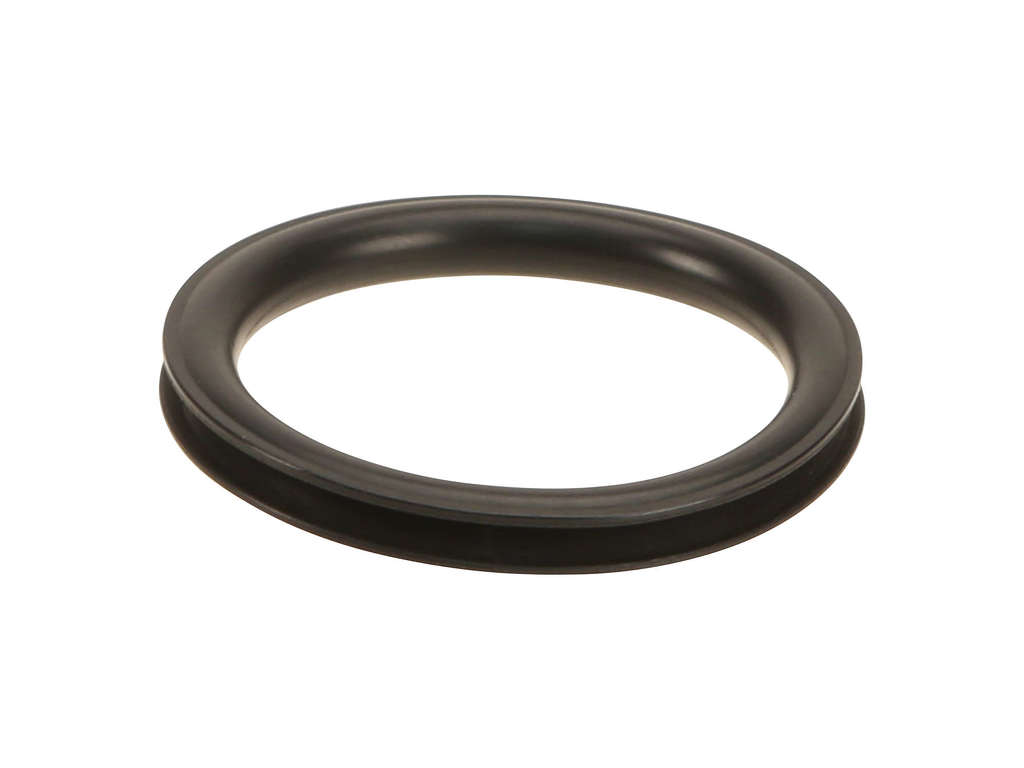
How to confirm: Ensure the gas cap is tightened until it clicks at least once. Inspect the rubber O-ring on the cap for cracks, brittleness, or damage. Check the fuel filler neck for rust or debris that could prevent a good seal. A dirty cap can be cleaned with a cloth and WD-40.
Typical fix: Tighten the cap and clear the code. If the code returns, replace the gas cap with a new OEM or high-quality aftermarket part. This is the cheapest and easiest first step.
Est. part cost: $15-$30 - Faulty EVAP Purge Valve (N80 Valve) 🟡 Medium Probability → Shop Vapor Canister The N80 purge valve is a frequently cited failure point on many VW and Audi models of this era, including those with the 2.5L and 2.0T engines. 🎬 Watch: Diagnosing and replacing the N80 valve on a 2.5L engine. It can become stuck open or closed, preventing the EVAP system from regulating pressure correctly and often triggering a P0441 code alongside P0440.
How to confirm: With the engine running, you can sometimes feel for suction or listen for a clicking sound from the valve. A more definitive test involves using a scan tool to command the valve to open and close to see if it responds. A stuck-open valve can also cause a rough idle or difficulty starting after getting gas.
Typical fix: Replace the N80 purge valve. This is a relatively simple replacement located in the engine bay, involving disconnecting two hoses and an electrical connector.
Est. part cost: $25-$70 - Cracked or Disconnected EVAP Hoses/Lines 🟡 Medium Probability Plastic and rubber lines can become brittle and crack over time due to heat and age. This is especially true for lines in the engine bay or lines exposed under the vehicle.
How to confirm: A visual inspection may reveal obvious cracks or disconnections. However, small leaks are hard to see. The most effective method is to have a professional perform a smoke test, which forces smoke into the EVAP system to reveal the exact location of any leaks. 🎬 See how a professional smoke test finds hidden EVAP leaks.
Typical fix: Replace the specific section of cracked or broken hose. In some cases, a small vacuum cap can fix a minor leak at an unused port.
Est. part cost: $10-$100 - Faulty EVAP Vent Valve / Solenoid ⚪ Low Probability → Shop Vapor Canister The vent valve, typically located near the charcoal canister at the rear of the vehicle, can fail and get stuck open, preventing the system from sealing for its pressure test.
How to confirm: Similar to the purge valve, a scan tool can be used to command the valve to operate. It can also be tested for electrical resistance with a multimeter. It is often tested during a professional smoke test.
Typical fix: Replace the vent valve/solenoid assembly.
Est. part cost: $40-$120
Rare But Worth Checking
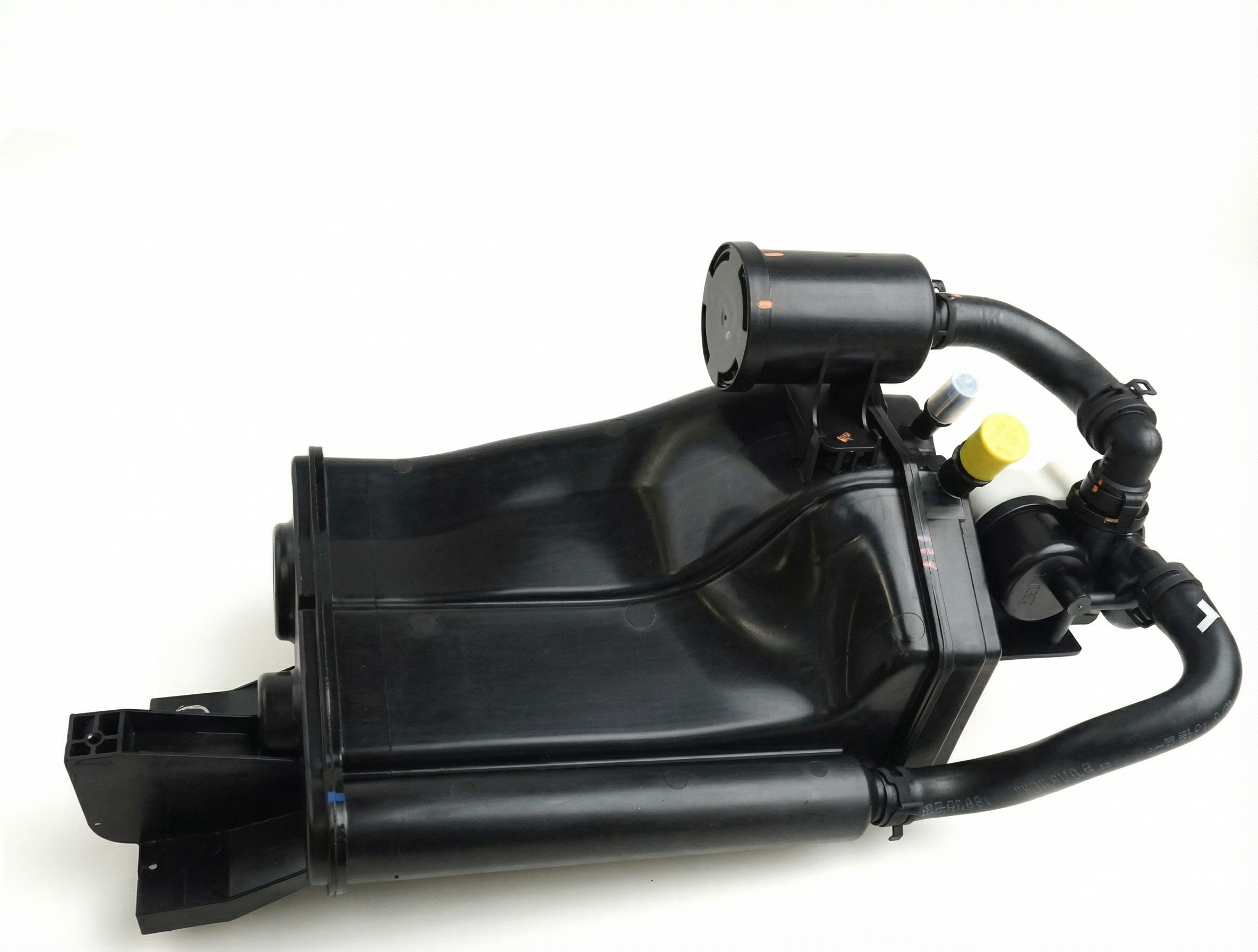
- Leaking or Saturated Charcoal Canister: → Shop Vapor Canister The charcoal canister itself can develop cracks, or it can become saturated with fuel if you frequently 'top off' your gas tank after the pump clicks off. A saturated canister can be damaged and may require replacement.
- Faulty Leak Detection Pump (LDP): → Shop Evaporative Emissions System Leak Detection Pump The Leak Detection Pump (LDP) is the component that pressurizes the system for the test. If the pump itself fails, it can cause a variety of EVAP codes, including P0440. For the Passat, this part is located in the rear passenger-side wheel well area.
- Damaged Fuel Filler Neck: → Shop Fuel Filler Neck Rust or physical damage to the metal filler neck where the gas cap seals can prevent a proper seal, causing a persistent leak code even with a new gas cap.
- Faulty Fuel Tank Pressure Sensor: → Shop Fuel Tank A defective fuel tank pressure (FTP) sensor can send incorrect data to the ECU, making it believe there is a leak when there isn't one.
Diagnosis Steps
- Check the Gas Cap: Ensure it is tight and clicks. Inspect the seal for cracks or damage. If in doubt, it's the cheapest part to replace first. Clear the code and drive for a few days to see if it returns.
- Visual Inspection: Look over all accessible EVAP hoses in the engine bay and around the fuel tank area for obvious cracks, disconnections, or signs of aging and brittleness.
- Test the Purge Valve (N80): Locate the N80 valve in the engine bay. With the engine running, listen for a clicking sound. You can also place a finger on the vacuum port to feel for suction. Use a scan tool to command it open and closed to verify its function.
- Perform a Smoke Test: This is the most effective way to find small or hidden leaks. A smoke machine is connected to the EVAP system, and smoke will visibly escape from any leak point in the hoses, canister, or seals. This is often best left to a professional shop but is the definitive diagnostic step.
- Test the Vent Valve and LDP: If no leaks are found, the vent valve and Leak Detection Pump (LDP) should be tested using a scan tool and/or multimeter to ensure they are functioning correctly. These components are located in the right rear wheel housing area. 🎬 Watch this walkthrough on how to replace the leak detection pump.
Parts You'll Likely Need
- Gas Cap
(OEM #3C8201550 / 3AA201550P (verify by VIN))— This is the most frequent cause of P0440 due to improper tightening or a worn-out seal.
Trusted brands: Genuine VW, Stant, Gates, ACDelco
OEM price range: $25-$40
Aftermarket price range: $15-$25 - EVAP Purge Valve (N80)
(OEM #06E906517A)— A very common failure point on VW/Audi vehicles of this generation that causes EVAP codes.
Trusted brands: Bosch (OEM Manufacturer), Genuine VW
OEM price range: $50-$90
Aftermarket price range: $25-$50 - EVAP Canister Vent Valve/Solenoid — If the system cannot seal for a test, a vent valve stuck open is a likely cause after the gas cap and purge valve have been checked.
Trusted brands: Bosch, Dorman, Genuine VW
OEM price range: $70-$130
Aftermarket price range: $40-$80 - Leak Detection Pump (LDP)
(OEM #7L0906243A (verify by VIN))— The pump that pressurizes the system can fail, leading to EVAP codes. It's less common than valves or caps but a known failure point.
Trusted brands: Genuine VW, Bosch, Dorman
OEM price range: $200-$250
Aftermarket price range: $60-$150
Related Codes That Often Appear With This One
- P0441 — P0441 indicates 'Incorrect Purge Flow,' which is often caused by a faulty N80 purge valve. If the valve is failing, it can trigger both a general system malfunction (P0440) and an incorrect flow code.
- P0455 — P0455 indicates a 'Large Leak Detected.' P0440 is a more general malfunction code, but the underlying cause (like a missing gas cap or completely disconnected hose) can sometimes trigger both codes.
- P0456 — P0456 indicates a 'Very Small Leak Detected.' If a small crack in a hose or a failing seal is the issue, the system might log this more specific code along with the general P0440.
Technical Service Bulletins (TSBs) & Recalls
- VWP-18-11 / U36/U37: While not for P0440, this is a critical warranty extension for the steering wheel clock spring on 2012-2018 Passat models. The warranty is extended to 10 years/120k miles or 15 years/unlimited miles depending on the vehicle's inclusion
Mechanic-Grade Diagnostic Values
- N80 Purge Valve Coil Resistance — expected: 15 to 30 Ω (values from different sources vary slightly, from 15-25 Ω to 22-30 Ω). Failure: A reading of infinite resistance (Open Loop) or a reading significantly outside the specified range indicates a failed coil.
- Leak Detection Pump (LDP) Internal Resistance (Pins 1 to 3) — expected: 640 to 720 Ω. Failure: A reading outside this range indicates an internal pump fault.
- Leak Detection Pump (LDP) Internal Resistance (Pins 2 to 3) — expected: 15 to 17 Ω. Failure: A reading outside this range indicates an internal pump fault.
- EVAP Canister Vent Solenoid Resistance — expected: 48 to 65 Ω. Failure: A reading outside this range suggests a faulty solenoid coil.
- Voltage at LDP Connector (Pin 3 to Ground) — expected: Battery Voltage (with Key On, Engine Off). Failure: No voltage indicates a problem with the power supply fuse or wiring leading to the pump.
Scan Tool Commands That Help
- VCDS (VAG-COM): Basic Settings - Group 070 (Evaporative Emissions Control Test) — This function runs the ECU's built-in EVAP system leak test on command. It can be used to verify if a repair was successful or to confirm a failure without waiting for the automatic drive cycle test to run.
- VCDS (VAG-COM) or equivalent professional scanner: Output Test (Actuator Test) for N80 Purge Valve and Vent Solenoid — This allows a technician to manually cycle the N80 valve and the vent solenoid to listen for an audible click and to confirm they are not seized. This is used to test the electrical and basic mechanical function of the valves.
- VCDS (VAG-COM) or equivalent professional scanner: Monitor Live Data for Fuel Tank Pressure Sensor — While performing output tests on the purge/vent valves or during a smoke test, monitoring the fuel tank pressure sensor's live data can confirm if the system is holding pressure or if the sensor is responding correctly to pressure changes.
Wiring & Ground Locations
- Leak Detection Pump (LDP) Location — In the rear passenger-side wheel well, typically attached to or near the charcoal canister assembly.. This location exposes the pump and its electrical connector to road salt, water, and debris, making it a common point for corrosion and wiring damage that can trigger EVAP codes.
- Ground Connection 363 / 417 — Earth connection points (8 and 9) located in the engine compartment wiring harness, on the left and right longitudinal members respectively.. The N80 Purge Valve and other engine bay sensors rely on a solid ground connection. A corroded or loose ground at these points can cause intermittent electrical issues for the entire EVAP control circuit.
- LDP Connector Pigtail — The electrical connector on the Leak Detection Pump itself.. The connector is a frequent failure point due to corrosion. If the pins are damaged, the entire pigtail may need to be replaced. The part number for the repair pigtail is often 1J0-973-704.
Real Owner Repair Stories
- AliExpress product review/guide (2003 VW Passat GLX, 142,000 miles (Note: older model but demonstrates a relevant diagnostic path)) — Persistent P0444 code (Purge Control Valve Circuit Open)
❌ Tried (didn't work) Replacing the gas cap, Checking all EVAP hoses, Performing a smoke test (which showed no leaks)
✅ What actually fixed it The N80 purge solenoid was tested with a multimeter and found to have infinite resistance (an open internal coil). Replacing the N80 valve with an aftermarket unit resolved the code immediately. - YouTube video by 'Beyond the Workshop' (2012 VW Passat) — Intermittent EVAP pump function, likely triggering an EVAP code.
✅ What actually fixed it The Leak Detection Pump (LDP) located in the rear passenger wheel well was replaced. The video notes the hoses can become crusty and stiff, and recommends having a new hose clamp ready.
"I Checked Everything" — The Actual Cause
- A common scenario is passing a smoke test but still having a persistent EVAP code. This often points to an electrical failure rather than a physical leak. A prime example is a faulty N80 purge valve where the internal coil is open or shorted. It will hold pressure during a smoke test (as it's normally closed), but it cannot be commanded open by the ECU, or it may be electrically noisy, triggering a fault. Testing the component's resistance with a multimeter is the key step that a smoke test misses.
OEM Part Supersession History
7L0-906-243→7L0-906-243-D (or later revision)— Component revision and improvement by the manufacturer.
Heads up: It is recommended to use the latest available revision of the Leak Detection Pump (LDP) to ensure compatibility and reliability.6e906517→06E906517A— Part number format update and potential internal revision for the N80 Purge Valve.
Model Year Variations Within This Range
- 2012-2022: While the 2012-2019 (B7 NMS) and 2020-2022 (facelift) Passats are built on the same underlying platform, there may be minor variations in wiring or the specific revision of parts like the LDP. However, the fundamental EVAP system design and the most common failure points (N80 valve, LDP, gas cap) remain consistent across the entire model range. Always verify part numbers with the vehicle's VIN.
Diagnostic Flowchart
Other Known Issues on This Vehicle
Issues unrelated to this code that are worth knowing about as an owner of this generation:
- Heater Core Clogging/Failure 🔴 High — Common on earlier models (2012-2015), often appearing after 80,000 miles. Can cause no heat, a sweet smell in the cabin, and coolant loss.
- Clock Spring Failure 🟠 Medium — Common across 2012-2018 models. Leads to airbag warning light and loss of steering wheel controls (horn, buttons). (Ref: Safety Recall 15V-483; Warranty Extension VWP-18-11 (15 years/unlimited mileage for some).)
- Timing Chain Tensioner Failure (TSI Engines) 🔴 High — Affects 1.8T and 2.0T TSI engines. Failure can be catastrophic, causing severe engine damage. Often occurs with little warning. (Ref: Subject of a class-action lawsuit, but no universal recall. Updated parts are available.)
- DSG Mechatronic Unit Failure 🔴 High — Affects models with the DSG automatic transmission. Can cause jerky shifting, inability to select gears, and transmission warnings. (Ref: Various recalls and warranty extensions have been issued for different models/years.)
- Premature Wheel Bearing Wear 🟡 Low — Some owners report noisy wheel bearings that require replacement before 100,000 miles.
- Ignition Coil Failure (Gasoline Engines) 🟡 Low — Can occur between 100,000-150,000 miles, causing engine misfires, rough idle, and hesitation.
Used vs. New Parts: Buying Guide for This Vehicle
When a used part is the smart pick: For purely mechanical or structural parts, a used component can be a cost-effective option. This includes the fuel filler neck or a charcoal canister from a low-mileage, non-collision donor vehicle. A used gas cap is generally not recommended as the seal's condition is unknown and a new one is inexpensive.
Donor-vehicle mileage cap: roughly under 60000 miles for the part to have meaningful remaining life.
What to inspect on the donor part:
- For a charcoal canister, ensure there are no physical cracks or signs of fuel saturation (heavy, sloshing sounds).
- For a fuel filler neck, inspect the sealing surface for any rust, pitting, or damage.
- Check that all hose connection points and mounting tabs are intact and not brittle.
OEM-only on this vehicle (don't cheap out):
- Leak Detection Pump (LDP): While aftermarket options exist, some owners report issues with incorrect resistance values causing persistent codes. OEM (or the OEM supplier, Bosch) is the safest bet.
- N80 Purge Valve: This is a critical and high-failure-rate electronic part. A cheap aftermarket version may fail prematurely. Sticking with OEM or the OEM supplier (Bosch) is strongly advised.
Aftermarket brands forum-validated for this vehicle:
- Bosch (Often the original OEM supplier for VW electronics)
- Standard Ignition (A well-regarded aftermarket brand for solenoids)
- Dorman (Offers a wide range of replacement parts, including LDPs and vent valves)
Brands owners have reported issues with on this vehicle:
- Unbranded, low-cost electronic components from online marketplaces. These parts are notorious for having incorrect electrical specifications or using materials that lead to premature failure, often causing the same code to return shortly after repair.
Real Owner Stories
Aggregated from forums and TSBs cited above. Mileages and costs reflect what owners reported in those sources.
2013 VW Passat
Symptoms: Heater core busted after a fix to another issue; sweet smell in the cabin and no heat.
What fixed it: Replacement of the heater core, which is a labor-intensive common failure for 2012-2015 models.
Source hint: Reddit thread discussing a heater core failure on a 2013 Passat, highlighting the high cost and labor-intensive nature of that separate common issue.
VW Passat
Symptoms: Vehicle threw a P0441 (Incorrect Purge Flow) which then progressed to a P0440 code.
What fixed it: The owner suspected the N80 valve as the culprit based on the progression of EVAP codes.
Source hint: PassatWorld forum member details their journey from a P0441 (Incorrect Purge Flow) to a P0440, ultimately suspecting the N80 valve as the culprit.
VW Passat
Symptoms: P0440 and P0455 codes appearing together, indicating a large EVAP leak.
What fixed it: Community members suggested starting with the gas cap and then moving to the N80 valve replacement.
Source hint: https://www.vwvortex.com/threads/p0440-and-p0455-evap-leak.9493035/
Related OBD-II Codes
Frequently Asked Questions
Does the steering wheel clock spring warranty extension VWP-18-11 apply to my 2012-2018 Passat?
Why does my Passat have trouble starting specifically after I fill up the gas tank?
Is the N80 purge valve failure common on the 2.5L and 2.0T Passat engines?
Where are the EVAP vent valve and Leak Detection Pump (LDP) located on this vehicle?
Can a dirty gas cap cause the P0440 code on my Passat?
Helpful Videos

Used OEM Parts in Stock
New Aftermarket Parts Available

The information in this article is provided for general reference and educational purposes only. Vehicle specifications, procedures, and part compatibility can vary by production date, trim level, and region. Always consult your vehicle's factory service manual and verify part numbers before purchasing or performing repairs. Safety-critical components such as airbags, seat belts, and braking systems should be installed by a qualified professional.
- Volkswagen Passat:
- 🧭 Diagnostic Flowchart
- 🎬 Helpful Videos
- 🛍️ Shop This Part
- What's Unique About the 2012-2022 Volkswagen Passat
- Symptoms You May Notice
- Most Likely Causes
- Rare But Worth Checking
- Diagnosis Steps
- Parts You'll Likely Need
- Related Codes That Often Appear With This One
- Technical Service Bulletins (TSBs) & Recalls
- Mechanic-Grade Diagnostic Values
- Scan Tool Commands That Help
- Wiring & Ground Locations
- Real Owner Repair Stories
- "I Checked Everything" — The Actual Cause
- OEM Part Supersession History
- Model Year Variations Within This Range
- Other Known Issues on This Vehicle
- Used vs. New Parts: Buying Guide for This Vehicle
- Real Owner Stories
- 2013 VW Passat
- VW Passat
- VW Passat
- Related OBD-II Codes
- Frequently Asked Questions
- 🎟️ Get 5% Off