

P0442 on 2013-2019 Cadillac XTS: EVAP Small Leak Causes and Fixes
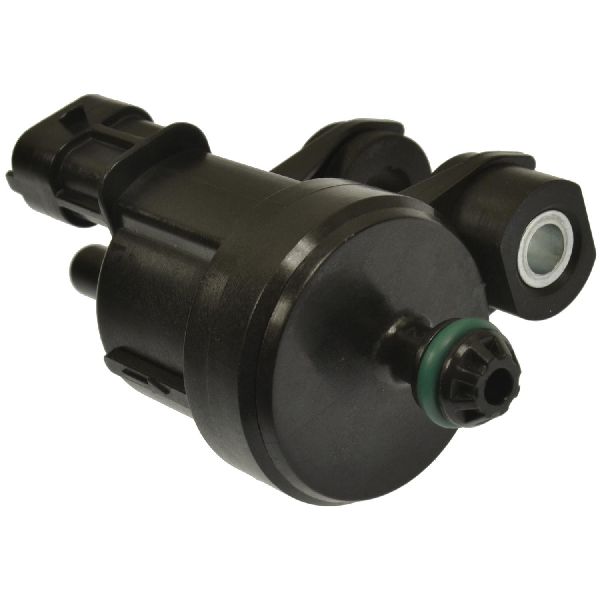
On a 2013-2019 Cadillac XTS, code P0442 is most often caused by a loose gas cap or a faulty EVAP purge valve. First, tighten the gas cap until it clicks. If the light returns, the purge valve is the next most likely part to fail. A common symptom of a bad purge valve is difficulty starting the car after refueling. An OEM replacement purge valve (ACDelco 12690512) costs around $30-$50 and is a common DIY fix.
- P0442 on a Cadillac XTS indicates a small leak in the emissions system and is not a critical mechanical issue.
- Always check the gas cap first. Ensure it's tight and the seal is intact before attempting any other repairs.
- The most likely failed part after the gas cap is the EVAP purge valve, located on the engine.
- A smoke test is the most reliable method to accurately pinpoint the source of the leak.
- Using OEM or quality aftermarket parts for the gas cap, purge valve, and vent valve is important for a lasting repair.
What's Unique About the 2013-2019 Cadillac XTS

For the 2013-2019 Cadillac XTS, the P0442 code is a straightforward emissions issue without major platform-specific quirks. The entire 2013-2019 range is a single generation, ensuring consistency in parts and diagnosis. Owner and technician reports frequently point to the EVAP purge valve as a common failure point, a trend seen across many GM vehicles of this era sharing the 3.6L engine, such as the Chevy Impala and Buick LaCrosse. A General Motors technical service bulletin (21-NA-124) specifically highlights checking the purge valve, vent valve, and all line connections for this code.
Diagnostic Flowchart

Tap your situation to follow the diagnostic path that matches what you're seeing on this vehicle.
Symptoms You May Notice
- Check Engine Light is on
- A faint smell of gasoline, particularly around the rear of the vehicle
- Vehicle will fail an emissions inspection
- Difficulty starting the engine or long crank times immediately after refueling (a strong indicator of a stuck-open purge valve).
- Replacing the fuel tank pressure (FTP) sensor. While an FTP sensor can fail, it usually triggers its own specific trouble codes (like P0452) and is not a common cause for a P0442 leak code alone.
Most Likely Causes

- Loose or Worn Gas Cap 🔴 High Probability → Shop Fuel Tank Cap This is the most common cause for any vehicle with a traditional gas cap. The rubber O-ring seal can dry out, crack, or get dirty over time, preventing a proper seal. It is always the first and easiest item to check.
How to confirm: Ensure the gas cap is tightened until it clicks several times. Inspect the rubber seal on the cap for any cracks, stiffness, or damage. If the seal is damaged, the cap needs replacement. It's recommended to use an OEM cap as some aftermarket caps may not seal correctly.
Typical fix: Tighten or replace the gas cap. It is recommended to use an OEM or high-quality aftermarket cap to ensure a proper seal.
Est. part cost: $15-$30 - Faulty EVAP Purge Valve/Solenoid 🔴 High Probability → Shop Vapor Canister The purge valve is a very common failure item on many GM vehicles, including the XTS and its platform mates with the 3.6L engine. It can get stuck partially open, creating a small, constant leak. A video specifically shows a 2019 XTS with a P0442 code caused by a leaking purge valve. A GM TSB also lists this as a primary component to check.
How to confirm: With the engine off, the valve should be closed. Remove the valve and try to blow through it; if air passes, it is stuck open and has failed. A mechanic can also use a smoke machine to push low-pressure smoke into the EVAP service port; if smoke comes out of the purge valve, it is leaking and needs to be replaced. A key symptom is a long crank time after refueling.
Typical fix: Replace the EVAP purge valve. It is typically located on the engine and is a simple repair. 🎬 Watch this quick walkthrough on changing the XTS purge valve. Many owners recommend using only the OEM ACDelco part, as aftermarket versions are known to fail quickly.
Est. part cost: $25-$60 - Faulty EVAP Vent Valve/Solenoid 🟡 Medium Probability → Shop Vapor Canister The vent valve, which is normally open, can fail to close completely during the EVAP system's self-test, causing a leak code. GM's service bulletin 21-NA-124 lists a stuck-open vent valve as a possible cause after checking lines and connections.
How to confirm: This valve is located near the charcoal canister by the fuel tank. Diagnosis involves using a scan tool to command the valve closed and then performing a smoke test. If smoke escapes from the vent valve when it's commanded shut, it has failed.
Typical fix: Replace the EVAP vent valve solenoid.
Est. part cost: $30-$70 - Cracked or Disconnected EVAP Hose ⚪ Low Probability Over time, the rubber and plastic hoses in the EVAP system can become brittle and crack, especially at connection points or elbows.
How to confirm: A visual inspection may reveal obvious cracks or loose connections. Bending the hoses slightly can sometimes reveal hidden cracks. The most reliable method is a smoke test, which will show smoke exiting from any cracks or poor seals in the lines.
Typical fix: Replace the damaged section of hose or reconnect it securely.
Est. part cost: $10-$50
Rare But Worth Checking
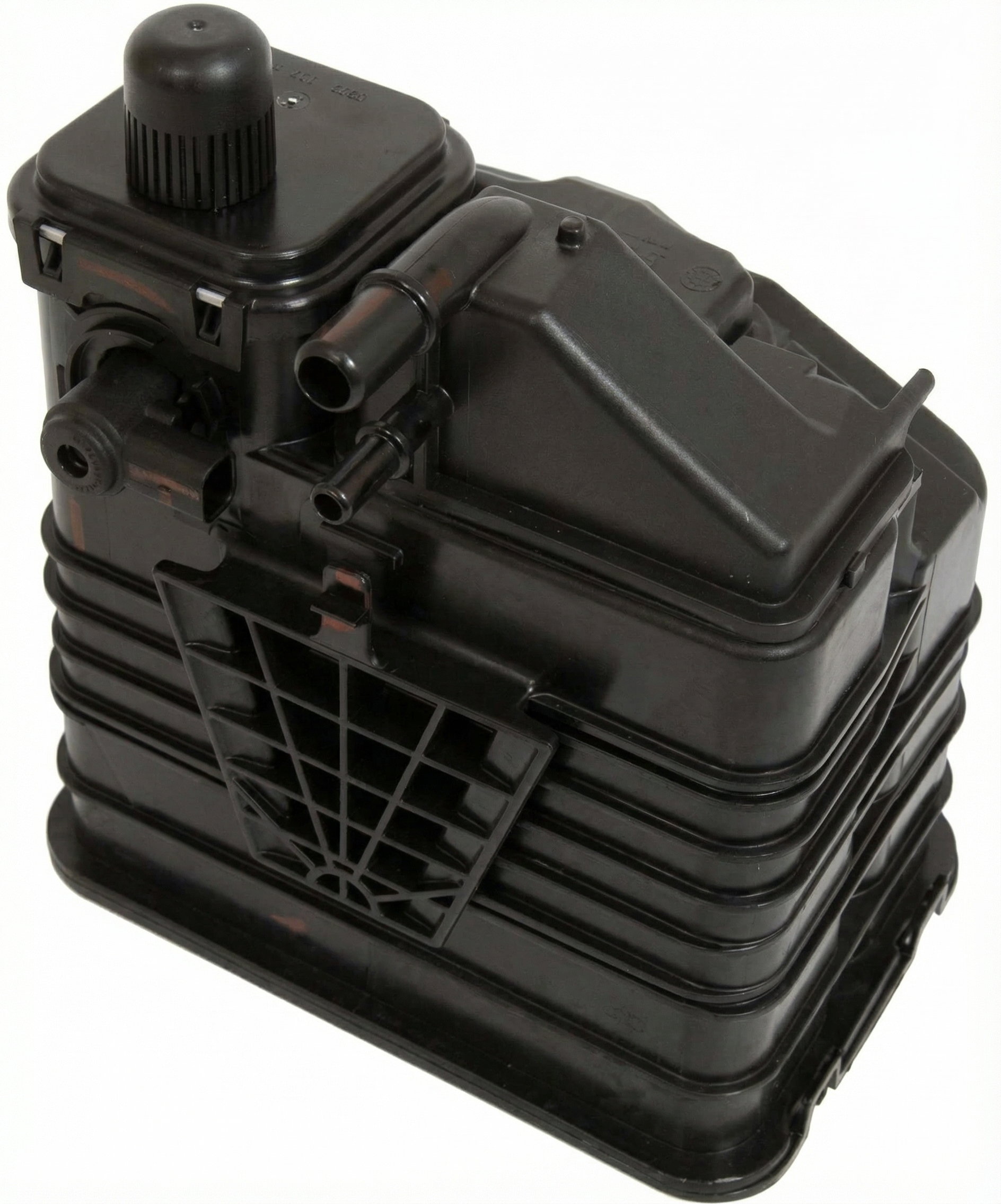
- Cracked Charcoal Canister: → Shop Vapor Canister While not as common as the valves, the plastic body of the charcoal canister can develop hairline cracks over time, causing a small leak. This is usually found with a smoke test after all other components have been checked.
- Leaking Fuel Tank Filler Neck: → Shop Fuel Tank The metal pipe leading to the gas tank can rust and develop small pinholes, especially in areas where road salt is used. This will cause a leak that is often mistaken for a bad gas cap. A leak may only be visible when the pressure increases during refueling.
- Rolled or Damaged Fuel Filler Pocket Insulator: GM issued a preliminary bulletin (PIC6030) for the related Cadillac ATS, noting that the rubber insulator in the fuel filler pocket can get rolled over the filler pipe neck, preventing the gas cap from sealing correctly and causing a P0442 code. While for a different model, this is a quick visual check worth performing.
Diagnosis Steps

- Read the code with an OBD-II scanner to confirm P0442 is the primary code present. Note any other codes like P0496 or P0455.
- Inspect the gas cap. Remove it, check the seal for cracks or damage, and reinstall it, ensuring it clicks multiple times. Clear the code and drive for a few days to see if it returns.
- If the code returns, perform a visual inspection of all accessible EVAP hoses and lines under the hood and around the fuel tank area. Look for any obvious cracks, damage, or loose connections.
- If you experience long crank times after refueling, the EVAP purge valve is the primary suspect. Remove it from the engine and attempt to blow air through it. If air passes, the valve is faulty and needs replacement.
- The most effective professional diagnostic step is to perform a smoke test. Connect an EVAP-approved smoke machine to the system's service port.
- Introduce smoke into the system. Look for smoke escaping from the gas cap, any hoses, the purge valve (on the engine), the vent valve (near the tank), or the charcoal canister itself.
- Use a scan tool to command the vent valve to close during the smoke test to isolate different parts of the system. If smoke appears from the vent valve when it should be closed, the valve is faulty.
- Follow the diagnostic order recommended in GM TSB 21-NA-124: 1) Inspect all EVAP lines for proper seating and damage. 2) Investigate the vent valve for malfunction. 3) Investigate the purge valve for malfunction.
Parts You'll Likely Need
- Vapor Canister Purge Valve
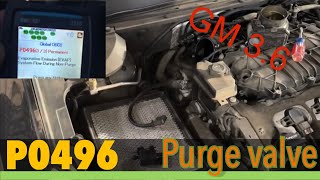
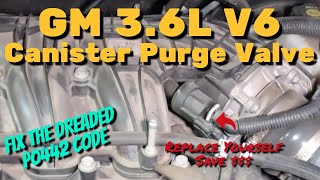
(OEM #12690512 (may be superseded by 12737252))— This is a very frequent failure point on GM vehicles that causes a small leak when it sticks partially open. It is shared with many other GM models and is often the root cause when P0496 is also present. 🎬 Watch a detailed replacement guide for the GM 3.6L purge valve.
Trusted brands: ACDelco, Dorman, SKP
OEM price range: $30-$50
Aftermarket price range: $20-$45 - Fuel Cap — The seal on the gas cap is the most common and simplest cause of a small EVAP leak. It's always the first part to check and replace due to its low cost and ease of installation.
Trusted brands: ACDelco, Stant
OEM price range: $20-$30
Aftermarket price range: $15-$25 - Vapor Canister Vent Valve Solenoid
(OEM #85123399)— This valve can fail to seal during the system test, causing a leak. It's another common failure point noted in GM service bulletins. This part number is used across a wide range of GM vehicles.
Trusted brands: ACDelco, Dorman, Wells
OEM price range: $40-$70
Aftermarket price range: $30-$50
Related Codes That Often Appear With This One
- P0455 — P0455 indicates a large EVAP leak. Sometimes a small leak (P0442) can worsen over time and become a large leak, or a faulty component may be intermittent, causing either code to appear. TSB 21-NA-124 addresses both codes simultaneously.
- P0441 — P0441 indicates incorrect purge flow. This can be caused by a purge valve that is stuck open or closed, which can also be interpreted by the system as a leak, sometimes triggering P0442 as well.
- P0496 — P0496 indicates EVAP flow during a non-purge condition. This code is very commonly seen with P0442 and almost always points to a faulty EVAP purge valve that is stuck open.
Technical Service Bulletins (TSBs) & Recalls
- 21-NA-124: Provides diagnostic tips for P0442 and P0455. It advises a specific diagnostic order: 1) Check all EVAP lines for damage/proper connection. 2) Check the vent valve for being stuck open. 3) Check the purge valve for malfunction.
- PIT4943D: Mentions P0442 and directs technicians to an article on using an EVAP system tester.
Mechanic-Grade Diagnostic Values
- Fuel Tank Pressure (FTP) Sensor Connector Voltage — expected: With the key on and engine off, the 3-wire connector should have: one pin with 5-volt reference, one pin with a good ground (near 0V), and a signal pin.. Failure: Missing the 5V reference or ground indicates a wiring or ECM issue, not a sensor failure.
- EVAP Purge Valve/Solenoid Function Test — expected: When 12V power and ground are applied directly to the two pins of the solenoid, a distinct 'click' should be heard as the valve opens.. Failure: No click indicates a failed solenoid. However, a click does not guarantee it isn't sticking or leaking; it only confirms electrical function.
Hidden / Shadow Codes Worth Checking
- Mode $06, Test ID $52: On some GM systems, this corresponds to the 'EVAP small leak vacuum decay rate test'. A failing value here can point to the P0442 trigger even before the code fully sets. (see via Advanced OBD-II scanner capable of displaying Mode $06 data.)
- Mode $06, Test ID $62: On some GM systems, this is the 'EVAP NV .020" Error test', which directly tests for the small leak size associated with P0442. (see via Advanced OBD-II scanner capable of displaying Mode $06 data.)
Scan Tool Commands That Help
- GDS2 / Tech2 (or equivalent professional scanner): EVAP Purge/Seal — This command allows the technician to manually close the EVAP vent solenoid and command the purge solenoid on or off, sealing the system to check if it holds vacuum or pressure during a smoke test.
- GDS2 / Tech2 (or equivalent professional scanner): EVAP Service Bay Test — This is an automated function that runs the vehicle's onboard EVAP leak test on demand, allowing a technician to see if the system passes or fails in the service bay without having to perform a full drive cycle.
- GDS2 / Tech2 (or equivalent professional scanner): Purge Valve Duty Cycle Control (%) — Allows a technician to incrementally open the purge valve by percentage (e.g., 10%, 20%) to test its range of motion and its effect on system pressure, helping to identify a sticky or intermittently failing valve.
Wiring & Ground Locations
- G401 — Left side of the luggage compartment/trunk area.. This is a primary rear-body ground. The EVAP canister, vent valve, and fuel tank pressure sensor are all located at the rear of the vehicle and rely on a solid ground connection to function and report correctly.
- G203 / G305 — At the base of the driver's side (left) kick panel.. These grounds serve various interior and body control modules. A poor ground here could potentially affect the Body Control Module, which communicates with the Engine Control Module regarding vehicle status.
- Purge Valve Connector — On the engine, behind the throttle body.. This 2-pin connector provides ignition voltage and a control signal (ground) from the ECM. Checking for power at this connector is a key step if the valve doesn't respond to scan tool commands.
Real Owner Repair Stories
- YouTube channel 'Nhan DIY' (2019 Cadillac XTS) — Check Engine Light with code P0442.
❌ Tried (didn't work) The video proceeds directly to the successful diagnosis.
✅ What actually fixed it A smoke test was performed on the purge valve after removing it from the car. Smoke was seen leaking from the valve, which should be in a closed position. Replacing the purge valve with a new OEM part resolved the leak. - YouTube channel 'G's World' (2018 Cadillac XTS, 3.6L engine) — Check Engine Light with code P0496 (EVAP System Non-Purge), which is commonly associated with P0442.
❌ Tried (didn't work) The video proceeds directly to the successful diagnosis.
✅ What actually fixed it The technician demonstrated with a smoke machine that the original purge valve was stuck open, allowing smoke to pass through freely. A new, genuine GM purge valve did not leak smoke. Replacing the purge valve fixed the issue.
OEM Part Supersession History
12690512→12737252— Standard part evolution for improved reliability or manufacturing changes.
Heads up: The new part number (12737252) is the correct, direct replacement for the older numbers, including 12690512, 12661763, and 12610560. They are physically and functionally interchangeable.
Model Year Variations Within This Range
- 2013-2019: While the Cadillac XTS received a cosmetic facelift for the 2018 model year, the core 3.6L engine and its associated EVAP system components (purge valve, vent valve, canister) remained consistent. Part numbers for the most common failure items are the same across the entire 2013-2019 range.
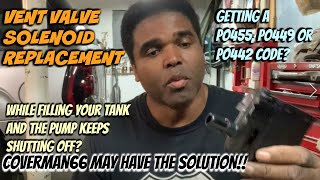
Helpful Videos
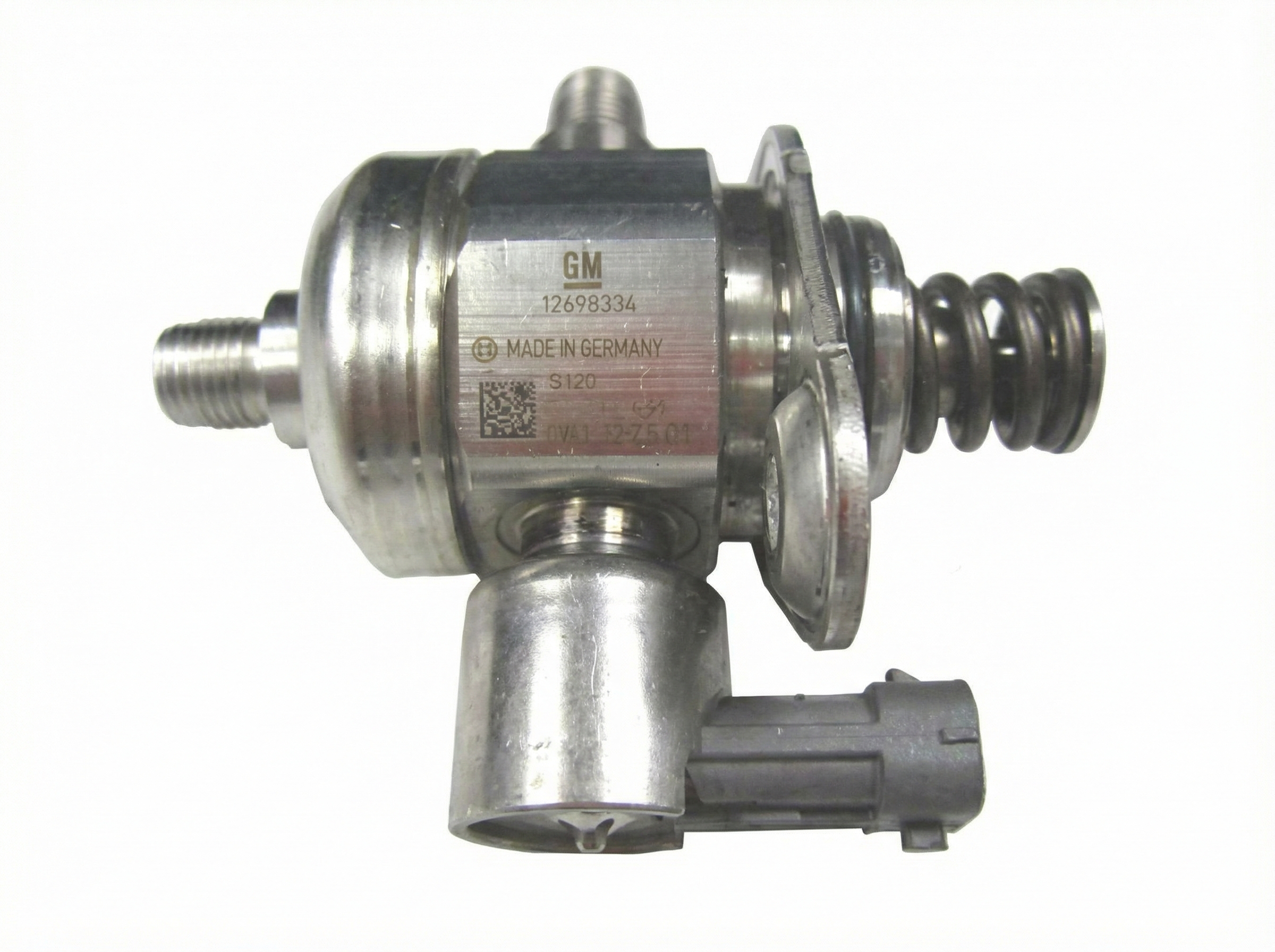
Used OEM Parts in Stock

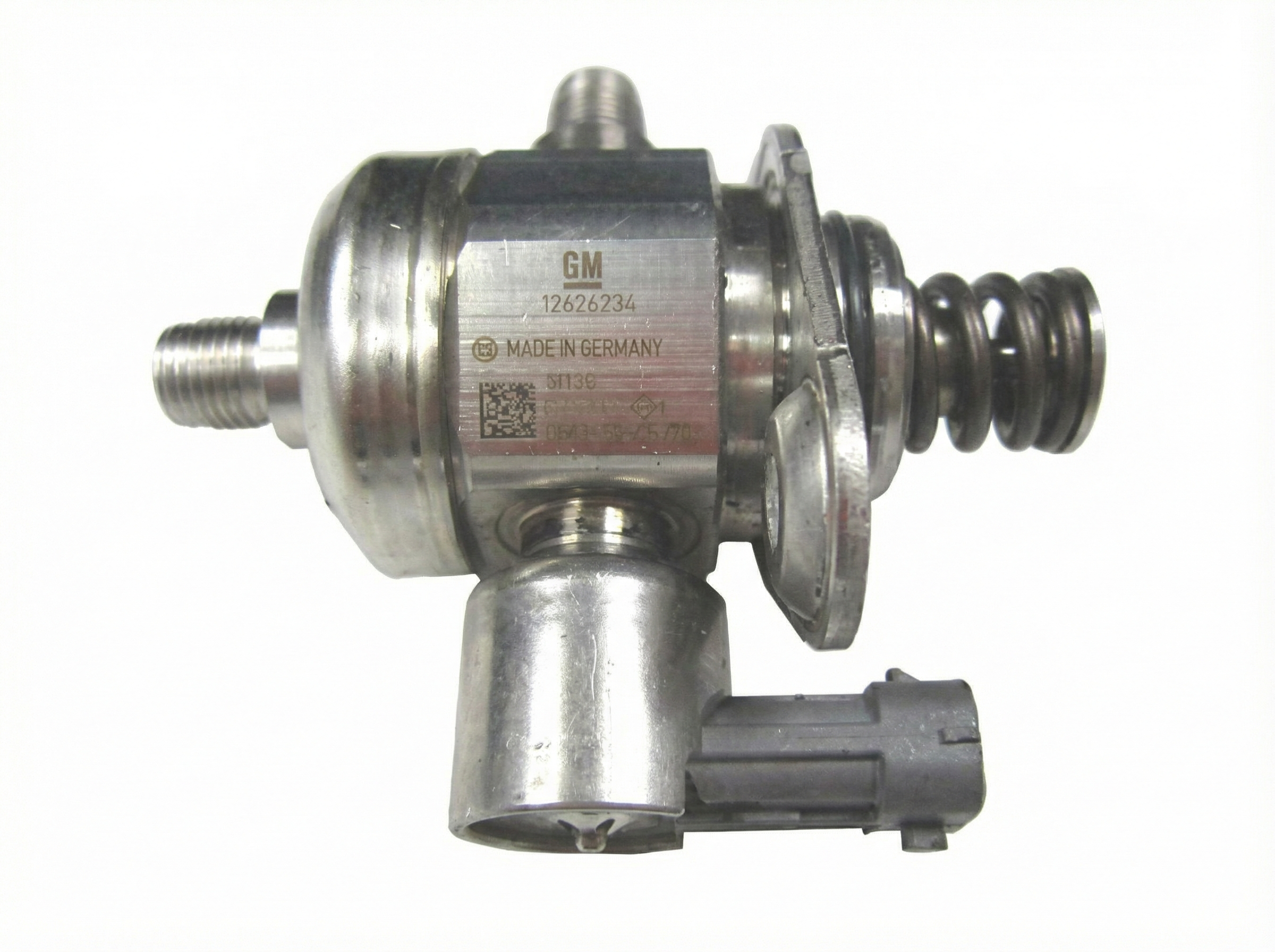
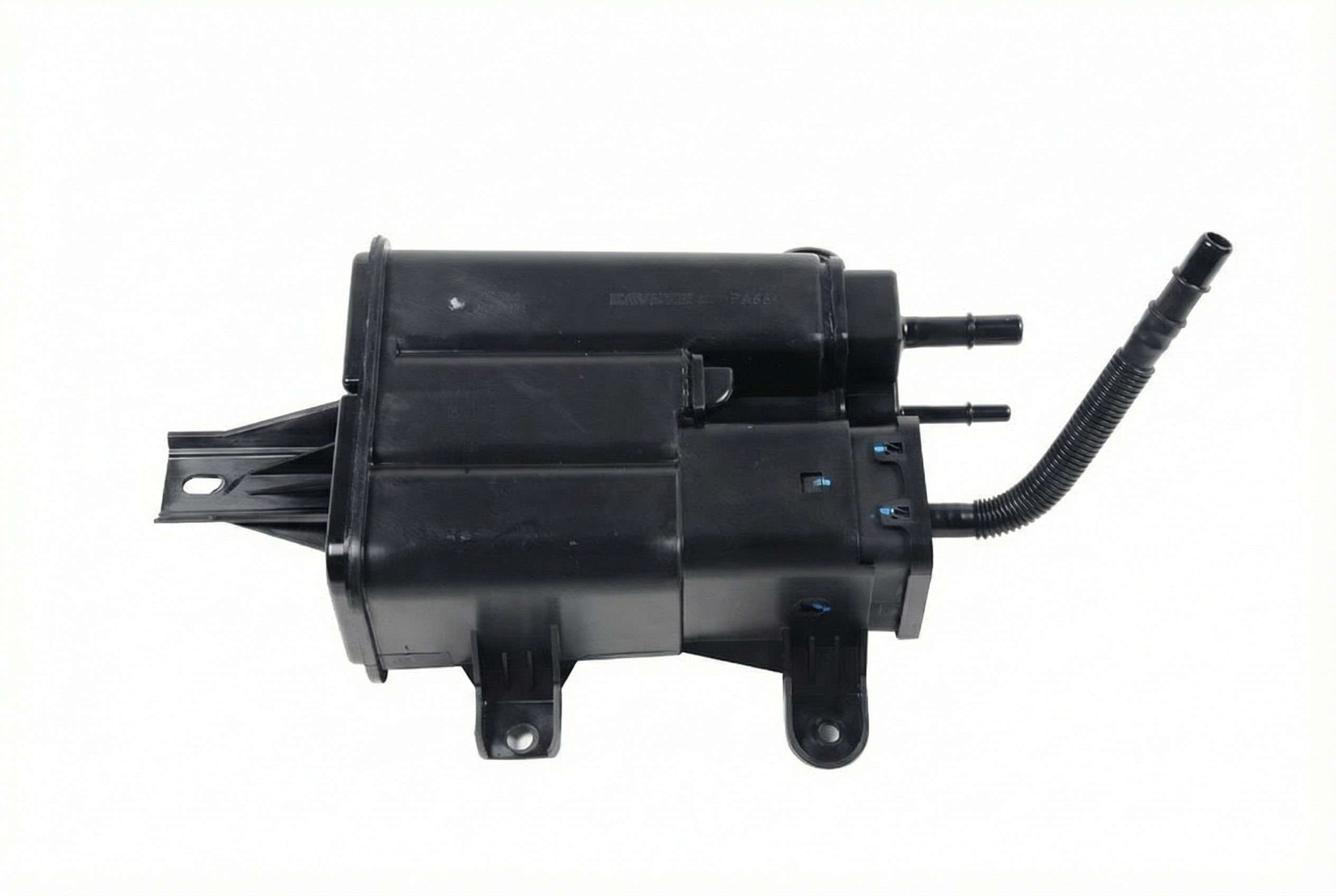
New Aftermarket Parts Available



The information in this article is provided for general reference and educational purposes only. Vehicle specifications, procedures, and part compatibility can vary by production date, trim level, and region. Always consult your vehicle's factory service manual and verify part numbers before purchasing or performing repairs. Safety-critical components such as airbags, seat belts, and braking systems should be installed by a qualified professional.
- Cadillac XTS:
- 🧭 Diagnostic Flowchart
- 🎬 Helpful Videos
- 🛍️ Shop This Part
- What's Unique About the 2013-2019 Cadillac XTS
- Symptoms You May Notice
- Most Likely Causes
- Rare But Worth Checking
- Diagnosis Steps
- Parts You'll Likely Need
- Related Codes That Often Appear With This One
- Technical Service Bulletins (TSBs) & Recalls
- Mechanic-Grade Diagnostic Values
- Hidden / Shadow Codes Worth Checking
- Scan Tool Commands That Help
- Wiring & Ground Locations
- Real Owner Repair Stories
- OEM Part Supersession History
- Model Year Variations Within This Range
- 🎟️ Get 5% Off