

P0442 on 1996-2002 Chevrolet Camaro: EVAP Small Leak Causes and Fixes
For a 1996-2002 Camaro, a P0442 code is most often caused by a loose or worn-out gas cap. If a new gas cap doesn't solve it, the next most likely culprits are a faulty EVAP purge or vent solenoid. A smoke test is the best way to find the exact leak source.
- P0442 indicates a small leak in the EVAP system on your 1996-2002 Camaro.
- Always check the gas cap first. A new, high-quality cap is an inexpensive and very common fix.
- If the gas cap doesn't solve the issue, the most likely failed parts are the EVAP purge solenoid (in the engine bay) or the vent solenoid (near the gas tank).
- The most reliable way to find the leak is to have a professional perform a smoke test.
- You can safely drive the car with this code, but you will not pass an emissions test until it is fixed.
What's Unique About the 1993-2002 Chevrolet Camaro
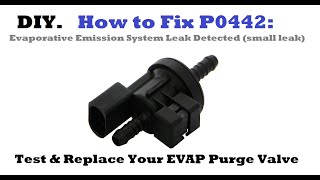
On the fourth-generation Camaro (1993-2002), the EVAP system components are subject to age-related failures. The plastic and rubber lines become brittle, and valves can fail after many years of service. While the gas cap is a universal weak point, owners of these specific models often report issues with the purge and vent solenoids. A notable change occurred in 1999 when GM switched the F-body from a metal to a plastic fuel tank, which affects some EVAP components and potential leak points, though the diagnostic principles remain the same. 🎬 Watch: A helpful overview of P0442 causes and common fixes. The fuel tank filler neck on pre-1999 models can also be a point of failure due to rust, preventing even a new gas cap from sealing properly.
Generation note: The specified range of 1993-2002 covers the entire fourth generation of the Chevrolet Camaro. However, the P0442 code is specific to OBD-II diagnostic systems, which were implemented starting in the 1996 model year. Therefore, this guide is applicable to 1996-2002 Camaros. 1993-1995 models use an OBD-I system with different trouble codes.
Symptoms You May Notice
- Check Engine Light is on.
- A faint smell of fuel, particularly around the gas cap area or rear of the car.
- The vehicle will not pass an emissions inspection.
- Replacing the fuel tank pressure sensor. While possible, a sensor failure is rare and would typically set a different code related to sensor performance (P0452, P0453).
- Immediately replacing the charcoal canister. The canister itself is usually durable; the valves attached to it are far more likely to fail.
Most Likely Causes
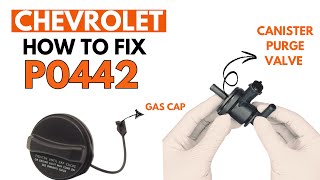
- Loose or Faulty Gas Cap 🔴 High Probability → Shop Fuel Tank Cap The gas cap seal is a simple rubber O-ring that degrades and cracks over time, preventing a proper seal. This is the most common cause for P0442 on any vehicle of this era. Note that 1998 models use a different cap than 1999-2002 models due to the switch from a metal to a plastic fuel tank.
How to confirm: Inspect the gas cap's rubber seal for any cracks, stiffness, or visible damage. Ensure the cap is tightened until it clicks at least three times. If the seal looks worn, replacement is the best confirmation.
Typical fix: Replace the gas cap. It is highly recommended to use an OEM-quality cap (like ACDelco) as some aftermarket caps may not seal correctly. After replacing, clear the code and drive for a few days to see if it returns.
Est. part cost: $15-$35 - Faulty EVAP Purge Solenoid/Valve 🟡 Medium Probability → Shop Vapor Canister This valve is located on the driver's side of the intake manifold and cycles frequently, leading to eventual failure where it may not close completely, creating a small leak path.
How to confirm: With the engine off, try to blow air through the valve; it should be closed and not allow air to pass. A hand-held vacuum pump can also be used to check if it holds a vacuum. A professional can command it with a scan tool and listen for a click.
Typical fix: Replace the EVAP purge solenoid. It is held on by a single 10mm bolt and is relatively easy to access after removing the throttle body boot. 🎬 Watch: Step-by-step guide to replacing the Camaro purge solenoid.
Est. part cost: $25-$60 - Faulty EVAP Vent Solenoid/Valve 🟡 Medium Probability → Shop Vapor Canister Located near the charcoal canister at the rear of the car (by the fuel tank), this valve is exposed to road debris and moisture, which can cause it to fail and not seal properly during the EVAP system test.
How to confirm: This valve is normally open. A bi-directional scan tool is needed to command it closed for testing. A smoke test is the most effective way to confirm a leak at the vent valve; smoke will be seen exiting the valve when it is commanded shut.
Typical fix: Replace the EVAP vent solenoid. Accessing it may require safely raising the rear of the vehicle.
Est. part cost: $30-$80 - Cracked or Disconnected EVAP Hoses ⚪ Low Probability After 20+ years, the rubber and plastic hoses in the engine bay and under the car become brittle and can develop small cracks or breaks. A common failure point is the hose connecting to the purge solenoid on the intake.
How to confirm: A thorough visual inspection may reveal obvious damage. However, small cracks are often invisible. A smoke test is the definitive method to locate a leaking hose.
Typical fix: Replace the specific section of damaged hose. In some cases, a pre-formed assembly may need to be purchased.
Est. part cost: $20-$100
Rare But Worth Checking
- Cracked Charcoal Canister: → Shop Vapor Canister The plastic body of the canister itself can develop hairline cracks from age or impact, creating a leak. This is usually found with a smoke test after all other common components have been checked.
- Leaking Fuel Tank Filler Neck: → Shop Fuel Tank On 1998 and earlier models with metal tanks, the surface where the gas cap seals can rust or corrode, preventing a proper seal even with a new cap. Visually inspect this area for rust or pitting when you check the gas cap.
- Leaking Fuel Pump O-ring / Seal: → Shop Fuel Pump The large O-ring that seals the fuel pump assembly to the top of the gas tank can dry out and leak. This often requires dropping the fuel tank to access and is typically found during a smoke test when no other leaks are apparent. Some owners on forums have had to drop the tank as a last resort.
Diagnosis Steps
- Read the code with an OBD-II scanner to confirm P0442 is the only code present.
- Inspect the gas cap. Remove it, check the seal for cracks or damage, and clean the sealing surface on the filler neck. Reinstall the cap, ensuring it clicks multiple times. Clear the code and drive for a few days to see if it returns.
- If the light returns, replace the gas cap with a quality OEM part (e.g., ACDelco) as a low-cost, high-probability fix. Be sure to get the correct cap for your model year (1998 is different from 1999-2002).
- Perform a thorough visual inspection of all accessible EVAP hoses in the engine bay, especially around the purge solenoid on the intake manifold, looking for obvious cracks or loose connections.
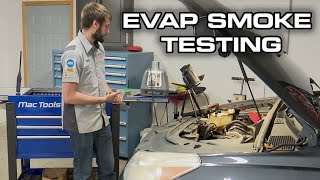
- If no visual faults are found, the most effective diagnostic step is a smoke test. A mechanic will introduce pressurized smoke into the EVAP service port. 🎬 See how a professional mechanic performs an EVAP smoke test. Smoke will escape from the location of the leak, making it easy to pinpoint whether it's a hose, valve, canister, or the fuel tank itself.
- While the smoke test is running, use a scan tool to command the vent and purge valves to close and open to verify their operation and check for leaks.
- If a valve is suspected, it can be removed and tested. The purge valve (on the engine) should be closed with no power; try blowing through it. The vent valve (by the tank) is normally open and requires a scan tool to command it closed for testing.
Technical Service Bulletins (TSBs) & Recalls
- TSB Bulletin #21-NA-124: This bulletin provides specific diagnostic tips and steps for testing for possible EVAP leaks in the system to correct customer concerns where the Malfunction Indicator Lamp (MIL) is illuminated with DTCs P0442 and/or P0455 set.
- TSB Bulletin #PIT4943D: This bulletin addresses vehicles with a Service Engine Soon lamp and DTC P0442. It directs technicians to review specialized procedures for "Using the Evaporative Emissions System Tester" to accurately locate the leak.
Parts You'll Likely Need
- Fuel Cap
(OEM #ACDelco GT261 (or GT330) for 1999-2002 plastic tanks; different part for 1998 metal tank.)— This is the most frequent cause of a P0442 code due to the rubber seal wearing out over time.
Trusted brands: ACDelco, Stant
OEM price range: $20-$35
Aftermarket price range: $15-$25 - EVAP Canister Purge Solenoid Valve
(OEM #ACDelco 214-641 (GM 12581282))— This valve cycles often and can fail by sticking slightly open, creating a small leak. It's located on the intake manifold for easy replacement.
Trusted brands: ACDelco, Delphi, Dorman
OEM price range: $40-$60
Aftermarket price range: $25-$50 - EVAP Canister Vent Solenoid Valve
(OEM #ACDelco 214-2308 (for 1999-2002); ACDelco 214-2149 (for 1998).)— Its location near the rear of the car makes it susceptible to dirt and moisture, which can cause it to fail to seal correctly.
Trusted brands: ACDelco, Dorman
OEM price range: $50-$80
Aftermarket price range: $30-$50
Related Codes That Often Appear With This One
- P0455 — Indicates a large EVAP leak. If you see both, it could mean there are multiple leaks or a component has failed significantly. A loose gas cap is a common cause for P0455.
- P0440 — This is a general EVAP system malfunction code. P0442 is a more specific code indicating the nature of the fault (a small leak).
- P0446 — Indicates a fault in the EVAP vent control circuit. If the vent solenoid is the root cause of the P0442 leak, it may eventually trigger a circuit code as well.
Platform-Specific Known Issues
- Owner Experience: The Diagnostic Chase: A common story on forums like LS1Tech involves an owner first replacing the gas cap for a P0442 code. When the light returns, they take the car for a smoke test. One user reported that after replacing the cap, a smoke test revealed no leaks. The shop suspected a failing fuel pump or a bad seal, but the issue ended up being an intermittent problem that was difficult to replicate. This highlights that while the common causes are probable, intermittent electrical issues or very small leaks may not be found with a single test.
Mechanic-Grade Diagnostic Values
- EVAP Vent Solenoid Coil Resistance — expected: 20-24 Ω. Failure: A reading outside this range, or an open circuit (O.L.), indicates a faulty solenoid coil.
- EVAP Vent Solenoid Control Circuit Voltage (at ECM) — expected: Between 2.6V and 4.6V when the solenoid is commanded OFF.. Failure: Voltage less than 2.6V when commanded OFF suggests a short to ground or a faulty driver in the ECM.
Scan Tool Commands That Help
- Tech 2 / GDS2: EVAP Service Bay Test — This is a comprehensive, automated test to verify a repair or force the EVAP monitor to run without extensive driving. It commands the solenoids and monitors the pressure sensor to confirm system integrity. Note: This function may be disabled on 2001-2002 models.
- Tech 2 / GDS2 / Bi-directional Scanner: EVAP Purge/Seal — This function allows the technician to manually command the vent solenoid closed to seal the system for a smoke test, and then command the purge solenoid to apply vacuum, verifying individual component function.
- Tech 2 / GDS2 / Bi-directional Scanner: EVAP Vent Solenoid ON/OFF — Used to individually test the vent solenoid. Command it closed (ON) and introduce smoke; if smoke escapes the vent, the solenoid is bad. Also used to check for voltage at the solenoid connector while commanding it.
Wiring & Ground Locations
- EVAP Purge Solenoid Control — For 1999-2002 models, this is the Dark Green/White wire at Pin 34 of the BLUE PCM connector.. This is the wire the PCM uses to ground-side switch the purge solenoid. A break or short in this wire can prevent the valve from operating correctly, causing a leak or system malfunction.
- EVAP Vent Solenoid Control — For 1999-2002 models, this is the White wire at Pin 45 of the BLUE PCM connector.. This wire is used by the PCM to command the normally-open vent solenoid closed to seal the system for testing. A fault here will prevent the system from sealing, causing the leak test to fail.
- PCM Grounds — The primary PCM grounds are located at Pins 1 and 40 of both the RED and BLUE PCM connectors. These wires are physically grounded to the back of the engine's cylinder heads.. A poor ground connection at the cylinder head can cause erratic behavior in the PCM and its controlled components, including the EVAP solenoids, leading to false codes or intermittent operation.
Real Owner Repair Stories
- LS1Tech Forum user 'Carlos01SS' (2001 Chevrolet Camaro SS) — P0442 code and engine sputtering when warm.
❌ Tried (didn't work) Replacing the gas cap.
✅ What actually fixed it A smoke test revealed the leak was from a valve located above the gas tank. The exhaust had to be partially removed and the fuel tank dropped to access and replace the faulty valve, which resolved the P0442 code. - LS1Tech Forum user 'WS6FirebirdTA00' (LS1-powered Pontiac Firebird (similar to Camaro)) — Intermittent P0442 code, sometimes appearing after a cold start.
❌ Tried (didn't work) Considering swapping parts with a friend's car to diagnose.
✅ What actually fixed it A friend with the same code had the issue resolved by a shop that found a leak in the plastic fuel filler tube and sealed it with epoxy. The repair was done at no charge as it may have been caused by a recent fuel pump replacement.
"I Checked Everything" — The Actual Cause
- In a detailed forum thread, an owner experienced a P0442 code accompanied by the engine stalling and being difficult to restart for a period of time. A smoke test of the EVAP system showed no leaks. A master tech suggested the EVAP system malfunction was preventing the fuel tank from venting properly as fuel was consumed, creating a strong vacuum that the fuel pump could not overcome. The suggested on-the-spot diagnosis was to immediately remove the gas cap the next time it stalled to see if a large whoosh of air entering the tank was heard.
OEM Part Supersession History
ACDelco 214-641 / GM 12581282 (Purge Solenoid)→GM 12735398— Standard part evolution for improved reliability or manufacturing changes.
Heads up: The new part number is the correct service replacement for the original.
Model Year Variations Within This Range
- 1998 vs. 1999-2002: The 1998 model uses a metal fuel tank, while 1999-2002 models use a plastic tank. This results in different gas caps, fuel filler necks, EVAP line materials, and a different location and part number for the charcoal canister and EVAP vent solenoid. The 1998 vent solenoid is ACDelco 214-2149, while the 1999-2002 part is ACDelco 214-2308.
- 1998 vs. 1999-2002: The PCM pinouts are different. For example, on a '98, the Fuel Tank Pressure signal is on pin 52. On a '99-02, the purge control is on Blue 34 and vent control is on Blue 45. Technicians must use the correct diagram for the vehicle's model year.
- 2001-2002: A GM service bulletin indicates that the "Service Bay Test" function on the Tech 2 scan tool was disabled for 2001-2002 Camaros, requiring technicians to use a different verification procedure to confirm EVAP repairs.
Diagnostic Flowchart
Other Known Issues on This Vehicle
Issues unrelated to this code that are worth knowing about as an owner of this generation:
- Optispark Distributor Failure (1993-1997 LT1) 🔴 High — Very common. The distributor is located under the water pump, and coolant leaks often drip directly onto it, causing failure. Symptoms include misfiring, hesitation, stalling when hot, and no-start conditions.
- Power Window Motor Failure 🟠 Medium — Extremely common across all 4th-gen years. The motors are weak and fail frequently, causing the window to become slow, get stuck, or stop working entirely. Replacement is complicated by a riveted design.
- Cracked Interior Door Panels & Bubbling Dashboard 🟡 Low — Very common due to age and sun exposure. The plastic door panels near the window switches are prone to cracking, and the top dashboard pad often develops bubbles or warps.
- High Oil Consumption (1998-2002 LS1) 🟠 Medium — A known issue, particularly in early LS1s, related to piston ring design. Some consumption is considered normal by GM, but excessive amounts can occur. An updated PCV system from the LS6 engine is a common owner upgrade to help mitigate this. (Ref: GM issued a TSB for 1999-2002 models addressing high oil consumption related to piston rings.)
- Failing Low Coolant Level Sensor 🟡 Low — The sensor, located on the radiator, frequently fails and causes the 'LOW COOLANT' light to illuminate on the dash even when the coolant level is correct.
Used vs. New Parts: Buying Guide for This Vehicle
When a used part is the smart pick: For this repair, using used parts is generally not recommended. The primary failure components (solenoids, gas cap seal, hoses) are wear items. A used part may have limited remaining life or carry the same intermittent fault you are trying to fix. Structural parts like mounting brackets are acceptable if needed.
Donor-vehicle mileage cap: roughly under 80000 miles for the part to have meaningful remaining life.
What to inspect on the donor part:
- For a solenoid, ensure there is no visible corrosion on the electrical terminals.
- For a charcoal canister, there should be no rattling sounds when shaken and no smell of raw fuel, which indicates it's saturated and ruined.
- For hoses, they should be pliable and free of any visible cracks or hardening.
OEM-only on this vehicle (don't cheap out):
- Gas Cap: Aftermarket gas caps are a frequent source of incorrect sealing issues, often causing a P0442 code by themselves. Sticking with an OEM ACDelco cap is highly recommended.
- Charcoal Canister: This part can be ruined by fuel over-filling, a condition not visible externally. A used canister is a significant gamble, as it may be saturated with fuel and cause immediate or future EVAP codes.
Aftermarket brands forum-validated for this vehicle:
- ACDelco (OEM Supplier)
- Delphi
Brands owners have reported issues with on this vehicle:
- Dorman: While they offer many of these parts, forum discussions occasionally mention fitment or quality control issues with Dorman products in general, suggesting caution.
- Unbranded / 'White-box' parts: Quality and correct sealing performance are not guaranteed and can lead to a repeat failure.
Real Owner Stories
Aggregated from forums and TSBs cited above. Mileages and costs reflect what owners reported in those sources.
2002 Chevrolet Camaro LS1
Symptoms: Check engine light for P0442. Owner replaced the gas cap, but the light returned. A subsequent smoke test revealed no leaks, suggesting an intermittent problem or a difficult-to-replicate seal issue.
What fixed it: The source describes this as a 'diagnostic chase' where the issue remained intermittent even after a smoke test and gas cap replacement.
Source hint: LS1TECH - P0442...help! (2006-11-03) and vehicle_specific_issues: 'The Diagnostic Chase'
1993-2002 Chevrolet Camaro
Symptoms: P0442 code present alongside a stalling issue where the car suddenly died while traveling at 45 MPH.
What fixed it: A smoke test was performed but found no leaks, illustrating a difficult diagnosis where the EVAP code may be present with other driveability symptoms.
Source hint: LS1TECH - P0442 and Car suddenly died while doing 45 MPH (2023-02-15)
1993-2002 Chevrolet Camaro
Symptoms: Code P0442; owner took the vehicle to a shop for a smoke test which failed to find a leak.
What fixed it: The next diagnostic step recommended was to drop the fuel tank to inspect the fuel pump seal.
Source hint: Camaro Forums - Code p0442 (2013-06-29)
Related OBD-II Codes
Frequently Asked Questions
Can I use the same gas cap for my 1998 Camaro as the one for a 2000 model?
Where is the EVAP purge solenoid located on my 4th-gen Camaro?
Is there a specific brand of gas cap recommended for the P0442 code on this vehicle?
How do I test the EVAP vent valve located near the rear fuel tank?
Are there any TSBs for the 1999-2002 Camaro that might be related to engine performance issues found alongside EVAP codes?
What is a common failure point for EVAP hoses in the Camaro engine bay?
Helpful Videos
We Have This Part in Stock


The information in this article is provided for general reference and educational purposes only. Vehicle specifications, procedures, and part compatibility can vary by production date, trim level, and region. Always consult your vehicle's factory service manual and verify part numbers before purchasing or performing repairs. Safety-critical components such as airbags, seat belts, and braking systems should be installed by a qualified professional.
- Chevrolet Camaro:
- 🧭 Diagnostic Flowchart
- 🎬 Helpful Videos
- 🛍️ Shop This Part
- What's Unique About the 1993-2002 Chevrolet Camaro
- Symptoms You May Notice
- Most Likely Causes
- Rare But Worth Checking
- Diagnosis Steps
- Technical Service Bulletins (TSBs) & Recalls
- Parts You'll Likely Need
- Related Codes That Often Appear With This One
- Platform-Specific Known Issues
- Mechanic-Grade Diagnostic Values
- Scan Tool Commands That Help
- Wiring & Ground Locations
- Real Owner Repair Stories
- "I Checked Everything" — The Actual Cause
- OEM Part Supersession History
- Model Year Variations Within This Range
- Other Known Issues on This Vehicle
- Used vs. New Parts: Buying Guide for This Vehicle
- Real Owner Stories
- 2002 Chevrolet Camaro LS1
- 1993-2002 Chevrolet Camaro
- 1993-2002 Chevrolet Camaro
- Related OBD-II Codes
- Frequently Asked Questions
- 🎟️ Get 5% Off