

P0442 on 2006-2010 Hummer H3: EVAP Small Leak Causes and Fixes
On a 2006-2010 Hummer H3, code P0442 is most often caused by a loose or worn-out gas cap. If a new gas cap doesn't fix it, the next most likely culprit is a faulty EVAP vent valve solenoid, located near the charcoal canister by the rear of the vehicle. Off-roading can introduce mud and debris into the system, causing this specific code.
- P0442 on your H3 means there's a small leak in the fuel vapor system.
- Always start with the simplest fix: check that your gas cap is tight. If that doesn't work, replace it with a quality OEM part.
- The second most likely cause is the EVAP vent valve solenoid, located under the truck near the spare tire, which can get clogged or fail.
- If you frequently off-road, your issue might be mud clogging the EVAP system's vent hose rather than a broken part.
- A professional smoke test is the fastest way to accurately find the leak if it's not the gas cap.
What's Unique About the 2006-2010 Hummer H3

The Hummer H3's off-road usage is a direct contributor to this code. The EVAP canister and vent solenoid are located underneath the vehicle, near the fuel tank and rear differential, making them highly susceptible to damage or clogging from mud and debris. Owners frequently report that the code appears after off-roading in muddy conditions, as muck can be sucked into the vent hose, blocking the system and causing a failed test. Additionally, a specific GM technical bulletin notes that on 2006-2007 models, an unusual ignition key cycle (turning the key to accessory instead of fully off) can occasionally trigger this code even when no leak is present.
Diagnostic Flowchart

Tap your situation to follow the diagnostic path that matches what you're seeing on this vehicle.
Symptoms You May Notice
- Check Engine Light is on
- A faint smell of fuel, especially when parked in an enclosed space like a garage
- Difficulty refueling (the gas pump nozzle clicks off repeatedly), which can indicate a clogged vent valve or canister.
- Rough idle or difficulty starting after filling the gas tank, which points towards a purge valve that is stuck open.
- Replacing the fuel tank pressure (FTP) sensor. While possible, the sensor itself failing is much less common than a simple leak elsewhere in the system. A faulty sensor would typically set its own specific codes (e.g., P0452, P0453).
Most Likely Causes


- Loose or Faulty Gas Cap 🔴 High Probability → Shop Fuel Tank Cap The gas cap is a simple wear item. Its rubber seal can crack and degrade over time, preventing a proper seal. This is the most common and cheapest starting point for a P0442 code.
How to confirm: First, ensure the cap is tightened until it clicks. Inspect the rubber O-ring on the cap for cracks, stiffness, or damage. Check the fuel filler neck for rust or debris that could prevent a seal. Some owners have reported success by applying a light coat of grease to the seal to test for full contact.
Typical fix: Replace the gas cap. This is an inexpensive and easy first step. An OEM cap is recommended.
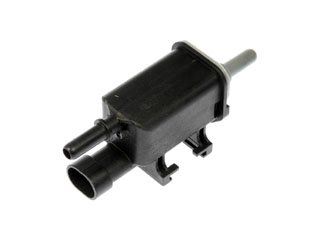
Est. part cost: $15-$30 - Failed EVAP Vent Valve Solenoid 🔴 High Probability → Shop Vapor Canister Due to its location under the vehicle near the rear differential, the vent valve is exposed to road debris, mud, and water, especially during off-roading. The valve can get stuck open or closed, or its filter can become clogged with dirt, leading to a leak code or a blockage that mimics a leak.
How to confirm: A professional would use a scan tool to command the valve closed and a smoke machine to see if smoke escapes from the valve. A DIY check involves removing the valve and attempting to blow through it; it should be open by default (allowing air to pass). Applying 12V power should cause it to click closed, preventing air from passing through. Often found with code P0449.
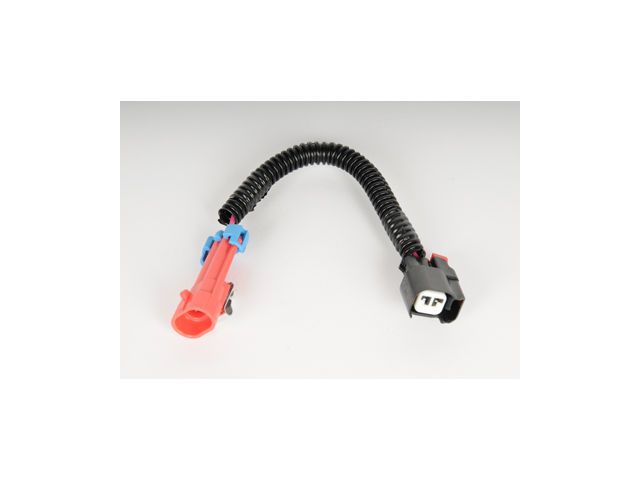
Typical fix: Replace the EVAP vent valve solenoid and its associated hose/filter assembly. The updated replacement part often requires a wiring harness adapter. 🎬 Watch: How to replace the vapor canister vent solenoid
Est. part cost: $20-$50 - Leaking EVAP Purge Valve Solenoid 🟡 Medium Probability → Shop Vapor Canister This valve is located in the engine bay, on the I5 engine it is accessed through the driver's side wheel well. On the V8 Alpha model, it is on top of the engine. It can fail over time, getting stuck slightly open and creating a small, constant vacuum leak into the engine.
How to confirm: Disconnect the vapor line from the valve that leads to the engine intake. With the engine off, try to blow through the valve; it should be normally closed and not allow air to pass. A hand vacuum pump can also be used to test if it holds vacuum. A smoke test can also confirm if it's leaking internally.
Typical fix: Replace the purge valve solenoid. On the I5 engine, this requires removing the driver's side front wheel and inner fender liner for access. 🎬 See this walkthrough for replacing the purge valve solenoid
Est. part cost: $25-$60 - Cracked or Disconnected EVAP Hoses ⚪ Low Probability The plastic and rubber hoses in the EVAP system can become brittle with age and heat cycles, leading to small cracks. The quick-disconnect fittings can also be tricky to handle and may not seat properly if disconnected and reconnected.
How to confirm: Visually inspect all accessible EVAP lines from the engine bay to the charcoal canister for obvious cracks, damage, or loose connections. A smoke test is the most effective way to find a small hose leak.
Typical fix: Replace the damaged section of hose and secure with clamps, or replace the pre-formed hose assembly.
Est. part cost: $5-$20
Rare But Worth Checking
- Cracked Charcoal Canister: → Shop Vapor Canister While not common, the plastic housing of the charcoal canister can be damaged by impacts from off-roading, causing a leak. The canister itself is expensive, so this should be confirmed with a smoke test.
- Incorrect Ignition Key Cycle: A GM service bulletin (#PIP4431) identified a rare scenario on 2006-2007 models where turning the ignition from 'ON' to 'Accessory' (without going to 'OFF' first) could falsely trigger a P0442 code. If no leak is found, the recommended fix is to advise the customer on proper key-off procedure.
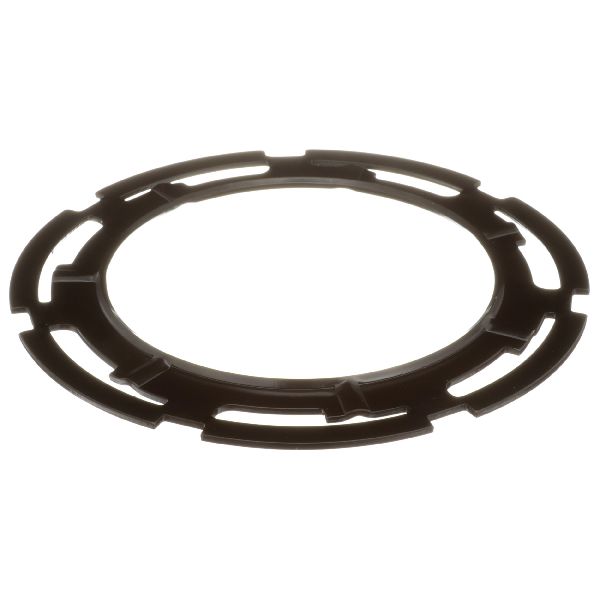
- Leaking Fuel Tank or Fuel Pump Module Seal: → Shop Fuel Pump On the related Chevrolet Colorado platform, rust on the fuel pump lock ring has been known to cause leaks at the top of the tank, which can trigger an EVAP code. While less commonly reported on the H3, it is a possibility.
Diagnosis Steps
- Check the gas cap. Remove it, inspect the seal for damage, and reinstall it, ensuring it clicks several times. Clear the code and drive for a few days to see if it returns. The EVAP monitor may take several drive cycles under specific conditions (fuel level between 1/4 and 3/4 tank) to run again.
- If the code returns, purchase a new OEM-spec gas cap. This is the cheapest and most common fix.
- Visually inspect the EVAP system components under the vehicle. The charcoal canister and vent solenoid are located near the rear differential. Look for any obvious cracks, damage from debris, or loose connections. Pay special attention to the vent hose for mud or dirt clogs, a common issue for off-roaded H3s.
- Locate and inspect the EVAP purge solenoid and its connecting hoses. On I5 models, this is in the driver's side wheel well; on V8 models, it's on top of the engine.
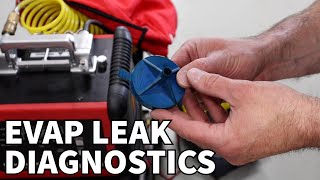
- If visual inspection reveals nothing, the most effective next step is a professional smoke test. A machine fills the EVAP system with a harmless, visible smoke under low pressure. The leak will be revealed by the escaping smoke. 🎬 Watch: How to perform a professional EVAP smoke test
- Based on the smoke test results, replace the leaking component, which could be the vent valve, purge valve, a hose, or the canister itself.
Parts You'll Likely Need
- Fuel Tank Cap
(OEM #15868887)— This is the most frequent cause of a P0442 code. The seal wears out over time, causing a small leak.
Trusted brands: ACDelco, Duralast
OEM price range: $20-$35
Aftermarket price range: $15-$25 - EVAP Vapor Canister Vent Valve Solenoid
(OEM #20907779)— This valve is a common failure point, often getting stuck or clogged with dirt, especially on a vehicle used off-road. Note: This updated part number supersedes older versions and requires a wiring adapter harness, part #19257603.
Trusted brands: ACDelco
OEM price range: $30-$50
Aftermarket price range: $20-$40 - EVAP Canister Purge Valve Solenoid
(OEM #12597567)— Located in the engine bay, this valve can fail and leak internally, causing a small leak detected by the system. Failure can also lead to hard starting after refueling.
Trusted brands: ACDelco, Bosch, Dorman
OEM price range: $40-$70
Aftermarket price range: $25-$50 - Vent Valve Solenoid Jumper Wiring Harness
(OEM #19257603)— Required to connect the updated EVAP Vent Valve Solenoid (20907779) to the original vehicle harness.
Trusted brands: ACDelco
OEM price range: $15-$25
Aftermarket price range: $10-$20
Related Codes That Often Appear With This One
- P0455 — P0455 indicates a large EVAP leak. If a small leak (P0442) gets worse, or if the gas cap is left off, it can trigger the large leak code. They often share the same root causes and diagnostic procedures.
- P0449 — P0449 specifically points to a fault in the EVAP vent valve solenoid circuit. If you see P0442 and P0449 together, it's a very strong indicator that the vent valve or its wiring is the problem.
Technical Service Bulletins (TSBs) & Recalls
- PIT4943D: Mentions that diagnosing P0442 requires following a specific Techlink article and using an Evaporative Emissions System Tester.
- PIP4431: Describes a rare condition on 2006-2007 models where turning the key to accessory instead of off can induce a P0442 code without a real leak. The bulletin advises technicians to interview the customer about their key-off habits if no leak is found through standard diagnosis.
Platform-Specific Known Issues
- The EVAP vent system's air intake can become clogged with mud or dirt during off-road use, preventing the system from performing its self-test correctly and setting a P0442 code. Owners report needing to clean out the vent hose or filter.
Mechanic-Grade Diagnostic Values
- EVAP System Test Pressure — expected: Must not exceed 13 in H2O (0.5 PSI). Failure: Exceeding this pressure can damage components and lead to misdiagnosis.
- EVAP System Leak Threshold — expected: System should not show a leak greater than what is equivalent to a 0.020 in (0.51 mm) orifice.. Failure: A flow rate indicating a leak larger than 0.020 inches will set DTC P0442.
- EVAP Vent Solenoid Voltage Supply — expected: Test lamp illuminates between the voltage supply circuit (Terminal A) and ground with ignition ON.. Failure: If the test lamp does not illuminate, there is an open/high resistance in the circuit or a blown fuse (check fuse 31 in underhood block).
Scan Tool Commands That Help
- Tech 2 / GDS2: EVAP Service Bay Test — This is a guided functional test to verify the integrity of the entire EVAP system. It commands the vent and purge solenoids to seal the system and monitors for pressure changes, simulating the vehicle's self-test. It can be used to confirm a leak exists before smoke testing or to verify a repair is successful.
- Tech 2 / GDS2: Purge/Seal — This function allows a technician to manually command the vent solenoid closed to seal the system. It is used during smoke testing to ensure the system is closed and for observing the Fuel Tank Pressure (FTP) sensor for vacuum decay to identify intermittent leaks that don't show up with a smoke test.
Wiring & Ground Locations
- EVAP System Fuse — Fuse #31 in the underhood fuse block (above left front wheelwell).. This fuse supplies power to the EVAP vent valve solenoid. If it's blown, the solenoid won't operate, which can lead to various EVAP codes, including P0449, which is often seen with P0442.
- G105 — On the left inner front wheelwell, behind the battery.. This is a primary engine bay ground point. A poor connection here can cause erratic behavior in various components, including those in the EVAP system.
- Rear Frame Ground — On the rear crossmember of the frame.. The fuel pump and potentially other rear-mounted components, including the EVAP canister assembly, may use this ground point. Corrosion or a loose connection here could affect the EVAP vent solenoid's operation.
- EVAP Service Port — A green-capped port on the EVAP purge line, typically located in the engine compartment near the purge solenoid.. This is the dedicated connection point for introducing smoke from a diagnostic smoke machine (like the GM-specified GE-41413-A) into the EVAP system for leak testing.
Real Owner Repair Stories
- Schwarttzy.com blog post (2006 Hummer H3) — Check Engine Light with codes P0455 (gross leak) and P0442 (small leak) appearing after off-roading.
❌ Tried (didn't work) Replacing the gas cap (ACDelco P/N 25827646). The light returned after about 2,000 miles.
✅ What actually fixed it The owner ultimately replaced the EVAP Vapor Canister Vent Hose assembly (ACDelco P/N 20907779) along with the required jumper wiring harness (ACDelco P/N 19257603), which resolved the codes. - Hummer4x4Offroad.com forum user (Hummer H3 (year not specified)) — P0442 code.
❌ Tried (didn't work) Initial diagnosis was inconclusive.
✅ What actually fixed it The user discovered that mud and muck had been ingested into the EVAP system's air intake/vent hose during off-roading. This blockage prevented the system from drawing in air to perform its vacuum test, which the computer interpreted as a leak. Cleaning the mud out of the vent hose and filter area resolved the code.
"I Checked Everything" — The Actual Cause
- According to GM TSB PIT4943D, a leak may only exist under a vacuum condition and not be visible during a standard positive-pressure smoke test. In this scenario, the recommended procedure is to use a scan tool's 'Purge/Seal' function to create a vacuum in the EVAP system and then monitor the Fuel Tank Pressure (FTP) sensor for vacuum decay. If the vacuum decays, it confirms a leak. The bulletin suggests this can expose an intermittent leak in the purge solenoid itself, which can be confirmed by removing the solenoid and smoke testing it directly while it is not energized.
OEM Part Supersession History
Various older vent valve solenoids→ACDelco 20907779— Updated design for improved durability and performance.
Heads up: The updated vent valve solenoid (20907779) has a different electrical connector than the original factory part. Installation requires an adapter jumper harness, ACDelco P/N 19257603, to connect to the vehicle's wiring.
Model Year Variations Within This Range
- 2008-2010 (V8 Alpha Models): On the 5.3L V8 engine, the EVAP purge solenoid is located on top of the engine near the rear of the intake manifold, making it more accessible than on the I5 engine. On the 3.5L/3.7L I5 engine, the purge solenoid is located on the driver's side, accessed through the wheel well.
Helpful Videos
Used OEM Parts in Stock
New Aftermarket Parts Available


The information in this article is provided for general reference and educational purposes only. Vehicle specifications, procedures, and part compatibility can vary by production date, trim level, and region. Always consult your vehicle's factory service manual and verify part numbers before purchasing or performing repairs. Safety-critical components such as airbags, seat belts, and braking systems should be installed by a qualified professional.
- Hummer H3:
- 🧭 Diagnostic Flowchart
- 🎬 Helpful Videos
- 🛍️ Shop This Part
- What's Unique About the 2006-2010 Hummer H3
- Symptoms You May Notice
- Most Likely Causes
- Rare But Worth Checking
- Diagnosis Steps
- Parts You'll Likely Need
- Related Codes That Often Appear With This One
- Technical Service Bulletins (TSBs) & Recalls
- Platform-Specific Known Issues
- Mechanic-Grade Diagnostic Values
- Scan Tool Commands That Help
- Wiring & Ground Locations
- Real Owner Repair Stories
- "I Checked Everything" — The Actual Cause
- OEM Part Supersession History
- Model Year Variations Within This Range
- 🎟️ Get 5% Off