

P0442 on 2010-2015 Hyundai Tucson: EVAP Small Leak Causes and Fixes
For a 2010-2015 Hyundai Tucson, a P0442 code is most often caused by a loose gas cap or a failing canister purge valve in the engine bay. Always check that the gas cap is tight and its seal is intact before buying any parts. In regions where road salt is used, a rusted fuel filler neck is also a common cause.
- Always check the gas cap first. Make sure it's tight and the seal is not cracked. This is the most common and cheapest fix.
- If the gas cap is okay, the next most likely culprit is the canister purge valve located in the engine bay. It's a relatively inexpensive part and easy to replace.
- A symptom of a bad purge valve can be difficulty starting the car right after you get gas.
- If you can't find a visual problem, a smoke test by a professional is the fastest way to find the leak and avoid replacing parts that are not broken.
What's Unique About the 2010-2015 Hyundai Tucson
For the second-generation Hyundai Tucson, the P0442 code follows a familiar pattern seen across many Hyundai and Kia vehicles of this era. The primary culprits are often the most accessible components. While any part of the EVAP system can fail, owners and mechanics frequently find the issue is either a simple worn gas cap seal or a faulty canister purge valve located in the engine compartment. Unlike some other vehicles where the canister close valve is more prone to failure, on the Tucson, starting the diagnosis at the front of the vehicle with the purge valve is often the most efficient path after checking the gas cap. The platform mate, the Kia Sportage, shares these exact failure patterns.
🎬 Watch: A quick 3-minute guide to fixing Kia Sportage EVAP leaks.Symptoms You May Notice
- Check Engine Light is on
- A faint fuel smell near the vehicle, particularly around the gas cap or rear wheel well.
- Slight decrease in fuel economy
- Difficulty starting the engine immediately after refueling (if the purge valve is stuck open)
- A 'loose gas cap' warning message on the dashboard, if equipped.
- Replacing the O2 sensor.
- Replacing the charcoal canister before performing a smoke test to confirm it's the source of the leak.
Most Likely Causes
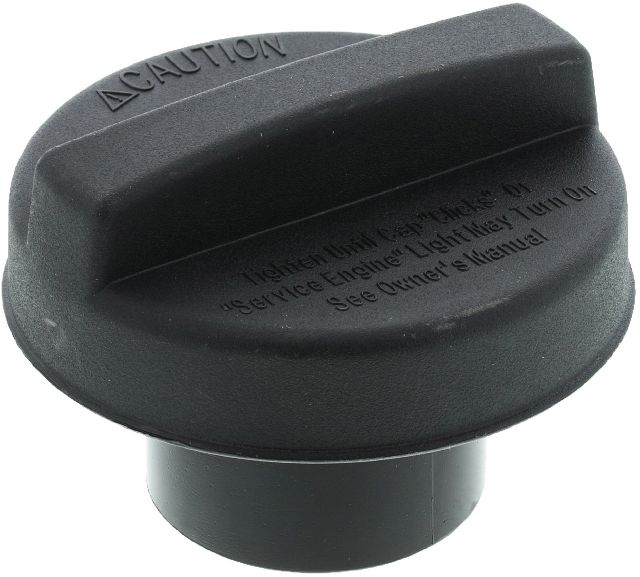
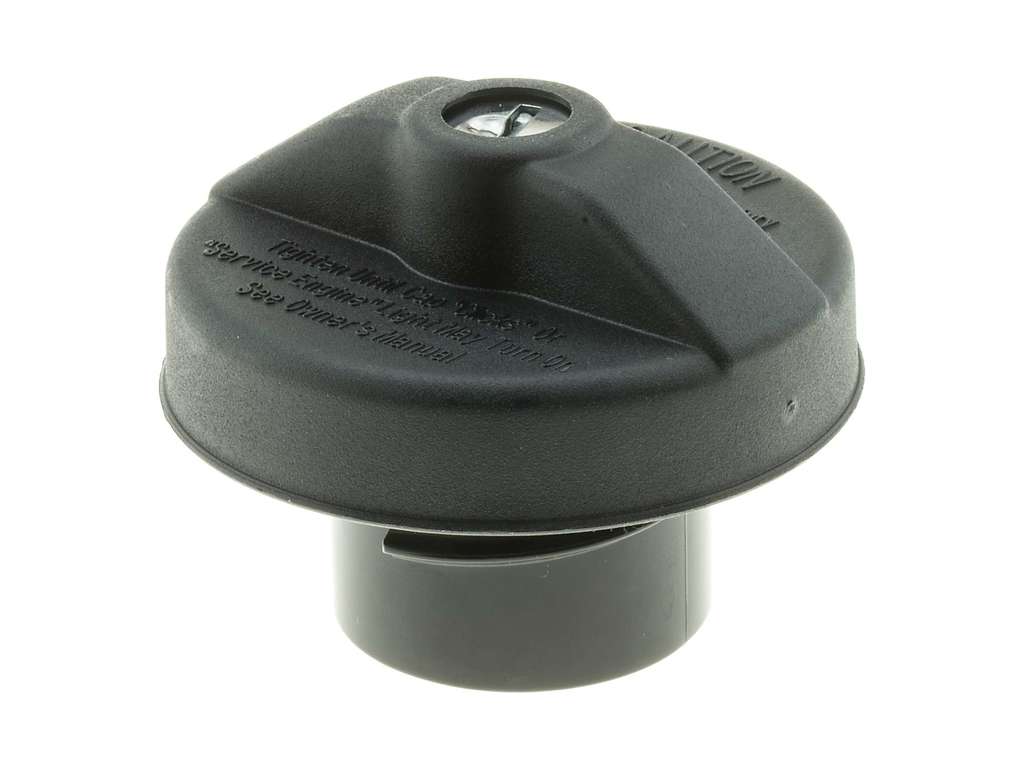
- Loose or Faulty Gas Cap 🔴 High Probability → Shop Fuel Tank Cap The gas cap seal is a simple rubber O-ring that degrades and cracks over time due to age and exposure to fuel vapors. This is the most common cause for any EVAP leak code on any vehicle.
How to confirm: Remove the gas cap and inspect the rubber seal for cracks, stiffness, or any signs of damage. Ensure the cap clicks several times when tightened. 🎬 See these two simple DIY methods to fix a P0442 code. Clean the filler neck surface and the cap seal.
Typical fix: If the seal is damaged or the cap doesn't click, replace the gas cap. It is highly recommended to use an OEM (Original Equipment Manufacturer) cap from Hyundai, as aftermarket caps can sometimes have sealing issues. Manufacturer Bulletin #5NPY6N5B02 notes that the fuel filler cap seal may fail to provide proper sealing, triggering the P0442 small leak code.
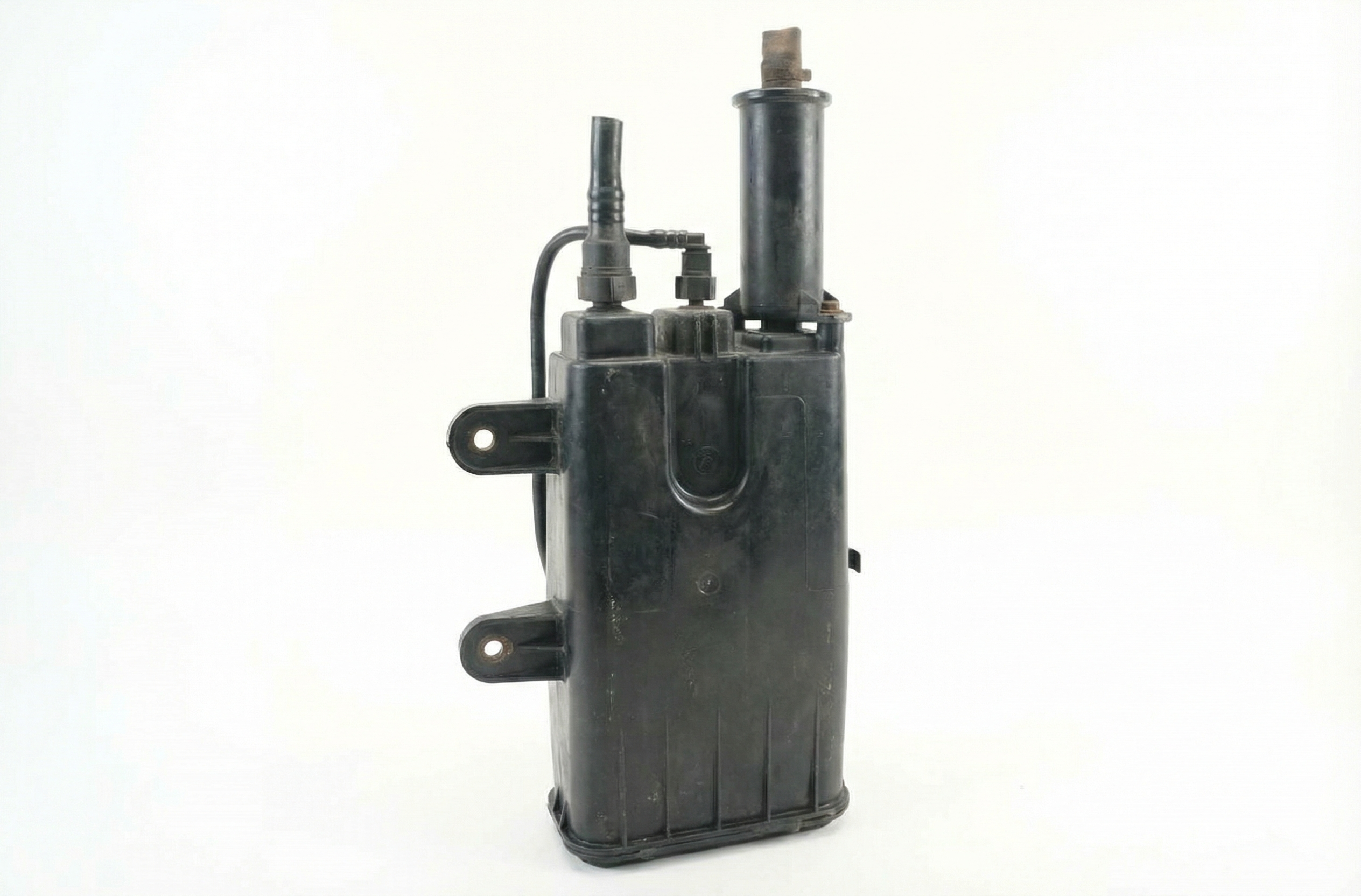
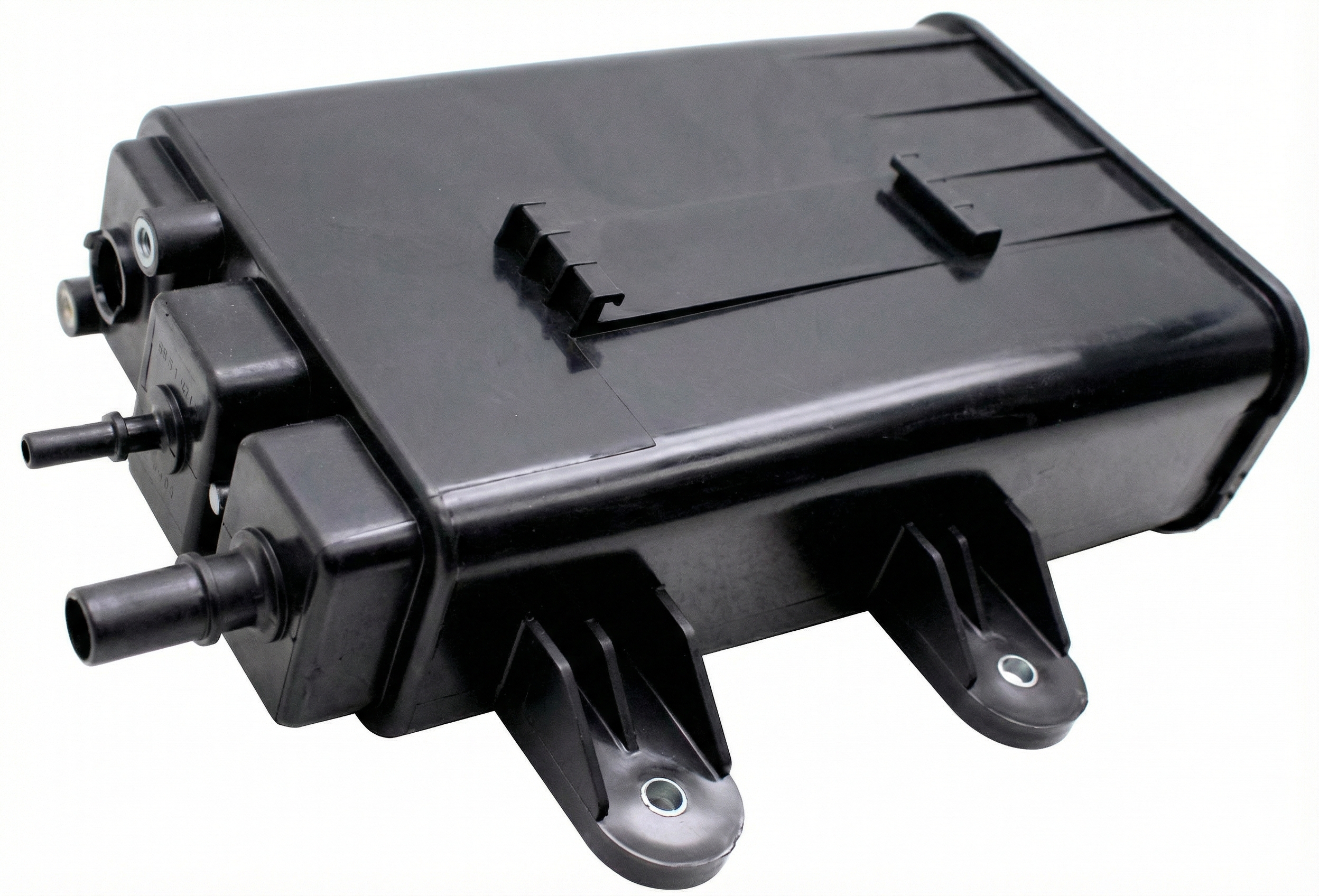
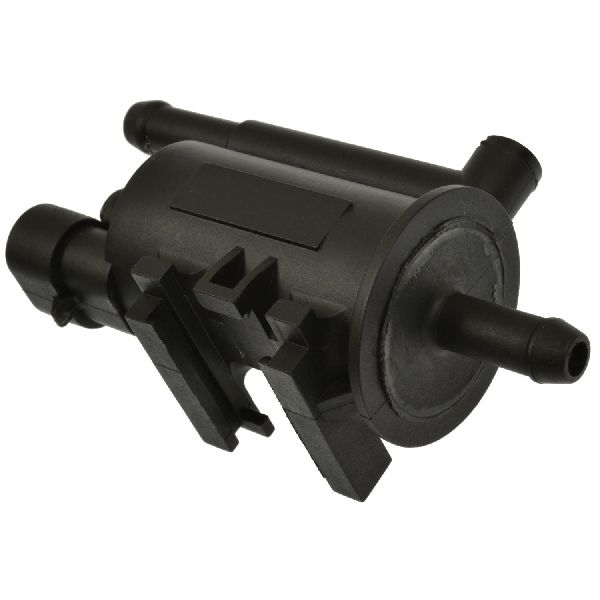
Est. part cost: $15-$40 - Faulty Canister Purge Valve / Solenoid (PCSV) 🟡 Medium Probability → Shop Vapor Canister This valve is a common failure point on many Hyundai models. It operates frequently and can become stuck open or closed, or develop an internal leak over time.
How to confirm: The purge valve is located in the engine bay, connected to the intake manifold. A key symptom of it being stuck open is difficulty starting after filling the gas tank. To test, disconnect the valve with the engine off and try to blow through it; it should be closed (no air passes). If you can blow through it, it's faulty and stuck open. Alternatively, with the engine running, feel for vacuum at the port; if it's pulling a vacuum at idle, it's stuck open.
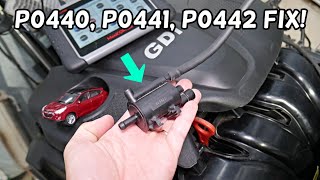
Typical fix: Replace the canister purge valve. 🎬 Watch: This video shows how to fix the purge control valve. This is generally an easy DIY job involving disconnecting two hoses and an electrical connector.
Est. part cost: $40-$85 - Cracked or Disconnected EVAP Hoses 🟡 Medium Probability The rubber and plastic hoses in the EVAP system can become brittle and crack with age and exposure to engine heat, particularly the hoses connected to the purge valve in the engine bay.
How to confirm: Visually inspect all accessible EVAP lines, starting from the purge valve in the engine bay and working your way back. Look for any obvious cracks, splits, or loose connections. A professional smoke test is the most definitive way to find a hard-to-see leak.
Typical fix: Replace the damaged section of hose. In many cases, you can use a universal vacuum hose of the correct diameter, or purchase a pre-formed OEM hose.
Est. part cost: $5-$50 - Faulty Canister Close Valve (CCV) / Vent Valve ⚪ Low Probability → Shop Vapor Canister This valve is located at the rear of the vehicle near the charcoal canister. It can get stuck or fail due to exposure to road debris and moisture, though it's reported as a less frequent cause for P0442 on this model compared to the purge valve.
How to confirm: The valve should be normally open and close only when commanded by the ECM during a test. It can be tested with a scan tool that can command it to close, or by applying 12V voltage to it directly. A smoke test will quickly reveal if this valve is failing to seal when commanded closed.
Typical fix: Replace the canister close valve. It is typically mounted on or near the charcoal canister.
Est. part cost: $40-$120
Rare But Worth Checking
- Cracked Charcoal Canister: → Shop Vapor Canister While not a common cause for a *small* leak, a hairline crack can develop in the plastic housing of the canister itself. This is usually found only with a smoke test after all other components have been checked. Replacement can be expensive.
- Leaking Fuel Tank Filler Neck: → Shop Fuel Tank In 'salt belt' regions, rust or corrosion on the filler neck where the gas cap seals can prevent a proper seal, even with a new cap. A smoke test will often show smoke escaping from the rusted area. Ensure this surface is clean and smooth.
Technical Service Bulletins (TSBs) & Recalls
While the Tucson shares many components with other Hyundai models, several manufacturer bulletins highlight the recurring nature of the P0442 code across the brand's lineup:
- Bulletin #21-01-035H notes that certain Hyundai vehicles may experience check engine light illumination with EVAP leakage codes P0442, P0455, or P0456, particularly in coastal areas.
- Bulletin #5NP-Z2J3V-04 confirms that several models in the Hyundai family frequently store P0442 (Small Leak) alongside P0455 and P0456 codes.
Diagnosis Steps
- Check the Gas Cap: Remove the gas cap, inspect the seal for cracks, and ensure the filler neck is clean. Tighten it until it clicks at least three times. Clear the code and drive for a few days to see if it returns.
- Inspect Engine Bay Hoses: Open the hood and locate the canister purge valve on or near the intake manifold. Carefully inspect the rubber and plastic hoses connected to it for any visible cracks or loose fittings.
- Test the Purge Valve: With the engine off, disconnect the hoses from the purge valve. Try to blow through it. If air passes through, the valve is stuck open and must be replaced.
- Inspect Underbody Components: If the above steps don't reveal the issue, safely raise the vehicle and inspect the hoses running to the charcoal canister and the canister close valve, which are located near the fuel tank.
- Perform a Smoke Test: If the leak is not visually apparent, the most effective method for finding it is a professional smoke test. This involves injecting a harmless, visible smoke into the EVAP system and watching where it escapes. This will pinpoint the exact source of the leak, whether it's a hose, valve, filler neck, or the canister itself.
Parts You'll Likely Need
- Gas Cap
(OEM #31010-3L600)— This is the most common and simplest fix. The seal wears out over time, causing a leak.
Trusted brands: Hyundai (OEM)
OEM price range: $20-$40
Aftermarket price range: $15-$30 - Canister Purge Valve / Solenoid
(OEM #28910-25100)— A very common failure point on Hyundai vehicles that causes a small leak or incorrect purge flow. Often gets stuck open or closed.
Trusted brands: Bosch, Dorman, Standard Motor Products
OEM price range: $60-$85
Aftermarket price range: $40-$70 - Canister Close Valve / Vent Valve
(OEM #31431-2S500)— This valve, located at the rear of the vehicle, can fail due to exposure to the elements, preventing the EVAP system from sealing properly during its self-test.
Trusted brands: Dorman, Standard Motor Products, Wells
OEM price range: $120-$170
Aftermarket price range: $40-$100
Related Codes That Often Appear With This One
- P0456 — This code indicates a 'very small leak,' while P0442 indicates a 'small leak.' They point to the same type of problem, and which code triggers can depend on the exact size of the leak and environmental conditions. The diagnostic process is identical.
- P0441 — This code means 'Incorrect Purge Flow.' If the purge valve is stuck open or closed, it can cause both a flow code (P0441) and a leak code (P0442) at the same time.
- P0455 — This code indicates a 'large leak.' If a small leak (P0442) worsens, or if the gas cap is left completely loose, the system may register it as a large leak.
Platform-Specific Known Issues
- A user on the 2CarPros forum with a persistent P0442 found the source to be a completely rusted-out fuel filler neck, which was leaking fuel while pumping gas. Replacing the filler neck resolved both the fuel leak and the trouble code.
- A Reddit user in r/MechanicAdvice with a P0442 on a similar platform was advised to check the purge vacuum hoses on top of the intake manifold, as they are known to crack over time.
Mechanic-Grade Diagnostic Values
- Canister Purge Valve (PCSV) Solenoid Coil Resistance — expected: 20-30 Ω (Ohms). Failure: A reading outside 15-35 Ω, infinite resistance (open circuit), or near-zero resistance (short circuit).
- Canister Purge Valve (PCSV) Connector Power Pin Voltage — expected: Battery Voltage (~11-14 V) with Key On, Engine Off.. Failure: No voltage suggests a blown fuse (such as the 'SENSOR 1' 10A fuse) or a break in the power supply wire from the engine room fuse box.
- Fuel Tank Pressure Sensor (FTPS) Voltage with Vacuum Applied — expected: Voltage should decrease from its baseline reading as light vacuum is applied with a hand pump.. Failure: Voltage does not change, or changes erratically, when vacuum is applied. Do not apply more than a few inches of mercury (inHg) or you may damage the sensor.
Scan Tool Commands That Help
- Hyundai GDS (Global Diagnostic System) or equivalent advanced scan tool: EVAP System Leak Test (Forced Activation) — This is the primary service function to manually run the onboard EVAP leak test. The tool commands the Canister Close Valve (CCV) to shut and the Purge Valve (PCSV) to open slightly to build a vacuum, then monitors the Fuel Tank Pressure Sensor (FTPS) for decay. This confirms if a leak is present without waiting for a full drive cycle.
- Hyundai GDS (Global Diagnostic System) or equivalent advanced scan tool: Actuation Test: Purge Solenoid Valve — This command allows the technician to cycle the PCSV on and off while the engine is running. You should hear an audible clicking from the valve, and see a corresponding change in short-term fuel trim on the live data screen, confirming the valve is mechanically and electrically responding.
- Hyundai GDS (Global Diagnostic System) or equivalent advanced scan tool: Actuation Test: Canister Close Valve — Used to command the CCV (Vent Valve) closed. This is essential before performing a smoke test to ensure the system is sealed. If smoke immediately exits the vent, the CCV has failed to close and is faulty.
Wiring & Ground Locations
- Canister Purge Control Solenoid Valve (PCSV) — In the engine bay, mounted on or near the intake manifold. It has two hoses and one electrical connector.. This is a primary failure point. The connector and its wiring are subject to engine heat and vibration, which can cause breaks or corrosion leading to circuit codes or intermittent operation.
- Ghg01 (Ground) — Located on the left front of the engine compartment, near the inner fender.. This is a major ground point for the engine management system. A loose or corroded connection here can cause erratic behavior from multiple sensors, including those in the EVAP system, potentially leading to false codes.
- Canister Close Valve (CCV) — At the rear of the vehicle, mounted on or near the charcoal canister, which is under the rear floor area.. The CCV and its connector are exposed to road salt, water, and debris, making them highly susceptible to corrosion and physical damage, which can prevent the valve from sealing the system for the leak test.
- Fuel Tank Pressure Sensor (FTPS) — Mounted on top of the fuel pump assembly, accessible by removing the rear seat bottom cushion and an access panel.. This sensor is what reports the leak to the ECM. While less common to fail than valves, a faulty sensor or wiring issue can trick the ECM into thinking there is a leak when there isn't one.
Real Owner Repair Stories
- YouTube video by 'P0442 Where Leaks Happen & Easy Common Fixes' (Older vehicle, likely in a salt-belt region) — P0442 Check Engine Light
❌ Tried (didn't work) Initial assumption was a bad gas cap.
✅ What actually fixed it The fuel filler neck was rusted where the gas cap seal makes contact. The technician cleaned the rust off the filler neck with a wire brush to create a smooth sealing surface, which resolved the leak and the code. - NHTSA ODI #11170436 describes a situation where an owner struggled for two years to resolve a P0442 code, having changed the gas cap twice and the purge valve without success, highlighting how difficult these small leaks can be to locate.
- NHTSA ODI #11570498 reports an owner experiencing a check engine light where common codes including P0442 and P0401 were found stored.
OEM Part Supersession History
28910-3C200→28910-25100— Part consolidation and potential design update for reliability across multiple Hyundai/Kia platforms.
Model Year Variations Within This Range
- 2014-2015: The 2014 model year introduced a mid-cycle refresh with updated engines (Nu GDI and Theta II GDI). While the fundamental EVAP system design is the same, some part numbers for valves and sensors may differ slightly. For example, some 2015 models list a different purge valve (28910-2E000) for specific trims. Always verify the part number with the vehicle's VIN.
Diagnostic Flowchart
Other Known Issues on This Vehicle
Issues unrelated to this code that are worth knowing about as an owner of this generation:
- Theta II Engine Failure 🔴 High — Widespread across 2.0L and 2.4L engines from this era. Caused by manufacturing debris leading to connecting rod bearing failure, oil consumption, and potential engine seizure. A class-action lawsuit was settled over this issue. (Ref: Multiple recalls and a knock sensor detection system software update were issued to mitigate the problem.)
- ABS Module Fire Risk 🔴 High — Affects a wide range of Hyundai models from this period, including the 2010-2013 Tucson. The ABS module can leak brake fluid internally, causing an electrical short and potential fire, even when the vehicle is parked. (Ref: Recall 251 (NHTSA Campaign 23V651000). The remedy involves replacing the ABS fuse. Owners were advised to park outside until the repair was completed.)
- Excessive Oil Consumption 🟠 Medium — Related to the Theta II engine issues, many owners report significant oil consumption between changes, which can lead to engine damage if not monitored closely. (Ref: While not a specific recall, it is a well-documented symptom of the larger engine problems.)
- Malfunctioning Stop Lamp Switch 🟠 Medium — A faulty stop lamp switch could cause the brake lights to not illuminate or prevent the deactivation of cruise control. (Ref: Recall campaign was issued to replace the faulty switch.)
- Leaking Engine Oil Pan 🟡 Low — A recall was issued for 2011-2013 models where the engine oil pan could leak. If unaddressed, the resulting loss of oil could lead to engine damage. (Ref: Recall was issued to address the potential leak.)
Used vs. New Parts: Buying Guide for This Vehicle
When a used part is the smart pick: Structural, non-electronic parts like the fuel filler neck or the plastic charcoal canister housing (if visually inspected for cracks) can be good candidates for used parts from a junkyard, especially if the donor vehicle is from a dry, non-salt-belt region.
Donor-vehicle mileage cap: roughly under 80000 miles for the part to have meaningful remaining life.
What to inspect on the donor part:
- For a fuel filler neck, check for zero rust or bubbling paint on the sealing surface and mounting points.
- For a charcoal canister, ensure there are no visible cracks on the plastic body or broken hose nipples.
- Check that electrical connectors on any component are free of green or white corrosion.
OEM-only on this vehicle (don't cheap out):
- Gas Cap: Aftermarket gas caps are a frequent source of incorrect sealing and can cause the P0442 code to persist or return. Using a genuine Hyundai OEM cap is strongly recommended as the first step.
- Fuel Tank Pressure Sensor: Given its critical role in reporting the leak and the relatively high labor to access it (under the rear seat), using an OEM sensor is advised to avoid repeat repairs due to inaccurate readings from a cheap aftermarket part.
Aftermarket brands forum-validated for this vehicle:
- Bosch (for Canister Purge Valve)
- Standard Motor Products (SMP) (for Purge and Vent Valves)
- Dorman (for various EVAP components, including valves and hoses)
Brands owners have reported issues with on this vehicle:
- Unbranded, no-name gas caps from online marketplaces are a common point of failure.
Real Owner Stories
Aggregated from forums and TSBs cited above. Mileages and costs reflect what owners reported in those sources.
2010-2015 Hyundai Tucson
Symptoms: Persistent P0442 code and fuel leaking while pumping gas.
What fixed it: Replacing a completely rusted-out fuel filler neck.
Source hint: 2CarPros forum thread regarding P0442 and fuel leak around filler neck
2010-2015 Hyundai Tucson
Symptoms: Check engine light P0442; advised to check hoses on top of the intake manifold.
What fixed it: Inspecting and replacing purge vacuum hoses that crack over time due to engine heat.
Source hint: Reddit r/MechanicAdvice
2010-2015 Hyundai Tucson
Symptoms: P0440, P0441, and P0442 codes present simultaneously.
What fixed it: EVAP purge control valve (PCSV) replacement.
Source hint: YouTube video: HYUNDAI TUCSON CODE P0440 P0441 P0442 EVAP PURGE CONTROL FIX
Related OBD-II Codes
Frequently Asked Questions
Is there a recall for the 2010-2015 Hyundai Tucson that might cause an EVAP leak or fuel smell?
My 2010 Tucson is hard to start only after I fill up the gas tank. Is this related to P0442?
Should I use an aftermarket gas cap to fix the P0442 code on my Tucson?
Where is the Canister Purge Valve located on the 2010-2015 Tucson?
I have a Kia Sportage from the same years; are the EVAP issues the same as the Tucson?
Can a rusted fuel filler neck cause the P0442 code on this model?
Helpful Videos
![How to Fix P0442 Engine Code in 3 Minutes [2 DIY Methods / Only $4.67]](https://img.youtube.com/vi/73AR8Tl6YZU/mqdefault.jpg)
![How to Fix KIA P0442 Engine Code in 3 Minutes [2 DIY Methods / Only $4.67]](https://img.youtube.com/vi/g0DfzEcXoJA/mqdefault.jpg)
Used OEM Parts in Stock
New Aftermarket Parts Available


The information in this article is provided for general reference and educational purposes only. Vehicle specifications, procedures, and part compatibility can vary by production date, trim level, and region. Always consult your vehicle's factory service manual and verify part numbers before purchasing or performing repairs. Safety-critical components such as airbags, seat belts, and braking systems should be installed by a qualified professional.
- Hyundai Tucson:
- 🧭 Diagnostic Flowchart
- 🎬 Helpful Videos
- 🛍️ Shop This Part
- What's Unique About the 2010-2015 Hyundai Tucson
- Symptoms You May Notice
- Most Likely Causes
- Rare But Worth Checking
- Technical Service Bulletins (TSBs) & Recalls
- Diagnosis Steps
- Parts You'll Likely Need
- Related Codes That Often Appear With This One
- Platform-Specific Known Issues
- Mechanic-Grade Diagnostic Values
- Scan Tool Commands That Help
- Wiring & Ground Locations
- Real Owner Repair Stories
- OEM Part Supersession History
- Model Year Variations Within This Range
- Other Known Issues on This Vehicle
- Used vs. New Parts: Buying Guide for This Vehicle
- Real Owner Stories
- 2010-2015 Hyundai Tucson
- 2010-2015 Hyundai Tucson
- 2010-2015 Hyundai Tucson
- Related OBD-II Codes
- Frequently Asked Questions
- 🎟️ Get 5% Off