

P0442 on 2009-2010 Kia Rondo: EVAP Small Leak Causes and Fixes
For a 2009-2010 Kia Rondo, a P0442 code is most often a loose or faulty gas cap. If that's not it, the next most likely cause, especially for vehicles in 'salt belt' states, is a cracked charcoal canister as identified in a Kia Technical Service Bulletin (TSB-SC135R1). If the car is hard to start after getting gas, suspect the purge valve.
- Always check the gas cap first for a P0442 code. Ensure it's tight and the seal is in good condition.
- If you live in a state with heavy winter road salt use, there is a very high probability the charcoal canister is cracked, as per Kia TSB-SC135R1.
- If the gas cap isn't the issue, the canister purge valve is the next most likely part to fail and is relatively easy to test and replace.
- For leaks that are not obvious, a smoke test is the most reliable diagnostic method to find the source without replacing unnecessary parts.
What's Unique About the 2009-2010 Kia RONDO
The 2009-2010 Kia Rondo is subject to a specific known issue outlined by Kia itself. Vehicles originally sold or currently registered in states with heavy road salt use are prone to developing cracks in the evaporative charcoal canister, directly causing a P0442 leak code. 🎬 Watch: A mechanic's guide to diagnosing Kia P0442 codes. This is significant enough that Kia issued a voluntary service campaign (TSB-SC135R1) to inspect and replace the canister or its mounting bracket to resolve the problem. This same issue also affects platform mates like the Kia Optima and Sedona.
Diagnostic Flowchart
Tap your situation to follow the diagnostic path that matches what you're seeing on this vehicle.
Symptoms You May Notice
- Check Engine Light is on
- A faint smell of fuel, particularly around the rear of the vehicle
- Failure to pass an emissions inspection
- Difficulty starting the engine immediately after refueling (classic symptom of a stuck-open purge valve).
- Replacing the purge valve or other components before checking if the gas cap is tight and its seal is intact.
- Assuming a leak is from a recently replaced part, like a fuel pump, without performing a smoke test to confirm the exact location.
Most Likely Causes
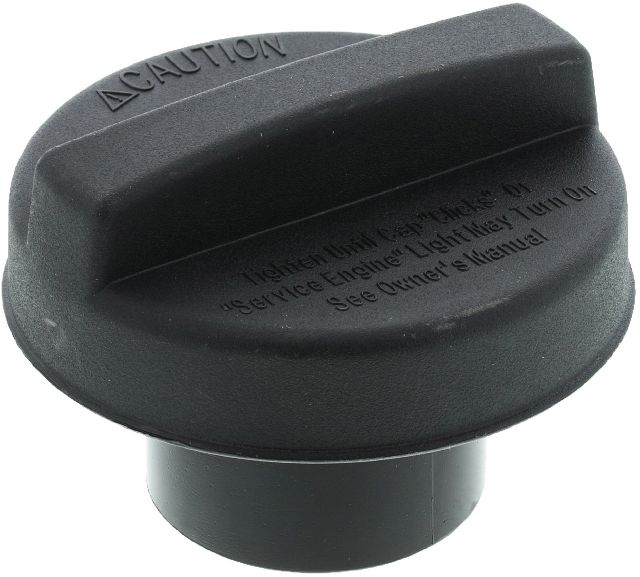
- Loose or Faulty Gas Cap 🔴 High Probability → Shop Fuel Tank Cap This is the most common cause for a P0442 on virtually all vehicles. The rubber O-ring seal on the cap degrades over time, or the cap may not have been tightened properly after refueling.
How to confirm: Ensure the gas cap is tightened until it clicks at least once. Inspect the rubber seal for cracks, stiffness, or damage. If the seal is damaged or the cap is suspect, replacement is the best confirmation. Also inspect the fuel filler neck for rust or debris that could prevent a good seal.
Typical fix: Replace the gas cap. It is highly recommended to use an OEM (Original Equipment Manufacturer) part, as aftermarket caps are known to cause sealing issues.
Est. part cost: $20-$40 - Cracked Evaporative Charcoal Canister 🔴 High Probability → Shop Vapor Canister Per Kia TSB-SC135R1, vehicles in 28 'salt belt' states are prone to cracks in the canister housing, likely due to corrosion and stress on the mounting points. A diagnostic video on a similar Kia model confirmed a cracked canister can cause this code.
How to confirm: A visual inspection of the canister (located under the vehicle near the fuel tank) may reveal a crack, often near the mounting tabs. The most definitive method is an EVAP smoke test, which will show smoke leaking directly from the canister body.
Typical fix: Replace the evaporative charcoal canister. The OEM part number is 31420-1D500, which fits both the 2.4L and 2.7L Rondo models from 2007-2010. If no crack is found on a salt-belt vehicle, the TSB recommends replacing the mounting bracket to prevent future failure.
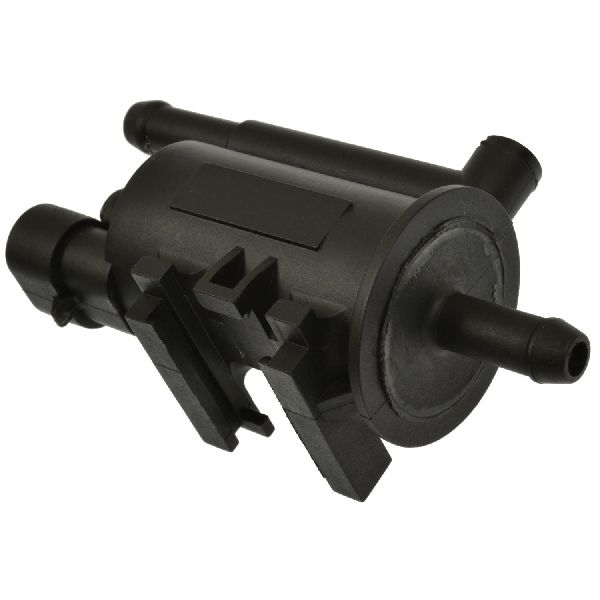
Est. part cost: $85-$150 - Faulty Canister Purge Valve / Solenoid (PCSV) 🟡 Medium Probability → Shop Vapor Canister The purge valve is a common failure item on many vehicles. It can become stuck open, creating a constant small leak in the EVAP system and often causing difficulty starting after refueling.
How to confirm: The valve is typically located in the engine bay. On the 2.7L V6, it is behind the throttle body, requiring removal of the air intake box for access. 🎬 See this walkthrough for replacing the Rondo purge valve. With the engine off, remove the valve and try to blow through it. It should be closed and block airflow. If air passes through, it is stuck open and faulty.
Typical fix: Replace the canister purge valve. Ensure the electrical connector and hoses are secure.
Est. part cost: $50-$85 - Cracked or Disconnected EVAP Hoses 🟡 Medium Probability
How to confirm: Visually inspect all accessible EVAP lines running from the fuel tank, to the charcoal canister, and up to the purge valve in the engine bay. Look for brittle, cracked, or disconnected rubber and plastic hoses. A smoke test is the most effective way to find a small hose leak.
Typical fix: Replace the damaged section of hose or the entire hose assembly. Ensure all connections are secure.
Est. part cost: $10-$50 - Faulty Canister Close Valve (CCV) / Vent Valve ⚪ Low Probability → Shop Vapor Canister This valve is located under the car near the charcoal canister and is exposed to road debris and moisture, which can cause it to fail or stick open.
How to confirm: The valve is normally open. A bi-directional scan tool can command it closed to test its function. During a smoke test, if smoke exits the vent filter while the valve is commanded closed, the valve has failed and is faulty.
Typical fix: Replace the canister close valve.
Est. part cost: $75-$115
Rare But Worth Checking
- Rusted Fuel Filler Neck: → Shop Fuel Filler Neck
Diagnosis Steps
- Check the gas cap. Ensure it is tight and clicks when closed. Remove it and inspect the rubber seal for any signs of cracking, hardening, or damage. Also, inspect the fuel filler neck for rust or debris.
- Clear the code with a scanner and drive the vehicle for a few days to see if the code returns. If it does not, the gas cap was the issue.
- If the code returns, perform a thorough visual inspection of all EVAP system components. Check the charcoal canister (under the rear of the car) for visible cracks, especially if you live in a salt-belt state.
- Inspect all EVAP hoses and lines for cracks, brittleness, or loose connections between the fuel tank, canister, and engine bay.
- Test the purge valve in the engine bay. On the 2.7L V6, it's behind the throttle body. With the vehicle off, disconnect the valve and attempt to blow through it. If air passes, the valve is stuck open and needs replacement.
- If no obvious issues are found, the most effective next step is to have the EVAP system professionally smoke tested. This involves injecting smoke into the system and watching where it escapes, pinpointing the exact source of the leak.
Parts You'll Likely Need
- Fuel Tank Cap — This is the most common and simplest fix for P0442. The seal wears out over time. Always use an OEM cap for the best seal.
Trusted brands: Genuine Kia
OEM price range: $20-$40
Aftermarket price range: $15-$25 - Evaporative Emissions Charcoal Canister
(OEM #31420-1D500)— A known failure point on 2009-2010 Rondo models, especially in salt-belt states, due to cracking. Kia issued TSB-SC135R1 to address this specific issue. This part fits both 2.4L and 2.7L engines for model years 2007-2010.
Trusted brands: Genuine Kia
OEM price range: $140-$150
Aftermarket price range: $70-$120 - Canister Purge Valve
(OEM #28910-25100)— A common failure part that can get stuck open, causing a persistent small leak and often hard starting after refueling. Note: 28910-25100 is for the 2.4L engine; the 2.7L V6 uses a different part number.
Trusted brands: Genuine Kia, Dorman, Standard Motor Products (SMP)
OEM price range: $55-$85
Aftermarket price range: $30-$60
Related Codes That Often Appear With This One
- P0455 — P0455 indicates a large EVAP leak. It can appear with P0442 if the leak is intermittent or on the borderline between small and large. The TSB for the Rondo specifically mentions 🎬 Watch: Replacing the purge valve on a similar Kia model. that a cracked canister can trigger either P0442 or P0455.
- P0441 — P0441 indicates incorrect purge flow, which is most often caused by a faulty canister purge valve (PCSV). If the valve is stuck open, it can also be detected as a small leak, triggering P0442 simultaneously.
Technical Service Bulletins (TSBs) & Recalls
- TSB-SC135R1: Voluntary Emissions Service Campaign for Evaporative Canister Inspection and/or Replacement on vehicles in salt belt states that may experience DTC P0442 or P0455. This TSB also applies to certain Kia Optima and Sedona models.
Platform-Specific Known Issues
- A Voluntary Emissions Service Campaign (TSB-SC135R1) was issued for 2009-2010 Kia Rondo vehicles in 28 'salt belt' states for issues causing P0442 or P0455. The campaign involves inspecting the evaporative canister for cracks and replacing it if necessary, or replacing its mounting bracket to prevent future cracks.
- For vehicles outside the salt belt states, Kia extended the warranty on the evaporative canister to 10 years or 120,000 miles, whichever occurs first from the date of first service.
Mechanic-Grade Diagnostic Values
- Fuel Tank Pressure Sensor (FTPS) signal voltage — expected: Approximately 2.5V with the gas cap off (at atmospheric pressure). Voltage should decrease towards 1.5V as vacuum is applied.. Failure: Voltage is stuck high (e.g., near 5V), stuck low (near 0V), does not change with vacuum, or goes up instead of down when vacuum is applied.
- Fuel Tank Pressure Sensor (FTPS) reference voltage — expected: 5V at the sensor's harness connector with key on, engine off.. Failure: Voltage is significantly lower than 5V, indicating a wiring or ECM issue.
Scan Tool Commands That Help
- Kia GDS or equivalent professional scan tool: Canister Shut Off Valve (Vent Valve) Actuation/Toggle Test — This command is used to manually close the normally-open vent valve. This seals the EVAP system, which is a required step before performing a smoke test to find a leak.
- Kia GDS or equivalent professional scan tool: Canister Purge Valve Actuation Test — This command manually opens and closes the purge valve to check for an audible click and to verify its function without having to remove it from the vehicle.
Wiring & Ground Locations
- Fuel Tank Pressure Sensor (FTPS) — On many Kia models of this era, the FTPS is located on top of the fuel pump assembly, which is accessed by removing the rear seat bottom cushion or an access panel in the trunk floor.. A faulty FTPS can give incorrect pressure readings, causing the ECM to falsely believe there is a leak. Accessing it is necessary for voltage testing or replacement.
- Body Control Module (BCM) — Located under the driver's side of the dashboard, positioned above the brake pedal.. While not a primary cause, the BCM is a central electronic module. In complex diagnostic situations, checking for corrosion or damage at major modules like the BCM can be a necessary step.
Real Owner Repair Stories
- YouTube channel 'National Auto Diagnostics' (2014 Kia (similar EVAP system design)) — Check Engine Light with codes P0456 (very small leak) and P0442 (small leak).
❌ Tried (didn't work) Initial scan and code reading.
✅ What actually fixed it The mechanic used a scan tool to command the canister close valve shut, then performed a smoke test. Smoke was observed leaking directly from a crack in the body of the charcoal canister itself. Replacing the charcoal canister resolved the codes. The mechanic noted the part was in stock at the dealer, indicating a common failure.
Model Year Variations Within This Range
- 2009-2010: The TSB for the cracking charcoal canister (TSB-SC135R1) specifically applies to Rondo vehicles produced from April 1, 2009, through July 30, 2010, that were sold or registered in salt-belt states.
Helpful Videos
We Have This Part in Stock


The information in this article is provided for general reference and educational purposes only. Vehicle specifications, procedures, and part compatibility can vary by production date, trim level, and region. Always consult your vehicle's factory service manual and verify part numbers before purchasing or performing repairs. Safety-critical components such as airbags, seat belts, and braking systems should be installed by a qualified professional.
- Kia RONDO:
- 🧭 Diagnostic Flowchart
- 🎬 Helpful Videos
- 🛍️ Shop This Part
- What's Unique About the 2009-2010 Kia RONDO
- Symptoms You May Notice
- Most Likely Causes
- Rare But Worth Checking
- Diagnosis Steps
- Parts You'll Likely Need
- Related Codes That Often Appear With This One
- Technical Service Bulletins (TSBs) & Recalls
- Platform-Specific Known Issues
- Mechanic-Grade Diagnostic Values
- Scan Tool Commands That Help
- Wiring & Ground Locations
- Real Owner Repair Stories
- Model Year Variations Within This Range
- 🎟️ Get 5% Off