

P0442 on 2011-2017 Kia Sportage: EVAP Small Leak Causes and Fixes
The P0442 code on a 2011-2017 Kia Sportage indicates a small leak in the evaporative emissions (EVAP) system. The most common and cheapest fix is to inspect and retighten or replace the gas cap with an OEM part. If that doesn't work, the next most likely cause is a faulty canister purge valve, a known failure point on this platform. For vehicles in 'salt belt' regions, a rusted fuel filler neck is also a strong possibility.
- Always check the gas cap first for a P0442 code. Ensure it's tight and the seal is intact. An OEM replacement is best.
- If the gas cap isn't the issue, the canister purge valve (PCSV) located in the engine bay is the next most likely and affordable part to replace.
- For persistent leaks that aren't solved by the gas cap or purge valve, a professional smoke test is the most reliable way to find the exact source of the leak.
- You can continue driving with this code, but you will not pass an emissions inspection until it is resolved.
What's Unique About the 2011-2017 Kia SPORTAGE
For the third-generation (SL) Kia Sportage, the P0442 code follows a common diagnostic path, but owners should be aware of a few platform tendencies. While the gas cap is a frequent culprit, the canister purge valve is also a very common failure point on this and similar Kia/Hyundai models of the era. Additionally, for vehicles in regions where road salt is used, corrosion of underbody components like the fuel filler neck or the charcoal canister itself can lead to hard-to-find pinhole leaks that trigger this code. Cleaning the rust off the filler neck sealing surface with a wire brush can sometimes resolve the issue without part replacement.
Diagnostic Flowchart
Tap your situation to follow the diagnostic path that matches what you're seeing on this vehicle.
Generation note: The 2011-2017 model years cover the third generation (SL) of the Kia Sportage. The causes and fixes are generally consistent across this generation and also apply to its platform-mate, the 2010-2015 Hyundai Tucson, which shares similar engines and EVAP system components.
Symptoms You May Notice
- Check Engine Light is on
- A faint smell of fuel, particularly around the gas cap area or outside the vehicle.
- Slightly reduced fuel efficiency.
- A rough or low idle if the purge valve is stuck open, causing a vacuum leak.
- Replacing the oxygen (O2) sensors. O2 sensors are not part of the EVAP system and will not cause a P0442 code.
- Replacing the fuel injectors. While part of the fuel system, injectors are not related to the evaporative emissions system.
Most Likely Causes
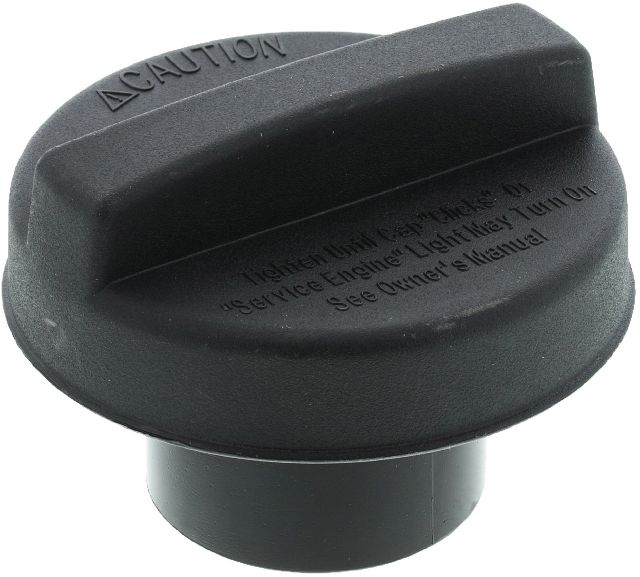
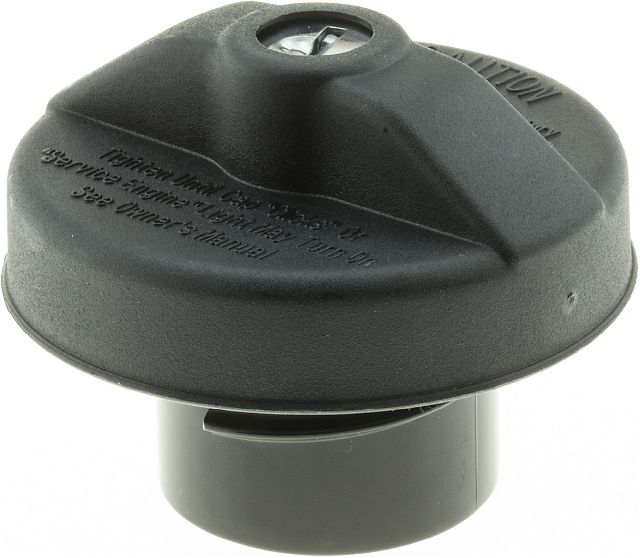
- Loose or Faulty Gas Cap 🔴 High Probability → Shop Fuel Tank Cap The gas cap seal is a simple rubber O-ring that degrades over time from exposure to fuel vapors and weather, causing it to lose its sealing ability. This is the most common cause for P0442 on virtually all vehicles.
How to confirm: First, ensure the cap is tightened until it clicks several times. Inspect the rubber seal on the cap for cracks, stiffness, or damage. If the seal is compromised or the cap looks old, replacement is the best confirmation. Also, inspect the metal fuel filler neck surface where the cap seals; rust or debris can prevent a good seal and can be cleaned with a wire brush.
Typical fix: Replace the gas cap. It is highly recommended to use an OEM (Original Equipment Manufacturer) cap from Kia (Part No. 31010-3L600 or 31010-3L600U), as some aftermarket caps are known to seal improperly.
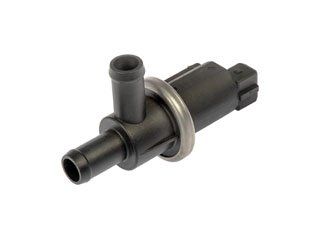
Est. part cost: $15-$35 - Faulty Canister Purge Valve (PCSV) 🟡 Medium Probability → Shop Vapor Canister This solenoid valve is a known failure point on many Kia and Hyundai models from this era. It can get stuck partially open, creating a small leak path that the system detects when it performs its pressure test.
How to confirm: The PCSV is located in the engine bay, typically on or near the intake manifold. A simple test is to remove the valve and try to blow through it; if air passes, it is stuck open and faulty as it should be normally closed. Another test with the engine running is to disconnect the vacuum hose from the tank side and feel for suction at idle; constant suction indicates a stuck-open valve.
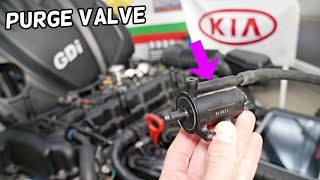
Typical fix: Replace the canister purge valve solenoid. This is a relatively simple replacement, typically involving disconnecting two hoses 🎬 Watch: See how to locate and replace the purge valve. and an electrical connector. The OEM part number for the 2.4L engine is often 28910-25100.
Est. part cost: $50-$100 - Cracked or Disconnected EVAP Hoses ⚪ Low Probability The rubber and plastic hoses in the EVAP system can become brittle with age and exposure to engine heat, leading to small cracks. This is more common on higher-mileage vehicles. Pay close attention to rubber elbows and connectors.
How to confirm: Visually inspect all accessible EVAP hoses in the engine bay and under the vehicle near the charcoal canister for any signs of cracking, disconnection, or deterioration. Bending the hoses slightly can reveal hidden cracks. A smoke test is the most definitive way to find a small hose leak.
Typical fix: Replace the specific section of cracked hose. In some cases, a generic vacuum hose of the correct diameter can be used.
Est. part cost: $10-$40 - Faulty Canister Close Valve (CCV) ⚪ Low Probability → Shop Vapor Canister The CCV, located near the charcoal canister under the car, is responsible for sealing the EVAP system for pressure testing. It can fail to close completely or develop a leak, especially in areas with corrosion.
How to confirm: The valve's function can be tested with a capable scan tool that can command it to close. The definitive diagnosis is usually made during a smoke test, where smoke will be seen exiting a faulty valve.
Typical fix: Replace the canister close valve. This part is located under the rear of the vehicle, often attached directly to the charcoal canister. Access may require removing the driver's side rear wheel.
Est. part cost: $40-$90
Rare But Worth Checking
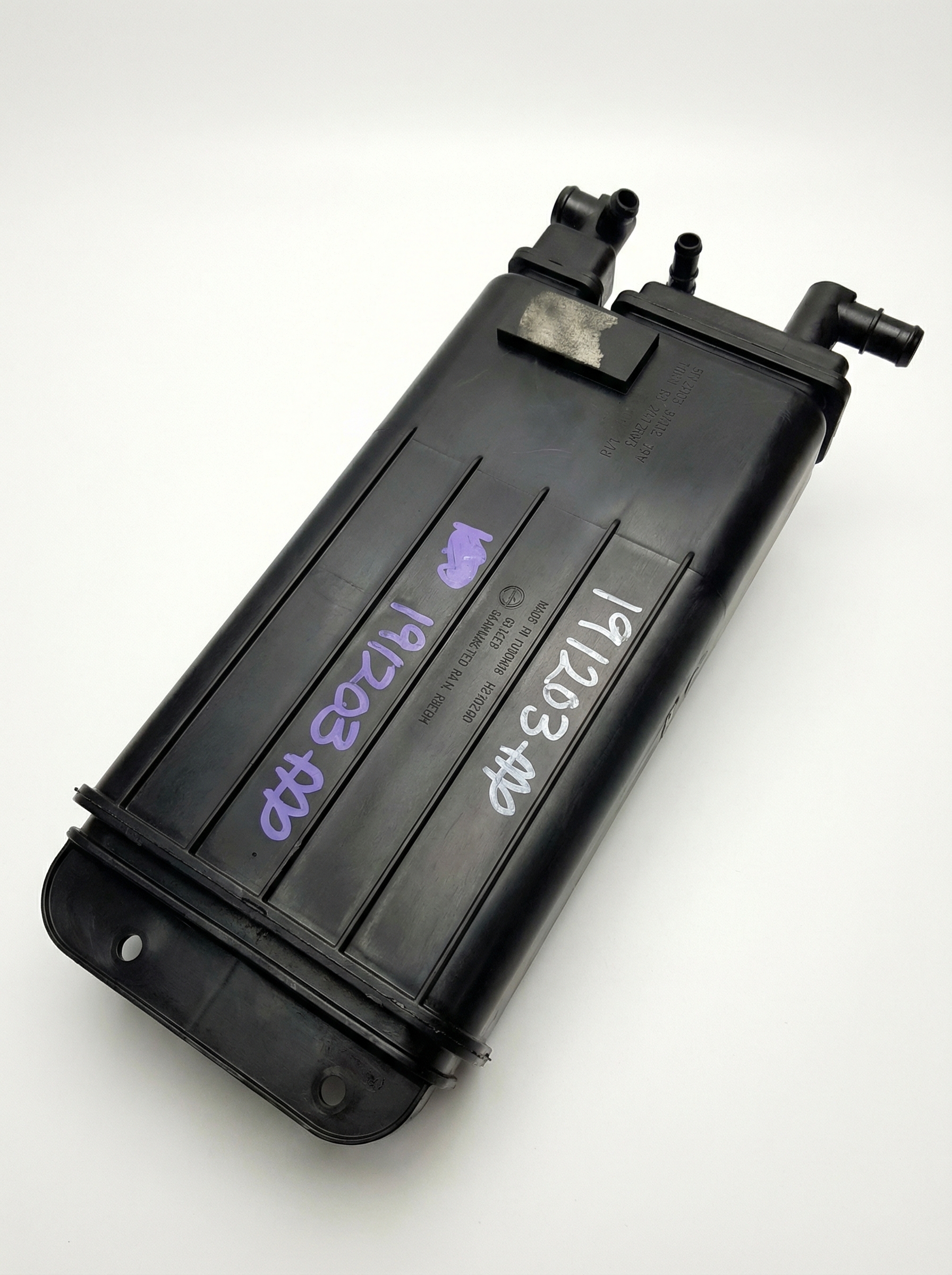
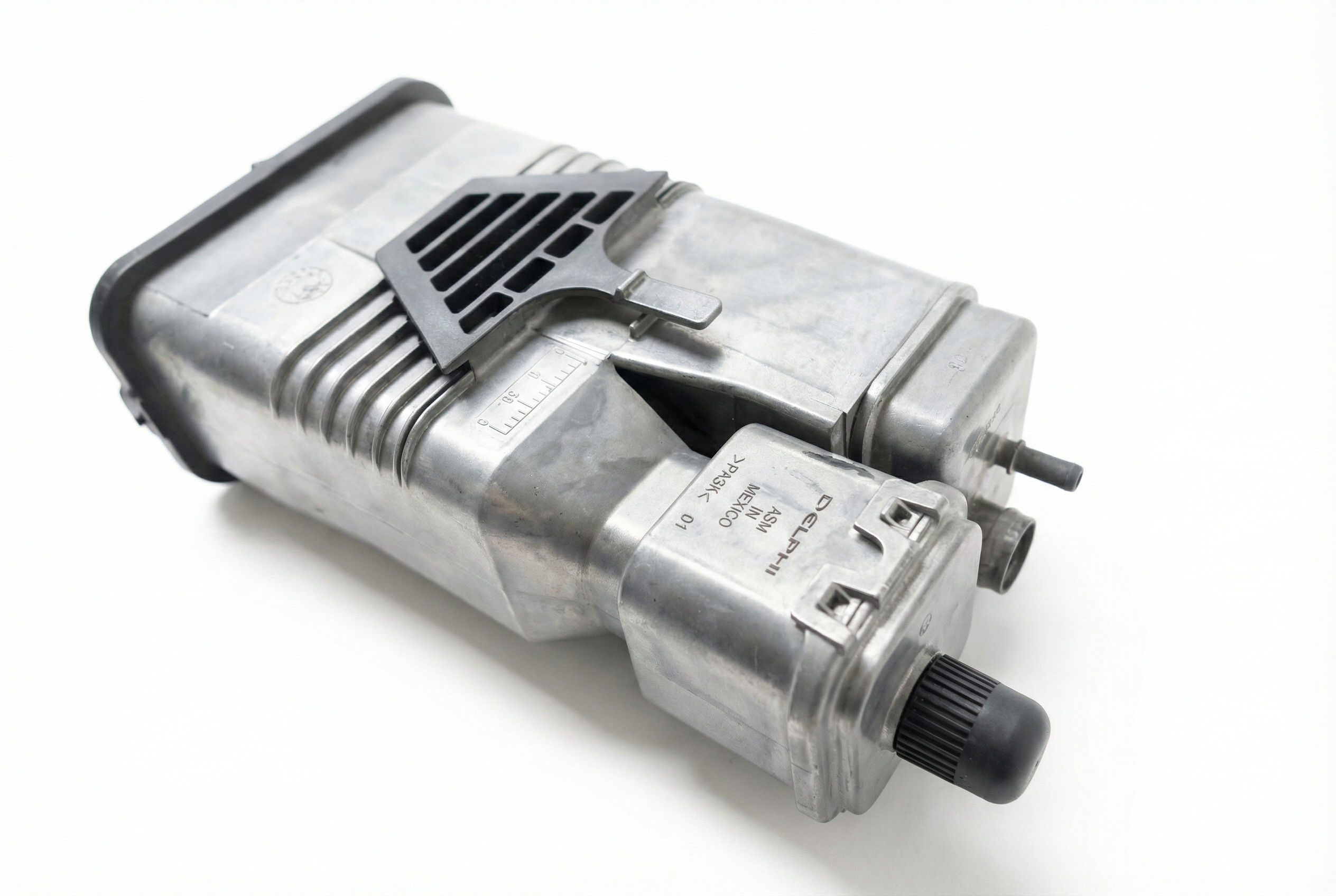
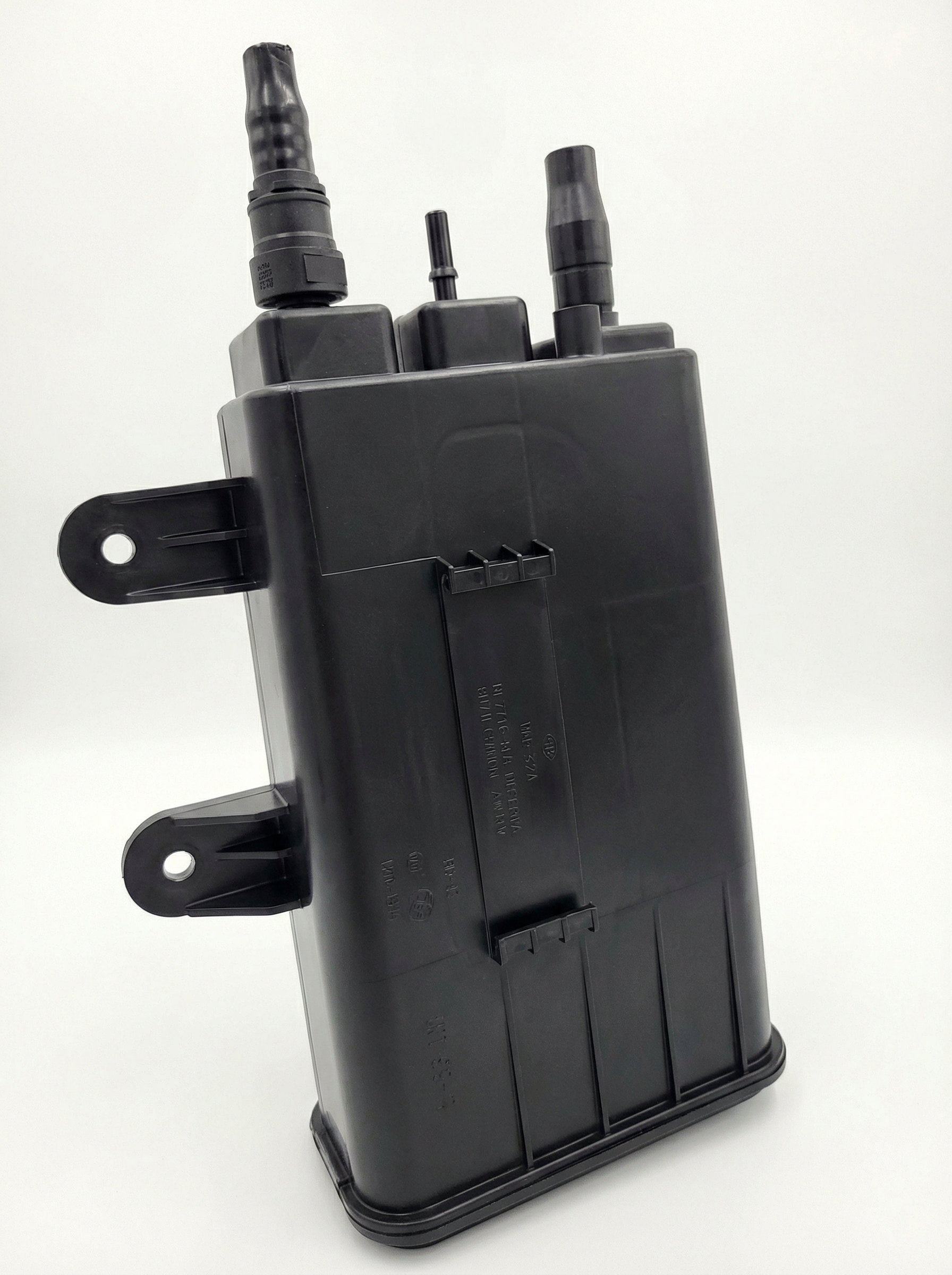
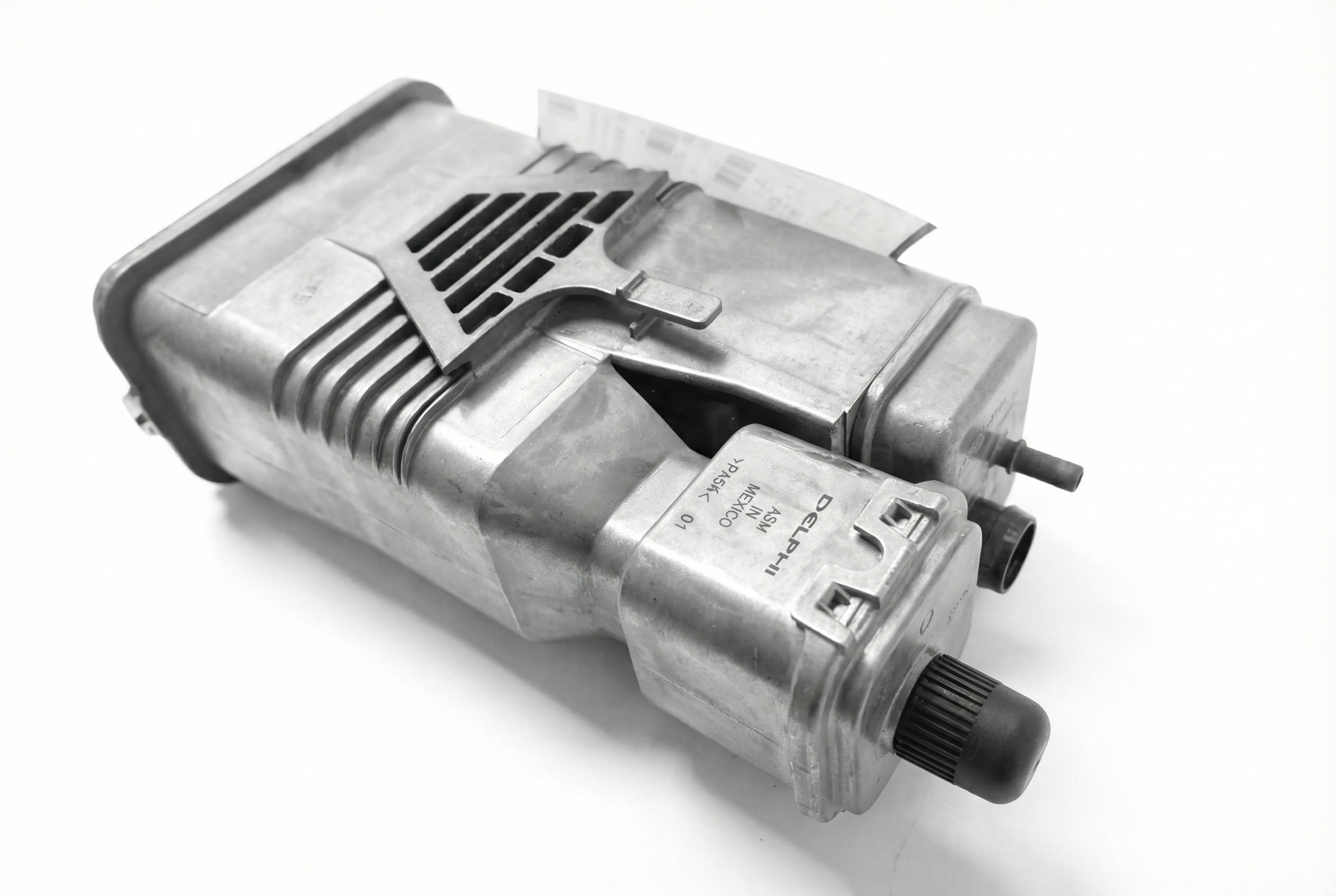
- Cracked Charcoal Canister: → Shop Vapor Canister While not common, road debris can damage the plastic canister, or corrosion of its mounting brackets can put stress on the housing, causing it to crack. A smoke test is the best way to identify a leak from the canister body.
- Rusted Fuel Filler Neck: → Shop Fuel Filler Neck In 'salt belt' regions, the metal pipe leading to the gas tank can rust and develop pinhole leaks, which will trigger a P0442 code. This is usually found with a smoke test where smoke will be seen escaping from the neck itself. Sometimes the rust is only on the sealing surface, which can be cleaned.
Diagnosis Steps
- Check the Gas Cap: Remove, inspect the seal for damage, and retighten the cap until it clicks multiple times. Also, clean any rust or debris from the filler neck sealing surface. Clear the code and drive for a few days to see if it returns.
- Visual Inspection: Carefully inspect all visible EVAP hoses and lines in the engine bay and under the car for obvious cracks, damage, or loose connections. Pay special attention to rubber fittings and bends.
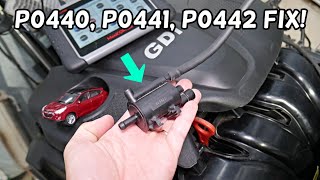
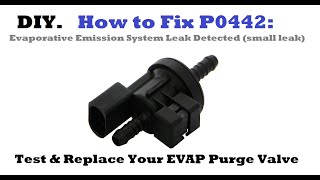
- Inspect Purge Valve (PCSV): Locate the purge valve in the engine bay. Disconnect it and try to blow air through it. If air passes, the valve is stuck open 🎬 Watch: A mechanic shows how to test and fix the valve. and needs to be replaced.
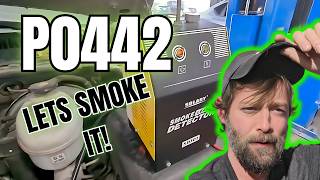
- Perform a Smoke Test: This is the most effective method for finding small leaks. A machine is used to fill the EVAP system with a harmless, visible smoke. The leak will be found wherever smoke escapes. 🎬 Watch: How to find a small leak using a smoke test. This is the method recommended by Kia for hard-to-find leaks.
- Inspect Canister Close Valve (CCV): During the smoke test, pay close attention to the CCV (near the charcoal canister) to see if it is the source of the leak. A scan tool can be used to command it shut during the test.
- Inspect Fuel Filler Neck: During the smoke test, check the entire length of the fuel filler neck for smoke, which would indicate a rust-induced pinhole leak, a known issue in areas with road salt.
Parts You'll Likely Need
- Gas Cap
(OEM #31010-3L600U)— This is the most frequent and simplest fix. The seal wears out over time, causing a leak. An OEM cap is strongly recommended for a proper seal.
Trusted brands: Genuine Kia
OEM price range: $20-$35
Aftermarket price range: $15-$25 - Canister Purge Valve / Solenoid
(OEM #28910-25100)— A very common failure point on this platform that gets stuck open, causing a persistent small leak.
Trusted brands: Genuine Kia, Dorman, Standard Motor Products (SMP)
OEM price range: $55-$85
Aftermarket price range: $25-$60 - Canister Close Valve
(OEM #31453-3K600)— This valve seals the EVAP canister. It can fail to close properly, causing a leak code. It is located under the vehicle near the fuel tank.
Trusted brands: Genuine Kia, Dorman
OEM price range: $40-$70
Aftermarket price range: $20-$50
Related Codes That Often Appear With This One
- P0455 — This code indicates a large EVAP leak. If a small leak (P0442) worsens, or if the gas cap is left off entirely, the system may eventually detect it as a large leak.
- P0456 — This indicates a very small EVAP leak. P0442 and P0456 are closely related, differing only in the size of the leak detected. The diagnostic process is identical, and a problem might first appear as a P0456 before worsening to a P0442.
- P0441 — This code means Incorrect Purge Flow. It often points directly to a malfunctioning canister purge valve, which can also cause a P0442 leak code if it's stuck partially open.
Technical Service Bulletins (TSBs) & Recalls
- PS469: Recommends a manual EVAP test (like a smoke test) for hard-to-find small leaks when codes like P0442, P0455, or P0456 are present and a system self-test results in 'No Trouble Found' (NTF).
Platform-Specific Known Issues
- Purge Valve Failure is Extremely Common: → Shop Vapor Canister Numerous owner accounts on forums like Kia-Forums.com and in YouTube repair videos specifically for the Sportage and Sorento identify the canister purge valve (PCSV) as the root cause after a gas cap replacement fails to solve the P0442 code.
- Fuel Filler Neck Rust in Salt Belt: → Shop Fuel Filler Neck Owners in northern climates or areas with heavy road salt usage report that the metal fuel filler neck can develop pinhole rust, causing a P0442 leak. A smoke test is the definitive way to find this, but a thorough visual inspection may also reveal the corrosion.
Mechanic-Grade Diagnostic Values
- Fuel Tank Pressure Sensor (FTPS) Signal Voltage — expected: With Key On Engine Off (KOEO) and gas cap removed, voltage should be stable and within the vehicle's specified range (typically around 1.5V).. Failure: According to Kia TSB #PS469, if the voltage is outside the specified range (per KGIS), the sensor or its circuit is faulty. If voltage drops below 1.5V during a manual purge test, it indicates a system restriction.
- Canister Purge Valve (PCSV) Function Test — expected: With the valve removed, no air should pass through when unpowered. When 12V is applied to the two pins, the valve should click open and allow air to pass through.. Failure: If air can be blown through the valve when it is unpowered, it is stuck open. If it does not open and allow airflow when 12V is applied, it is seized closed or the coil is bad.
Scan Tool Commands That Help
- Kia GDS (or equivalent professional scan tool): EVAP System Leak Test — This is an automated test that commands the various EVAP solenoids and monitors the fuel tank pressure sensor to verify system integrity after a repair or as a primary diagnostic step.
- Kia GDS (or equivalent professional scan tool): Canister Close Valve (CCV) Actuation — Used to manually command the CCV to close during a smoke test to isolate the canister and valve from the rest of the system, or to check for an audible click confirming the solenoid is activating.
Wiring & Ground Locations
- EVAP Component Connectors — Located on the components themselves (PCSV in engine bay, CCV and FTPS near fuel tank).. The Canister Purge Valve (PCSV) has a 2-wire connector (power and ECM ground control). The Fuel Tank Pressure Sensor (FTPS) has a 3-wire connector (5V reference, ground, and signal). Kia TSB #PS469 explicitly states technicians must refer to the Kia Global Information System (KGIS) for vehicle-specific pinouts, as they can vary.
Real Owner Repair Stories
- Reddit user in r/AskMechanics (Kia (model not specified, but behavior is universal)) — EVAP leak code (P0455, large leak, but same principle applies to P0442).
❌ Tried (didn't work) Using a non-OEM gas cap.
✅ What actually fixed it Replacing the gas cap with a genuine OEM part resolved the code, which did not return for over a year.
"I Checked Everything" — The Actual Cause
- A faulty Fuel Tank Pressure Sensor (FTPS) can cause a P0442 code even if the system has no physical leaks and passes a smoke test. The sensor may send an incorrect voltage reading to the computer, making the ECM believe a pressure change (leak) has occurred when it has not. Diagnosis requires verifying the sensor's voltage output against specifications, as outlined in Kia's TSB #PS469.
OEM Part Supersession History
31453-3K600→31453-3K600FFF— Part revision by manufacturer.
Model Year Variations Within This Range
- 2011+: The manual electrical test procedure detailed in Kia TSB #PS469 for hard-to-find EVAP leaks is specified for vehicles that are model year 2011 or newer.
- 2016-2017: Many common replacement parts for the EVAP system, such as the Canister Close Valve (31453-3K600) and Purge Control Valve (28910-25100), are listed by vendors with a fitment range ending at the 2015 model year. Owners of 2016 and 2017 models should exercise extra caution and verify part numbers with a VIN before purchasing.
Helpful Videos
Used OEM Parts in Stock
New Aftermarket Parts Available


The information in this article is provided for general reference and educational purposes only. Vehicle specifications, procedures, and part compatibility can vary by production date, trim level, and region. Always consult your vehicle's factory service manual and verify part numbers before purchasing or performing repairs. Safety-critical components such as airbags, seat belts, and braking systems should be installed by a qualified professional.
- Kia SPORTAGE:
- 🧭 Diagnostic Flowchart
- 🎬 Helpful Videos
- 🛍️ Shop This Part
- What's Unique About the 2011-2017 Kia SPORTAGE
- Symptoms You May Notice
- Most Likely Causes
- Rare But Worth Checking
- Diagnosis Steps
- Parts You'll Likely Need
- Related Codes That Often Appear With This One
- Technical Service Bulletins (TSBs) & Recalls
- Platform-Specific Known Issues
- Mechanic-Grade Diagnostic Values
- Scan Tool Commands That Help
- Wiring & Ground Locations
- Real Owner Repair Stories
- "I Checked Everything" — The Actual Cause
- OEM Part Supersession History
- Model Year Variations Within This Range
- 🎟️ Get 5% Off