

P0442 on 2008-2014 Mercedes-Benz C-Class: EVAP Small Leak Causes and Fixes
For a P0442 code on a W204 C-Class, first check the gas cap (OEM Part No. A2214700705). If that doesn't fix it, the most likely causes are a faulty EVAP purge valve in the engine bay (OEM Part No. A0004708893) or a deteriorated O-ring on the charcoal canister shutoff valve, located behind the rear passenger-side wheel well liner. A smoke test is the best way to find the exact leak source.
- Always start with the simplest fix: check that the gas cap is tight and its seal is in good condition.
- If the gas cap isn't the issue, a professional smoke test is the fastest way to accurately locate the small leak.
- On the W204 C-Class, the most likely culprits after the gas cap are the purge valve (in the engine bay) and the charcoal canister shutoff valve O-ring (behind the rear passenger wheel).
- Do not immediately replace expensive components like the fuel tank or charcoal canister; the leak is often a much cheaper, smaller part like a seal or hose.
What's Unique About the 2008-2014 Mercedes-Benz C-Class
While P0442 is a generic code, on the W204 C-Class and its predecessor (W203), owners frequently trace this 'small leak' to specific components beyond the usual gas cap. A common but hard-to-find culprit is a small, deteriorated O-ring on the charcoal canister's shutoff valve. Additionally, cracked plastic nipples on the purge valve and, in some stubborn cases, hairline cracks in the fuel filler neck assembly have been identified as the root cause by owners.
Generation note: This guide covers the 2008-2014 Mercedes-Benz C-Class, known as the W204 generation. Some diagnostic insights, particularly regarding the charcoal canister O-ring, are drawn from well-documented owner experiences with the previous W203 generation, which shares a similar EVAP system design.
Symptoms You May Notice
- Check Engine Light is on.
- No 'whoosh' sound of pressure being released when opening the gas cap after driving.
- A faint smell of fuel around the rear of the vehicle, though this is not always present.
- In rare cases of a stuck-open purge valve, the engine may have a long crank time after refueling.
- Replacing the charcoal canister when only the shutoff valve O-ring is bad.
- Replacing the fuel tank pressure sensor, which is rarely the cause of a small leak code.
Most Likely Causes
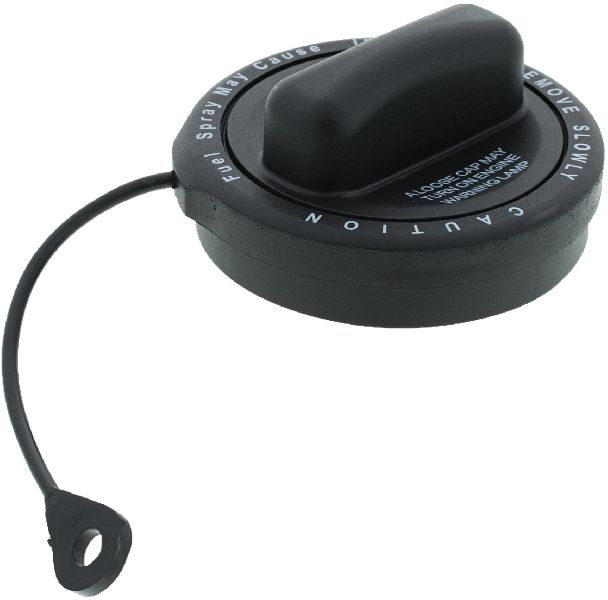
- Loose or Faulty Gas Cap 🔴 High Probability → Shop Fuel Tank Cap This is the most common cause for any vehicle. The cap's rubber seal can dry out, crack, or get dirty, preventing a proper seal. Owners consistently report that using non-OEM caps can cause the P0442 code to persist.
How to confirm: Ensure the cap is tightened until it clicks. Inspect the rubber O-ring on the cap for any cracks, stiffness, or damage. If the seal is compromised, the cap needs replacement.
Typical fix: Tighten or replace the gas cap. It is highly recommended to use an OEM (Original Equipment Manufacturer) cap, as some aftermarket caps may not seal correctly. The most common OEM part number is A2214700705, which supersedes older numbers.
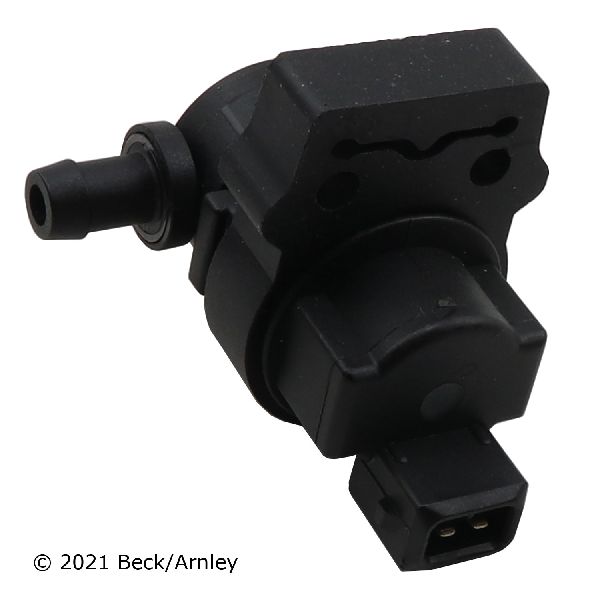
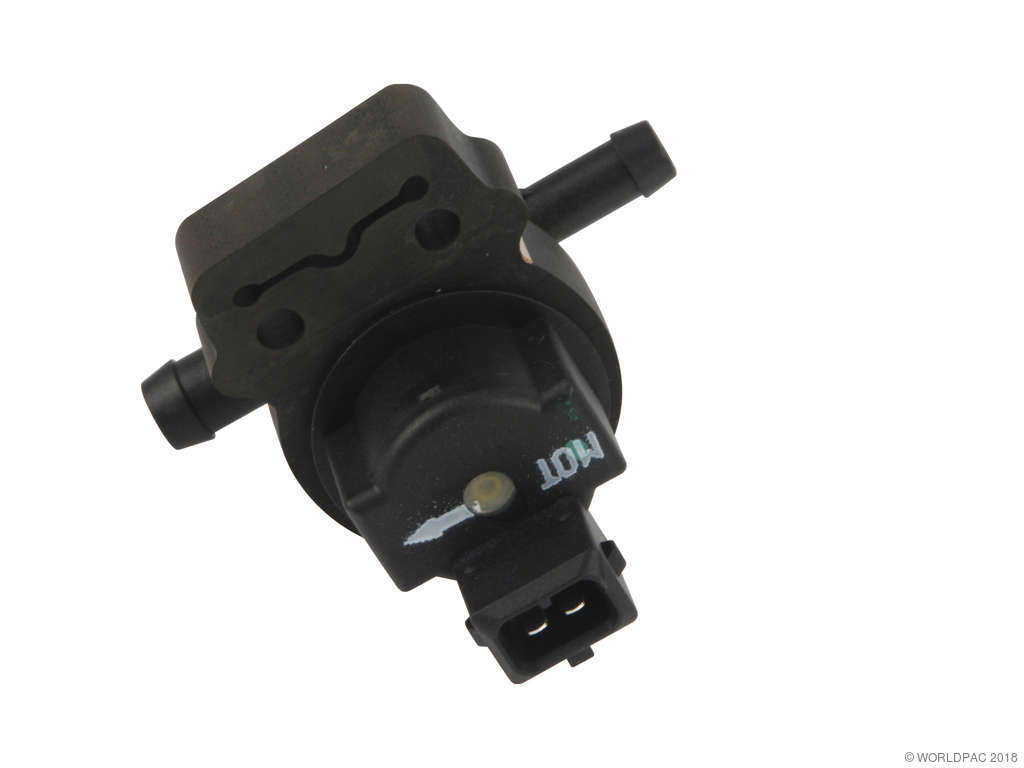
Est. part cost: $25-$50 - Faulty EVAP Purge Valve or Hose 🟡 Medium Probability → Shop Vapor Canister The purge valve (also called a regeneration valve or MOT valve) is located in the engine bay and is subjected to heat cycles. The plastic housing or hose connections can develop small cracks over time. It can also fail internally, creating a leak.
How to confirm: With the engine off, remove the purge valve and try to blow through it. It should be closed and not allow air to pass. If you can blow through it, it's stuck open and faulty. Also, inspect the valve body and its hose connections for any visible cracks. A smoke test will definitively show a leak from this component.
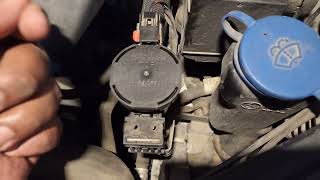
Typical fix: Replace the purge valve. It is typically mounted in the engine bay and is relatively easy to access and replace. 🎬 Watch: Step-by-step guide to replacing the purge valve solenoid. The OEM part number is often A0004708893 or A0004708593.
Est. part cost: $60-$120 - Deteriorated Charcoal Canister Shutoff Valve O-Ring 🟡 Medium Probability → Shop Vapor Canister On the W203 and W204 platforms, a very common failure point is the small rubber O-ring that seals the shutoff valve to the charcoal canister body. This O-ring deteriorates over time, creating a small leak that is difficult to find without a smoke test.
How to confirm: This leak is best found with a smoke test, which will show smoke exiting from the shutoff valve area on the canister. The canister is located behind the passenger-side rear wheel well liner. Upon removal of the valve, the O-ring will often be visibly cracked or flattened.
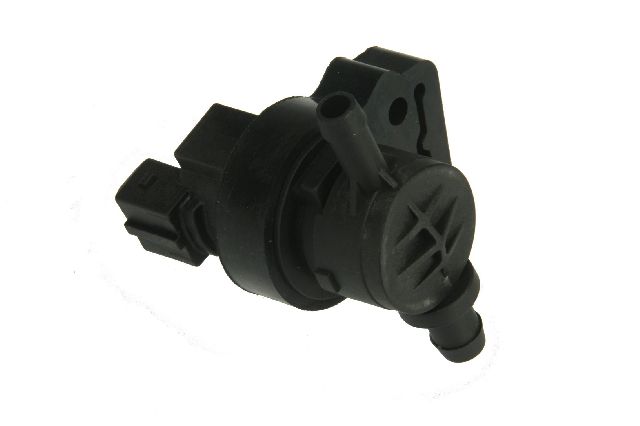
Typical fix: Replace the small O-ring on the shutoff valve (Part No. 0299978448). Some owners replace the entire shutoff valve (Part No. 0004707193) which often comes with a new seal. 🎬 See how to diagnose a small leak on this specific model. The canister may need to be removed to access the valve and replace the seal properly.
Est. part cost: $5-$15 for O-ring, $50-$80 for valve. - Cracked or Disconnected EVAP Hoses ⚪ Low Probability The rubber and plastic hoses that make up the EVAP system can become brittle and crack with age and exposure to the elements, particularly in the engine bay or near the rear wheel well.
How to confirm: Perform a thorough visual inspection of all accessible EVAP lines between the engine, charcoal canister, and fuel tank. A smoke test is the most effective method to pinpoint a small crack in a hose.
Typical fix: Replace the specific section of cracked hose. Ensure connections are secure.
Est. part cost: $10-$40
Rare But Worth Checking
- Cracked Fuel Filler Neck: → Shop Fuel Filler Neck Some owners have reported that after replacing all other common components, the P0442 code was finally resolved by replacing the entire fuel filler neck assembly due to hairline cracks. This is an expensive last resort and should only be considered after a smoke test confirms the leak source.
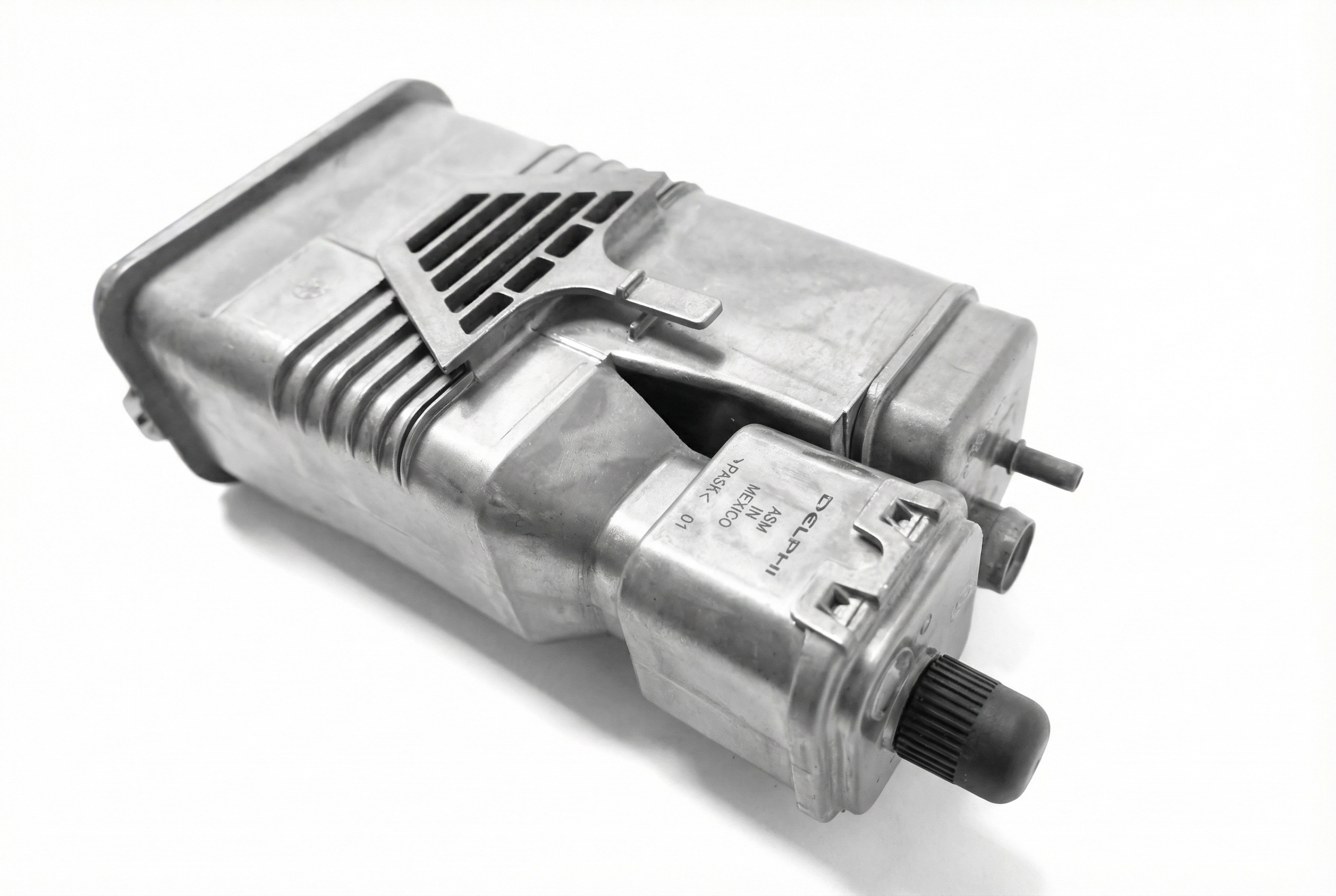
- Cracked Charcoal Canister: → Shop Vapor Canister While the canister O-ring is more common, the canister body itself can crack. A TSB for a newer Mercedes model also notes that the canister can internally break down, sending charcoal particles into the EVAP lines and causing the purge valve to stick open. If charcoal dust is found in the purge valve, the canister and valve must be replaced.
Diagnosis Steps
- Retrieve the P0442 code and any other codes from the ECM using an OBD-II scanner.
- Inspect the gas cap. Ensure it is tight and clicks. Remove it and check the rubber seal for any cracks, hardening, or damage. If in doubt, replace it with an OEM part (A2214700705).
- Clear the code and drive the vehicle for a few days to see if the light returns. If it does, proceed with further diagnosis.
- Perform a smoke test. This is the most effective way to find the exact source of a small leak. Introduce smoke into the EVAP service port and look for smoke escaping from any hoses, valves, the canister, or the fuel filler neck.
- If a smoke machine is not available, begin with visual inspections. Start in the engine bay and locate the purge valve. Check its body and hose connections for cracks.
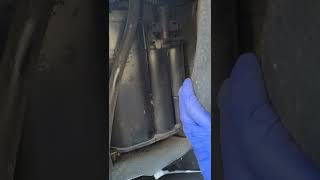
- Remove the passenger-side rear wheel and the wheel well liner 🎬 Watch: Locating and inspecting the charcoal canister on a W204. to access the charcoal canister. Inspect the canister, shutoff valve, and all connected hoses for visible damage or loose connections.
- Based on extensive forum experiences, pay close attention to the shutoff valve on the canister. Remove it and inspect its O-ring for deterioration.
- If no external leaks are found, the purge valve itself may be leaking internally. Remove it and test if it's properly sealed when not energized (it should not allow air to pass).
- If all other components check out, the fuel filler neck may have a hairline crack, which would require replacement to fix.
Parts You'll Likely Need
- Fuel Cap
(OEM #A2214700705 (or superseding A2214700605))— This is the most frequent and easiest fix for a P0442 code. The seal fails over time.
Trusted brands: Mercedes-Benz (OEM)
OEM price range: $30-$50
Aftermarket price range: $15-$30 - EVAP Purge Valve
(OEM #A0004708893 / A0004708593)— A common failure point due to cracking of the plastic housing or internal failure, causing a leak.
Trusted brands: Bosch, Pierburg, Mercedes-Benz (OEM)
OEM price range: $90-$150
Aftermarket price range: $50-$90 - Charcoal Canister Shutoff Valve O-Ring
(OEM #0299978448)— A well-documented failure on this platform's family (W203/W204). The small rubber seal cracks, creating a hard-to-find small leak.
Trusted brands: Mercedes-Benz (OEM)
OEM price range: $5-$15
Aftermarket price range: $1-$5 - Charcoal Canister Shutoff Valve
(OEM #0004707193)— Sometimes replaced as a unit if the valve itself is faulty or to ensure a good seal, as it typically includes a new O-ring.
Trusted brands: Mercedes-Benz (OEM), Uro Parts
OEM price range: $60-$90
Aftermarket price range: $40-$60
Related Codes That Often Appear With This One
- P0456 — P0456 indicates a 'Very Small Leak Detected.' It is very similar to P0442 and can be triggered by the same faults, just at a different leak-size threshold. Sometimes both codes can appear.
- P0455 — P0455 indicates a 'Large Leak Detected.' This is often caused by a very loose or missing gas cap, or a completely disconnected hose, but can sometimes appear alongside smaller leak codes if there are multiple issues.
Technical Service Bulletins (TSBs) & Recalls
- TSB LI47.10-P-059273: Addresses diagnosing EVAP leaks (P0442, P0456, P0455). The procedure advises performing a smoke test and paying special attention to the purge valve (MOT valve) and the shutoff valve on the charcoal canister, confirming the common failure points.
Mechanic-Grade Diagnostic Values
- EVAP Purge Valve (MOT Valve) Solenoid Resistance — expected: 15 - 30 Ohms. Failure: A reading of infinite Ohms (open circuit) or near zero Ohms (short circuit) indicates a failed solenoid coil.
Scan Tool Commands That Help
- XENTRY/DAS or capable aftermarket scanner: EVAP System Leak Test Activation / Canister Shutoff Valve Actuation — This function is critical when performing a smoke test. The canister shutoff (vent) valve is normally open, so it must be commanded closed to seal the system and allow it to be pressurized with smoke. A technician would use this command to change the valve state from 'Venting' to 'Not Venting' before introducing smoke.
Wiring & Ground Locations
- EVAP System Fuses (Front SAM) — In the engine compartment fuse box (Front SAM), located on the driver's side near the brake fluid reservoir.. The EVAP system components are tied into the engine management system. Specifically check fuses #4, #6, #25, #27, and #34 as they relate to the engine control unit and associated sensors/valves.
- Activated Charcoal Canister Shutoff Valve Fuse (Rear SAM) — In the trunk fuse box (Rear SAM), located behind the panel on the passenger side.. Fuse #42 is often designated for the EVAP system. For models built from 03/01/2011 onward, Fuse #5 in the Rear SAM is specifically listed for the 'Activated charcoal canister shutoff valve'.
- Trunk Ground Point — In the trunk, near the Rear SAM (Signal Acquisition Module) on the passenger side. Multiple brown wires will be bolted to the chassis here.. A poor ground for the Rear SAM can cause erratic behavior of the components it controls, including the charcoal canister shutoff valve, potentially leading to incorrect operation and fault codes.
- Engine Bay Ground Point — Under the coolant overflow tank on the passenger side of the engine bay.. This ground point serves various engine sensors. Corrosion or looseness here can cause intermittent electrical issues for components like the purge valve.
Real Owner Repair Stories
- MBWorld.org Forums (Mercedes-Benz C-Class (W203, similar EVAP design to W204)) — Check Engine Light with code P0442. Owner noted the characteristic 'whoosh' sound when opening the gas cap was no longer present.
❌ Tried (didn't work) Cleaning the gas cap seal., Replacing the gas cap with a new one.
✅ What actually fixed it The owner performed a more in-depth diagnosis and found the charcoal canister would not hold a vacuum. After removing the canister shutoff valve, the O-ring was found to be completely deteriorated and cracked. Replacing only the small O-ring (costing ~$3) fixed the leak, resolved the P0442 code, and restored the 'whoosh' sound.
"I Checked Everything" — The Actual Cause
- If a smoke test is performed and no external leaks are visible from any hoses, the canister, or the gas cap, the most likely culprit is the EVAP purge valve (MOT valve) in the engine bay. The valve can fail internally, creating a leak path from the EVAP system directly into the engine's intake manifold. Smoke will be drawn into the running engine rather than escaping to the atmosphere, making the leak invisible externally during the test. The valve should be completely closed with the engine off; if you can remove it and blow through it, it has failed internally and must be replaced.
OEM Part Supersession History
0004701593, 0004702093, 0004703593, 0004705593→A0004708893— Standard part evolution and updates by the manufacturer.
Model Year Variations Within This Range
- 2011-2014: For models produced from March 1, 2011 onwards, the fuse for the 'Activated charcoal canister shutoff valve' is Fuse 5 (5A) in the rear trunk fuse box (Rear SAM). On earlier models, power may be supplied via a different fuse, often tied more generally to the Rear SAM's functions.
Diagnostic Flowchart
Other Known Issues on This Vehicle
Issues unrelated to this code that are worth knowing about as an owner of this generation:
- Rear Subframe Corrosion and Failure 🔴 High — Widespread, especially in regions using road salt. Mercedes-Benz extended the warranty to 20 years/unlimited miles for this specific issue due to its prevalence. (Ref: Warranty Extension - Replaces rear subframe if corrosion with perforation is found.)
- Electronic Steering Lock (ESL) Failure 🔴 High — Very common on pre-facelift models (2008-2011). Failure results in a no-start condition where the key is recognized but the engine will not crank.
- 7G-Tronic Transmission Conductor Plate Failure 🟠 Medium — A common issue across many Mercedes models using the 722.9 transmission. Speed sensors on the plate fail, causing harsh shifting, getting stuck in gear, or going into limp mode.
- M272 Engine Balance Shaft Sprocket Wear 🔴 High — Primarily affects M272 V6 engines manufactured before engine number 2729..30 468993 (approx. late 2008 models). A worn sprocket leads to timing issues and can cause catastrophic engine damage. (Ref: Mercedes-Benz Service Bulletin S-B-03.30/08i)
- LED Taillight Ground Wire Failure 🟡 Low — Common issue where the ground wire on the taillight connector plug overheats and melts, causing the taillight assembly to fail. Often requires replacing the connector and bulb holder. (Ref: Service campaign may have been issued in some regions.)
Used vs. New Parts: Buying Guide for This Vehicle
When a used part is the smart pick: For this repair, used parts are generally not recommended for seals and valves due to the low cost of new parts and the high risk of used rubber/plastic components having the same age-related failures. However, a large, expensive component like a fuel filler neck or a complete charcoal canister assembly could be sourced from a low-mileage donor vehicle from a dry climate as a cost-saving measure, provided it is inspected carefully.
Donor-vehicle mileage cap: roughly under 60000 miles for the part to have meaningful remaining life.
What to inspect on the donor part:
- For a fuel filler neck, inspect the sealing surface for any signs of rust or corrosion.
- For a charcoal canister, check for any physical cracks in the plastic housing.
- Ensure all hose connection nipples are intact and not brittle or cracked.
- Verify the donor car is from a region without heavy road salt use to minimize corrosion and plastic degradation.
OEM-only on this vehicle (don't cheap out):
- Fuel Cap: Aftermarket gas caps are notoriously problematic and a frequent cause of persistent P0442 codes. Always use a genuine Mercedes-Benz cap.
- Charcoal Canister Shutoff Valve O-Ring: This part costs only a few dollars from the dealer. There is no reason to use an aftermarket or used seal.
Aftermarket brands forum-validated for this vehicle:
- Bosch: Bosch is an OEM supplier to Mercedes-Benz for many components, including the EVAP purge valve. A Bosch-branded part is often identical to the genuine part without the Mercedes-Benz logo and price markup.
- Pierburg: Another reputable OEM supplier for fuel and emissions components in German vehicles.
Brands owners have reported issues with on this vehicle:
- Unbranded/White-box parts: Avoid generic, unbranded parts from online marketplaces for critical emissions components like valves and sensors, as their quality control and sealing performance are often poor.
Real Owner Stories
Aggregated from forums and TSBs cited above. Mileages and costs reflect what owners reported in those sources.
2008 Mercedes-Benz C-Class (W203/W204 platform)
Symptoms: Check engine light for a small EVAP leak; no pressure release 'whoosh' sound when opening the gas cap.
What fixed it: Replaced the small O-ring on the charcoal canister shutoff valve (Part No. 0299978448).
Cost: $5-$15
Source hint: https://mbworld.org/forums/c-class-w203/286388-check-engine-light-code-p0442.html
Related OBD-II Codes
Frequently Asked Questions
Does TSB LI47.10-P-059273 apply to my C-Class for the P0442 code?
Can I use an aftermarket gas cap to fix the P0442 code on my W204?
Where is the charcoal canister located on the 2008-2014 C-Class?
Is there a specific part I should check on the charcoal canister for a small leak?
My C-Class has a long crank time after I refuel; is this related to P0442?
What are the common OEM part numbers for the purge valve if I need to replace it?
Helpful Videos
Used OEM Parts in Stock
New Aftermarket Parts Available


The information in this article is provided for general reference and educational purposes only. Vehicle specifications, procedures, and part compatibility can vary by production date, trim level, and region. Always consult your vehicle's factory service manual and verify part numbers before purchasing or performing repairs. Safety-critical components such as airbags, seat belts, and braking systems should be installed by a qualified professional.
- Mercedes-Benz C-Class:
- 🧭 Diagnostic Flowchart
- 🎬 Helpful Videos
- 🛍️ Shop This Part
- What's Unique About the 2008-2014 Mercedes-Benz C-Class
- Symptoms You May Notice
- Most Likely Causes
- Rare But Worth Checking
- Diagnosis Steps
- Parts You'll Likely Need
- Related Codes That Often Appear With This One
- Technical Service Bulletins (TSBs) & Recalls
- Mechanic-Grade Diagnostic Values
- Scan Tool Commands That Help
- Wiring & Ground Locations
- Real Owner Repair Stories
- "I Checked Everything" — The Actual Cause
- OEM Part Supersession History
- Model Year Variations Within This Range
- Other Known Issues on This Vehicle
- Used vs. New Parts: Buying Guide for This Vehicle
- Real Owner Stories
- 2008 Mercedes-Benz C-Class (W203/W204 platform)
- Related OBD-II Codes
- Frequently Asked Questions
- 🎟️ Get 5% Off